

Walk through almost any contemporary home, and you’ll likely find traces of a design era most people can’t fully name. Mid-century modern is characterized by clean, simple lines and a lack of embellishment, and it gained its greatest popularity in North America, Brazil, and Europe roughly between 1945 and 1970. Yet its reach has never really stopped. This design movement epitomizes post-war western interiors, and its ability to influence modern design never seems to wane.
Most conversations about this era circle back to the same familiar names: the Eameses, Eero Saarinen, Arne Jacobsen. Their contributions were enormous, no argument there. The mid-century movement was, however, far bigger than a few household names. Many incredible designers helped shape the era with timeless work that continues to influence furniture and interiors today, yet they remain under the radar. The designers profiled here worked just as seriously, just as inventively, often solving problems their more celebrated peers never had to think about. Their names deserve more than a footnote.
Florence Knoll: The Architect Who Redefined the Modern Interior

Often credited as the force behind the success of Knoll Associates, Florence Knoll was much more than a businesswoman. Trained under Mies van der Rohe and Eliel Saarinen, she brought an architectural rigor to interior and furniture design. This background gave her a perspective that was genuinely rare for the time. She didn’t just design individual pieces. She thought in rooms.
During a time when resources were scarce, Knoll made a name for herself by doing more with less, discovering creative solutions where necessary. She believed strongly in “total design,” meaning her approach took into consideration all aspects of designing a room, not just the furniture. While the Knoll brand became iconic, Florence’s own contributions are often overshadowed by her male peers. Her sofas, benches, and clean-lined credenzas remain in production and in demand today, quietly anchoring offices and living rooms that their owners might not even associate with her name.
Greta Magnusson Grossman: The Swede Who Shaped California Modernism
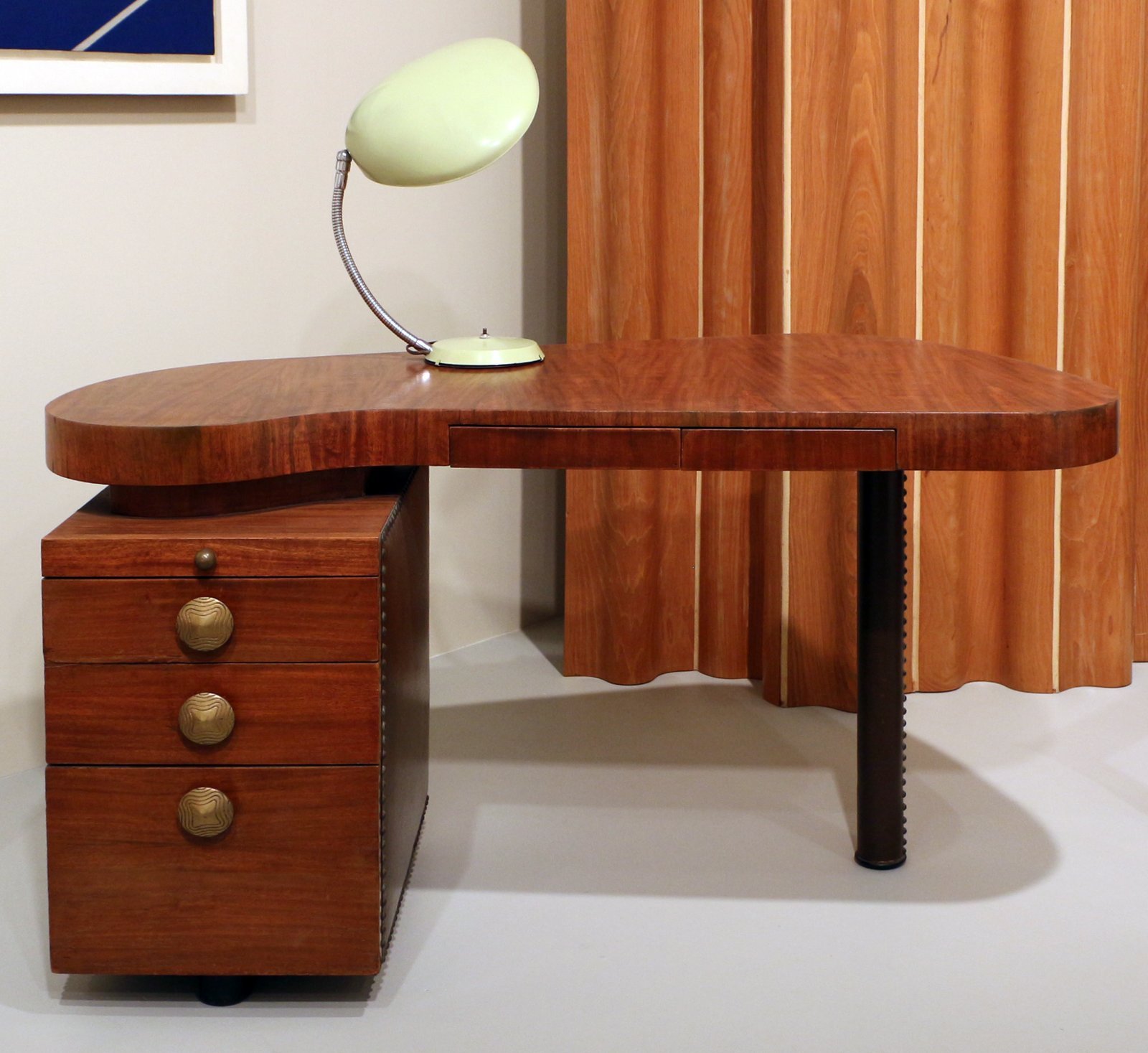
Greta Magnusson Grossman (1906–1999) was a prolific designer working within the male-dominated world of mid-century modern design, whose status and influence has been largely ignored. That neglect is genuinely hard to square with her record. She maintained a prolific forty-year career on two continents, and her achievements encompassed industrial design, interior design, and architecture.
Upon arriving in Los Angeles in 1940, Grossman opened a well-publicized shop on Rodeo Drive and was among the first to bring the Scandinavian modern aesthetic to southern California’s burgeoning modernist scene. Her work appeared in Arts and Architecture magazine and was exhibited at museums such as MoMA in New York and the National Museum in Stockholm throughout the 1940s and 50s, and her Cobra Lamp was recognized with a Good Design Award in 1950. Following her retirement in the late 1960s, Grossman’s name all but disappeared from the design landscape, and some postulate this had to do with her status as a woman in a profoundly male-dominated profession. Her Gräshoppa lamp, now reissued by GUBI, has found its way into thousands of contemporary interiors with many owners entirely unaware of its origin.
Ilmari Tapiovaara: Finland’s Democratic Design Pioneer
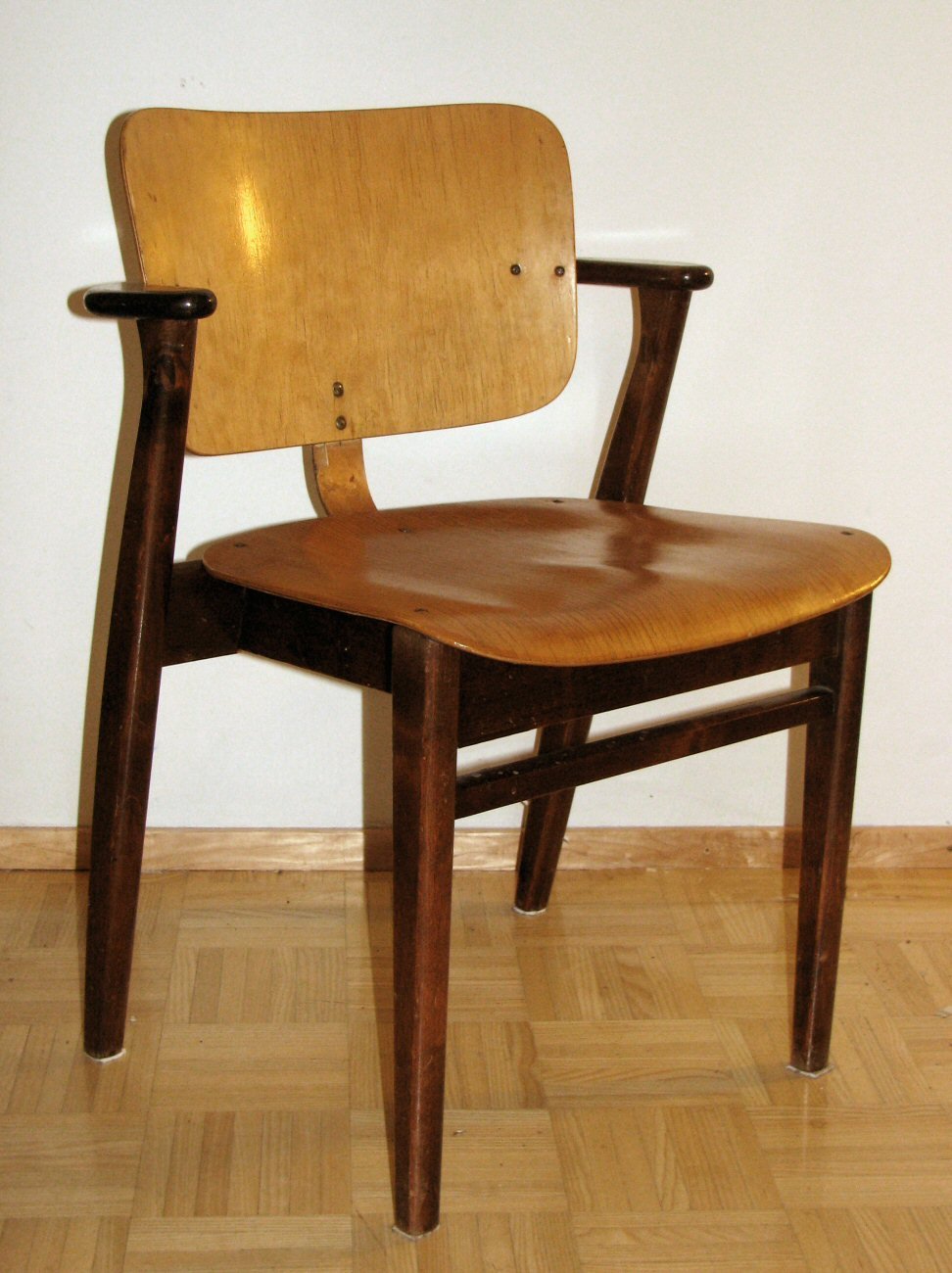
Ilmari Tapiovaara (1914–1999) was a seminal Finnish designer and interior architect whose work significantly influenced mid-20th-century design. Renowned for his functionalist approach, he sought to create accessible, high-quality furniture that harmonized with architectural spaces. His early career included collaborations with prominent figures such as Alvar Aalto at Artek’s London office and Le Corbusier in Paris, experiences that profoundly shaped his design philosophy.
His most famous piece, the Domus Chair from 1946, was originally created for a student dormitory and became a model of efficient, stackable design. Tapiovaara worked with the Finnish army during World War II to create ergonomic, durable furniture from local materials, a practice he carried into civilian life. His designs were modular, often foldable, and perfect for small postwar homes. His dedication to functional beauty and democratic design principles resonates with contemporary movements prioritizing sustainability and accessibility. His ability to blend traditional Finnish craftsmanship with modernist ideals offers valuable insights for today’s designers striving to create meaningful and enduring work.
Paul McCobb: The American Designer Who Furnished the Middle Class
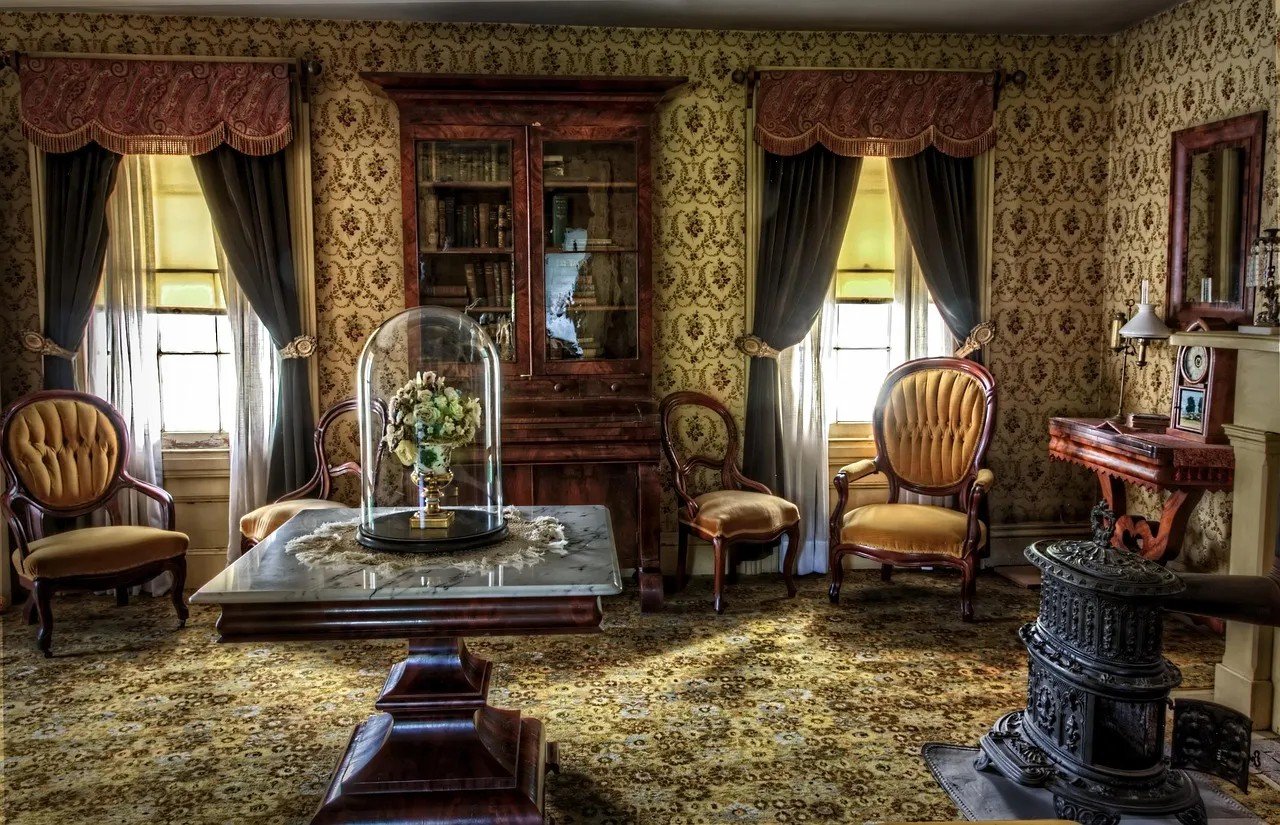
Paul McCobb (1917–1969) stands as a seminal figure in the landscape of 20th-century American design. While his name may not have reached the same level of popular familiarity as Charles and Ray Eames or George Nelson, his impact was arguably broader and more accessible. McCobb’s work embodied the ethos of mid-century modernism: a belief in simplicity, function, and form derived from purpose.
Unlike the ornate, traditional furniture of previous decades, McCobb’s pieces emphasized function, flexibility, and affordability. Through the Planner Group, first introduced in 1949, McCobb delivered what many call the first commercially successful line of modern furniture for the masses. His work was featured prominently in the Museum of Modern Art’s Good Design exhibitions from 1950 to 1955, and he received MoMA Good Design awards in 1950, 1951, 1953, and 1954. Celebrated for his refined proportions, honest materials, and everyday functionality, McCobb created furniture that feels as fresh now as it did in the 1950s and 1960s.
Sergio Rodrigues: Brazil’s Unsung Voice in Modern Comfort
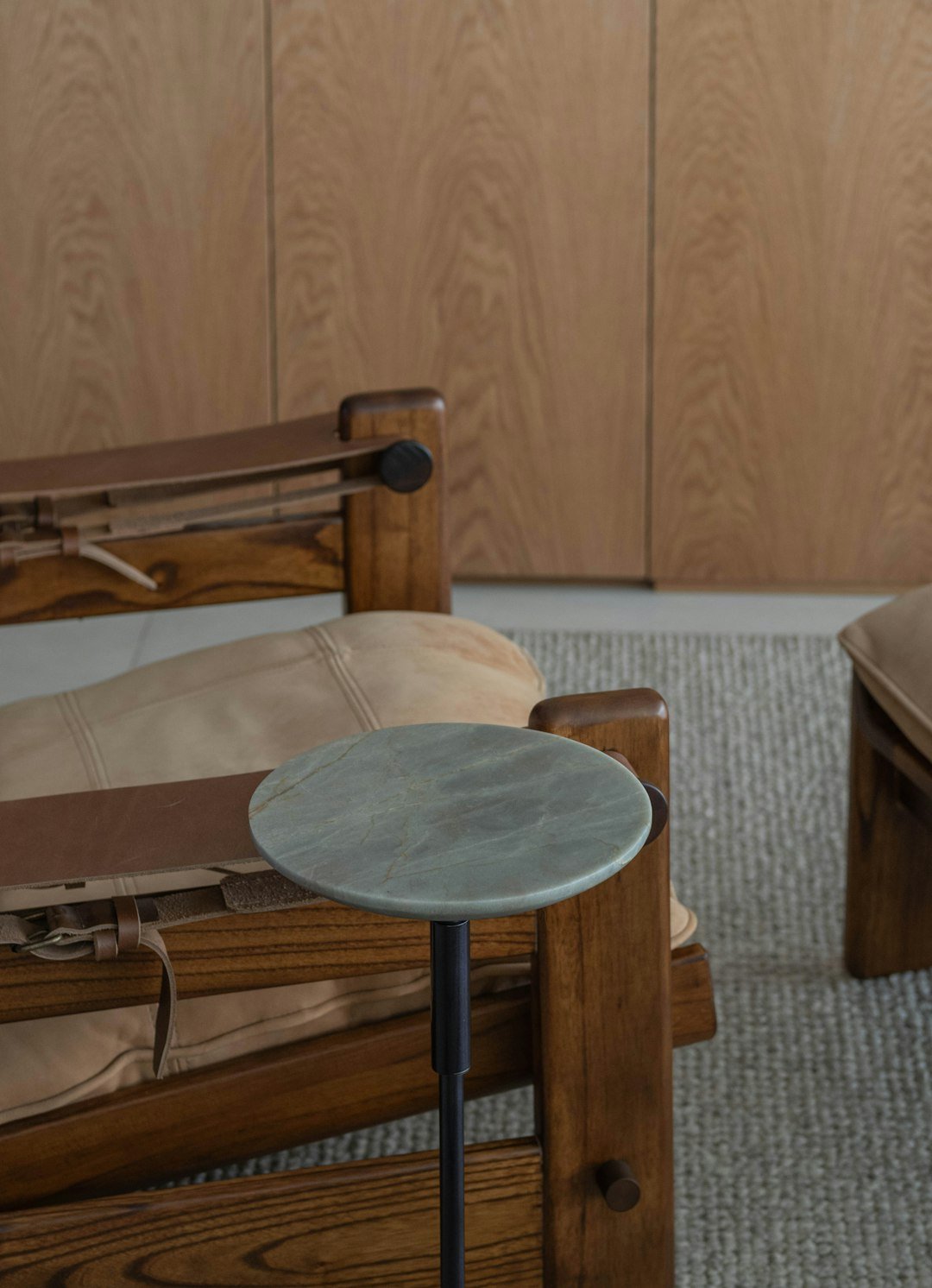
Often called the father of Brazilian modernism, Sergio Rodrigues infused his furniture with a sense of local identity and comfort. His 1957 Mole Armchair, designed for photographer Otto Stupakoff, combined rich tropical hardwood with plush leather cushions, inviting users to sink into its deep, enveloping form. Rodrigues championed relaxed luxury, designing with Brazil’s warm climate and cultural attitudes in mind. His work stood in stark contrast to the often austere tone of European modernism, offering a joyful, sensual alternative.
Though his pieces gained traction in global markets, Rodrigues is still underrecognized outside of South America. His legacy is one of cultural authenticity and comfort-first design that continues to resonate with collectors and curators alike. In an era when the design world has become more conscious of non-European perspectives, Rodrigues stands as a compelling reminder that mid-century modernism was never a single, monolithic story. It was a conversation happening across continents simultaneously, and Brazil had plenty to say.
Børge Mogensen: Denmark’s Master of Lived-In Design
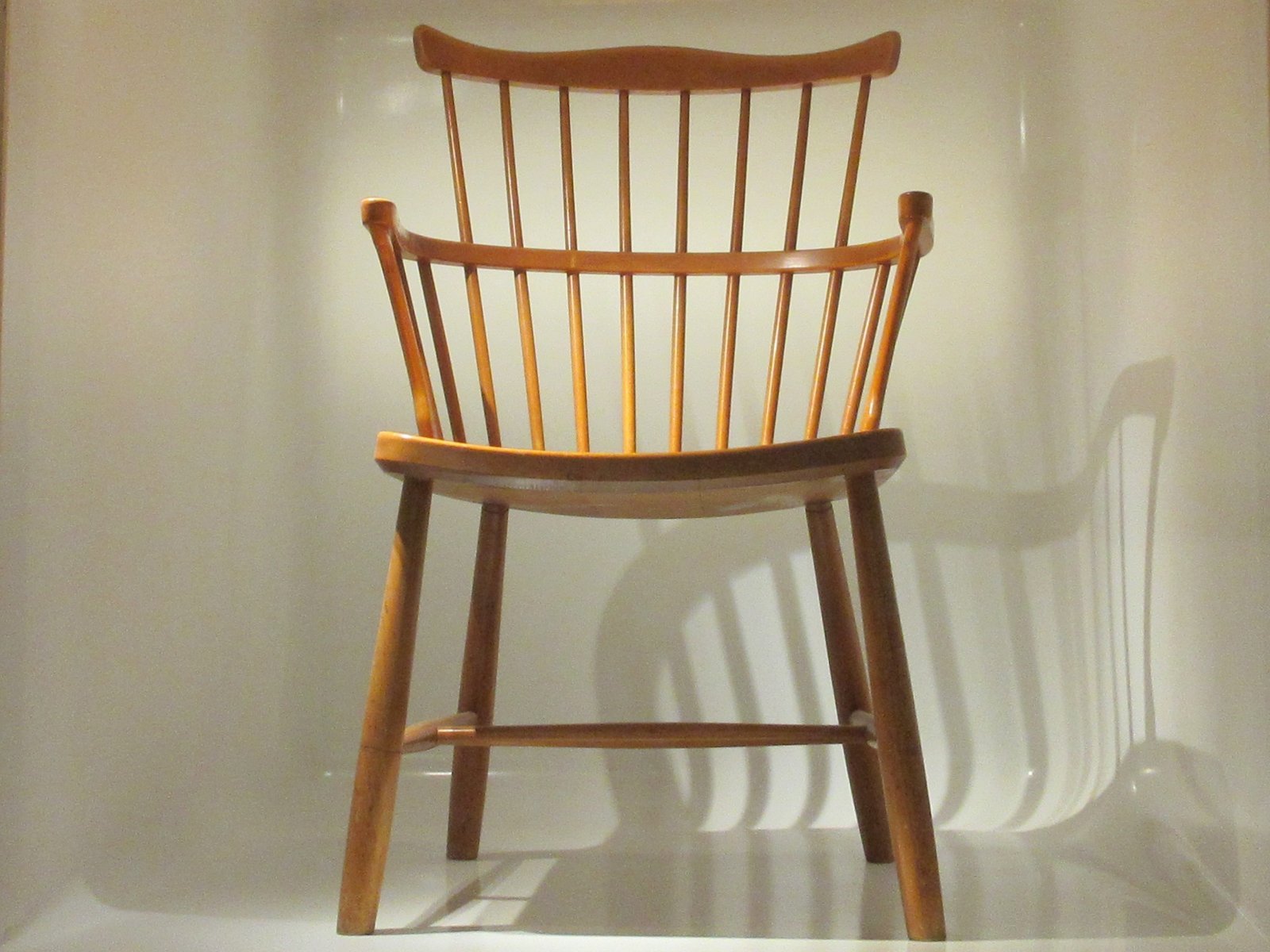
One of Denmark’s most influential designers, Børge Mogensen studied under the legendary Kaare Klint. Mogensen brought a pragmatic, user-focused approach to design, translating traditional Danish forms into modern classics. His 1950 Hunting Chair and 1958 Spanish Chair are notable examples, characterized by their robust oak frames and saddle leather seats.
Unlike many mid-century designers who chased industrial production, Mogensen believed in longevity and craftsmanship. His furniture was built to be lived in, reflecting both rural simplicity and urban refinement. That philosophy runs directly counter to the disposable furniture culture that came later, which is precisely why his pieces feel so relevant in 2026. While Eames, Saarinen, and Jacobsen remain icons, designers like Mogensen offer a deeper, more personal take on the movement, one that feels fresh yet familiar.
Nanna Ditzel: The Danish Pioneer of Warm Modernism
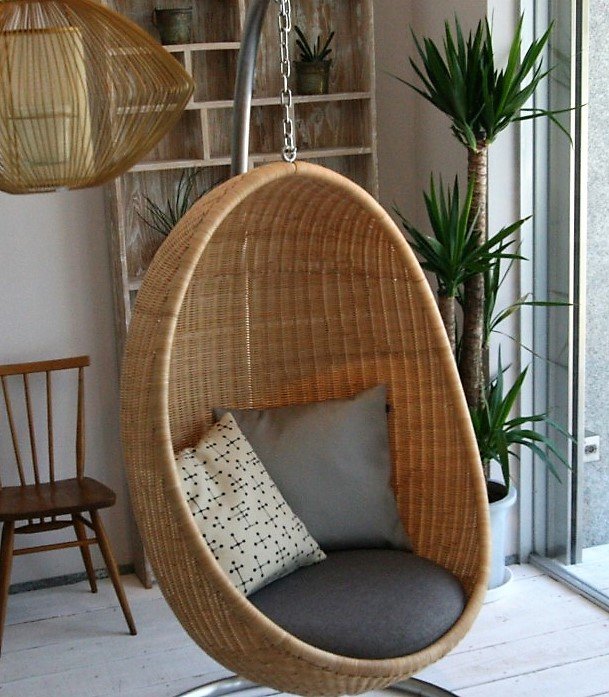
Danish designer Nanna Ditzel was a trailblazer in the male-dominated world of mid-century modern design. With her husband Jørgen Ditzel, she created the iconic 1957 Hanging Egg Chair, a graceful blend of form and function. Her work extended into textiles and jewelry, reflecting her belief in a holistic approach to design. Ditzel’s pieces conveyed a sense of softness and fluidity, setting her apart from the hard-edged minimalism of her time.
Often referred to as the “First Lady of Danish Furniture Design,” Nanna Ditzel introduced a more expressive side to Scandinavian modernism. Her pieces were both experimental and functional, making her a pioneer in embracing femininity in design. Her designs feel joyful, sculptural, and distinctly human, perfect for interiors that want warmth with flair. Today, many of her creations are being reissued, and her legacy as a pioneer of “warm modernism” is finally gaining renewed attention. It took decades, but her influence on contemporary soft-form furniture is now impossible to ignore.
Charlotte Perriand: The Modernist Who Made Function Beautiful
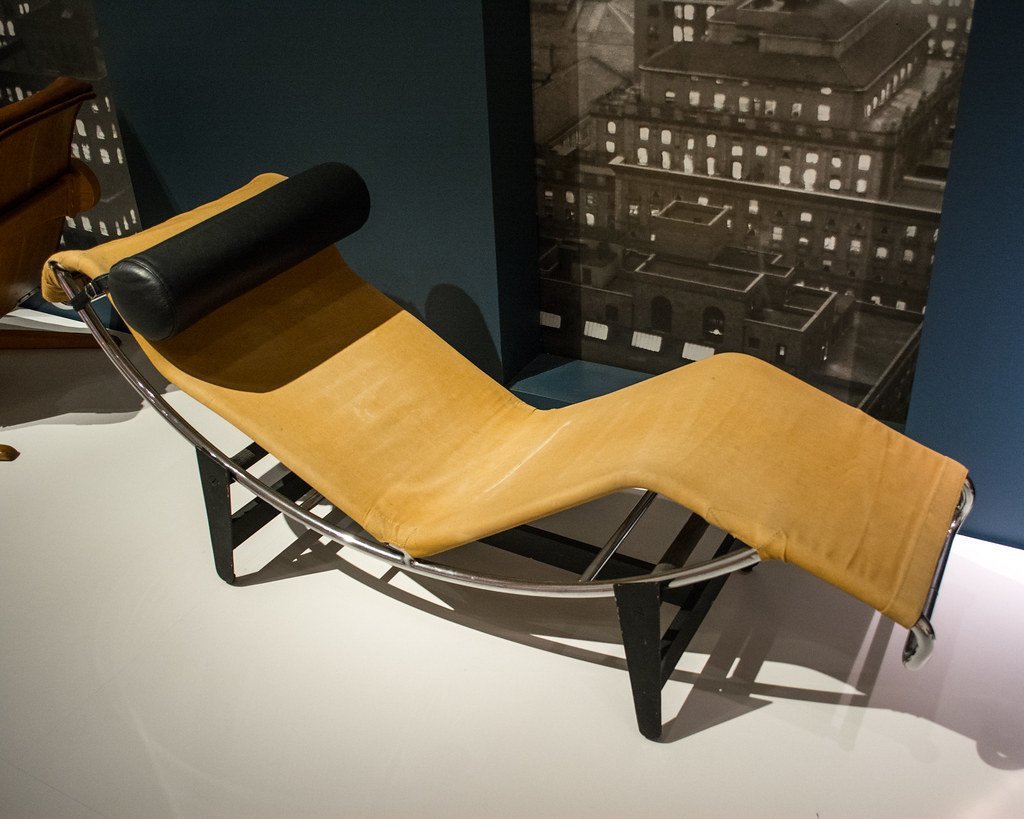
Versatile and one of modernism’s precocious pioneers, Charlotte Perriand designed her famous lounge chair at the age of 23, and her work ranges from rational, minimalistic chrome to organic wood. Over the span of her long career, while her materials changed, her design philosophy of harmony did not. Perriand was a pioneer who believed that good design should serve people rather than impress them. She began her career in a male-dominated environment, joining Le Corbusier’s studio in 1927 after famously being rejected at first.
Rather than designing isolated pieces of furniture, Perriand imagined complete environments. This systemic approach, combining tables, chairs, and storage elements, met the new demands of modern homes. Her inventive use of materials has had a lasting influence on contemporary design. Her Cloud Library, a modular shelving system that adapts fluidly to both residential and commercial spaces, is still sought out by architects and interior designers today. She thought in systems long before the word became fashionable in design circles.
Yrjö Kukkapuro: The Finnish Ergonomist Ahead of His Time
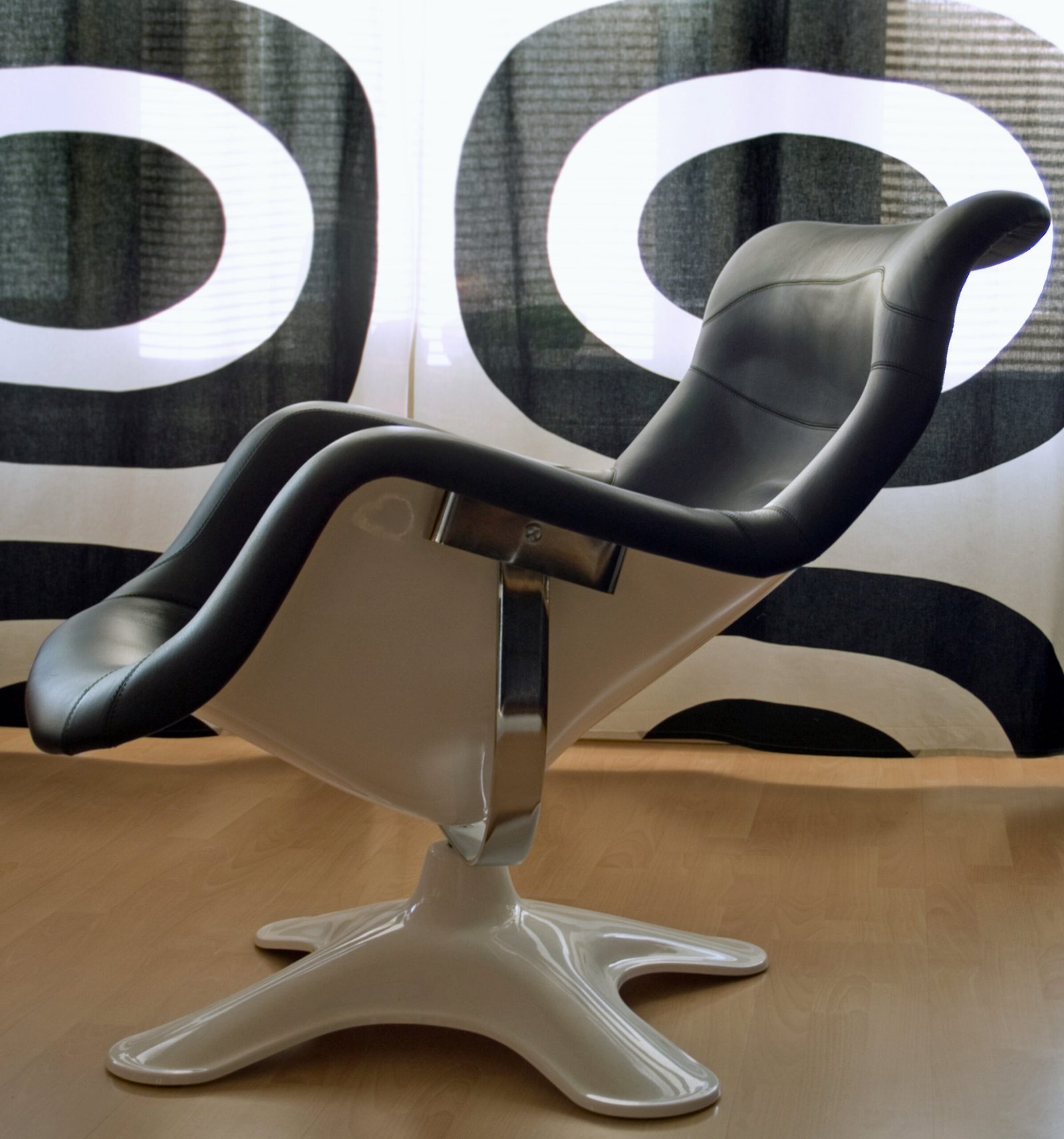
Kukkapuro was a Finnish pioneer of ergonomic furniture who saw design as an extension of the human body. Best known for his 1964 Karuselli Chair, he approached design scientifically. He would sit in snow to study the body’s natural posture and even covered himself in chicken wire to create plaster molds that would guide the ergonomic structure of his chairs.
The Karuselli Chair landed on the cover of Domus magazine in 1966 and is still in production today. Yet despite his immense contributions, Kukkapuro is often eclipsed by fellow Finns like Alvar Aalto. His work represents a perfect synthesis of sculptural beauty and user-centered design, a legacy still evident in public buildings and hotels throughout Scandinavia. The modern obsession with ergonomic seating, which now drives enormous market interest from home offices to corporate lobbies, owes more to Kukkapuro’s quiet research than most people would guess.
John and Sylvia Reid: Britain’s Accessible Modernists
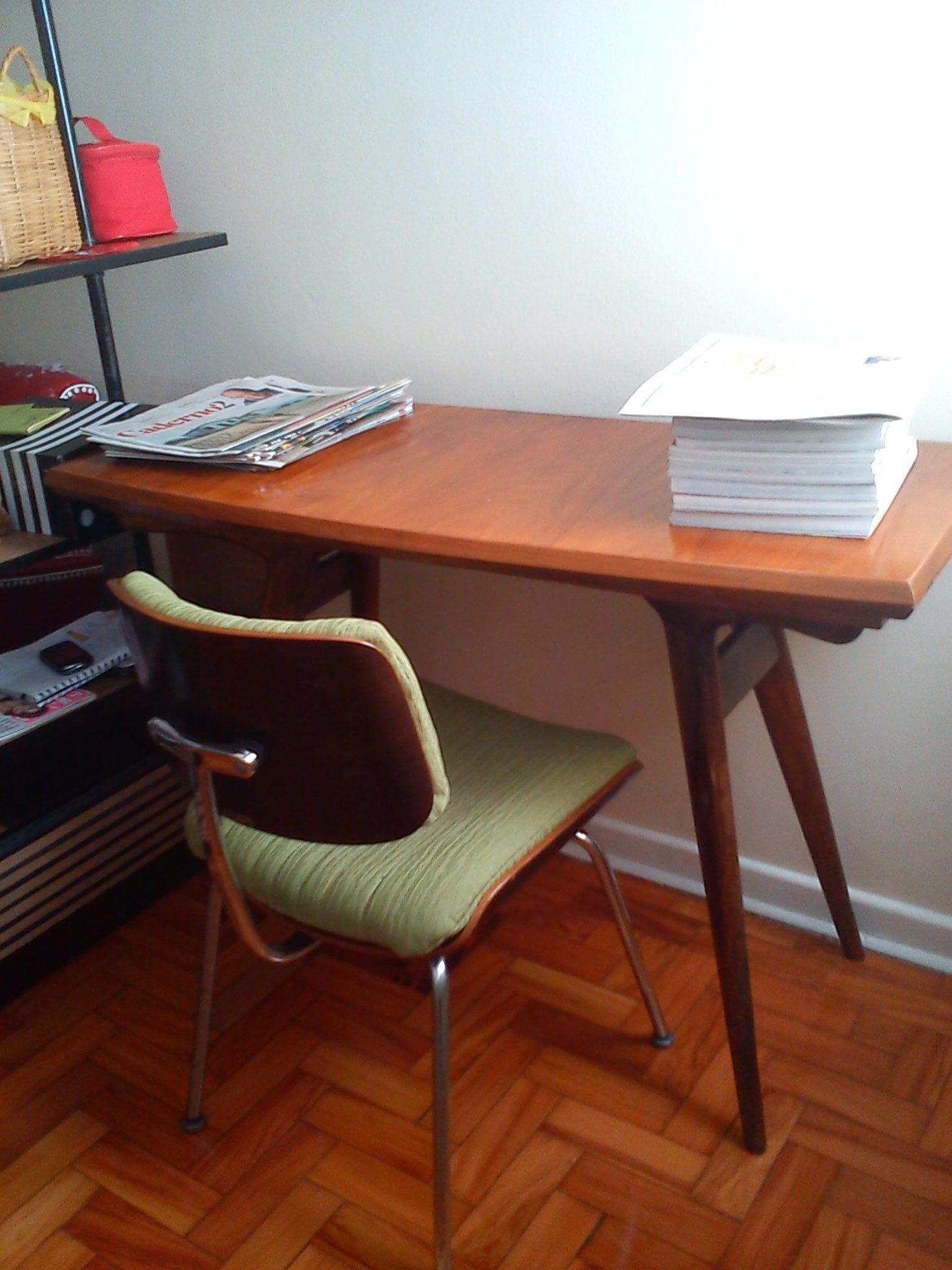
British designers John and Sylvia Reid brought modernism to the masses through their work with Stag Furniture, a U.K. brand that offered affordable yet beautifully designed pieces for postwar homes. Their modular bedroom collections, marketed to young couples, offered flexibility and style in equal measure. Their designs often featured clean lines, simple forms, and functional storage, hallmarks of good design made accessible.
The Reids weren’t just furniture makers. They also worked in graphic and lighting design, echoing the multidisciplinary approach of the Eameses. Yet, unlike their American counterparts, the Reids never broke through on a global scale, partly due to the localized nature of their market. Nonetheless, their influence on British interiors during the 1950s and 1960s is undeniable. The modular storage aesthetic they advanced, affordable, adaptable, unpretentious, feels like a direct ancestor of how younger generations approach furnishing small homes today.
The Quiet Legacy of Mid-Century Modern Design
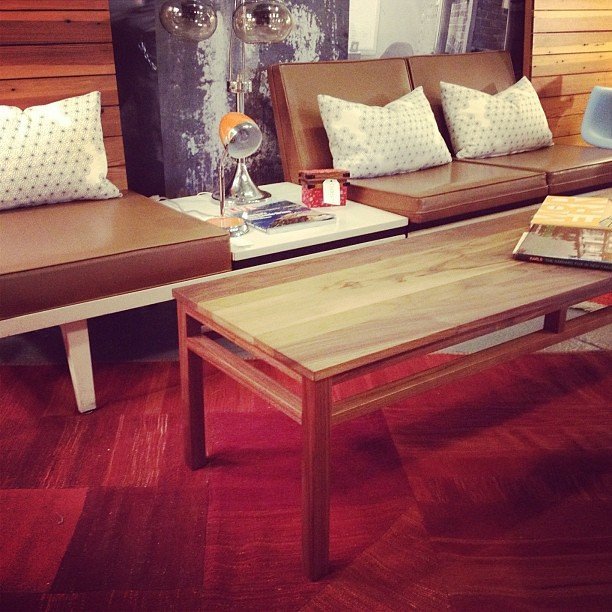
The mid-century style has seen a marked resurgence of interest over the past decade. Brands such as IKEA and Habitat are reinterpreting its codes. These contemporary pieces, while using innovative materials, retain the functional spirit and characteristic colors of the original movement.
Today, contemporary design blends elements of mid-century modern, Scandinavian, and minimalist styles, with an added focus on dramatic lighting, advanced technological elements, and ultra-sleek finishes. What’s striking is how much of that blend traces back to designers whose names most homeowners have never heard. The open floor plan, the tapered leg, the sculptural lamp in the corner, the modular shelving unit: these didn’t emerge from nowhere.
The designers profiled here worked across different countries, different materials, and different philosophies, yet they shared something essential: a belief that everyday spaces deserved serious thought. Their contributions were absorbed into the mainstream so thoroughly that they became invisible. That invisibility, in its own way, is the highest compliment a designer can receive. Their ideas became the air we breathe inside our homes.

- 12 Classic TV Shows With Shocking Behind-the-Scenes Dramas You Never Knew - September 10, 2026
- 10 Novels That Were Initially Dismissed, Only to Become Timeless Masterpieces - September 10, 2026
- The ’80s Were a Wild Ride of Style and Sound That Changed Everything - September 10, 2026

