

For any feedback please reach out to info@festivalinside.com
- 12 Literary Feuds So Intense, They Changed the Course of Literature - August 11, 2026
- 10 Mysterious Disappearances of Famous Figures That Still Puzzle Experts - August 11, 2026
- 10 Foods We Thought Were American But Were Actually Invented Somewhere Else. - August 11, 2026
Documentary photography freezes pivotal slices of history, turning raw human struggle into enduring visual records. These images often emerge from chaos, capturing the raw emotion of wars, migrations, and protests that define eras.
Photographers risk everything to document these turning points, revealing truths that words alone cannot convey. Their work shapes how generations understand global upheavals and personal resilience.[1][2]
Migrant Mother
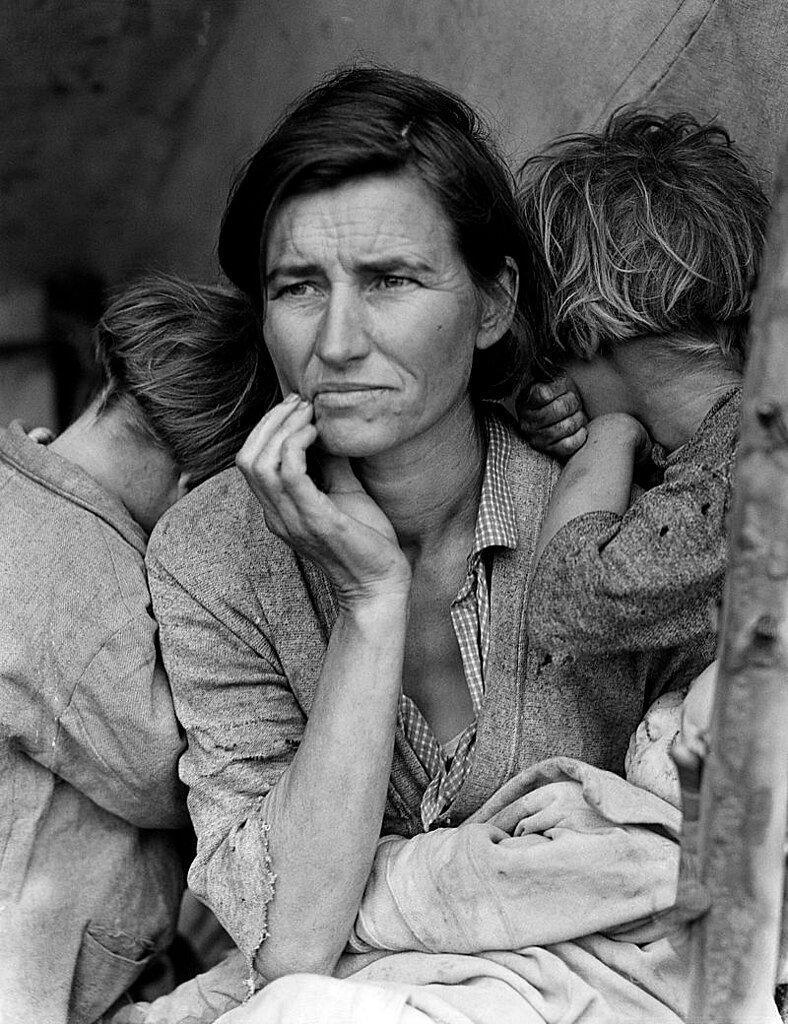
Dorothea Lange captured this image in March 1936 at a pea pickers’ camp in Nipomo, California. Florence Owens Thompson, a 32-year-old mother of seven, sat with her children amid the Great Depression’s grip. The family had lost their home and crops to the Dust Bowl, scraping by on frozen peas and birds. Lange, working for the Resettlement Administration, approached after spotting their desperation during a road trip.[3][4]
The photo galvanized federal aid, prompting immediate food shipments to the camp. It became the face of New Deal relief efforts, symbolizing widespread poverty. Thompson later expressed mixed feelings, as the image overshadowed her private recovery. Culturally, it endures as a stark emblem of economic hardship, influencing art and policy discussions on inequality.[5]
Raising the Flag on Iwo Jima
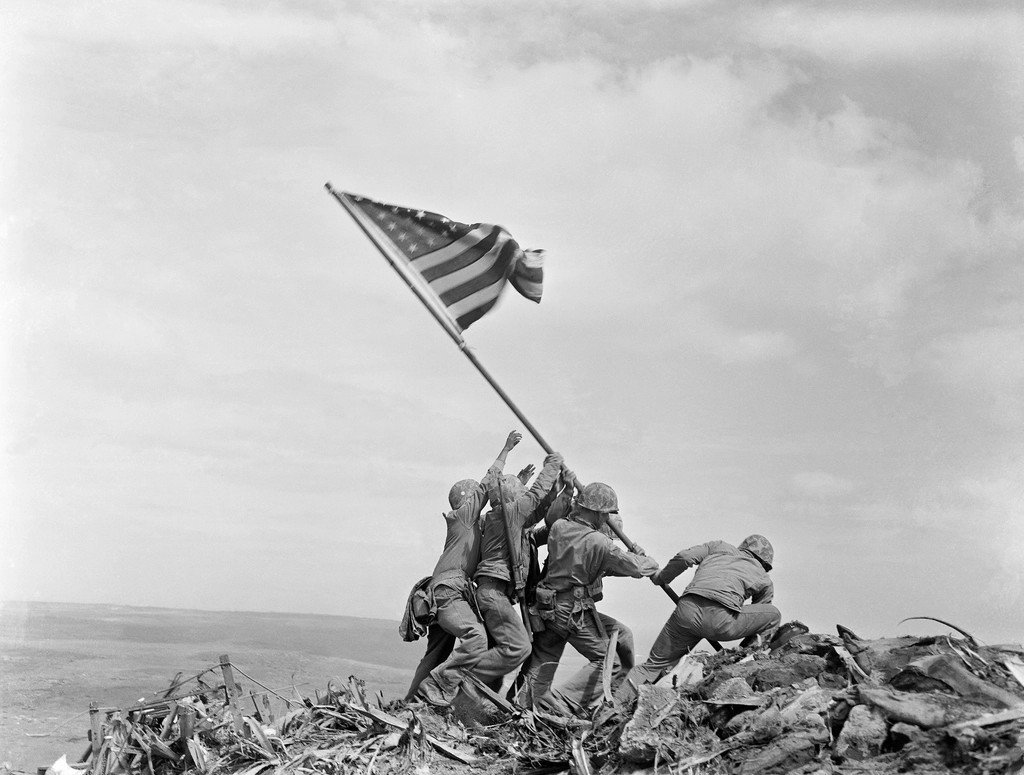
Joe Rosenthal snapped this on February 23, 1945, atop Mount Suribachi during the brutal Battle of Iwo Jima. Six Marines raised a second, larger American flag after the first small one proved too tiny for visibility below. The island campaign raged in World War II’s Pacific theater, costing thousands of lives in five weeks of fighting. Rosenthal, nearly missing the moment, climbed the mountain with his Speed Graphic camera.[1][6]
The image won a Pulitzer Prize and fueled a $26 billion war bond drive. It inspired the Marine Corps War Memorial in Arlington. Politically, it boosted morale and unified public support for the final push against Japan. Its legacy persists in military iconography, though debates arose over staging claims, which Rosenthal denied.[7]
V-J Day in Times Square
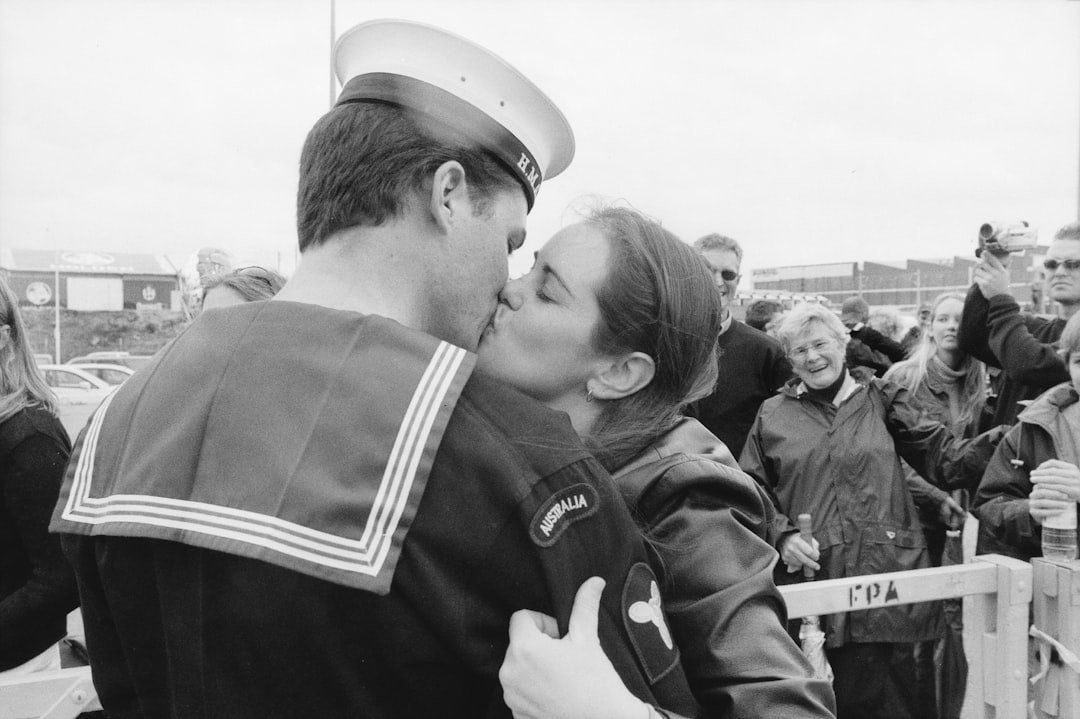
Alfred Eisenstaedt photographed this on August 14, 1945, amid New York City’s wild celebrations marking Japan’s surrender in World War II. A sailor spontaneously grabbed a nurse in a white dress for a passionate kiss in Times Square. The scene erupted after radio announcements confirmed victory, ending years of global conflict. Eisenstaedt captured multiple angles with his Leica, blending joy and relief.[1]
The photo graced LIFE magazine, embodying postwar euphoria and romance. It shaped cultural views of victory and gender dynamics in the 1940s. Politically, it marked a pivot to peacetime prosperity. Today, it sparks consent discussions while remaining a symbol of collective triumph.[2]
The Burning Monk
![The Burning Monk (Immediate source:[1]
For further info see: http://www.apimages.com/metadata/Index/Watchf-AP-I-VNM-aphs019555-VIETNAM-MONK-PROTEST/a344206cdb5a490e9fceb1e1c2ebbefc/1/1, Public domain)](https://festivaltopia.com/wp-content/uploads/2026/04/1776606131563_1776606125672_th-c3-adch_qu-e1-ba-a3ng_-c4-90-e1-bb-a9c_self-immolatio.jpeg)
For further info see: http://www.apimages.com/metadata/Index/Watchf-AP-I-VNM-aphs019555-VIETNAM-MONK-PROTEST/a344206cdb5a490e9fceb1e1c2ebbefc/1/1, Public domain)
Malcolm Browne documented Thich Quang Duc’s self-immolation on June 11, 1963, in Saigon. The Buddhist monk protested President Ngo Dinh Diem’s suppression of Buddhism, dousing himself in gasoline and igniting amid traffic. This act highlighted religious tensions in South Vietnam, where Catholics held power under U.S. backing. Browne, the only Western photographer present, used a fire extinguisher lens filter.[1][8]
The image earned a Pulitzer and pressured U.S. policy, contributing to Diem’s ouster months later. It amplified global awareness of Vietnam’s instability. Culturally, it stands as a testament to nonviolent protest’s extremes. Its calm horror continues to evoke martyrdom in activism.[2]
The Terror of War (Napalm Girl)
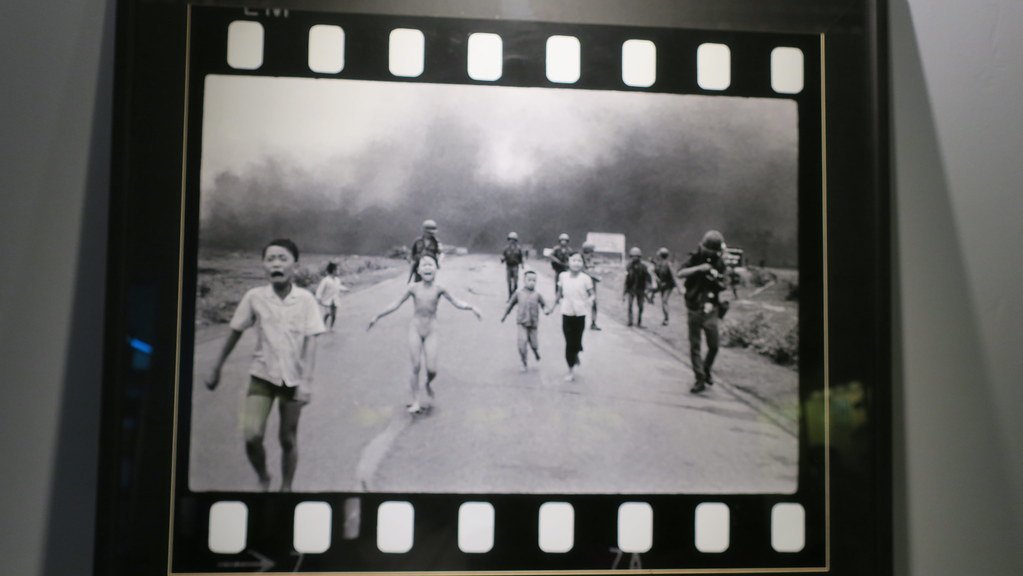
Nick Ut photographed nine-year-old Phan Thi Kim Phuc on June 8, 1972, near Saigon during the Vietnam War. South Vietnamese planes mistakenly dropped napalm on her village, leaving her naked and screaming from burns. Ut rushed her to a hospital, saving her life amid fleeing villagers. The image pierced the fog of distant conflict.[2][8]
Winning a Pulitzer, it fueled anti-war protests and policy shifts toward U.S. withdrawal. Phuc became a peace advocate post-war. The photo challenged media norms on child nudity. Its raw power reshaped perceptions of war’s civilian toll.[1]
Saigon Execution
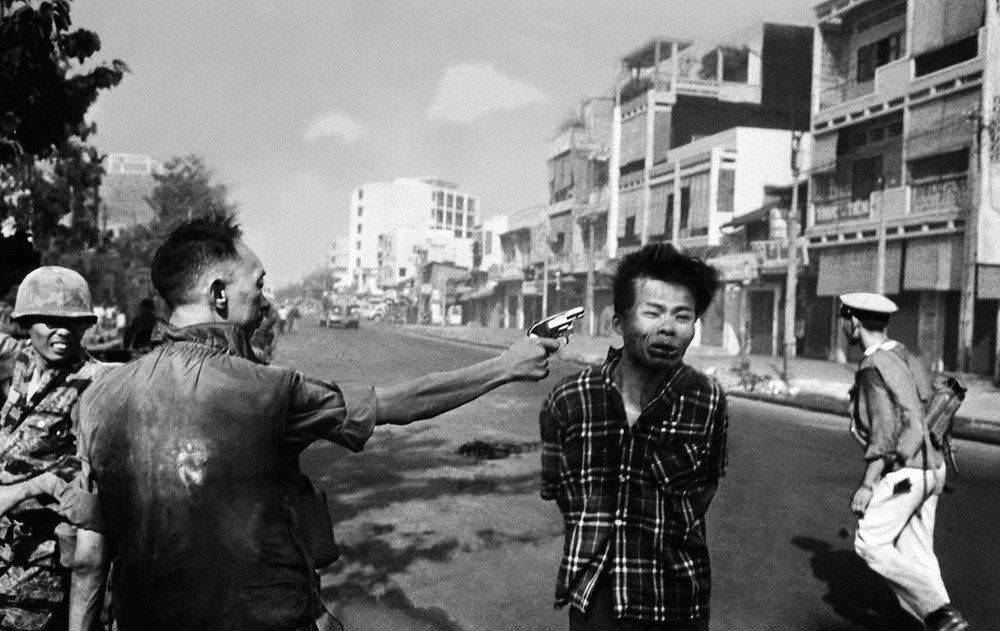
Eddie Adams captured Brig. Gen. Nguyen Ngoc Loan executing Viet Cong prisoner Nguyen Van Lem on February 1, 1968, during the Tet Offensive. On a Saigon street, Loan shot Lem point-blank after allegations of atrocities. Adams, riding with Loan, fired his Leica in split-second timing. The Vietnam War’s urban fighting intensified the moment’s brutality.[1][8]
The Pulitzer-winning image swayed American opinion against the war, eroding support for involvement. It humanized the enemy and exposed summary justice. Adams later regretted its oversimplification of Loan. Politically, it accelerated troop drawdowns.[2]
Tank Man
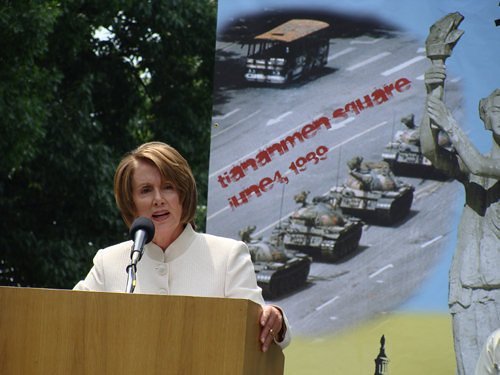
Jeff Widener shot this on June 5, 1989, in Beijing after the Tiananmen Square massacre. An unidentified man blocked a tank column with shopping bags, repeatedly repositioning himself. Protests for democracy had ended in bloodshed days earlier. Widener smuggled film out via hotel balconies.[1][8]
The anonymous figure symbolizes defiance against oppression worldwide. It evaded China’s censorship, becoming a global protest icon. Culturally, it inspires art and activism. Politically, it underscores ongoing human rights struggles.[2]
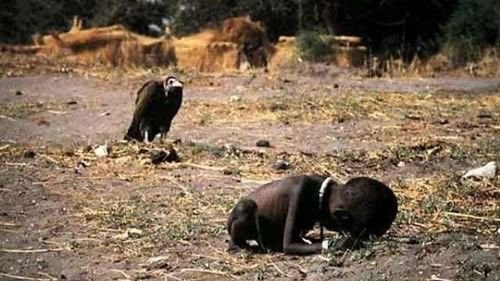
Starving Child and Vulture
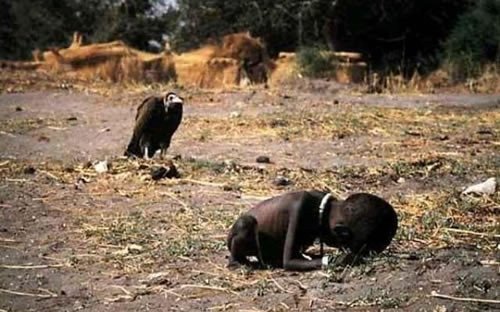
Kevin Carter took this in March 1993 at Ayod, Sudan, during a famine killing thousands. A frail toddler collapsed near a waiting vulture, as parents foraged far for food. Carter waited for the bird to spread wings but chased it off afterward. The Bang-Bang Club documented apartheid’s aftermath in Africa.[8]
A Pulitzer followed, but backlash questioned non-intervention ethics. It spotlighted Sudan’s crisis, aiding relief efforts. Carter’s suicide highlighted photojournalism’s toll. The image endures as a famine emblem, prompting aid reflections.[1]
Photojournalism serves as visual history, etching collective memory into shared consciousness. These moments remind us how single frames can shift nations and hearts. In an image-saturated age, their unfiltered power still commands attention, urging ongoing vigilance for truth.

Christian Wiedeck, all the way from Germany, loves music festivals, especially in the USA. His articles bring the excitement of these events to readers worldwide.
For any feedback please reach out to info@festivalinside.com
