


- 15 Hit Singles From the Last Three Decades That Still Get You Dancing. - August 12, 2026
- Taylor Swift’s Impact on the Music Industry Is Truly Unprecedented - August 12, 2026
- 8 Poets Whose Lives Were More Tumultuous Than Their Most Dramatic Verses - August 12, 2026
History has a strange habit of burying its greatest ideas. Some of the most astonishing innovations ever conceived weren’t celebrated when they were born. They were mocked, ignored, underfunded, or simply forgotten. The people behind them sometimes died in poverty, in obscurity, or in the shadow of lesser minds who arrived later and got all the credit.
What’s truly wild is how many of these inventions weren’t just early. They were centuries ahead of schedule. Think about that for a moment. Imagine designing a smartphone-equivalent in the 1400s, or sketching a working helicopter before modern metallurgy even existed. These weren’t lucky guesses. They were moments of pure, almost inexplicable genius. Let’s dive into twelve of history’s most jaw-dropping examples.
1. The Antikythera Mechanism: The World’s First Computer (circa 150–100 BCE)
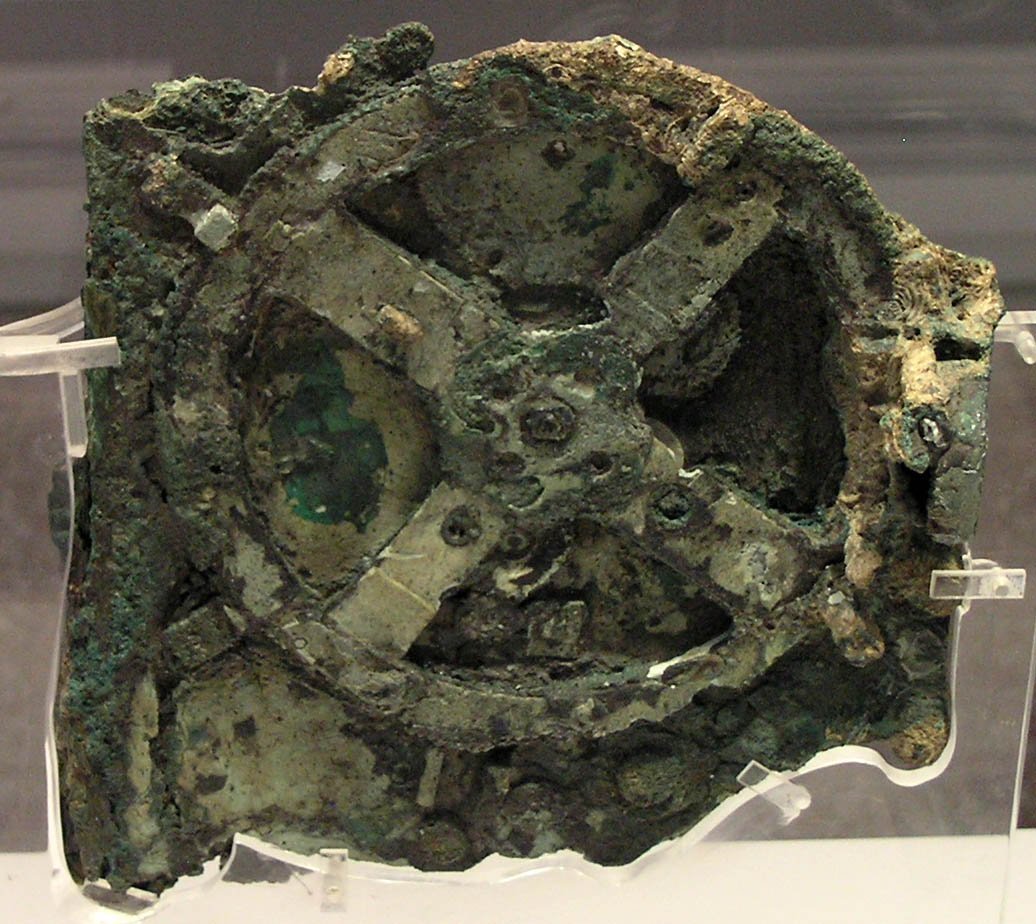
Picture a bronze shoebox covered in gears, pulled from the ocean floor after two thousand years. That is essentially what Greek sponge divers discovered in 1901. In the spring of 1901, a group of Greek sponge divers working off the coast of the tiny island of Antikythera hauled something extraordinary from the seafloor. Among the marble statues, pottery, and coins of an ancient Roman-era shipwreck lay an unassuming lump of corroded bronze, roughly the size of a shoebox. Nobody immediately understood what they were looking at.
The Antikythera mechanism, dated to the late 2nd century/early 1st century BCE, is understood as the world’s first analog computer, created to accurately calculate the position of the sun, moon, and planets. The Antikythera mechanism could calculate 42 separate calendar functions, predict the motion of the Moon, the positions of planets, and the timing of lunar and solar eclipses. That is not a primitive tool. That is a scientific instrument of breathtaking sophistication.
The Antikythera mechanism is the oldest known analog computer on Earth, built roughly 2,100 years ago, and so sophisticated that nothing of comparable complexity would appear again for over a thousand years. The implication is stark: the ancient Greeks possessed a level of mechanical and mathematical knowledge that was largely lost during the upheavals of late antiquity. Some of it survived in fragments – Arabic scholars preserved and built upon Greek astronomy and mathematics – but the specific tradition of precision gear-based computing seems to have vanished almost completely.
2. Leonardo da Vinci’s Flying Machines (late 1400s)
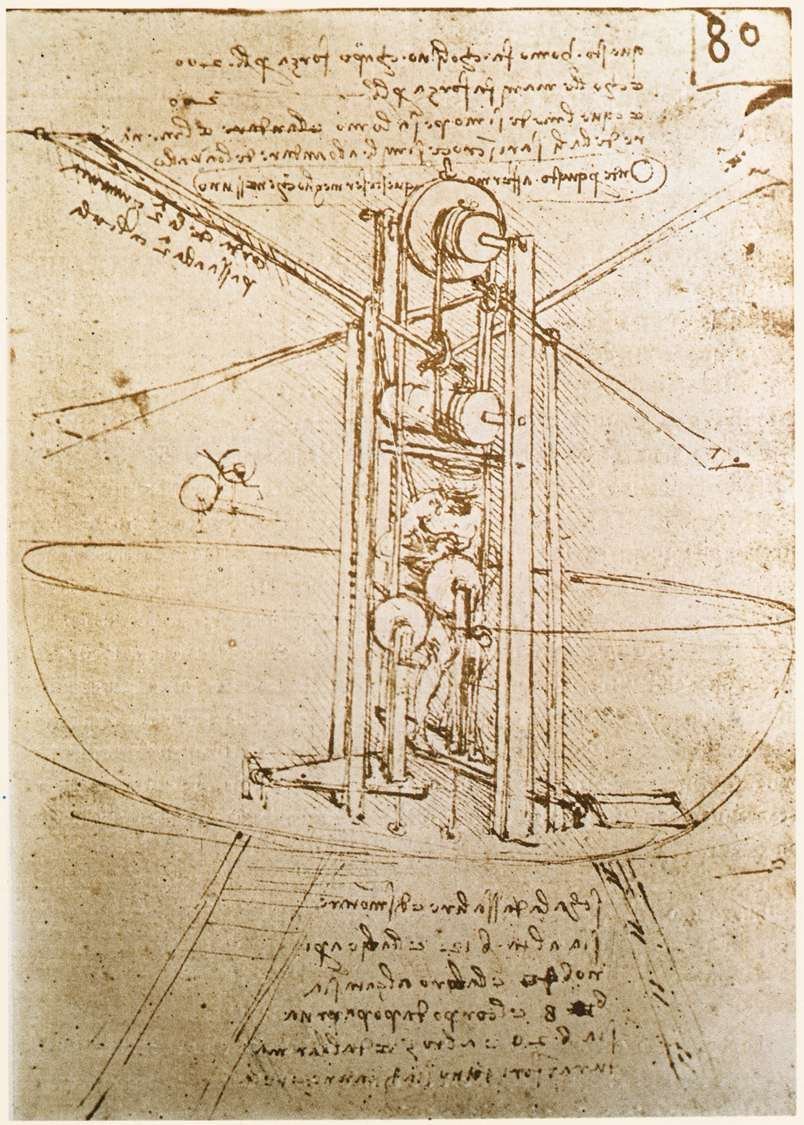
Leonardo da Vinci is famous for painting the Mona Lisa. Honestly, though, that might be the least interesting thing about him. As an engineer, Leonardo conceived ideas vastly ahead of his own time, conceptually inventing the parachute, the helicopter, an armored fighting vehicle, the use of concentrated solar power. He did all of this from a small studio with quill and ink, with no modern physics to guide him.
Working much like a modern helicopter, his flying machine looks a lot like a giant whirling pinwheel. The “blades” of this helicopter were to have been made out of linen. As with many of da Vinci’s ideas, he never actually built and tested it – but his notes and drawings mapped out exactly how the device would operate. Though the first actual helicopter wasn’t built until the 1940s, it is believed that Leonardo da Vinci’s sketches from the late fifteenth century were the predecessor to the modern day flying machine.
After his death, his notebooks were hidden away, scattered, or lost, and his wonderful ideas were forgotten. Centuries passed before other inventors came up with similar ideas and brought them to practical use. That gap is heartbreaking, really. The world essentially lost a century or two of aviation progress because a genius’s notebooks ended up scattered across Europe.
3. Da Vinci’s Robotic Knight (circa 1495)
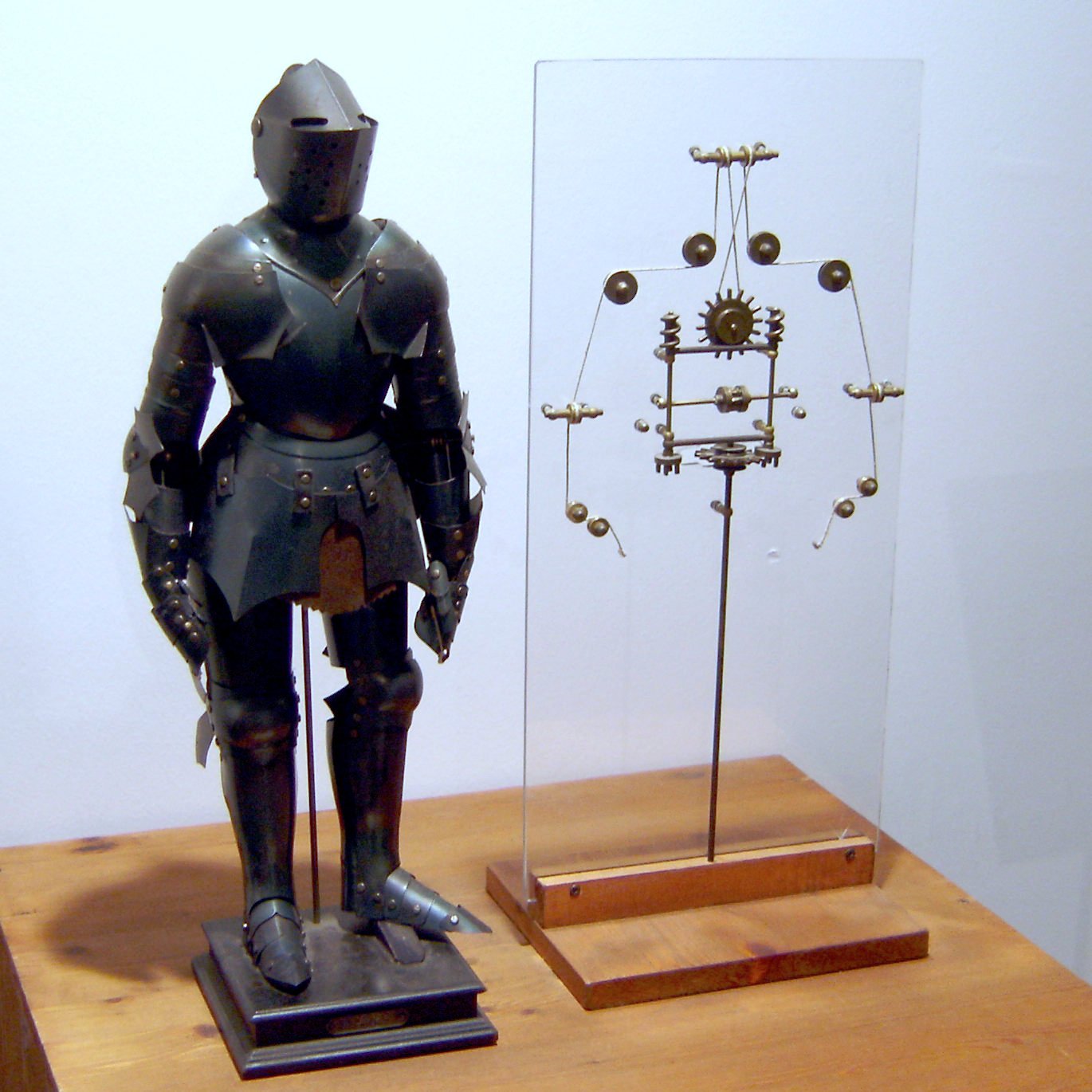
Here’s the thing – when people talk about robotics, they tend to think of the 20th century. The servo motors, the microchips, the factory floors. But Leonardo had sketched out a humanoid robot five centuries before any of that existed. Many of da Vinci’s inventions were before his time, but his designs for a humanoid robot were truly futuristic. Under the patronage of Sforza, da Vinci invented a “robotic knight” that could wave its arms, move its neck, and even open and close its mouth. This strange doll was controlled externally by cables operated with a hand crank, as well as by an internal, gear-driven machine.
The design was rooted not in fantasy but in anatomy. The design for da Vinci’s robotic knight was based closely on human anatomy. During his lifetime, Leonardo drew many sketches depicting the muscles and tendons of the upper body. This is what separated da Vinci from mere dreamers. He thought like an engineer, not a storyteller.
About 450 years after da Vinci designed his robotic knight, his detailed sketches of the invention were rediscovered. And in the early 21st century, one roboticist took a page from these notes in designing an anthropomorphic robot for the modern age. That a Renaissance-era sketch could inspire a 21st-century robotics project says everything you need to know about how far ahead this man’s mind was operating.
4. Hero of Alexandria’s Steam Engine (circa 1st century AD)
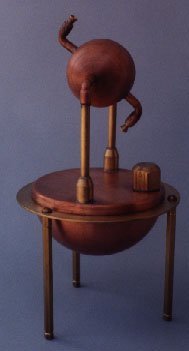
I know it sounds crazy, but the steam engine – the engine that powered the entire Industrial Revolution – was conceptually invented nearly two thousand years before James Watt. Hero of Alexandria’s most amazing practical invention was probably the steam engine. He came up with an engine called an Aeolipile, which was not just a steam engine, but a jet engine that spun when heated. A spinning jet-powered device. In the first century AD.
It would be another 2,000 years before scientists “discovered” this, and when they did they realized that the fanciful blueprints drawn up by Hero were actually right on. Think about what that delay cost humanity. The Industrial Revolution didn’t happen until the 1700s. If Hero’s Aeolipile had been recognized and developed, it is entirely plausible that industrial society could have emerged over a thousand years earlier.
Heron of Alexandria was one of those individuals whose every idle thought seems to have been a stroke of inspiration. Living in the first century AD, he invented many things that would not be seen again for nearly 2,000 years. The tragedy isn’t just that the technology was lost. It’s that the entire tradition of mechanical thinking surrounding it disappeared with it.
5. Hero of Alexandria’s Vending Machine (circa 1st century AD)

Yes, the same Hero of Alexandria. The man was on another level entirely. Hero of Alexandria, a Greek engineer, mathematician, and inventor, built a box with a series of levers. When the user inserted a coin, it triggered the levers to open a valve and pour out a small amount of holy water. That is a vending machine. A fully functional coin-operated vending machine, almost two thousand years before anyone thought to put a bag of chips in one.
Heron created the first vending machine. A worshipper deposited a coin into a slot, and this moved a lever that opened a pipe. Then the water flowed out. Once the coin fell into the machine, the water stopped. The mechanical logic here is remarkably clean. Insert coin, receive product, transaction complete. Nothing about this concept has fundamentally changed in two millennia.
The invention faded into history not because it failed, but because the economy and culture around it simply had no framework to develop it further. Recognizing a great idea is one thing. Having the infrastructure to build an entire industry around it is something else entirely.
6. Zhang Heng’s Seismoscope (132 AD)
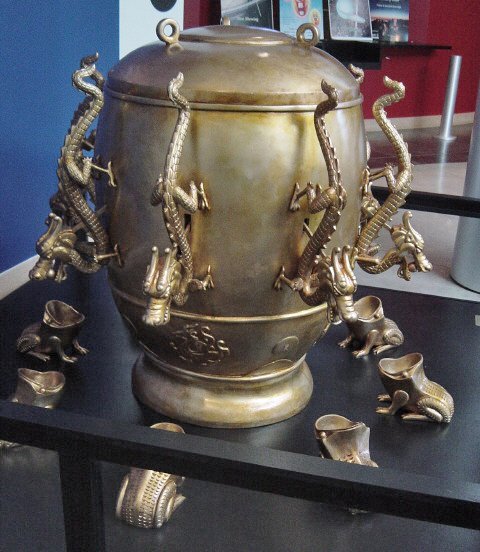
Earthquake detection is a technology most of us associate with the modern era. Seismographs, sensors, alert systems pinging your phone seconds before the ground shakes. Yet dating back to 2,000 years ago in ancient China, the Houfeng Didong Yi was the first earthquake detection device recorded in history and was very effective. The person who created the tool was Zhang Heng, dubbed the Leonardo da Vinci of China, a Renaissance man who was an inventor, astronomer, engineer, scientist, scholar, and artist.
The Houfeng Didong Yi could detect earthquakes hundreds of kilometers away remotely. The jar device featured eight tubed projections shaped like dragon heads on the exterior, with eight corresponding toads at the base of the jar. When an earthquake struck in a particular direction, one of the dragon heads would release a bronze ball into the corresponding toad’s mouth, indicating the direction of the quake. A simple mechanism. A brilliant outcome.
Modern seismology as a formal science didn’t emerge until the 19th century. Zhang Heng was operating in the second century AD. His device reportedly detected an earthquake roughly 400 miles away, a feat that stunned court officials who felt no shaking at the capital. The recognition came too late, and too slowly, for his technology to evolve into a full scientific tradition.
7. Roman Hypocaust Central Heating (circa 1st century BC)

Most people don’t realize that the Romans had central heating. Not a fireplace in every room, not a stove in the corner. Actual underfloor central heating, with hot air circulating beneath the ground and through the walls. The Romans invented a method of centrally heating their homes. When they built their villas, they first created a hollow space under the ground. These spaces were supported by tiles with large gaps between them. Known as hypocausts, these structures allowed hot air to pass through them. A fire was channeled into the hypocaust, and the hot air warmed the home from below.
The air was also drawn through channels in the walls. So the whole home was warmed and not just the parts near the fire. This is radiant floor heating. The concept you find in high-end modern homes, installed today as a luxury feature, was a standard Roman engineering solution two thousand years ago.
When the Roman Empire collapsed, hypocausts went out of fashion and Europe became a much chillier place to live for hundreds of years. Europe essentially went from underfloor heating to huddling around smoky hearths for the better part of a millennium. The loss of this technology is one of history’s great technical regressions, and it took until the 20th century for central heating to become widespread again.
8. Leonardo da Vinci’s Self-Propelled Cart (circa 1478)
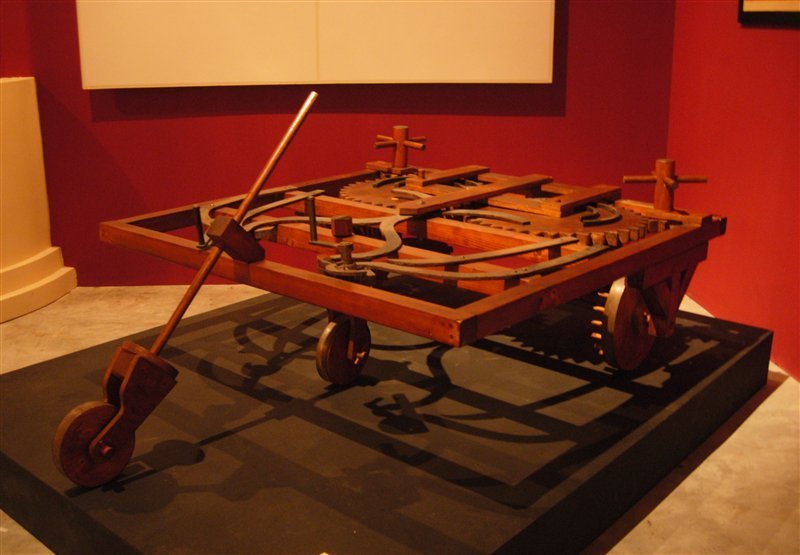
If you had to pinpoint the conceptual ancestor of the automobile, most historians would start with the 19th century. Steam carriages, internal combustion, Karl Benz. Reasonable choices. Still, Leonardo da Vinci got there first. Leonardo designed what many historians consider the world’s first self-propelled vehicle – a cart driven by coiled spring mechanisms and steerable using a rudimentary steering system. The Leonardo da Vinci car was not designed to carry passengers; it was likely intended as a prop for theatrical performances at the Sforza court.
Until late in the 20th century, scholars actually struggled to understand da Vinci’s design for a self-propelled cart because it was so ahead of its time and it exceeded expectations of capabilities in that time period. A museum in Italy built the design to test its practical application in 2006 and to the surprise of many historians and museum staff it actually worked. That is staggering. A five-hundred-year-old design, built from scratch, and it worked.
Way ahead of its time, its exact workings baffled scholars until the late 20th century. Leonardo apparently considered his cart to be something of a toy. The man who essentially designed the first car thought it was a toy. That’s either the most charming or the most frustrating thing in all of technology history, depending on your mood.
9. Nikola Tesla’s Wireless Electricity and the Wardenclyffe Tower (1901)
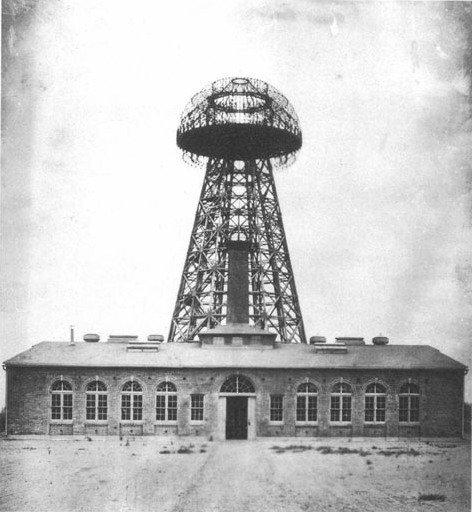
Previously published in Arthur B. Reeve, “Tesla and his Wireless Age” in Popular Electricity magazine, Popular Electricity Publishing Co., Chicago, Vol. 4, No. 2, June 1911, p. 97, Public domain)
Back in the early 1900s, genius inventor Nikola Tesla envisioned a system that would transmit electricity wirelessly through the air, free for anyone to use. Let that sink in. Free wireless electricity for the entire planet. Not a fantasy, either. Tesla filed actual patents and built an actual tower. Wardenclyffe Tower, also known as the Tesla Tower, was an early experimental wireless transmission station designed and built by scientist Nikola Tesla on Long Island in 1901–1902, located in the village of Shoreham, New York.
Tesla planned to use the tower to achieve what the scientific community had so far considered impossible: a global, wireless communication system. The tower itself was intended to be a prototype broadcasting tower that would be able to broadcast music, news, reports, and even facsimile images anywhere in the world wirelessly, using the Earth as a conductor. This is the internet. This is streaming. This is WiFi. Described in 1901.
Despite his many revolutionary inventions and around 300 patents to his name, Tesla died poor and ultimately failed in his greatest pursuit: to develop a free system of clean, wireless, electric power. In 1917, the tower was dismantled and sold for scrap to pay off Tesla’s debts, leaving the once revolutionary site a painful, empty reminder of his failed dream. History rarely produces a more bitter ending for a visionary.
10. Da Vinci’s Ideal City Plan (circa 1490)

Most people have heard of urban planning as a modern concept, something that emerged with industrialization and the chaos of rapidly growing cities. Leonardo da Vinci was thinking about it five hundred years earlier. Da Vinci designed a whole city, planned from the ground up, to be sanitary and livable, featuring wide streets and underground waterways. The result was a triumph of urban planning that unfortunately was never built.
When Leonardo was living in Milan around the year 1400, the Black Plague devastated Europe. Cities suffered far more than the countryside, and da Vinci theorized that something about cities made them especially vulnerable to disease. Da Vinci’s “ideal city” was divided into levels, with everything thought to be unsanitary kept on the lowest level, and a network of canals available for rapid waste disposal. He essentially deduced germ theory centuries before Louis Pasteur formalized it.
The “ideal city” concept was far ahead not just technologically but conceptually. Da Vinci understood that disease spread through waste and overcrowding – ideas that wouldn’t be scientifically accepted for another four centuries. Few of his design concepts were ever constructed, not because they weren’t practical, more often because the technologies and resources to create them were just not available at the time.
11. Microsoft SPOT Smartwatch (2004)

Let’s be real – when Apple launched the Apple Watch in 2015, the world acted like wearable tech had just been invented. It hadn’t. In 2004, Gates and Microsoft launched the world’s first smartwatch, the Microsoft SPOT (Smart Personal Objects Technology). The SPOT watch was an ambitious venture that aimed to bring real-time information, including news, weather reports, and stock updates, to users through FM radio signals.
The wearable electronics received much hype, but ultimately it was a flop. It was costly, required a monthly subscription, and was glitchy. It was discontinued in 2008 and was a setback in the company’s goal of creating wearable technology. The SPOT watch wasn’t a bad idea. It was a correct idea delivered to a world that wasn’t ready for it. The ecosystem wasn’t there. The data infrastructure wasn’t there. The consumer appetite wasn’t there yet.
After the Apple Watch debuted in 2015, the public was ready for smartwatches. That’s eleven years. Eleven years between a genius invention and the world catching up. In technology terms, that gap between readiness and recognition is everything. Microsoft had the right vision. They just arrived at the party over a decade too early.
12. Gutenberg’s Printing Press (circa 1440)
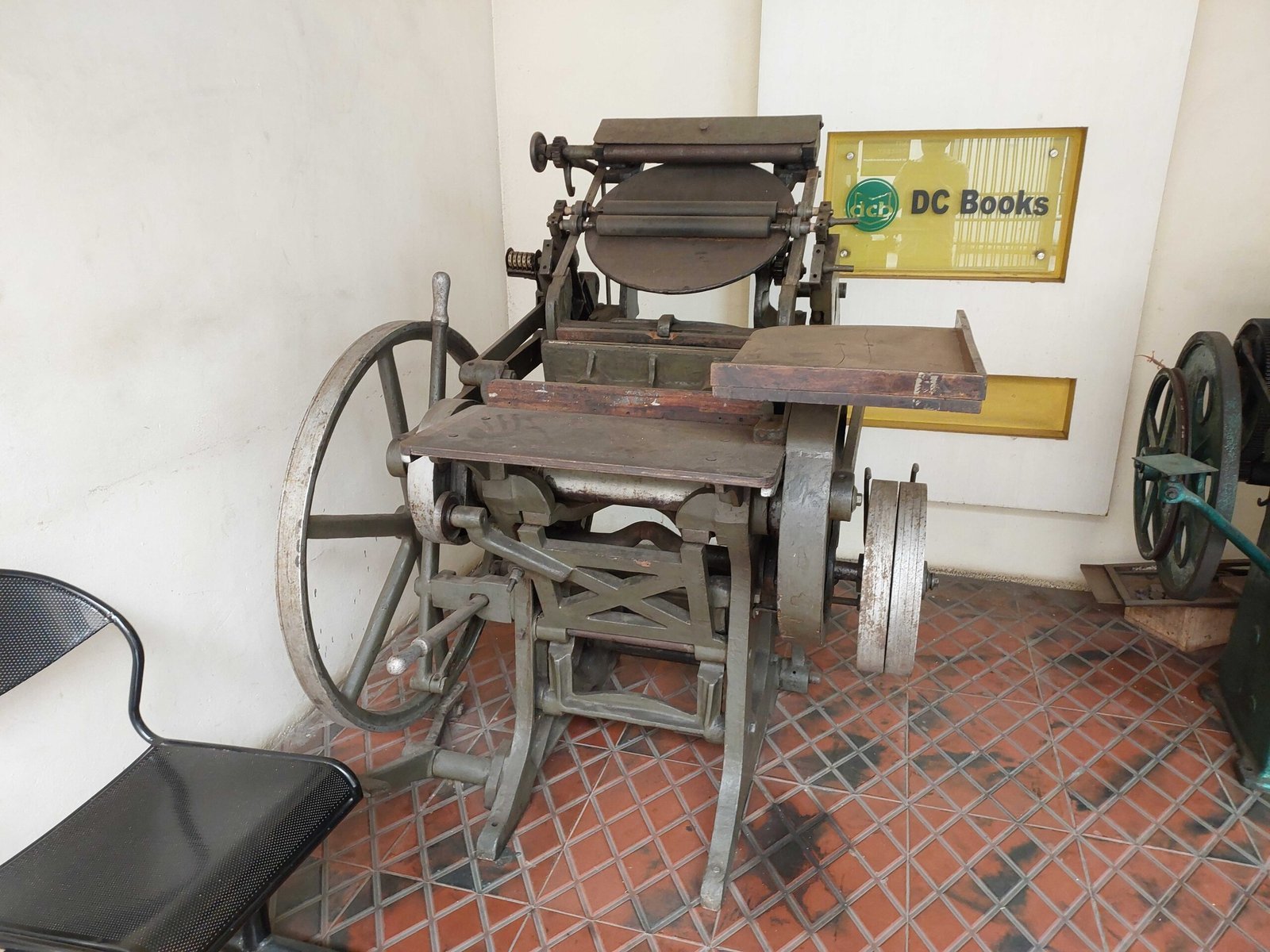
The printing press might seem too familiar to feel revolutionary now. Everyone knows about Gutenberg. But what people forget is just how violently the world resisted it. Though woodblock printing emerged in China during the 7th century, the first bona fide printing press was invented around 1440 in Mainz, Germany by Johannes Gutenberg, changing humanity forever and ushering in the modern era. The machine itself was a masterpiece of mechanical ingenuity for its era.
The reaction from the established world was not applause. German Benedictine abbot Johannes Trithemius thought that printed materials wouldn’t last and believed writings inscribed on parchment were better suited to withstand the test of time. Other critics complained that printed books would lead to everything from information overload to political chaos and would put Europe’s monks out of work, harming their spiritual development.
It’s hard not to laugh at those criticisms now. Information overload. Political chaos from the spread of ideas. Sound familiar? Every critique levelled at Gutenberg’s press has been repeated almost word for word about the internet, about social media, about AI. The fears change their costume. They never really change their character. Invented by Johannes Gutenberg in 1450, the printing press enabled the mass production of books and instigated a new age of enlightenment. Without it, many of the other innovations on this list would have never existed, as those inventors probably wouldn’t have been able to access the knowledge that enabled them to devise their concepts.
The Pattern Behind Every Visionary Invention

Uploaded by Marcus Cyron, CC BY 2.0)
Looking at these twelve inventions, a clear and slightly unsettling pattern emerges. Genius doesn’t wait for its time. It arrives when it arrives. The world then faces a choice: embrace it, ignore it, or destroy it. Far too often, history chose option two or three.
The Antikythera Mechanism vanished under the sea. Da Vinci’s notebooks were scattered and forgotten for centuries. Tesla’s tower was sold for scrap. These weren’t failures of imagination. They were failures of timing, funding, and cultural readiness. Many ideas and invention designs are groundbreaking, and they have the potential to completely change the way we perceive the world and carry out our daily duties. Some inventions are so ahead of their time that they set the path for future generations to build on.
The deepest lesson here might be this: the next revolutionary idea that gets laughed at, underfunded, or quietly shelved could be the one we’re all using a hundred years from now. History keeps proving it. Over and over again, the maddest ideas turn out to be the truest ones. Which of today’s “impossible” technologies do you think will be on this list in the year 2126? Tell us in the comments.

Besides founding Festivaltopia, Luca is the co founder of trib, an art and fashion collectiv you find on several regional events and online. Also he is part of the management board at HORiZONTE, a group travel provider in Germany.
