
For any feedback please reach out to info@festivalinside.com
- 12 Literary Feuds So Intense, They Changed the Course of Literature - August 11, 2026
- 10 Mysterious Disappearances of Famous Figures That Still Puzzle Experts - August 11, 2026
- 10 Foods We Thought Were American But Were Actually Invented Somewhere Else. - August 11, 2026
Long before Hollywood’s studio system locked in formulas for drama and spectacle, a handful of tinkerers and photographers wrestled with bulky cameras in garages and labs. These early innovators captured motion itself, turning fleeting moments into sequences that hinted at stories. Their experiments with exposure, framing, and projection built the raw grammar of film language.
Working outside the spotlight, they solved technical puzzles that freed storytelling from theater’s stage-bound limits. Simple acts like walking or running took on new meaning through their lenses. That groundwork endures in every cut and angle today.[1][2]
Louis Le Prince
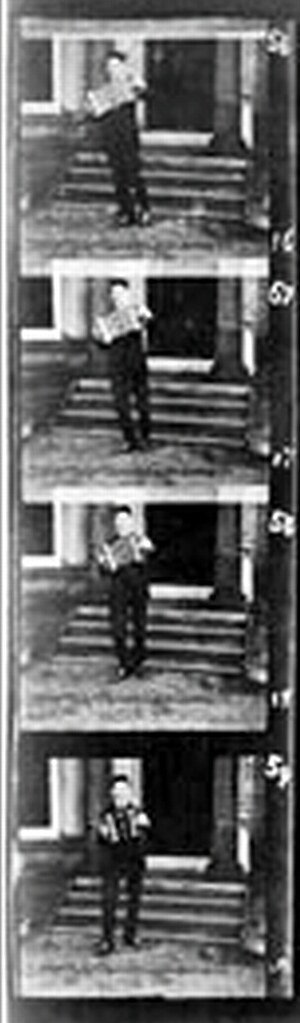
French inventor Louis Le Prince built one of the first cameras to shoot motion on celluloid paper film in 1888. His “Roundhay Garden Scene,” lasting just two seconds, showed family members strolling in a garden near Leeds, England. This predated public showings by Edison or the Lumières, proving a camera could record natural movement without multiple lenses.[3][4]
Le Prince patented a 16-lens camera for smoother footage and filmed street scenes in New York before vanishing mysteriously in 1890. His work demonstrated film’s potential for documenting real life, influencing later narrative uses. Without fanfare, he bridged still photography to moving pictures, setting a practical path for storytellers.[5]
Eadweard Muybridge
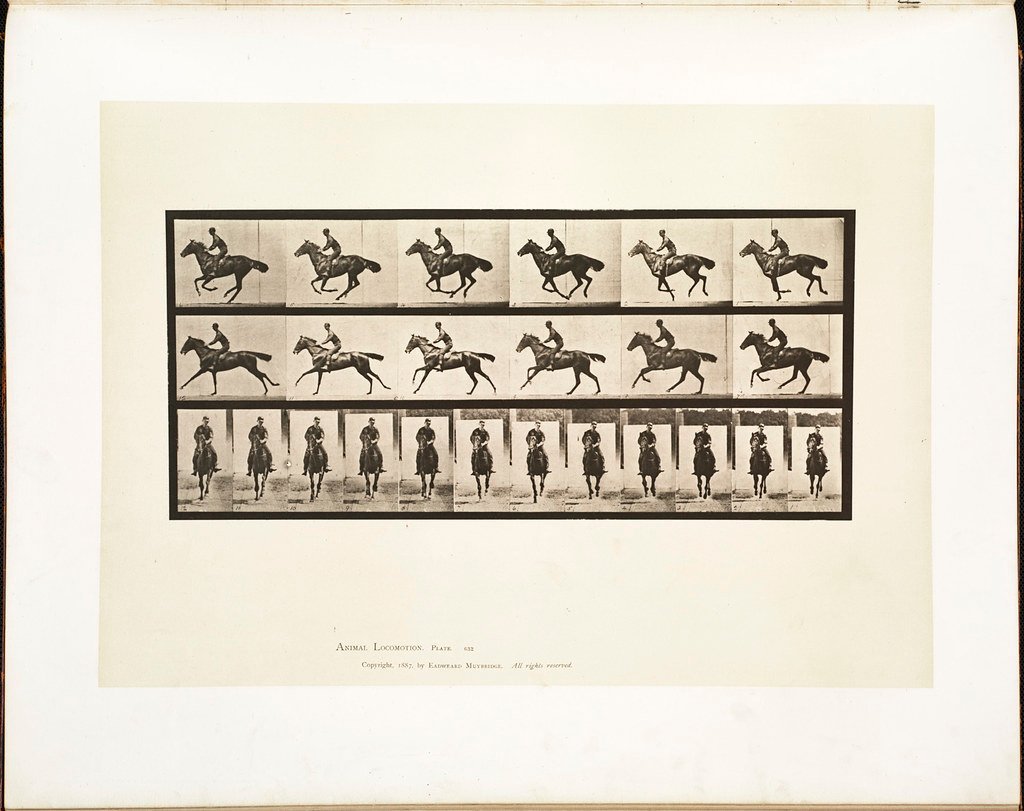
British photographer Eadweard Muybridge settled a bet for railroad magnate Leland Stanford by sequencing 12 cameras to capture a horse in full gallop in 1878. The resulting images revealed all four hooves leaving the ground, shattering artistic assumptions about motion. He projected these as moving pictures via his zoopraxiscope, thrilling audiences with lifelike animation.[2]
Muybridge’s animal locomotion studies produced thousands of frames dissecting human and beast movement. This visual analysis inspired filmmakers to break action into analyzable parts, foundational for editing. His persistence-of-vision lectures laid scientific groundwork for cinema’s illusion of continuous story flow.
Étienne-Jules Marey
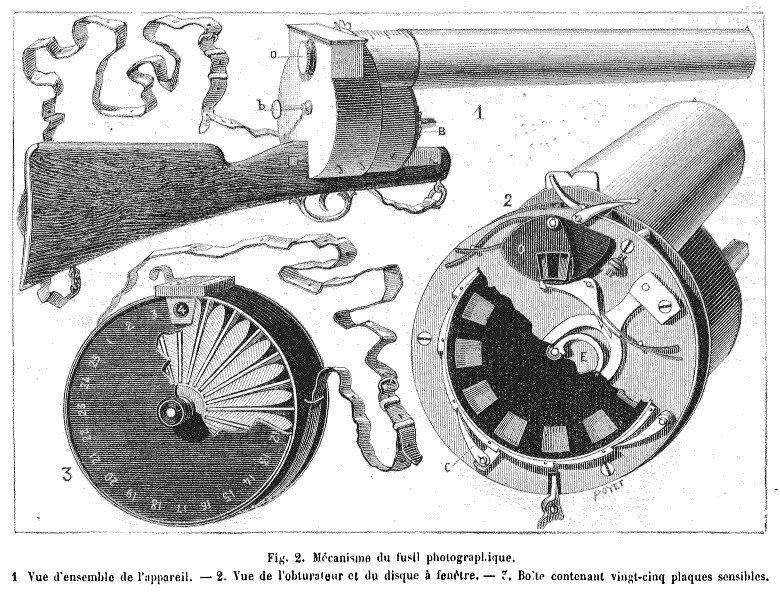
French physiologist Étienne-Jules Marey invented the chronophotographic gun in 1882, a device like a rifle that exposed a rotating plate to 12 images per second from one lens. Unlike Muybridge’s battery of cameras, Marey’s setup superimposed motion phases on single frames, vividly charting bird flight or human gaits. These “time exposures” compressed events, hinting at film’s ability to manipulate time.[6]
Marey’s stationary camera with slotted disks evolved into roll-film systems, directly influencing the Lumières. His scientific drive to visualize unseen motion paved the way for cinematic montage, where slices of time build tension or revelation. Early directors drew from his methods to craft rhythm in stories.
G.W. “Billy” Bitzer
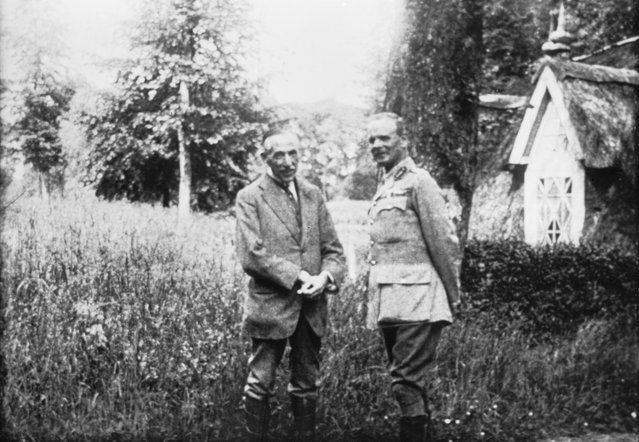
American cinematographer Billy Bitzer joined D.W. Griffith at Biograph Studios around 1908, shooting hundreds of shorts that refined film’s visual vocabulary. He pioneered the iris shot for smooth transitions and backlighting to sculpt depth and mood in scenes. Bitzer’s close-ups captured subtle expressions, pulling viewers into characters’ emotions for the first time.[7][8]
Through films like “The Lonely Villa,” Bitzer used soft focus and matte paintings to enhance realism and fantasy. His collaboration pushed naturalistic lighting over stagey setups, influencing epic works like “Intolerance.” Bitzer’s techniques made the camera a storyteller, not just recorder.
Edwin S. Porter
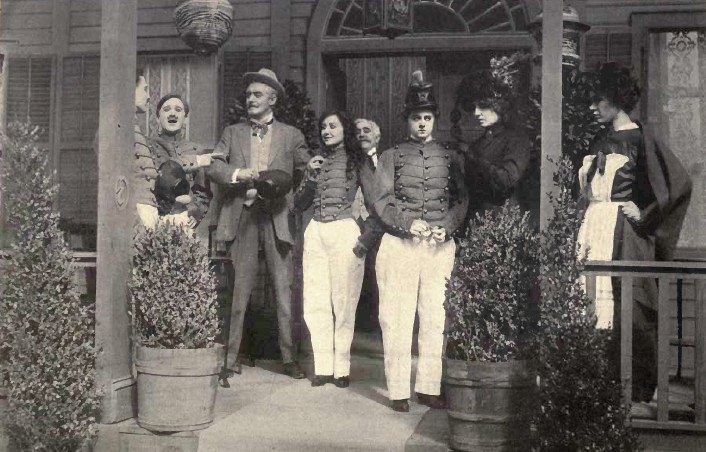
Edwin S. Porter, working for Edison, shot “Life of an American Fireman” in 1903, employing parallel action to show a rescue from inside and outside a burning building simultaneously. This early cross-cutting built suspense, a staple of narrative drive. His “The Great Train Robbery” wove scenes with inserts and point-of-view shots, turning vignettes into cohesive tales.[9]
Porter’s flexible camera placement broke the single-shot norm, allowing geography and causality to guide viewers through plots. He blended actualities with staged drama, expanding film’s scope beyond documentation. These innovations prefigured Hollywood’s continuity editing.
George Albert Smith
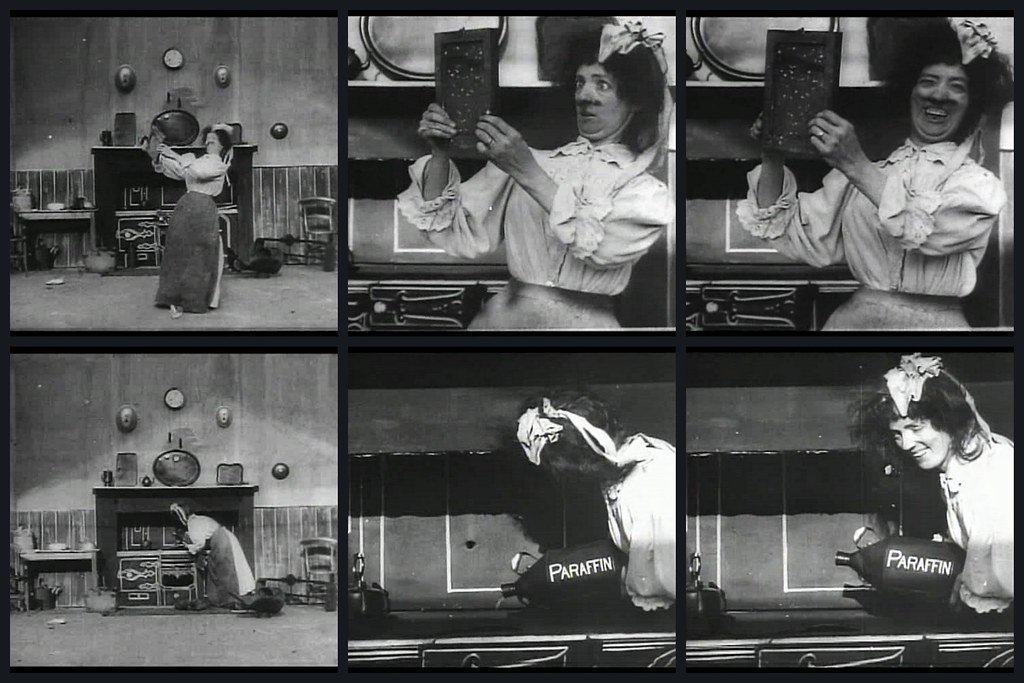
British showman George Albert Smith experimented post-Lumière, creating “As Seen Through a Telescope” in 1900 with extreme close-ups that distorted and clarified a distant scene. His “Mary Jane’s Mishap” used reverse motion for comedic cause-effect, delighting audiences with impossible logic. Smith’s mask matte technique inserted close details into wider shots seamlessly.[9]
These tricks made narrative clarity intuitive, teaching viewers to read inserts as part of the story world. Smith’s films bridged trick films to drama, influencing global pioneers. His subtle manipulations enriched film’s expressive power before studios standardized it.
The Lasting Foundations
These behind-the-scenes trailblazers turned mechanical curiosities into vessels for human tales, all before assembly-line studios took over. Their camera rigs and darkroom hacks birthed cuts, angles, and illusions that define editing suites today. Modern blockbusters trace lines back to those grainy experiments.
Without patents or premieres, they handed filmmakers a toolkit for wonder. Cinema’s story engine still hums on their quiet revolutions.[10]

Christian Wiedeck, all the way from Germany, loves music festivals, especially in the USA. His articles bring the excitement of these events to readers worldwide.
For any feedback please reach out to info@festivalinside.com
