

For any feedback please reach out to info@festivalinside.com
- 15 Forgotten TV Show Theme Songs That Are Still Incredibly Catchy - August 31, 2026
- Every Masterpiece Holds a Secret Story of Its Creation Within Its Depths. - August 31, 2026
- 10 Groundbreaking Scientific Discoveries That Revolutionized Daily Life - August 31, 2026
Rock and roll burst onto the scene in the early 1950s, pulling together threads from rhythm and blues, country, gospel, and boogie-woogie. This fusion happened mostly in the American South and Midwest, where Black and white musicians traded influences after World War II. Young people craved something fresh, and radio stations started spinning records that mixed raw energy with catchy hooks.
Disc jockeys played a big role too, bridging divides between audiences. What started as club music and jukebox favorites soon crossed racial lines. Cities like Memphis and Cleveland became hotbeds for this sound that pulsed with rebellion and joy.[1][2]
Alan Freed Coins the Term “Rock and Roll”
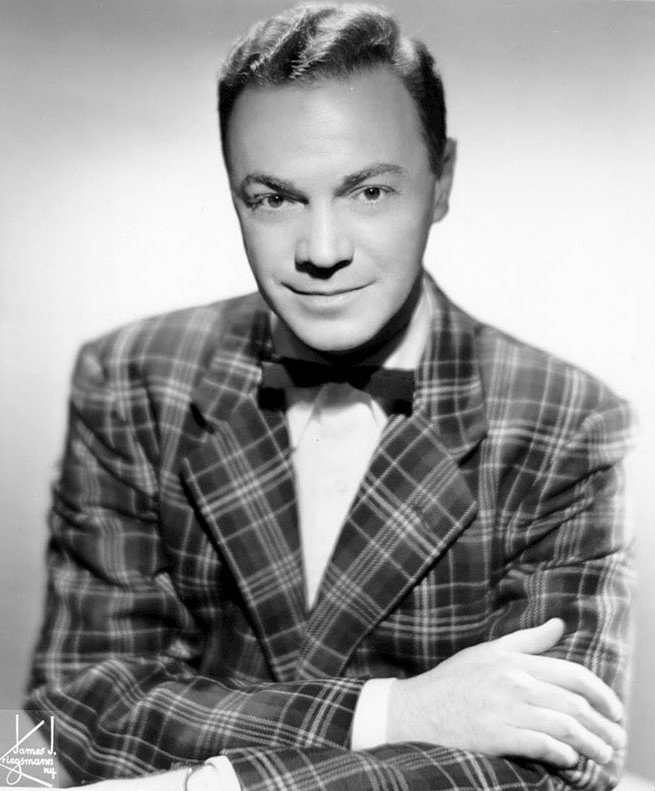
Cleveland DJ Alan Freed began using “rock and roll” on his radio show in 1951. He played rhythm and blues tracks for mostly white teenage listeners, helping the music gain a name. This era marked the shift from niche sounds to something mainstream.[1][3]
Freed’s Moondog Coronation Ball in 1952 drew thousands, sparking riots but proving the draw. His promotion made the genre visible beyond Black communities. It set the stage for records to top charts and influence youth culture nationwide.[4]
“Rocket 88” by Jackie Brenston and Ike Turner
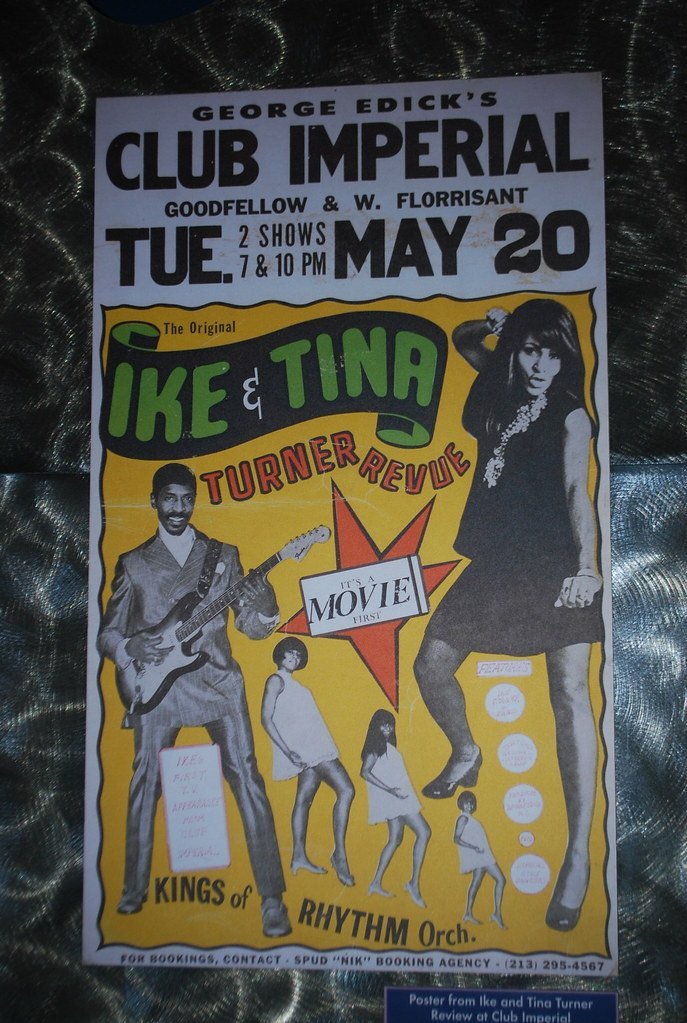
In 1951, Jackie Brenston recorded “Rocket 88” with Ike Turner’s Kings of Rhythm at Sam Phillips’ Memphis studio. The fuzzy guitar sound came from a damaged amp, giving it a gritty edge. This track topped the R&B charts and many call it the first rock and roll record.[1][5]
Released on Chess Records, it blended blues riffs with uptempo drive. The 1950s post-war boom let such innovations spread fast. Its success showed how electric guitars could propel a new beat forward.[6]
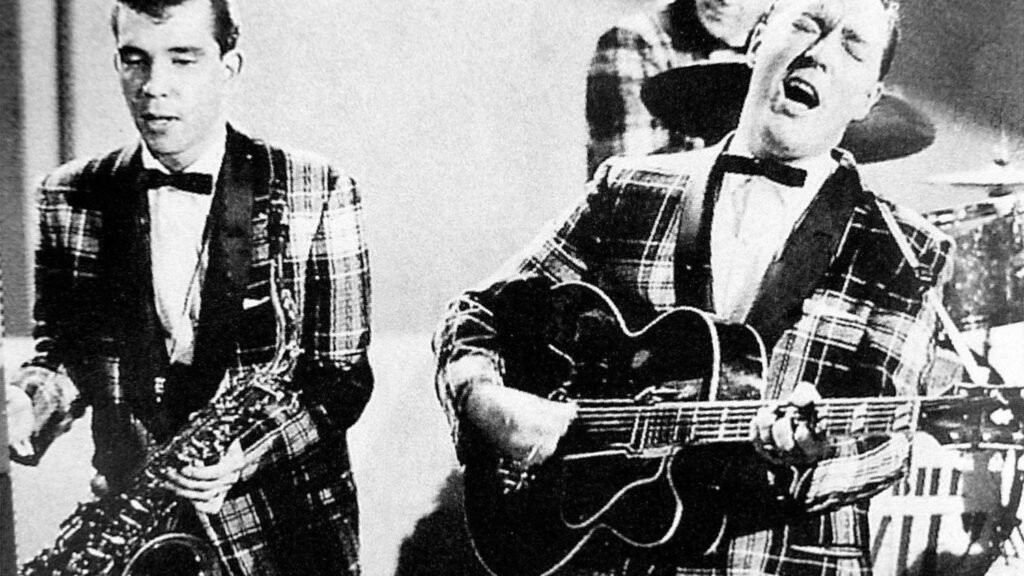
Bill Haley and “Rock Around the Clock”
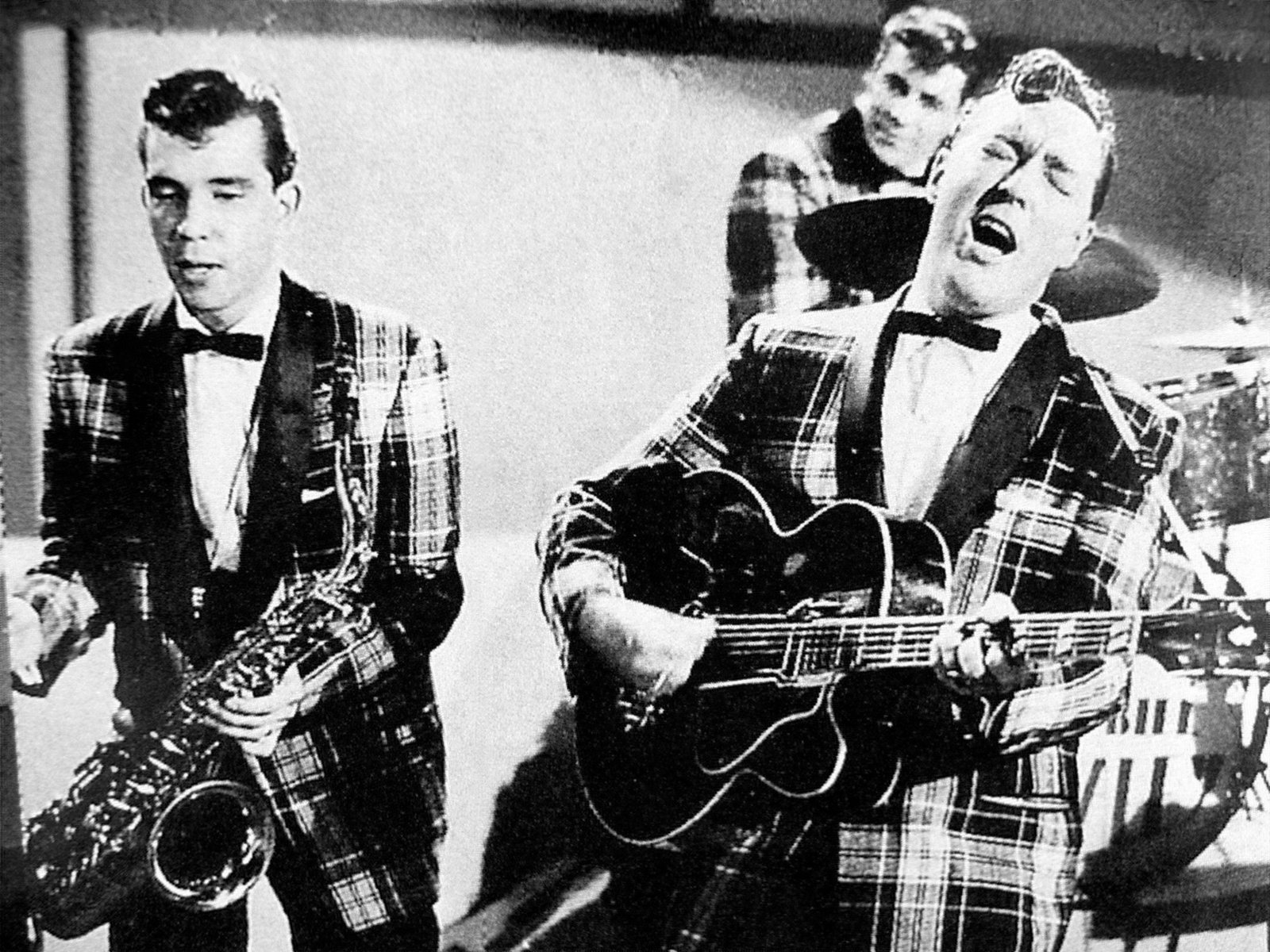
Bill Haley and His Comets cut “Rock Around the Clock” in 1954, landing it as the first rock and roll song to hit number one on pop charts. The upbeat rhythm mixed country twang with R&B swing. Featured in the film Blackboard Jungle, it exploded among teens.[1]
This mid-1950s moment captured postwar optimism and dance craze. Haley’s clean image eased white parents’ fears. It paved the way for rock to dominate jukeboxes and sock hops everywhere.[7]
Elvis Presley’s Sun Sessions
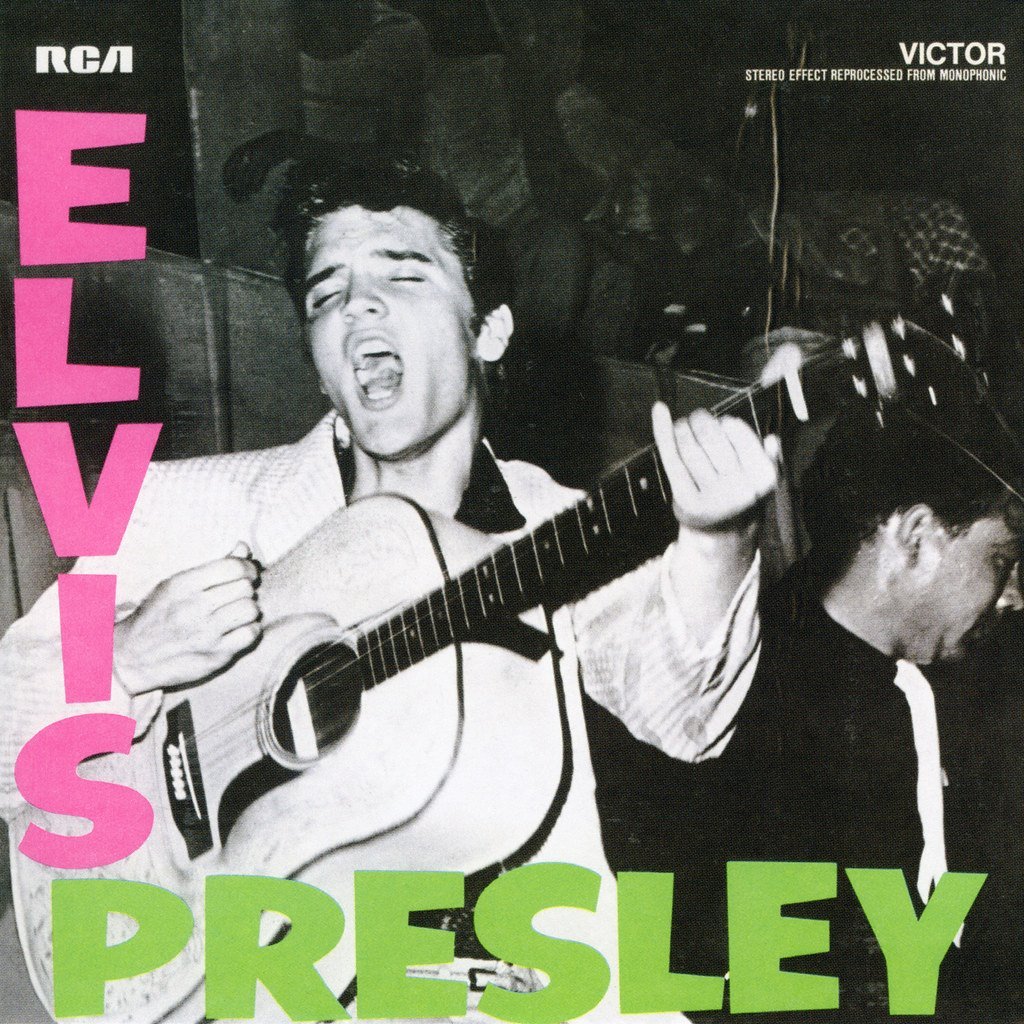
Elvis Presley recorded “That’s All Right” on July 5, 1954, at Sun Records in Memphis. Sam Phillips captured Elvis blending gospel fire with blues and country. Local DJ Dewey Phillips spun it that night, igniting phone lines with calls.[1]
These 1954 sessions birthed hits like “Blue Moon of Kentucky.” Elvis’s voice and hips crossed musical and racial barriers. By 1956, he ruled TV and charts, making rock a national phenomenon.[8]
His appeal lay in raw charisma that teens adored. Sun’s raw sound influenced countless follow-ups.
Chuck Berry’s Guitar Mastery
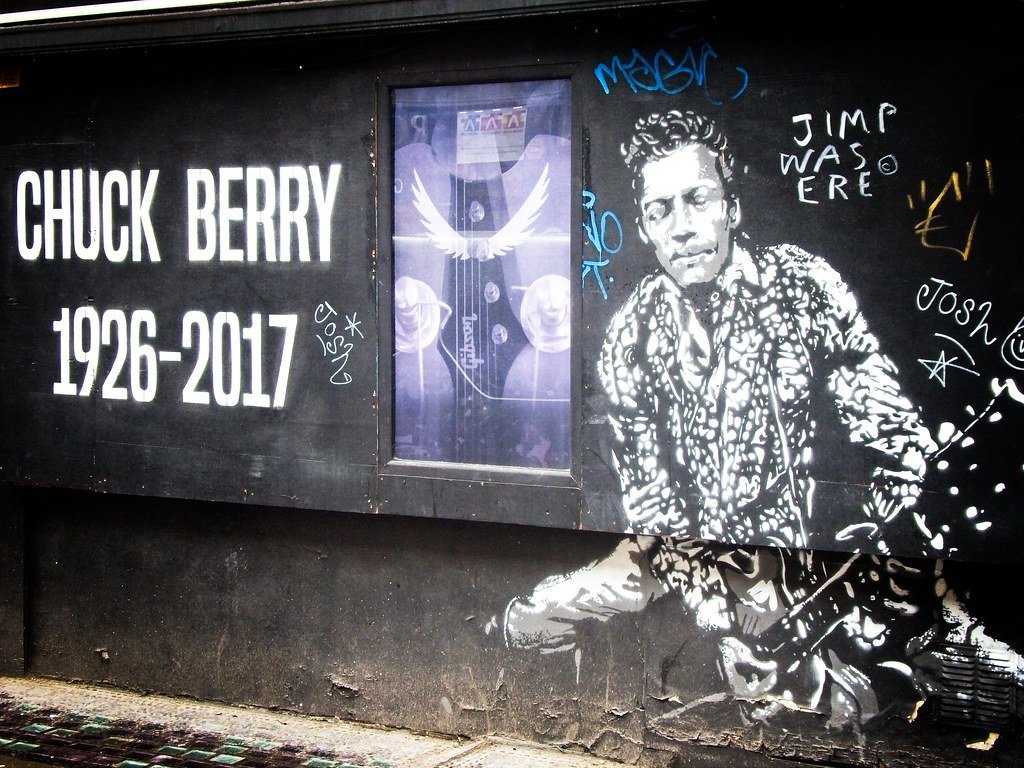
Chuck Berry hit with “Maybellene” in 1955, his guitar licks defining rock’s riff style. From St. Louis, he drew from bluesmen like T-Bone Walker. Chess Records pushed his storytelling songs about cars and girls.[9]
In the mid-1950s, Berry’s duck walk thrilled audiences. His clever lyrics gave rock smart edge. Artists from the Beatles to the Stones later covered him, cementing his blueprint role.[10]
Little Richard’s Explosive Energy
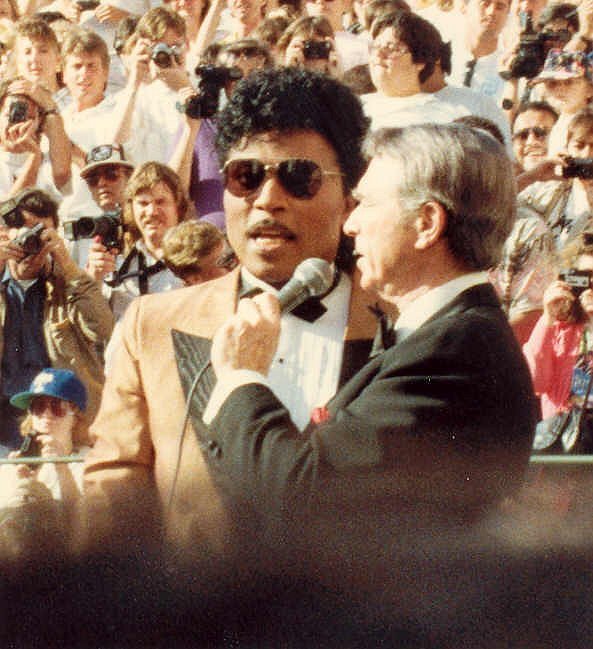
Little Richard unleashed “Tutti Frutti” in 1955 on Specialty Records. His piano pounding and whoops brought gospel fervor to rock. The 1950s South fueled his flamboyant showmanship.[11]
Producer Robert “Bumps” Blackwell cleaned up his wild lyrics for radio. Richard’s hits like “Long Tall Sally” inspired peers. His influence shaped soul and later glam rock.[12]
He bridged Black R&B and white pop audiences boldly.
Jerry Lee Lewis’s Piano Fire
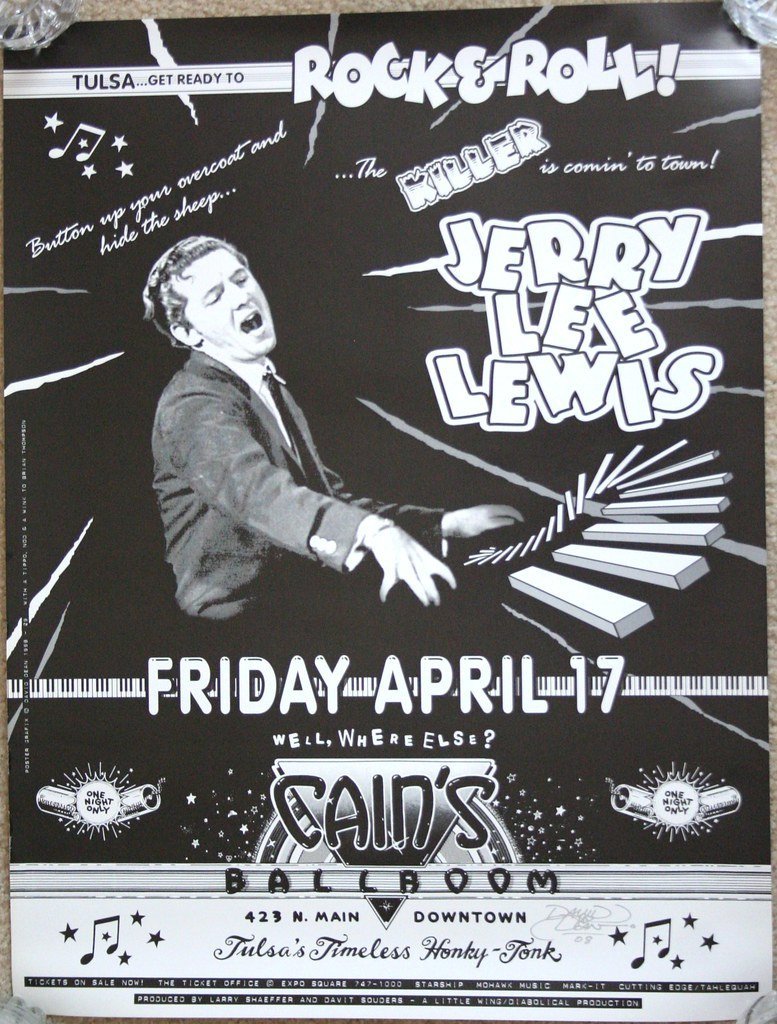
Jerry Lee Lewis pounded “Whole Lotta Shakin’ Goin’ On” in 1957 at Sun Records. His Louisiana roots mixed sacred and profane in frenzied style. The late 1950s saw his TV appearances stun viewers.[5]
Scandals later hit, but his raw power endured. Lewis pushed rock’s boundaries with danger. He influenced everyone from the Stones to Bruce Springsteen.[10]
Rock and Roll Lays the Foundation for Modern Music

These early bursts created a template for electric guitars, backbeats, and youth anthems. By the late 1950s, rock evolved into broader forms like surf and British Invasion. It shattered old divides, birthing pop, hip-hop precursors, and indie scenes today.
The 1950s innovations still echo in stadium shows and streaming hits. Rock and roll proved music could unite and disrupt. Its spirit keeps evolving, a endless road of sound.[2]

Christian Wiedeck, all the way from Germany, loves music festivals, especially in the USA. His articles bring the excitement of these events to readers worldwide.
For any feedback please reach out to info@festivalinside.com
