
Something strange is happening in California right now. The Golden State, long synonymous with tech innovation and billionaire success stories, finds itself at the center of a political firestorm that has some of its wealthiest residents openly threatening to leave.
Silicon Valley’s wealthiest residents are once again threatening to leave California, this time over a proposed state wealth tax that tech founders warn could fundamentally reshape where innovation and capital call home. The controversy has ignited fierce debates about economic justice, entrepreneurship, and whether the state that gave birth to Google, Meta, and countless tech unicorns is about to lose its magic touch. Let’s be real, when billionaires start shopping for moving vans, something big is in the air.
What This Tax Actually Means for Silicon Valley’s Elite
The proposal, backed by the Service Employees International Union–United Healthcare Workers West, would impose a one-time 5% tax on the assets of California residents worth more than $1 billion. That means roughly around 200 people would be affected by this measure. Think about it this way: if you had a fortune valued at twenty billion dollars on January first, you’d suddenly owe the state a billion, though a resident with $20 billion in net worth as of the valuation date would owe a one-time tax of $1 billion.
Here’s where it gets controversial. A major reason that tech investors and executives are united in opposing the effort is the concern that the tax would apply to unrealized gains. That means startup founders with a net worth of over $1 billion based on the paper value of their private stock would have to pay tax on their wealth even though it’s illiquid. Imagine owning a company valued at billions but having no actual cash to pay the tax bill. You’d be forced to sell chunks of your own business just to satisfy Sacramento’s demands.
Supporters say the revenue could help offset federal funding cuts for healthcare. Medi-Cal, California’s Medicaid program, faces federal funding cuts, according to supporters of the proposal. The proposed tax could raise tens of billions of dollars, according to the state’s Legislative Analyst’s Office, although estimates vary due to uncertainty over billionaires’ responses; with most of the revenue earmarked for health care and the rest for education or food assistance.
The Big Names Making Exit Plans

Billionaires like Google co-founder Larry Page and venture capitalist Peter Thiel are reportedly leaving California because of a proposed wealth tax. These aren’t idle threats from fringe players. Page could face a roughly $7-8 billion tax bill and Thiel around $1 billion, based on recent estimates of their net worth. Those are numbers that get anyone’s attention, regardless of net worth.
The personal stakes here are massive. Thiel, who owns a home in the Hollywood Hills, is already scouting office locations for his investment firm outside of California. Meanwhile, Page has reportedly discussed leaving by year’s end and has filed documents to incorporate three of his businesses in Florida. This isn’t just talk anymore. Companies are being restructured, offices are being scouted, and the logistics of departure are being worked out in real time.
Palmer Luckey, founder of defense tech startup Anduril, has been particularly vocal about his frustrations. Luckey wrote on X that he made money from his first company, paid hundreds of millions of dollars in taxes on it, used the remainder to start a second company that employs thousands of people and now has to somehow come up with billions of dollars in cash. He claimed the tax would force founders to sell huge chunks of their companies to pay for what he described as fraud, waste and political favors.
When Does This Actually Kick In?

If the measure qualifies for the November ballot and is approved by voters, it would apply retroactively to anyone who lived in California as of Jan. 1, 2026. That’s January first of this year. The retroactive nature of this proposal is what’s sending shockwaves through the tech community right now.
It’s hard to say for sure, but the timing creates a uniquely stressful situation. Wealthy residents who want to avoid the tax would’ve needed to establish residency elsewhere before the new year began. California will require around 875,000 signatures before placing the initiative on the ballot. The measure needs to gather these signatures to qualify for voting in November. Even if it makes the ballot, it still needs voter approval.
What makes this particularly nerve-wracking is the uncertainty. Billionaire investor Vinod Khosla wrote on X late last month that even people who don’t expect this initiative to pass are still planning to leave because there will be another one is the argument. And California will lose its most important tax payers and net off much worse. The fear isn’t just about this specific tax passing. It’s about what comes next.
The Political Battlefield Takes Shape
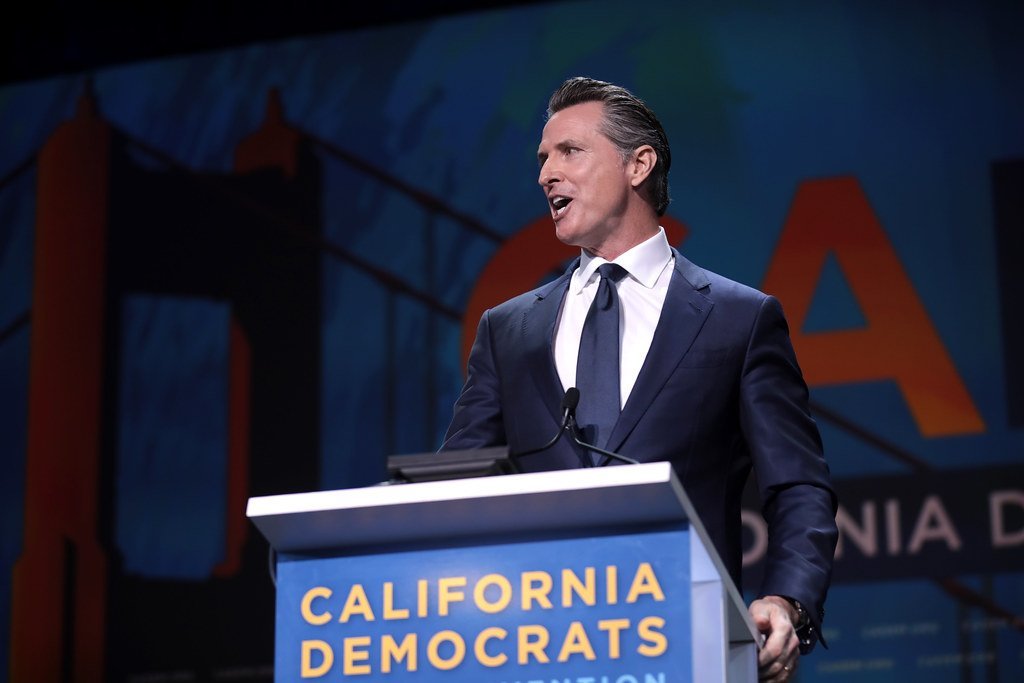
Governor Gavin Newsom finds himself in an interesting position. Gavin Newsom voiced his opposition to the wealth tax. Speaking at The New York Times DealBook conference, Newsom cautioned against panic while acknowledging the underlying tensions, saying it’s not something to be panicked about, but it’s part of the broader concern and narrative that’s developed in this country of the haves and have-nots, not just income inequality, but wealth inequality.
Meanwhile, Democratic Representative Ro Khanna, who represents Silicon Valley in Congress, has taken a different stance entirely. Democrat Rep. Ro Khanna has embraced a wealth tax in his home state of California, and his longtime allies in Silicon Valley are now threatening to abandon him. His support has caused serious rifts with former allies in the tech world.
Matt Mahan, the Democratic mayor of San Jose, California, came out against a proposed ballot measure that would impose a one-time 5% tax on billionaires living in the state. Mahan said in a series of X posts on Monday that the initiative would end up costing the majority of California residents, writing that we need a rising economic tide to lift all boats, not a political plan that will sink California’s innovation economy. Even liberal politicians from tech-heavy regions are pushing back.
The Ripple Effect Nobody’s Talking About

Silicon Valley startups ironically follow the herd. Once enough respected companies/founders establish a pattern, other startups will follow, even if the wealth tax does not apply to them yet. This is the part that worries me most. Even founders who aren’t billionaires yet might start questioning whether California is the right place to build their next venture.
The ecosystem effect could be devastating. California’s advantage has always been more than just weather and geography. It’s been about the network effects of having so many talented engineers, investors, and entrepreneurs concentrated in one place. Once that starts to fragment, it’s hard to put back together. Texas has been aggressively courting tech companies with no state income tax. Florida offers similar advantages plus better weather for those tired of California wildfires.
Mahan wrote on Monday that driving billionaires out of state might feel good in the short run but working people, as is almost always the case, will pick up the tab for this political ploy. The people who lose in the long run are California families who will be asked to foot more of the bill for government services and infrastructure. There’s a pragmatic argument here that goes beyond ideology.
The Constitutional Minefield Ahead

Let’s say this measure makes it onto the ballot and voters approve it. The legal battles would just be beginning. If the 2026 Billionaire Tax Act is enacted, it will likely face numerous legal challenges.
The tax would be retroactive because the date for determining California residency, the tax obligation date of January 1, 2026, precedes when the initiative can be enacted after the November 2026 election. Although courts have applied a rational basis test to some retroactive tax legislation, the U.S. Supreme Court has indicated that it may not apply when considering the creation of a wholly new tax. Taxpayers could argue that the retroactive aspect of the proposed Billionaire Tax would be violative of due process given that California does not have and has never had a wealth tax.
Beyond retroactivity concerns, there are constitutional questions about the Dormant Commerce Clause. Taxpayers could argue that the new tax would fail the Complete Auto test because worldwide assets would be subject to the tax. Additionally, taxpayers could argue that this tax is not fairly apportioned, as the tax could reach wealth generated outside California. The billionaires affected by this tax can afford teams of constitutional lawyers, and they would have every incentive to fight this in court for years.
What Economists and Professors Are Saying
Not everyone thinks the exodus threats are credible. San Francisco State University Labor professor John Logan believes that if it happens, only a small number of billionaires would leave. Most tech billionaires who could easily afford to pay this 5-percent one-off tax are not going to upend their lives, move to Austin, Texas, move to Florida, move to other parts of the country, given all the advantages they enjoy.
There’s also the practical challenge of actually relocating to avoid California’s notoriously aggressive tax agency. California tax authorities don’t just take your word for it when you say you’ve moved. They look at where your bank accounts are, where you vote, where your kids go to school, where your investments are held. Moving to avoid this tax would require genuine life upheaval, not just buying a condo in Miami and claiming you live there now.
Supporters of the tax argue it’s simply asking the ultra-wealthy to contribute their fair share. Omar Ocampo, a researcher at the left-leaning Institute for Policy Studies, told CBS News that the billionaire class had their wealth nearly triple in the last six years, and a one-time wealth tax will only put a 5% constraint on their wealth accumulation. It will not significantly impact their lives, their consumption or spending habits.
The Cultural War Underneath It All

This debate has become about much more than tax policy. David Sacks, the Trump White House’s crypto czar, wrote in a post on X this week that after blindly funding the Left for years, Silicon Valley is finally realizing what time it is. Dinner time. And they’re on the menu. The rhetoric has gotten increasingly hostile on both sides.
The political realignment happening in Silicon Valley is remarkable. Republicans have been making increasing inroads in Silicon Valley, home to a number of tech billionaires who have traditionally leaned Democratic. Tech CEOs this year have flocked to the White House to curry the favor of President Donald Trump, who has placed tech leaders in roles within his administration. What was once a reliably blue political stronghold is showing cracks.
Billionaire investor Bill Ackman echoed those concerns, calling California on a path to self-destruction if the measure moves forward. These aren’t just policy disagreements anymore. They’re existential questions about California’s future trajectory and whether the state can maintain its special role as America’s innovation engine while simultaneously pursuing aggressive wealth redistribution policies.
Can California Really Afford to Lose Its Tax Base?

Here’s the thing: California’s tax system is already incredibly dependent on its wealthiest residents. The state has some of the most progressive tax brackets in the nation, meaning the top earners pay a disproportionately large share of total revenue. California billionaires, like all those earning money in the state, currently pay state taxes on their annual income. How billionaires respond to a new wealth tax could indirectly reduce their income tax payments. For example, it is likely that some billionaires decide to leave California. The income taxes they currently pay to the state would go away with their departure.
The irony is cruel. The state hopes to raise tens of billions from this wealth tax to plug budget holes, particularly in healthcare. Yet if even a modest percentage of targeted billionaires relocate permanently, California could lose far more in ongoing annual income tax revenue than it gains from the one-time wealth tax. The math might not work out the way proponents hope.
California would likely raise tens of billions of dollars from the wealth tax, according to a Dec. 11 analysis by the state’s nonpartisan Legislative Analyst’s Office. However, the group noted that quantifying the exact amount potentially raised by the tax is difficult because it’s unclear what actions billionaires might take to reduce their tax burden, and because much of their wealth is based on stock prices, which continuously fluctuate. There’s genuine uncertainty about whether this experiment would even accomplish its stated fiscal goals.
Where Innovation Goes Next

The bigger story might be about the future geography of American innovation. For decades, if you wanted to start a tech company, you came to California. That’s just what you did. The talent was here, the venture capital was here, the ecosystem was here. That’s changing regardless of this wealth tax.
Companies have already been trickling out to other states for years. Tesla moved to Texas. Oracle relocated to Austin. The pandemic proved that remote work functions fine for many tech roles, which weakens California’s geographic lock on talent. This wealth tax proposal might accelerate a trend that was already underway rather than creating something entirely new.
The question is whether California loses just some billionaires or whether it loses Silicon Valley’s gravitational pull as the undisputed center of the tech universe. Those are very different outcomes with very different implications for the state’s long-term economic health and cultural identity.
What Happens Next

Right now, the initiative was submitted in October, but it will need to earn 874,641 signatures, about 4% of registered voters in California, to qualify for the November ballot. If it appears on the ballot, it will need a simple majority to pass. The signature gathering process will be the first major test of whether this has genuine grassroots support or whether it’s mainly being pushed by union leadership.
Assuming it makes the ballot, the campaign will be brutal. Proponents will frame it as finally making billionaires pay their fair share to support healthcare for millions of vulnerable Californians. Opponents will portray it as economic suicide that drives job creators out of state and ultimately hurts working families. Both sides will spend enormous sums trying to sway voters.
The retroactive provision creates immediate pressure. Wealthy residents who fear it might pass can’t wait until November to decide whether to relocate. They needed to make that choice months ago. That’s why we’re already seeing billionaires making preliminary exit plans and filing incorporation papers in Florida despite the measure not yet being on the ballot.
The Broader American Experiment
California isn’t operating in a vacuum here. Other states are watching this closely. If California successfully implements a wealth tax and it doesn’t trigger a mass exodus, expect progressive states like New York, Illinois, and Massachusetts to consider similar measures. If it backfires spectacularly and billionaires flee while revenue projections fall short, it becomes a cautionary tale that kills the wealth tax movement nationwide for a generation.
California is the ideal place to put in place a billionaire tax because it is particularly billionaire heavy. California today has 12% of the US population but 28% of all US billionaire wealth. The collective wealth of California billionaires surged from $300 billion in 2011 to $700 billion in 2019 and then to $2190 billion by October 17, 2025. California’s unique concentration of billionaire wealth makes it both the best candidate for this policy experiment and the place where failure would be most costly.
European countries have tried various forms of wealth taxes with mixed results. France famously implemented and then largely repealed its wealth tax after wealthy residents relocated to London and Switzerland. Sweden abolished its wealth tax after concluding the economic costs outweighed the revenue benefits. Switzerland and Norway maintain wealth taxes that function reasonably well, though their rates are far lower than California’s proposed 5%.
The fundamental tension is whether you can have both extreme wealth concentration and aggressive wealth taxation in a mobile, globalized economy. California is about to test whether American federalism allows one state to buck national trends on taxation when wealthy residents can simply drive a few hours to Nevada or hop on a plane to Texas.
What makes this particularly fascinating is nobody really knows what will happen. Economic models can only tell us so much. Human behavior, especially among the ultra-wealthy when facing existential tax threats, doesn’t always follow predictable patterns. Some billionaires might stay purely out of principle or because they genuinely love California and don’t want to uproot their families. Others might leave despite having deep ties because a billion-dollar tax bill focuses the mind wonderfully.
The next eleven months will reveal whether California’s progressive ambitions are compatible with maintaining its economic dominance, or whether the state is about to learn some very expensive lessons about the limits of taxing mobile wealth in the twenty-first century. Either way, the outcome will reshape American politics and policy for years to come. Did anyone expect the fight over healthcare funding would turn into an existential question about Silicon Valley’s future? What do you think will happen? Share your thoughts in the comments.