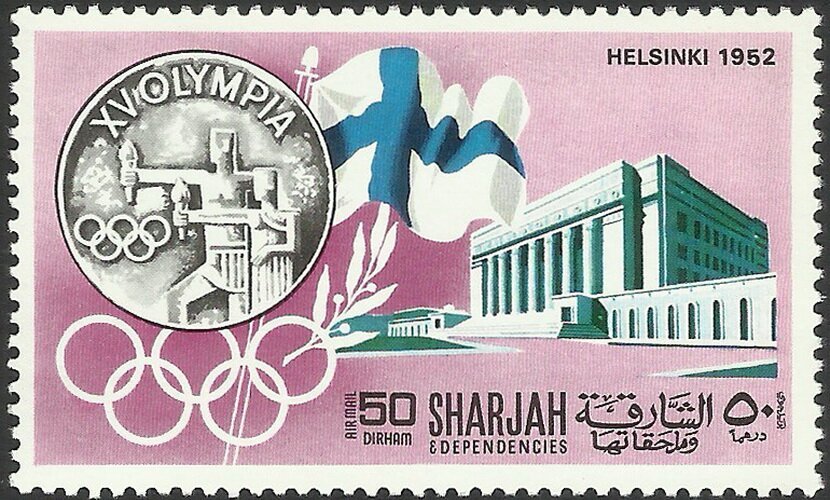
Myth and Might in Olympia (Image Credits: Upload.wikimedia.org)
Nearly 3,000 athletes tested their limits on Italy’s icy slopes and rinks during the Milan-Cortina Winter Olympics.[1][2]
Myth and Might in Olympia
The term “Olympics” traces its roots to ancient Greece, where mythology and athletics intertwined at a revered site. Greek legends described gods descending from Mount Olympus to mingle with mortals in the town of Olympia, a designated sanctuary.[1] Scholars describe Olympia as a sacred space dedicated to Zeus, hosting the inaugural games around 776 B.C.E.[3]
Competitors in those early contests stripped bare for events, endured harsh penalties like corporal punishment for sprint false starts, and claimed only silver or bronze awards – no gold circled necks back then.[1] These quadrennial festivals blended religious rites with physical prowess, cementing the name’s link to divine heights. The games persisted for roughly 1,000 years before fading amid the Roman Empire’s collapse and the ensuing Dark Ages.
Resurrection Through the Ages
Interest flickered back during Europe’s Renaissance, fueled by rediscovered texts and digs at Olympia. By the late 1500s and early 1600s, organizers revived the “Olympic Games” label – sometimes spelled “Olympick” – for various sports gatherings.[1]
England’s Cotswold Olimpick Games, launched in 1612, endure today with quirky tests like tug-of-war and shin-kicking. Greece saw the Zappas Olympics in the late 1800s, bankrolled by philanthropist Evangelis Zappas. Historians debate the modern spark: some point to Zappas’s 1856 plea to King Otto, others to Pierre de Coubertin’s 1894 push, culminating in Athens’s 1896 edition.[2]
- Cotswold Olimpick Games: Ongoing since 1612 in England.
- Zappas Olympics: Sporadic events in late-19th-century Greece.
- First modern Olympics: 1896 in Athens, Greece.
- Etymological root: Greek Olympikos, tied to Olympia and Mount Olympos.[3]
Ownership Disputes Over an Ancient Term
Even today, the word sparks contention, particularly around trademarks. The U.S. Olympic & Paralympic Committee pursued cases against Puma in 2021 over “PUMA TOKYO 2021” and “PUMA PARIS 2024” filings, and against Logan Paul’s Prime Hydration in 2024 for ad usage – both efforts failed in court.[4] Matthew Llewellyn, co-director of California State University, Fullerton’s Center for Sociocultural Sport and Olympic Research, called such claims an overreach: “You certainly can’t own a word that was first used thousands of years ago by the Greeks.”[1]
These battles underscore the challenge of claiming an term steeped in millennia-old heritage. Neither the International Olympic Committee nor the U.S. group responded to inquiries on the matters.
Hearing ‘Olympics’ Changes Everything
For four-time Olympian Ashley McKenzie, the word ignited a lifelong pursuit. At 11, a playground brawl over a Pokémon card exposed him to judo when his foe flipped him with a textbook throw. He tracked the boy to a dojo, where a coach dangled Olympic dreams.
“The word ‘Olympics’ to me… opened my eyes to new doors and new things,” McKenzie recalled. “When I first heard it, it gave me hope.”[2] A decade later, he stepped onto the 2012 London stage for Great Britain. National support washed over him regardless of background or style. “Everyone, the whole country, got behind me,” he said, “and that’s when I knew it was so nice to be an Olympian.”[1]
Key Takeaways
- “Olympics” stems from Olympia, Greece’s sacred Zeus site near mythical Mount Olympus.
- Ancient games launched in 776 B.C.E.; modern form in 1896 after fits-and-starts revivals.
- To athletes like McKenzie, it promises unity, hope, and transcendence.
The “Olympics” endures as a bridge from godly myths to mortal grit, reminding us of shared human potential. What does the word evoke for you? Share in the comments.