

For any feedback please reach out to info@festivalinside.com
- 20 Song Intros That Hook You Instantly - September 19, 2026
- 15 Historical Myths That Turned Out to Be False - September 19, 2026
- 10 Inventions That Changed the World in Unexpected Ways - September 19, 2026
There is something almost electric about standing before a great building. It stops you in your tracks. Your jaw drops a little. You forget, briefly, what you came there to do. Architecture is the only art form you can walk inside, and in the United States, the variety of what you can walk inside is staggering.
From misty Pennsylvania forests to the electric skylines of New York, American architecture tells the story of a nation that never quite agreed on who it was – and that tension, honestly, is what makes it so fascinating. A country built from dozens of cultures, philosophies, and ambitions was always going to produce buildings that argue with each other. Let’s dive in.
1. Fallingwater – Mill Run, Pennsylvania
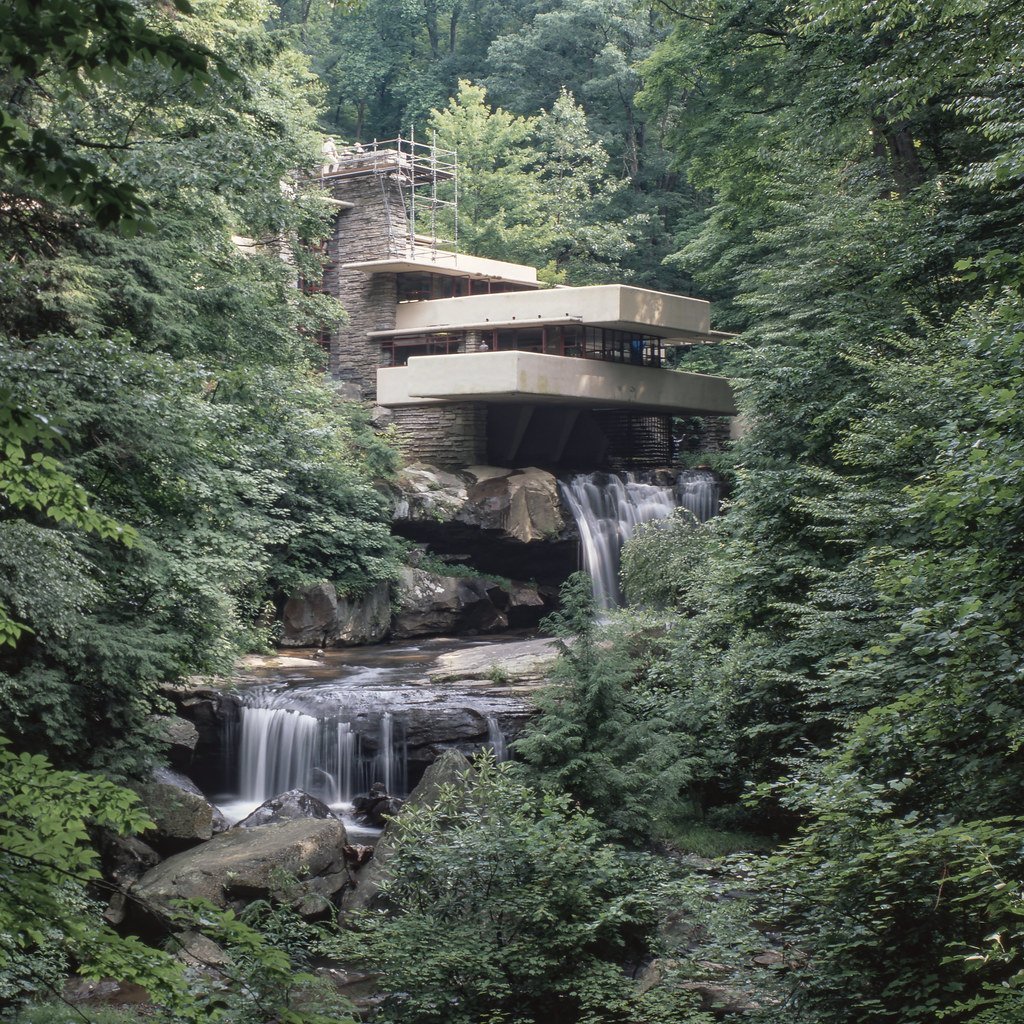
Let’s start with what many consider the single greatest building ever created on American soil. Fallingwater is widely regarded as Frank Lloyd Wright’s crowning achievement in organic architecture and was named the American Institute of Architects’ “best all-time work of American architecture.” I think that title is entirely earned. There is simply nothing else like it.
Designed in 1935 for the Kaufmann family, owners of Pittsburgh’s largest department store, Fallingwater best exemplifies Wright’s philosophy of organic architecture: the harmonious union of art and nature. Kaufmann and his wife had expected a weekend house offering views of a favourite waterfall, but Wright’s plans situated the house directly above the waterfall. Wright argued he wanted to bring the falls into the family’s everyday life, so that the Kaufmanns would always be able to hear the movement of the water.
Cantilevered terraces of local sandstone blend harmoniously with the rock formations, appearing to float above the stream below. The first floor entry, living room, and dining room merge to create one continuous space, while a hatch door in the living room opens to a suspended stairway that descends to the stream. Glass walls further open the rooms to the surrounding landscape.
In 2025, Time Out magazine ranked Fallingwater among the world’s most beautiful buildings. In 2019, the residence, along with seven other Frank Lloyd Wright buildings, was designated a UNESCO World Heritage Site. After nearly ninety years, the world still cannot stop talking about it.
2. The Chrysler Building – New York City, New York
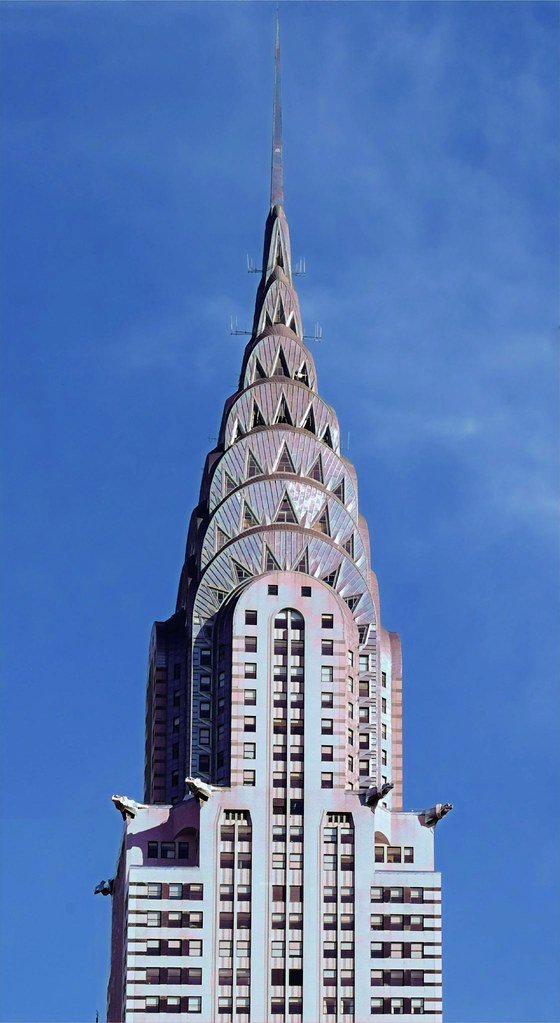
Honestly, for sheer visual drama, nothing quite compares to the Chrysler Building on a clear Manhattan evening. Its sunburst-patterned stainless steel spire remains one of the most striking features of the Manhattan skyline. Built between 1928 and 1930, the Chrysler Building was briefly the tallest in the world, at 1,046 feet. It lost that title fast – but nobody really cares.
The Chrysler Building, one of New York City’s most iconic Art Deco-style buildings, reflects the personality of the tycoon Walter Percy Chrysler, but it also takes us back to a very specific moment in the history of New York: the Roaring Twenties. In secret, architect Van Alen had the 185-foot spire of the Chrysler constructed in sections and assembled inside the building, then hoisted up and through the top only after his rival’s tower had reached its full height. That’s not just architecture – that’s theater.
The Chrysler Building appears in several films set in New York and is widely considered one of the most positively acclaimed buildings in the city. A 1996 survey of New York architects revealed it as their favorite. When the Skyscraper Museum polled 100 architects, critics, and scholars on their favorite towers, the Chrysler Building came in first place.
3. The Empire State Building – New York City, New York
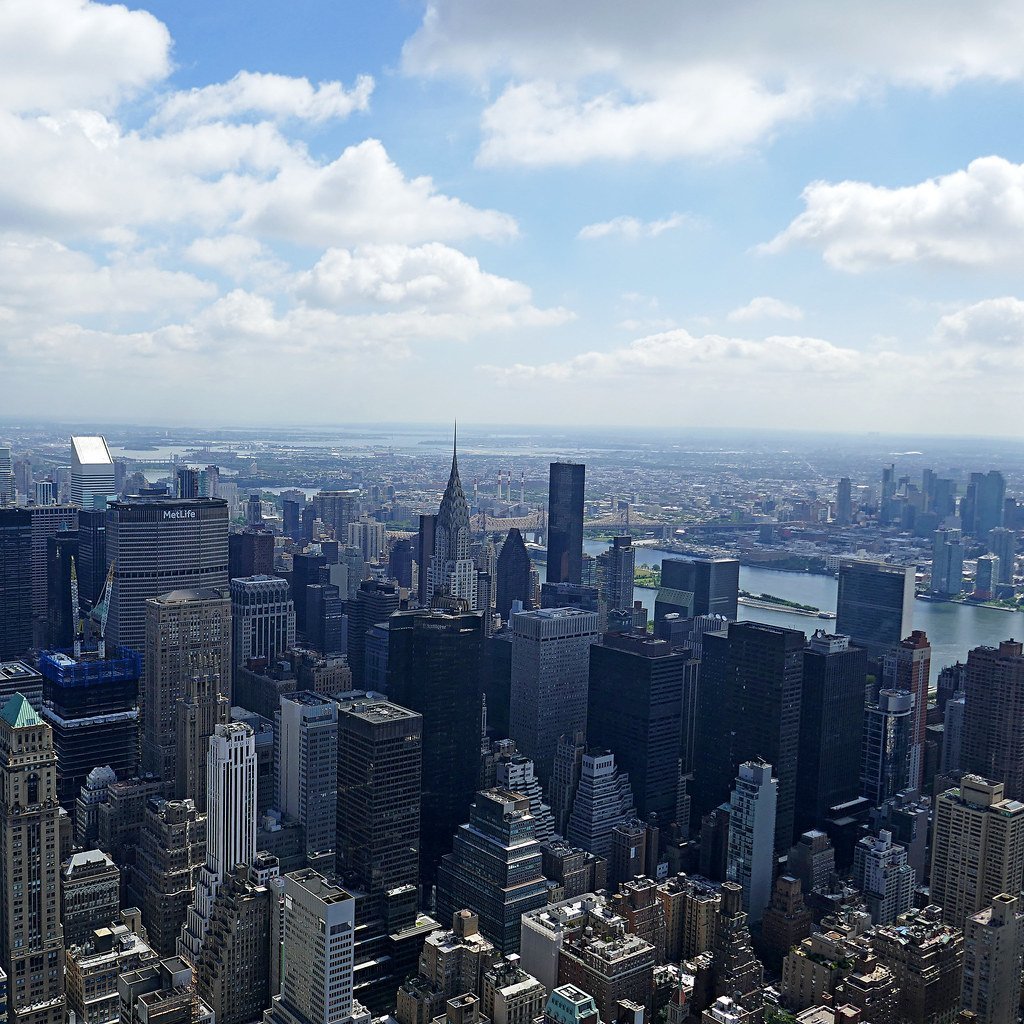
If the Chrysler is pure romance, the Empire State Building is something more muscular and determined. The Empire State Building is an iconic Art Deco skyscraper completed in 1931 that stood as the world’s tallest building for nearly 40 years. Think about that for a moment. Forty years. It sat at the top of the world for four full decades.
Raskob selected architects Shreve, Lamb and Harmon Associates to design the Empire State Building. His inspiration was a simple pencil, which he stood on its end, asking the architects: “How high can you make it so that it won’t fall down?” The image of a man holding a pencil upright to conceive the world’s tallest building is almost too perfect. The steel frame rose by four and a half floors every week until, after one year and 45 days, it reached 1,252 feet high.
The Empire State Building features Art Deco styling characterized by sleek lines and decorative motifs, and its cultural significance is profound, appearing in numerous films, television shows, and works of literature. In recent years, the Empire State Building has undergone sustainability upgrades, such as LED lighting and energy-efficient windows, showcasing a commitment to environmental responsibility.
4. Walt Disney Concert Hall – Los Angeles, California
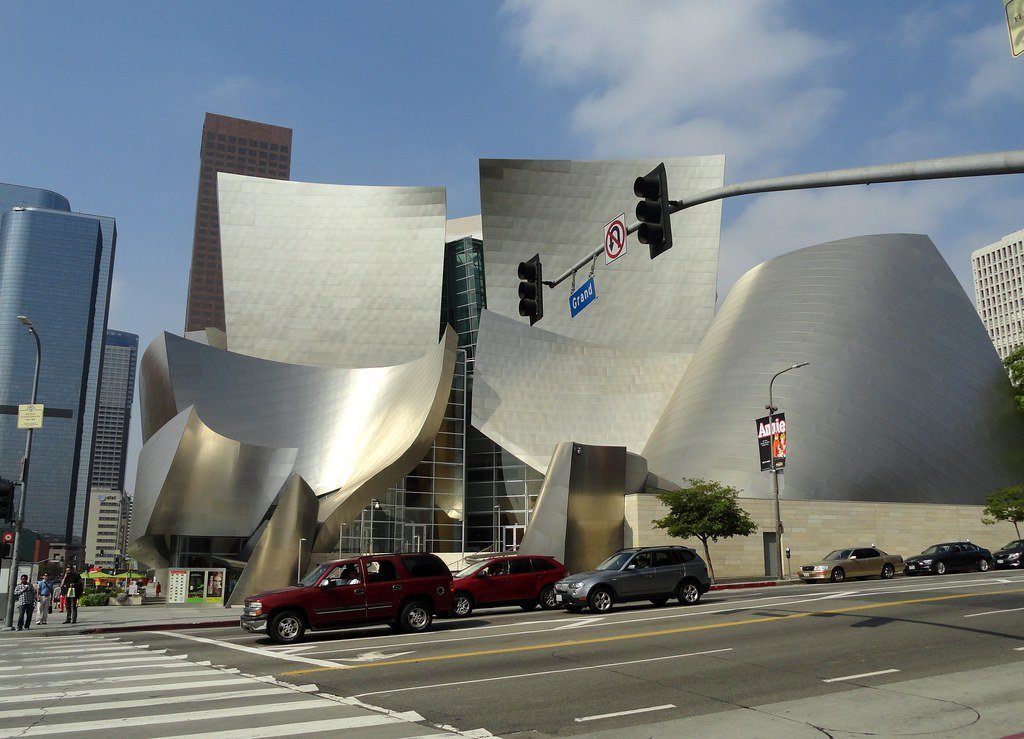
Step off Grand Avenue in downtown Los Angeles and you’ll feel it before you fully see it. The Walt Disney Concert Hall doesn’t just catch your eye – it ambushes it. Designed by architect Frank Gehry, Walt Disney Concert Hall is an internationally recognized landmark and one of the most acoustically sophisticated concert halls in the world.
Lillian Disney made an initial gift of $50 million in 1987 to build a performance venue as a gift to the people of Los Angeles and a tribute to Walt Disney’s devotion to the arts and to the city. The road from that donation to opening night was anything but smooth. Several years into the project, a combination of political and managerial impediments threatened its realization. It was shut down in 1994, but revived by a press and fundraising campaign two years later.
Due to the mathematical complexity of Gehry’s innovative design, he relied on computer software typically used in the design process for French fighter jets to aid his process of designing the concert hall. From the stainless-steel curves of its striking exterior to the state-of-the-art acoustics of the hardwood-paneled main auditorium, the 3.6-acre complex embodies the unique energy and creative spirit of the city of Los Angeles and its orchestra. It is, in short, a building that sounds just as beautiful as it looks.
5. Solomon R. Guggenheim Museum – New York City, New York
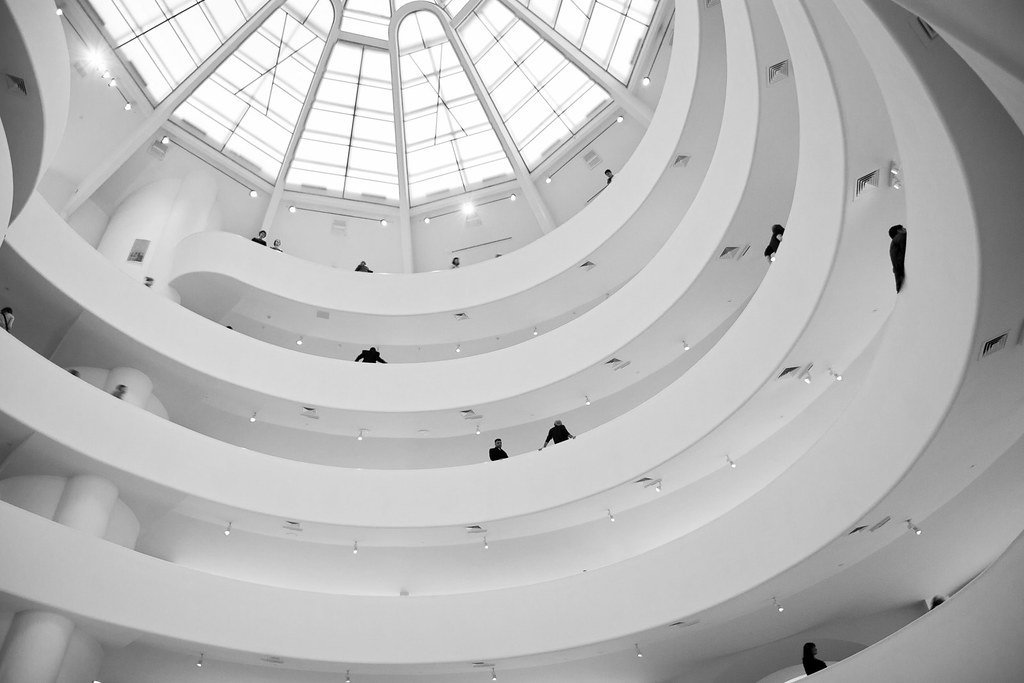
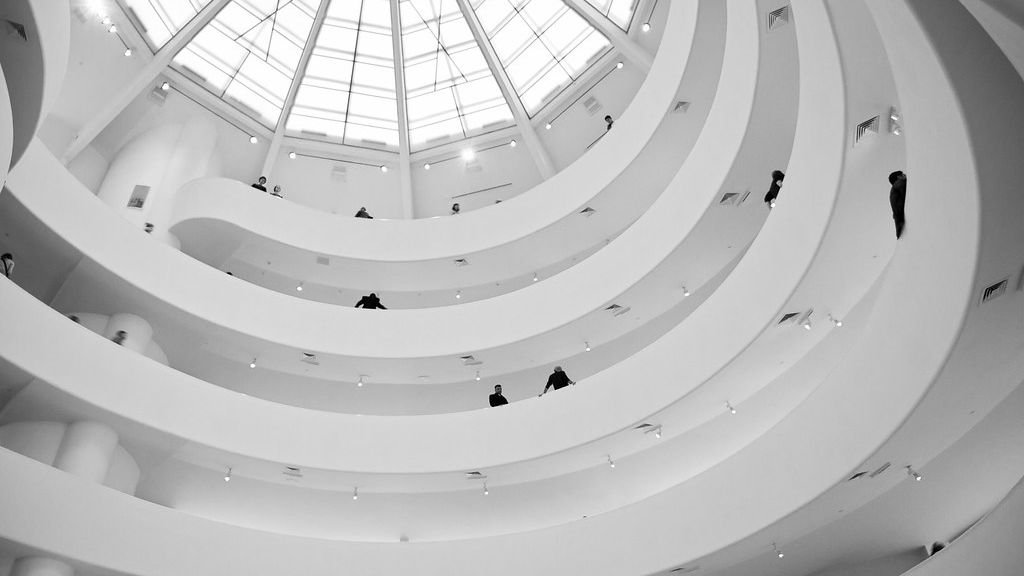
Most museums ask you to walk in, admire the art, and walk out. The Guggenheim asks something different. It invites you to spiral. Although it was constructed in 1959, the Solomon R. Guggenheim Museum has quickly cemented itself as one of the 20th century’s most significant pieces of architecture. The internationally renowned art gallery was designed by one of the greatest architects of all time, Frank Lloyd Wright, and took a staggering 16 years to come to fruition.
Wright conceived the building as one continuous, uninterrupted spiral ramp, defying every convention a museum was supposed to follow. At the time, critics were outraged. Today, it’s hard to imagine Fifth Avenue without it. Now a UNESCO World Heritage Site, this iconic building welcomes over one million visitors every year. Interestingly, Wright designed it while simultaneously working on Fallingwater – two radically different buildings, both unmistakably his.
6. Grand Central Terminal – New York City, New York
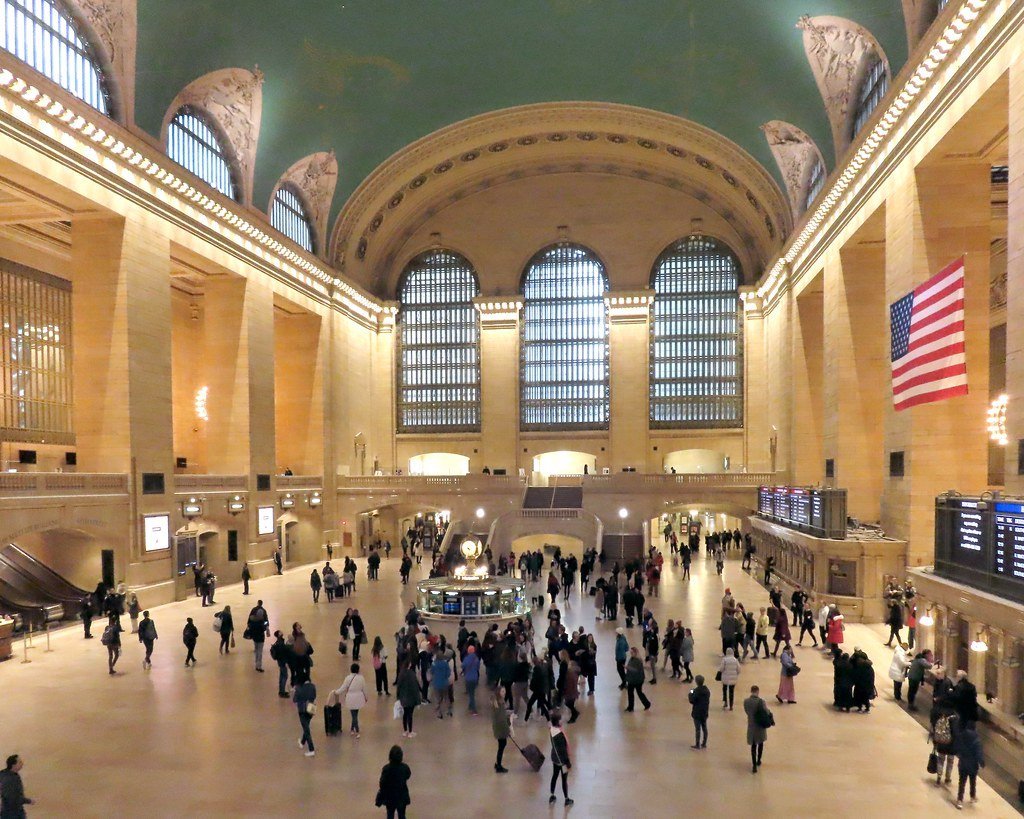
There is something about Grand Central Terminal that can stop even the most distracted New Yorker cold. Truly iconic, Grand Central Terminal is one of the most famous train stations in the world. Opened to the public in February 1913, it remains one of the country’s greatest architectural achievements. A hub for transport, the cathedral-like space is a designated National Historic Landmark.
The Main Concourse is, quite simply, one of the most beautiful interior spaces in human civilization. Light pours in from tall arched windows, illuminating the famous turquoise ceiling painted with the constellations of the winter sky. Key features include the Booth Clock, Manhattan’s iconic meeting place, and the spectacular ceiling in the Main Concourse. That ceiling alone has made New York feel magical to countless millions of visitors over more than a century.
7. Independence Hall – Philadelphia, Pennsylvania
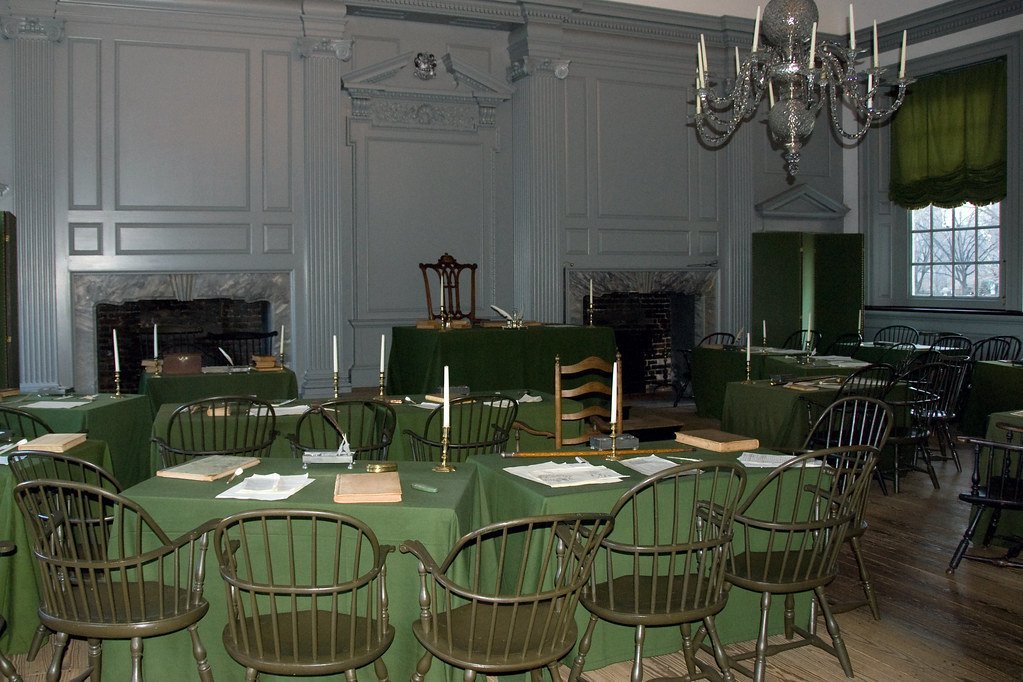
Some buildings are beautiful because of their architecture. Others are beautiful because of what happened inside them. Independence Hall is both. Independence Hall in Philadelphia, Pennsylvania, is a key historic site known as the birthplace of the nation. Completed in 1753 as the Pennsylvania State House, it features Georgian architecture and saw the adoption of both the Declaration of Independence and the U.S. Constitution.
The Georgian style here is quiet and restrained, almost modest by today’s standards. Red brick, white wooden steeple, a tidy symmetry that feels deeply purposeful. There’s no flash, no grandeur for its own sake. In 1979, Independence Hall was designated a UNESCO World Heritage Site, attracting millions of visitors annually to its red brick facade, white wooden steeple, and historic Assembly Room. It’s a reminder that sometimes the most powerful statement architecture can make is simply one of integrity.
8. Washington National Cathedral – Washington, D.C.
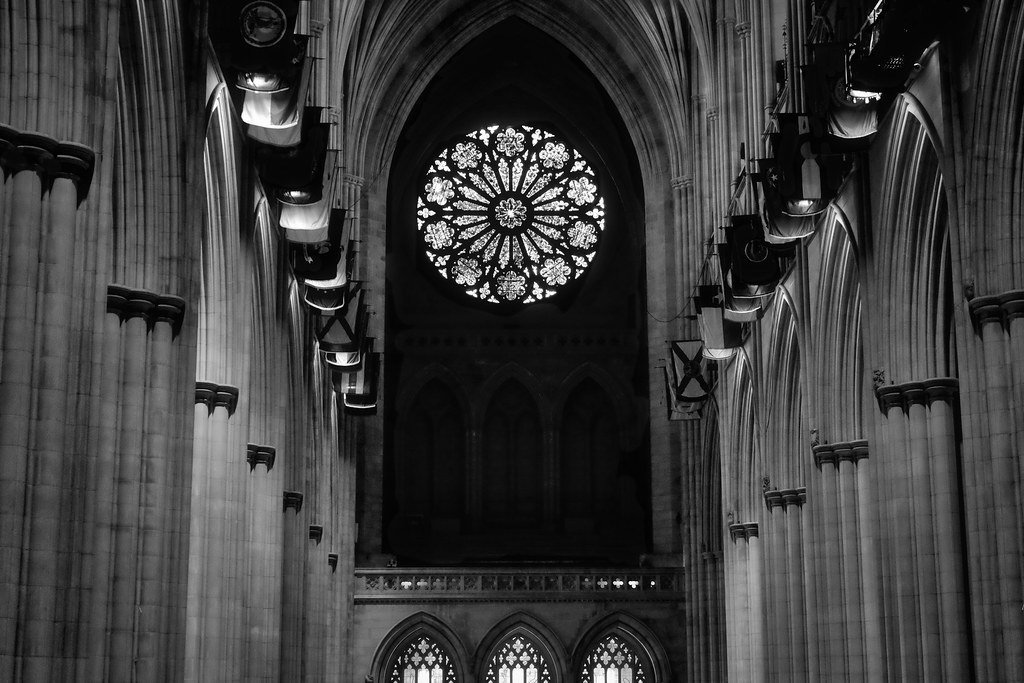
Here is a building that seems genuinely out of time. Stand before the Washington National Cathedral on a grey morning and you would be forgiven for thinking you’d somehow been transported to medieval France. The Washington National Cathedral is a stunning example of Neo-Gothic architecture and, according to the American Institute of Architects, one of the most beautiful buildings in the nation.
The Washington National Cathedral, located in Washington, D.C., is a prominent Episcopal church and a significant landmark in the United States. Construction of the cathedral began in 1907 and wasn’t completed until 1990, meaning it took longer to build than many of the great European cathedrals it was modeled after. That’s an almost incomprehensible act of commitment. Its flying buttresses, rose windows, and soaring towers represent something that American architecture rarely attempts: a complete surrender to spiritual beauty over practical efficiency.
9. The Library of Congress – Washington, D.C.
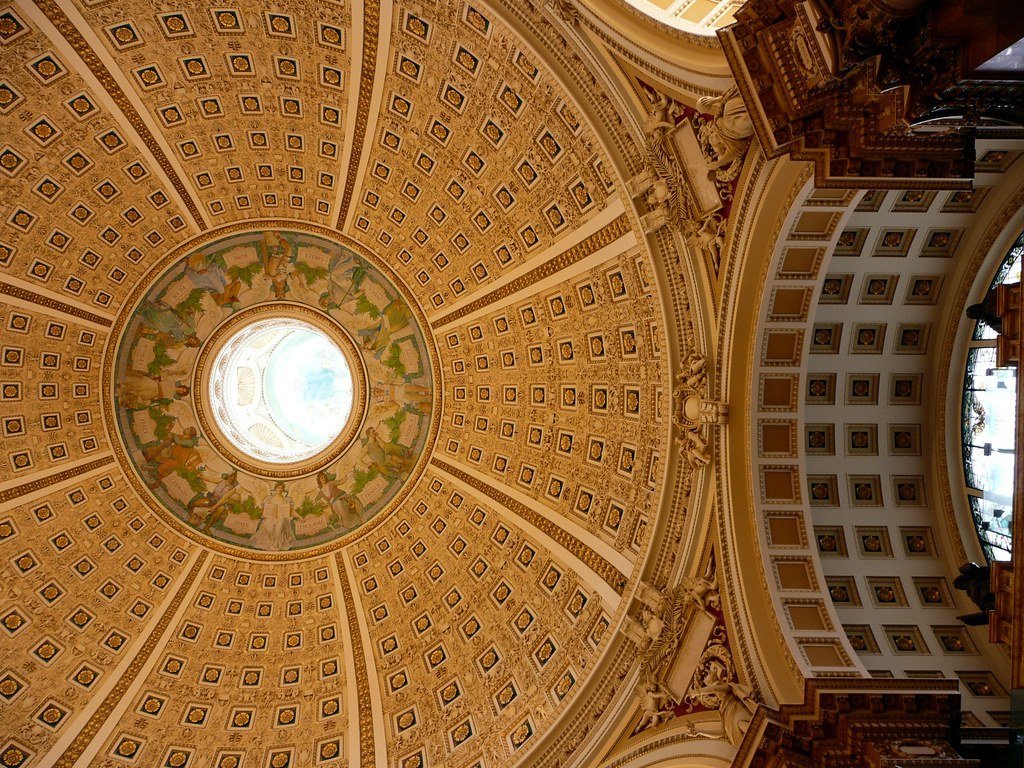
The Library of Congress is one of those places that makes you feel both very small and strangely proud of the human race all at once. The research library serves the United States Congress and also happens to be the world’s largest library. The Main Reading Room, with its dominant bronze statues, painted dome, and precious marble clock, is particularly spectacular.
Completed in 1897 and designed in the Italian Renaissance Beaux-Arts style, the Thomas Jefferson Building is essentially an argument that knowledge deserves beautiful surroundings. The dome rises over a reading room ringed with ornate columns and filled with intricate mosaics. It’s hard to say for sure, but I suspect it may be the most elaborate interior in any public building in the country. The building stands as proof that democratic institutions can aspire to the grandeur previously reserved for palaces and cathedrals.
10. The Biltmore Estate – Asheville, North Carolina
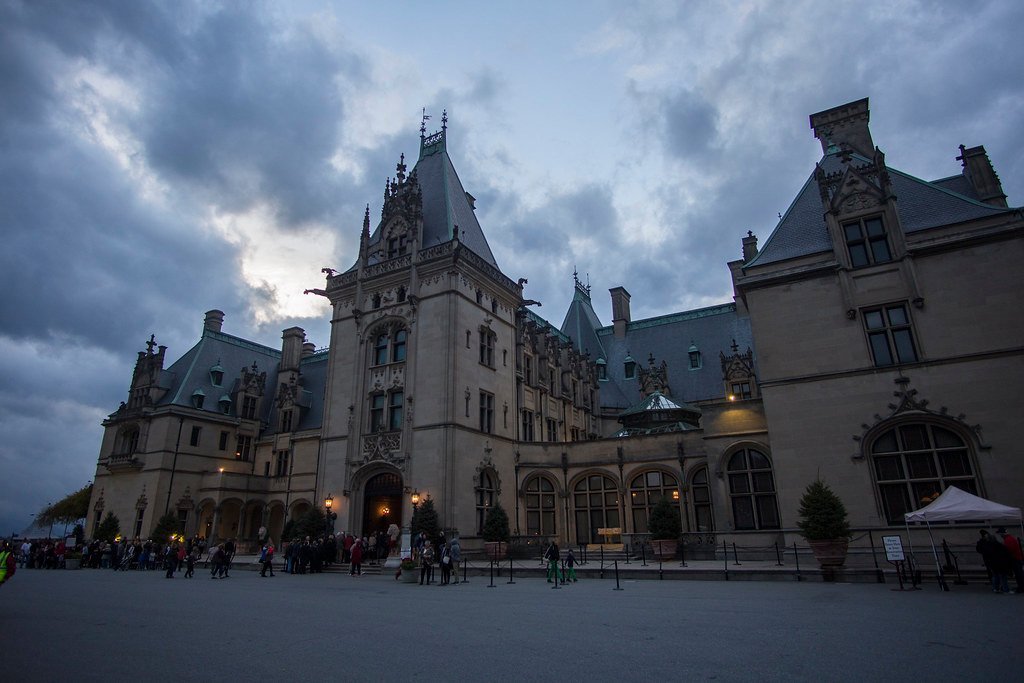
Let’s end somewhere that stretches the imagination completely. The Biltmore Estate stands proud as one of America’s most spectacular pieces of architecture. Constructed in 1889 by George Vanderbilt, the grandson of the business magnate Cornelius Vanderbilt, the Gilded Age mansion is the country’s largest private residence. It remains so to this day.
Designed by architect Richard Morris Hunt, the Biltmore drew direct inspiration from the great châteaux of the Loire Valley in France. It features 35 bedrooms, 43 bathrooms, 65 fireplaces, a bowling alley, a swimming pool, and a banquet hall large enough to swallow most apartment buildings whole. The surrounding landscape was designed by none other than Frederick Law Olmsted, who also designed Central Park. It is, without question, the most extravagant residential building ever erected on American soil – and standing before it, you cannot help but feel a strange mix of awe and disbelief that one family lived there.
The Extraordinary Breadth of American Architecture
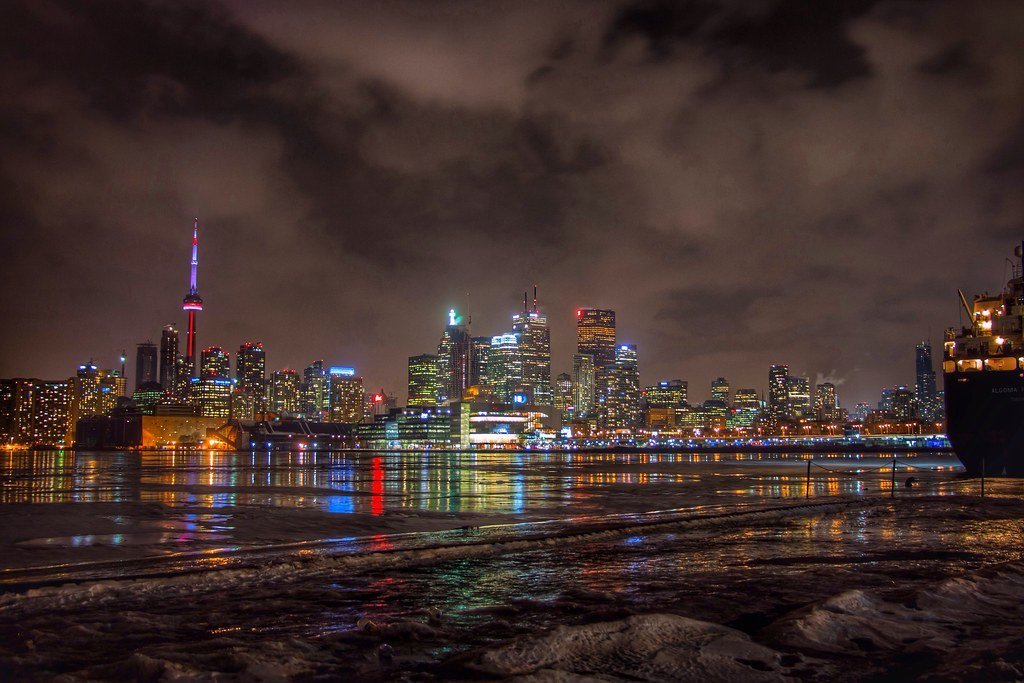
What strikes you, after traveling through this list, is how wildly different these buildings are from one another. A house over a waterfall. A spiraling museum. A Gilded Age château in the Appalachian Mountains. A concert hall that looks like it crash-landed from another planet. Famous American buildings are more than just architectural landmarks – they are powerful symbols of the nation’s history, ideals, and identity, reflecting the spirit of different eras and the values of American culture, including freedom, innovation, and resilience.
Honestly, that diversity is the point. A’s penchant for doing things in its own, often regionally distinctive and stubborn way has resulted in hundreds of innovative and eclectic buildings. There is no single American architectural style, and there never really was. Instead, there is ambition, experimentation, and an enduring belief that a building can be more than shelter.
It can be an idea. A statement. A dream made out of steel, stone, and glass. Which of these ten surprised you most?

Christian Wiedeck, all the way from Germany, loves music festivals, especially in the USA. His articles bring the excitement of these events to readers worldwide.
For any feedback please reach out to info@festivalinside.com
