

For any feedback please reach out to info@festivalinside.com
- 20 Song Intros That Hook You Instantly - September 19, 2026
- 15 Historical Myths That Turned Out to Be False - September 19, 2026
- 10 Inventions That Changed the World in Unexpected Ways - September 19, 2026
There is something deeply unsettling about a book that cannot be read. Not because it is boring or complex, but because nobody on Earth, not even ‘s sharpest cryptographers, linguists, or historians, can decode a single word of it. The idea that knowledge might be locked away in pages that still exist, physically touchable, visually present, yet completely impenetrable, is one of the most haunting concepts in all of human history.
Mysterious texts have fascinated people for centuries for a very simple reason: they imply secrets. They suggest that someone, somewhere, knew something they did not want the rest of us to know. Or, even more disturbing, that whoever wrote these pages has been dead for hundreds of years, and the answer died with them. Some of these books are genuinely ancient. Others are disturbingly modern. All of them will leave you with more questions than answers. Let’s dive in.
1. The Voynich Manuscript: The Book That Has Defeated Everyone
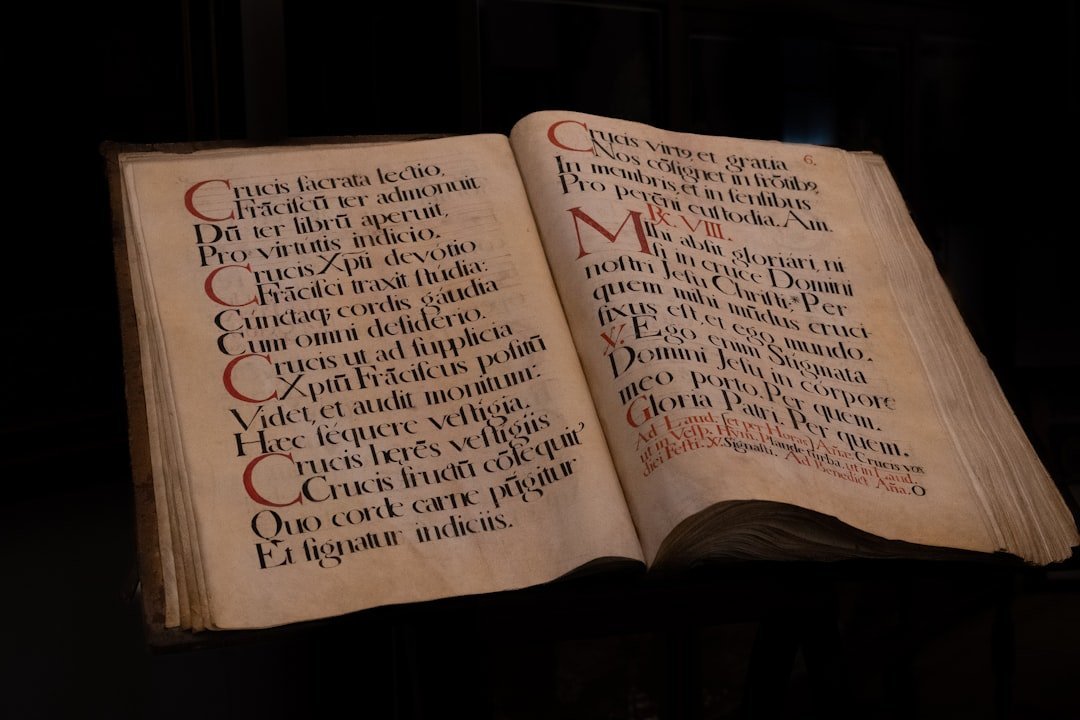
Honestly, if there’s one book that defines the phrase “unsolvable mystery,” it’s this one. Many call the fifteenth-century codex, commonly known as the “Voynich Manuscript,” ‘s most mysterious book. It consists of 116 leaves of parchment covered in outlandish botanical and astrological drawings and thousands of lines of undeciphered text in an unknown language. The sheer visual variety of its content, plants that match no known species, naked women bathing in green pools, zodiac charts, astronomical diagrams, makes it unlike anything else ever produced by human hands.
The Voynich Manuscript is an illustrated codex, hand-written in an unknown script. The vellum on which it is written has been carbon-dated to the early 15th century, between 1404 and 1438, and stylistic analysis has indicated the manuscript may have been composed in Italy during the Italian Renaissance. The manuscript has been studied by both professional and amateur cryptographers, including American and British codebreakers from both World War I and World War II. Codebreakers Prescott Currier, William Friedman, Elizebeth Friedman, and John Tiltman were all unsuccessful, and the manuscript has never been demonstrably deciphered.
While the “Naibbe Cipher” and “Women’s Secrets” theories are current leaders in the field, the Voynich Manuscript remains officially undeciphered. In September 2024, multispectral scans of ten selected pages were made public, revealing details unseen with visible light. We are, in 2026, perhaps closer than ever to an answer. Perhaps. It’s hard to say for sure, but after 600 years, the book continues to win.
2. The Rohonc Codex: A Script That Shouldn’t Exist
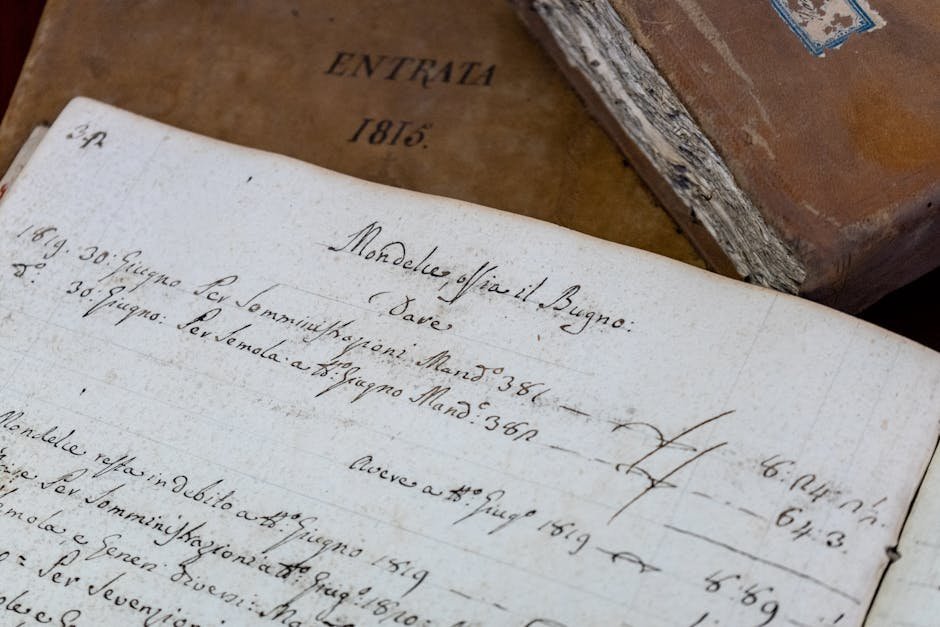
Tucked away in the Hungarian Academy of Sciences lies a book that has stumped codebreakers for nearly two centuries. The Rohonc Codex, an unidentified text discovered in Hungary, has captivated scholars for over two centuries with its enigmatic script. Think of it as the Voynich’s equally confusing cousin, except it has illustrations that are somehow even more baffling.
This peculiar script is written from right to left and seems to mix up runes, straight and rounded characters in the style of Old Hungarian, but it defies all attempts at translation. The Codex consists of 448 pages of text, all written in a still-unknown language. Scholars have argued it could be anything from early Hungarian to Hindi, but it lacks many prominent features of any of these languages. Moreover, the alphabet features many more characters than any major language outside of Chinese.
Perhaps even more fascinating than the text of the Rohonc Codex are the 87 illustrations that accompany it. These depict everything from landscapes to military battles, but they also employ religious iconography unique to a number of different religions, including Christianity, Hindu, and Islam. This would suggest that whatever culture the document depicts had many different faiths in existence simultaneously. That alone is extraordinary. No single civilization in that era is known to have blended all three.
3. The Codex Gigas: The Devil’s Bible

Let’s be real, the nickname alone should tell you everything you need to know. Weighing roughly the same as an adult kangaroo and nearly three feet long, the Codex Gigas is one of the largest medieval manuscripts ever created. Inside, alongside the complete Latin Bible, is a full-page illustration of the devil, leading to sinister legends about its origins.
The Codex Gigas was created in the early thirteenth century in the Benedictine monastery of Podlažice in Bohemia, modern-day Czechia. According to one tale, the book was written in a single night by a monk who made a pact with Satan. While historians believe it was actually written over decades, the legend only adds to its eerie reputation. Today, the Codex Gigas is housed in Sweden’s National Library, where it continues to fuel speculation and superstition. The mystery here is less about what it says and more about why anyone would invest such extraordinary effort into creating something so deliberately sinister in appearance.
4. The Book of Soyga: The Text That Obsessed a Queen’s Advisor
The Middle Ages produced their share of strange texts, but perhaps none was as mysterious as the Book of Soyga, a treatise on magic and the paranormal that contains passages that have yet to be translated by scholars. Here’s the thing: the man who became most obsessed with it was no ordinary reader. The book is most famously associated with John Dee, a noted thinker of the Elizabethan era known to dabble in the occult. In the 1500s, Dee was said to be in possession of one of the only copies of the book, and he supposedly became obsessed with unlocking its secrets, particularly a series of encrypted tables that Dee believed held the key to some kind of esoteric spiritual knowledge.
The book’s unknown author had utilized a number of typographical tricks, including writing certain words backwards and encoding others in mathematical script. Dee became so fixated on cracking the codes that he even traveled to continental Europe in order to meet with a famous spiritual medium called Edward Kelley. The book was believed lost until 1994, when two copies were rediscovered in England. Scholars have since studied the book, and one of them was able to partially translate the tables that so fascinated Dee. Still, beyond finding that the book is most likely related to Kabbalah, a mystical sect of Judaism, these researchers have not been able to decipher the book’s real significance.
5. The Codex Seraphinianus: An Encyclopedia of a World That Does Not Exist
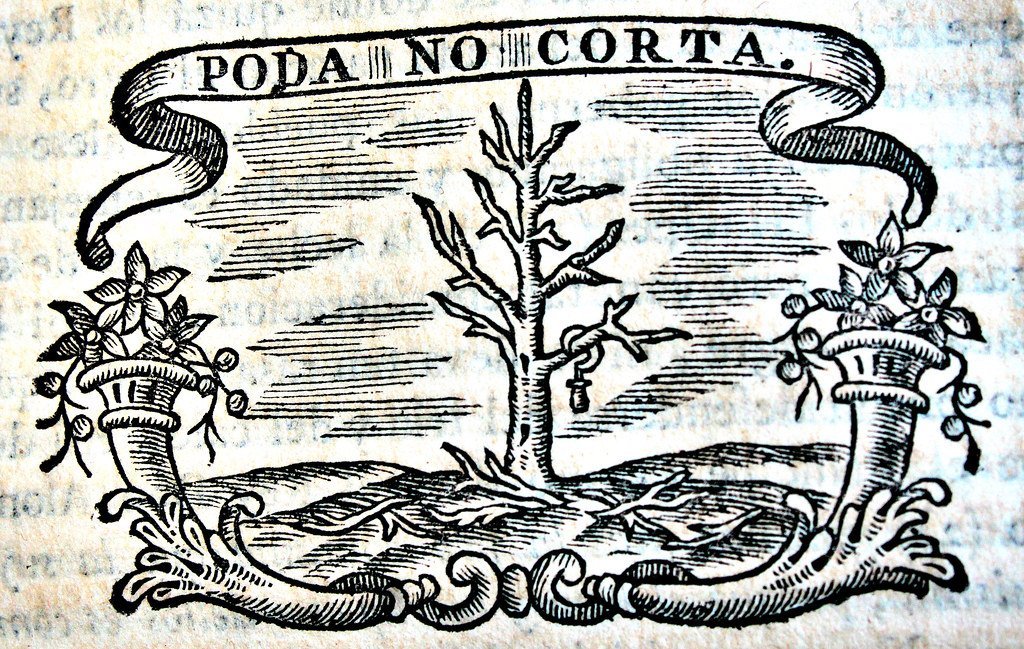
Unlike most entries on this list, this one has a known author. That somehow makes it even stranger. The Codex Seraphinianus was created in 1981 by Italian artist Luigi Serafini. This lavishly illustrated book is written in an entirely invented language, complete with its own grammar and syntax. Filled with surreal imagery of bizarre creatures, plants, and machines, the Codex appears to be an encyclopedia from an alternate reality.
Serafini said he wanted to recreate a feeling he remembered having as a little kid, before he even knew how to read, of what it was like to look at an encyclopedia for the first time. All the pictures and charts looked very mysterious to the little boy who knew they meant something but didn’t know what. In a talk at Oxford University in 2009, Serafini claimed there was no real meaning in the text, which was written in a process resembling automatic writing. I think that explanation is somehow the most unsettling answer of all. A book that looks like it has profound meaning, but the creator insists it’s a kind of beautiful nothing. Is he telling the truth? Nobody truly knows.
6. The Popol Vuh: The Sacred Book Hidden from Conquerors
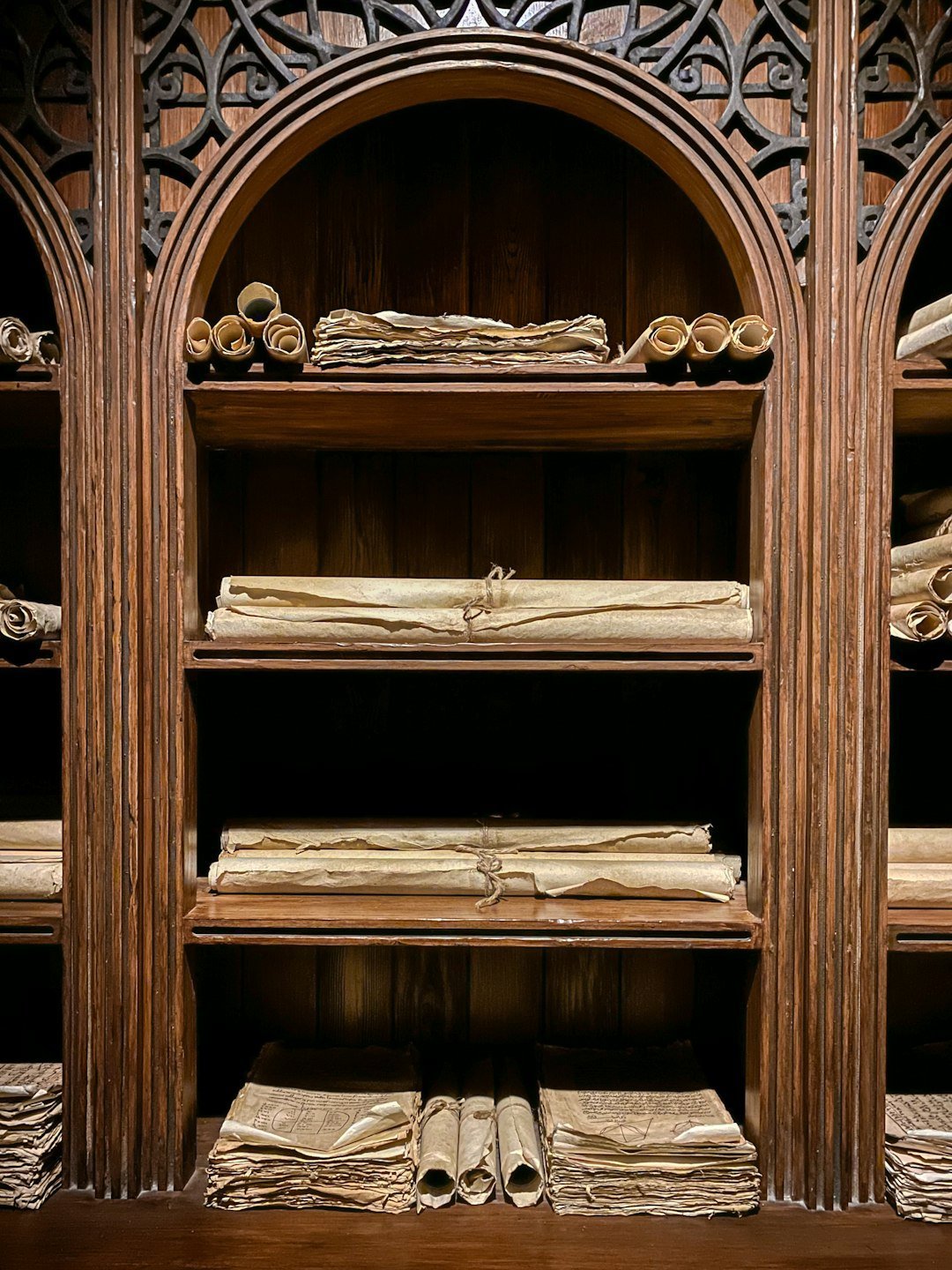
The Popol Vuh is often called the Maya “Bible,” but its origins are clouded in secrecy. Written in the 16th century but based on much older oral traditions, it details the Maya creation myth, gods, and heroes. The surviving text, written in the Latin alphabet in K’iche’, was hidden by Maya scribes to protect it from Spanish destruction. The fact that it survived at all feels like a minor miracle of history.
Written over the course of centuries by an unknown number of people, Popol Vuh covers the entire span of Mayan history and mythology. In the early 1700s, a Dominican priest named Francisco Ximenez journeyed into the heart of the Mayan civilization and began transcribing it in two columns, one for the original K’iche’ and one in Spanish. While the Popol Vuh has been translated, its stories are so steeped in allegory and metaphor that scholars believe the true meanings may still be hidden. Differing interpretations of its myths have led to scholarly debates, and the full understanding of this complex text remains elusive.
7. The Smithfield Decretals: Church Law With Very Disturbing Doodles
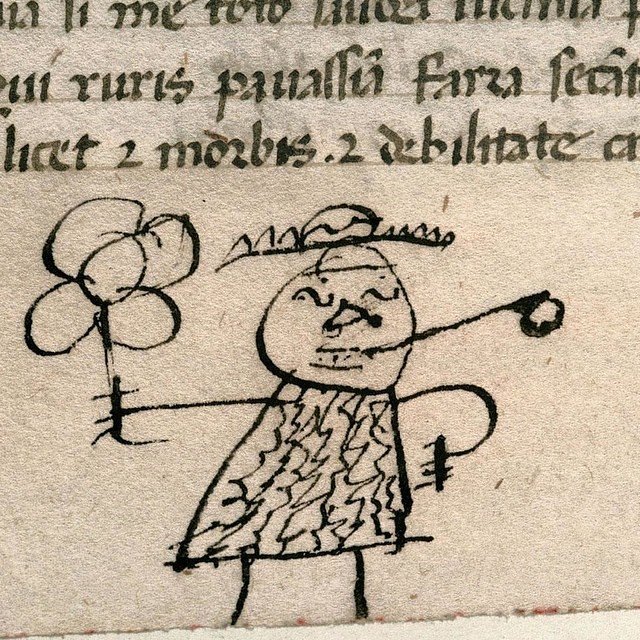
Imagine opening a serious legal document and finding illustrations of giant rabbits executing humans in the margins. Officially known as the Decretals of Gregory IX, this is a collection of canonical law ordered in the 13th century by Pope Gregory IX. Such collections were fairly common at the time, but what’s bizarre about the Smithfield Decretals is the illustrations that went along with them. The decretals were created as an illuminated manuscript, combining illustrations and flowery calligraphy with the lettering.
Although it is clear who, when, and why the book was written, the bizarre illustrations used in the decretals lifted the book to a mystical status. The Smithfield Decretals features numerous illustrations of homicidal giant rabbits, fighting between unicorns and bears, and peculiar animals and human practices. While some believe these oddities were just fanciful scribbles of bored monks, others speculate that they might hold hidden meanings or satirical commentary on the medieval church or society. Personally, I lean toward the satirical theory. Those rabbits look a little too purposeful.
8. The Liber Linteus: A Book Found Wrapped Around a Mummy
This one sounds almost too strange to be real. The Liber Linteus is the longest Etruscan text and the only known example of an Etruscan linen book. Remarkably, it survived by being used to wrap a mummy. The language is virtually unknown, making the text cryptic. Some light has been cast on its possible content: it’s likely a religious calendar, but full understanding eludes us.
Present interpretations offer some insights about the text, but further translations have been hindered due to the scarcity of knowledge about the Etruscan language. Think about that for a moment. An entire civilization, with its own written language, essentially vanished from history, and this strip of linen wrapped around a corpse is one of the longest pieces of writing they left behind. The Etruscans were a sophisticated people of ancient Italy, and yet we understand only a fraction of what they tried to say. It is a genuinely humbling reminder of how much has been lost to time.
9. The Oera Linda Book: Ancient Chronicle or Brilliant Hoax?
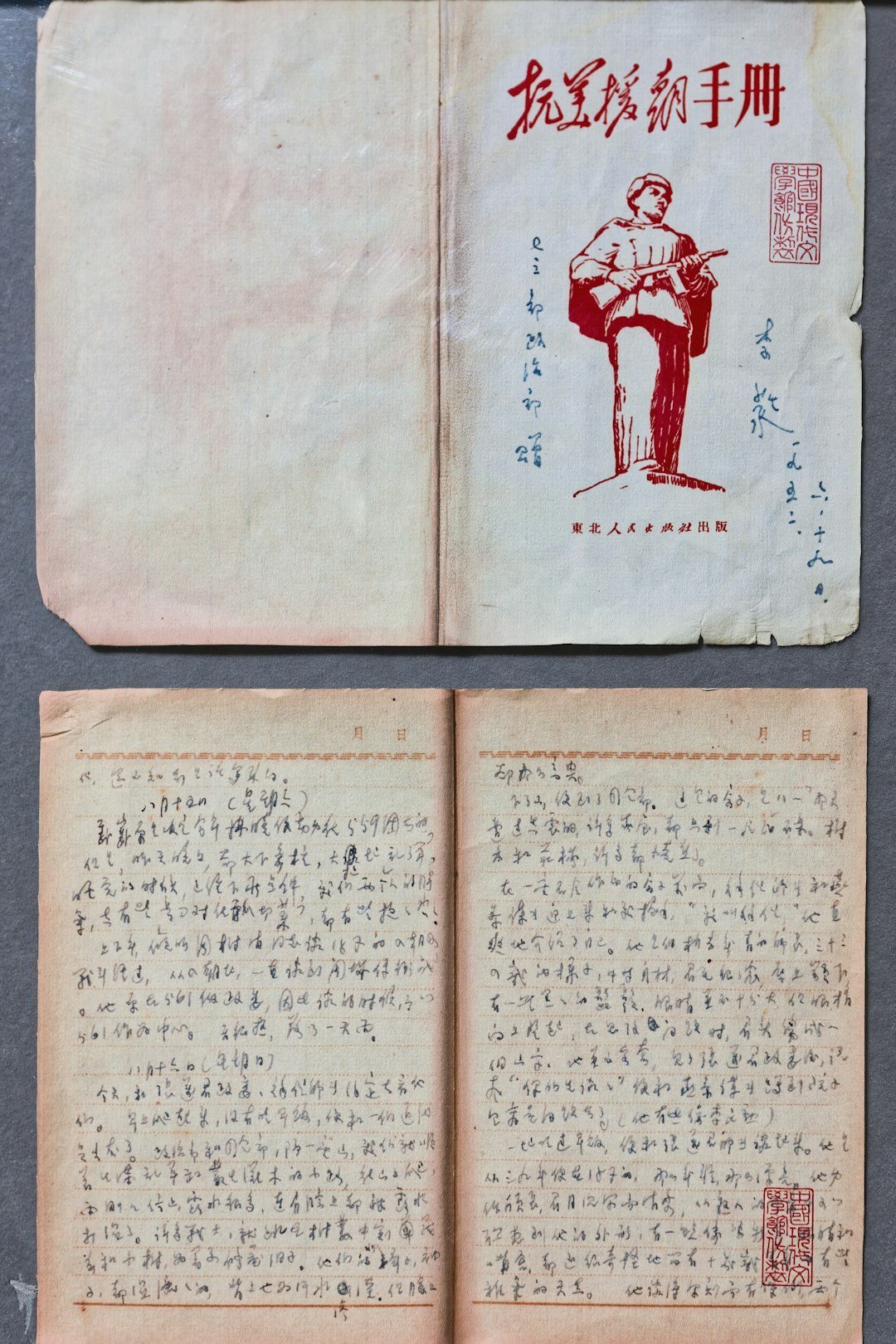
The Oera Linda Book is a manuscript written in imitated Old Frisian, purporting to cover historical, mythological, and religious themes of remote antiquity, from 2194 BCE to 803 CE. In 1867, in a small town in the Netherlands, a man named Cornelis Over de Linden claimed to have an amazing family treasure, a book written in Old Frisian, said to have been handed down by a mysterious ancestor named Adela.
The Oera Linda Book contains historical accounts of floods, migrations, and battles, along with cultural and religious practices of the ancient Frisian people. It describes a matriarchal society and worship of the goddess Frya, with detailed hymns, prayers, and laws. The authenticity of the Oera Linda Book is highly debated. Some believe it is a genuine ancient text based on its detailed cultural accounts, while others argue it is a 19th-century forgery due to linguistic inconsistencies and historical inaccuracies. Whether authentic relic or masterful fraud, it sparked enough controversy to influence nationalist movements and esoteric communities alike.
10. The Hypnerotomachia Poliphili: A Love Story Nobody Fully Understands
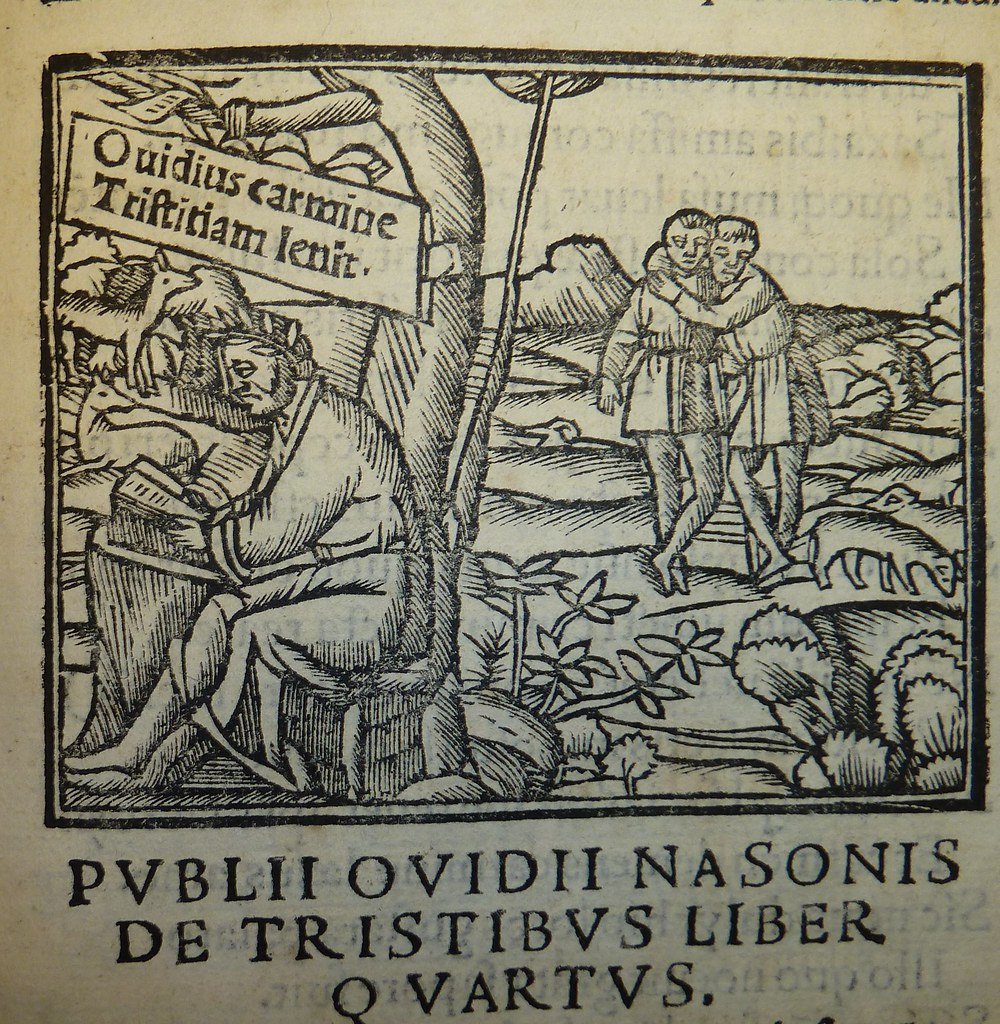
The Hypnerotomachia Poliphili, or “The Strife of Love in a Dream,” published in 1499 in Venice, is a famed work of early printing. It’s known for its elaborate typography and extensive woodcut illustrations. This illustrated love story is written in a unique blend of Latin, Italian, and Greek words, and includes complicated architectural descriptions and fantastical lands. No one is even sure who wrote it. The author’s identity, despite centuries of research, remains genuinely disputed.
The book tells the story of a man named Poliphilo wandering through a dreamscape pursuing his love Polia, all while describing impossibly detailed architecture, symbolic gardens, and allegorical monuments. Scholars believe the text contains layered alchemical, kabbalistic, and Neoplatonic symbolism. While some argue that such works are hoaxes intentionally left behind to confuse readers, others insist they hold ancient truths. The Hypnerotomachia feels like both at once. Visually magnificent, intellectually exhausting, and ultimately, wonderfully unresolved.
What These Books Tell Us About Ourselves
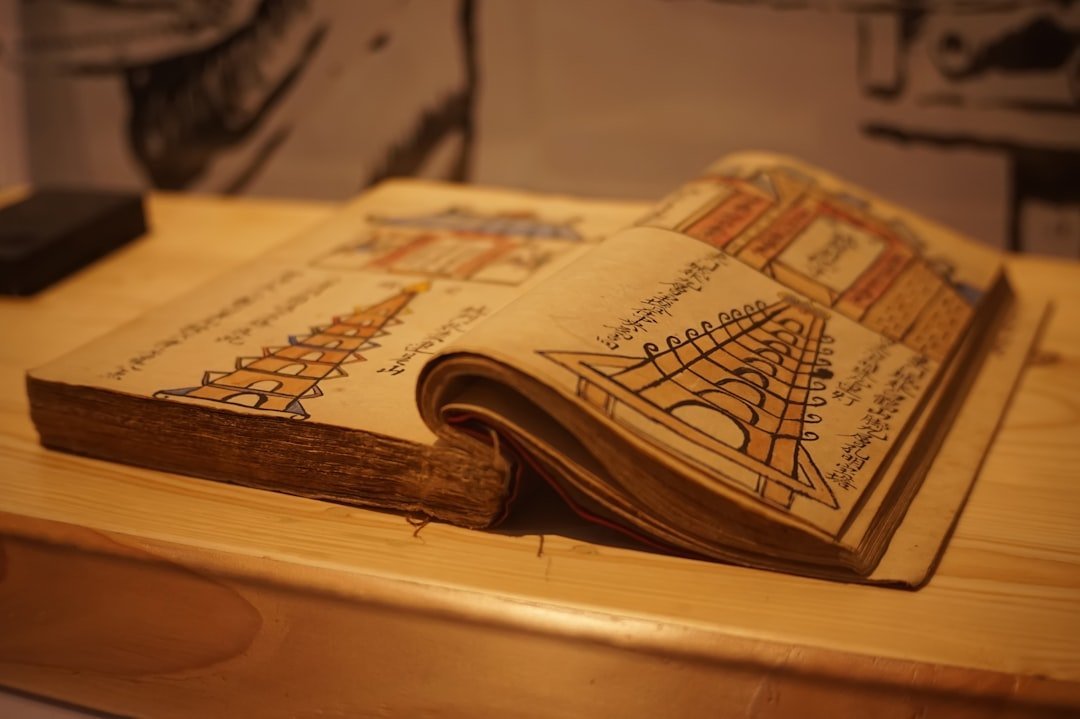
There is a pattern running through every single one of these texts, and it is not really about the books. It is about us. Humans have an almost desperate need to decode, to understand, to pull meaning out of chaos. These mysterious books are not just academic curiosities; they are windows into lost worlds, forgotten civilizations, and the deepest mysteries of human communication. That is why they keep pulling people back, generation after generation.
These weird and mysterious works often have unknown authors and describe forgotten histories or strange fantastical worlds. Some are so mysterious that no one has ever been able to read them, written in cryptic codes that have yet to be cracked. We live in an era of instant answers, where almost any question can be resolved within seconds. The existence of these books, with their stubborn, enduring silence, is almost radical by comparison.
Maybe that is exactly why they matter. In a world obsessed with transparency, these books remind us that some secrets are extraordinarily stubborn. Some mysteries have outlasted empires, survived wars, and defeated the best minds humanity has ever produced. The question is not just what these books say. The deeper question is: what does it mean that we still cannot tell? What do you think, are these books protecting something, or is the mystery itself the point? Tell us in the comments.

Christian Wiedeck, all the way from Germany, loves music festivals, especially in the USA. His articles bring the excitement of these events to readers worldwide.
For any feedback please reach out to info@festivalinside.com
