

- The 20 Longest Songs Ever to Chart – And Why They Worked Anyway - September 16, 2026
- The 20 Most Misquoted Speeches in History – And What Was Actually Said - September 16, 2026
- 20 Songs That Were Turned Down by Other Artists – Big Mistake - September 16, 2026
There is something deeply human about the urge to celebrate. Every culture on earth, no matter how remote or how ancient, has developed its own rituals, its own ways of marking time, honoring the dead, welcoming new seasons, or simply expressing pure, unfiltered joy. Festivals are a kind of living fingerprint. They reveal who a people are, what they believe, what makes them laugh, and what makes them cry.
Some celebrations are instantly recognizable. Others, however, will make you do an absolute double-take. From towns that throw thousands of tomatoes at each other to communities that feast their local monkeys, the world is full of extraordinary gatherings that no travel brochure could ever fully prepare you for. So let’s dive in.
1. La Tomatina – Buñol, Spain
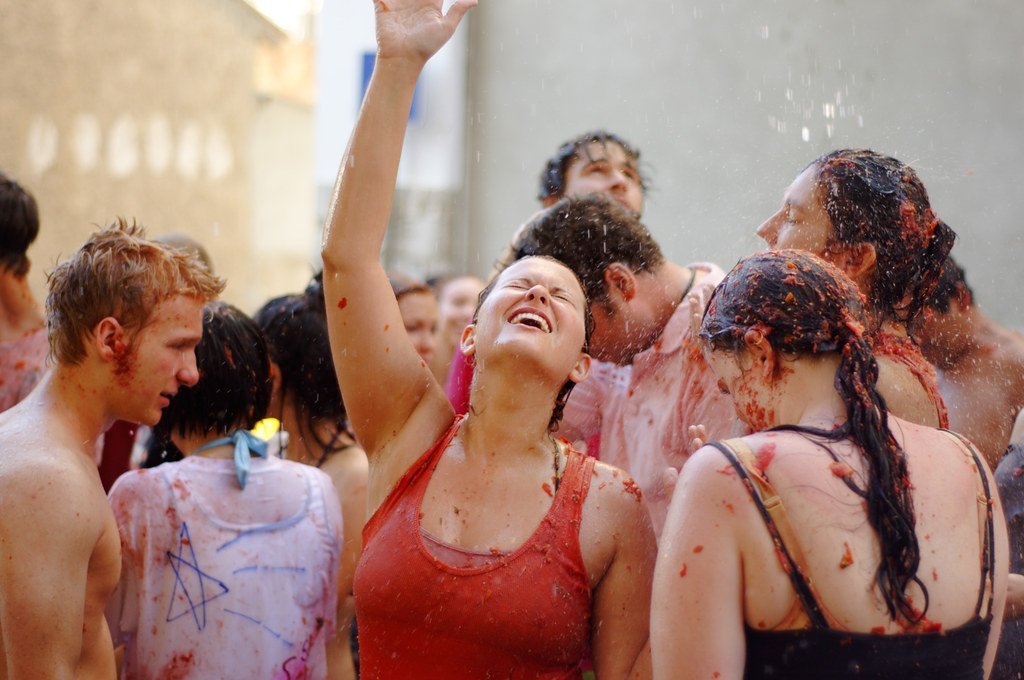
Let’s be real: the idea of turning an entire town into a crimson battlefield sounds like the premise of a very odd dream. Yet every year, on the last Wednesday of August, the small Spanish town of Buñol transforms into a tomato battleground, with thousands of participants hurling approximately 150,000 overripe tomatoes at each other in a chaotic display of fun. Whole streets turn red. Buildings are coated in pulp. People slip, laugh, and hurl more tomatoes.
This festival began in 1945 during a local parade dispute and, despite facing a few attempts to ban it in the 1950s, La Tomatina has become one of Spain’s most celebrated events. Before 2013, about 50,000 people flocked to Buñol for the festival, which has a permanent population of just 9,000. To manage the sizable crowd, an official ticketing system capped participation at 20,000 festival-goers starting in 2013. Honestly, that still sounds like an enormous amount of tomatoes.
2. Día de los Muertos – Oaxaca, Mexico
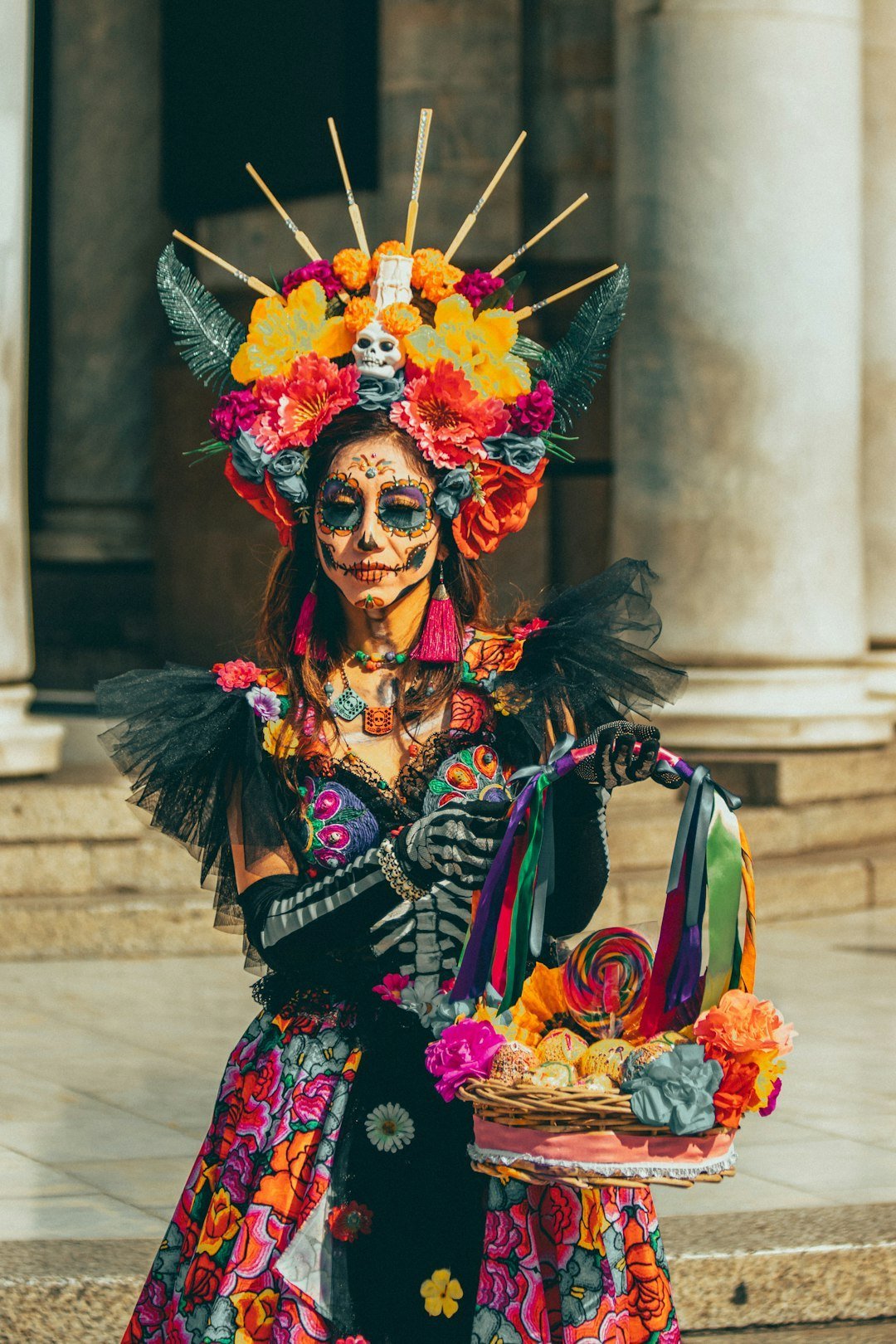
Death, in most Western cultures, is something hushed and kept behind closed doors. In Oaxaca, Mexico, it becomes an exuberant, colorful invitation. Día de los Muertos is a joyful multi-day Mexican celebration of deceased loved ones that combines pre-hispanic death festivals with those of the Catholic tradition. Though the specific manner of celebrating can vary from state to state, and even from pueblo to pueblo, the true purpose remains the same: to come together with family and friends to feast, laugh, reminisce, and welcome back loved ones from the great beyond.
Families erect ofrendas (altar offerings) to honor their deceased family members, then decorate the altar with bright orange marigolds, painted skulls, flickering candles, bottles of tequila, and colorful paper cutouts. Parades of musicians and mojigangas meander through town, their music blaring, while men and women dressed in costume and with their faces painted as calaveras flood the streets. Fireworks and firecrackers join the cacophony, increasing in frequency as night falls. It is simultaneously the most festive and most spiritually profound event I think you could ever witness.
3. Holi – India
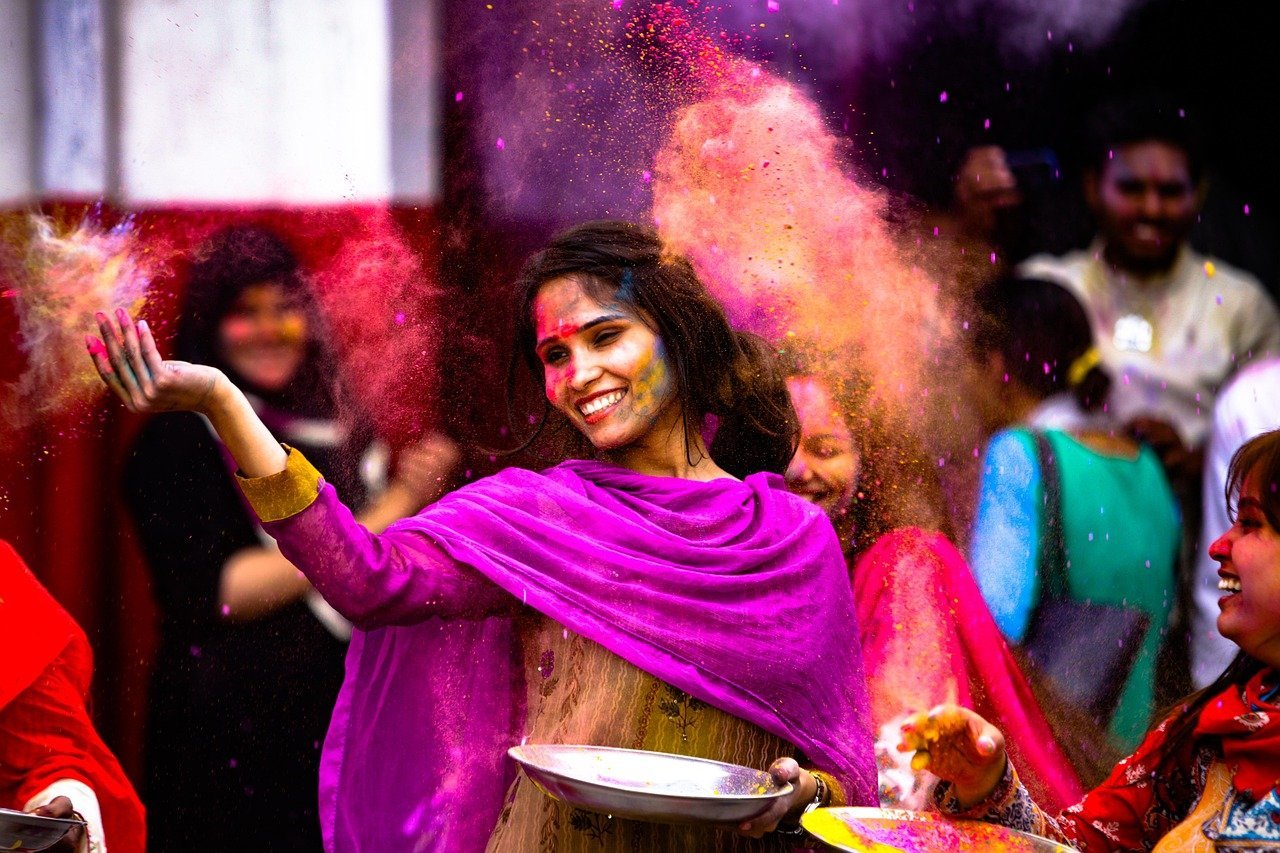
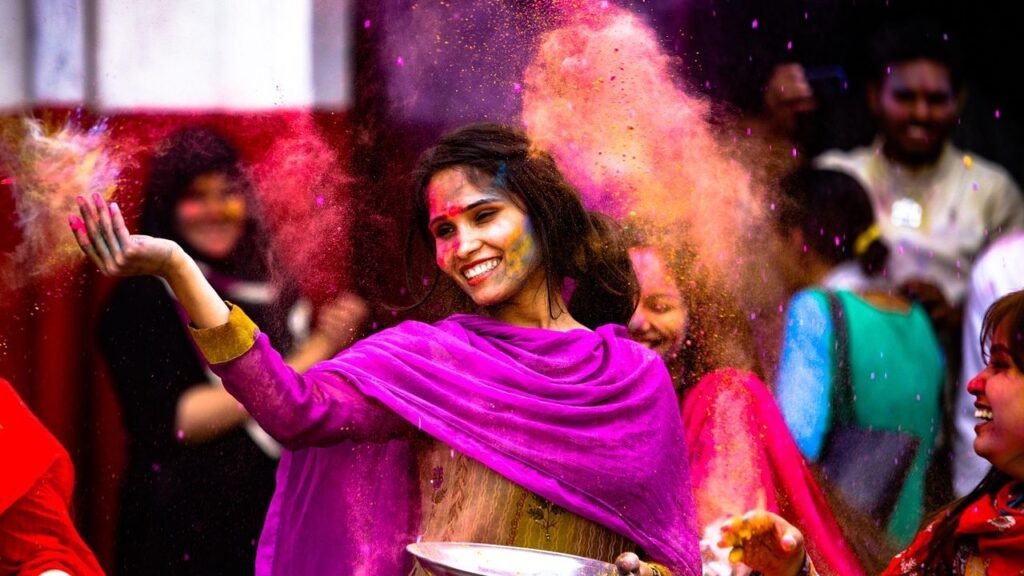
Picture yourself standing in an open square, wearing white, and within minutes being completely drenched in every color imaginable. That is Holi. Holi is a vibrant and colorful Hindu festival celebrated predominantly in India and Nepal but also observed by communities around the world. Also known as the “Festival of Colors” or “Festival of Love,” Holi typically takes place in March, marking the arrival of spring and the triumph of good over evil.
The celebration consists of two main events: Holika Dahan, where bonfires are lit to dispel evil spirits, and Rangwali Holi, where participants engage in playful color throwing. Each color holds significance, with blue representing power and life, green symbolizing happiness, yellow signifying holiness, red denoting love and fertility, and white embodying purity. Holi is a time when social barriers are temporarily set aside, and people from all walks of life, regardless of caste, creed, or social status, come together to celebrate. That kind of radical social leveling through shared joy is rare and worth traveling across the world to feel.
4. Up-Helly Aa – Shetland, Scotland
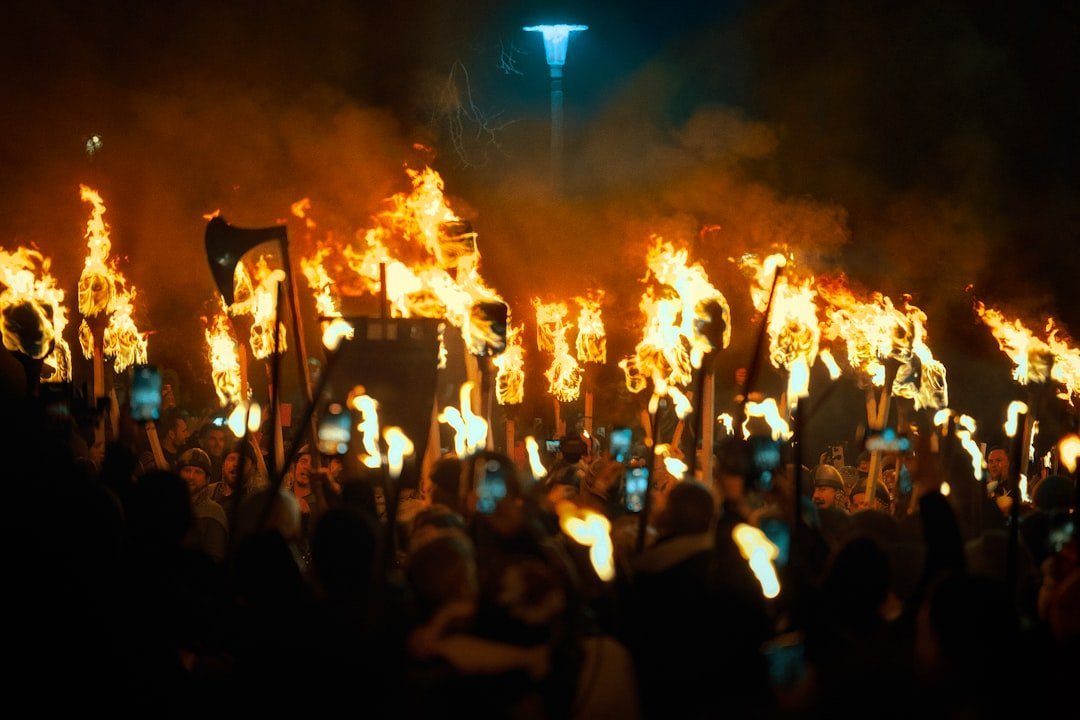
Here is a festival that makes you feel like you have time-traveled straight into a Viking saga. Up-Helly Aa is a fire festival typically held every year between January and March among various communities in Shetland, Scotland, that marks the end of the Yule season. Shetland boasts of its Norse connection and celebrates Viking culture by parading down the cobblestones, blazing torches held up high, as they make their way through the dark streets. The festival, which began in the 1880s, draws thousands of locals and tourists alike to honor the rich heritage.
This involves a procession of up to a thousand men who march through the streets of Lerwick on the last Tuesday of January. A full-scale Viking longship is dragged through the town and eventually set alight in a blaze that can be seen for miles. I think it’s impossible to fully prepare yourself for the sight of a thousand torch-bearing figures marching silently through the frozen dark of a Scottish January. It is both terrifying and magnificent.
5. Boryeong Mud Festival – South Korea
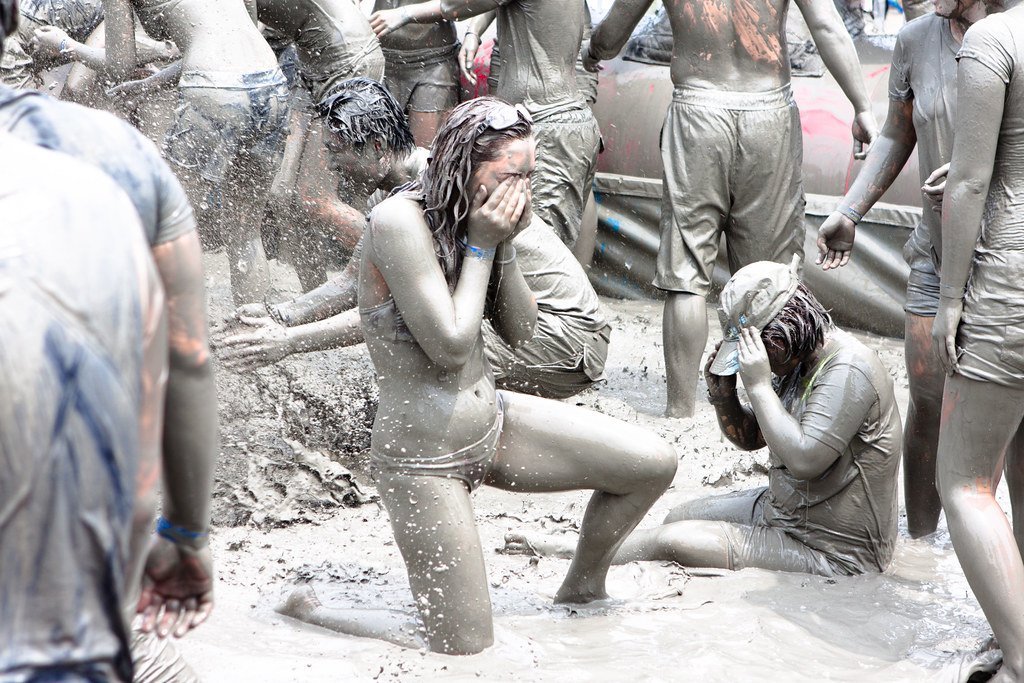
South Korea has many world-class attractions. But nothing quite prepares you for willingly diving into an enormous pit of mud and considering it a holiday. For 10 days in summer, people in Boryeong basically have nothing but mud on their mind. The unusual mud festival has no religious or spiritual background – it started as a marketing tool for the cosmetic industry that wanted to market the area’s famous mud.
The mud from the Boryeong mud flats is considered rich in natural minerals and is used to make beauty products. The world’s largest mud festival now attracts millions of mud lovers who participate in any activity that can be done with wet dirt, including bathing, wrestling, sliding, playing, dancing, and throwing. There is something wonderfully ridiculous about the fact that a cosmetics marketing campaign accidentally became one of the most beloved summer festivals on earth. Sometimes, the world surprises you.
6. El Colacho (Baby Jumping Festival) – Castrillo de Murcia, Spain

Of all the festivals on this list, this one arguably demands the deepest breath before you read further. Known as “El Colacho,” this festival dates back to 1620 and is held annually during the Catholic feast of Corpus Christi. Men dressed as devils jump over rows of babies laid out on mattresses in the street. This ritual is believed to cleanse the babies of original sin, ward off evil spirits, and ensure good health and prosperity throughout their lives.
During the El Salto del Colacho, men dressed as the Devil wear red and yellow suits holding whips and oversized castanets to jump over babies who lie on mattresses in the street. The 1600s cultural festival is believed to ward off evil spirits, ensuring a safe passage through life. No injuries have been reported, but the Catholic higher-ups frown upon the ritual. Part ancient rite, part theatrical spectacle, this festival sits comfortably in its own category of “you just have to see it to believe it.”
7. Cooper’s Hill Cheese-Rolling – Gloucestershire, England
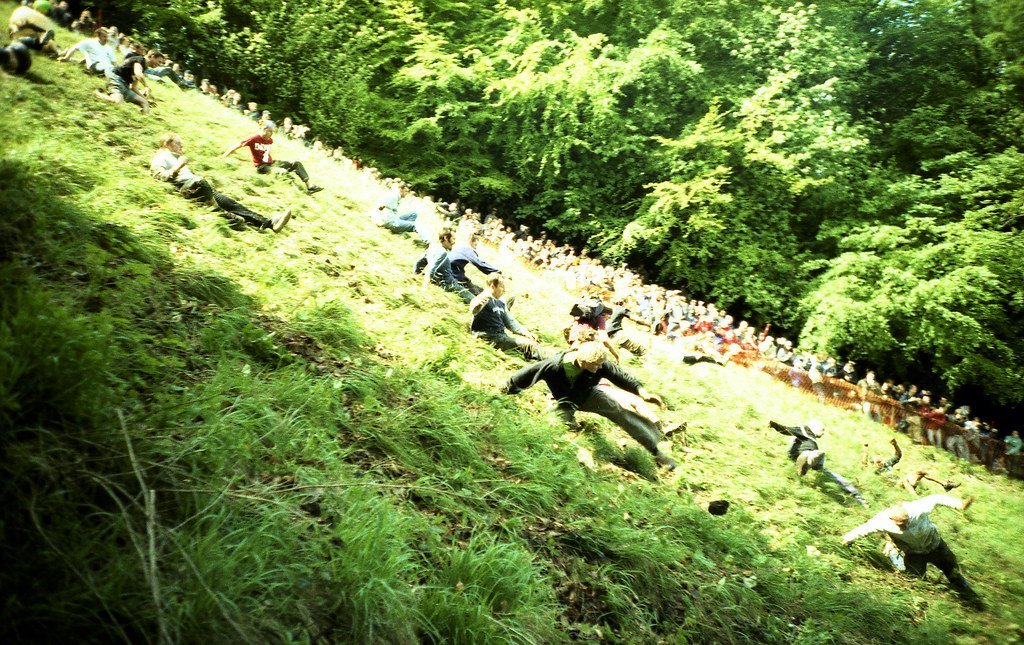
Imagine rolling a nine-pound wheel of cheese down a near-vertical hill at speeds approaching 80 miles per hour and then chasing it. That is exactly what happens in Gloucestershire every spring. Dating back to at least 600 years ago, many believe that cheese rolling originated as an ancient festival that saw pagan communities mark the changing of the seasons.
Participants hurl down the steep and grassy Cooper’s Hill chasing a frisbee-like wheel of Double Gloucester cheese. Cooper’s Hill was chosen for being the steepest in Gloucestershire, standing at a whopping 180 meters high. With this dramatic incline, contestants have no hope of staying on their feet during the duration of the race. The cheese rolling is a serious event: many of the runners injure themselves and get scooped up by the ambulance once they reach the bottom of the hill. Dangerous, absurd, gloriously British. What more could you want?
8. Monkey Buffet Festival – Lopburi, Thailand
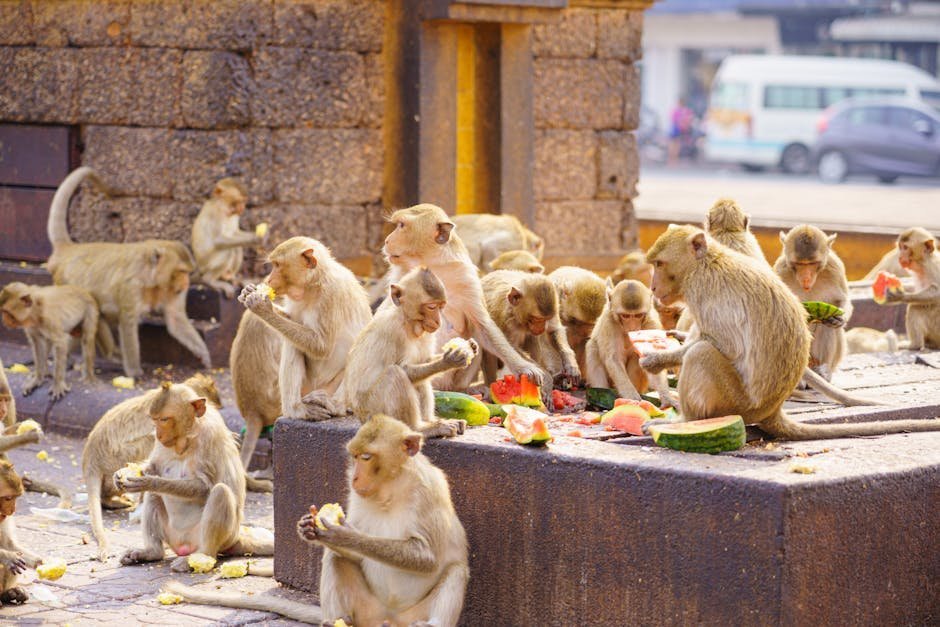
In the ancient city of Lopburi, there lives a very large and very opinionated group of macaques. Once a year, the city goes all out to feed them. The local monkey population of around 2,000 to 3,000 in the Lopburi Province north of Bangkok is gifted with a feast of 4,000 kilograms of fruits, vegetables, cakes, and candies every November. After the monkeys are given their treat, youths dressed up as monkeys perform dances.
The festival first occurred in 1989, run by a local businessman who thought of this unique way to drive up tourism in Lopburi. Luckily for him and the monkeys, it worked. While it may seem silly to Westerners, reverence for monkeys has its roots in the Hindu epic tale, the Ramayana, which is at least 2,000 years old. One crucial episode sees the prince Rama having to rescue Sita from a demon, a victory only won after Rama receives help from Hanuman, a monkey king, and his troops. So next time someone accuses you of treating your pets too well, just remember: Thailand built an entire festival around it.
9. Phuket Vegetarian Festival – Phuket, Thailand
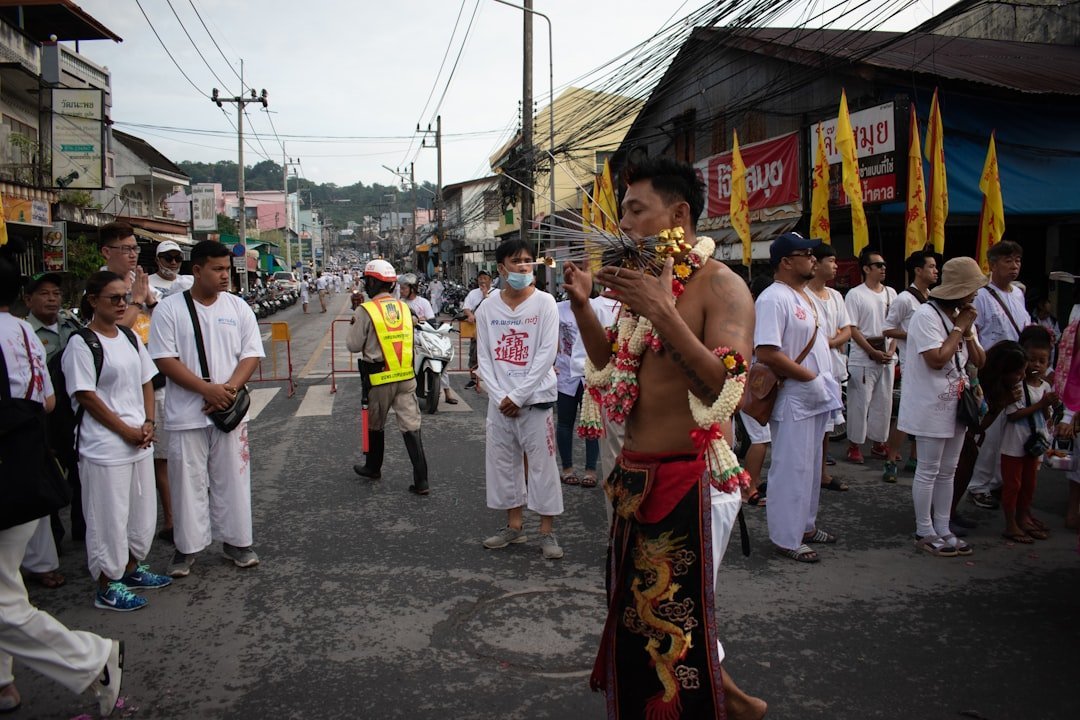
Thailand appears again on this list, and this time the festival is far more intense. The festival originated in 1825 when a Chinese opera troupe performed ritualistic self-mutilation to protect against an outbreak of disease. Today, the streets are filled with the aroma of incense and vegetarian delicacies, as mediums enter trance states to connect with Chinese deities and perform astonishing acts of endurance.
This nine-day festival attracts thousands of spectators who come to witness these extraordinary displays of faith rooted in Chinese-Thai traditions. The participants believe that by enduring these intense physical challenges, they can purify their souls and bring blessings to their communities. It’s hard to say for sure what the right emotion is when watching this festival. Awe feels most accurate. This is devotion stripped to its rawest, most visceral form.
10. Busójárás – Mohács, Hungary
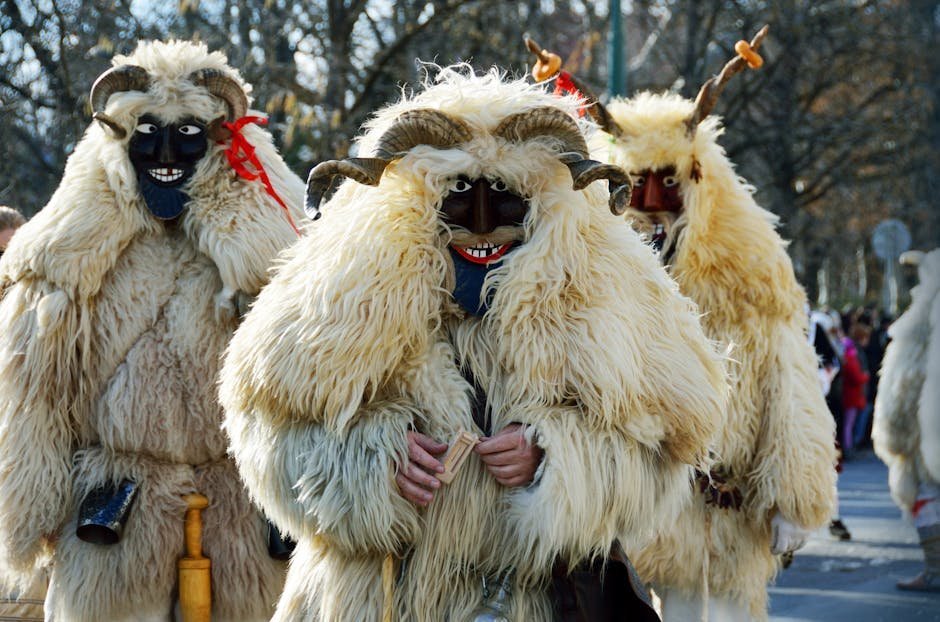
Every year, the town of Mohács undergoes a transformation that would genuinely terrify anyone who stumbled upon it unprepared. The Busójárás is an annual celebration of the Šokci living in the town of Mohács, Hungary. The event begins at the end of the Carnival season and ends the day before Ash Wednesday. The celebration features Busós, people wearing traditional masks, and includes folk music, masquerading, parades, and dancing.
The carved wooden masks worn by participants are genuinely fearsome. Think enormous horned faces, wild furs, cowbells, and rattles. The whole point of the costumes is to scare away the winter and, according to local legend, the Ottoman invaders who once occupied the region. UNESCO recognized the Busójárás as an Intangible Cultural Heritage of Humanity, and honestly, once you see those masks, you will never question why it deserved the recognition.
11. Air Guitar World Championships – Oulu, Finland
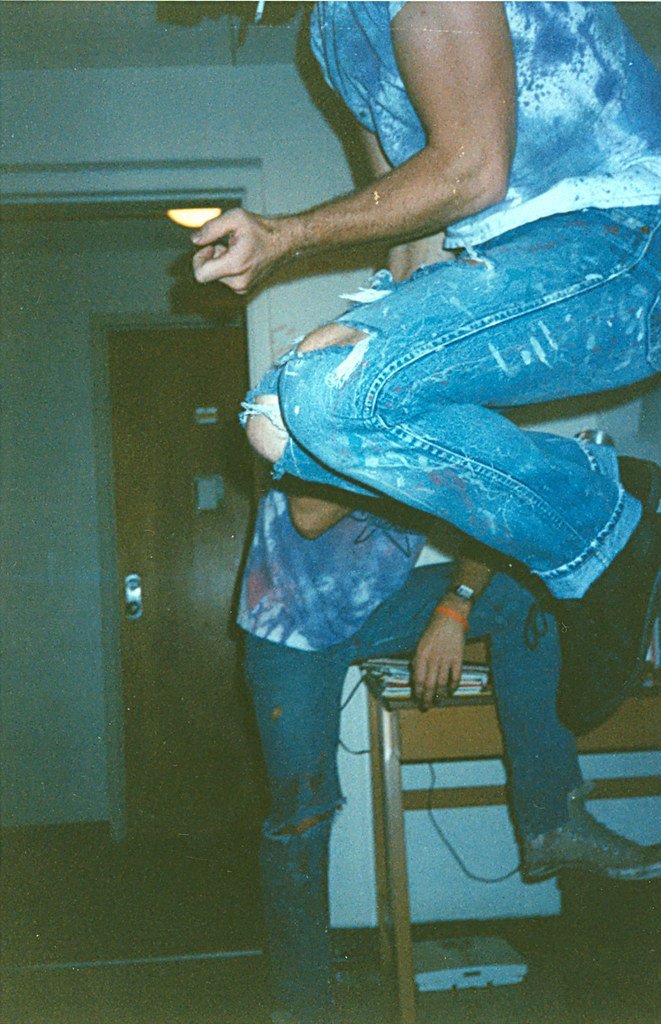
This one is exactly what it sounds like. And it is magnificent. The Air Guitar World Championship has been held annually in Oulu, Finland, since 1996 as part of the Oulu Music Video Festival. What started as a joke has turned into a serious draw for the event.
Participants must play air guitar on stage in two rounds with each lasting at least one minute, one song chosen by the participant and one by the organizer, and are scored out of 6.0. The ideology behind the event is a simple one: wars would end and all the bad things would go away if everyone just played air guitar. The one-of-a-kind festival is today among the top battle competitions popular in Europe, Australia, USA, Japan, UK, Canada, and New Zealand. No instrument. No sound. Absolutely maximum effort. I find it deeply inspiring, honestly.
12. Cheung Chau Bun Festival – Hong Kong
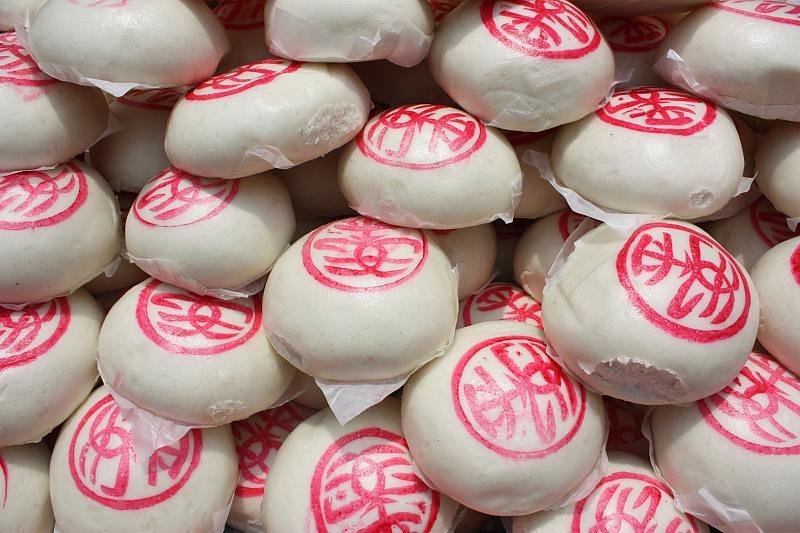
One of Hong Kong’s most beloved traditions involves a 60-foot tower covered in buns and a very competitive scramble to the top. The Bun Festival is the biggest and busiest event in Cheung Chau. What originally started as a celebration for the end of the plague on the island has transformed into one of the popular cultural events today.
The festival runs for almost a week with a vibrant yet traditional parade along with the famous Bun Scrambling Competition, where participants conquer a massive 60-feet bamboo tower covered with buns, trying to grab as many buns as possible. The annual festival dates back to the 18th century and marks the eighth day of the fourth month in the Chinese calendar, which coincides with the celebration of Buddha’s birthday. There is something wonderfully poetic about a tower of buns that connects ancient spiritual tradition to spectacular athletic theatre.
13. Wife Carrying Championship – Sonkajärvi, Finland

Finland gives the world not one but two entries on this list, which says something remarkable about Finnish creativity. Wife carrying, or eukonkanto in Finnish, originated as a sport in Sonkajärvi, Finland, in 1992. The exact origins of the tradition are unknown, but each story has something to do with theft. Today, wife carrying is practiced around the world.
Participants are allowed to carry their wives in a variety of ways, including piggyback, fireman’s carry, or Estonian-style, where the wife hangs upside-down with her legs around her husband’s shoulders. They carry her across a 253.5-meter track riddled with obstacles. The prize for winning, famously, is the wife’s weight in beer. Whether that makes the whole thing more or less romantic is a question best left to the participants themselves.
14. Las Bolas de Fuego (Fireball Festival) – Nejapa, El Salvador
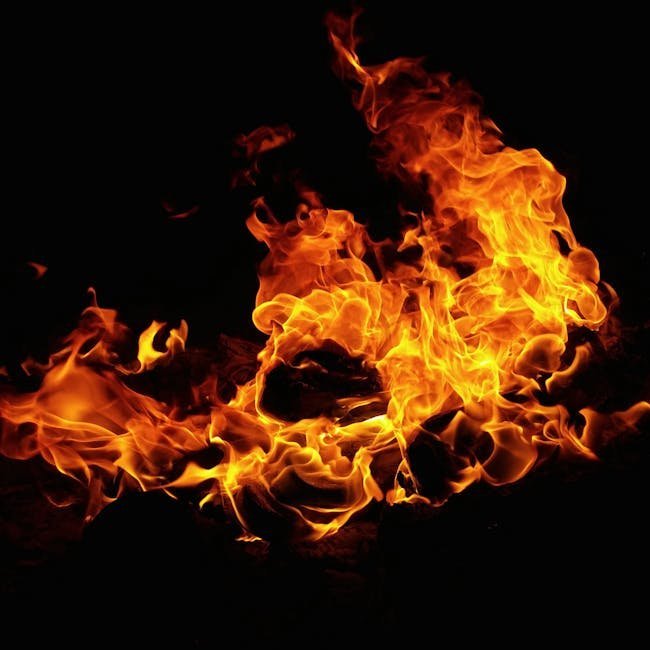
Every year, in the Salvadoran town of Nejapa, residents split into two teams and hurl flaming balls of kerosene at each other. Each year on the evening of August 31st, residents of Nejapa gather around to throw fireballs in commemoration of the 1658 El Playon volcanic eruption. History has it that the natural disaster forced the villagers of the old town to flee and settle in their current location. Today, residents split themselves into two teams, paint their faces like skulls, and begin the festival by hurling palm-sized fireballs of kerosene at the opposing team.
Though dangerous, Las Bolas de Fuego has been running for more than 100 years now and falls among the top unusual festivals worldwide. The sheer bravado of the whole thing is staggering. This is not a festival for the faint of heart. It is, however, a festival that tells a genuine story of survival, resilience, and the spectacular human capacity to commemorate hardship with fire.
15. Gerewol Festival – Chad, West Africa
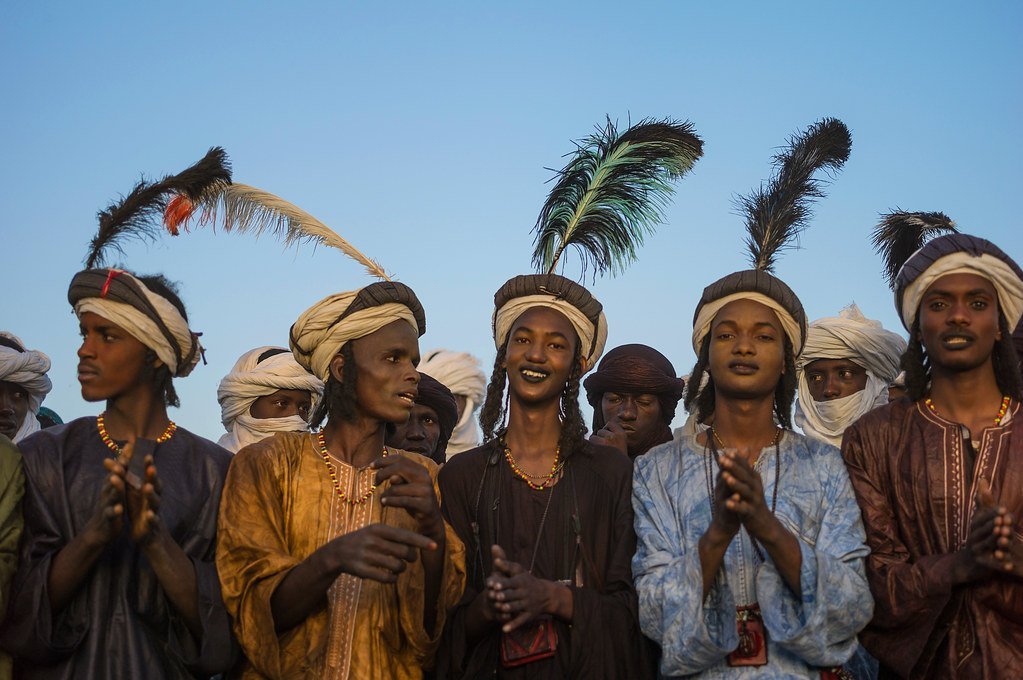
Among all the festivals on this list, the Gerewol may be the most visually breathtaking and the most culturally distinct. In this unique courtship ritual, young men compete to win the affections of suitors. Dressed in colorful clothing and face paint, the men showcase their dancing prowess and physical beauty in hopes of finding love, a stunning event underscoring the importance of courtship and marriage in their society.
The festival is celebrated by the Wodaabe people of the Sahel region. Men spend hours preparing intricate face paint, adorning themselves with feathers, beads, and jewelry, before performing hours-long dances designed to impress female judges. It completely inverts the Western expectation of how gender roles play out in courtship rituals. The world is rich with extraordinary celebrations showcasing the incredible diversity of human culture, and these festivals offer travelers a chance to witness traditions ranging from the wonderfully weird to the deeply meaningful.
The World Is Waiting – Go Celebrate It
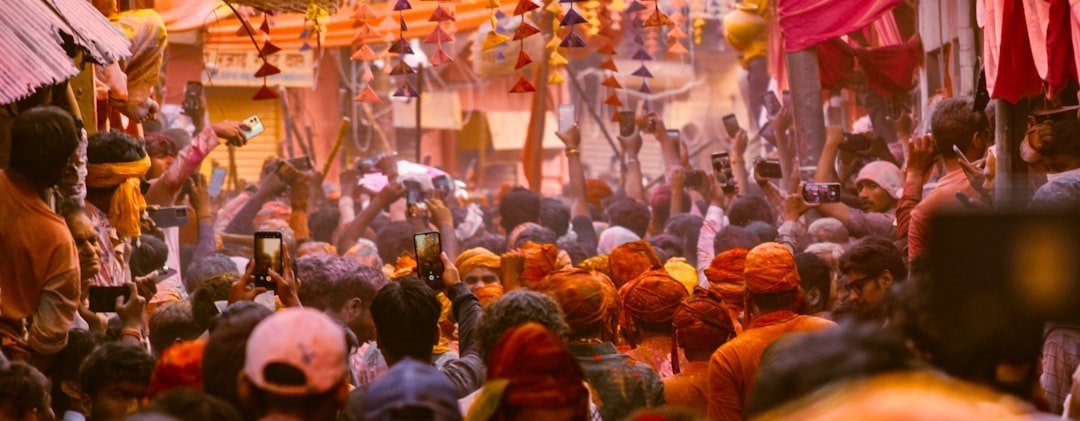
Every single festival on this list started somewhere small. A crowd in a Spanish town square. A businessman with an eccentric idea in Thailand. A Viking tradition in the frozen north of Scotland. Small seeds that grew into extraordinary cultural events capable of drawing travelers from every corner of the globe.
Festivals are more than just parties. They are a window into the values, rituals, and quirks of a culture. The strangest festivals often come with the richest backstories, rooted in history, mythology, or sheer whimsy, and while they might seem unusual to outsiders, to the locals, they are cherished traditions that bring communities together.
There is no museum in the world that can replicate the experience of standing in a crowd of strangers who are all, for one shared moment, completely and totally alive in the same tradition. These extraordinary celebrations offer travelers the chance to participate in living traditions, showcasing everything from ancient rituals to modern creative expressions. For adventurous travelers, these unusual festivals provide lasting memories and stories that no conventional tourist attraction can replicate.
So here is a question worth sitting with: of all 15 festivals on this list, which one would you be brave enough to actually attend? Drop your answer in the comments and let’s find out who among us is truly ready for adventure.

Besides founding Festivaltopia, Luca is the co founder of trib, an art and fashion collectiv you find on several regional events and online. Also he is part of the management board at HORiZONTE, a group travel provider in Germany.
