

- 5 Ambitious 21st-Century Ideas That Crashed and Burned - July 26, 2026
- 5 Bizarre True Crime Cases That Defy Belief - July 26, 2026
- Discover Your Reading Persona: Which Type Fits You Best? - July 25, 2026

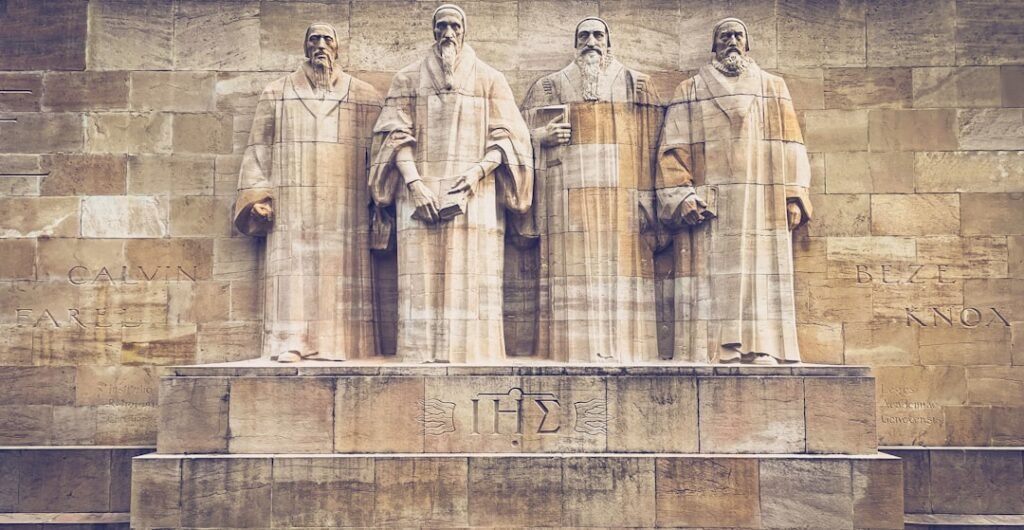
A Movement Without Clear Boundaries (Image Credits: Unsplash)
The Protestant Reformation transformed European Christianity after Martin Luther challenged the Catholic Church in 1517, yet scholars continue to debate its endpoint.
A Movement Without Clear Boundaries
Martin Luther posted his Ninety-Five Theses on October 31, 1517, criticizing indulgences and sparking widespread theological upheaval. This act ignited protests across German states and beyond, leading to the formation of Lutheran churches. The movement quickly spread as reformers like John Calvin and Huldrych Zwingli advanced their own interpretations of scripture.
Religious divisions fueled conflicts, including the Peasants’ War in 1524-1525 and the Schmalkaldic War in the 1540s. These events highlighted the Reformation’s disruptive power, as princes aligned with Protestant causes against imperial authority. The Catholic Church responded with the Council of Trent from 1545 to 1563, which clarified doctrines and launched the Counter-Reformation.
Milestones Often Cited as Endpoints
Historians frequently point to the Peace of Augsburg in 1555 as a potential turning point. That agreement allowed rulers to determine their territories’ religion under the principle of cuius regio, eius religio, granting legal recognition to Lutheranism alongside Catholicism. It temporarily eased tensions in the Holy Roman Empire.
Still, violence persisted. The French Wars of Religion culminated in the St. Bartholomew’s Day Massacre of 1572, while the Thirty Years’ War ravaged Europe from 1618 to 1648. The Peace of Westphalia in 1648 ended that conflict, extending religious tolerances to Calvinism and affirming state sovereignty over faith matters.
- 1517: Luther’s Theses launch the Reformation.
- 1555: Peace of Augsburg legalizes Protestantism in parts of Germany.
- 1563: Council of Trent concludes, strengthening Catholic reforms.
- 1572: St. Bartholomew’s Day Massacre underscores ongoing strife.
- 1648: Peace of Westphalia halts major religious wars.
Arguments for an Ongoing Reformation
Many experts argue the Reformation lacked a definitive close because its ideas endured and evolved. Enlightenment thinkers in the 18th century further secularized society, diminishing the church’s political dominance. The American and French Revolutions embedded Protestant principles like individual liberty into modern governance.
In the 19th and 20th centuries, movements such as Methodism and Pentecostalism carried Reformation emphases on personal faith and scripture. The Second Vatican Council from 1962 to 1965 prompted Catholic adaptations that echoed Protestant critiques. Today, global Christianity reflects diverse denominations born from those 16th-century schisms.
Legacy in the Modern World
The Reformation’s influence extends to education, work ethics, and democracy. Protestant regions often prioritized literacy to enable Bible reading, fostering widespread schooling. Max Weber later linked Calvinist doctrines to capitalism’s rise, though debates persist on that connection.
| Proposed Endpoint | Year | Key Outcome |
|---|---|---|
| Peace of Augsburg | 1555 | Ruler’s choice of religion |
| Peace of Westphalia | 1648 | End of major wars, tolerance expanded |
| Second Vatican Council | 1965 | Catholic-Protestant dialogue advances |
These markers illustrate shifting views rather than a single resolution.
Key Takeaways
- The Reformation began decisively in 1517 but lacked a formal end.
- 1648’s Peace of Westphalia quelled Europe’s deadliest religious wars.
- Its principles shape contemporary faith, politics, and culture worldwide.
Ultimately, the Reformation endures as a pivotal force in Western history, with no universal agreement on its closure. Its ripples continue to influence divisions and dialogues in Christianity. What markers would you consider the true end? Share your thoughts in the comments.

Besides founding Festivaltopia, Fritz is the managing director of Europe’s largest manufacturer of mobile stages Kultour and has a lot of experience in the event industry, loves music and likes to go to festivals.
