


- The 20 First and Last Sentences of These Books Say Everything - September 22, 2026
- 10 Stories That Are Way Shorter Than You Remember - September 22, 2026
- The 20 Most Quoted Lyrics in Instagram Captions — Ranked - September 22, 2026
Ever feel like your brain’s stuck in a rut? In our fast-paced world where innovation is currency, creative thinking games aren’t just child’s play – they’re secret weapons used by artists, entrepreneurs, and visionaries to stay ahead. These 10 mind-bending games will jolt your imagination awake and transform how you solve problems forever.
Oblique Strategies: Brian Eno’s Genius in a Deck

Imagine having a personal creativity coach in your pocket. That’s Oblique Strategies, the legendary card deck created by musician Brian Eno and artist Peter Schmidt. Each card delivers a cryptic command like “Honor thy error as hidden intention” or “Do the last thing first.” When you’re staring at a blank page or stuck on a project, pulling a random card forces your brain to make unexpected connections. Many famous musicians and writers swear by this method to break through creative blocks. It works because it disrupts your habitual thinking patterns. The beauty lies in how these simple prompts can mean completely different things in various contexts. Keep the deck on your desk and watch how it transforms mundane tasks into creative adventures.
Rory’s Story Cubes: Where Every Roll Sparks Magic
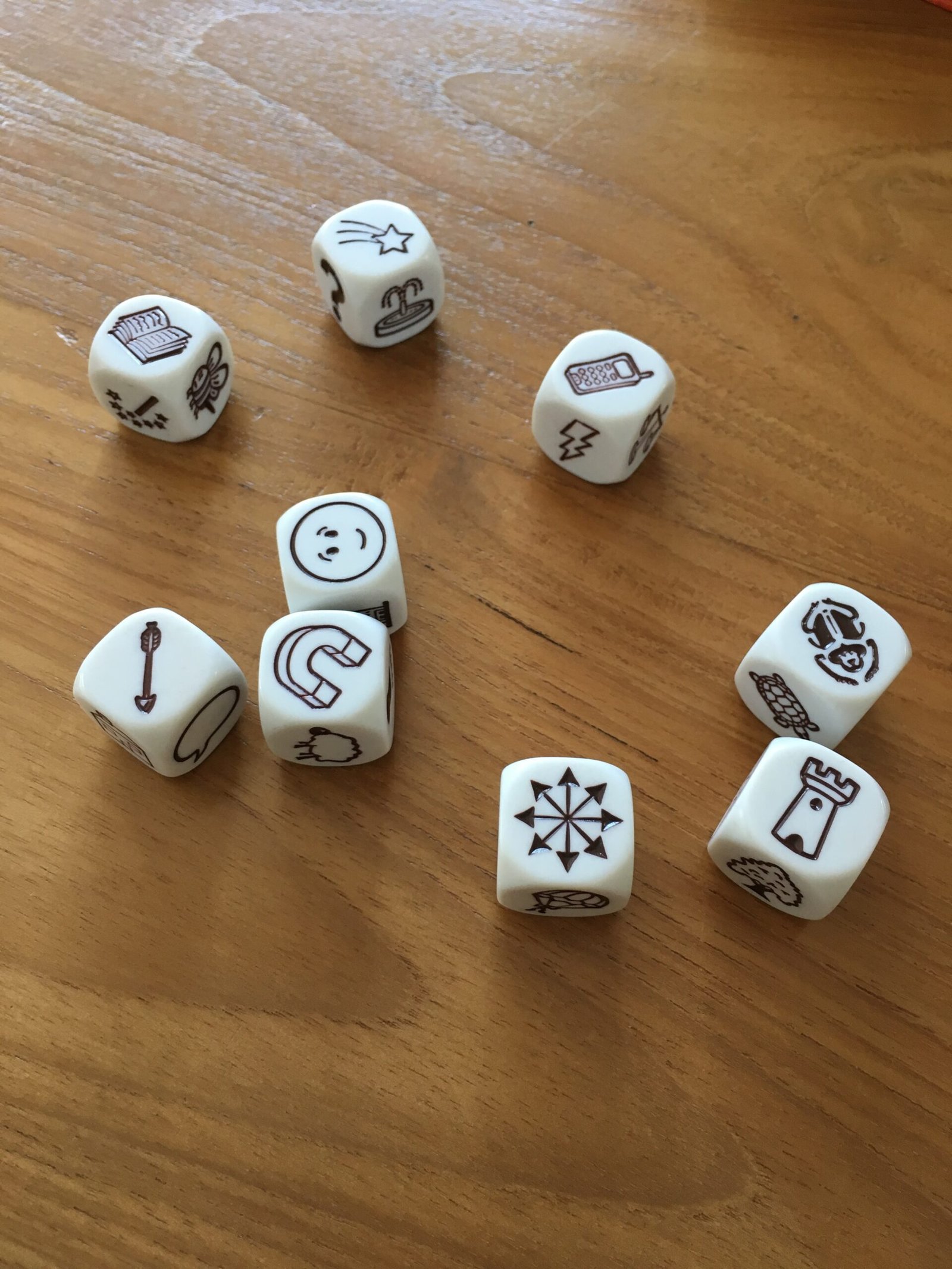
Nine dice, endless possibilities – that’s the magic of Rory’s Story Cubes. These aren’t ordinary dice; each side displays whimsical icons ranging from a lightning bolt to a turtle. The rules couldn’t be simpler: roll the cubes and craft a story linking the images. You’ll be shocked how quickly these colorful cubes awaken your inner storyteller. Teachers use them to boost students’ narrative skills, while corporate teams employ them for innovative brainstorming. The real power lies in how they force you to make unexpected connections between unrelated concepts. Whether you’re writing a novel or planning a marketing campaign, these cubes prove constraints actually fuel creativity rather than limit it.
The Extraordinaries Game: Supercharge Your Creative Confidence

What would Steve Jobs do? How would Marie Curie approach this? The Extraordinaries Game throws you into the minds of history’s greatest innovators through creative problem-solving challenges. Each card presents a scenario where you must think like your assigned extraordinary character. This game does more than spark ideas – it builds creative courage by showing you how legendary thinkers might tackle modern problems. Participants report feeling more daring in their ideas after playing. The secret sauce? It removes the fear of failure by framing solutions through someone else’s perspective. Perfect for teams needing an innovation boost or individuals wanting to think bigger.
Exquisite Corpse: The Surrealist Party Game That Actually Works

Born from 1920s Parisian artist gatherings, Exquisite Corpse remains one of the most delightfully unpredictable creativity boosters. Here’s how it works: one person starts a drawing or story, folds the paper to hide most of it, then passes it to the next contributor. The final reveal always sparks laughter and awe at the collective imagination. Modern versions include digital adaptations where teams build upon each other’s ideas blind. This game teaches you to embrace uncertainty and find beauty in unexpected combinations. Many professional creatives use variations of this to generate fresh concepts when feeling stuck. The lesson? Sometimes the best ideas come from relinquishing control.
Mind Mapping: Your Brain on Paper

Tony Buzan’s mind mapping technique has stood the test of time for good reason – it works with how your brain naturally operates. Start with a central concept in the middle of a page, then let related ideas branch out organically. Unlike linear lists, mind maps reveal hidden connections between concepts. Color coding different branches activates different parts of your brain. The tactile experience of hand-drawing maps often yields more creative insights than digital versions. Pro tip: try mapping the same concept multiple ways to uncover new perspectives. Designers, writers, and engineers alike use this method to untangle complex projects.
Reverse Brainstorming: Solving Problems Backwards

Here’s a counterintuitive trick that delivers brilliant results: instead of brainstorming solutions, brainstorm how to create the problem. This reverse approach reveals overlooked aspects of challenges. For example, if you’re designing a user-friendly app, list all the ways you could make it frustrating instead. Suddenly, solutions become obvious. Teams love this method because it removes the pressure of finding “right” answers initially. The sillier the bad ideas, the better – they often contain seeds of genius solutions. This technique works exceptionally well for quality improvement and innovation projects. It proves that sometimes you need to walk backward to move forward.
The Creativity Challenge: Quantity Begets Quality

Set a timer for 15 minutes and generate 30 ideas about anything – product names, plot twists, ways to use a paperclip. The key? No judging allowed during the sprint. This rapid-fire approach bypasses your inner critic that normally stifles wild ideas. Studies show that later ideas in these sessions tend to be more innovative than early ones. The magic happens when you push past obvious solutions into uncharted territory. Many successful inventions began as “silly” ideas in sessions like these. Keep a dedicated idea notebook and watch how your creative output transforms over time.
The Random Word Game: Forcing Brilliant Connections

Open a dictionary to a random page and pick a word – any word. Now connect it to your current project. If you’re designing a chair and get “elephant,” maybe you create a sturdy, graceful design with memory foam “feet.” This game trains your brain to find relevance in the irrelevant, a hallmark of creative genius. The more absurd the initial connection seems, the more innovative the results tend to be. Advertising creatives use versions of this technique daily to develop memorable campaigns. It proves that constraints breed creativity rather than limit it.
Role-Playing Scenarios: Walk in Their Shoes

Great innovators share one skill: empathy. Role-playing exercises where you embody different personas (angry customer, skeptical investor, enthusiastic intern) yield profound insights. Try holding a meeting where team members assume various stakeholder roles. The perspectives that emerge often reveal blind spots in plans. This method works because it forces you out of your habitual thinking patterns. Many breakthrough products emerged from designers truly understanding users’ unspoken needs. Keep a “role dice” with different personas to shake up routine brainstorming sessions.
The 30 Circles Challenge: Simple Shapes, Infinite Possibilities

Bob McKim’s famous creativity test from Stanford’s d.school remains one of the quickest ways to measure and improve creative thinking. Grab a paper with 30 empty circles and set a 3-minute timer. Transform as many circles as possible into recognizable objects (a basketball, planet, smiley face). Most adults stall after 10-15, while children easily fill the page. This reveals how education often trains creativity out of us. Regular practice literally rewires your brain to see potential everywhere. Designers use variations of this to break out of creative ruts. The lesson? Creativity isn’t magic – it’s a muscle anyone can strengthen.

Besides founding Festivaltopia, Luca is the co founder of trib, an art and fashion collectiv you find on several regional events and online. Also he is part of the management board at HORiZONTE, a group travel provider in Germany.
