

- 15 Incredible True Stories Behind the Most Famous Rock Ballads Ever - March 26, 2026
- The Disturbing Origins of 10 Famous Fairy Tales - March 26, 2026
- 10 ‘Ghost Ships’ That Mysteriously Disappeared At Sea - March 26, 2026
There’s a romantic idea most of us carry that great writers live quietly, hunched over desks in dimly lit rooms, conjuring worlds from pure imagination. Honestly, the truth is far more exciting than that. Some of the most celebrated literary minds in history were restless, borderline obsessive travelers who couldn’t stay put for more than a season. They needed foreign streets, unfamiliar smells, and the friction of distant cultures to fuel their work.
Books have the ability to transport us to faraway places, and the settings for much of the greatest literature ever written were inspired by the real-life experiences of their authors, from tributes to their hometowns to meditations on their travels. The connection between movement and creativity is older than the printing press. Travel didn’t just color these writers’ work around the edges. For many of them, it was the entire beating heart of it. Let’s dive in.
Ernest Hemingway: The Man Who Needed Every Continent

Ernest Hemingway was an American novelist, short-story writer, and journalist known for an economical, understated style that influenced later 20th-century writers, romanticized for his adventurous lifestyle and outspoken, blunt public image. That reputation wasn’t manufactured. He genuinely lived at the edge of things, and his travels were the raw material for nearly everything he wrote.
In 1921, Hemingway moved to Paris, where he worked as a foreign correspondent for the Toronto Star and was influenced by the modernist writers and artists of the “Lost Generation” expatriate community. During his first 20 months in Paris, Hemingway filed 88 stories for the Toronto Star newspaper. He covered the Greco-Turkish War, where he witnessed the burning of Smyrna, and wrote travel pieces such as “Tuna Fishing in Spain” and “Trout Fishing All Across Europe.”
Much of Hemingway’s inspiration came from his own experiences with travel and war and can be found in some of his most renowned classics: “A Farewell to Arms,” “The Sun Also Rises,” and “For Whom the Bell Tolls.” His African safaris were no idle hobby either. He went on numerous hunting safaris in Africa, which greatly influenced his writing in works such as “The Green Hills of Africa” and “The Snows of Kilimanjaro,” which depict hunting scenes and explore themes of nature, human endurance, and mortality. Few writers have ever squeezed more literary mileage from a passport.
Mark Twain: America’s Funniest Man Abroad
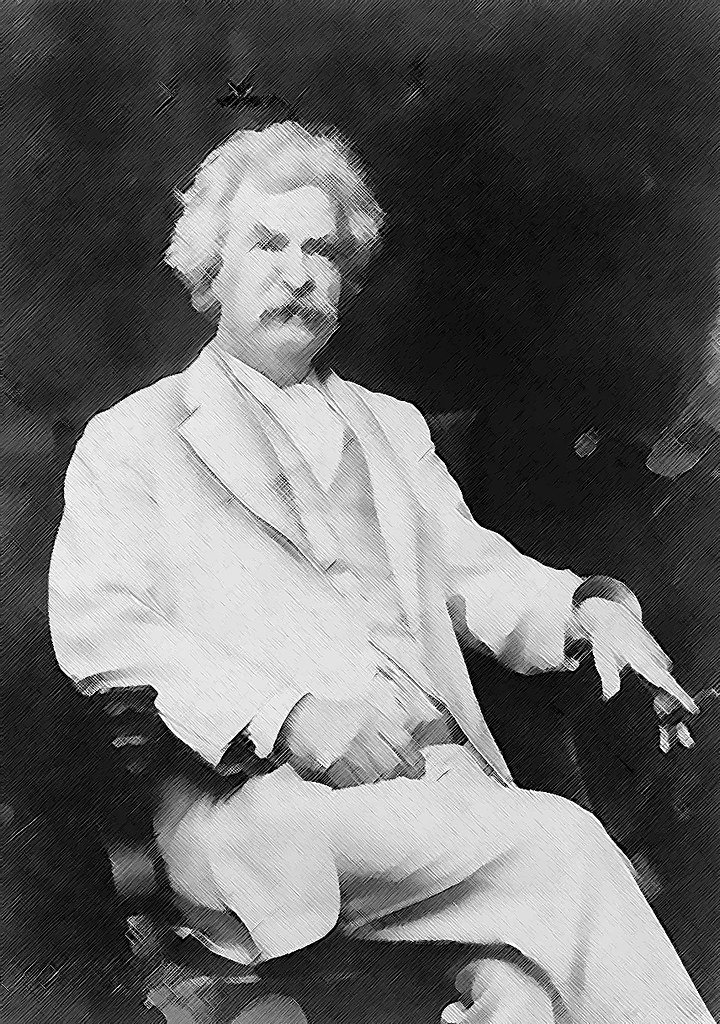
Here’s the thing about Mark Twain: most people associate him with the Mississippi River, with Tom Sawyer and Huck Finn and the deep American South. What they don’t realize is that his single best-selling book during his own lifetime was actually a travel memoir. That’s right.
The Innocents Abroad, or The New Pilgrim’s Progress is a travel book by American author Mark Twain. Published in 1869, it humorously chronicles what Twain called his “Great Pleasure Excursion” on board the chartered steamship Quaker City through Europe and the Holy Land with a group of American travelers in 1867. The five-month voyage included numerous side trips on land. He visited the Azores, Morocco, France, and Italy, where he avoided quarantine at Naples. He broke quarantine in Greece, visited the Ottoman Empire and Russia, and took a two-week horse ride through the Holy Land. On the way home the ship stopped in Egypt, Spain, and the Bermudas.
The book offers a satirical perspective on the experiences of Americans encountering foreign cultures and landmarks, revealing both the charm and the shortcomings of their interactions. Twain’s humorous commentary highlights the often superficial and commercialized nature of European sites, and the narrative serves as a critique of American behavior abroad, suggesting that both sides can be foolish and exploitative. Travel, for Twain, wasn’t just inspiration. It was a mirror held up to American identity itself.
George Orwell: A Colonial Police Officer Who Became a Literary Conscience
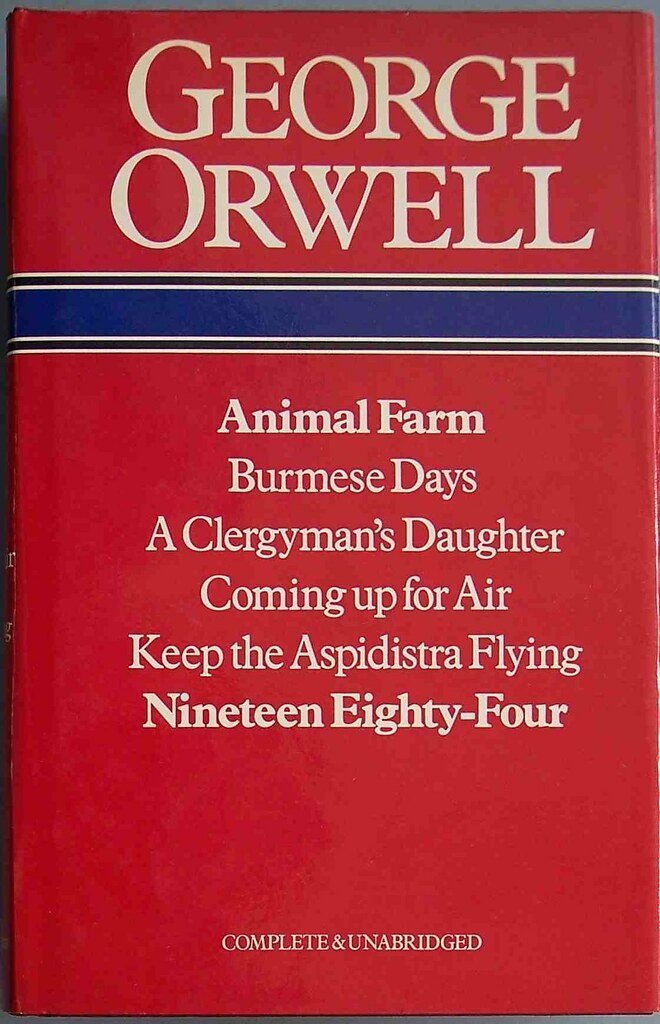
Before George Orwell was the author of “1984” and “Animal Farm,” before he became one of the most quoted writers in the English language, he was a young man stationed in one of the most remote postings of the British Empire. That journey changed everything.
George Orwell served in the Indian Imperial Police in Burma for five years from 1922 to 1927, an experience that was the inspiration for his 1934 novel “Burmese Days.” He worked as a colonial police officer in northern Burma in the 1920s. Orwell served in a number of locations in Burma. After a year of training in Mandalay and Maymyo, his postings included Myaungmya, Twante, Syriam, Moulmein, and Kathar.
Orwell’s time in Burma marks a key turning point in his life. It was during those years that he was transformed from a snobbish public-school boy to a writer of social conscience who sought out the underdogs of society. His subsequent journey to Paris and London, living among the destitute, only deepened that transformation. In Burma, there is a joke that Orwell wrote not just one novel about the country, but three: a trilogy comprised of “Burmese Days,” “Animal Farm,” and “Nineteen Eighty-Four.” I find that darkly funny and entirely believable.
James Joyce: The Exile Who Never Stopped Writing About Home
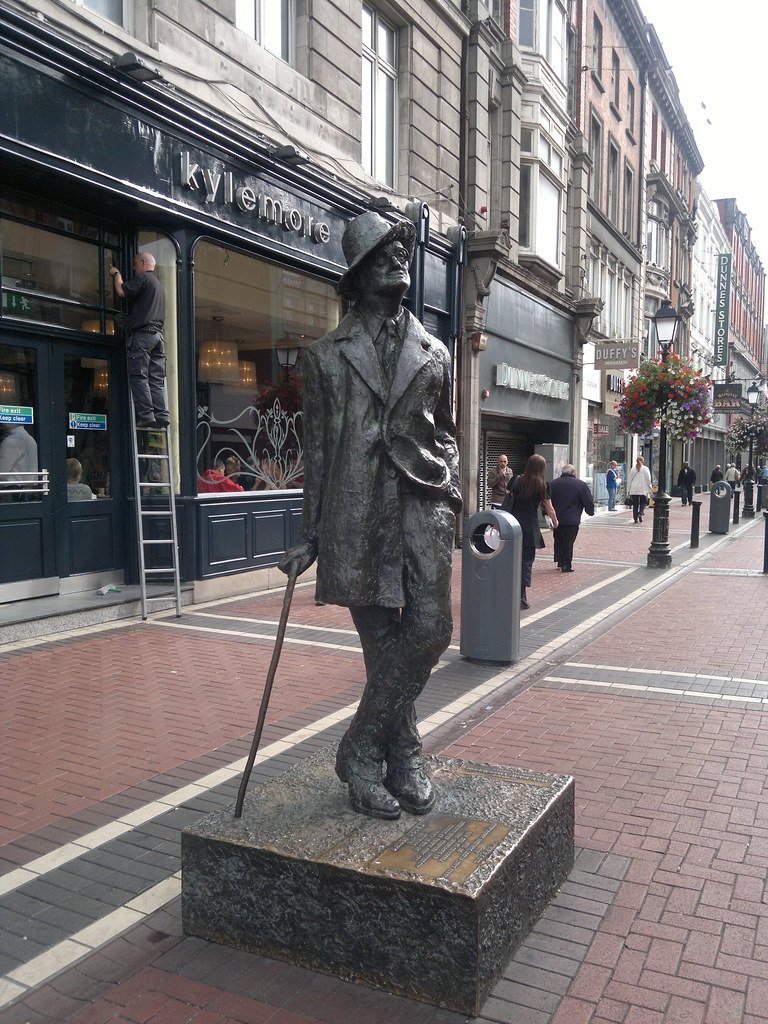
There is a delicious irony at the heart of James Joyce’s travel story. He spent most of his adult life running away from Ireland, only to spend his entire literary career writing about nothing but Ireland. It’s the kind of paradox only a true traveler could produce.
None captured the Irish capital as faithfully as James Joyce. Though he spent most of his adult life in Trieste, Italy, Joyce was born in Dublin in 1882 and chose it as the setting for both of his famous tomes, “Ulysses” and “Finnegans Wake.” Yet his greatest tribute to the city has to be “Dubliners,” a short story collection centered on 20th-century Irish middle-class life.
Joyce’s years in Trieste gave him the distance he desperately needed to look back at Dublin with full clarity. It’s a little like how you can only see a mountain properly once you’ve walked far enough away from it. Living as an expatriate in continental Europe sharpened his observational eye, feeding his extraordinary capacity for emotional and cultural detail. Distance, it turns out, was exactly what one of history’s greatest novelists needed to write with devastating intimacy about a place he had left behind.
Karen Blixen: Seventeen Years in the African Wild
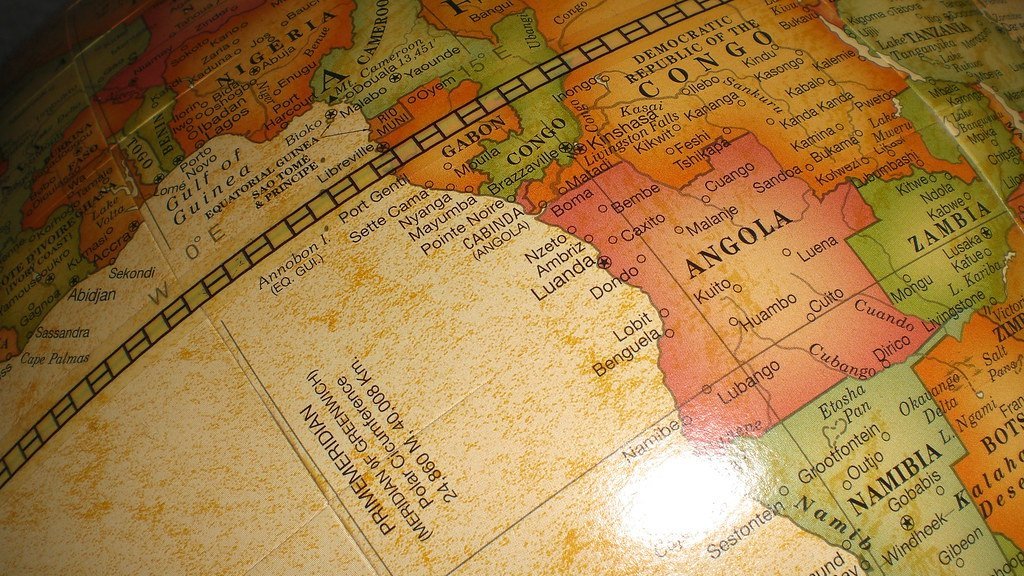
Not every writer who traveled extensively did so on a whim or with notebooks already packed. Karen Blixen went to Africa to run a coffee farm and ended up with one of the most celebrated memoirs of the twentieth century. Sometimes life makes writers of us, whether we plan it or not.
In 1937, Danish author Karen Blixen, pen name Isak Dinesen, published a memoir recounting her life on a coffee plantation in what was then called British East Africa. Depicting both the natural landscape and the characters and customs she came to know during her nearly two decades in Kenya, “Out of Africa” examines Blixen’s role as a European colonizer in the dying days of East Africa’s British colonial rule.
The Ngong Hills of Kenya, the vast Kenyan highlands, and the vivid rhythms of East African life saturated Blixen’s prose in ways that no library could ever replicate. She lived among the Kikuyu and Maasai peoples, learned from them, and wrote about them with a richness that crossed cultural lines. Her nearly two decades on that continent produced not just a memoir but an entire sensibility, a way of seeing time and landscape and human existence that remains striking to this day.
E.M. Forster: Florence Changed Everything
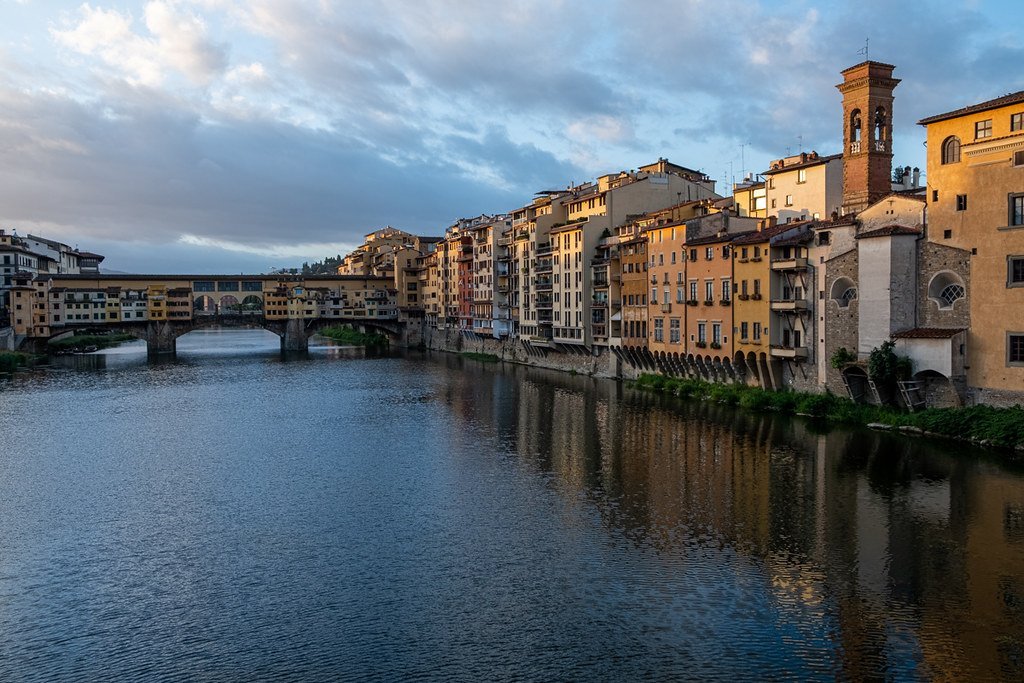
Some writers travel to gather material. E.M. Forster traveled to Italy and came back with not just material but an entire novel, practically pre-formed by the streets of Florence themselves. It’s one of the most direct examples in literary history of a specific place becoming the engine of a specific book.
Referred to as being based on a trip E.M. Forster took to Florence in 1901, “A Room with a View” evokes Florence and European travel of a certain time perfectly. In the story, Lucy Honeychurch goes to Italy with her cousin Charlotte and they are given a room with a view of a courtyard, not of the river. That seemingly trivial detail, where the view points, becomes the novel’s defining metaphor for constraint and liberation.
Forster’s journeys to India were equally transformative. His extended travels there eventually produced “A Passage to India,” a novel so dense with cultural nuance and moral complexity that it could only have been written by someone who had truly immersed themselves in the subcontinent’s contradictions. Travel, for Forster, was never tourism. It was an act of seeing, and he had one of literature’s sharpest pairs of eyes.
Rumi: The Mystical Poet Who Traveled Escaping Destruction
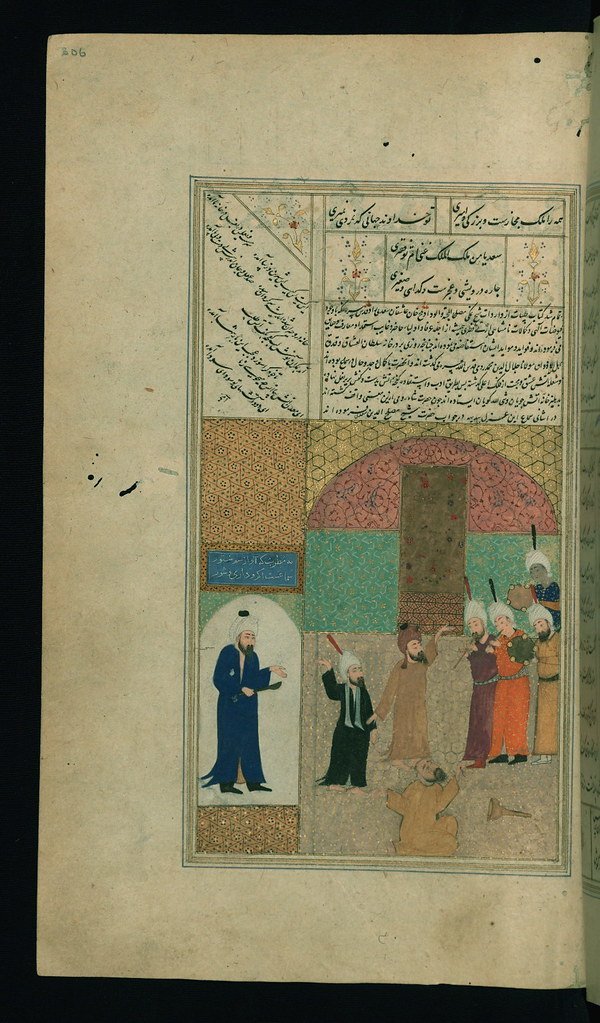
Long before the modern age of jet travel and literary residencies, one of the world’s greatest poets was forced into a journey that would shape the entire course of Islamic mystical literature. Rumi’s travels were not of the leisurely variety. They were born of crisis.
Jalaluddin Rumi, Scholar in Religious Sciences and famed Sufi Mystic Poet, was born on September 29, 1207, in Balkh, modern-day Afghanistan. Escaping Mongol invasions, he travelled extensively to Muslim lands, including Baghdad, Mecca, Damascus, and Malatia in Turkey. He eventually married and moved to Konya in present-day Turkey.
Encountering the wandering dervish and Saint Shamsuddin Tabrezi, who introduced him to the path of mystical and spiritual knowledge, Rumi authored six volumes of didactic epic works. His most famous work, written in Dari and Arabic, is commonly referred to as the “Persian Quran.” The encounter with Shams in Konya, a city reached only after years of displacement and wandering, became the explosive emotional fuel for Rumi’s greatest poems. It’s hard to imagine that mystical fire igniting in a life that had never moved.
V.S. Naipaul: From Trinidad to the World and Back Again
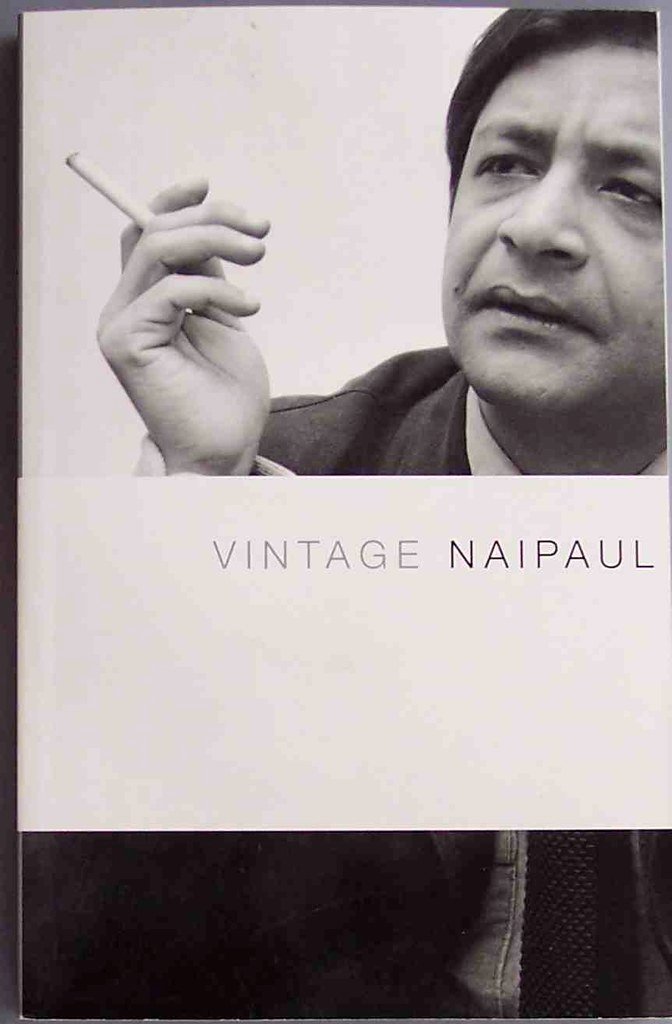
V.S. Naipaul was one of literature’s great restless spirits, and his relationship with travel was uniquely charged because it was inseparable from questions of identity, belonging, and colonial legacy. He was always moving, and always writing about what that movement meant.
Nobel Prize-winning V.S. Naipaul, a Trinidad-born British writer, used his birthplace as the backdrop for many of his early works, as well as the first of his novels to gain worldwide recognition, “A House for Mr. Biswas.” Leaving Trinidad as a young man on a scholarship to Oxford, Naipaul spent decades traveling through Africa, India, South America, and the Caribbean, producing a body of travel writing alongside his fiction that remains deeply controversial and brilliantly observed.
His journeys through India, documented in works such as “An Area of Darkness,” “India: A Wounded Civilization,” and “India: A Million Mutinies Now,” traced a profoundly complicated relationship with a country he had inherited culturally but never truly known. His travel was almost an ongoing argument with himself, a search for roots and identity that never quite resolved. Travel writing is much more than a literary genre. It is a window into the past, a reflection of human curiosity, and a record of the world’s most intriguing cultures and landscapes. Naipaul proved that more completely than almost anyone.
Conclusion: The Open Road as Literary Laboratory

What strikes me most about all eight of these writers is that their travels were rarely comfortable. They weren’t taking luxury cruises or ticking off bucket lists. They were throwing themselves into unfamiliar, sometimes dangerous, often morally challenging situations, and then doing what writers do: making sense of it in prose.
Travel writing has existed for as long as humans have journeyed beyond their familiar surroundings. The earliest travel writers were not necessarily authors in the modern sense, but rather individuals who felt compelled to document their experiences for various reasons. That compulsion, that need to record what the eye and the heart encounter in foreign territory, turns out to be one of the deepest engines of literary creativity. Hemingway needed Spain and Africa. Orwell needed Burma. Twain needed the Mediterranean. Blixen needed Kenya.
Every single one of these writers came home changed, and then gave us something we had never read before. The lesson is almost embarrassingly simple: sometimes you have to leave to truly see. Which of these journeys surprised you the most?

Besides founding Festivaltopia, Luca is the co founder of trib, an art and fashion collectiv you find on several regional events and online. Also he is part of the management board at HORiZONTE, a group travel provider in Germany.
