
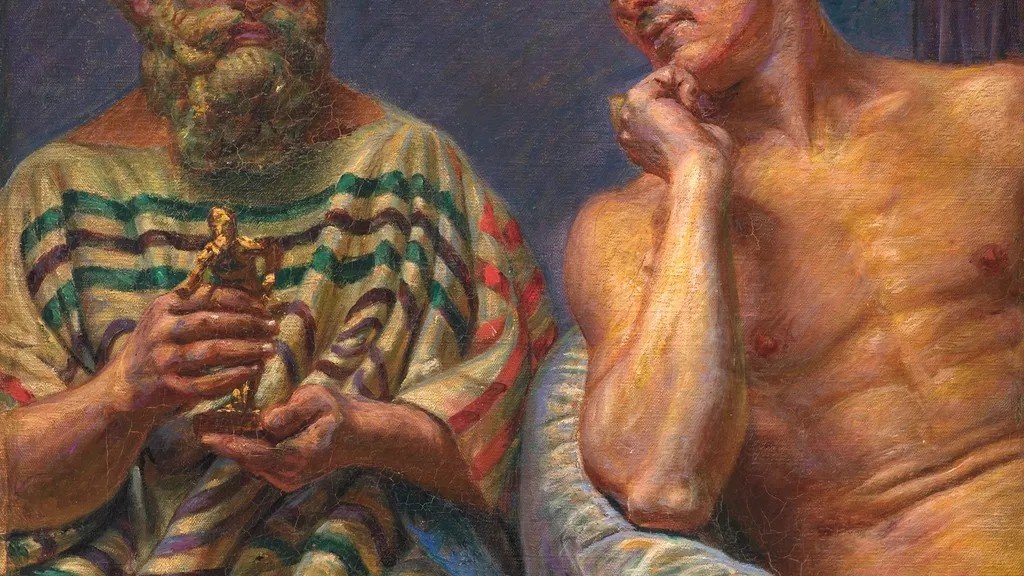

If you think modern life is complicated or dramatic, ancient history will make your jaw drop. The past is packed full of characters so bizarre, so daring, so delightfully unhinged that even the most imaginative storyteller would struggle to invent them. We tend to picture ancient history in broad strokes, as great battles and marble statues. But zoom in closely, and you’ll find something wilder: real human beings who defied every expectation, broke every rule, and often paid the most extraordinary price for it.
From a philosopher who may have died because of his fear of beans to a teenager who turned an empire’s religion upside down, these are seven ancient figures whose real lives rival, and frequently surpass, the myths built around them. Let’s dive in.
Alcibiades: Athens’ Most Brilliant Traitor
![Alcibiades: Athens' Most Brilliant Traitor ([1], Public domain)](https://festivaltopia.com/wp-content/uploads/2026/03/1773262743086_1773262736567_mosaico_alcibiade.jpeg)
Honestly, if you had to pick one figure from ancient history who could have been the protagonist of a modern thriller, it’s Alcibiades. He was a brilliant but unscrupulous Athenian politician and military commander who provoked the sharp political antagonisms at Athens that were the main causes of Athens’ defeat by Sparta in the Peloponnesian War. That alone sounds extraordinary. But the details of his life are somehow even more staggering.
During the course of the Peloponnesian War, Alcibiades changed his political allegiance several times. In his native Athens in the early 410s BC, he advocated an aggressive foreign policy and was a prominent proponent of the Sicilian Expedition. After his political enemies brought charges of sacrilege against him, he fled to Sparta, where he served as a strategic adviser. However, Alcibiades made powerful enemies in Sparta too, and defected to Persia. The man literally switched sides three times during the same war. Think about that for a moment.
At one notorious party, the revelers dared him to find a rich and respected man named Hipponicus and slap him on the ear. The naturally unscrupulous Alcibiades was more than happy to oblige, and he eagerly prowled Athens for his target. When he found poor Hipponicus, he gave the unsuspecting man a strong smack on the ear and escaped to inform his friends of his success. His way of apologizing? Stripping off and offering his back to be flogged. The result? Hipponicus forgot all his resentment, and not only pardoned him, but soon after gave him his daughter Hipparete in marriage. Such was the way Alcibiades was allegedly introduced to his wife and in-laws.
After taking final refuge with the Persian Pharnabazus, Alcibiades was murdered in Phrygia, possibly following the intervention of Lysander and the Thirty Tyrants of Athens. He was charming enough to seduce every power in the ancient world, yet trusted by none of them. A life stranger than fiction? Absolutely.
Pythagoras: The Mathematician Who Ran a Cult and Feared Beans
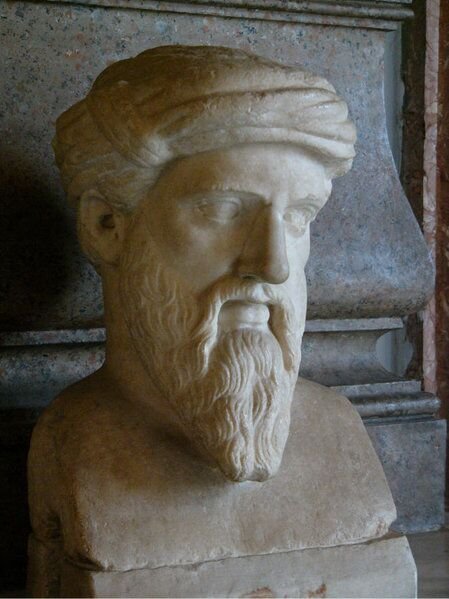
(Original text: Fotografiert am 30.03.2005), CC BY-SA 3.0)
You remember Pythagoras from school, right? The triangle guy. Here’s the thing though: to the ancient Greeks, he was better known along the lines of “that weird and murderous philosopher who founded a religious cult.” The man behind the famous theorem was, to put it mildly, operating on a completely different plane of reality.
In the 6th century BCE, Pythagoras established a “brotherhood” built around soul transmigration, disciplinary measures of philosophy and diets, and even had a taboo against bean consumption. Essentially, he believed that such actions were cause for spiritual harm and would be a sign of impurification. The bean thing really is its own spectacular story. Pythagoras obtained some beans and buried them, waiting for them to grow for a few weeks. Apparently, when he dug them up again, they looked a bit like human fetuses. He concluded that eating beans was tantamount to cannibal behavior, as they contained the “souls of the dead.”
Ancient sources record that early Pythagoreans underwent a five-year initiation period of listening to the teachings in silence. Oh, and Pythagoras once claimed he had been reincarnated multiple times and was the son of Hermes, who gifted him the power of remembering who he was in all of his past lives. It’s hard to say for sure whether any of this is fully accurate, given that so much is legend. Still, it makes for an almost unbelievably wild portrait of a man the world credits with foundational mathematics.
The ending is the most poetic part of all. There is a theory that Pythagoras attempted to flee from angry mobs that tried to kill him towards the end of his life. While he was running away from the crowds, he stumbled across a fava bean farm and believed walking over them would be akin to walking over human flesh, leading him to die after standing still and not wanting to trample over them. The man who was afraid of beans may have literally been killed by beans. Ancient history has a dark sense of humor.
Hatshepsut: The Pharaoh History Tried to Erase
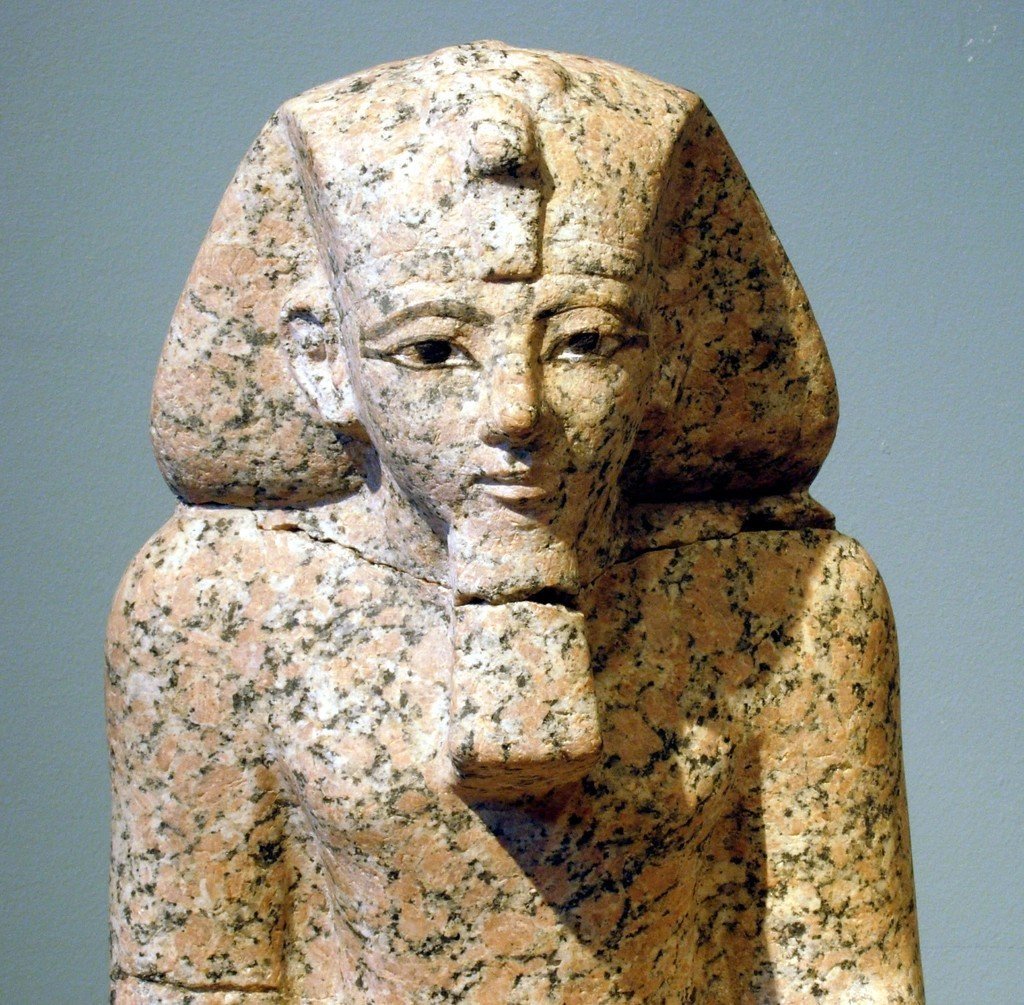
Imagine building one of the most prosperous reigns in Egyptian history, only to have your very existence systematically destroyed by your successor. That is, more or less, what happened to Hatshepsut. Hatshepsut was the sixth pharaoh of the Eighteenth Dynasty of Egypt, ruling first as regent, then as queen regnant from around 1479 BC until around 1458 BC.
Upon the death of her husband and half-brother Thutmose II, she had initially ruled as regent to her stepson, Thutmose III, who inherited the throne at the age of two. Several years into her regency, Hatshepsut assumed the position of pharaoh and adopted the full royal titulary. In order to establish herself in the Egyptian patriarchy, she took on traditionally male roles and was depicted as a male pharaoh, with physically masculine traits and traditionally male garb. Essentially, she rewrote the rulebook of power in real time.
Hatshepsut was one of the most prolific builders in ancient Egypt, commissioning hundreds of construction projects throughout both Upper and Lower Egypt. Many of these building projects were temples to build her religious base and legitimacy. At these temples, she performed religious rituals that had hitherto been reserved for kings. That is a remarkable legacy by anyone’s standards.
Yet despite all of it, the knives came out after her death. Images depicting Hatshepsut as queen regent were typically left alone. Representations depicting her as king were broken, scratched out, and, in the case of an obelisk she erected at the temple of Karnak, walled up. It was clear: being a queen regent was acceptable, but being the pharaoh was not. Her story only resurfaced properly through modern archaeology. It took three thousand years for the world to hear her name again.
Elagabalus: Rome’s Most Scandalous Teenager
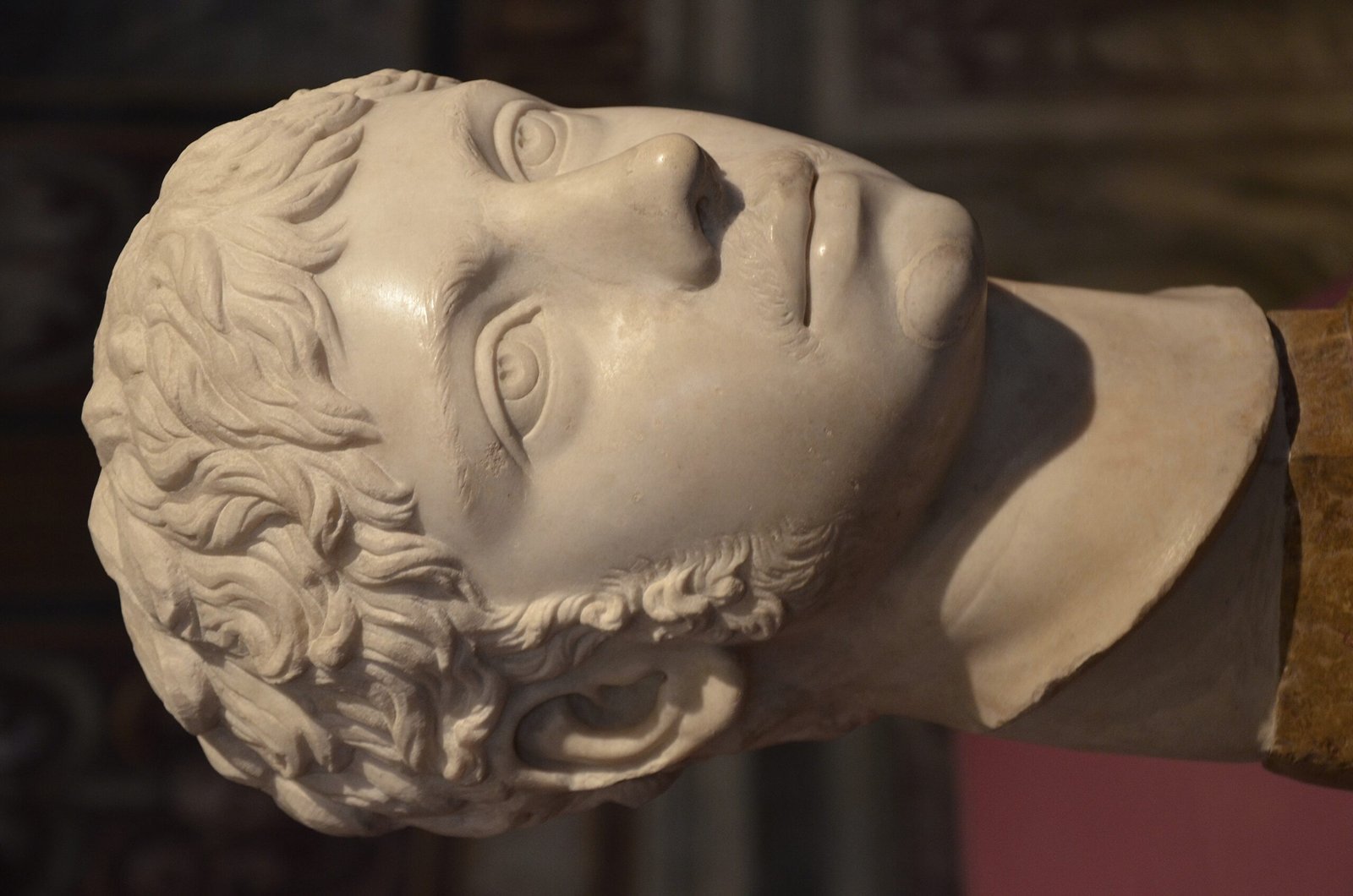
Few rulers in all of history have packed as much chaos into as short a reign as Elagabalus. From 218 to 222 AD, Elagabalus took the throne, leaving a very nasty taste in his empire’s mouth. Despite only ruling for four years, he has gone down in history for his religious and sexual experiments, his lavish and bizarre parties, and his violent death at the hands of his own soldiers. He was just fourteen when he became emperor. Fourteen.
Soon after his arrival in Rome, Elagabalus reportedly overturned the religious hierarchy by announcing the authority of his god Elagabal over Jupiter and the entire Roman pantheon. He commissioned the construction of a grand new temple on the Palatine Hill, and he installed inside it a sacred black stone from Emesa, which he declared the physical form of the deity. The promotion of a Syrian deity above Jupiter shocked the conservative elite and upset the carefully maintained balance of Roman religious tradition.
According to some sources, he often dressed in women’s garments made of silk, applied makeup, and addressed the court with gestures that copied the priestesses of eastern temples. Inside his palace, he hosted banquets where guests were buried in flower petals or fed wax replicas of food, all while dwarves and naked performers provided amusement. Even by the standards of the notoriously decadent Roman Empire, this was considered extreme.
He reportedly married up to five times, yet the most infamous union came when he took Aquilia Severa, a Vestal Virgin, as his bride. Since Vestals were sworn to celibacy under pain of death, the marriage angered both the Senate and the religious establishment. He justified it as a divine union between Elagabal and Vesta and later remarried her after a brief divorce, claiming divine intervention required their reunion. The Praetorian Guard eventually had enough and killed him at the age of eighteen. His reign was brief, but it has never been forgotten.
Aeschylus: Killed by a Tortoise from the Sky
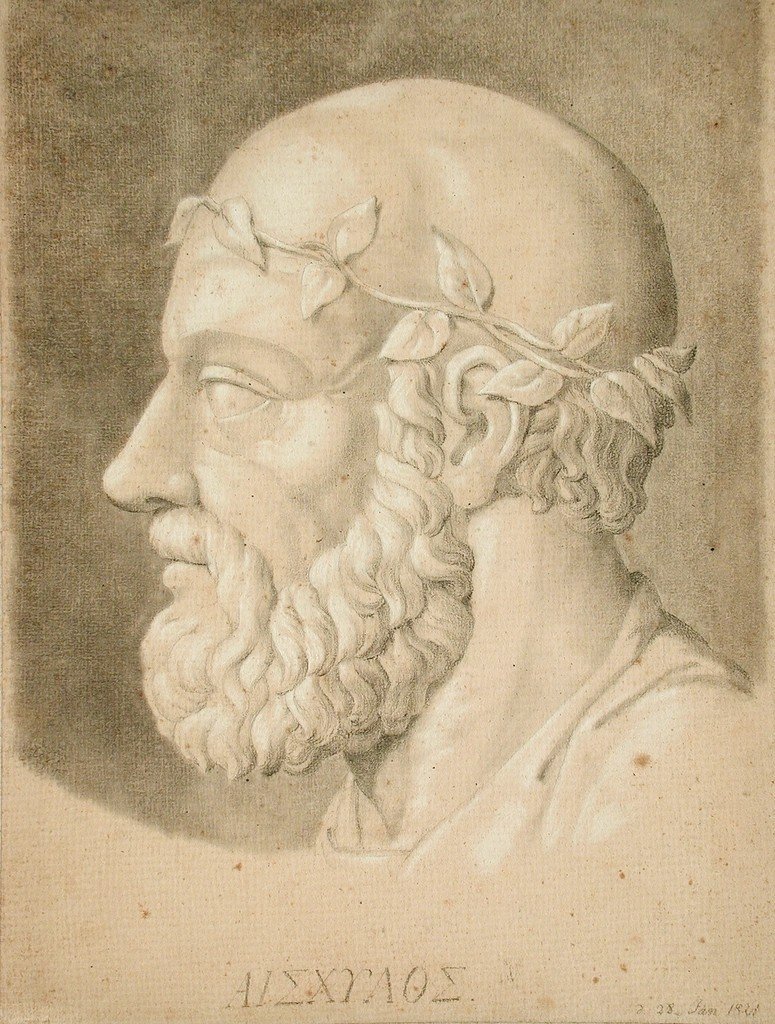
Let’s be real. If you were a great dramatist, you might hope for a death with some theatrical dignity. A peaceful passing surrounded by your writings, perhaps. Often called “the father of tragedy,” Aeschylus, an ancient Greek tragedian, met an ending even he couldn’t have written. Several notable sources of the day claimed that a tortoise, or rather a bird, was responsible for the great playwright’s demise.
Valerius Maximus, a first-century Latin writer, claimed that Aeschylus died in the Sicilian city of Gela after a bird carrying a tortoise mistook his bald head for a rock that it could use to smash the reptile’s shell. The impact of the tortoise instantly killed him. Pliny the Elder added to the legend by claiming that Aeschylus had been staying outdoors after an oracle warned him that a falling object would cause his death. In other words, he tried to stay outside to avoid a falling object, and a tortoise fell on him anyway.
Whether entirely true or partly embellished by ancient writers, the story has stuck for over two millennia. It captures something deeply human about the Greeks’ worldview: fate is patient, and the universe has no shortage of irony. Aeschylus wrote plays about the inescapability of destiny. And if the accounts are to be believed, destiny made its point with a tortoise.
Diogenes of Sinope: The Philosopher Who Lived in a Barrel
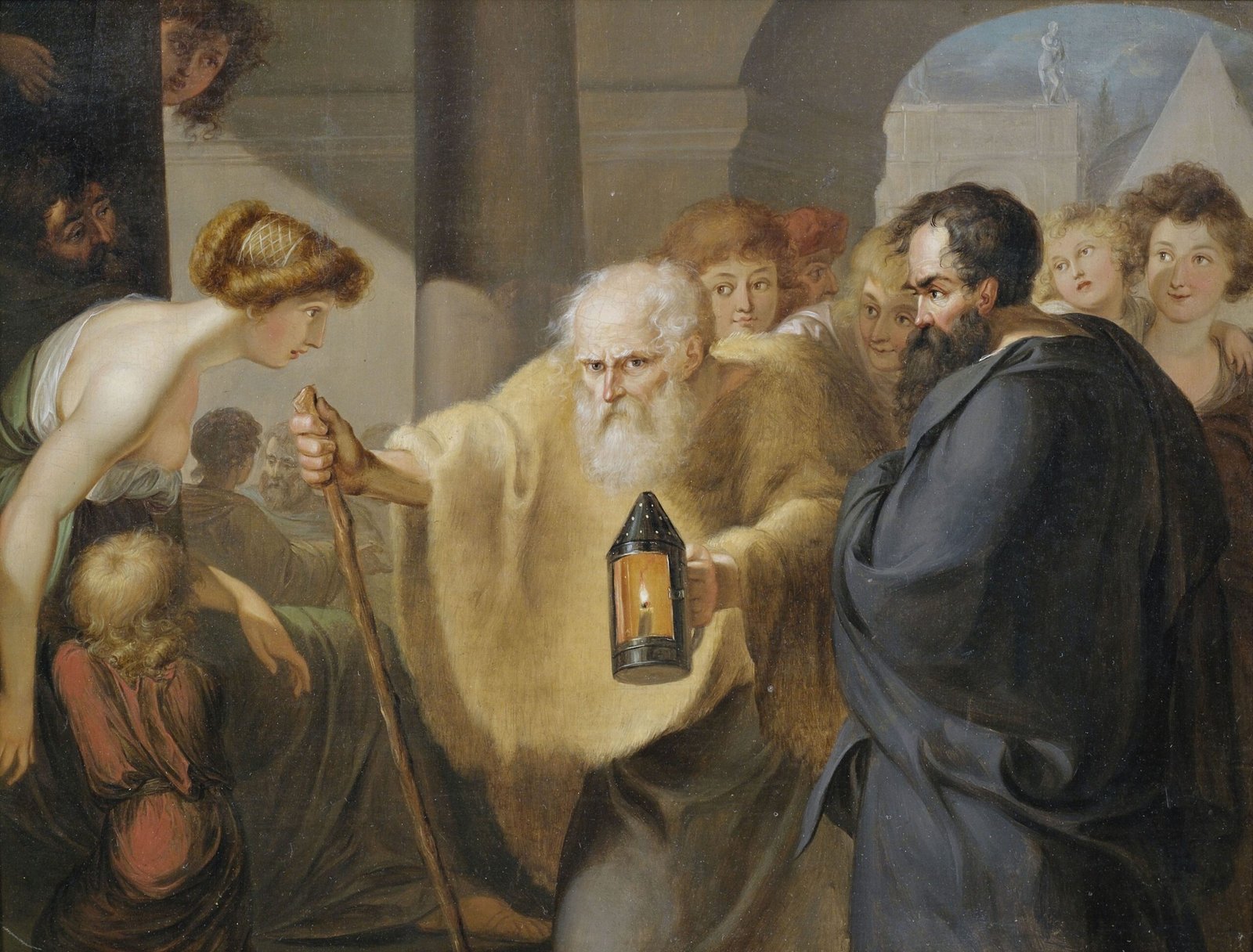
Some people talk about rejecting society. Diogenes actually did it. Diogenes was born in either 412 or 404 BC in the very remote Greek colony of Sinope. As a young man, he worked with his father minting currency for the colony. That is until they were both exiled for adulterating the gold and silver content of the coins. From that point, his life became something genuinely extraordinary.
Diogenes of Sinope was a Greek philosopher who lived in a barrel. He is famous for his quest to find an honest man, carrying a lantern in daylight. Diogenes was a founder of Cynicism, advocating for a simple life free from materialism and social conventions. Think of him as the ancient world’s most committed minimalist, though “minimalist” feels like far too polite a word for someone who publicly defied every social norm of the day.
Greek history is full of interesting philosophers and thinkers, but Diogenes stands out as the founder of cynicism. He lived in poverty, would walk around with a lantern in the morning, and claimed he was just looking to find at least one honest person in the world. He was a man without fear and shame, and eagerly challenged powerful figures at the time. Legend has it that when Alexander the Great visited him and offered him anything he wanted, Diogenes asked him to move, as he was blocking the sunlight. Alexander reportedly said that if he were not Alexander, he would wish to be Diogenes.
Few figures in all of ancient history were so deliberately, theatrically strange. The man rejected the comforts, customs, and courtesies of civilization not by accident but by design. He genuinely believed that a life stripped bare was the only honest life. Whether you agree with him or not, it’s hard not to find that kind of radical commitment to an idea just a little bit mesmerizing.
Attila the Hun: The Fearsome Conqueror Who Died on His Wedding Night
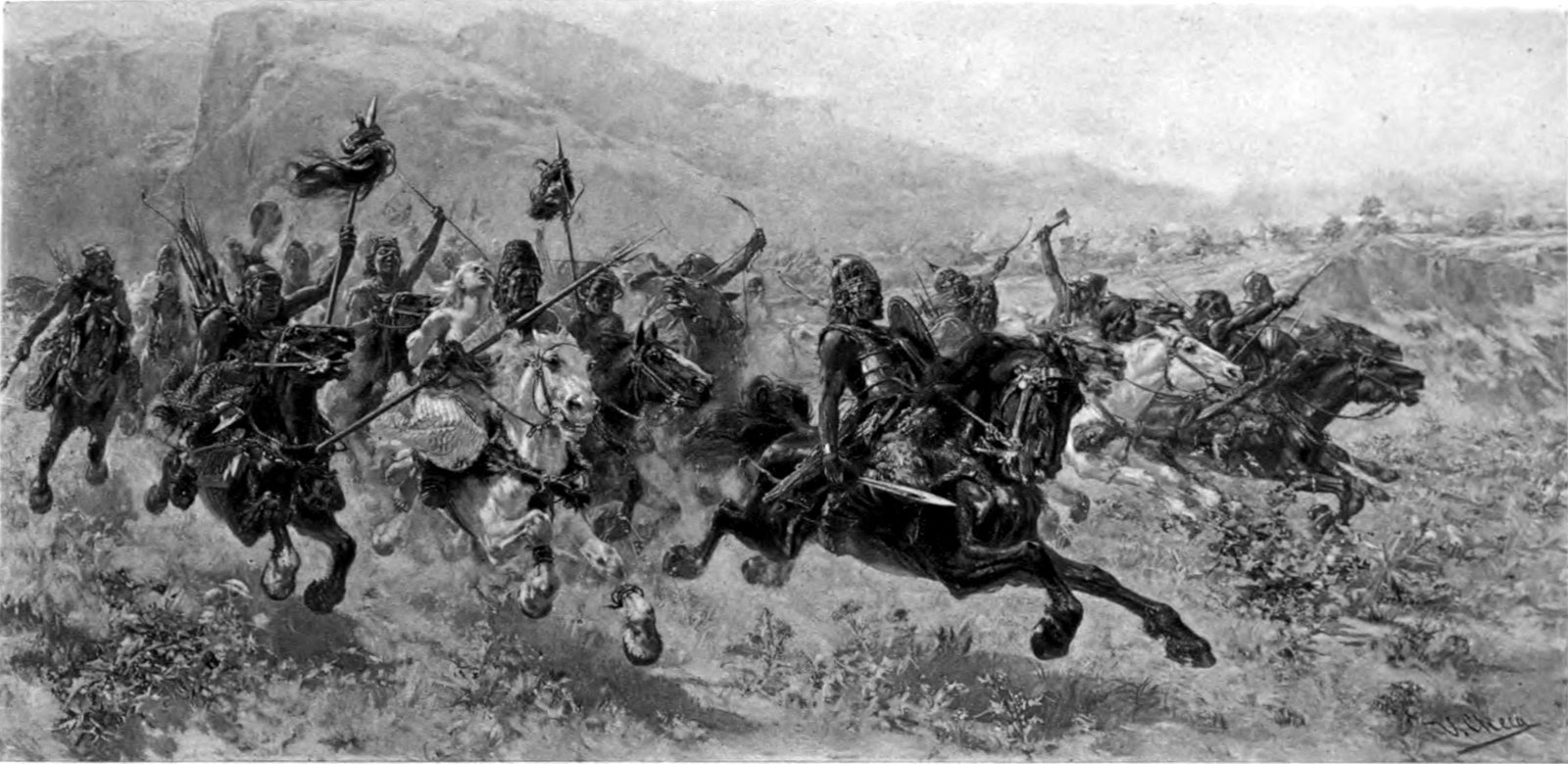
Attila the Hun is one of history’s most terrifying names. He carved a path of devastation across Europe so severe that he earned the nickname “Scourge of God.” Attila was ruler of the Huns, invader, and fearsome warrior. In 453 CE, while plotting an attack on the Eastern Roman Empire, Attila decided to marry his third wife, a young woman named Ildico.
During the wedding celebration, it was said that the ruler ate and drank to his heart’s content before retiring to the bridal chamber. The following morning, when Attila had failed to make an appearance, the royal guards grew suspicious and broke down the door of the bridal chamber. It was there they found the new bride weeping hysterically next to her husband’s corpse. Attila’s body was searched, and no wounds were found.
The man who terrorized an entire continent, who made emperors tremble and cities surrender, had died not in battle, not by the sword, but apparently from a nosebleed caused by too much celebratory drinking. Many believed his death could have been a plot by near-thwarted emperor Marcian or even that Ildico might have played a part in his demise. The truth, most historians agree, is considerably more mundane. It’s almost impossible not to feel a sense of dark irony. The most feared man in the world, undone by revelry on his wedding night.
His death triggered the rapid collapse of the Hunnic Empire, as if the whole thing had only been held together by the sheer force of his personality. History sometimes delivers justice in the strangest packaging.
These Lives Still Haunt Us
What’s so extraordinary about all seven of these figures is that they don’t feel like history. They feel alive. The more you learn about Alcibiades switching sides mid-war, Pythagoras meeting his fate over a field of beans, or a teenage Roman emperor shaking the foundations of an empire in four short years, the more it becomes clear that human nature has always been wildly, beautifully unpredictable.
History is filled with characters whose lives were anything but ordinary. These individuals defied norms and left behind tales that continue to intrigue and perplex us. From eccentric geniuses to peculiar rulers, their stories offer a fascinating glimpse into human diversity and creativity. The passage of thousands of years has not dimmed their strangeness one bit.
Each of these figures reminds us that the ancient world was not a tidier or simpler place than today. If anything, it was messier. More theatrical. And far more human than the marble busts and textbook summaries suggest. The real history, once you dig past the surface, is full of characters so vivid they make you wonder what your own life might look like to a historian three thousand years from now.
Which of these figures surprised you the most? Tell us in the comments!
CEO-Co-Founder
