You know the chorus. You’ve belted it in a car, swayed to it at a wedding, maybe cried to it at 2 a.m. Now try naming the person who wrote it. Odds are you’ll name the singer instead, and that gap is exactly what this list is about: 25 songwriters whose work became famous while their own names stayed buried in the credits.
Some wrote for the biggest voices of their era. Others handed a song away and watched it become someone else’s signature. A few have names you’ll swear you’ve seen somewhere, and the songs behind those names may surprise you even more than the people do. Keep going, because the countdown saves some of its most familiar hits for the end.
#25 – Cindy Walker
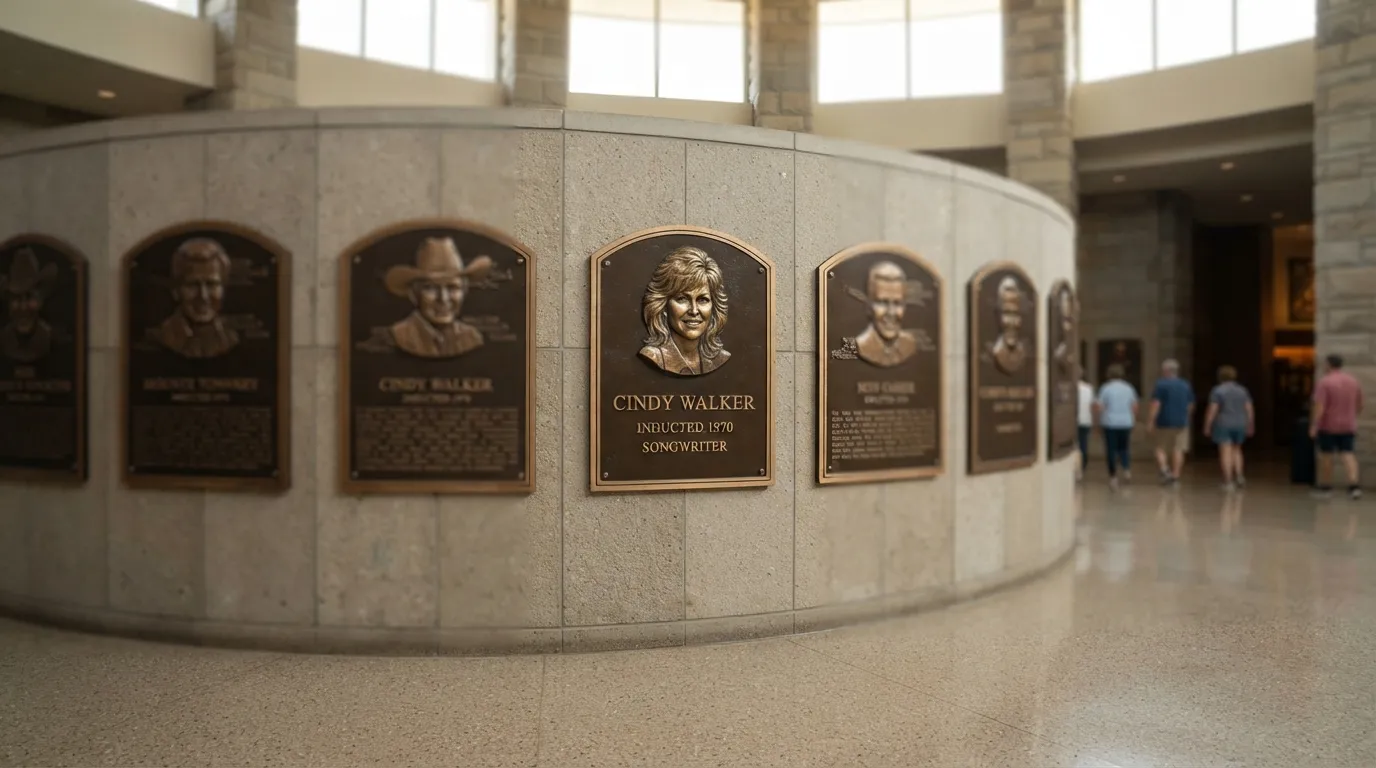
Ray Charles turned “You Don’t Know Me” into a late-night confession in 1962, and Elvis Presley recorded it too. Hardly anyone listening stopped to ask who put that ache into words. The answer is Cindy Walker, who wrote it with Eddy Arnold.
That was only one door she opened. Gene Autry sang her “Blue Canadian Rockies,” and Jim Reeves had a hit with her “Distant Drums.” Bob Wills recorded her songs too.
Walker did her best work from the writer’s chair, not the stage. The singers got the posters, and she got the royalty statements. Country radio kept playing her words for decades while her name lived mostly in the small print.
#24 – Allee Willis
Ever hit the dance floor the second “September” came on? Allee Willis helped write it for Earth, Wind & Fire, alongside Maurice White and Al McKay. She also co-wrote their “Boogie Wonderland.”
Then she kept going. Willis co-wrote “Neutron Dance” for the Pointer Sisters, a standout from the Beverly Hills Cop soundtrack. She is also credited on “What Have I Done to Deserve This?” by Pet Shop Boys and Dusty Springfield.
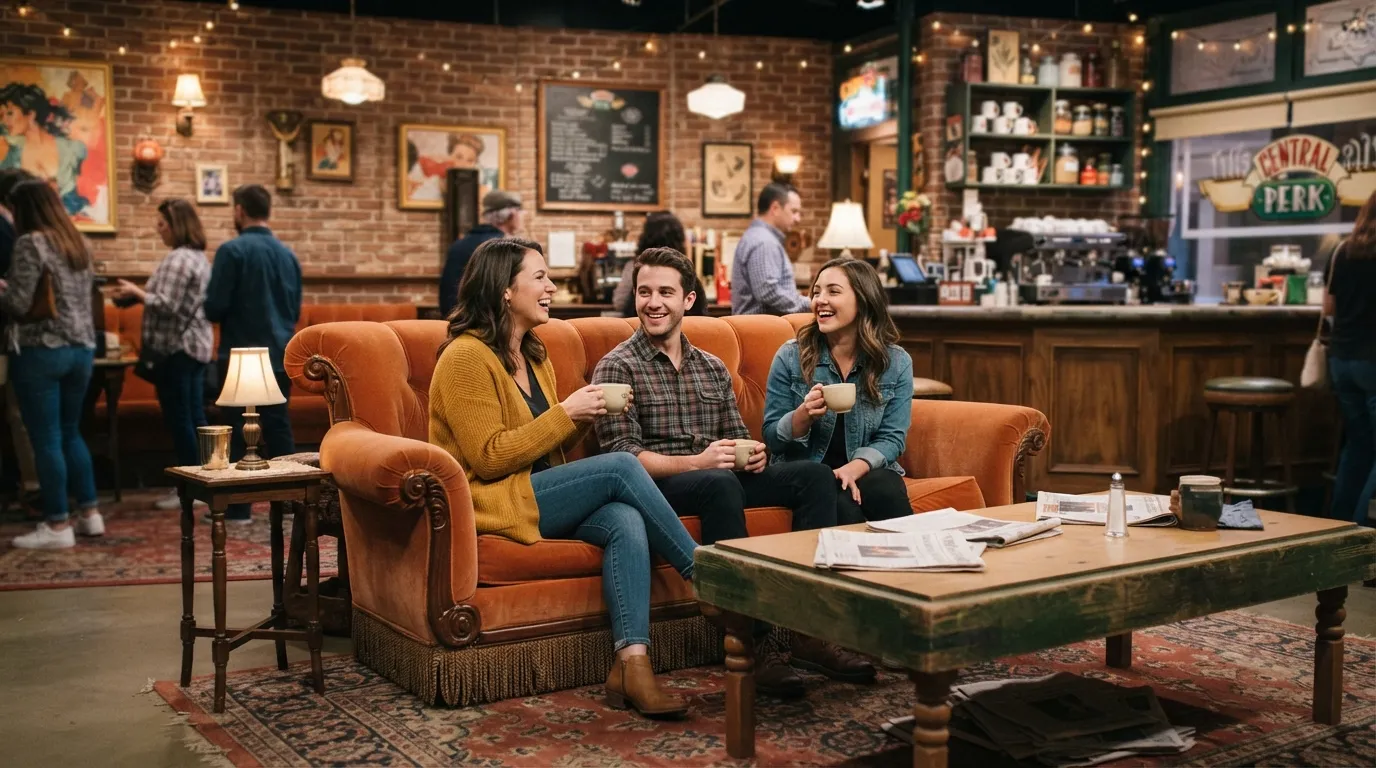
And she helped write “I’ll Be There for You,” the Friends theme that The Rembrandts turned into one of TV’s most recognizable openings. Later she moved to Broadway, co-writing songs for The Color Purple. Disco floors, sitcom couches, and theater stages all carry her fingerprints, yet almost none of them carried her face.
#23 – Jules Shear
Cyndi Lauper’s “All Through the Night” sounds like it was built around her voice, with that shimmer and slow-burning ache. It wasn’t. Jules Shear wrote it, and Lauper turned it into a mid-1980s hit.
He also wrote “If She Knew What She Wants,” which gave The Bangles another radio favorite in 1986. Shear kept making his own records, including with his band Jules and the Polar Bears, but radio kept choosing other voices for his best material.
That’s the strange math of songwriting. A writer can supply the emotional core of a hit and still be the least recognizable person connected to it. Shear’s songs traveled much further than he did, and the people singing along rarely knew whose words they were borrowing.
#22 – Narada Michael Walden
Aretha Franklin roaring through “Freeway of Love” in 1985 feels like pure Aretha. But Narada Michael Walden co-wrote it and produced it, and he brought Clarence Clemons in to play that sax.
Whitney Houston’s “I Wanna Dance with Somebody” carries his production fingerprints too. So does Starship’s “Nothing’s Gonna Stop Us Now.” That is a lot of 1980s radio built in one man’s studio.
Here’s the twist: Walden was no stranger to the stage. He drummed with the Mahavishnu Orchestra and even had his own 1979 hit, “I Shoulda Loved Ya.” Still, once he moved behind the glass, the stars took the spotlight and his name drifted into the liner notes. He became the sound of other people’s biggest moments.
#21 – Holly Knight
Pat Benatar made “Love Is a Battlefield” sound like a sneer and a dare. Holly Knight co-wrote it with Mike Chapman, and she did the same on Tina Turner’s “The Best.”
Here’s a detail that gets people: Bonnie Tyler recorded “The Best” first, before Turner turned it into a stadium anthem. Knight also co-wrote Aerosmith’s “Rag Doll” and Animotion’s “Obsession.”
She stepped into the spotlight herself with her band Spider, and its “New Romance (It’s a Mystery)” had its moment. But the writing credits piled up much faster than the personal fame did. Her songs were big enough to fit an arena, and the name on the marquee was never hers.
#20 – Lamont Dozier
Try imagining the 1960s without “Where Did Our Love Go,” “Baby Love,” “Stop! In the Name of Love,” or “Reach Out I’ll Be There.” Lamont Dozier was one third of Holland-Dozier-Holland, the writing team behind those Supremes and Four Tops classics.
The trio supplied a huge portion of Motown’s hit parade in the mid-1960s. Then they left Motown in the late 1960s to start their own labels, Invictus and Hot Wax.
Fast Facts
- Five straight Supremes No. 1 hits in 1964 and 1965 all came from the Holland-Dozier-Holland team.
- The Four Tops took “Reach Out I’ll Be There” to No. 1 in the U.S. in 1966.
- Holland-Dozier-Holland entered the Rock and Roll Hall of Fame in 1990.
Dozier later made solo records and kept writing for other artists. He co-wrote Phil Collins’s “Two Hearts,” which won a Golden Globe. But when people hummed those songs, they pictured Diana Ross, not the man at the piano. Dozier died in 2022, leaving behind a catalog many fans know by heart without knowing his name.
#19 – Barry Mann
“You’ve Lost That Lovin’ Feelin’” starts with a low, aching voice and builds to a wall of sound. Barry Mann wrote it with his wife Cynthia Weil and Phil Spector, and the Righteous Brothers made it immortal. BMI later ranked it the most-played song on American radio and TV in the 20th century.
Mann had a taste of the spotlight early, with his own novelty hit “Who Put the Bomp.” But his real power was behind the keys. He co-wrote “On Broadway,” “We Gotta Get Out of This Place,” and “Somewhere Out There.”
That’s a long run of songs people can sing from memory. Hardly any of those people could pick him out of a crowd.
#18 – Cynthia Weil

If Barry Mann supplied the melodies, Cynthia Weil often found the words that made them hurt. She co-wrote “You’ve Lost That Lovin’ Feelin’,” and “Soul and Inspiration” gave the Righteous Brothers another No. 1.
Weil also co-wrote “Uptown” for The Crystals and “On Broadway.” Dolly Parton took “Here You Come Again,” a Mann and Weil song, straight into the Top 10.
Together, she and Mann became one of pop’s most durable writing partnerships, married and working side by side in the Brill Building era. Even so, the credit line always seemed smaller than the songs. Weil died in 2023, but the lyrics she shaped still pop up in car radios and wedding playlists every week.
#17 – Jerry Leiber
Elvis Presley’s “Hound Dog” feels like it was born out of Elvis. It wasn’t. Jerry Leiber and Mike Stoller wrote it when they were just 19, and Big Mama Thornton recorded it first.
Leiber, the words man of the pair, also wrote “Jailhouse Rock” with Stoller. He co-wrote “Stand By Me,” and Ben E. King turned it into one of the most covered songs of its era.
Add in The Coasters’ “Yakety Yak” and “Charlie Brown,” and you start to see how big his footprint was. Leiber was a writer and producer who helped shape early rock and roll. Yet the singers got the screaming crowds, and his name stayed in the credits where only the curious ever looked.
#16 – Mike Stoller

Mike Stoller was the music half of Leiber and Stoller, the piano player who gave those lyrics their swagger. Together they gave rock and roll “Hound Dog,” “Jailhouse Rock,” and “Love Potion No. 9.”
Their reach went far past the 1950s. They co-wrote “Spanish Harlem” with Phil Spector, and Stoller’s music powered “Is That All There Is?” for Peggy Lee, a very different kind of hit.
Here’s a plot twist: Stoller survived the 1956 sinking of the Andrea Doria. He came out of that nightmare and went right back to writing songs that shaped a generation. The songs became cultural furniture. The man behind the piano barely became a name.
#15 – Paul Williams
“We’ve Only Just Begun” started life as a bank commercial. Paul Williams and Roger Nichols wrote it for Crocker Bank, and the Carpenters turned it into a wedding-song staple. Williams also wrote the words to “Rainy Days and Mondays.”
His credits get stranger and better. He wrote the lyrics to “Evergreen,” the Oscar-winning Barbra Streisand love song from A Star Is Born. He also co-wrote “Rainbow Connection,” which Kermit the Frog sings in The Muppet Movie.
Worth Knowing
- On “Evergreen,” Streisand wrote the music and Williams wrote the lyrics.
- Kenneth Ascher co-wrote “Rainbow Connection” with Williams.
- Williams wrote the score for the 1974 cult film Phantom of the Paradise and also acted in it.
- He later became president and chairman of ASCAP, the songwriters’ rights organization.
Williams was no total unknown. He turned up on talk shows and in movies. Still, the voices of Karen Carpenter and Kermit made his words famous, and that’s the reason many people know the songs by heart without knowing he wrote them.
#14 – Russ Ballard
When Rainbow’s “Since You Been Gone” kicks in, it sounds like a band that has lived inside the song forever. It isn’t theirs. Russ Ballard wrote it and recorded it himself first, then watched Rainbow turn it into the version most people remember.
That became his pattern. Hot Chocolate had “So You Win Again,” America had “You Can Do Magic,” and Santana took “Winning” up the charts. He also wrote “God Gave Rock and Roll to You,” which Argent recorded and Kiss later revived.
Ballard made his own records and played in Argent, but he never became a front-page name. His songs kept finding bigger voices, and the bigger voices kept getting the credit.
#13 – Steve Kipner
Olivia Newton-John in a headband, singing “Physical,” was an image that defined 1981. The song spent ten weeks at No. 1, and Steve Kipner co-wrote it with Terry Shaddick.
Fast-forward to 1999. Christina Aguilera bursts onto the scene with “Genie in a Bottle,” and Kipner is among its writers along with David Frank and Pam Sheyne.
Think about that stretch for a second. One writer, two eras, two completely different pop stars, and both songs are instantly recognizable to a huge crowd. Kipner built a long career supplying hits for other people’s voices. The result is a catalog that sounds like three decades of pop radio and a name hardly anyone connects to it.
#12 – Dan Nigro
When “drivers license” exploded in 2021, it felt like a teenager had poured her heart straight onto the charts. Olivia Rodrigo wrote it, but Dan Nigro co-wrote it with her and produced it. He did the same on “good 4 u.”
Nigro didn’t stop there. He also worked on Chappell Roan’s breakout music, helping shape another young artist’s rise from cult favorite to pop name.
Before all that, he was in the band As Tall as Lions. Today he is one of the producers who can shift a pop era from the studio. Fans know Rodrigo’s voice instantly. Many still couldn’t pick Nigro’s name out of the credits, even though his fingerprints are all over her sound.
#11 – Amy Allen
If you sang along to “Watermelon Sugar” in the summer of 2020, you were singing words Amy Allen helped write, alongside Harry Styles, Mitch Rowland, and Tyler Johnson. She also helped write Styles’s “Adore You.”
Then came Sabrina Carpenter’s “Espresso,” another giant. Allen is credited there too, working with Carpenter and a small team of co-writers.
That’s the modern songwriter’s life in a nutshell. The song blankets the internet, the singer gets the spotlight, and the writing room stays mostly invisible. Allen has built a reputation as one of pop’s go-to co-writers, helping artists find the sticky, singable core of a hit. Millions have hummed her work, yet few could pick her out of a crowd.
#10 – Jamie Hartman
When “Human” hit in 2016, Rag’n’Bone Man’s deep, rough voice seemed to come from somewhere ancient. The song itself, though, was co-written by Jamie Hartman and Rory Graham, who is Rag’n’Bone Man.
Hartman wasn’t a stranger to the stage. He had fronted the British band Ben’s Brother before moving more fully into songwriting. That’s a familiar story in pop: someone who once chased the microphone finds that the real power lies in the song.
“Human” gave the world a huge hook, a chorus that people shouted in cars and clubs. The singer’s face became the face of the song. The writer who helped shape it stayed mostly in the credits, quietly watching someone else carry it to the world.
#9 – Glen Ballard
In 1995, Alanis Morissette’s “You Oughta Know” snarled through radios like a thrown plate. Glen Ballard co-wrote and produced the album it came from, Jagged Little Pill, and helped shape “Hand in My Pocket” too.
The record became a defining release of the 1990s. It turned a young artist into a global voice, and Ballard was the quiet partner in the room with her.
At a Glance
- Jagged Little Pill won the Grammy for Album of the Year in 1996.
- “Man in the Mirror,” co-written with Siedah Garrett, reached No. 1 in the U.S. in 1988.
- Wilson Phillips’s “Hold On” also topped the Hot 100, in 1990.
Go back further and the surprises pile up. He co-wrote Michael Jackson’s “Man in the Mirror” with Siedah Garrett. He also co-wrote Wilson Phillips’s “Hold On.”
That is a rare range, from pop’s biggest star to an angry rock confession. Ballard’s name was rarely the one on the poster.
#8 – Michael Masser

Whitney Houston’s “Greatest Love of All” became a ballad people link to her forever. But Michael Masser wrote the music, with lyrics by Linda Creed, and George Benson recorded it first, in 1977.
Masser also co-wrote “Saving All My Love for You” with Gerry Goffin, another Houston signature. He wrote “Touch Me in the Morning” for Diana Ross and “Didn’t We Almost Have It All” for Houston.
That’s a run of big, plush ballads, each one made for a singer who could fill a room. Masser’s melodies gave them the room to soar. Still, the audience remembered the voices that carried them, and the man who built the stage stayed in the shadows.
#7 – George Merrill
Few songs hit the dance floor like Whitney Houston’s “I Wanna Dance with Somebody (Who Loves Me).” It was a 1987 explosion of joy and one of her signature hits. George Merrill co-wrote it with Shannon Rubicam.
Merrill and Rubicam were also Boy Meets Girl, a duo with a hit of their own, “Waiting for a Star to Fall,” in 1988. So they did get a taste of the stage lights.
But the bigger payoff came from writing for someone else’s megawatt voice. When Houston sang their words, millions heard them. When Merrill walked down the street, almost nobody did. That’s the bittersweet side of a smash: it can make the song immortal and leave its writer anonymous.
#6 – Shannon Rubicam
Whitney Houston’s first No. 1 hit, “How Will I Know,” bounced out of radios in 1985 with a teenager’s nerves and a pop star’s confidence. Shannon Rubicam co-wrote it with George Merrill and Narada Michael Walden.
It was the song that helped introduce Houston as an unstoppable force. Rubicam’s words gave her something real to sing about: the thrill of falling for someone and not knowing if they feel the same way.
Rubicam was also half of Boy Meets Girl, which brought “Waiting for a Star to Fall” to the charts. Yet history mostly remembers the voices that sang her lines. A songwriter can create a feeling that lasts for decades and still be a name that fades behind the singer.
#5 – Graham Gouldman
“For Your Love” was so pop-leaning that Eric Clapton left The Yardbirds over it in 1965. Graham Gouldman wrote it. He was a young Englishman who had a gift for hooks and a talent for handing them to other bands.
The hits kept coming. The Yardbirds got “Heart Full of Soul,” The Hollies got “Bus Stop” and “Look Through Any Window,” and Herman’s Hermits got “No Milk Today.”
Quick Compare
- 1965: “For Your Love” and “Heart Full of Soul” for The Yardbirds.
- 1966: “Bus Stop” for The Hollies and “No Milk Today” for Herman’s Hermits.
- 1975: “I’m Not in Love” for 10cc, his own band.
Later he joined 10cc and co-wrote the lush “I’m Not in Love” with Eric Stewart. So he did land a spotlight of his own. But before and after, his songs were far better known than his face. Gouldman turned out to be the quiet engine behind a whole British Invasion playlist.
#4 – Paul Epworth
“Rolling in the Deep” hits like a slammed door. Adele has said the song grew out of a bitter breakup, and Paul Epworth co-wrote it with her and produced it. It anchored her breakthrough album, 21.
Epworth’s resume goes well beyond one song. He co-wrote “Skyfall” with Adele, and the two won an Oscar for it. He also worked with Florence + the Machine, helping shape their dramatic, big-room sound.
That’s a lot of heavy hits for a man most listeners could not name. The singer’s voice is the thing that cracks, soars, and sells the song. But sometimes the person turning that voice into a record is the one who made it land.
#3 – Kenneth Gamble
Before Philadelphia soul had a global name, Kenneth Gamble and Leon Huff were building it. In 1971 they launched Philadelphia International Records, a label that turned their silky, orchestral sound into a brand.
Gamble helped write “Love Train” for The O’Jays and “If You Don’t Know Me by Now” for Harold Melvin & the Blue Notes. Simply Red later took that second song to No. 1 in the U.S. in 1989. He also helped write “Me and Mrs. Jones” for Billy Paul, a slow, smoky affair-song classic.
The sound was so strong that people could recognize it before they could name the writers. Gamble gave the world a whole musical city, and the singers still got the biggest billing.
#2 – Leon Huff
Every Saturday morning, a generation heard the opening of Soul Train and moved. That groove was “TSOP (The Sound of Philadelphia),” written by Gamble and Huff and performed by MFSB. Leon Huff was the pianist and arranger who helped give Philadelphia soul its lush, driving pulse.
He co-wrote “Love Train,” “Me and Mrs. Jones,” and “When Will I See You Again,” the glittering Three Degrees hit. Different singers, different moods, but the same architect behind the music.
That’s the strange side of fame in soul: a song can sound like a whole city and still lose its writer in the crowd. The voices got the applause. Huff got a catalog that still sparks dance floors decades later.
#1 – Diane Warren
Celine Dion’s “Because You Loved Me” is a tearjerker built for a giant voice. Diane Warren wrote it. She also wrote Toni Braxton’s “Un-Break My Heart” and Aerosmith’s “I Don’t Want to Miss a Thing,” the band’s first No. 1.
Then there’s “How Do I Live,” which both LeAnn Rimes and Trisha Yearwood recorded. Two singers, one song, and two versions fighting for the same radio airtime.
Warren has been nominated for multiple Oscars and received an honorary Academy Award in 2022. Still, she may be the clearest example of the whole list: the biggest voices on Earth borrowing her words. The next time a chorus takes over your car, check the credits. The name you find might be the real star.