

- 15 Rock Anthems That Defined a Generation and Still Sound Amazing Today - August 11, 2026
- 12 Unforgettable Movie Quotes You Can Still Use in Everyday Conversation. - August 11, 2026
- 10 Music Festivals That Changed the World - August 11, 2026
Music evolves through human ingenuity and deep-rooted traditions. Across centuries, cultures have birthed instruments that stretch the limits of sound production, often blending natural materials with mechanical wizardry. These oddities reflect a universal drive to explore new sonic territories.
Innovation meets heritage in these creations. From electronic pioneers to ancient oddities, they showcase how necessity, curiosity, and ritual have shaped melodies in unexpected ways.[1][2]
Theremin
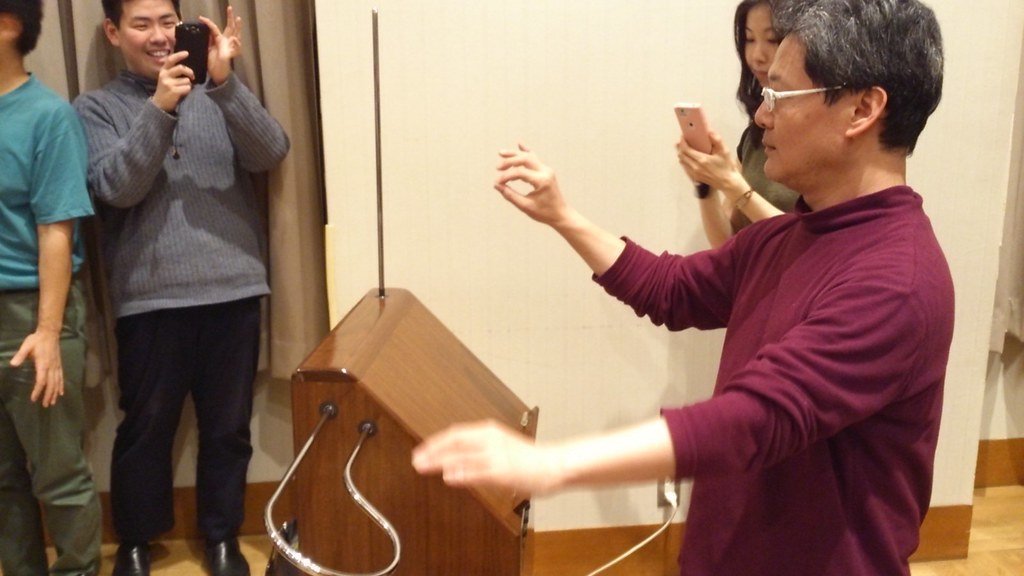
The theremin stands out as one of the earliest electronic instruments, featuring two metal antennas that detect hand movements without physical contact. Invented in 1920 by Russian scientist Leon Theremin, it uses radio oscillators to generate electromagnetic fields altered by the player’s gestures for pitch and volume control. Its eerie, wavering tones evoke UFO landings or ghostly wails, making it a staple in sci-fi soundtracks. Russian roots tie it to early 20th-century experimentation, though it gained fame through composers like Dmitri Shostakovich.[1][2][3]
Players wave hands near the antennas, one for pitch and the other for volume, creating continuous glissandos that demand precise control. The haunting sound arises from interference patterns turned into audio signals. Culturally, it bridged classical music and electronic frontiers, influencing modern virtuosos like Carolina Eyck. Its non-touch interface remains a marvel of physics meeting art.
Glass Armonica
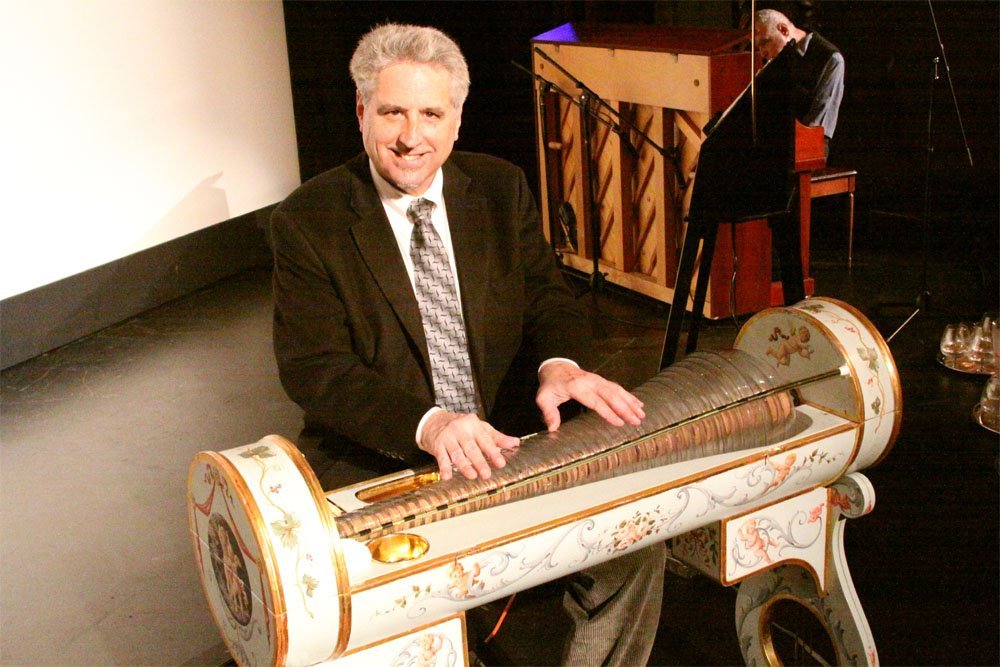
Benjamin Franklin invented the glass armonica in 1762, inspired by street performers rubbing wine glasses. It consists of a series of graduated glass bowls mounted on a spinning horizontal rod, wet fingers glide over the rims to produce friction-based tones. The ethereal, high-pitched sounds mimic celestial harps or shivering chills, once popular until health myths curtailed its use. European salons embraced it, with Mozart composing for it.[1][2]
A foot pedal spins the bowls while damp fingers create harmonics through vibration. The pure tones carry far, blending fragility with resonance. Franklin’s design drew from global glass music traditions dating back centuries. Today, revivals highlight its delicate, otherworldly charm.
Pikasso Guitar
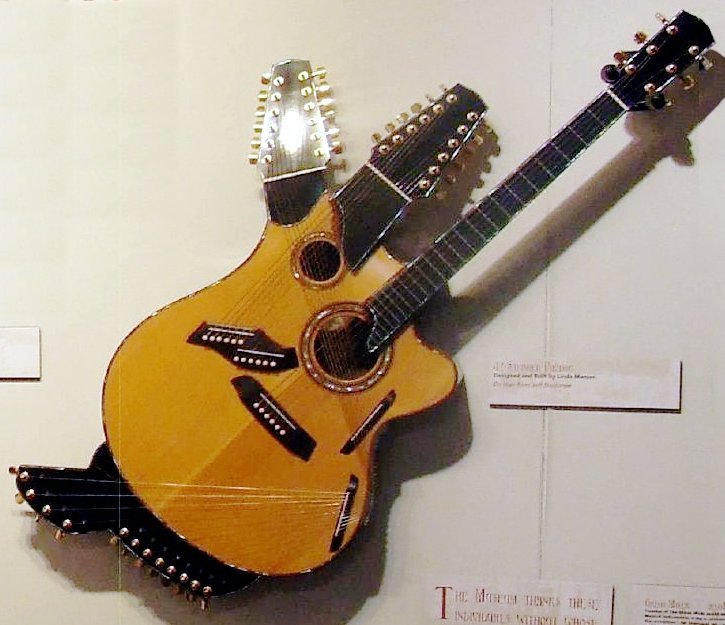
Luthier Linda Manzer crafted the Pikasso guitar in 1984 for jazz legend Pat Metheny, featuring 42 strings across four necks and two sound holes in a cubist-inspired body. It functions as a harp guitar, with strings plucked or strummed in complex patterns for layered harmonies. The vast string array yields orchestral textures, from harp-like arpeggios to dense chords. Its Picasso-named design nods to visual art’s influence on music.[1][2][3]
Players navigate the multi-neck layout like an extended harp, tapping or strumming for polyphony. Sounds range from intimate plucks to symphonic swells. Rooted in modern luthiery, it expands guitar possibilities beyond tradition. Metheny’s recordings showcase its boundless potential.
Contrabass Balalaika
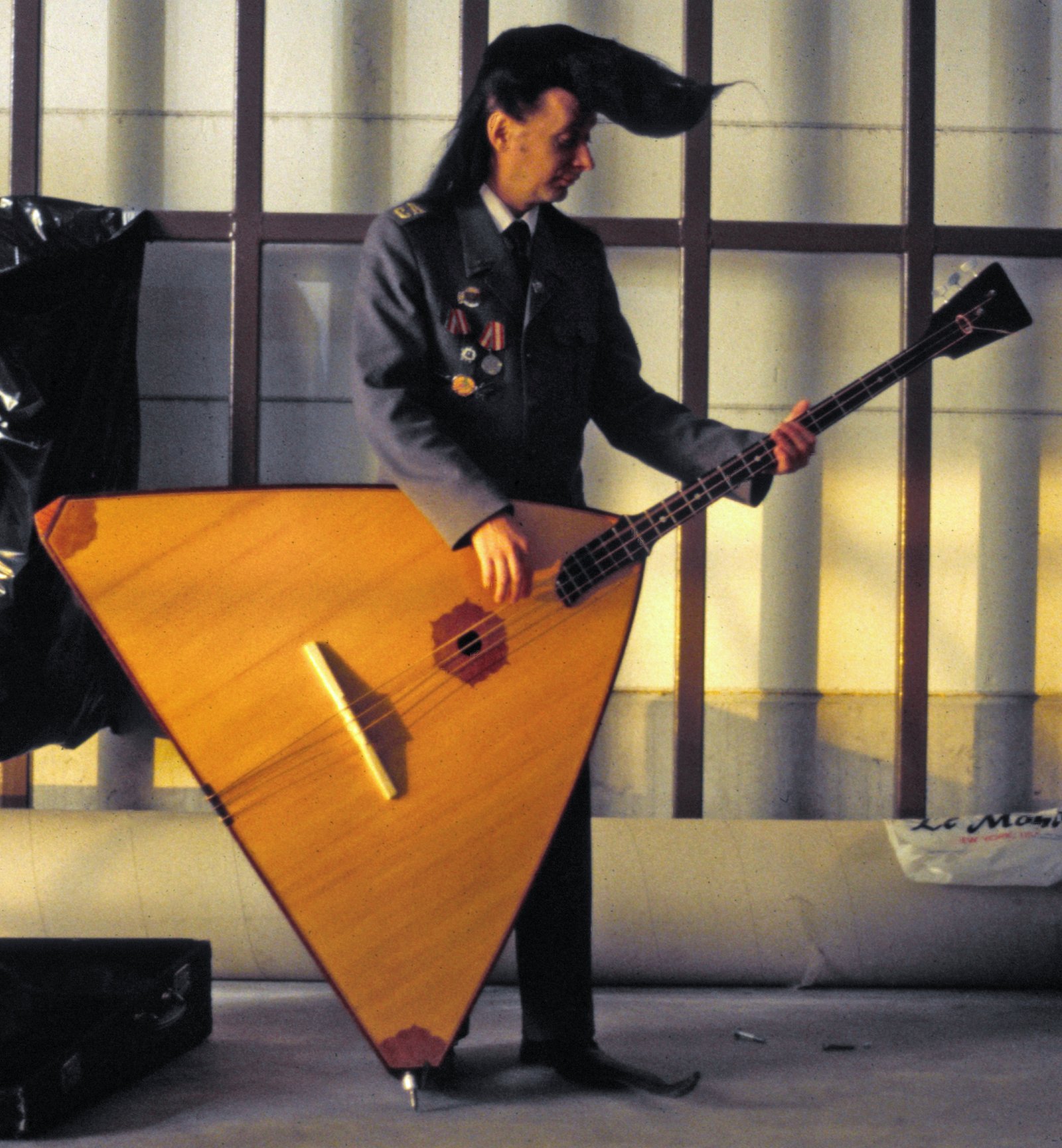
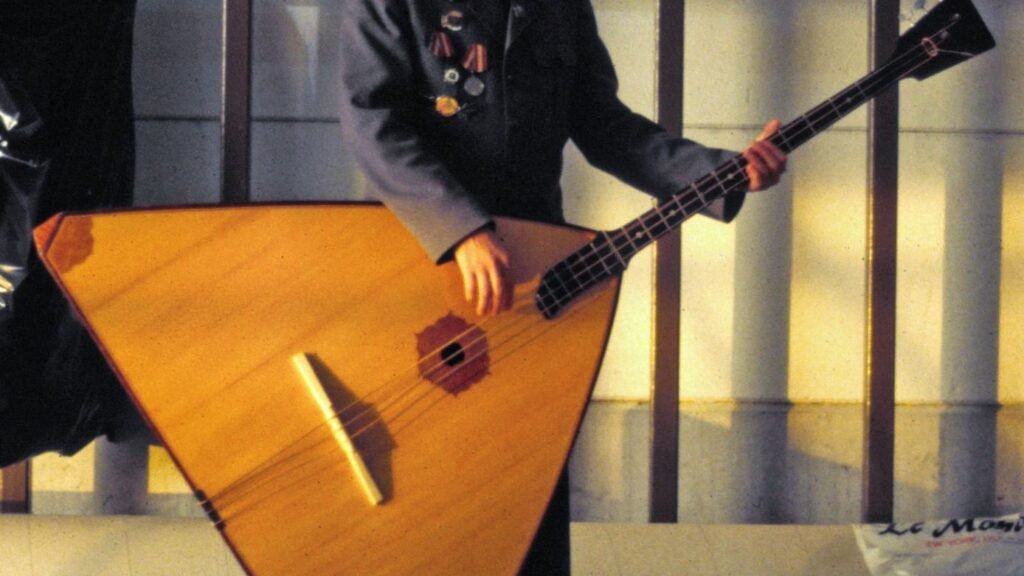
The contrabass balalaika towers like an upright bass in Russia’s balalaika family, with a massive triangular body and three thick strings. A large leather plectrum strikes the strings to produce deep, resonant booms. Its clear, booming tones anchor folk ensembles, far richer than smaller kin. Russian folk traditions birthed it for orchestral depth.[1]
Standing over six feet, it demands a seated player with the plectrum for power. Vibrations fill rooms with earthy rumble. Part of balalaika orchestras since the 19th century, it preserves Slavic heritage. Rarity adds to its mythical status among string giants.
Hydraulophone
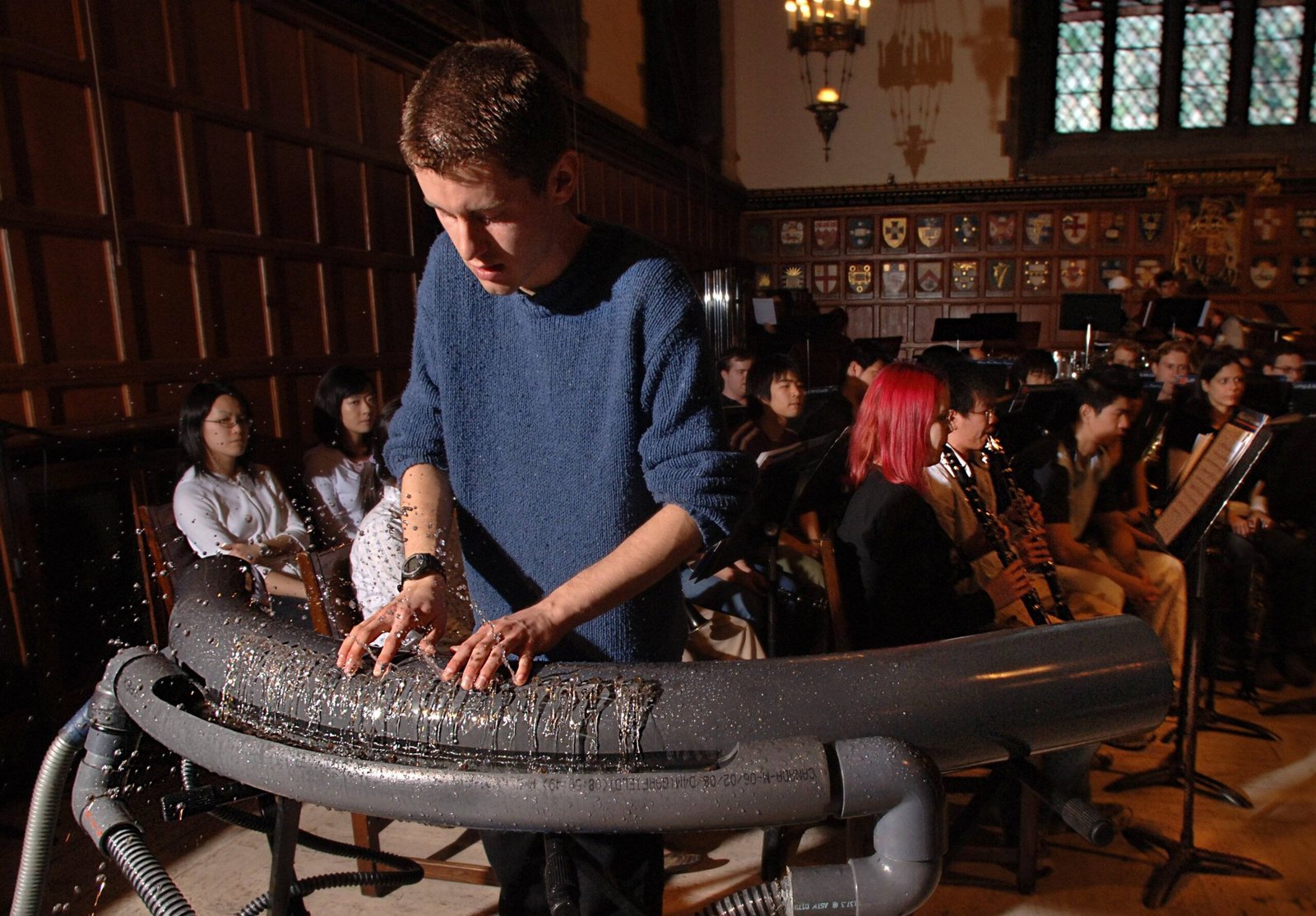
The hydraulophone pipes pressurized water jets instead of air, resembling a fluid organ patented in 2011. Fingers block jets to divert flow, creating reed-like tones through water displacement. Its woodwind-esque sounds feel submerged and intimate, ideal for immersive setups. Canadian inventor Steve Mann designed early versions for accessibility.[1][2][3]
Water streams produce notes via turbulence, amplified acoustically. Tactile play suits the visually impaired. Featured in science centers, it merges hydrodynamics with music. Global installations highlight its watery weirdness.
Pyrophone
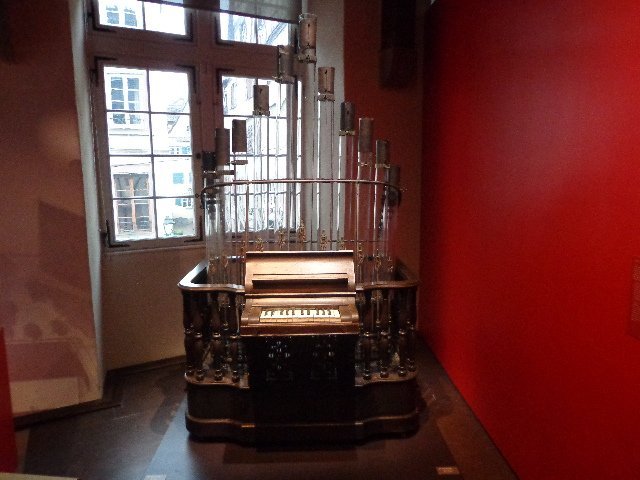
The pyrophone, or fire organ, channels combustion through organ pipes fueled by propane or gasoline for explosive tones. 19th-century inventor Frederic Kastner built early models from flame-singing experiments. Pulsing flames generate haunting, chaotic bellows akin to infernal bagpipes. Safety concerns limited its spread, but festivals revive it.[1][3]
Valves control fuel bursts for pitch variation. Visual flames sync with auditory blasts. European origins tie to acoustic pyrotechnics. Modern performers blend it with light shows.
Hang Drum
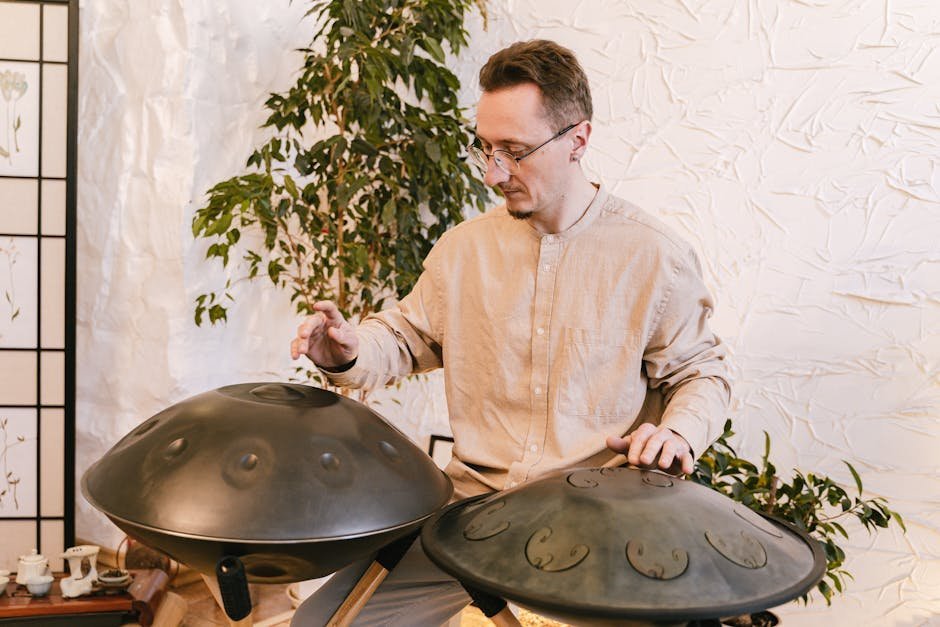
Swiss inventors crafted the Hang in 2000 from nitrided steel sheets hammered into dimpled domes. Hands strike the tuned indentations for steelpan-inspired notes. Bell-like tones cascade softly, evoking tranquil meditation. Limited production fueled its mystique worldwide.[1][2]
Finger mallets coax harmonics from the shell. Portable design suits soloists. Drawing from Caribbean steel drums, it found global new-age appeal. Handpans now vary its legacy.
Yaybahar
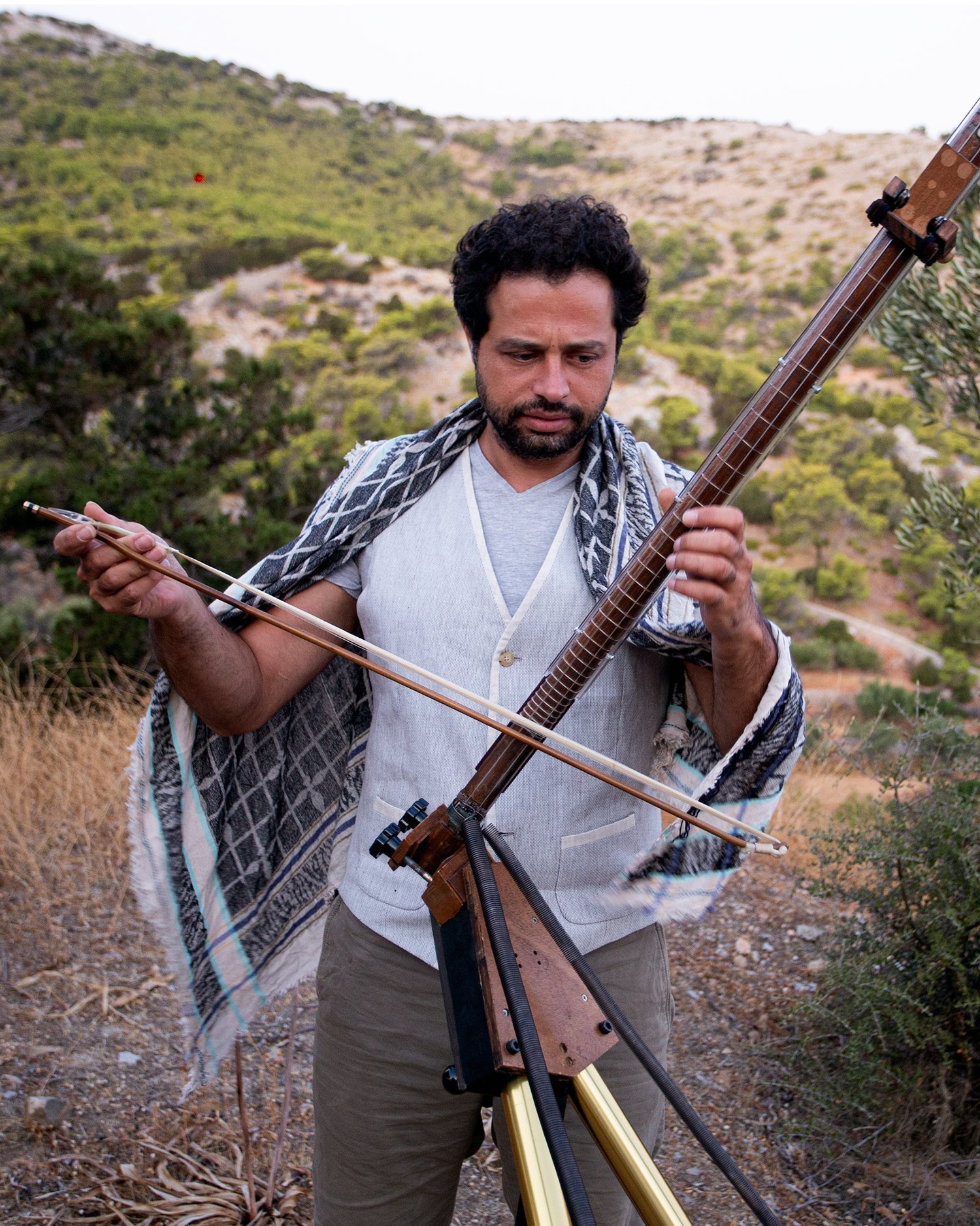
Turkish musician Görkem Şen invented the Yaybahar with strings feeding coiled springs to frame drums for acoustic synthesis. Bowing or striking strings transmits vibrations through springs to membranes. Whale-song timbres and sci-fi drones mesmerize with surround reverb. Istanbul’s craft scene birthed this electric-free wonder.[1][2][3]
Springs act as delay lines, drums as speakers. Ethereal echoes fill spaces. Modern Turkish innovation challenges electronic norms. Videos reveal its hypnotic depth.
Crwth
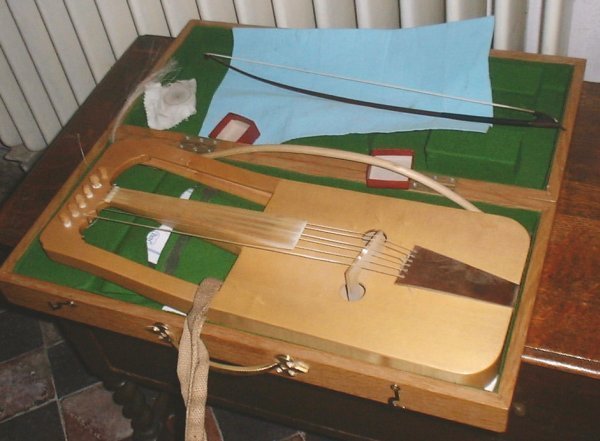
The crwth, an archaic Welsh string instrument, features a boxy body with bowed strings and only four originals surviving. Bowed like a violin, its gut strings yield nasal chants. Celtic bardic traditions used it for ancient hymns. Modern replicas revive its whispery voice.[1]
Bridged lyre and fiddle forms from medieval Wales. Flat bridge allows drone harmonies. Rarity stems from fragile wood. It echoes pre-classical Europe.
Nyckelharpa
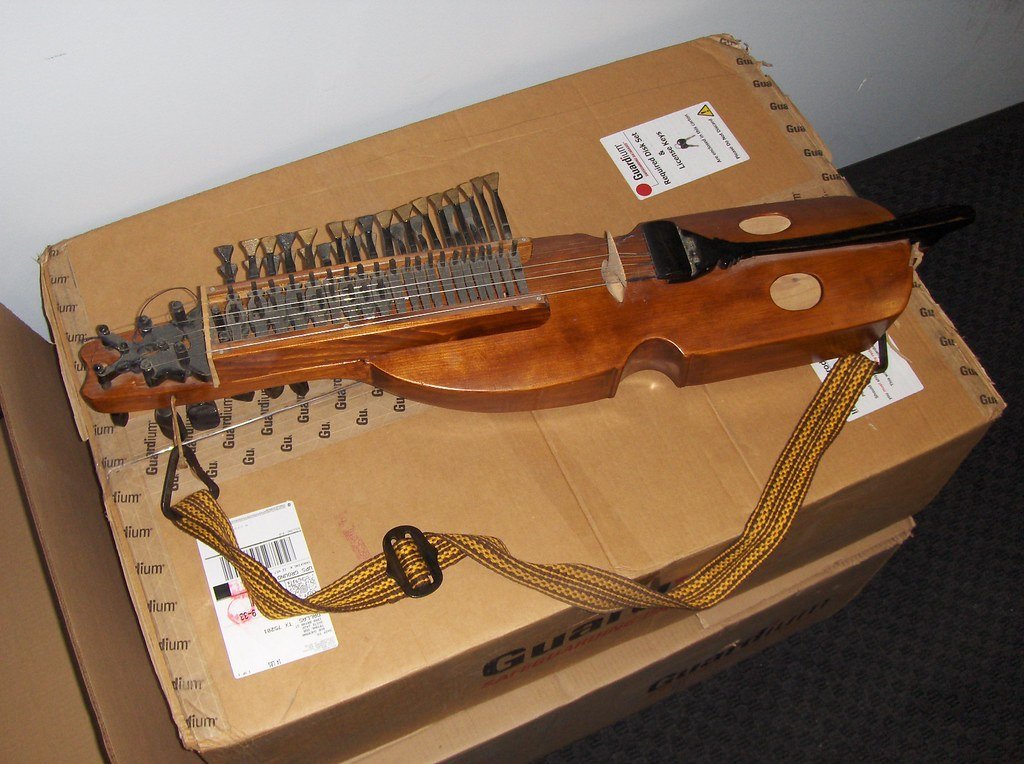
This 600-year-old Swedish keyed fiddle boasts 16 strings and 37 tangent keys sliding under strings like guitar frets. A short bow draws continuous tones while keys shorten strings. Folk dances pulse with its violin-bagpipe hybrid. Revived in Scandinavian traditions.[1]
Keys mimic keyboards for melody and drone. Sympathetic strings enrich timbre. Medieval origins evolved through rural Sweden. Festivals keep it alive.
Great Stalacpipe Organ
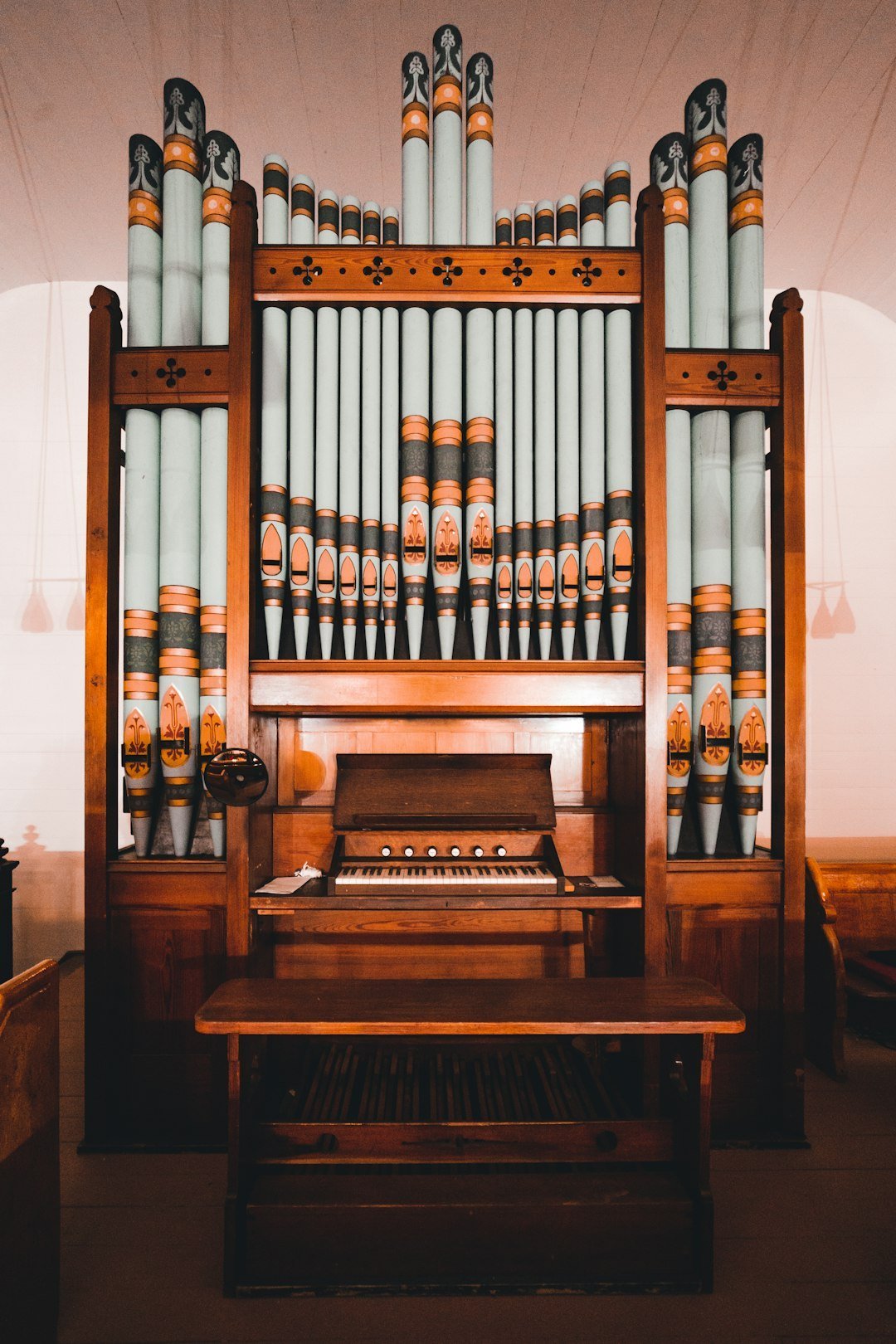
Leland W. Sprinkle built this 1956 cavern organ in Virginia’s Luray Caverns, using 37 stalactites as tuned lithophones struck by mallets. Keyboards trigger rubber hammers on sanded stalactites. Cathedral chimes resonate through caves. Natural geology meets engineering.[2][3]
Amplified echoes span acres. Plays classics like Moonlight Sonata. World’s largest natural instrument draws tourists. Geological tones defy convention.
Hurdy-Gurdy
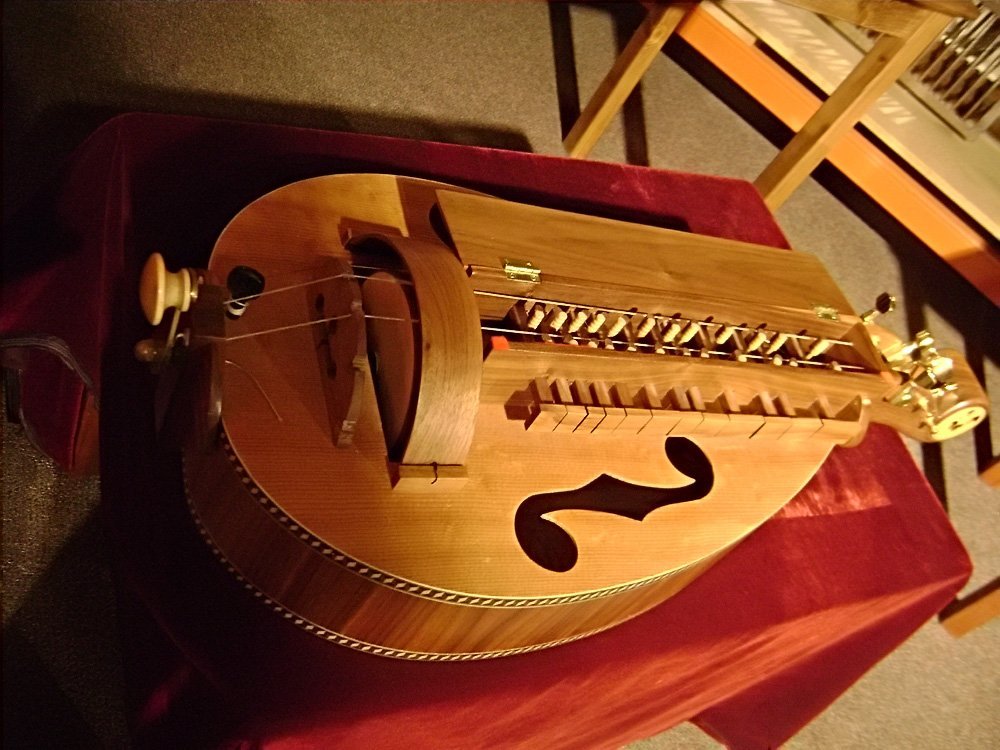
The hurdy-gurdy cranks a rosined wheel against strings, with keys pressing tangents for pitches like a keyboard. Pre-11th-century European origins blend fiddle and organ. Bagpipe-violin drone suits medieval reenactments. Renaissance popularity waned with polyphony rise.[2][3]
Crank provides sustain, keys define notes. Buzzing bridge adds rhythm. Folk and metal revivals honor its grit. Peasant instrument turned icon.
Chapman Stick
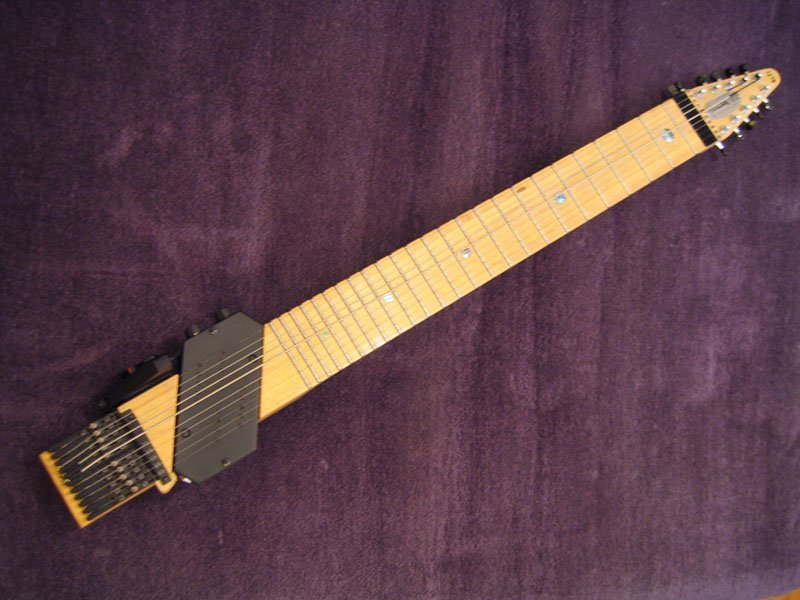
Emmett Chapman devised this 1970s electric stick with 10-12 strings tapped polyphonically like a bass-guitar hybrid. Both hands tap frets for bass, chords, melodies. Versatile tones span genres via pickups. Rock progressives adopted it.[1][2]
Tapping technique frees fretting hand. MIDI expands synthesis. Inventor’s tapping method revolutionized string play. Compact power redefines solo performance.
Wheelharp

derivative work: StefanWesthoff (talk), CC BY-SA 3.0)
The wheelharp’s keyboard controls 61 bowed strings via rotating wheels for orchestral swells. Keys engage wheels rubbing rosined strings. Rich string ensemble sounds emerge from one player. Modern invention evokes harp orchestras.[1]
Polyphonic bowing simulates sections. Compact yet symphonic. Appeals to composers seeking density. Innovation in string automation.
Zeusaphone
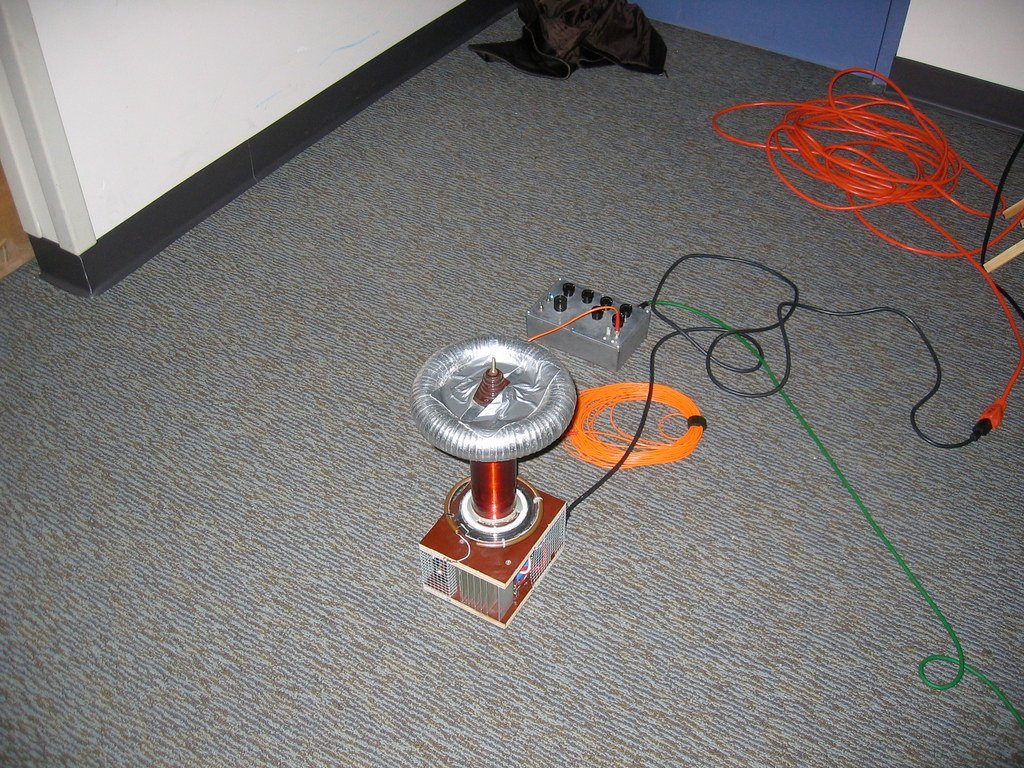
The Zeusaphone modulates Tesla coils for musical arcs, using solid-state tech for safe plasma tones. MIDI inputs pulse arcs vibrating air up to 900Hz. Lo-fi synth screams pair with lightning visuals. Björk featured it in Biophilia.[1][2][3]
Software shapes waveforms into music. Theatrical sparks demand caution. Electronic art form from physics hacks. Stage spectacle meets sound design.
Reflecting on Musical Creativity Worldwide

These instruments reveal boundless imagination across continents and eras. From Welsh crwths to Turkish yaybahars, they prove music thrives on the unconventional. Traditions evolve, blending old crafts with new tech.
Creativity knows no borders. Each oddity invites us to rethink sound’s possibilities, reminding that the strangest tools often yield the most profound expressions. The world hums with untapped melodies.
CEO-Co-Founder
