

- 15 Incredible True Stories Behind the Most Famous Rock Ballads Ever - March 26, 2026
- The Disturbing Origins of 10 Famous Fairy Tales - March 26, 2026
- 10 ‘Ghost Ships’ That Mysteriously Disappeared At Sea - March 26, 2026
There’s something deeply human about staring at a building and thinking, “Who on earth approved this?” Architecture, at its best, is far more than walls and roofs. It’s a statement, a provocation, sometimes even an act of rebellion. When a structure breaks every rule in the book, something strange happens. People travel thousands of miles just to see it. They take photos, argue about it, write about it, and eventually, they love it.
Designing and constructing buildings is not easy, which is why architects spend years training for the profession. While many focus on creating practical, functional structures that serve their intended purpose, some experiment with unconventional designs, pushing creative boundaries and producing strange, imaginative structures that look unlike anything you’d normally encounter. Some of these buildings have even become major tourist attractions despite initial skepticism or criticism. Honestly, that might be the best revenge an architect can get.
From a house squeezed between prehistoric boulders to an office block with a live highway running straight through it, the world is full of structures that make you stop, tilt your head, and wonder. Let’s dive in.
1. The Dancing House, Prague, Czech Republic
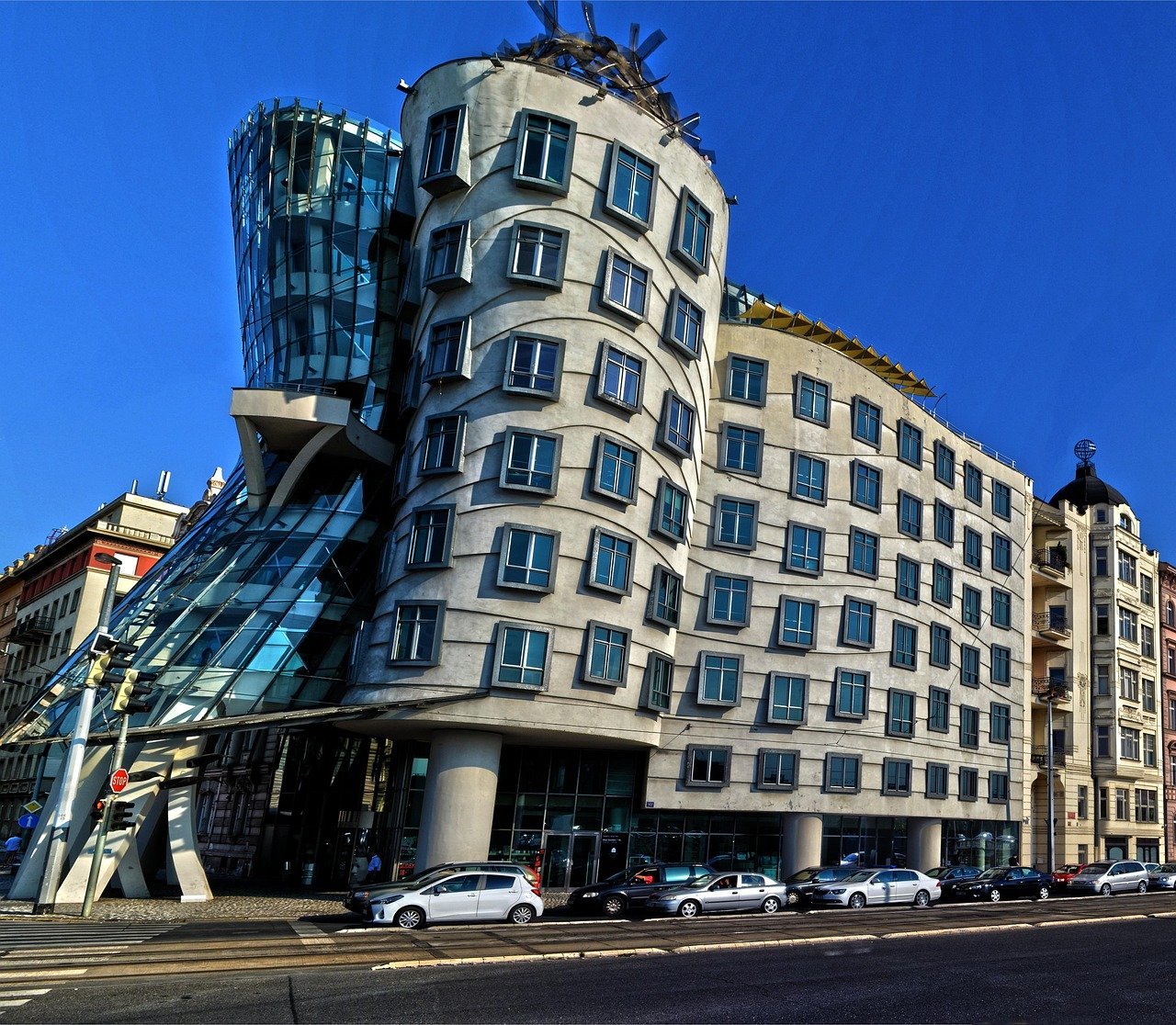
Nicknamed “Fred and Ginger,” the Dancing House is a curved glass-and-concrete structure that appears to sway like two dancers in motion. Designed by Frank Gehry and Vlado Milunić, this structure truly looks like two dancers in a mid-performance embrace. The building replaced a structure that was bombed during World War II, and its design carries a deeper symbolic weight beyond the spectacle.
When the project was first proposed, it sparked controversy because its modern style differed sharply from Prague’s traditional Baroque, Gothic, and Art Nouveau architecture. Nevertheless, the design received support from former Czech president Václav Havel. The site itself replaced a building destroyed during World War II bombing, and the new structure is often interpreted as symbolizing Czechoslovakia’s transition from a communist regime to a parliamentary democracy.
Frank Gehry initially resisted the “Dancing House” nickname but later embraced it. The project was controversial in the 1990s, with critics calling it out of place. Today, it’s considered a bold case of post-communist architectural freedom. Today, the Dancing House contains office spaces, a luxury hotel, and the Ginger & Fred restaurant, which offers panoramic views of Prague from the top floor.
2. Hundertwasserhaus, Vienna, Austria
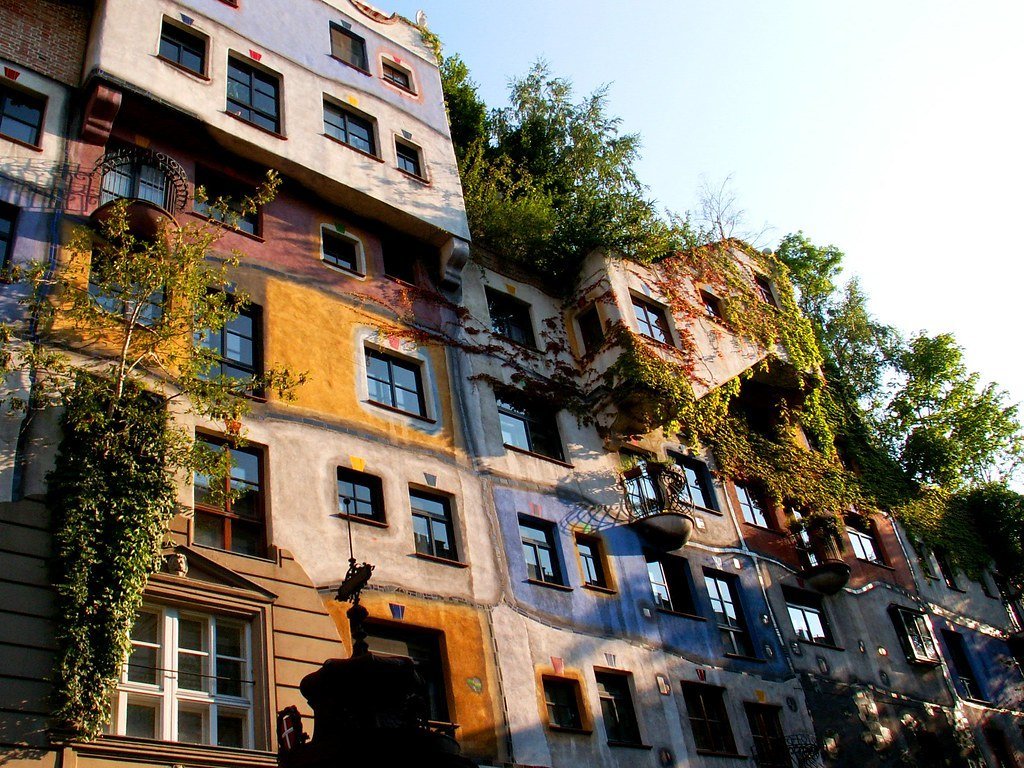
The Hundertwasserhaus is an apartment house in Vienna, Austria, completed in 1985, after the idea and concept of Austrian artist Friedensreich Hundertwasser. This expressionist landmark is located in the Landstraße district, and it has become one of Vienna’s most visited buildings and part of Austria’s cultural heritage.
Hundertwasser’s main philosophy was that human misery was a result of rational, sterile, monotonous architecture. He called for a boycott of this type of architecture, demanding creative freedom of buildings and the right to create individual structures. The building features undulating floors, a roof covered with earth and grass, and large trees growing from inside the rooms, with limbs extending from windows. I think that last part is my personal favorite detail. Trees that just casually grow through windows.
Hundertwasser took no payment for the design of the house, declaring that it was worth it to prevent something ugly from going up in its place. Within the house there are 53 apartments, four offices, 16 private terraces and three communal terraces, and a total of 250 trees and bushes. When it was completed, his fantastical creation caused quite a stir, and some architecture critics quickly dismissed his work as kitsch. However, the Hundertwasserhaus was a hit with the public and soon started to attract visitors to this otherwise quiet residential area.
3. The Gate Tower Building, Osaka, Japan
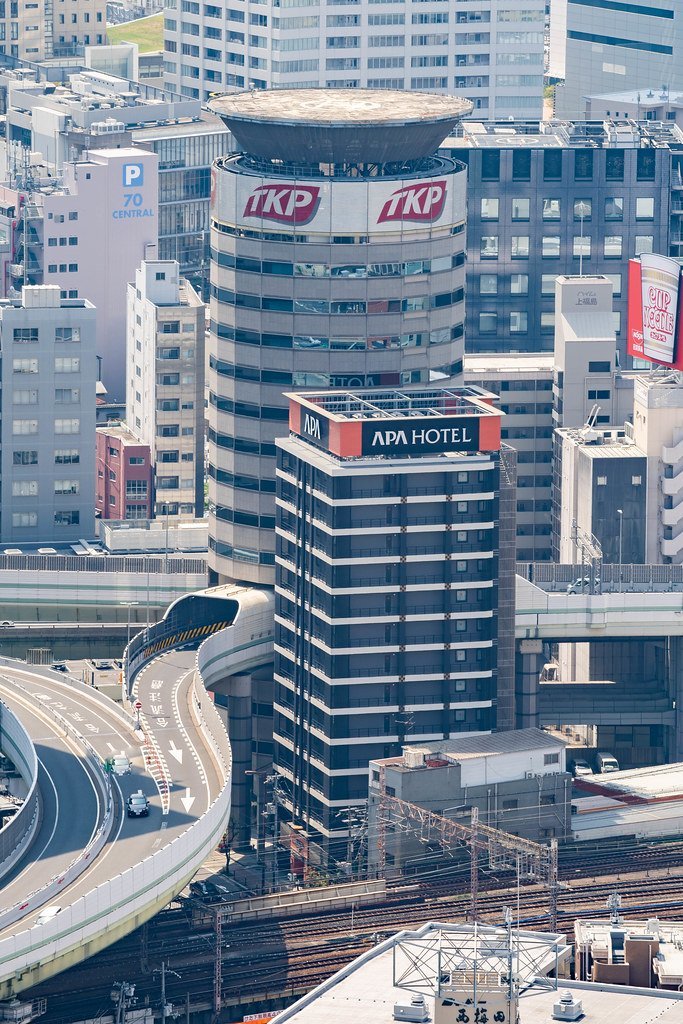
Here’s a fun thought experiment. Imagine you own a plot of land, and the government decides a highway needs to pass straight through your future building. Most people would either sell up or rage-quit. Not in Osaka. The Gate Tower Building is a 16-floor office building in Fukushima-ku, Osaka, Japan, notable for the highway offramp of the Ikeda Route that passes through the building.
In the 1980s, Hanshin Expressway Corporation planned to build the Ikeda Route through a plot of land owned by the same family since the Meiji period, and the owners refused to sell. After five years of negotiations between the determined landowner and the highway authorities, an ingenious compromise was reached, and the building was completed in 1992 with a one-of-a-kind arrangement.
In an ingenious engineering feat, the highway passes through the building but does not actually touch it. The off-ramp is its own self-supporting bridge surrounded by noise and vibration dampeners inside a protective tunnel. The highway corporation effectively rents those three floors as a transportation tenant. Visitors entering the ground floor of the building will see the elevator marked with floors numbered 1 to 4, and then 8 to 16. The floors in between simply say “Hanshin Expressway” and are, naturally, inaccessible.
4. The Hang Nga Guesthouse (“Crazy House”), Vietnam
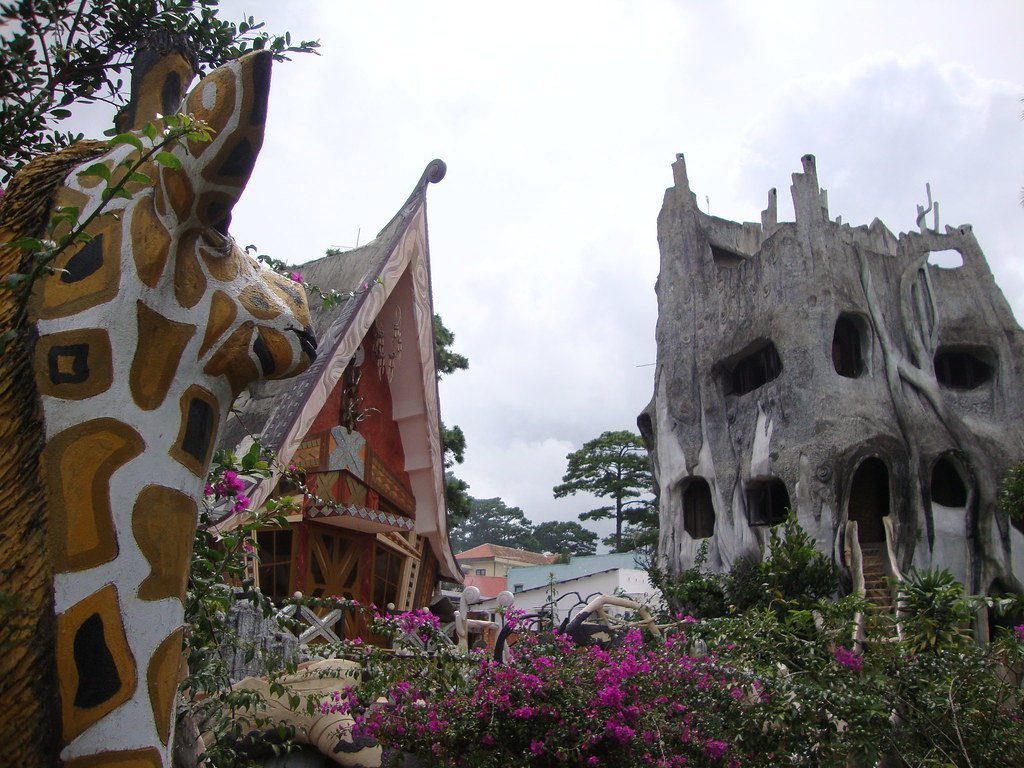
The Hang Nga Guesthouse, widely known as the “Crazy House,” is located in the mountain resort city of Da Lat in southern Vietnam. The building is famous for its unusual design, which incorporates sculptural forms representing animals, mushrooms, spiderwebs, and caves. The result is a structure that resembles something from a surreal fairy tale.
The building was designed by Vietnamese architect Dang Viet Nga and opened to the public in 1990. It quickly gained international attention because of its expressionist architectural style. The design was heavily inspired by the work of Catalan architect Antoni Gaudí and has often been described as one of the most bizarre buildings in the world. Dang Viet Nga is also the daughter of former Vietnamese president Truong Chinh, adding an additional layer of historical context to the project.
With twisting pathways, irregular surfaces, and vibrant colors, the structure was created to help visitors reconnect with forms found in nature. Constructed from materials such as steel, wood, and concrete, the complex contains ten themed rooms named after animals or plants. The Crazy House also functions as a hotel, allowing guests to stay in rooms designed to resemble giant tree trunks. It’s the kind of place that makes you feel like you’ve wandered into someone else’s dream.
5. The Longaberger Basket Building, Ohio, USA
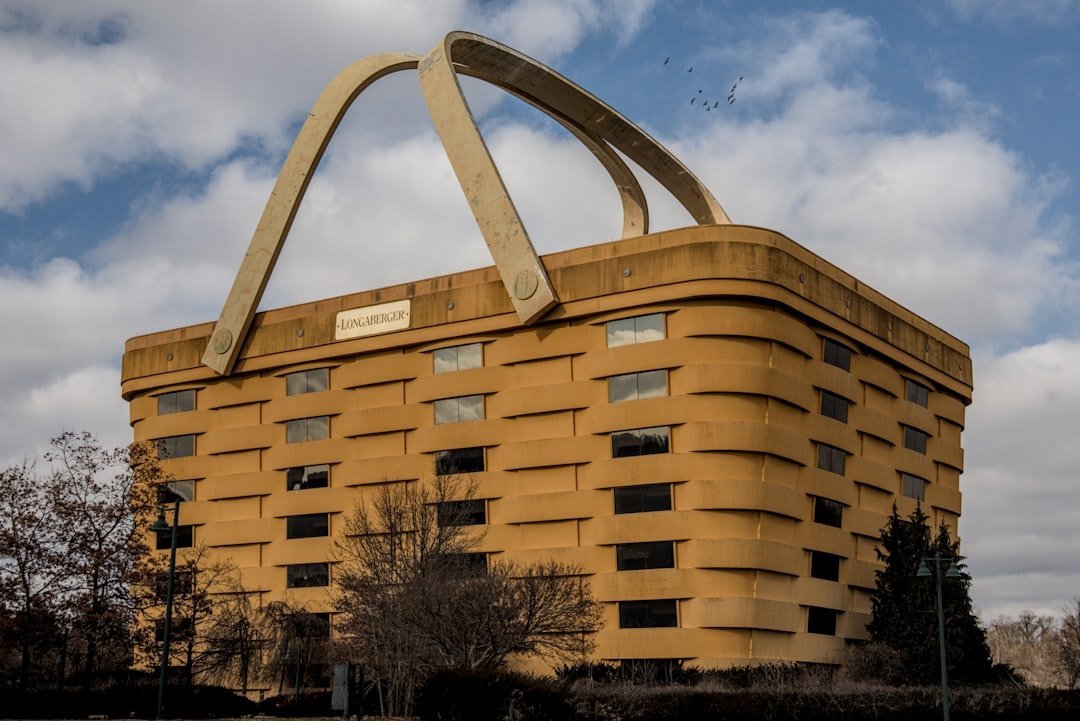
The Basket Building is a seven-story structure that looks exactly like an oversized woven basket, handles and all. It was built as the former headquarters for the Longaberger Company, which sold handcrafted wooden baskets. Although the building was once a bustling office space, it sat vacant for years after the company downsized.
Longaberger’s founder, Dave Longaberger, personally insisted that the Basket Building look like the company’s best-selling basket. At the time, he even wanted every branch office to follow the same concept. That never happened, but the original basket HQ became an icon of American roadside architecture.
It was designed to replicate the basket, 160 times larger. It is one of the most famous examples of novelty or mimetic architecture, which is defined as buildings designed to represent or mimic the objects associated with their functions. After several years of vacancy, the world’s largest house in the shape of a basket celebrated its reopening as a luxury hotel in 2020. It’s hard to say for sure whether Dave Longaberger was a branding genius or an eccentric dreamer, but honestly, maybe both.
6. The Crooked House (Krzywy Domek), Sopot, Poland
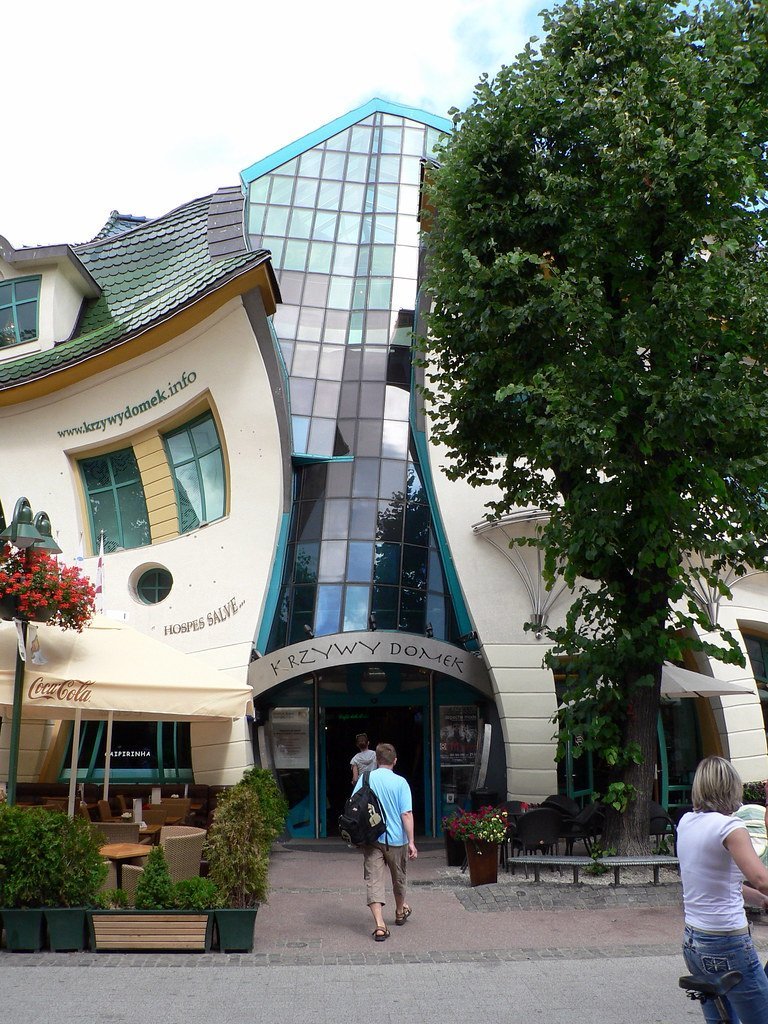
Located at the intersection of Monte Cassino and Morska Streets in Sopot, Poland, the Crooked House is sometimes nicknamed the “Drunk House” for its unusual appearance. Completed in 2004, the building was designed by Polish architects Szotyńscy and Zaleski. The roughly 4,000-square-meter structure forms part of the Rezydent shopping center. The architects drew inspiration from whimsical Polish fairy-tale illustrations created by Jan Marcin Szancer and Per Dahlberg.
Designed by Szotyńscy and Zaleski in 2004, this unusual building is one of the most photographed sights in Poland. No wonder, as it gives viewers the impression of being drunk. The Crooked House bends and warps as though gravity has lost its grip. Housing cafes, shops, and entertainment spaces, it attracts tourists who marvel at its unconventional charm. It’s a prime example of how playful design can also be commercially successful.
7. The Bubble Palace (Palais Bulles), France
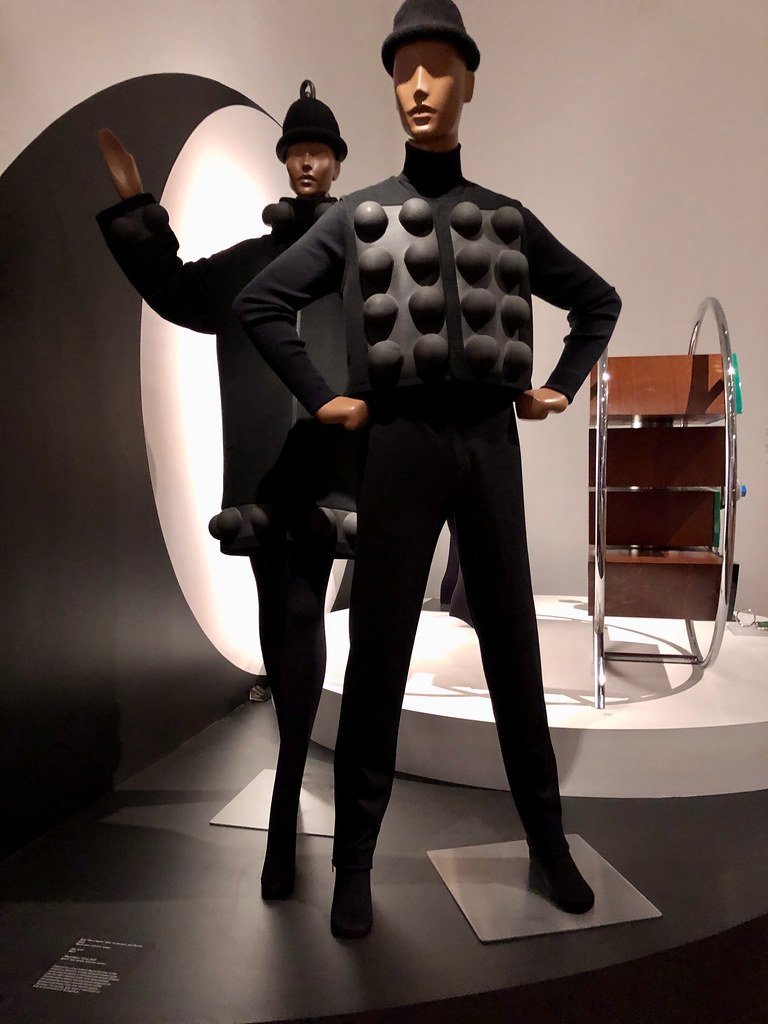
Imagine designing a home where straight lines are considered an act of aggression. That was the philosophy behind one of the most otherworldly residences in Europe. Also known as Palais Bulles, Bubble Palace is a huge residence in Théoule-sur-Mer, close to Cannes, France. The building was designed by the Hungarian architect Antti Lovag, and the period of its construction was from 1975 to 1989.
The palace was actually built for a French industrialist but later on, fashion designer Pierre Cardin bought it as his holiday home. The 1,200 square meter house comprises a front area, panoramic lounge, 500-seat open-air amphitheatre, 10 bedrooms, numerous swimming pools, and waterfalls.
Covering a total of 1,200 square meters, its unique appearance is derived from an ensemble of bubble clusters, which makes it one of the most significant and classic examples of modern architecture. The design approach was to avoid straight lines as they are considered an aggression against human nature, and to create a space that doesn’t impede movement or break harmony. Owned by fashion designer Pierre Cardin, the Bubble Palace is a fantastical complex of interconnected circular structures overlooking the Mediterranean Sea. Designed by architect Antti Lovag, the palace embraces the idea that curves and organic forms are more natural and comfortable for human living.
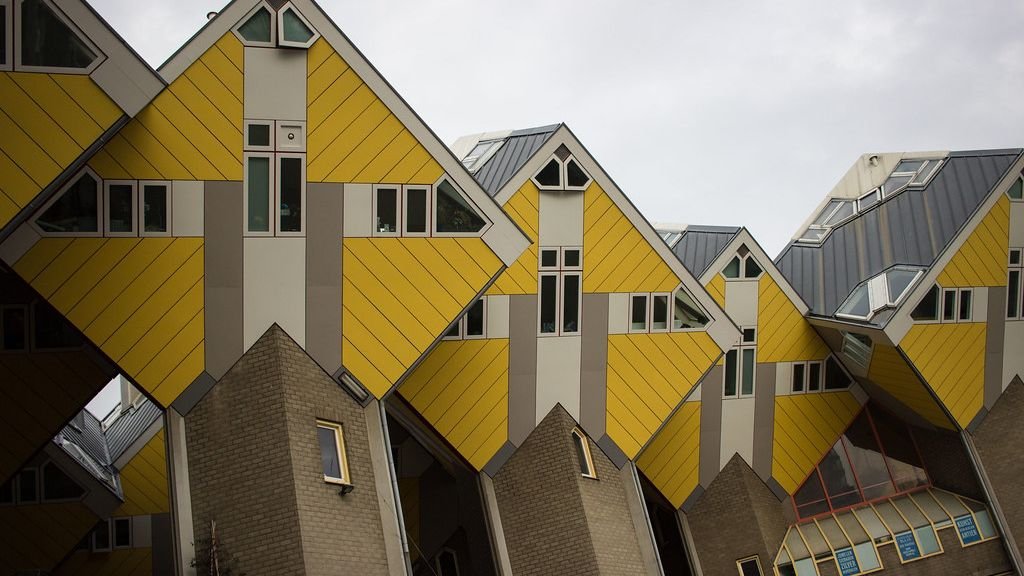
8. The Cube Houses, Rotterdam, Netherlands
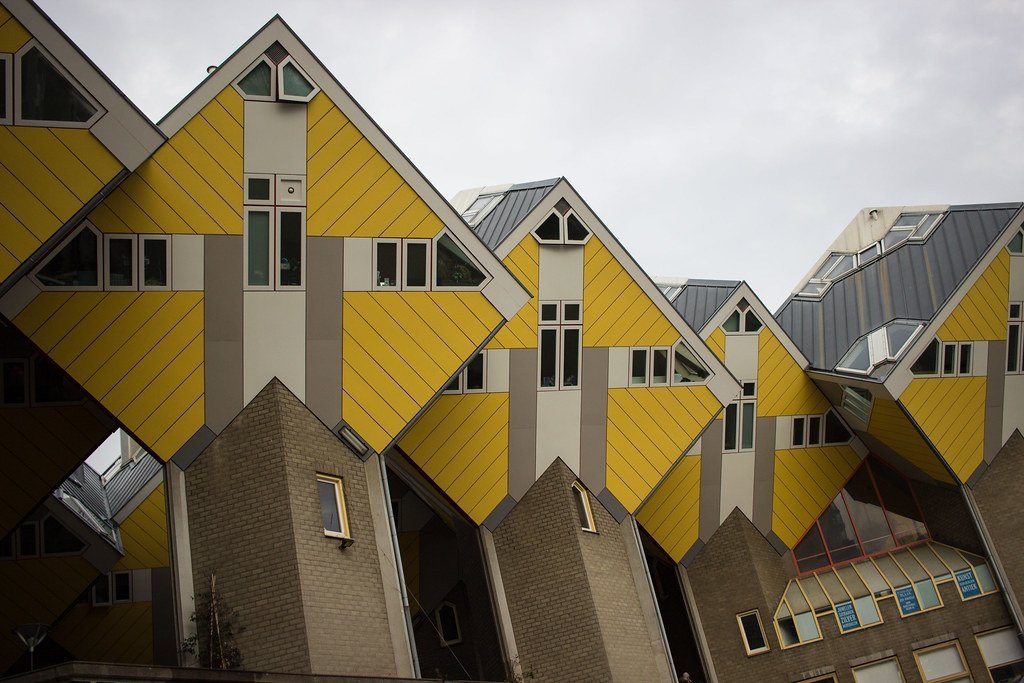
Picture living inside a tilted box, perched high above the street, with walls that lean at impossible angles and floors that slope just enough to mess with your morning coffee. Welcome to Rotterdam. The Cube Houses in Rotterdam, designed by architect Piet Blom, are tilted cubes perched atop hexagonal pylons. These innovative residential units challenge traditional housing concepts, offering a futuristic take on urban living. Each cube is a fully functional home with angled walls and unconventional layouts.
A residential development designed by Dutch architect Piet Blom, with literal cubes tilted over by 45 degrees to optimize most of the available space, resulted in a building that is one of a kind. These residential units are two-bedroom apartments consisting of three floors, and even though it looks quite complicated and clustered, the apartments are extremely spacious and airy.
The idea was that each house would represent a tree, and all of them together would make an architectural forest. All the Cube Houses are inhabited, except for one, which serves as a house museum called Kijk-Kubus. You can also book a room at the “Stayokay Hostel Rotterdam,” a hostel that opened in 2009. Let’s be real, sleeping inside a tilted cube hostel sounds like a fever dream. A fun one.
9. The Stone House (Casa do Penedo), Portugal
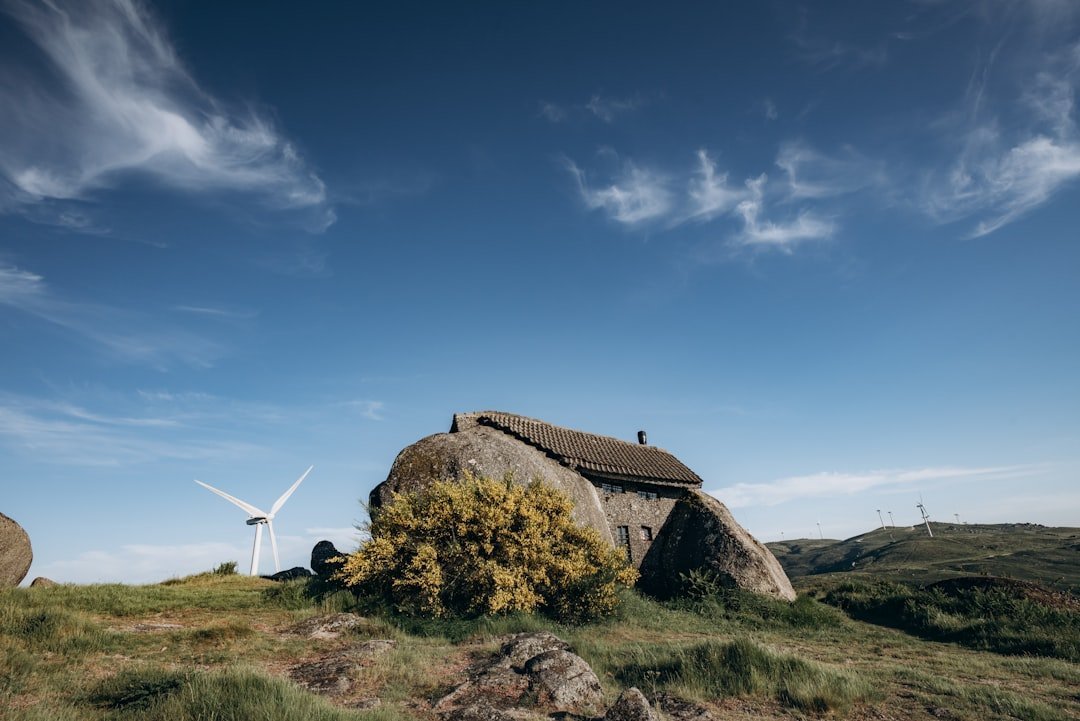
Among the most striking examples of unconventional housing is Casa do Penedo in Fafe, Portugal, built in 1974. Squished between four enormous boulders, from which it takes its name, the house was built by a local family as a rural retreat. It looks, for all the world, like something the Flintstones might have commissioned if they had slightly better taste.
The Stone House in Fafe, Portugal, is undoubtedly one of the most unusual buildings in the world. Also known as “Castle of Stone,” the house was built in 1972 by engineer Guimaraes using four giant stones he found in the area. The Stone Age house lookalike was meant to be a rural retreat for a family from Fafe. But as soon as tourists multiplied, the owners decided to move out. Today, the Stone House functions as a small museum open to the public.
Tucked between two giant boulders in the Fafe Mountains of Portugal, the Stone House blends naturally with its rocky surroundings. Resembling a real-life version of the Flintstones’ home, though it appears prehistoric, it was actually built in the 1970s and features a cozy interior with modern amenities. The irony that modern people fled a Stone Age house because of tourism is something I find endlessly amusing.
10. The Guangzhou Circle, China
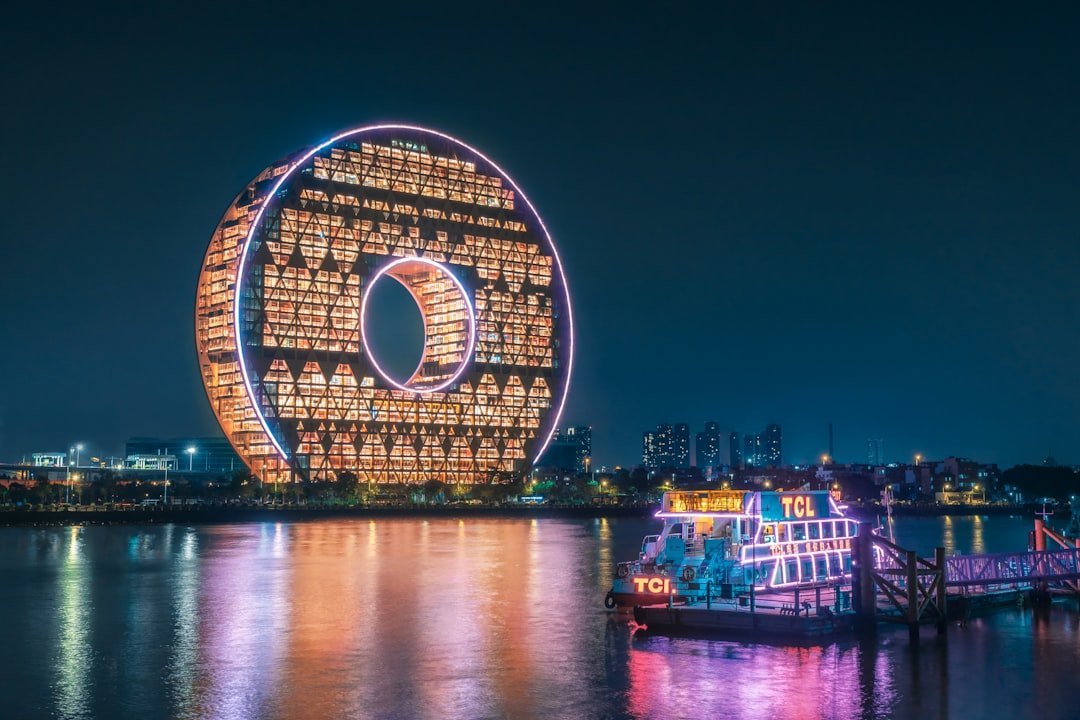
Most skyscrapers try to be tall. This one decided to be a ring. Guangzhou Circle is a 138-meter circular skyscraper that rises like a giant jade disc beside the Pearl River. Designed by Joseph di Pasquale and completed in 2013, the building’s symbolic form references ancient Chinese cosmology and Guangzhou’s trading heritage. Its bronze-tinted façade and dramatic central void make it visually unlike any neighboring tower.
It is often described by the BBC and ArchDaily as one of China’s most distinctive modern buildings, and while sometimes promoted as the “world’s tallest circular skyscraper,” a more accurate description is that it is one of the tallest and most prominent circular high-rises ever constructed. The shape deliberately echoes the ancient Chinese jade disc, known as a “bi,” which was historically used in rituals and symbolized heaven and earth.
The building’s construction presented enormous engineering challenges, given that a perfect circle creates unusual load distributions that standard rectangular towers never encounter. Despite the technical obstacles, the finished structure is stunning. In a world often shaped by uniformity and efficiency, structures like this stand out as reminders of the value of curiosity, playfulness, and experimentation in architecture. Guangzhou Circle is exactly that. A statement in steel, glass, and ancient symbolism all at once.
The Enduring Power of Strange Architecture
There’s a thread connecting all ten of these buildings. None of them were built to be ordinary. Some started as bold visions, others as eccentric obsessions, and at least one emerged from a legal dispute nobody expected to end with a highway living inside an office block. These buildings are united not by style but by a willingness to push architectural boundaries. Many defy conventional shapes, scales, and expectations, encouraging viewers to reconsider how humans inhabit and interact with space. Some structures were conceived to attract attention, others as personal expressions, and some as experiments in form and material.
Architects aim to inspire, innovate, or reflect cultural identity. Taking creative risks often leads to groundbreaking designs. The buildings on this list have done all of that and more. They’ve become landmarks, tourist destinations, cultural symbols, and conversation starters across generations.
What’s truly remarkable is how many of them faced ridicule when they were first built, only to become beloved icons decades later. The Dancing House was called an eyesore. Hundertwasserhaus was dismissed as kitsch. The Basket Building was considered a corporate gimmick. All of them survived the criticism, and most of them thrived because of it.
Architecture, at its strangest, is also architecture at its most honest. It shows us what happens when someone refuses to build just another box. The world is far more interesting for it. Which of these ten would you most want to step inside?

Besides founding Festivaltopia, Luca is the co founder of trib, an art and fashion collectiv you find on several regional events and online. Also he is part of the management board at HORiZONTE, a group travel provider in Germany.
