

For any feedback please reach out to info@festivalinside.com
- 10 Most Mysterious Books in The World - March 23, 2026
- 8 Interesting Quirks About Mozart Not Everyone Knows - March 23, 2026
- 12 Olympic Athletes Who Were Stripped of Their Medals - March 23, 2026
Few songs in the history of popular music have sparked as much debate, speculation, and genuine wonder as “Mr. Tambourine Man.” Released in 1965, it arrived like a riddle wrapped in a melody, and decades later, people are still arguing about what it actually means. Is it a drug song? A spiritual plea? A love letter to creativity itself? Honestly, it might be all of those things at once, and that is exactly what makes it so endlessly fascinating.
In the vast landscape of popular music, few songs have left as lasting a footprint as Bob Dylan’s “Mr. Tambourine Man,” with its mysterious lyrics and mesmerizing melody establishing itself as a touchstone in the canon of American music. The song refuses to sit still under one interpretation, morphing into something new with every listening. So let’s dive in and unpack what Dylan was really getting at, or at least try our best.
The Man Behind the Tambourine: Real Inspiration or Pure Myth?

Here’s the thing that surprises almost everyone when they first hear it. The tambourine man was a real person. Bruce Langhorne, who plays guitar on the track, has been cited by Dylan as the inspiration for the tambourine man image in the song. Langhorne used to play a giant, four-inch-deep “tambourine,” which was actually a Turkish frame drum, and had brought the instrument to a previous Dylan recording session.
The instrument was as big as a wagon wheel, and Langhorne was a charming fellow from the sunnier climes of Tallahassee, Florida. Think about that for a second. One of the most analyzed and philosophically loaded images in rock history came from a guy walking into a recording studio with an oversized drum. Dylan is famously obtuse about explaining his songs, but in his 1985 Biograph compilation album, he broke the news that “Mr. Tambourine Man” is not about drugs, and was inspired by folk musician Bruce Langhorne. That said, whether you believe Dylan’s explanation or not is entirely another matter.
The Lyrical Symbolism: A World Built Out of Images
The song’s lyrics are densely packed with literary references, cultural touchstones, and symbolic motifs. The tambourine man himself can be interpreted as a muse, a figure of spiritual or artistic inspiration, or even as a representation of the countercultural ethos emerging in the mid-1960s.
Lines such as “Though I know that evening’s empire has returned into sand / Vanished from my hand” evoke impermanence, loss, and the fleeting nature of experience, connecting the personal to the universal. Dylan’s imagery is simultaneously specific and abstract, creating a kaleidoscopic effect where meaning shifts with each listening.
Some readers hear youth slipping away in these verses. The first lines convey the singer’s mourning over the loss of childhood. The evening symbolizes the last moments of child-like youthfulness, which are so far distant that they have vanished from the singer ever being able to have that youthfulness again. It’s a deeply personal reading, and not at all wrong. The beauty of the song is that it holds space for multiple truths simultaneously.
Drug Culture or Creative Freedom? The Debate That Won’t Die
Let’s be real. The drug interpretation has always been the elephant in the room. The song is widely considered to be drug-influenced, with lines like “Take me for a trip upon your magic swirling ship” and “take me disappearin’ through the smoke rings of my mind” indicating a pot or acid experience.
The psychedelic imagery found in the lyrics led many to interpret the song as a celebration of the mind-expanding properties of hallucinogenic drugs, particularly LSD. Dylan has consistently denied this interpretation, though the association persists, adding another layer of intrigue to the song’s mystique.
I think the honest answer is somewhere in the middle. Getting stoned is a double-edged sword. Dylan’s own live performances of the song in 1966 seemed to reflect this ambiguity, with the tone darkening considerably. In that darker reading, the tambourine man becomes a master of illusion who will lead you to a land of smoke and mirrors, the “dancing spell” not a celebration but a curse. Suddenly the song feels far less euphoric and far more cautionary.
Artistic Influences: What Was Dylan Actually Reading?
Dylan did not write in a vacuum, and the fingerprints of other artists are all over this song. Dylan has cited the influence of Federico Fellini’s movie “La Strada” on the song, while other commentators have found echoes of the poetry of Arthur Rimbaud.
The song was also reportedly inspired by Dylan’s fascination with literary influences such as the works of Jack Kerouac and William S. Burroughs. That Beat Generation influence is impossible to ignore. The wandering, free-flowing quality of the lyrics, the sense of rootlessness and desire for transcendence, reads almost like a song written from the pages of “On the Road.”
Some analysts, like John Hinchey, even think the song is based on Keats’ “Ode to a Nightingale.” It’s an interesting theory, though far from obvious. There are some definite similarities: both lyrics clearly state the need for escape from the humdrum life. In the Keats poem, the vehicle is the nightingale’s song, whereas in “Mr. Tambourine Man,” it’s the music. Dylan was, in short, a man who absorbed everything and reflected it back in a completely new form.
Historical Context: A Song Born From National Anxiety
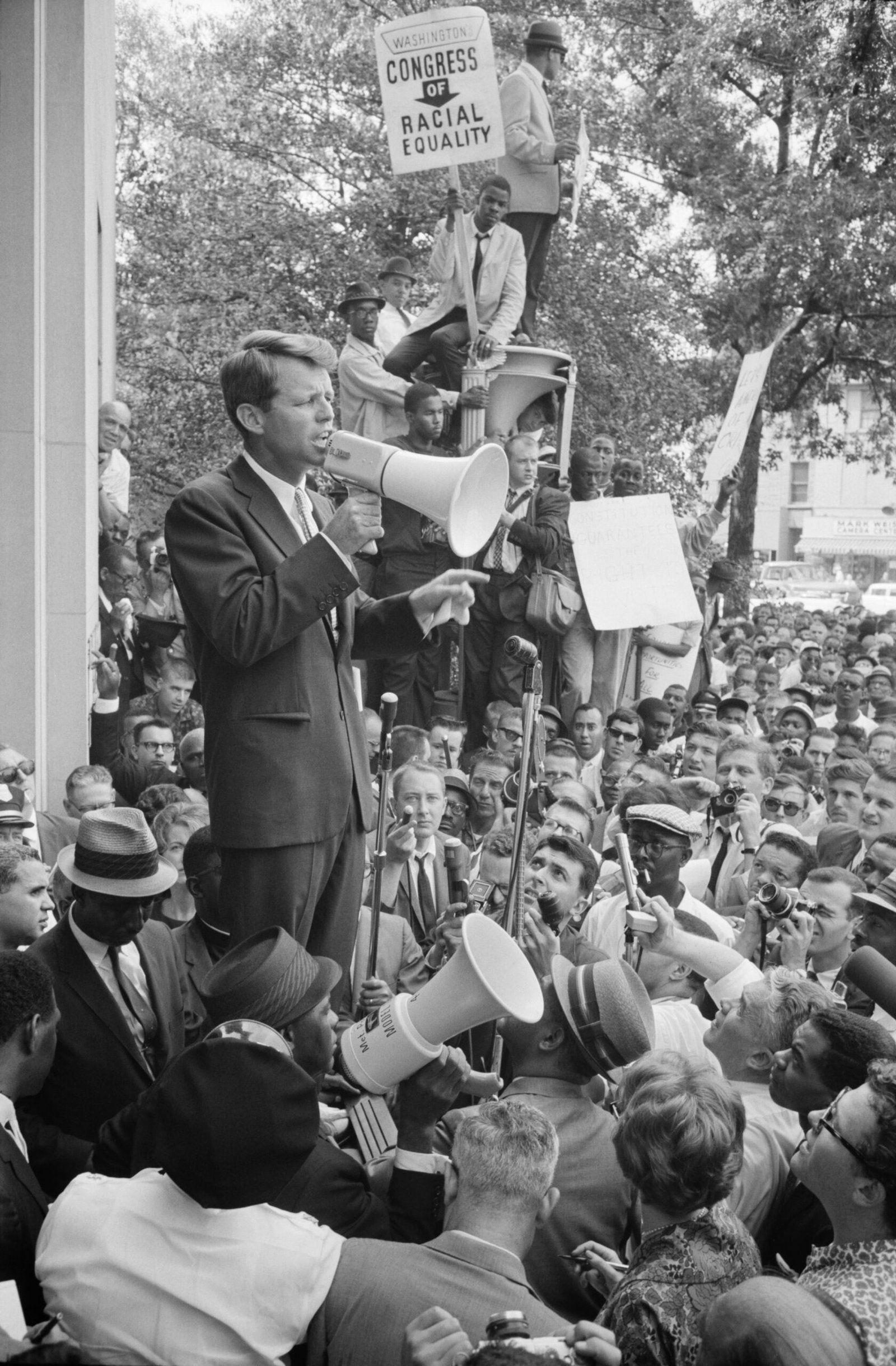
It’s hard to fully appreciate the song without understanding the world Dylan was living in when he wrote it. The song emerged during a period marked by significant social and cultural upheaval in America. The civil rights movement was gaining momentum, the Vietnam War was intensifying, and the counterculture was rising. Dylan’s music reflected the anxieties and aspirations of a generation searching for meaning and identity.
The song was most likely conceived during a three-week station wagon trip Dylan undertook with friends in February 1964, driving from the East to the West Coast of the US. The three months before that, Dylan’s creativity had been completely blocked following the Kennedy assassination and his controversial Tom Paine Award incident. The song, then, was not just a piece of art. It was a kind of emotional exhale. A way of breaking free from the weight of history pressing down.
Because of the political context in which the song was born, it was seen to express a hedonistic turn, an aspect of Dylan’s turning away from protest songs to more surreal, interior, drug-lit songs. Yet that interpretation may actually undersell it. Seen in another light, it is as much a protest song as any other, and its “escaping on the run” can be seen as a rebellion against the unlived meaning.
Critics and Listeners: A Song That Means Something Different to Everyone
Part of what makes “Mr. Tambourine Man” so extraordinary is how completely it resists a single definitive reading. At first glance, the song appears to be a simple request for companionship and escapism. However, a closer examination reveals deeper currents of existential angst, search for enlightenment, and drug culture.
Some listeners always heard the song as Dylan saying he was done being the folk singer protest “voice of his generation,” which he never liked anyway. “I wouldn’t pay it any mind” and “escaping on the run” suggest Dylan wanted to be free to go his own way without other people defining him. That reading is perhaps the most personally compelling of all.
Hunter S. Thompson had his own take. Thompson figured the song typified the times. As he documents in “Fear and Loathing in America,” he called Dylan’s classic “the Hippy National Anthem.” Meanwhile, the tambourine man has sometimes been interpreted as a symbol for Jesus or the Pied Piper of Hamelin, with the song possibly referencing gospel music themes, with the tambourine man being the bringer of religious salvation. One song. A thousand meanings. That is genuinely rare.
The Byrds and the Birth of Folk Rock

Whatever Dylan originally intended, the song took on a life far beyond him once The Byrds got hold of it. Bob Dylan wrote and recorded the original version, but it was made famous by The Byrds, who took it to number one in both the US and UK. The song hadn’t even been released when The Byrds learned it from a demo Dylan gave to their manager, Jim Dickson. The two versions were released just weeks apart.
The single’s success initiated the folk rock boom of 1965 and 1966, with a number of American and British acts imitating the band’s hybrid of a rock beat, jangly guitar playing, and poetic or socially conscious lyrics. The single was called the “first folk rock smash hit,” and gave rise to the very term “folk rock” in the US music press.
Their version set the standard for folk rock and even convinced Dylan to go electric. Think about the ripple effect of that for a moment. A song about a man with a big drum effectively rewired the direction of popular music. Since the 1960s, the Byrds’ jangly folk rock sound has continued to influence popular music, with authors noting the band’s influence on acts including Big Star, Tom Petty and the Heartbreakers, R.E.M., the Smiths, the Stone Roses, and Teenage Fanclub. The family tree is enormous.
The Song’s Lasting Impact on Popular Music
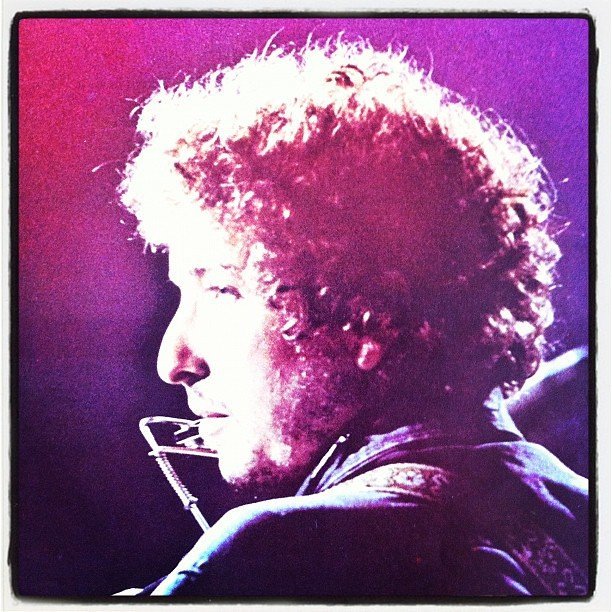
The 1965 release coincided with a period of experimentation and transformation in Dylan’s career. Having already gained fame as a protest singer, Dylan was now exploring a more personal, poetic, and surrealistic approach. “Mr. Tambourine Man” marked the moment where Dylan stopped being a spokesman and started being an artist in the fullest, most uncompromising sense.
This shift was initially controversial among fans who preferred his earlier, more politically engaged material, but it ultimately expanded the possibilities of what folk and popular music could accomplish. The song became a bridge between Dylan’s folk roots and the emerging folk-rock movement, influencing both contemporaries and the next generation of singer-songwriters.
Both Dylan’s and The Byrds’ versions of “Mr. Tambourine Man” have appeared on Rolling Stone’s 2004, 2010, and 2021 lists of the 500 Greatest Songs of All Time. Over sixty years after its release, the song still shows up on those lists. That is not nostalgia. That is something deeper.
Why the Song Still Matters in 2026

It would be easy to dismiss “Mr. Tambourine Man” as a relic of a specific era, a curio from the protest folk days or the psychedelic dawn. That would be a mistake. Its themes of freedom, self-discovery, and the search for meaning resonate with audiences today, just as they did in the 1960s.
The song’s enduring relevance is partly due to its universality: regardless of era or cultural context, listeners can find personal meaning in the imagery, metaphor, and emotional resonance of the lyrics. The song becomes not just a listening experience but a participatory journey, inviting the imagination to take flight.
The song’s legacy extends beyond music itself, having become a symbol of protest and resistance. The desire for personal and collective freedom expressed through its lyrics resonated deeply with the countercultural movements of the 1960s and continues to inspire contemporary social movements. In a world that still feels, on many days, too loud and too chaotic, the desire to follow someone with a jingle-jangle into the unknown remains completely human.
Conclusion: The Mystery Is the Point

What “Mr. Tambourine Man” was “really” about may be, in the end, the wrong question. Dylan knew he had done something special and unrepeatable when he wrote it. From an interview with Sing Out magazine, he revealed that he tried to write another “Mr. Tambourine Man” but after enough time going at it, it just began bothering him so he dropped it. Even Dylan himself couldn’t replicate what he had made.
The song’s power lives precisely in its refusal to be pinned down. It is about escaping, about longing, about music itself, about drugs and not about drugs, about youth and loss and wonder and weariness, all at the same time. It is a song poem about how art can lead us to an otherworldly state that often beckons from just beyond the veil of reality, and then, just when you think you have reached transcendence, it all comes crashing down.
That tension, that beautiful, unresolvable tension, is what keeps people coming back. What does it mean to you?

Christian Wiedeck, all the way from Germany, loves music festivals, especially in the USA. His articles bring the excitement of these events to readers worldwide.
For any feedback please reach out to info@festivalinside.com
