


For any feedback please reach out to info@festivalinside.com
- 10 Mouthwatering Food Festivals in The US Every Foodie Need To Experience At Least Once - April 3, 2026
- The Most Iconic Music Festivals In The World - April 3, 2026
- Weirdest Quirks About Beethoven You May Not Know! - April 3, 2026
There are few names in human history that carry the same electric weight as Ludwig van Beethoven. His symphonies can move people to tears. His sonatas feel almost supernatural. Yet behind all that immortal music lived a man who was, honestly, one of the strangest, most unpredictable, and flat-out bizarre human beings to ever walk the streets of Vienna.
Beethoven’s personality was a complex tapestry of contradictions – quick-tempered yet warm-hearted, rebellious yet sensitive, charismatic yet increasingly isolated by his deafness. What’s so fascinating is that these contradictions weren’t just personality flaws. They were, in many ways, the engine behind some of the greatest music ever written. The chaos fueled the creation.
So if you think you know Beethoven from his portrait or his Fifth Symphony, brace yourself. The real man was far stranger, far more human, and far more surprising than any textbook will tell you. Let’s dive in.
He Was a Spectacular Klutz
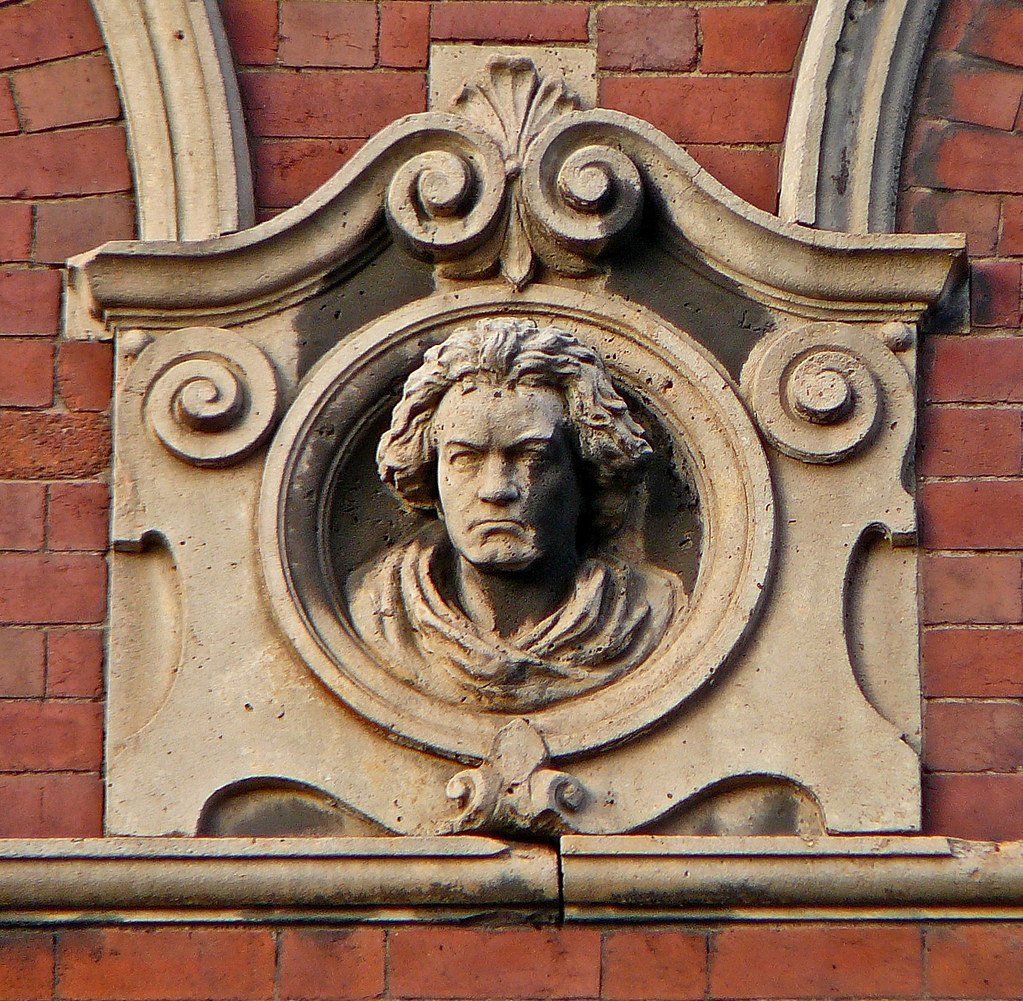
Here’s the thing – the man responsible for some of the most precise, technically demanding music in history could barely hold a cup without dropping it. Beethoven was, sorry to say, a complete klutz. He seldom picked up anything without dropping or breaking it. No furniture was safe from him – all was overturned, dirty, and destroyed. Think about that for a second. The composer of the “Moonlight Sonata” was essentially a walking accident.
On several occasions, he upset his inkwell directly into his piano. He was also constantly breaking piano strings with his exuberant playing. His demands from instrument makers were not about tone or resonance. His biggest requirement of a piano was simply that it be “sturdy.” Imagine being the piano builder who had to meet those specs.
He Couldn’t Dance, Shave, or Do Much of Anything Else
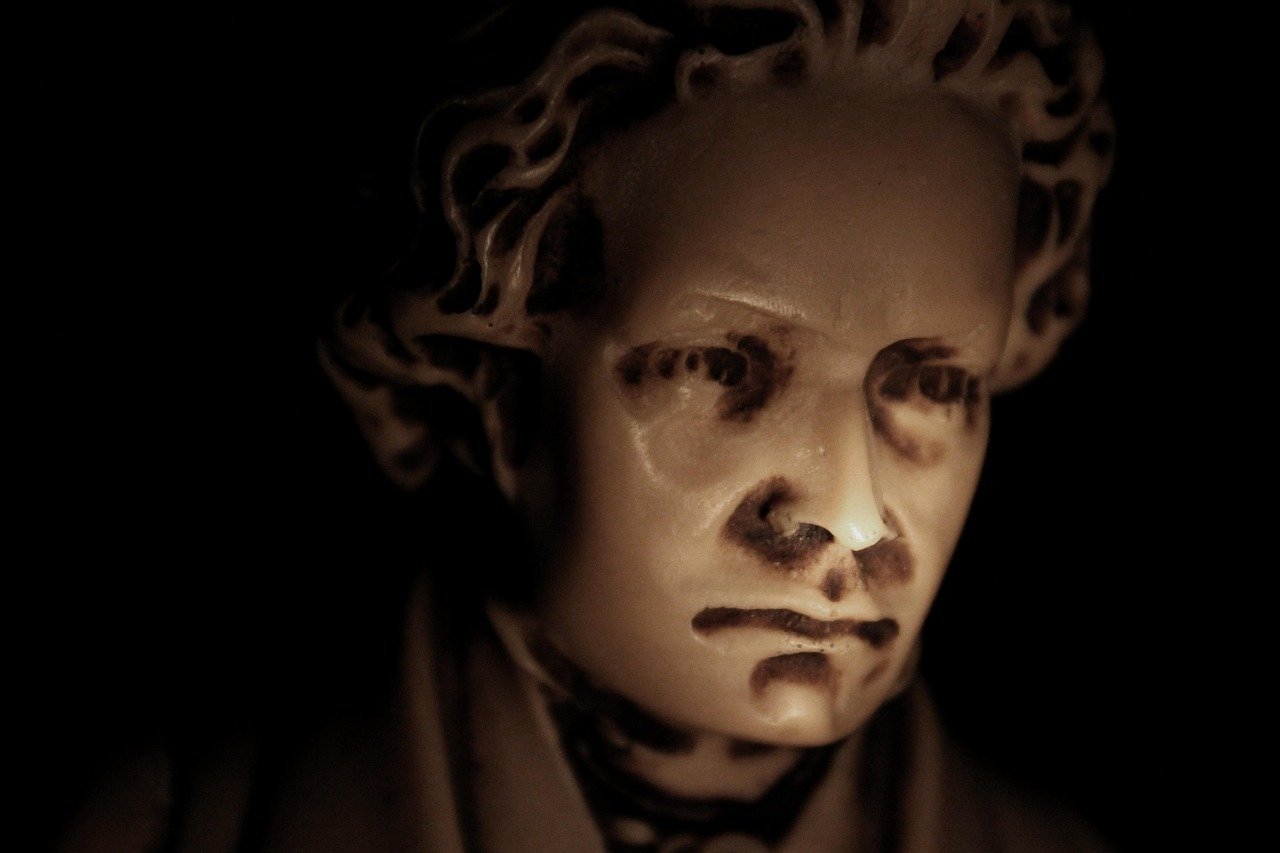
I know it sounds crazy, but the man who understood rhythm at a level almost no human before or since could match – could not dance in time to music. One acquaintance mused that how he managed to shave himself was hard to understand, given the many cuts upon his cheeks. He never even learned to dance in time to the music. There is something almost poetic about that.
He washed thoroughly every morning and, when deep in thought, poured water over his hands or even emptied a jug of cold water over his head while composing, sometimes soaking the floor and the apartment below. Shaving was a genuine challenge, often leading to comical incidents. One acquaintance reportedly said that figuring out how he managed to shave at all – given the perpetual cuts on his face – was among life’s great mysteries.
He Flooded His Apartments on a Regular Basis

One of the strangest of Beethoven’s habits was his daily head-dunking ritual. To stimulate his brain and stay alert, he would pour cold water over his head, sometimes while actively composing. He believed this practice helped clear his mind and spark creativity. There is something almost admirable about that level of commitment to the creative process, even if his neighbors disagreed.
Whether this ritual reflected a particular concern for personal hygiene or was essential to his thought process is open to question. What is certain is that the overflow from the buckets of water he emptied over himself often leaked through the floor, causing Beethoven to be unpopular with landlords. From his move to Vienna in 1792 until his death in 1827, he changed his residence a total of 68 times. Honestly, the flooding alone probably explains quite a few of those moves.
He Counted Exactly 60 Coffee Beans Every Single Morning
If there is one Beethoven quirk that feels almost relatable in today’s coffee-obsessed world, it’s this one. He liked coffee. However, it always had to be made from exactly 60 coffee beans, which he counted out beforehand. Not 59. Not 61. Sixty. Every single day. That kind of obsessive precision from a man who could not pick up a glass without dropping it is, let’s be real, absolutely hilarious.
It speaks to something deeper, too. Beethoven’s mind clearly operated on its own terms. In music, that exactness produced timeless masterworks. In daily life, it produced a man counting individual coffee beans at dawn while the floor of his apartment was still wet from his morning head-dunking session. From his coffee obsession to his wild temper and odd eating habits, his life was filled with fascinating stories that make him more than just a legendary composer – he was a real, complex, and often unpredictable human being.
He Completely Ignored His Own Appearance
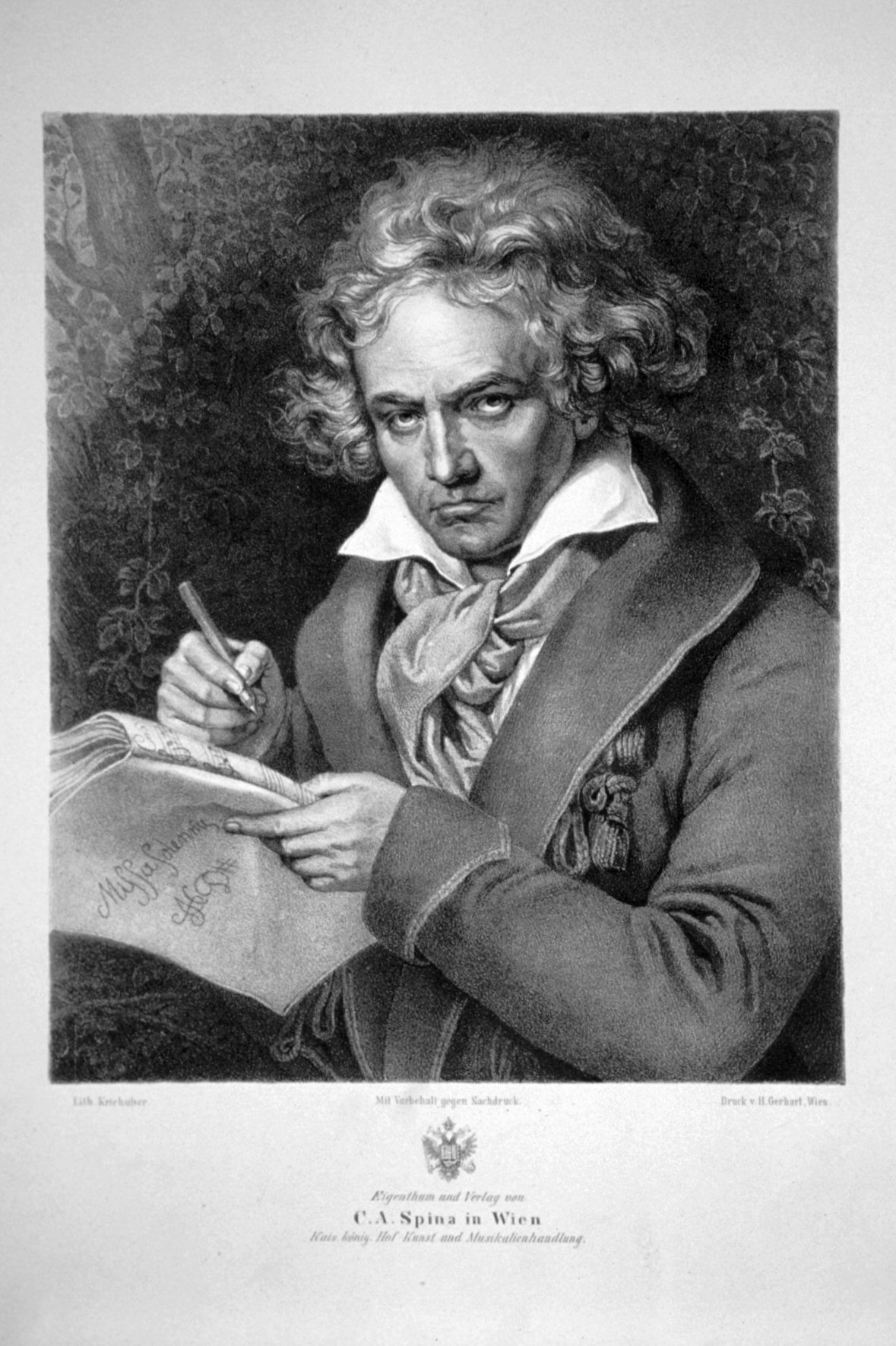
His hair was very dark and hung tousled about his face. His attire was very ordinary and not remotely of the choiceness customary in his social circles. Another observer described his hair as “untouched by scissors or comb.” That last phrase is genuinely something. Untouched. By either tool. For what sounds like extended periods of time.
Some friends even went so far as to steal his old, worn-out clothes from where he had tossed them about his room and replace them with new outfits. He never even noticed. He put on his new pants and jackets without a second glance. This is the kind of detail that makes you realize his brain was operating on an entirely different frequency. Fashion was simply not part of the signal his mind was receiving.
He Was Arrested for Looking Like a Vagrant

This is one of my favorite stories in all of music history, because it is both deeply funny and a little heartbreaking. One evening in 1820, Beethoven went for a walk in the countryside, completely lost in thought. He wandered into a small town looking so ragged and disoriented that the local police arrested him for vagrancy. He tried to explain that he was Beethoven, but they didn’t believe him. It wasn’t until a prominent music lover came to his rescue that the authorities realized they had just jailed one of the greatest composers of all time.
The constable reportedly told the commissioner, “He keeps on yelling that he is Beethoven; but he’s a ragamuffin, has no hat, an old coat… nothing by which he can be identified.” The man who would be studied, celebrated, and revered for centuries was spending the night in a jail cell because nobody believed he was who he said he was. You genuinely cannot make this up.
He Had a Volcanic Temper That Terrified Everyone Around Him
Beethoven was infamous for his fiery personality. He would slam piano lids, break violins, and even throw things at people when he got frustrated. One of the most famous stories tells of him angrily dumping a plate of food on a waiter’s head because he wasn’t happy with his meal. Some historians debate the precise details, but the general thrust – Beethoven, furious, sauce everywhere – is thoroughly documented in multiple accounts.
While playing a private piano recital for one of his royal patrons, Beethoven happened to glance at the audience and noticed a certain Count Palffy chatting with a woman, paying no attention to the music. Beethoven stopped playing, slammed his fists on the keyboard, shouted at the audience, and stormed out. Let’s be real – most performers would have kept playing and fumed silently. Not Beethoven. The man simply refused to exist on anyone else’s terms.
He Was a Hopeless Romantic Who Got Rejected Every Single Time
Beethoven was a hopeless romantic who fell in love many times with women who ultimately rejected him. He proposed marriage to three different women, and each of whom turned him down. Three separate proposals. Three separate rejections. It’s hard not to feel something for the man, even as you’re laughing a little. Beethoven never married, though he was deeply in love multiple times. His most famous romantic mystery is the “Immortal Beloved” – a passionate love letter he wrote to an unknown woman in 1812.
The identity of that mysterious “Immortal Beloved” has never been definitively solved and remains one of the great romantic puzzles in classical music history. It’s hard to say for sure who she was, but the raw emotion in those letters is undeniable. He had very few friends, because he usually managed to insult or upset them. Yet Beethoven had plenty of self-esteem. A man who could pour out his deepest feelings in a love letter and then slam his fists on a piano at a royal concert in the same week. That is range.
He Composed His Greatest Work While Completely Deaf

This is probably the most well-known of Beethoven’s quirks, yet it never stops being staggering. One of the most incredible facts about Beethoven is that he composed some of his greatest works after losing his hearing entirely. By the time he wrote Symphony No. 9, he was completely deaf. Instead of hearing the music, he “felt” the vibrations of the piano and used muscle memory to compose.
When the symphony premiered, he had to be turned around to see the audience’s applause because he couldn’t hear it. Think about what that moment must have felt like. The most celebrated premiere of the century, and the man who wrote every note of it stood with his back to the crowd, completely silent to the thunder of response around him. All the more shocking is that he experienced his first hearing problems in 1796, at the age of just 26, problems that probably stemmed from a case of typhoid fever. He had been losing what mattered most to him for over three decades before he finished his greatest achievement.
He Forgot He Owned a Horse

This one does not get nearly enough attention. A grateful countess gifted Beethoven a horse after he dedicated a composition to her. There is no record of whether he was happy with the gift, but we know he rode it a few times. He found a stable for the horse and then forgot all about it entirely. He just… moved on. Mentally filed under: no longer my concern.
Without any active ownership, a stable hand began renting the horse out for side money, quietly pocketing the income. Later, when Beethoven received a hefty bill for feeding and keeping the horse, he was absolutely furious. The man who could hold a complex symphony in his head, layer upon layer of orchestral movement, could not remember that he owned a living animal that needed to be fed. It’s the kind of thing that makes you love him a little more, honestly.
He Struggled Badly with Basic Math

Beethoven had serious learning disabilities. Even as an adult, he couldn’t multiply or divide simple sums. If he had to figure out twelve times two, for example, he wrote down twelve twos and added them up manually. The man who constructed some of the most mathematically intricate compositions in the Western canon was doing addition on his fingers in daily life. There is something almost beautiful about that contradiction.
Despite these issues, Beethoven never gave up on tasks he wanted to pursue. According to biographer J.R. Ruciman, the composer had great difficulty understanding counterpoint in music but refused to give up, eventually mastering it completely. Unlike Mozart or Handel, Beethoven was a very slow thinker, but once he came to understand something, he understood it completely and would never budge on his conclusions. That stubbornness, which made him insufferable in daily life, was apparently the same force that made him unstoppable as an artist.
His Wild Daily Walks Were Part of His Creative Process

Beethoven loved nature and went to the countryside as often as possible. He needed exercise to compose – a short walk in the morning and a longer one in the afternoon. In between, he would jot down notes, whistle melodies, and then put the music down on paper. These walks were not gentle Sunday strolls. They were intense, frantic, sometimes alarming to witness.
A man striding briskly along country roads near Vienna, looking unkempt, pensive at times, then suddenly singing and gesturing so wildly that the oxen pulling passing carts became skittish – that was Beethoven composing. Imagine just trying to farm your field and suddenly this disheveled, howling man comes striding past, conducting invisible orchestras in the open air. His love for nature and disregard for conventional tidiness reveal a personality driven by creative necessity. It wasn’t carelessness. It was total, consuming focus on something no one else could hear.
Conclusion: The Glorious Mess Behind the Masterpieces
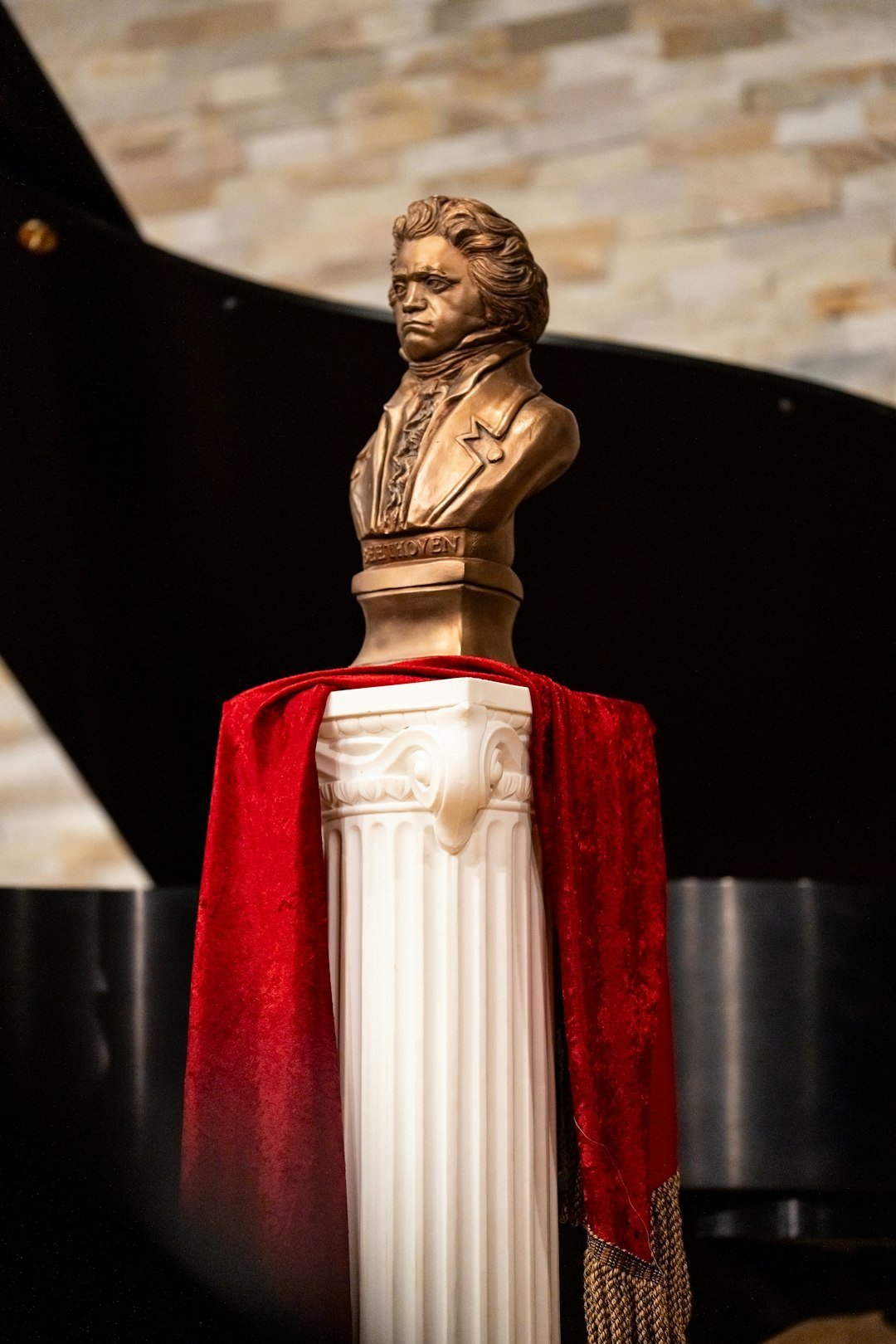
Beethoven was, in the most honest sense, a walking contradiction. He was a man who counted coffee beans with obsessive precision yet forgot he owned a horse. He could bring an entire audience to tears with a piano improvisation and then laugh at them for crying. His personality was a complex tapestry of contradictions – quick-tempered yet warm-hearted, rebellious yet sensitive. His social interactions, marked by robust humor and intense emotions, paint a picture of a man who both captivated and alienated those around him.
What strikes me most, looking at all of this, is that his quirks weren’t separate from his genius. They were part of the same raw, unfiltered wiring. The rage that sent a plate flying across a restaurant was the same energy that powered the thunderous opening of his Fifth Symphony. The obsessive focus that had him dunking his head in cold water was the same concentration that let him hear entire symphonies in his head in complete silence.
All of this is a sharp antidote to the transcendental immortality of his music, arguably the crowning achievement of Western art in the early 19th century. Should we simply devour the music and overlook the man? Never – for music and man are inseparable. Beethoven was not a statue. He was a person – deeply flawed, wildly unpredictable, and undeniably, unforgettably real. The question worth sitting with is: would his music have been as extraordinary if he had been ordinary? What do you think? Tell us in the comments.

Christian Wiedeck, all the way from Germany, loves music festivals, especially in the USA. His articles bring the excitement of these events to readers worldwide.
For any feedback please reach out to info@festivalinside.com
