

For any feedback please reach out to info@festivalinside.com
Red Rocks Amphitheatre – Nature’s Perfect Concert Hall
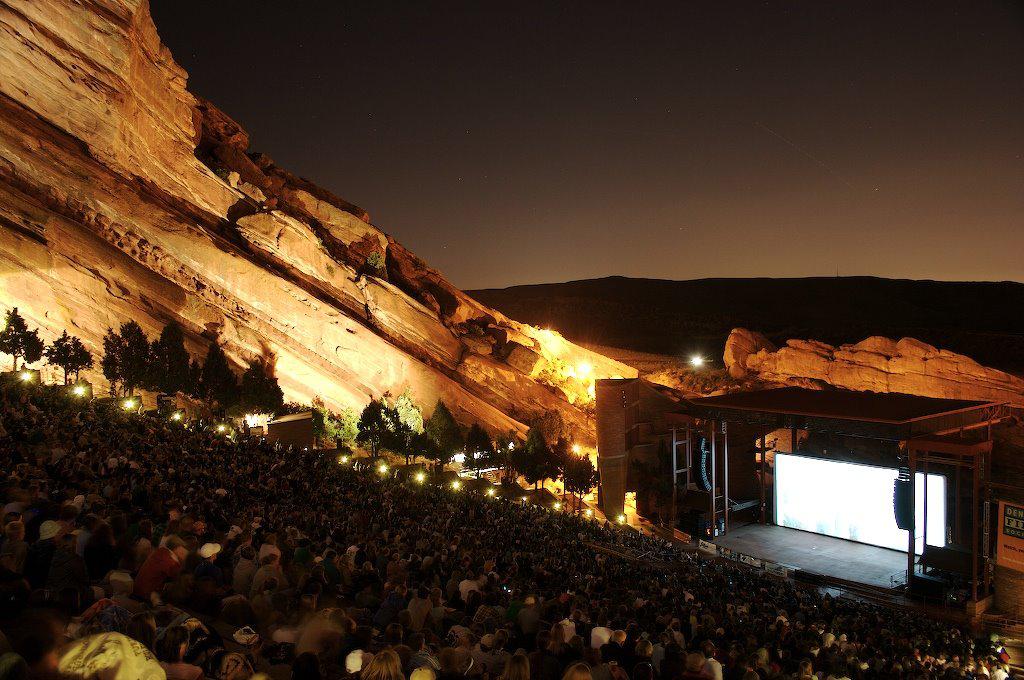
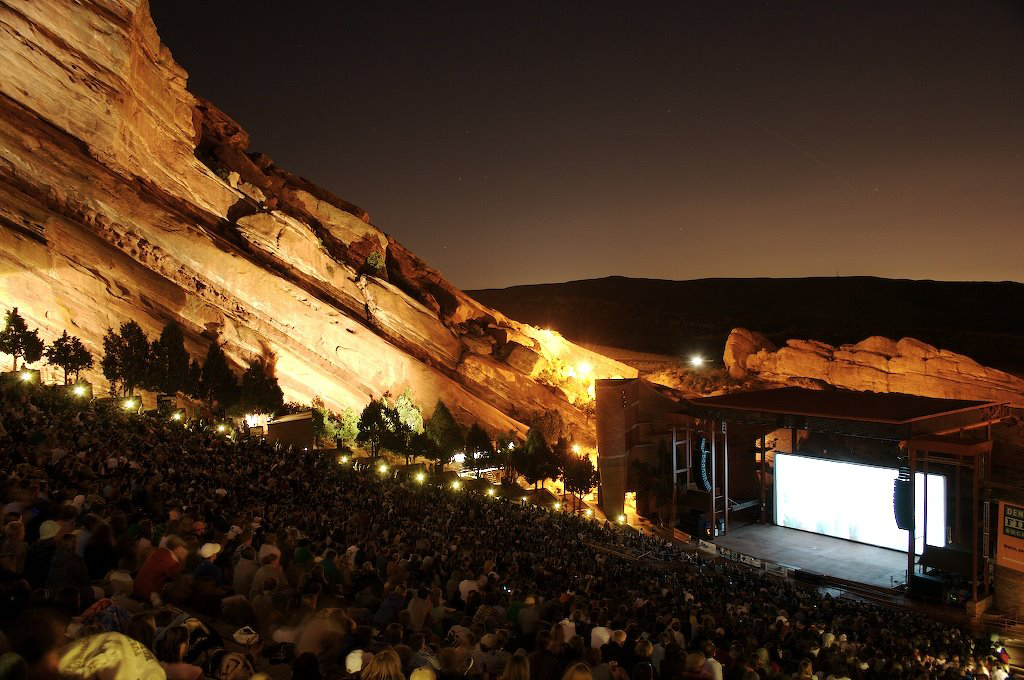
You’ve seen the photos on Instagram, but nothing prepares you for the actual experience of walking into Red Rocks Amphitheatre. The 9,525-seat venue outside Morrison, owned by the city of Denver, is one of the nation’s most iconic places to see live music and draws more than a million people each year. The massive red sandstone monoliths create a natural amphitheater that’s been 250 million years in the making. In 2021, Red Rocks Amphitheatre was named the top-grossing and most-attended concert venue of any size, anywhere in the world.
What makes this venue truly special isn’t just the breathtaking backdrop. Red Rocks finished 2023 with over 1.65 million tickets sold including concerts, Film on the Rocks and fitness events such as Yoga on the Rocks. The venue has become a rite of passage for musicians, and Geddy Lee of Rush said, “It’s an amazing location…One of the most stunning concert venues in the United States… or anywhere. I would hazard a guess that it’s one of the most beautiful places in the world.” Artists from U2 to Phish have created legendary performances here, though you might want to check the weather forecast first – Colorado’s mountain weather can be unpredictable!
Royal Albert Hall – Victorian Elegance Meets Modern Sound
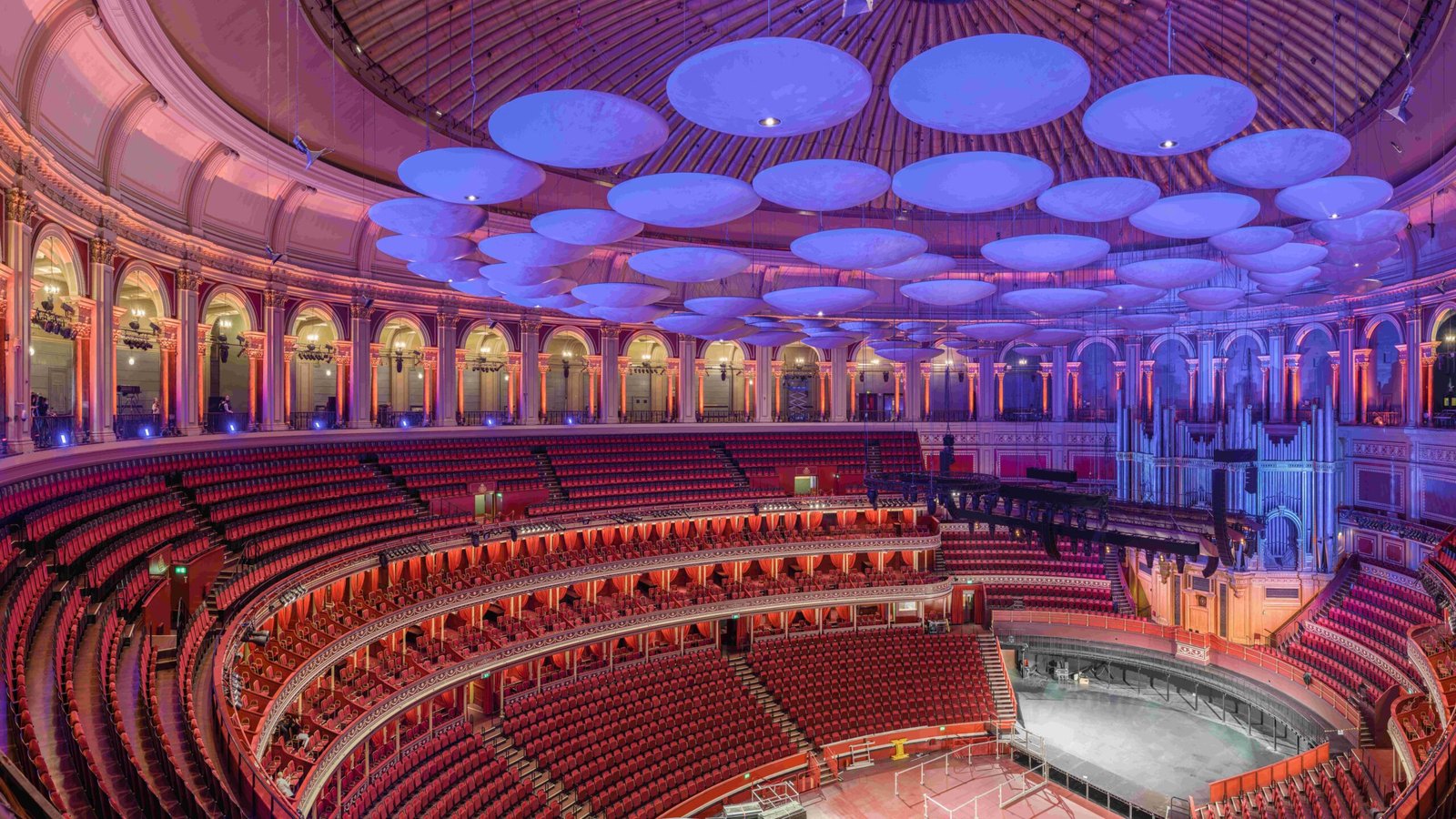
The Royal Albert Hall can seat over 5,200 people, pretty impressive for a venue from the 1800s right? This circular Victorian concert hall opened in 1871 and has become synonymous with world-class performances. Soak up the atmosphere, the interior and the amazing acoustics at one of more than 360 events a year, including classical music, jazz, world music, circus, rock, pop, opera, dance, comedy and tennis. Every summer, the Royal Albert Hall hosts the famous BBC Proms series of classical music concerts.
Here’s a fun fact that’ll make you appreciate the venue even more: Ironically, due to the unusual domed ceiling, the Royal Albert Hall actually had really bad acoustics – not great for a concert venue! Thankfully, extensive renovations in 1969 fixed this issue, making it the acoustically perfect venue it is today. From The Beatles to Adele, this venue has hosted them all, and sitting in one of those ornate boxes feels like stepping into a fairy tale.
Sydney Opera House – Architecture That Sings
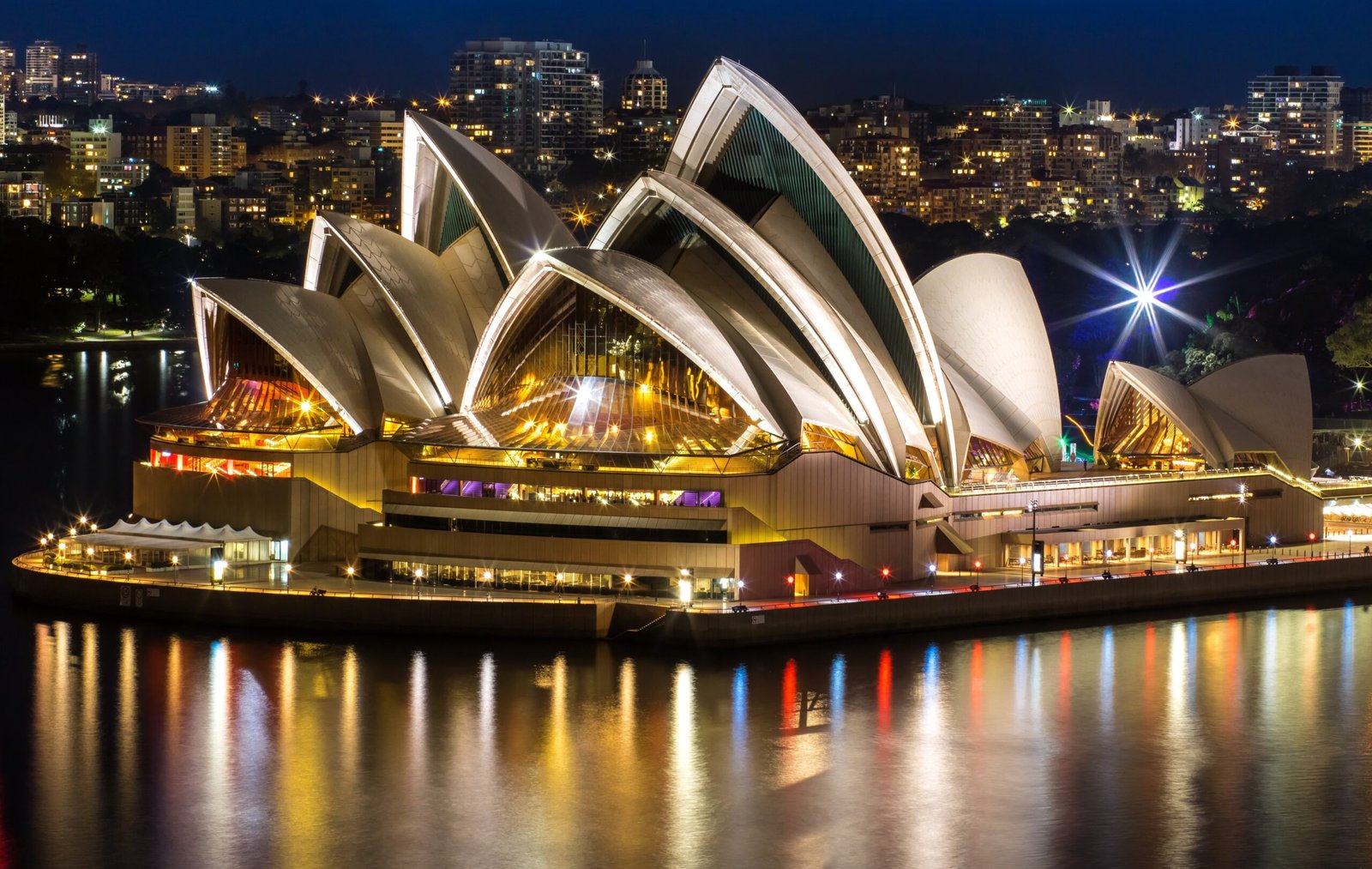
The Sydney Opera House isn’t just a building – it’s a work of art that happens to host incredible performances. Those iconic white shells rising from Sydney Harbour create one of the most recognizable silhouettes in the world. The venue hosts over 1,600 performances annually across multiple theaters, from intimate chamber music to full-scale operas.
What many visitors don’t realize is that the Opera House was never designed to be just an opera venue. It houses multiple performance spaces, including the Concert Hall with its massive organ and the Drama Theatre for plays. The building’s unique design means that every seat offers a different acoustic experience, making each performance feel personal and unique. Plus, you can grab a pre-show drink while watching the harbor lights reflect off the water – try finding that view at any other venue!
The Hollywood Bowl – Stars Under the Stars
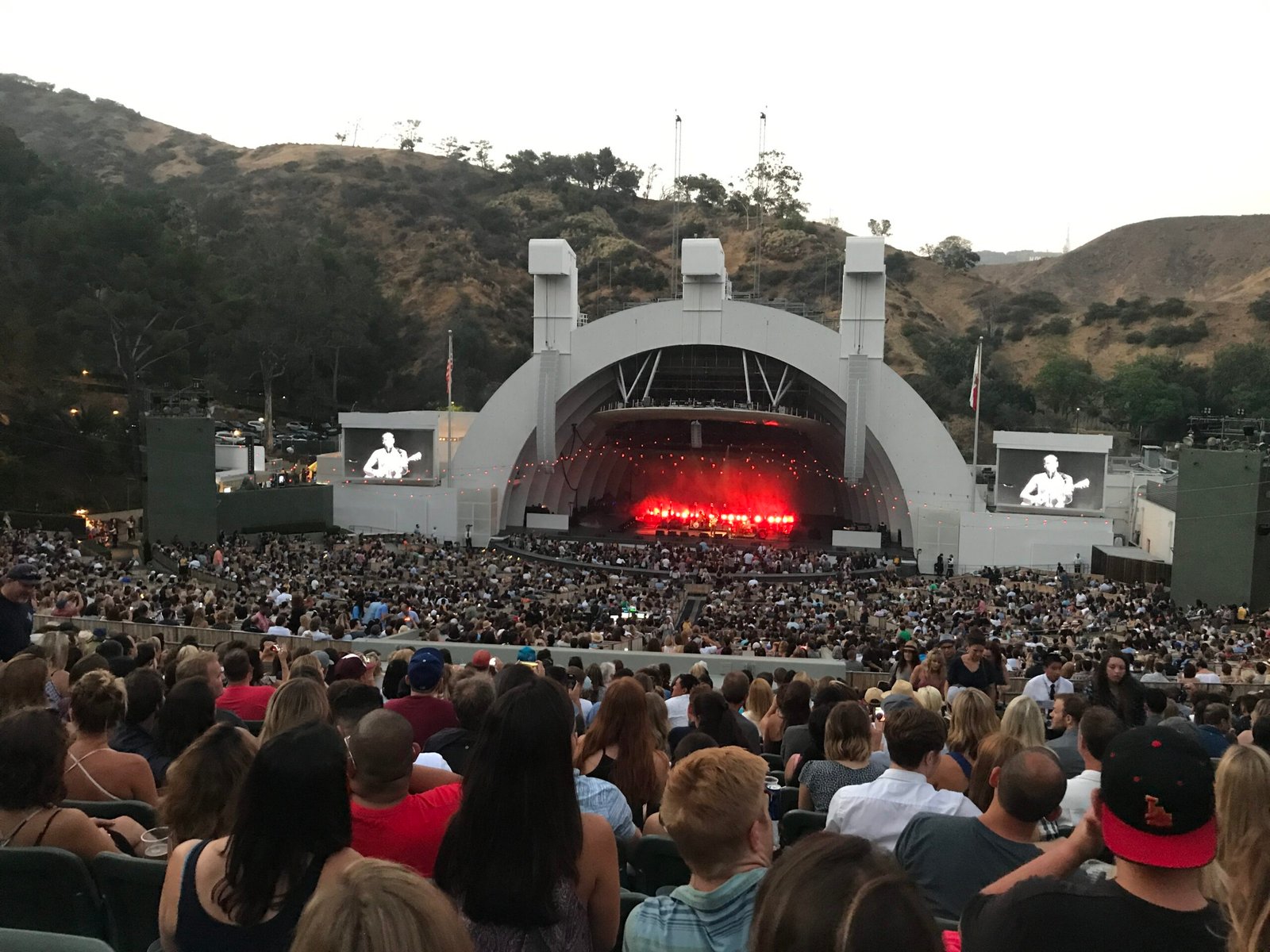
There’s something magical about watching a concert under the California stars at the Hollywood Bowl. This outdoor amphitheater nestled in the Hollywood Hills has been hosting performances since 1922, making it one of the oldest venues still in operation. The venue’s capacity ranges from 17,000 to 18,000 depending on the configuration, but it never feels crowded thanks to its thoughtful design.
The Hollywood Bowl isn’t just about the music – it’s about the entire experience. Many concertgoers arrive hours early to set up elaborate picnic spreads in the parking lot, turning the event into a proper celebration. The venue’s unique shell design amplifies sound naturally, creating an intimate atmosphere despite its large size. From the Beatles’ historic 1964 performance to modern acts like Billie Eilish, the Bowl has consistently delivered unforgettable moments that become part of music history.
Ryman Auditorium – The Soul of Country Music
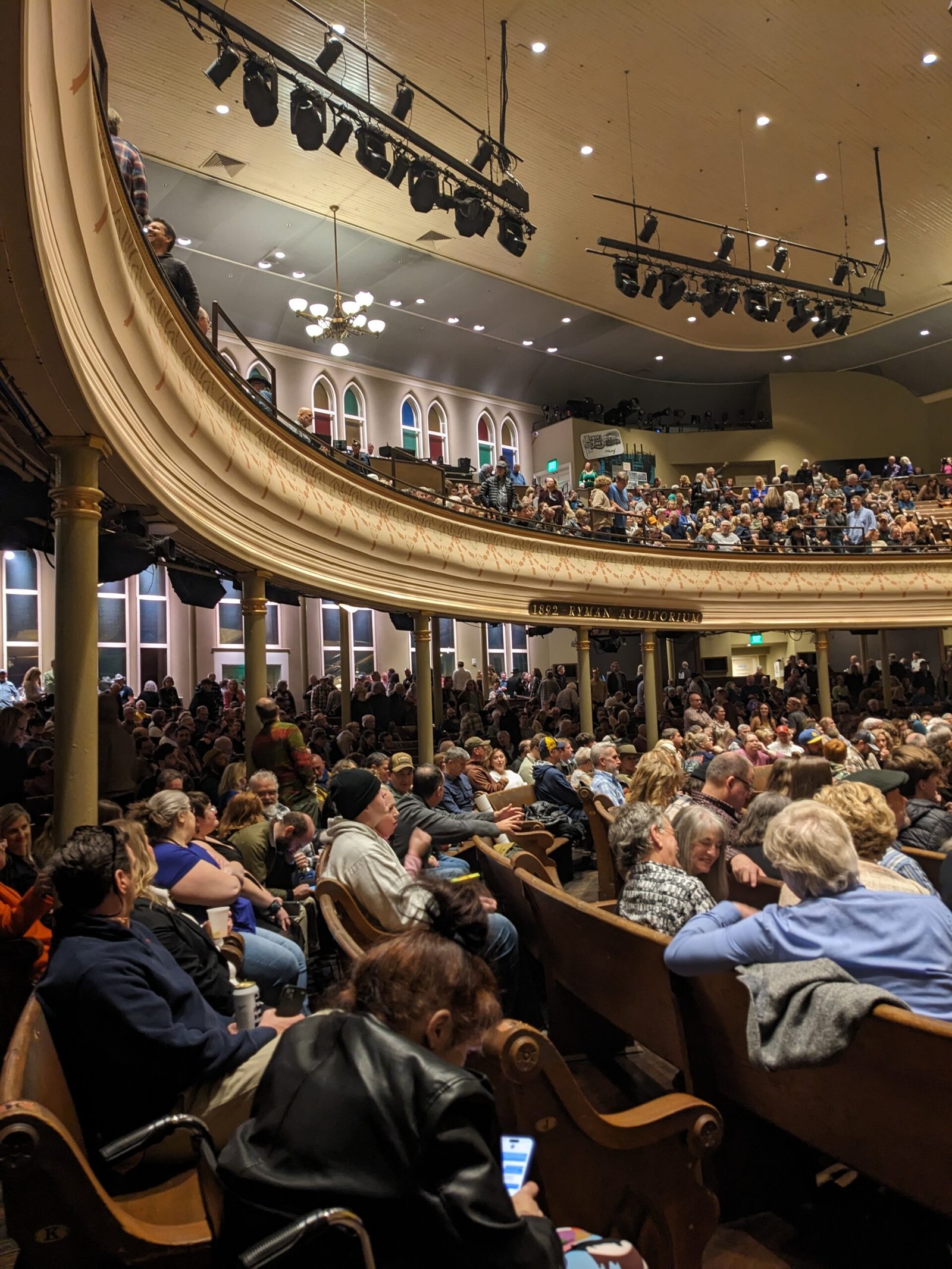
Step inside the Ryman Auditorium and you’re walking into the heart of American music history. Known as the “Mother Church of Country Music,” this former gospel tabernacle has hosted everyone from Hank Williams to contemporary artists who still consider playing the Ryman a career milestone. The venue’s capacity of 2,362 means every seat feels close to the action, creating an intimacy that’s rare in today’s mega-venues.
The Ryman’s pews (yes, actual church pews) might not be the most comfortable seating, but they’re part of the charm. The venue’s incredible acoustics were designed for preaching, which translates perfectly to music performances. Every whisper from the stage reaches the back row with crystal clarity. The ghosts of country legends seem to linger in the air, and many artists report feeling overwhelmed by the venue’s spiritual atmosphere during their performances.
La Scala – Opera’s Most Sacred Stage
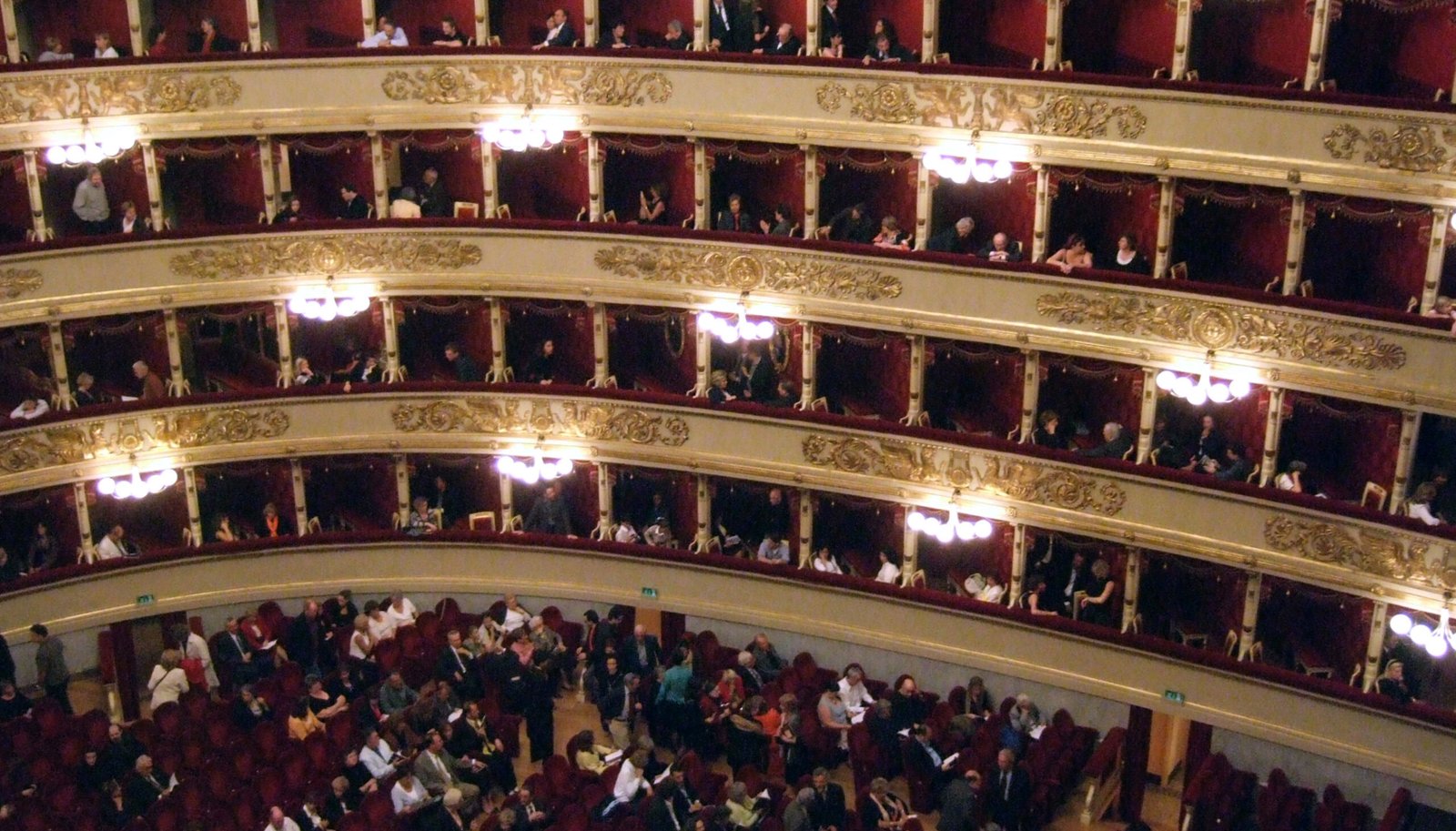
Teatro alla Scala in Milan represents the pinnacle of opera houses worldwide. Opening in 1778, La Scala has premiered works by Verdi, Puccini, and countless other masters. The venue’s horseshoe-shaped auditorium seats 2,030 people across six tiers, with the famous La Scala boxes providing the ultimate luxury experience. Getting tickets here requires planning months in advance, but the experience is truly once-in-a-lifetime.
La Scala’s audience is notoriously discerning – they’ve been known to boo performances that don’t meet their exacting standards. But when everything comes together perfectly, the magic is indescribable. The venue’s acoustics are so precise that singers can hear their own voices reflecting back from the furthest seats. Even if you’re not an opera fan, witnessing a performance here is like stepping into centuries of musical tradition and Italian cultural heritage.
Budokan – Where Rock Legends Are Born
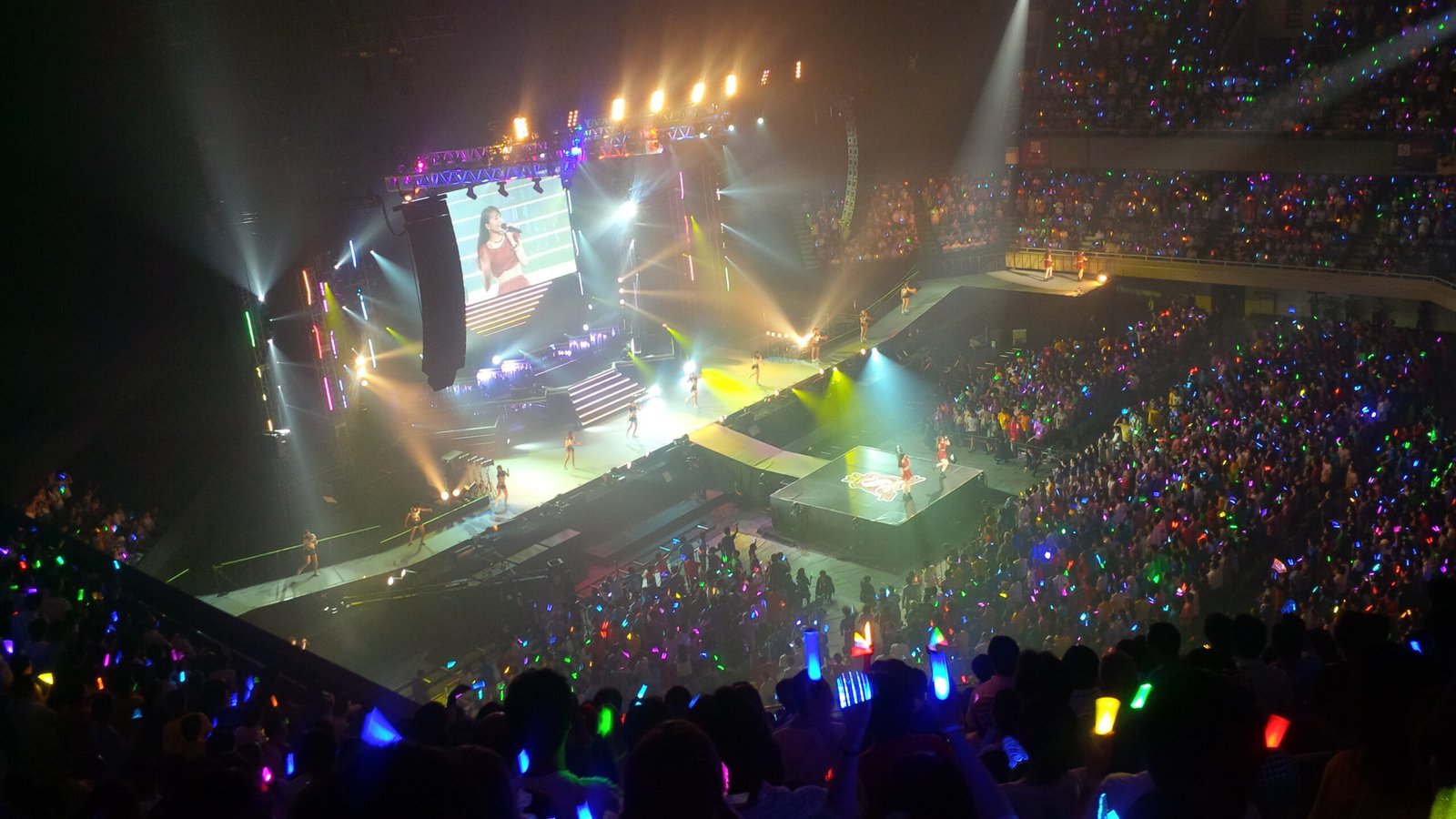
The Nippon Budokan in Tokyo started as a martial arts venue for the 1964 Olympics, but it transformed into a legendary rock destination when The Beatles performed there in 1966. The octagonal venue holds about 14,000 people and has become a rite of passage for international rock acts. Playing the Budokan is such an honor that many artists record live albums there, with Cheap Trick’s “At Budokan” being the most famous example.
What makes Budokan special isn’t just its history – it’s the incredibly respectful and attentive Japanese audience. Concerts here feel almost ceremonial, with fans showing a level of appreciation that can be deeply moving for both artists and fellow audience members. The venue’s unique architecture creates an intimate atmosphere despite its size, and the acoustics are surprisingly good for a building not originally designed for music. It’s where East meets West in the most beautiful musical way possible.
The Fillmore – Psychedelic Temple of Rock
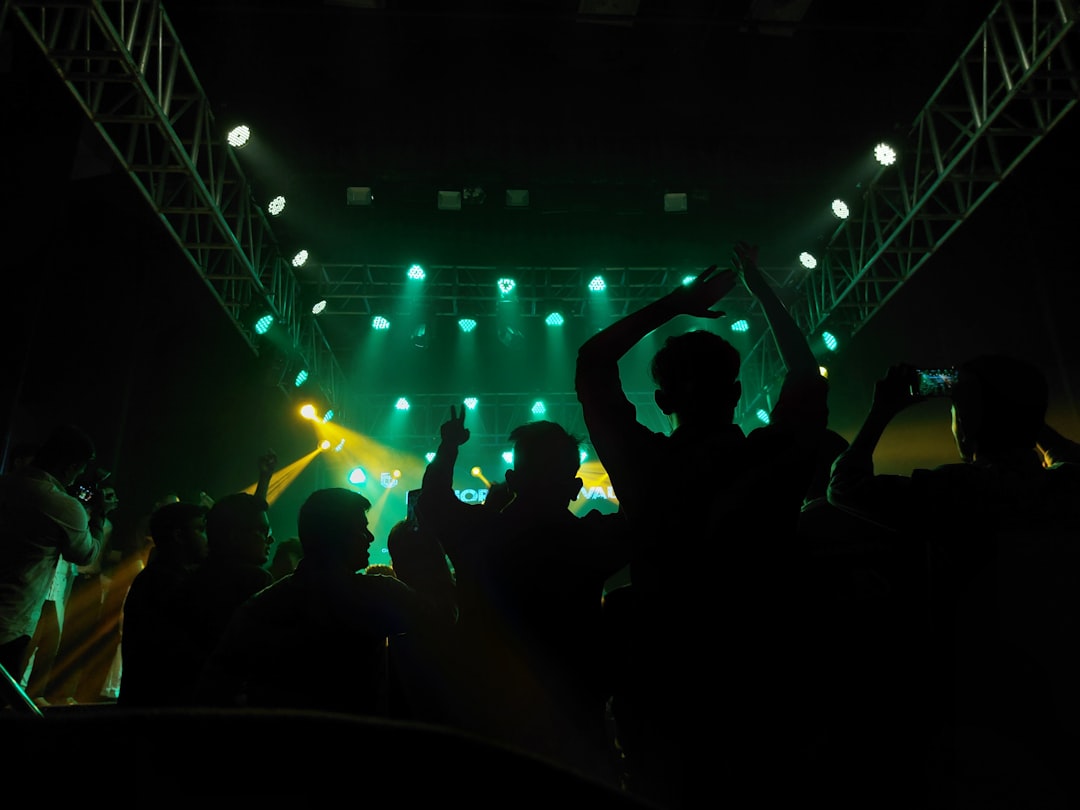
The Fillmore in San Francisco is where the 1960s counterculture movement found its voice. This intimate venue holds just 1,150 people, but its impact on music history is enormous. Bill Graham’s legendary concerts here featured everyone from Jimi Hendrix to The Grateful Dead, creating the template for modern rock shows. The venue’s famous psychedelic posters are now collector’s items worth thousands of dollars.
Today’s Fillmore maintains that rebellious spirit while offering modern amenities. The venue’s standing-room-only floor creates an electric atmosphere where you can feel the bass in your chest and the energy of the crowd around you. Free apples are still given out after shows, a tradition dating back to the hippie era. The chandeliers hanging above the chaos create a surreal juxtaposition that perfectly captures San Francisco’s eclectic spirit.
Paradiso – A Church Transformed
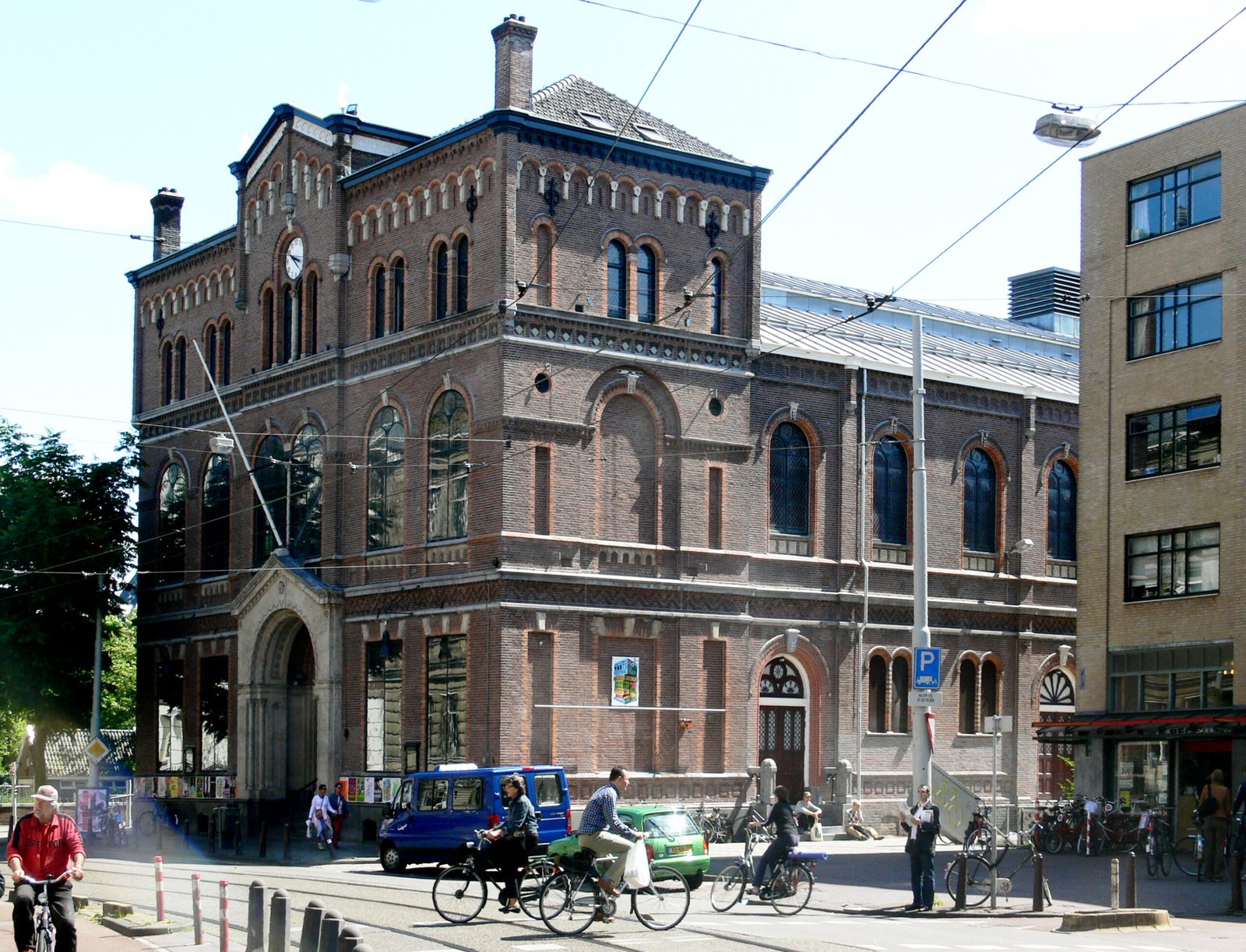
Amsterdam’s Paradiso proves that the best concert venues have the most unexpected origins. This former church, complete with stained glass windows and soaring ceilings, was converted into a concert hall in 1968. The venue’s capacity of 1,500 creates an intimate setting, while the church architecture provides natural acoustics that make every performance feel like a spiritual experience.
The juxtaposition of rock concerts in a sacred space creates a unique atmosphere that’s both reverent and rebellious. Many artists report feeling inspired by the venue’s history and architectural beauty. The balcony seating provides excellent views of the stage, while the main floor allows fans to get up close to their favorite performers. It’s a place where music truly becomes a form of worship, regardless of your religious beliefs.
Bowery Ballroom – Intimate Indie Paradise

While the original CBGB may be gone, the Bowery Ballroom carries on New York’s tradition of discovering the next big thing. This Lower East Side venue holds just 575 people, making it the perfect size for both emerging artists and established acts wanting to play intimate shows. The venue’s three-tiered design means there’s not a bad seat in the house, and the balcony provides excellent sightlines to the stage.
The Bowery Ballroom’s programming is consistently excellent, featuring a mix of indie rock, folk, electronic, and experimental acts. Many artists credit their performances here as career-defining moments, and the venue’s reputation for treating both artists and audiences well has made it a beloved institution. The ornate interior design, complete with columns and detailed ceiling work, creates an elegant backdrop for cutting-edge music.
Glastonbury Festival – The Ultimate Musical Pilgrimage
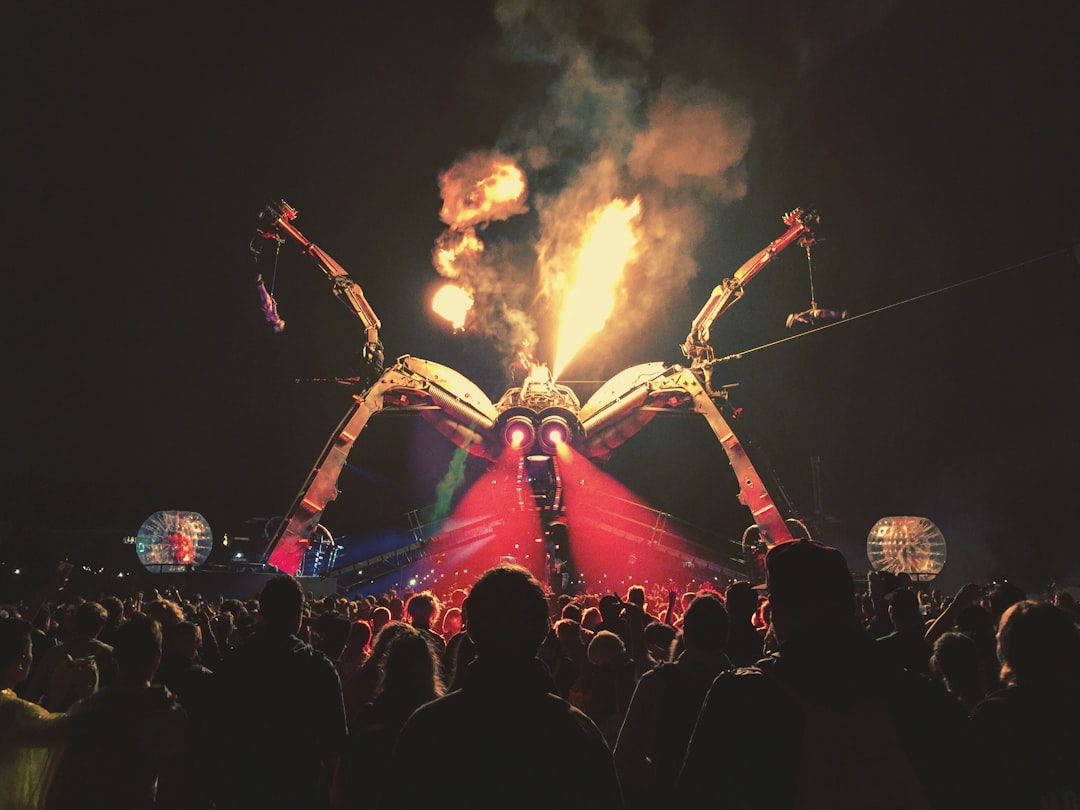
The Glastonbury festival is one of the UK’s biggest cultural events – this year 210,000 people attended the event, which was headlined by Dua Lipa, Coldplay and SZA. But Glastonbury isn’t just about the headliners – it’s about the entire experience of music discovery across more than 100 stages. This startling attendance figure places it as the “largest green-field music and performing arts festival in the world”.
What makes Glastonbury legendary isn’t just its size – it’s the spirit of adventure and discovery. You might stumble upon your new favorite artist at a small stage while wandering between headliner sets. On 17 November 2024, tickets for the 2025 Festival sold out in 35 minutes. Tickets cost £373.50, plus a £5 booking fee, an increase of £18.50 on 2024. The festival’s commitment to sustainability and social causes adds meaning beyond the music, making it feel like a temporary utopia where music really can change the world.
Coachella Valley Music and Arts Festival – Desert Dreams
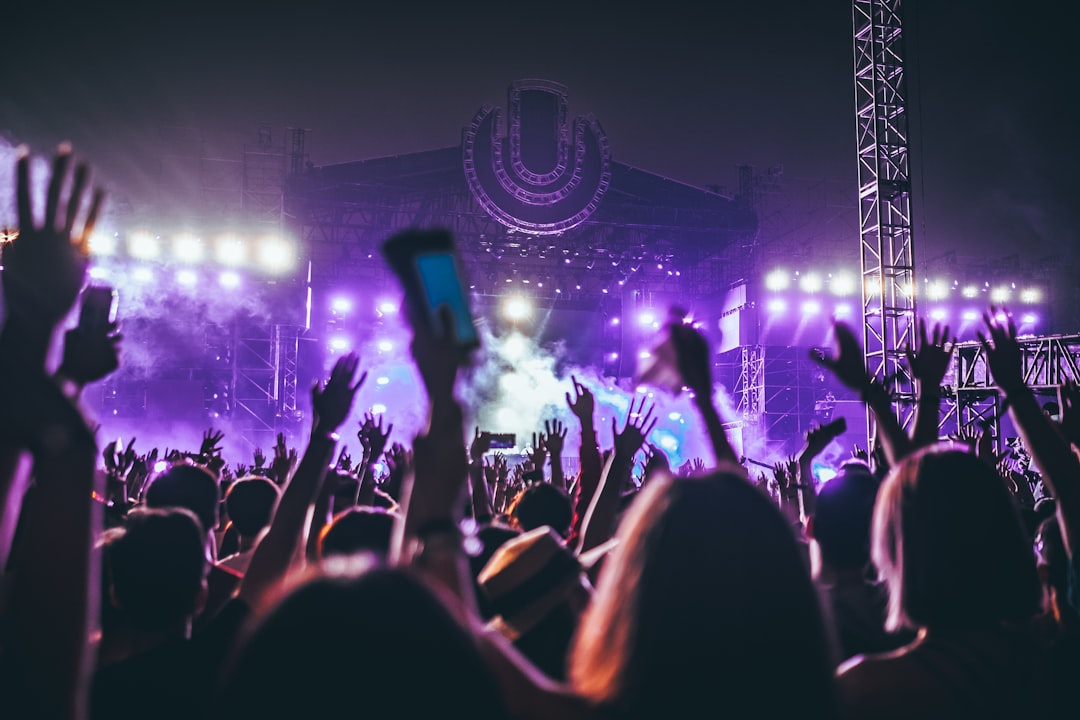
Coachella has become synonymous with festival fashion and Instagram moments, but beneath the style lies some serious musical curation. The festival’s two weekends in the California desert attract around 750,000 people annually, making it one of the highest-grossing festivals worldwide. The festival’s multiple stages ensure there’s always something happening, from established headliners to emerging artists across every genre imaginable.
The desert setting creates a unique atmosphere that’s both harsh and beautiful. The art installations scattered throughout the grounds turn the entire festival into a living gallery, while the clear desert nights provide perfect conditions for outdoor performances. Many artists consider their Coachella sets to be among their most important performances, and the festival’s live streams bring the experience to millions more viewers worldwide.
Tomorrowland – Electronic Music’s Promised Land
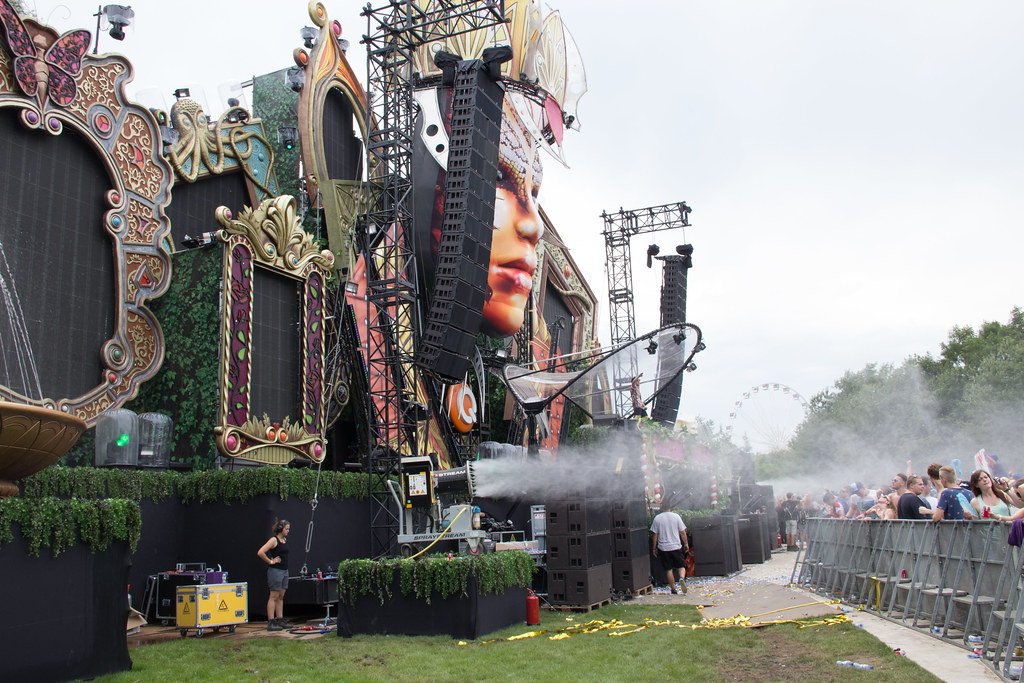
Tomorrowland in Belgium has transformed from a small electronic music festival into a global phenomenon that attracts over 400,000 attendees across two weekends. The festival’s elaborate stage designs and immersive themes create a fantasy world where electronic music becomes the soundtrack to an alternate reality. Each year’s theme is more elaborate than the last, with stages that look like they belong in a fairy tale.
The festival’s international appeal has led to expansion worldwide, but the original Belgian location remains the holy grail for electronic music fans. The sense of unity and shared experience among festival-goers creates an atmosphere that’s both euphoric and deeply emotional. Many attendees describe Tomorrowland as life-changing, and the festival’s emphasis on love, unity, and positive energy makes it feel like a glimpse into a better world.
Fuji Rock Festival – Mountains Meet Music
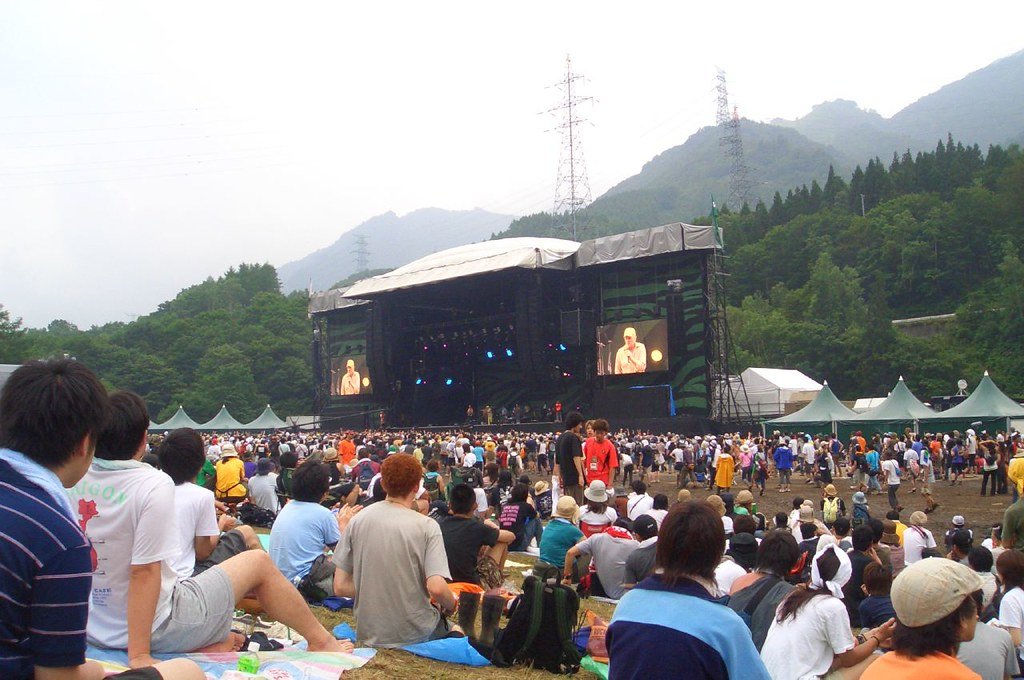
Japan’s Fuji Rock Festival combines stunning natural beauty with incredible musical programming. Set at the Naeba Ski Resort, the festival’s mountain location creates a unique atmosphere where you can catch a world-class DJ set while surrounded by pristine forests and mountain peaks. The festival’s capacity of around 100,000 people spread across multiple days feels intimate despite its size, thanks to the expansive mountain setting.
The Japanese attention to detail extends to every aspect of the festival experience. The food offerings rival those of top restaurants, while the camping facilities are clean and well-organized. The festival’s commitment to environmental sustainability fits perfectly with its mountain location, and the respectful behavior of festival-goers creates a peaceful atmosphere that’s rare at large music events.
Lollapalooza – Urban Festival Pioneer
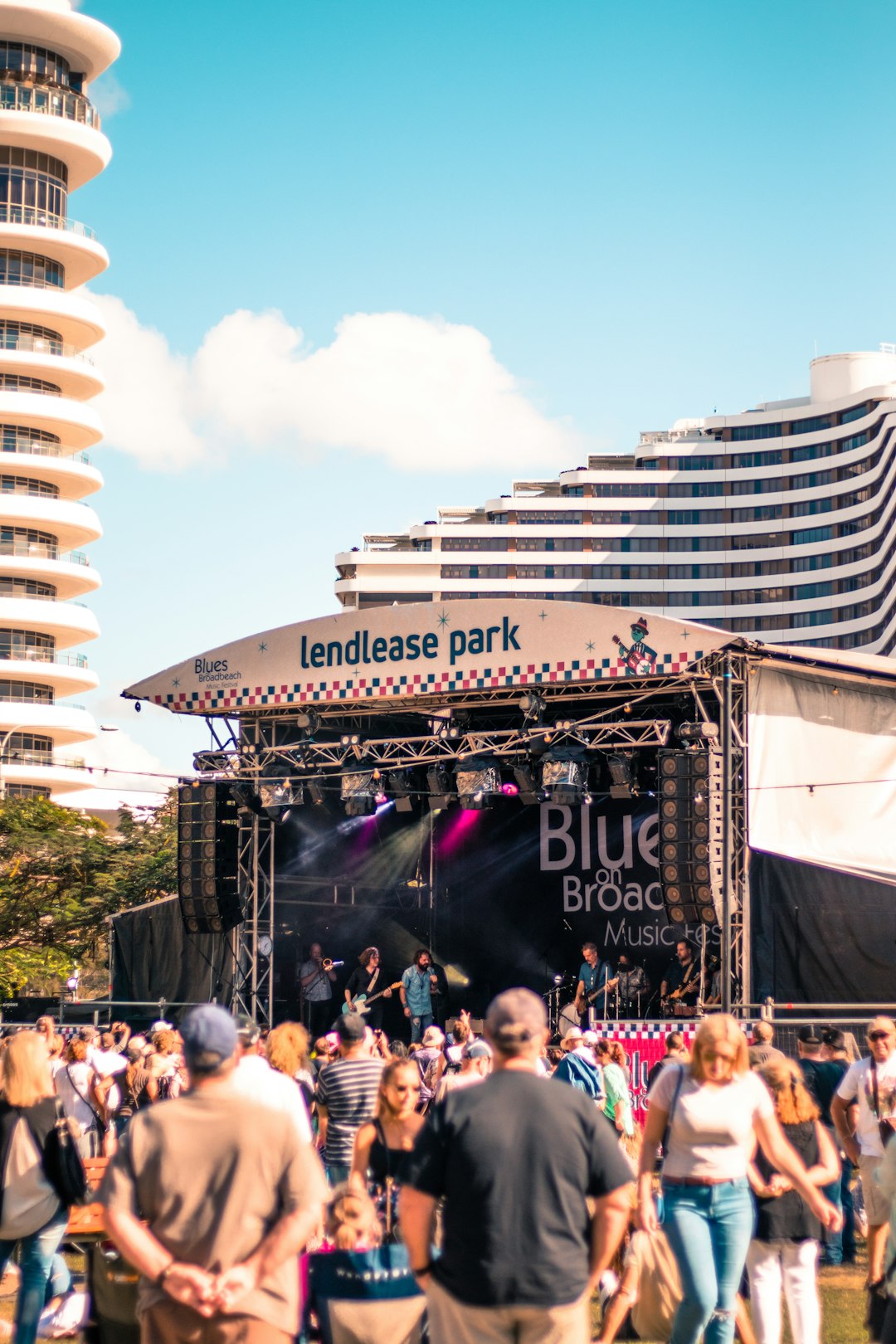
Chicago’s Lollapalooza transformed from a traveling alternative rock festival into a permanent fixture in Grant Park, attracting over 400,000 people across four days. The festival’s urban setting creates a unique dynamic where you can experience world-class music while surrounded by one of America’s most beautiful cityscapes. The festival’s multiple stages and diverse programming ensure there’s something for every musical taste.
The festival’s location in Grant Park provides easy access to Chicago’s incredible food scene, with many attendees making the festival part of a larger Chicago experience. The festival’s commitment to showcasing both established and emerging artists has made it a launching pad for many careers, while its urban setting attracts music fans who might not typically attend outdoor festivals.
Taylor Swift’s Eras Tour – The Concert Experience That Redefined Everything
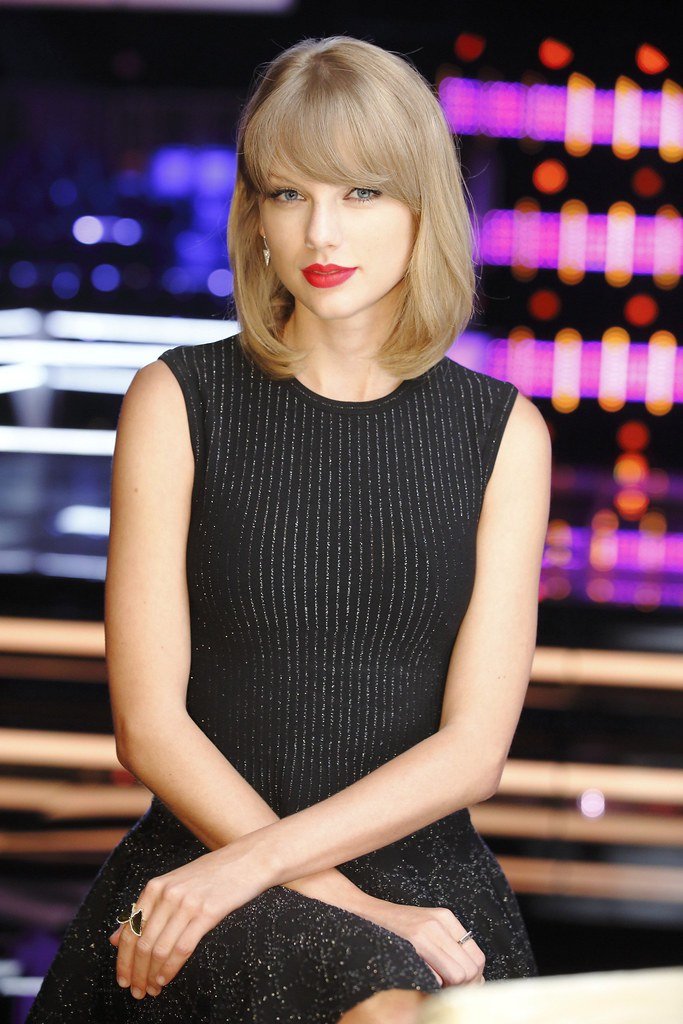
The publication revealed that the tour grossed $2.07 billion with an attendance of 10.1 million. Pollstar’s final estimate was $2.2 billion from 10.055 million tickets, making Swift the first solo act in history to sell over 10 million tickets on a single tour. The Eras Tour wasn’t just a concert – it was a cultural phenomenon that proved live music could still unite people in our divided world.
A typical Eras show featured 44-46 songs and ran for 3 hours and 15 minutes. Swift spent a total of roughly 25 hours performing her 10-minute version of “All Too Well.” The tour’s impact extended far beyond music, generating billions in economic activity and creating a sense of community among fans that transcended age, geography, and background. When Swift performed her first Eras Tour show in Glendale, Ariz., on March 17, 2023, she broke the record for highest attended concert by a female artist in the U.S., with over 69,000 tickets sold. It set a new standard for what a concert experience could be – part autobiography, part spectacle, part group therapy session.
Paul McCartney – A Living Legend’s Timeless Magic
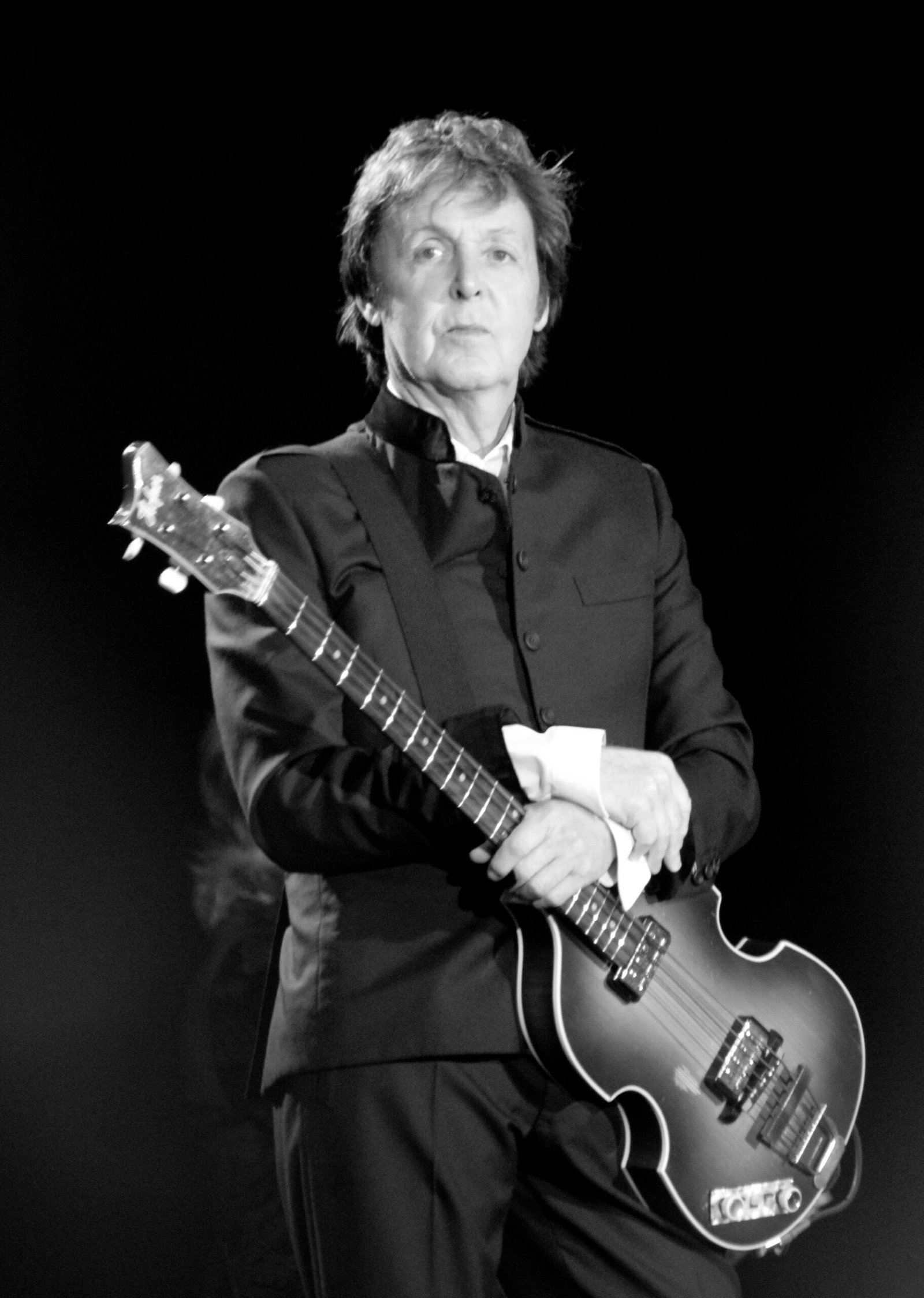
Seeing Paul McCartney live is like witnessing music history in real-time. At 82, he still performs with the energy of someone half his age, delivering three-hour sets that span his entire career from The Beatles to Wings to his solo work. His concerts feel like a conversation with an old friend who happens to have written the soundtrack to several generations’ lives.
McCartney’s setlists are masterclasses in pacing and emotional storytelling. He’ll have you singing along to “Hey Jude” one moment and dabbing your eyes during “Here Today” (his tribute to John Lennon) the next. The man who wrote “Yesterday” and “Let It Be” still approaches each performance with genuine joy and gratitude that’s infectious. His bass playing remains sharp, his voice surprisingly strong, and his stage presence absolutely magnetic.
The Rolling Stones – Rock and Roll’s Eternal Flame
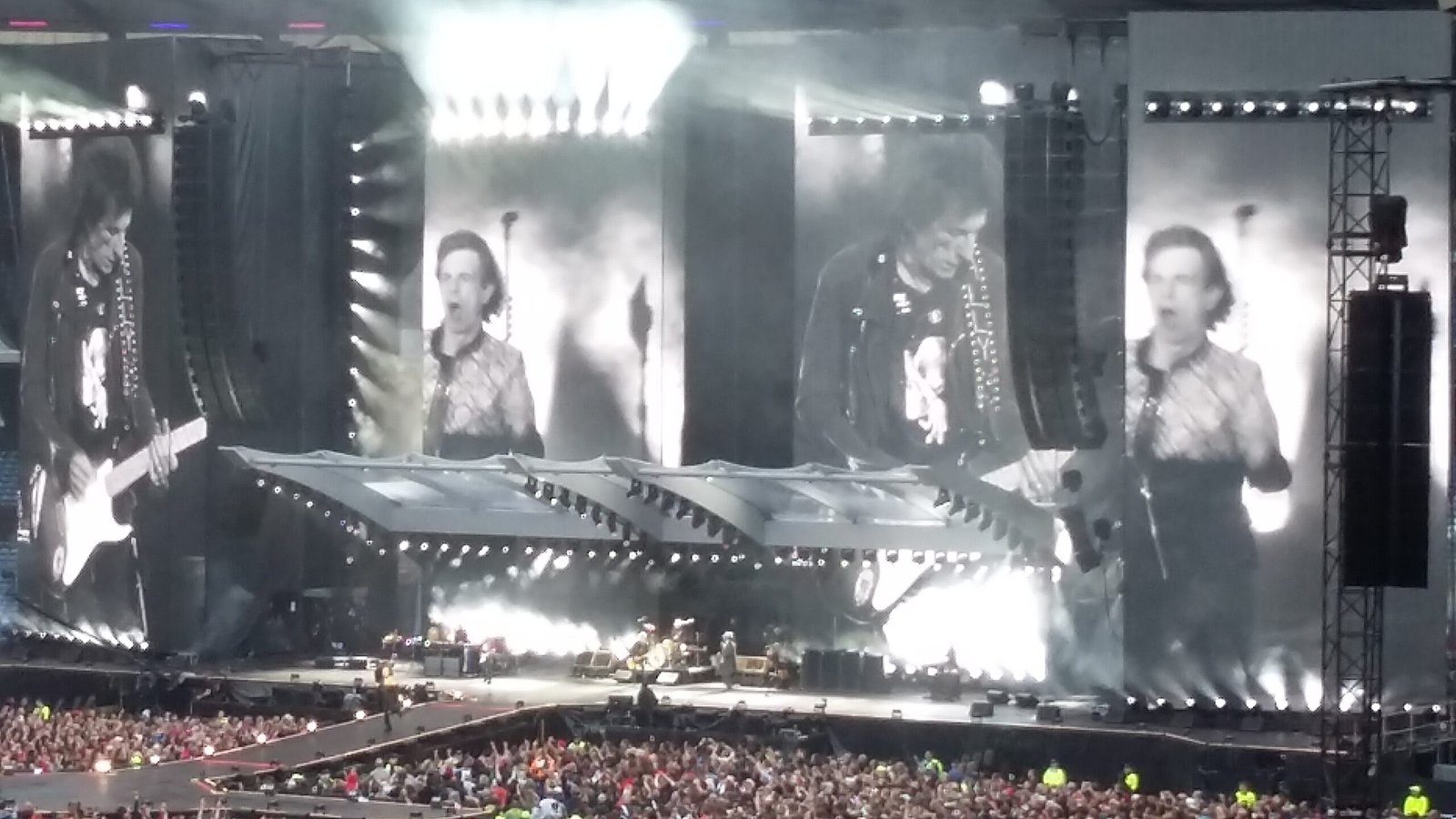
The Rolling Stones prove that rock and roll really can keep you young. Mick Jagger’s energy on stage defies physics – the man covers miles during a single performance, dancing and strutting like someone a quarter of his age. Keith Richards’ guitar work remains as sharp and dangerous as ever, while Charlie Watts’ replacement Steve Jordan has seamlessly integrated into the band’s legendary rhythm section.
A Stones concert is a celebration of rock and roll’s rebellious spirit and enduring power. The band’s catalog runs so deep that even three-hour shows barely scratch the surface. From “Paint It Black” to “Satisfaction,” these aren’t just songs – they’re anthems that define what rock music can be. The staging is always spectacular, but it’s the raw energy and genuine chemistry between band members that makes each show feel essential.
Beyoncé – The Ultimate Performance Artist
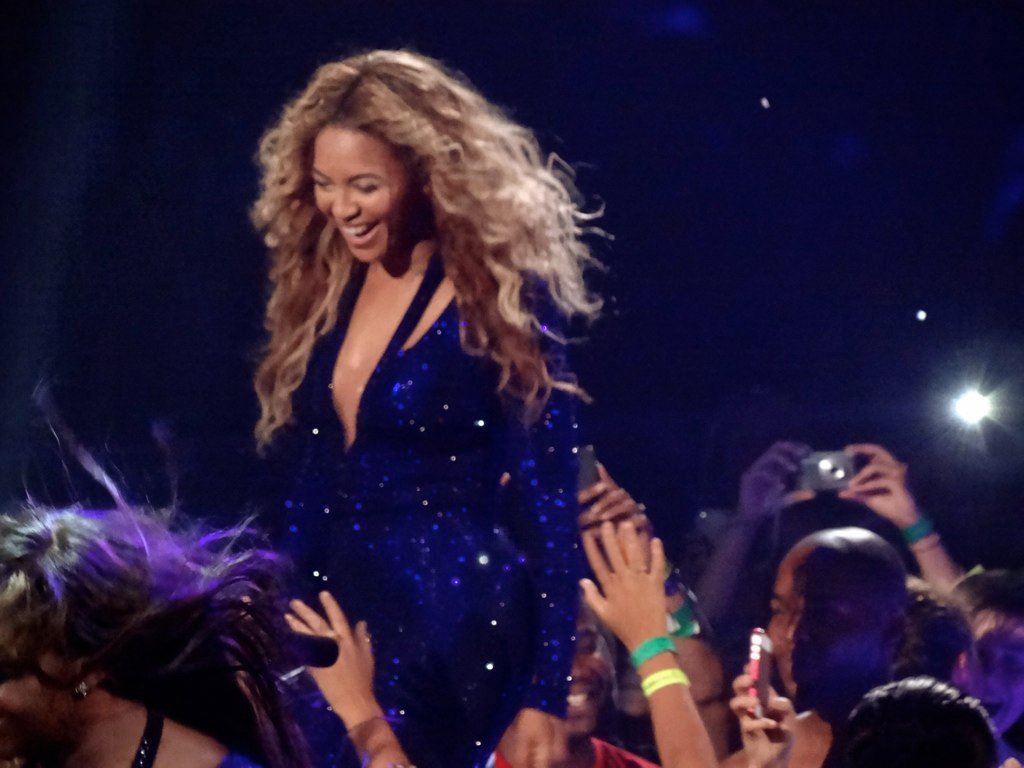
Beyoncé doesn’t just perform – she creates transcendent experiences that blur the line between concert and art installation. Her attention to detail is legendary, from the choreography that tells stories to the costume changes that mark different emotional chapters. Every gesture feels deliberate, every note perfectly placed, yet the overall effect is one of spontaneous magic.
Her concerts are celebrations of Black culture, female empowerment, and artistic excellence all rolled into one. The visual elements – from the LED screens to the elaborate stage design – create an immersive environment that supports rather than distracts from the music. When she performs “Crazy in Love” or “Single Ladies,” the entire audience becomes part of the show, creating a sense of communal joy that’s increasingly rare in our fragmented world.
Secret Underground Gigs – Music’s Best Kept Secrets
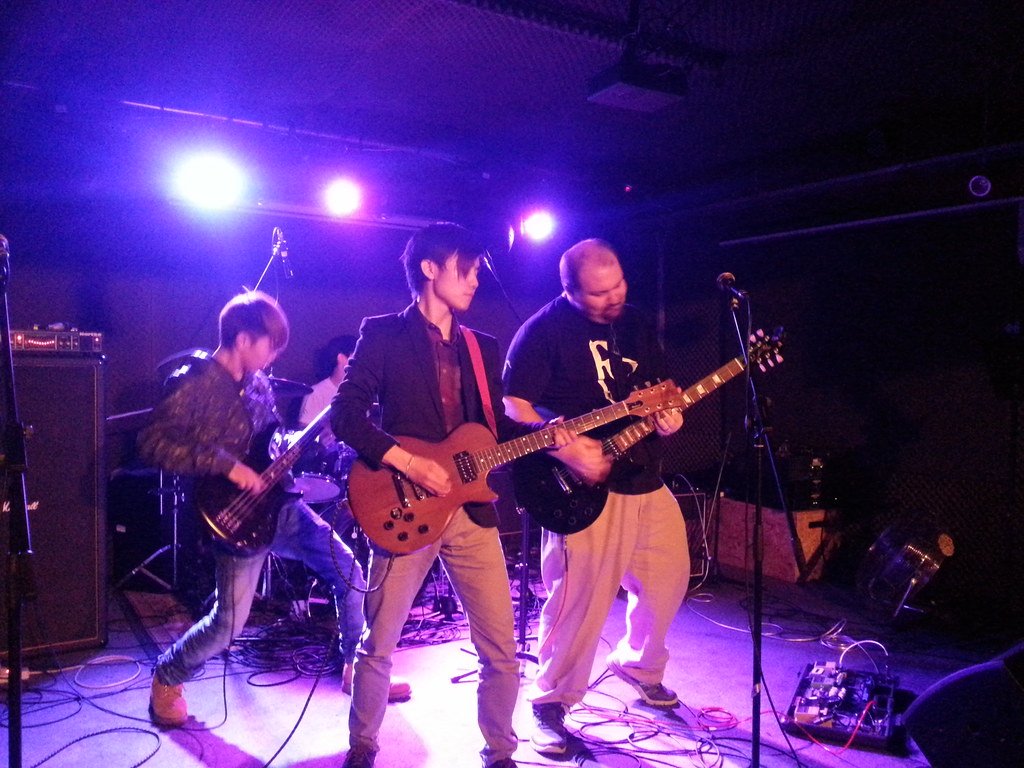
Some of the most memorable concert experiences happen in the most unexpected places. Secret shows in tiny venues create an intimacy that’s impossible to replicate in larger settings. These underground gigs often feature major artists playing under pseudonyms, emerging acts before they break big, or established musicians experimenting with new material away from the pressure of expectations.
The element of surprise adds to the magic – you might think you’re seeing a local band only to discover it’s actually a famous artist testing new songs. These shows often happen with little advance notice, spread through word of mouth or social media whispers. The small venues mean you’re close enough to see the artists’ expressions, hear their between-song banter, and feel like you’re part of something special and exclusive.
Hans Zimmer Live – When Film Scores Come Alive
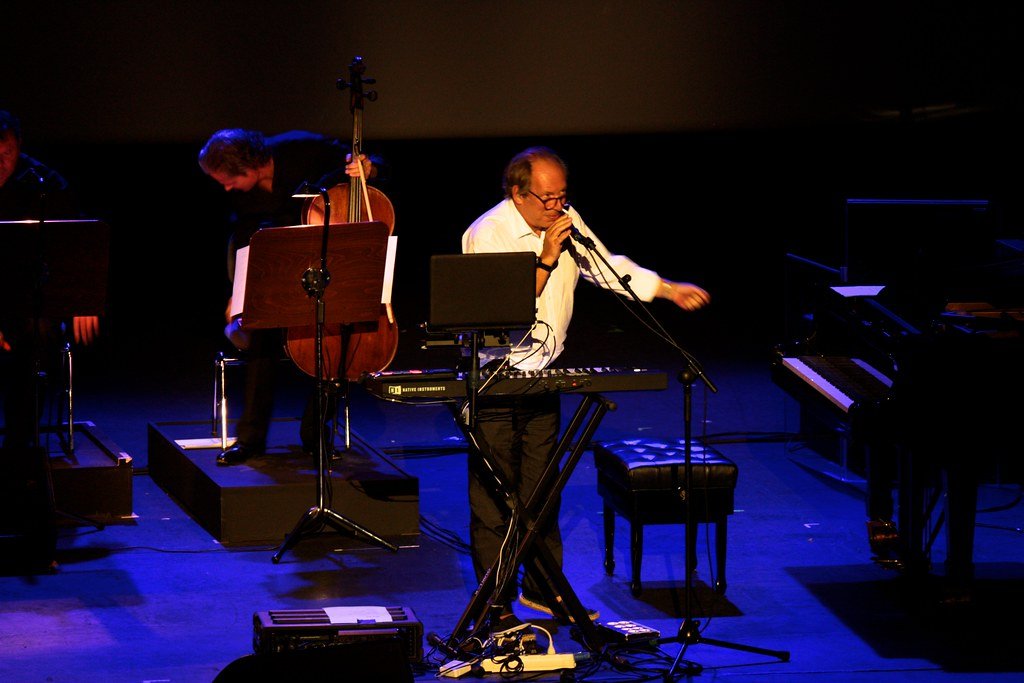
Hans Zimmer’s live performances prove that film music can stand on its own as concert repertoire. His shows featuring full orchestras and choirs performing music from “The Dark Knight,” “Inception,” “Dune,” and countless other films create an emotional journey that’s both familiar and completely new. The visual elements complement rather than compete with the music, creating a multimedia experience that’s uniquely contemporary.
Hearing “Time” from “Inception” performed live with a full orchestra is an experience that transcends the original film context. Zimmer’s ability to create emotional landscapes through music becomes even more apparent when stripped of visual context. The audience response to these performances is often surprisingly emotional – people discover they have deeper connections to this music than they realized.
Stadium Tours – When Size Matters
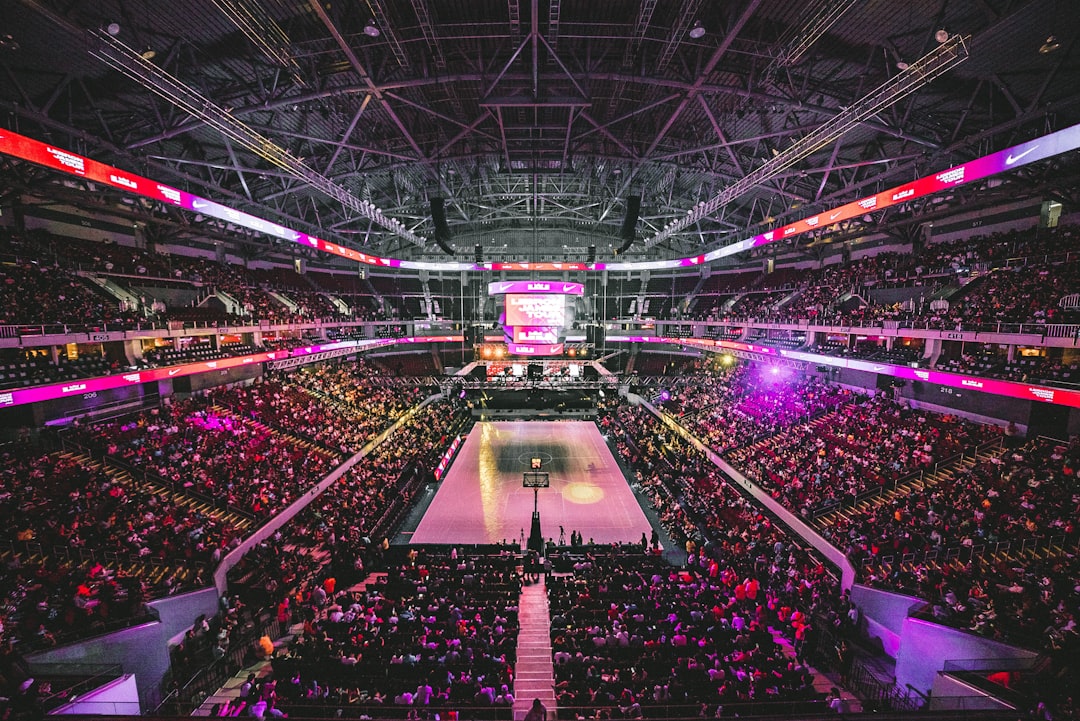
Stadium tours represent the pinnacle of live music spectacle. Artists like Coldplay, Metallica, and Ed Sheeran have perfected the art of creating intimate moments in venues that hold 50,000+ people. The production values are staggering – LED screens, pyrotechnics, and elaborate stage designs that can be seen from the furthest seats. These shows are experiences that create lifelong memories.
The energy of a stadium crowd is unlike anything else in live music. When 80,000

Christian Wiedeck, all the way from Germany, loves music festivals, especially in the USA. His articles bring the excitement of these events to readers worldwide.
For any feedback please reach out to info@festivalinside.com
