


There’s something almost magical about sitting in a dark theater, watching a scene unfold and thinking, “there’s no way that actually happened.” The drama feels too sharp. The tension, too perfectly sculpted. The coincidences, too wild to be real. Yet filmmakers have a long and fascinating history of lifting their most gripping moments directly from the messy, chaotic record books of human events.
Real events have always been some of the most reliable sources of inspiration for directors and writers, which means there’s no shortage of compelling films drawn from accounts about real people and events. Movies based on true stories are a special breed of entertainment. We know better than to believe every detail or line of dialogue, because movies are always a fiction in the broad sense, and filmmakers dealing with real-life events need to take liberties.
What’s truly startling, though, is just how close to the bone some of those “cinematic” moments really are. Some scenes that feel almost absurdly over the top were barely changed at all. Let’s dive in.
Titanic (1997): The Band Really Did Play On
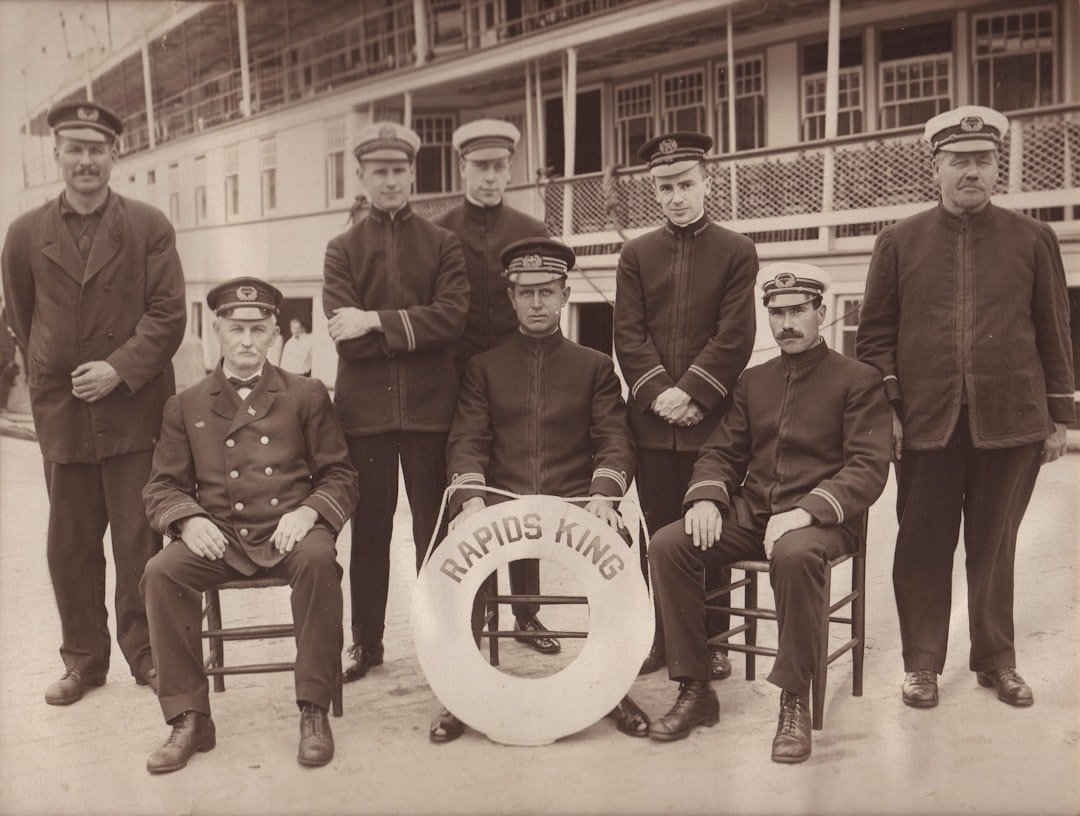
It’s one of those details that seems lifted straight from a novelist’s imagination: a band continuing to play music as a massive ship sinks around them. It feels almost theatrical, too noble and poetic to be true. Honestly, I remember watching that scene as a kid and thinking it was the one part Cameron must have invented.
After the ship struck an iceberg, Wallace Hartley assembled his eight-man band, and they eventually ended up on the Boat Deck near the entrance to the Grand Staircase, where they played ragtime and waltzes. Survivors specifically reported them playing “Alexander’s Ragtime Band” and “In the Shadows.” All of the band members perished in the sinking. Wallace Hartley’s body was recovered on May 4, 1912, by the cable ship Mackay-Bennett, and thousands of mourners lined the streets during his funeral procession in Lancashire.
Titanic is a 1997 American epic historical romance written and directed by James Cameron, incorporating both historical and fictional aspects based on accounts of the sinking of RMS Titanic in 1912. Cameron was influenced by A Night to Remember, the 1958 British film about the Titanic, and he liberally copied some scenes, including the lively party of passengers in steerage and the musicians playing on the deck during the sinking. The band on screen wasn’t a dramatic invention. It was an act of genuine, heartbreaking historical tribute.
Titanic (1997): The Man With the Flask on the Stern

There’s a brief but memorable moment in Titanic where, as Jack and Rose cling to the stern of the sinking ship, a man above them calmly takes a drink from a flask. It looks like a bit of darkly comic screenwriting. A small, surreal touch to underscore the chaos. It wasn’t.
That man, Charles Joughin, was the real-life chief baker on the Titanic. He went into the water while holding onto the back rails of the ship just like he does with Jack and Rose in the movie, and before that, he had snuck back to his room for a drink. Jack and Rose, the main characters in the 1997 movie, weren’t real people. Like all films based on a true story, the movie added its own fictional elements to historical events. During the film, though, Jack and Rose do run into several characters based on real people, some of whom have far more interesting stories than the film addresses.
The movie’s writer and director, James Cameron, wanted to surround his fictional leads, particularly in first class, with real passengers. The historian for the Titanic Historical Society, who also served as the 1997 film’s historian, says Cameron picked out these people in advance when he wrote the script. Joughin, for what it’s worth, famously survived in the freezing Atlantic for hours and attributed his survival, at least in part, to the alcohol in his system. It sounds like a tall tale. It really isn’t.
Schindler’s List (1993): The Little Girl in the Red Coat

In an otherwise black-and-white film, a single splash of color appears during the liquidation of the Kraków ghetto: a small girl in a red coat. It’s one of cinema’s most unforgettable visual choices, the kind of device that feels almost too perfect, like something a screenwriter engineered from scratch to maximize emotional impact.
While the film is shot primarily in black and white, a red coat is used to distinguish a little girl in the scene depicting the liquidation of the Kraków ghetto. Later in the film, Schindler sees her exhumed dead body, recognizable only by the red coat. Spielberg said the scene was intended to symbolize how members of the highest levels of government in the United States knew the Holocaust was occurring, yet did nothing to stop it.
Released in 1993, Steven Spielberg’s Schindler’s List adapts the novel Schindler’s Ark, a historical fiction book based on the real story of Oskar Schindler, a German industrialist and member of the Nazi Party who became an unlikely hero after witnessing the horrific atrocities committed during the Holocaust. The scene in the film where Amon Göth guns down prisoners from his villa balcony with a rifle is based on fact. At the end of the war, Göth was charged with war crimes and executed by hanging near the site of the former Płaszów camp. Spielberg built his masterpiece from real horror, barely needing to embellish a thing.
Schindler’s List (1993): The List Itself Was Real, But Different

Here’s the thing: one of the most iconic moments in the film, the actual creation of Schindler’s list, was dramatized in a way that historians have firmly contested. The scene of Schindler sitting down and personally compiling the names feels like the moral heart of the movie. It’s also, largely, not what happened.
Schindler was actually in jail when the list was made, having been detained during an investigation into whether he’d bribed a commandant. The scene of him being directly involved in drawing it up is, according to historian David Crowe, “totally bogus.” In addition, there was actually more than one list. In October of 1944, a Płaszów camp orderly named Marcel Goldberg made two lists of people approved to go to Brünnlitz, one with the names of 300 women and one with 700 men.
In reality, there was more than one list, written not by Schindler, but by a Płaszów camp orderly named Marcel Goldberg, that had the names of those cleared to be transported to Schindler’s factory. The film was hailed not only by critics, winning the Academy Award for Best Picture, but also by Holocaust survivors, who found its depiction of events so realistic that it inspired many to share their own memories, enabling historians to preserve their stories for future generations. The truth behind the list is messier, more complicated, and in some ways, even more human than what the film depicts.
Catch Me If You Can (2002): The Con Artist Who May Have Conned Everyone
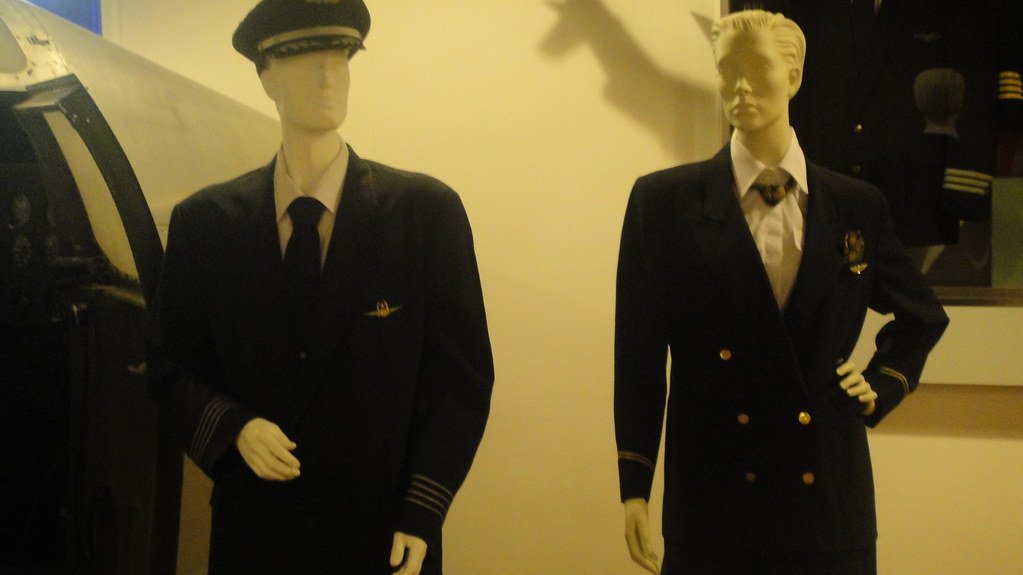
Steven Spielberg’s breezy cat-and-mouse thriller starring Leonardo DiCaprio and Tom Hanks is one of the most entertaining films of the early 2000s. It follows Frank Abagnale Jr., who supposedly impersonated a pilot, doctor, and lawyer, forging millions in checks while the FBI chased him across the world. Charming, right? Almost unbelievably so. That’s because, well, it might be.
The screenplay is based on the semi-autobiographical book by Frank Abagnale Jr., who claims that prior to his 19th birthday, he successfully performed cons worth millions of dollars by posing as a Pan American World Airways pilot, a Georgia doctor, and a Louisiana parish prosecutor. However, the truth of his story is, as of the 2020s, heavily disputed. In 2020, journalist Alan C. Logan published a book that debunked Abagnale’s story. Logan spent years combing through records and failed to find much of anything that supported Abagnale’s claims. He also discovered that Abagnale had deliberately omitted and lied about other parts of his life, such as a prison stint that took place at the exact time he was supposedly committing his greatest crimes.
One element that is documented and widely accepted is that Abagnale posed as a Pan Am pilot to obtain free air travel. He was arrested in France in 1969, served time in European prisons, and was extradited to the U.S., where he faced federal charges for fraud. So parts of the story are verifiably real. Just how large those parts are remains, fittingly, a bit of a con itself. It’s hard to say for sure where the truth ends and the myth begins, which, honestly, is sort of perfect for a film about a con man.
Argo (2012): The Fake Movie That Rescued Real Diplomats
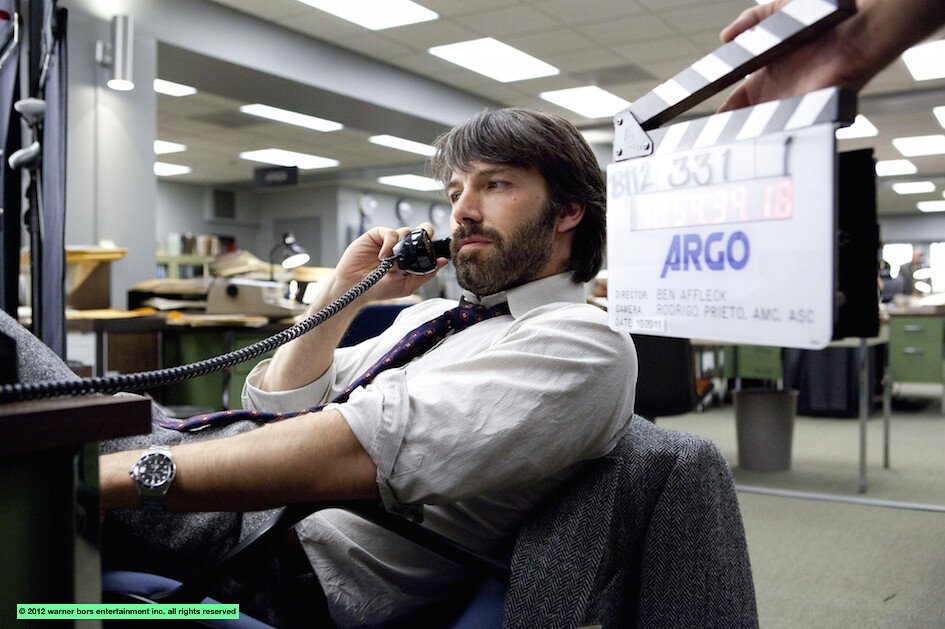
If you had pitched this story to a Hollywood producer in 1979, they would have laughed you out of the room. A CIA operative invents a fake science-fiction film production, goes to Tehran during the Iranian Revolution, and uses it as cover to smuggle six American diplomats out of the country? Come on. That’s not a plot. That’s a fever dream.
It’s one of those stories too far-fetched for even the most inventive screenwriter to make up. At the onset of the 1979 Iranian Revolution, a movie-loving CIA agent hatched a plot to smuggle six diplomats out of the country by pretending to be a Canadian film crew shooting a fake Star Wars-alike sci-fi flick there. Directed by Ben Affleck, the film Argo tells the incredible story of a CIA operative who orchestrated a daring rescue mission to save six American diplomats from Tehran during the Iran hostage crisis. It’s a gripping and suspenseful thriller that showcases the ingenuity and bravery of those involved.
The operation was real, was classified for nearly two decades, and was so audacious that when it was finally declassified in the late 1990s, even intelligence insiders were astonished. Audiences have learned to view movies based on true stories with a certain amount of suspicion. Cinematic truth often differs from actual truth, and even the most accurate depictions of real events typically feature at least a sprinkling of dramatic license. In Argo’s case, the basic premise needed no embellishment. The truth was already cinematic enough.
Bohemian Rhapsody (2018): The Live Aid Performance

Let’s be real: when you watch the climactic Live Aid scene in Bohemian Rhapsody, it almost looks too good. The energy, the lighting, Rami Malek hitting every mannerism with uncanny precision. It feels like a production team dialed everything up to eleven for maximum effect. Except they barely needed to.
Named for one of their most well-known songs, Bohemian Rhapsody tells the story of Freddie Mercury and the formation of the legendary rock band Queen. The movie features all of the biggest Queen hits and culminates with an incredible recreation of the group’s famous Live Aid performance in 1985. The actual Live Aid performance by Queen is widely considered one of the greatest live concert performances in rock history. Freddie Mercury’s command of the 72,000-person Wembley Stadium crowd that day is well documented, studied, and celebrated by music historians.
The filmmakers worked from archival footage and accounts to reconstruct the performance with remarkable fidelity. What the film gives you is essentially a compressed, staged version of something that was already extraordinary in real life. Some moments feel larger than life because they were larger than life. Mercury didn’t need a screenwriter to make him dramatic. He simply was.
Apollo 13 (1995): “Houston, We Have a Problem” Was Real
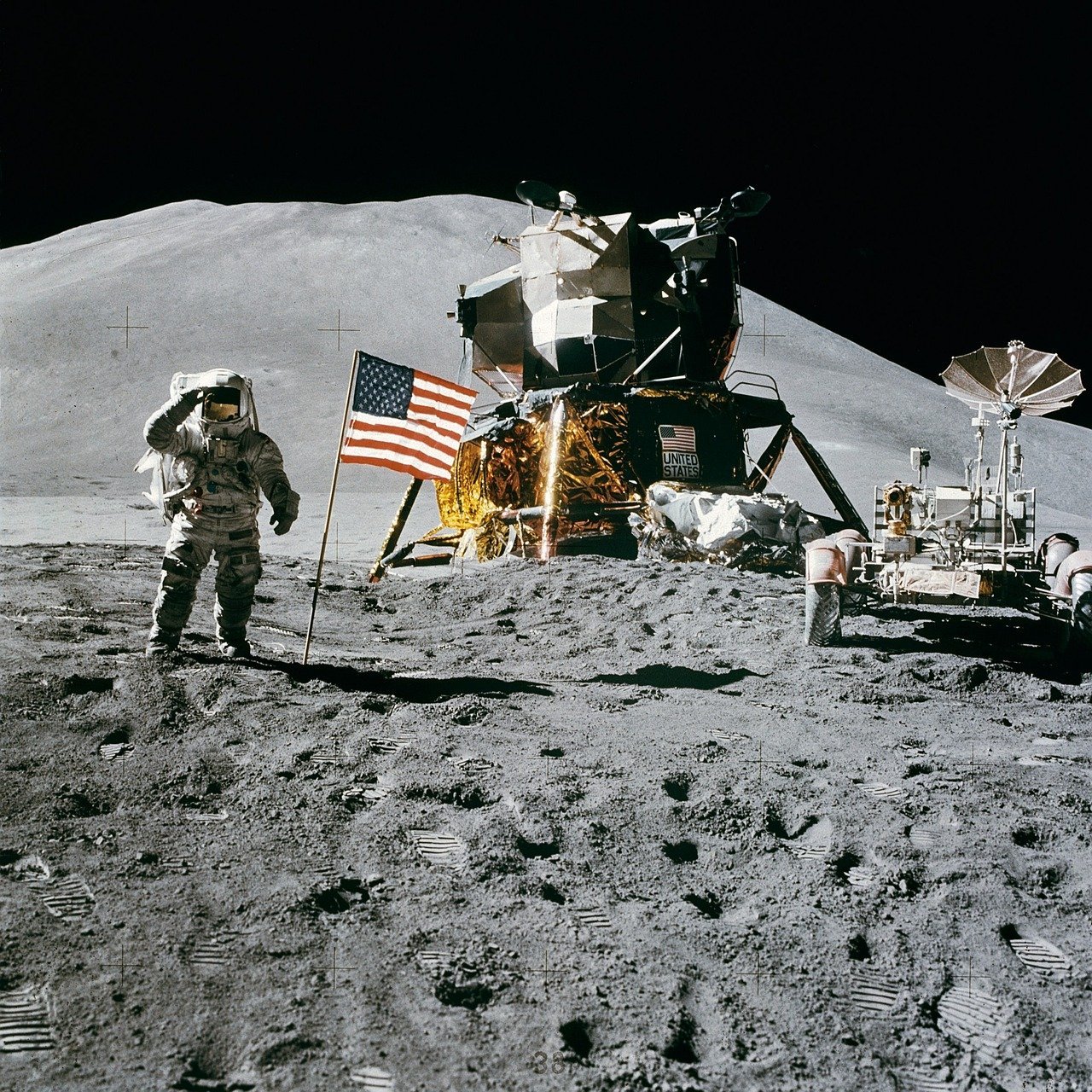
Few movie lines are as embedded in popular culture as Tom Hanks’ calm, devastating delivery of “Houston, we have a problem” in Ron Howard’s 1995 film. It’s become shorthand for any crisis situation, quoted in boardrooms, cartoons, and casual conversation. Yet the scene behind it, the exact moment that the Apollo 13 mission began to unravel, was not invented by a screenwriter.
Apollo 13 recounts the real-life story of the Apollo 13 mission, which faced a critical malfunction that threatened the lives of the astronauts on board. With stunning visuals and gripping performances, the film captures the tension and drama of this historic event. On April 13, 1970, an oxygen tank in the spacecraft’s service module exploded approximately 200,000 miles from Earth. The astronauts had to abort the lunar landing and use the lunar module as a lifeboat, a scenario that NASA engineers had never actually prepared for.
The famous line was slightly modified for cinema; the actual transmission used the past tense: “Houston, we’ve had a problem.” Sometimes, truth really is stranger than fiction, and often, it makes the best movies. In this case, the raw reality of three men calmly reporting a life-threatening emergency from space didn’t need a Hollywood upgrade. What it needed was an audience finally paying full attention.
Conclusion: The Truth Was Always Stranger

There’s a temptation to believe that the movies we love are purely the products of imagination. That the musicians playing as a ship sinks, the baker with the flask, the little girl in red, the fake film crew in Tehran, all of it must have been invented by someone sitting at a typewriter. But again and again, reality turns out to be the more daring screenwriter.
Filmmakers dealing with real-life events need to take liberties. They might have to guess what certain encounters might have been like or imagine dialogue where there’s no record. Timelines are abridged, the order of events may be shuffled, and supporting figures may be melded into a single character. Even so, the bones of the story, the emotional architecture, so often come from something that actually happened to actual human beings.
Movies based on true stories give us the chance to enter into a time period other than our own, nurture empathy and understanding when we experience life from a different perspective, and model virtues like integrity, resilience, and bravery from real events and people. That connection is what gives these films their gravity. We’re not just watching characters. We’re watching echoes.
The next time a movie scene grips you so deeply you think it couldn’t possibly be real, maybe don’t be so sure. Reality has a way of outdoing fiction, and filmmakers have always known exactly where to look. Which of these surprised you the most? Tell us in the comments.
CEO-Co-Founder
