


Los Angeles has always been a city of contradictions. Glittering wealth exists alongside deep inequality. The film industry manufactures fantasy while criminals operate in very real, meticulously planned operations. While most people think of LA crime as gang violence or street chaos, the truth is more unsettling. Some of the most brilliant criminal minds in modern history have operated here, turning the city’s unique geography, culture, and infrastructure into opportunities.
These weren’t acts of desperation or madness. They were calculated gambles executed with patience, insider knowledge, and an almost artistic understanding of human behavior. Let’s be real, these stories reveal something uncomfortable about how vulnerable even the most secure systems can be when someone truly understands how they work.
The Dunbar Armored Heist: Inside Knowledge Pays Off

In 1997, a former Dunbar employee orchestrated one of the largest cash robberies in United States history, stealing roughly nineteen million dollars from an armored facility in Bell Gardens. The brilliance here wasn’t brute force. It was familiarity.
Allen Pace knew every weakness in the system because he had worked there. He understood guard schedules, knew when alarm systems were vulnerable, and could predict how his former colleagues would react under pressure. The crew walked in like they belonged because, in a sense, they did. No forced entry, no dramatic standoff. Just intimate knowledge exploited with surgical precision.
For months afterward, they spent the money quietly. Small purchases, careful distributions. The theft might have remained unsolved longer if one crew member hadn’t gotten careless. The Dunbar heist remains a textbook case of why insider threats terrify security professionals more than any external attack.
The Pink Panthers: International Precision Meets Beverly Hills Excess

The Pink Panthers are an international jewel thief network responsible for robberies described as some of the most audacious in organized crime history, with roughly 800 core members, many of whom are ex-soldiers with military backgrounds. Though they operated globally, Beverly Hills became one of their favorite hunting grounds during the 2000s.
They scouted shops for weeks to figure out where the most valuable jewelry was kept. The average robbery took as little as 60 seconds. Speed wasn’t recklessness; it was the result of exhaustive preparation. Escape routes were mapped, police response times calculated, disguises perfected.
Many members escaped internationally before local authorities even knew who to look for. Beverly Hills, with its concentration of high-value luxury goods in a compact geographic area, was almost designed for their methods. The Panthers are believed responsible for at least 370 heists, with estimates putting their takings at around 500 million dollars.
The 1983 Wells Fargo Depot Robbery: Timing and Exploitation
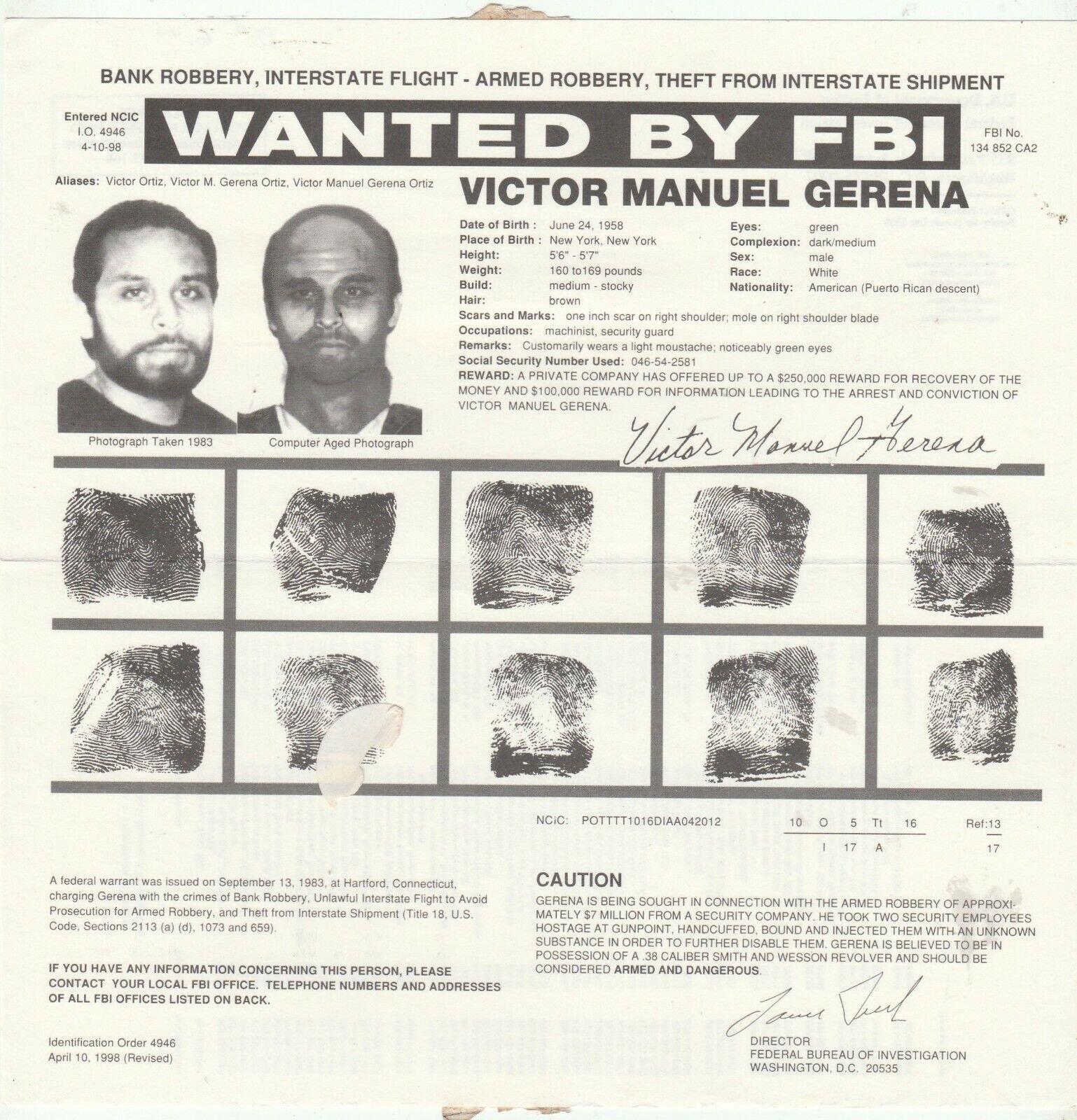
The Wells Fargo robbery took place in West Hartford, Connecticut on September 12, 1983, netting more than seven million dollars, which at the time was the largest cash heist in U.S. history. Though technically not in LA, this case deserves mention because of its connection to LA’s Puerto Rican community and its sheer audacity.
Victor Gerena and a coworker arrived back at the depot after collecting several million dollars, while their boss had arrived earlier with his truckload of another five million dollars; Gerena suddenly pulled the pistol from the boss’s holster and ordered the two men to lie on the floor. The robbery exploited predictable guard routines and management complacency.
Victor Gerena remains at large and is one of the FBI’s Top Ten Most Wanted Fugitives, and authorities never recovered the stolen money. Honestly, that’s remarkable given the decades of investigation. The crime revealed how even supposedly secure facilities become vulnerable when employees are underpaid and supervision is lax.
The Hollywood Hills Celebrity Burglary Rings: Fame Creates Patterns

The Bling Ring was a group of seven teenagers and young adults based in Calabasas who broke into homes of high-profile celebrities between October 2008 through August 2009, resulting in the theft of about three million dollars in cash and belongings. What made this smart wasn’t sophisticated tools or violence. It was social media surveillance.
The group used social media and celebrity gossip websites to track schedules, and once they knew their targets were out of town, they would go to the houses during the night and gain access through open doors. Many celebrities whose homes were invaded were completely oblivious they had been robbed, purely because they possessed so much.
Prugo and Lee used Google Earth to find a place to access Paris Hilton’s community via a hill climb. They weaponized celebrity culture against itself. Red carpet events, award shows, public appearances – all became alibis proving the victims weren’t home. The audacity is almost impressive. These weren’t hardened criminals; they were teenagers who understood that fame creates predictable absences.
Movie Prop and Wardrobe Warehouse Thefts: Hiding in Plain Sight

Hollywood operates on organized chaos. Warehouses full of costumes, props, and memorabilia exist in a strange limbo between priceless and disposable. Thieves exploited this confusion brilliantly. Screen-used items worth thousands were assumed to be replicas until they appeared for sale online.
Insider familiarity once again proved crucial. Employees or former workers understood inventory systems were often outdated or incomplete. Items could disappear for months before anyone noticed. When they did surface, establishing provenance became nearly impossible. Was that costume from the actual film or a publicity replica?
The blurred line between authentic and reproduction created perfect cover. Studios rarely prosecuted aggressively because it meant admitting their security was inadequate. I think this reveals something uncomfortable about how Hollywood values objects only when they’re immediately useful, creating opportunities for those paying attention.
Luxury Car Lease and Export Fraud Rings: Exploiting International Gaps

Los Angeles is home to one of the highest concentrations of luxury vehicles in the world. It’s also near major shipping ports. Criminals recognized this combination as an opportunity. They leased high-end cars using false identities and documentation, then shipped them overseas before payments stopped.
The genius was in timing. Lease agreements often had grace periods. Export documentation took time to process. By the time anyone realized something was wrong, the vehicles were on container ships or already in Eastern Europe, the Middle East, or Asia. Recovery became nearly impossible once they left U.S. jurisdiction.
This scheme required understanding both automotive finance bureaucracy and international shipping logistics. The criminals weren’t stealing cars in dramatic heists. They were exploiting the delays between different systems that didn’t communicate efficiently. Patience and paperwork became weapons.
Fake Production Company Tax Credit Schemes: Bureaucracy as Cover

California offers generous tax incentives to film productions. The application process is paperwork-heavy, which means it assumes legitimacy. Fraudsters created shell production companies with impressive-sounding names, submitted elaborate fake budgets, and claimed credits for projects that barely existed.
Audits came years later, if at all. By then, the money was spent and the companies dissolved. The scheme worked because the entertainment industry is genuinely chaotic. Projects get announced, delayed, canceled, and renamed constantly. Distinguishing between legitimate struggling productions and outright fraud proved incredibly difficult.
Only in LA could you exploit the intersection of government incentives and Hollywood’s reputation for unpredictability. The criminals essentially bet that oversight agencies couldn’t tell the difference between a legitimate low-budget production and a complete fabrication. Often, they were right.
LA Art Gallery Inside Jobs: Trust as a Weapon

The high-end art world operates on relationships and discretion. Galleries trust employees who have worked there for years. This trust became a vulnerability when those employees quietly removed or swapped artwork from private collections and storage units.
No break-ins meant no alarms. Everything looked authorized because technically it was. Employees had legitimate access, knew security protocols, and understood which pieces were rarely viewed. Items could vanish for months before inventory checks revealed the loss. By then, establishing exactly when and how became nearly impossible.
Art markets move slowly and discreetly. Stolen pieces could be sold through intermediaries or held for years until attention died down. LA’s concentration of wealthy collectors, combined with its relatively informal trust culture compared to New York or London, created ideal conditions. The thieves weren’t outsiders breaking in. They were insiders walking out.
Why LA Became the Perfect Laboratory

These crimes share common threads. They exploited LA’s unique characteristics: sprawling geography that makes surveillance difficult, extreme wealth concentration, industries built on image over substance, and infrastructure designed for movement and anonymity. The city’s car culture means people are often predictably absent from home. Celebrity obsession creates public schedules.
The entertainment industry’s chaos provides cover for financial schemes. Proximity to international shipping routes enables export fraud. In many ways, LA’s greatest strengths became vulnerabilities when examined by criminal minds willing to study patterns most people never notice.
Honestly, it’s somewhat terrifying how these operations reveal systemic weaknesses. These weren’t crimes of passion or desperation. They were almost academic in their precision. Each one required patience, research, and an understanding that the best way to steal isn’t forcing your way in. It’s making people believe you belong there until it’s too late.
What strikes me most is how many of these crimes succeeded not through violence or intimidation, but through understanding human behavior and institutional complacency. The criminals studied their targets as thoroughly as any researcher, then waited for the perfect moment. That kind of discipline and planning deserves grudging respect, even as we recognize the harm caused.
The fact that many perpetrators came close to succeeding permanently should make us question how many similar operations are currently underway, operating beneath notice because they’ve learned from these cases what works and what doesn’t.

Besides founding Festivaltopia, Luca is the co founder of trib, an art and fashion collectiv you find on several regional events and online. Also he is part of the management board at HORiZONTE, a group travel provider in Germany.
