

- Anticipated Album Releases of 2025: A Musical Journey Awaits - February 22, 2026
- New York City’s Star-Studded Line-Up: 2025’s Must-See Performances - February 22, 2026
- 25 Times Tech Meets Style: The Best Wearable Gear for 2024 - February 22, 2026
The Birth of a Literary Revolution
Picture this: a lawyer sitting by his daughters’ bedside in 1969, struggling to think of what happens next in their bedtime story. That moment of creative uncertainty would spark a publishing phenomenon that would captivate millions of children worldwide. Edward Packard thought up the concept in 1969, as he was telling his daughters a bedtime tale about a man on a desert island, and “I couldn’t think of what should happen next,” Packard later recalled to Marketplace, so he asked his kids what they would do. The girls provided two different answers, and Packard saw a genre with potential. “They could not just identify with the main character, but they could be the main character,” he said.
The genre that Packard invented, in which the reader chooses what happens, has come to be called “interactive fiction”. Packard wrote the first known book of this type, Sugarcane Island, in 1969, and arranged for it to be published in 1976 by Vermont Crossroads Press, owned by Constance Cappel and Raymond A. Montgomery, Jr. The concept was simple yet revolutionary: instead of following a linear narrative, readers would make choices that determined the story’s direction and outcome.
From Rejection to Recognition

The road to publication wasn’t smooth sailing for Packard’s groundbreaking idea. Packard struggled to sell the concept at first—”It was just too strange and too new,” he later said—but publisher and author R.A. Montgomery, having worked in role playing-game design himself, finally recognized its potential. He set out in 1970 to find a publisher but was rejected by nine publishing companies, causing him to shelve the idea. In 1975, he was able to convince Ray Montgomery, co-owner of Vermont Crossroads Press, to publish the book and it sold 8,000 copies, a large amount for a small local publishing house.
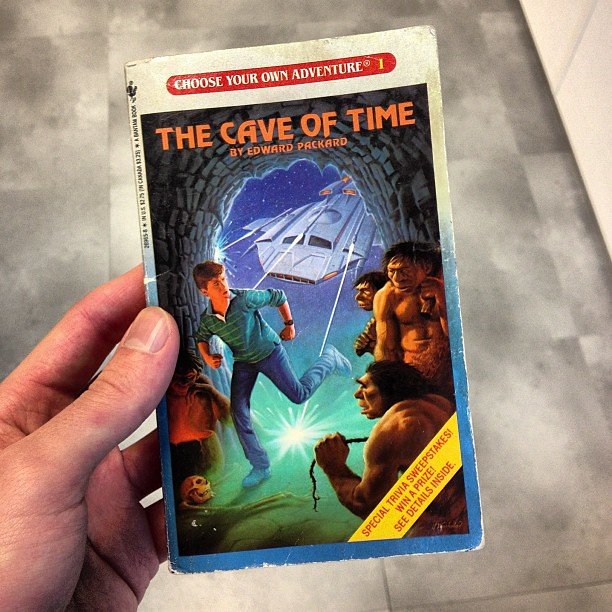
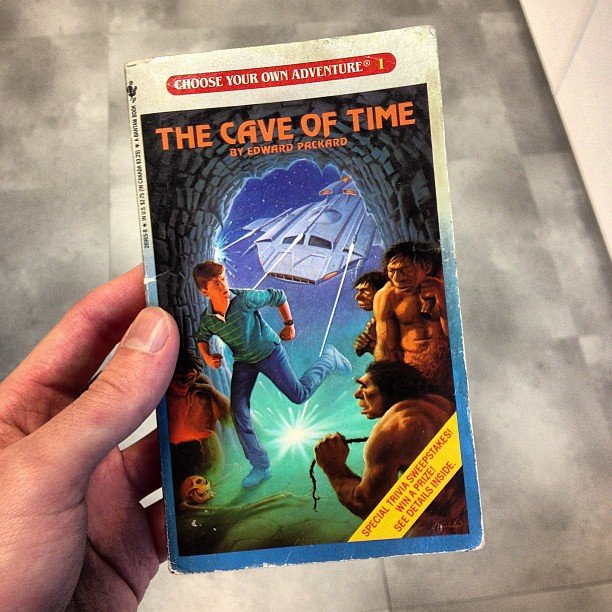
The series was later marketed to Pocket Books, where it also sold well, but Montgomery believed that it would sell better if a bigger publisher could be found. After some discussion, Montgomery was able to make a contract for the series with Bantam Books. In 1979, the Choose Your Own Adventure series officially launched with The Cave of Time, where you might encounter a T-Rex or a UFO, depending on which route you opted to hike.
The Golden Age of Interactive Fiction
The 1980s marked the absolute peak of Choose Your Own Adventure’s popularity. A 1981 article in The New York Times, followed by an interview with Packard on The Today Show, provided free publicity. Choose Your Own Adventure, as published by Bantam Books, was one of the most popular children’s series during the 1980s and 1990s, selling more than 250 million copies between 1979 and 1998. The series has been translated into 40 languages. These weren’t just books; they were cultural artifacts that defined a generation’s reading experience.
The Choose Your Own Adventure series published 184 titles through Bantam Books between 1979 and 1998, including many by Montgomery himself and several by his sons Ramsey and Anson. The series reached the peak of its popularity with children in the 1980s. It was during this period that Bantam released several other interactive series to capitalize on the popularity of the medium (a few examples are: Choose your Own Adventure for Younger Readers, Time Machine and Be An Interplanetary Spy).
The Cultural Impact Beyond Books

The success of Choose Your Own Adventure created a ripple effect throughout popular culture. Unsurprisingly, the immense popularity of the series led to a handful of spin-offs and competitors. By the mid-1980s one could purchase “Which Way Follow Your Heart” romance novels, “Play It Your Way” sports books, or “Which Way Secret Door” mystery stories. Corporate synergy began shortly after, with Star Wars and Disney versions of CYOA. One independent Toronto bookstore owner lamented their complete dominance in 1984, claiming that alternative titles “have all been purged to make room for yet another imitation of Choose Your Own Adventure.”
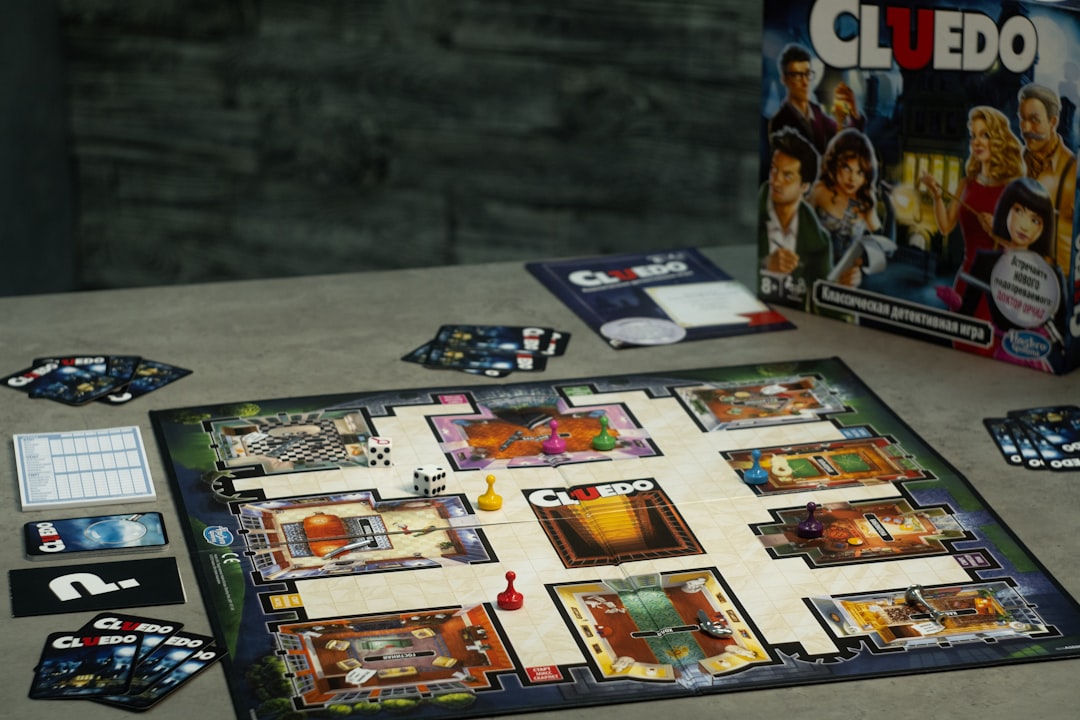
The popularity of the series led to the creation of merchandise such as action figures, board games, role-playing game systems, magazines, novels, and video games. The format’s influence extended far beyond the realm of children’s literature, inspiring early video game narratives and helping establish the foundation for what would become modern interactive entertainment.
The Creative Mechanics Behind the Magic
What made these books so captivating was their intricate construction. The number of endings varies from as many as 44 in the early titles to as few as 7 in later adventures. Likewise, there is no clear pattern among the various titles regarding the number of pages per ending, the ratio of good to bad endings, or the reader’s progression backwards and forwards through the pages of the book. This allows for a realistic sense of unpredictability, and leads to the possibility of repeat readings, which is one of the distinguishing features of the books.
As the series progressed, both Packard and Montgomery experimented with the gamebook format, sometimes introducing unexpected twists such as endless page loops or trick endings. Examples include the “paradise planet” ending in Inside UFO 54-40, which can only be reached by cheating or turning to the wrong page by accident. The only way out of this is to “reset”, or close the book and start over from the first page.
The Seeds of Decline

By the late 1980s, cracks were beginning to show in the Choose Your Own Adventure empire. Edward Packard noted: “We wrote so many books that we began to explore more specialized subject areas and then follow up on them.” The rapid expansion led to market saturation, with publishers churning out titles to meet demand rather than maintaining the quality that had made the series special. The branching-path book commercial boom dwindled in the early 1990s, and the number of new series diminished.
The publishing industry’s focus shifted from innovation to quantity, resulting in repetitive plots and declining storytelling quality. A Smithsonian article criticizes the style as “formulaic” and quotes a scholar stating that “in terms of literary quality, many of the multiple-storyline books are true skunks”. What had once been a fresh, exciting format was becoming predictable and stale.
The Digital Revolution Strikes
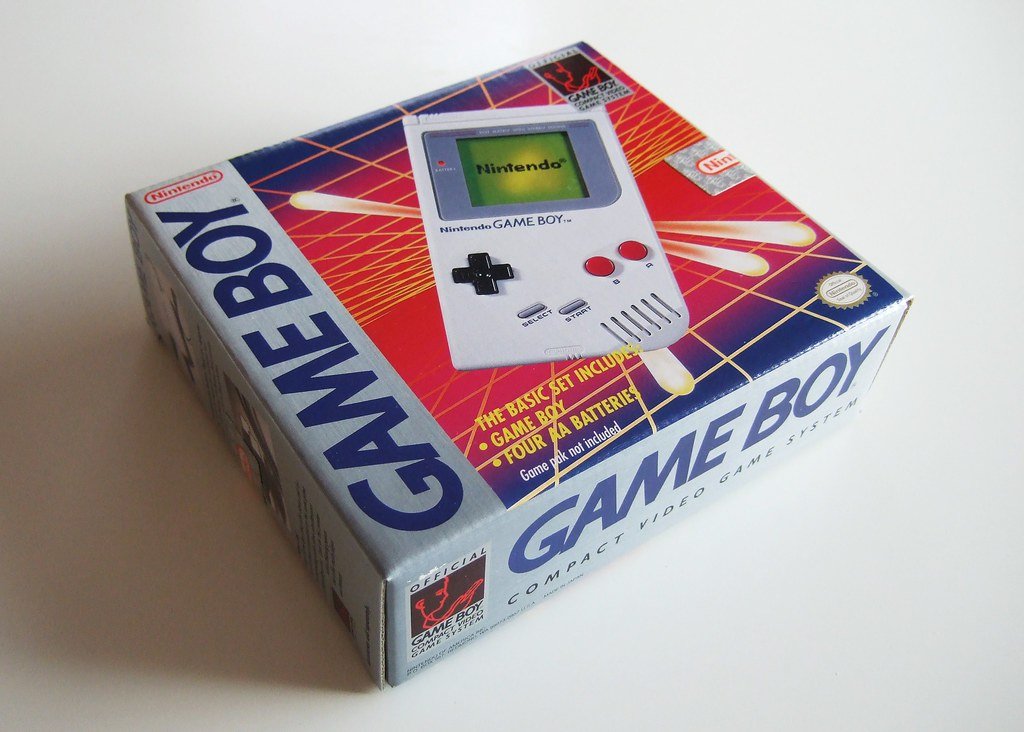
By the 1990s, the series faced competition from computer games and was in a decline. The series was discontinued in 1999, but was relaunched by a new company, Chooseco, in 2003. Although the Fighting Fantasy titles had successful sales the increasing dominance of video games in the 1990s caused a gradual decline. The rise of home gaming consoles like the NES and Sega Genesis, along with increasingly sophisticated PC games, offered interactive experiences that made static books seem outdated.
Another factor that led to the decline of the adventure game market was the advent of first-person shooters, such as Doom and Half-Life. These games, taking further advantage of computer advancement, were able to offer strong, story-driven games within an action setting. This slump in popularity led many publishers and developers to see adventure games as financially unfeasible in comparison. Children who had grown up with Choose Your Own Adventure books were now teenagers drawn to more visually spectacular and technologically advanced forms of entertainment.
The End of an Era
When Bantam, now owned by Random House, allowed the Choose Your Own Adventure trademark to lapse, the series was relaunched by Chooseco. Circa 1999: Random House, which by then had acquired Bantam, ceases publishing new books in the series and abandons the Choose Your Own Adventure trademark. Subsequently Montgomery’s company, ChooseCo LLC., registers the Choose Your Own Adventure trademark and begins publishing books under that imprint. The original golden age was officially over.
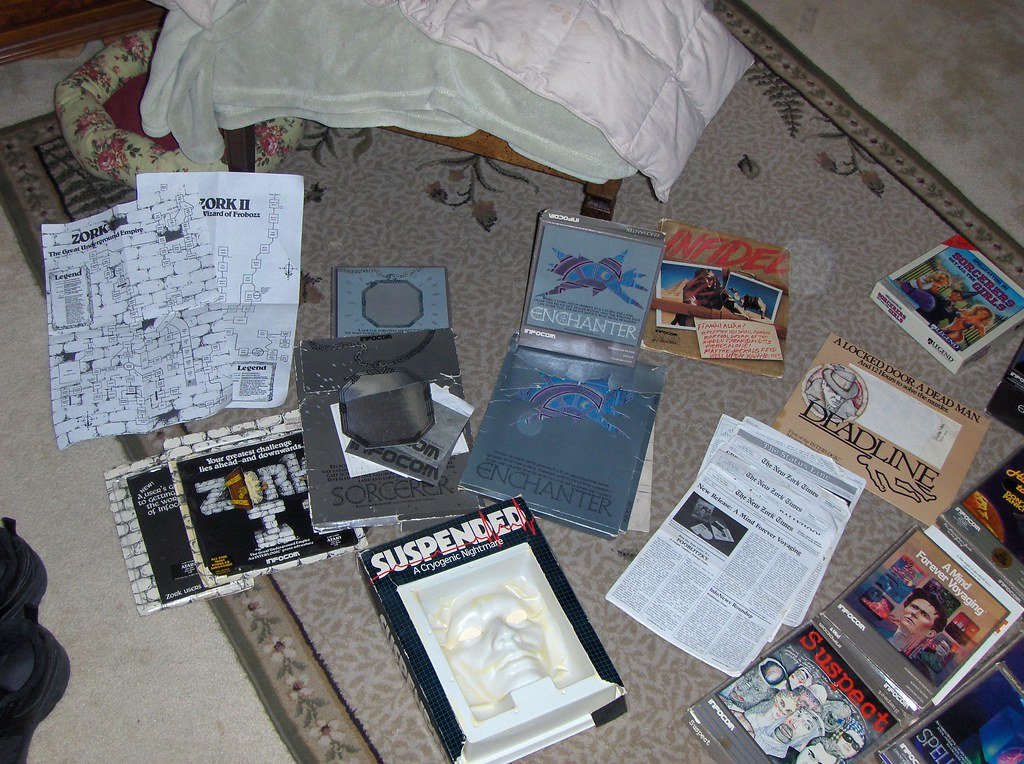
As was the case with other types of gamebooks, the production of solitaire RPG adventures decreased dramatically during the 1990s. However, new solos continue to be published to this day. Production of new gamebooks in the West decreased dramatically during the 1990s as choice-based stories have moved away from print-based media, although the format may be experiencing a resurgence on mobile and ebook platforms. Such digital gamebooks are considered interactive fiction or visual novels.
The Digital Renaissance
While traditional Choose Your Own Adventure books faded, their DNA survived and evolved in the digital realm. The genre has undergone something of a mobile revival, with publishers such as Tin Man Games, Inkle and Choice of Games delivering everything from classic gamebook fun to more experimental interactive fiction apps that play around with the possibilities of the digital medium. Edward Packard, one of the authors of the interactive Choose Your Own Adventure series, has helped create U-Ventures, an application for the iPhone and iPad. It incorporates sounds, lights and special effects into the traditional Choose Your Own Adventure format.
Authoring tools for choice-based IF include Twine, Squiffy, Undum, ChoiceScript, and ink, among others. More authoring systems are listed at Authoring systems for choice-based IF. The democratization of publishing tools meant that anyone could create their own interactive stories, leading to a renaissance of creativity in the format.
Netflix and the Streaming Revolution

While the movie itself isn’t interactive (something that could have helped rehabilitate the plot), the release reflects Netflix’s growing interest in choose-your-own-adventure-style programming. Since the debut of Black Mirror: Bandersnatch back in 2018, the streaming service has been steadily investing in these titles. In January 2019, Chooseco initiated a trademark infringement legal challenge against Netflix for the film Black Mirror: Bandersnatch. Netflix settled the suit in November 2020.
It’s easy to be a little cynical about this interactive programming push, which feels like a ploy for Netflix to find new relevance as a mobile gaming platform, especially now as it reports its first subscription losses in a decade. Yet this mainstream adoption of interactive storytelling represents a full-circle moment for the format that Edward Packard pioneered in his daughters’ bedroom decades earlier.
The Legacy Lives On
Today’s gaming and entertainment landscape owes an enormous debt to Choose Your Own Adventure books. Today, books, video and computer games, television and films continue to push the boundaries of what interactive fiction can do. The potential control readers can have over the story can, at times, feel downright radical (take author Stuart Moulthrop’s mind-bending hyperfiction text Victory Garden). National Public Radio has run two large segments in the past five years on the history of CYOA. Recognizing this lasting imprint on American culture, Netflix recently sought to cash in on this nostalgia.
ChooseYourStory.com is a community-driven website centered on Choose-Your-Own-Adventure style storygames. Members create their own storygames, read and comment on other members’ storygames, participate in the forum, and improve their writing ability. The format continues to find new life in digital platforms, proving that the fundamental appeal of reader agency remains as strong as ever.
The Modern Market Reality

The conclusion: it’s a very difficult market with lots of competition, no matter where you look. Traditional books are under fire from e-books, e-books are under fire from amateur e-books and flatrate models, other genres like visual novels have the same problem as e-books and there are lots… This shows, again, that digital media are increasingly important and that traditional books are suffering from the increased competition. But: people are still buying Choose-your-own-adventure-style books/ games in all of their variations. If you have the right quality and marketing it’s possible to make money with it. It won’t be easy, but it’s not impossible.
December, 2024, Packard licenses six of his most well-known original Choose Your Own Adventure books for reissue by ChooseCo. Chooseco will begin to reissue titles by Packard in August of 2025. This recent development suggests that there’s still commercial viability in the classic format, even as the industry continues to evolve.
The Eternal Appeal of Choice

But the decisions don’t have to be extreme to make an impact; there’s something to be said for the more quotidian of the choose-your-own plots that continue to crop up (for me, one of the most anticipated offering on the horizon right now is the first interactive rom-com). After all, whatever weight the decisions carry in these plots, the act of choice remains central to each of them, and helps to remind us that not only is there a multiverse of possibility out there, but that each of our decisions can create a ripple effect.
The Choose Your Own Adventure phenomenon perfectly captured a fundamental human desire: the need to feel in control of our own stories. In an age where children often felt powerless in the face of adult decisions, these books offered genuine agency. The format’s enduring influence on modern gaming, streaming media, and digital storytelling proves that Packard’s bedtime story innovation tapped into something timeless about human nature.
What began as a solution to writer’s block during a children’s bedtime story became a cultural phenomenon that defined a generation’s relationship with reading and storytelling. Though the golden age of printed Choose Your Own Adventure books has passed, their spirit lives on in countless digital formats, proving that the desire to shape our own narratives remains as compelling today as it was in 1969. After all, who doesn’t want to be the hero of their own story?

Besides founding Festivaltopia, Luca is the co founder of trib, an art and fashion collectiv you find on several regional events and online. Also he is part of the management board at HORiZONTE, a group travel provider in Germany.
