

- 15 Top Saddest Movies of All Time That Make You Cry - March 21, 2026
- 10 Groundbreaking Scientific Discoveries That Changed the World Forever - March 21, 2026
- 15 Best Protest Songs of All Time - March 21, 2026
There is something almost unfair about how much natural beauty America packs within its borders. Seriously, think about it. The USA packs spectacular biodiversity within its borders, boasting hot desert playas and plateaus, skyscraping mountain ranges topped by glaciers, rolling grasslands where millions of bison once roamed, tropical rainforests, active volcanic zones, and polar tundra. No other country on Earth asks you to make such impossible choices about where to go first.
From the sun-scorched deserts of the Southwest to the frozen peaks of Alaska, America’s landscapes operate on a scale that feels genuinely cosmic. Many of the USA’s most magnificent natural wonders are protected today by the National Park Service. These are not just pretty backdrops for Instagram. They are living, breathing chapters of Earth’s geological story. So buckle up, because this list is going to make you want to book flights immediately.
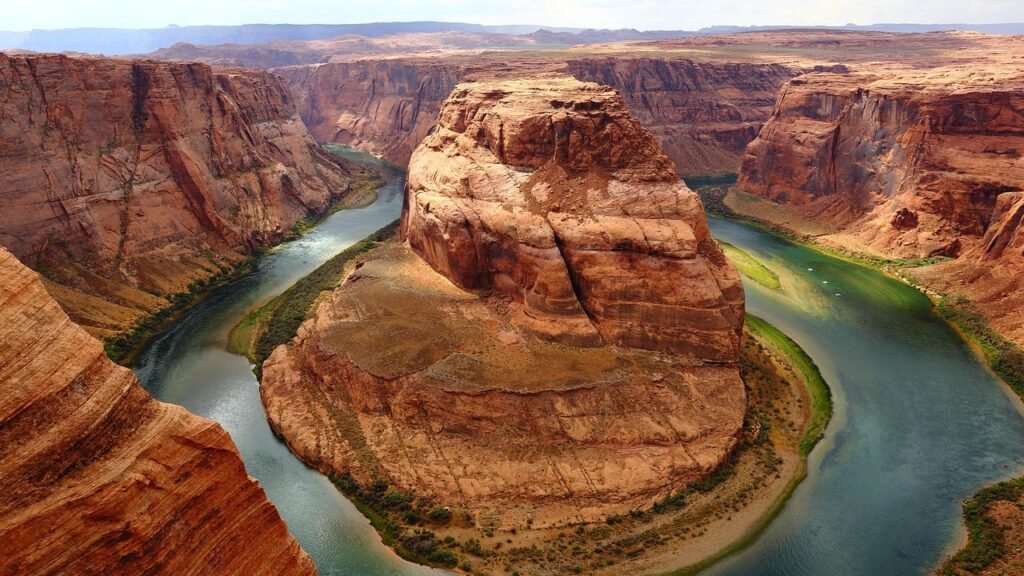
1. The Grand Canyon, Arizona: Earth’s Greatest Open Book
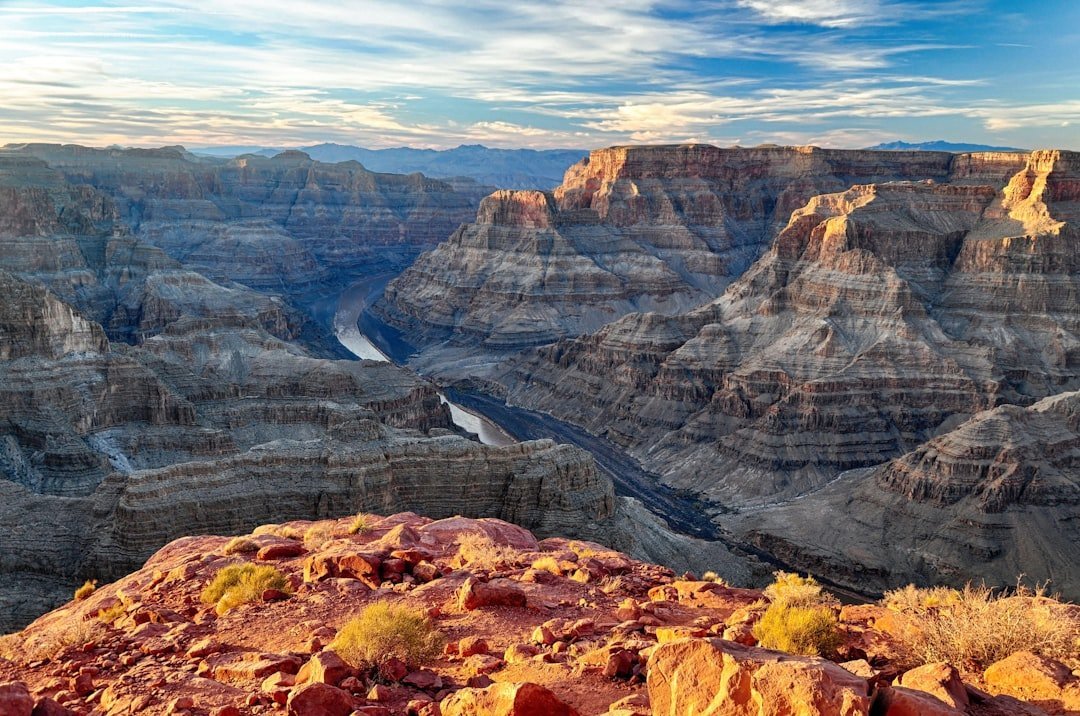
If you’ve never stood on the rim of the Grand Canyon and felt genuinely small, you haven’t truly experienced humility. This vast landscape is not only one of Earth’s most impressive natural wonders but also a living textbook of geologic layers that span nearly two billion years, stretching 277 miles long, up to 18 miles wide, and over a mile deep. The canyon reveals layer after layer of ancient rock, each telling its own story of vanished seas, shifting deserts, and tectonic upheaval.
The Grand Canyon is 1.6 kilometers deep and is being carved into the uplifting Colorado Plateau by the erosional power of the Colorado River, exposing an exceptionally complete rock record covering about 40 percent of Earth’s history. Remarkably, the canyon offers one of the most visible examples of a worldwide geological phenomenon known as the Great Unconformity, in which 250 million-year-old rock strata lie back-to-back with 1.2 billion-year-old rocks.
The Ancestral Puebloan people lived in and near the Grand Canyon region around 10,000 years ago, and eleven present-day Native American groups have ties to the canyon, with many of their oral histories involving the creation of the canyon in some way. Today, the Grand Canyon is a remarkable natural landmark drawing over 5 million visitors annually with its breathtaking, deep canyon. The best time to visit is spring or autumn when the heat is manageable and the light turns that red rock into something almost otherworldly.
2. Yellowstone National Park, Wyoming: A Planet Within a Park
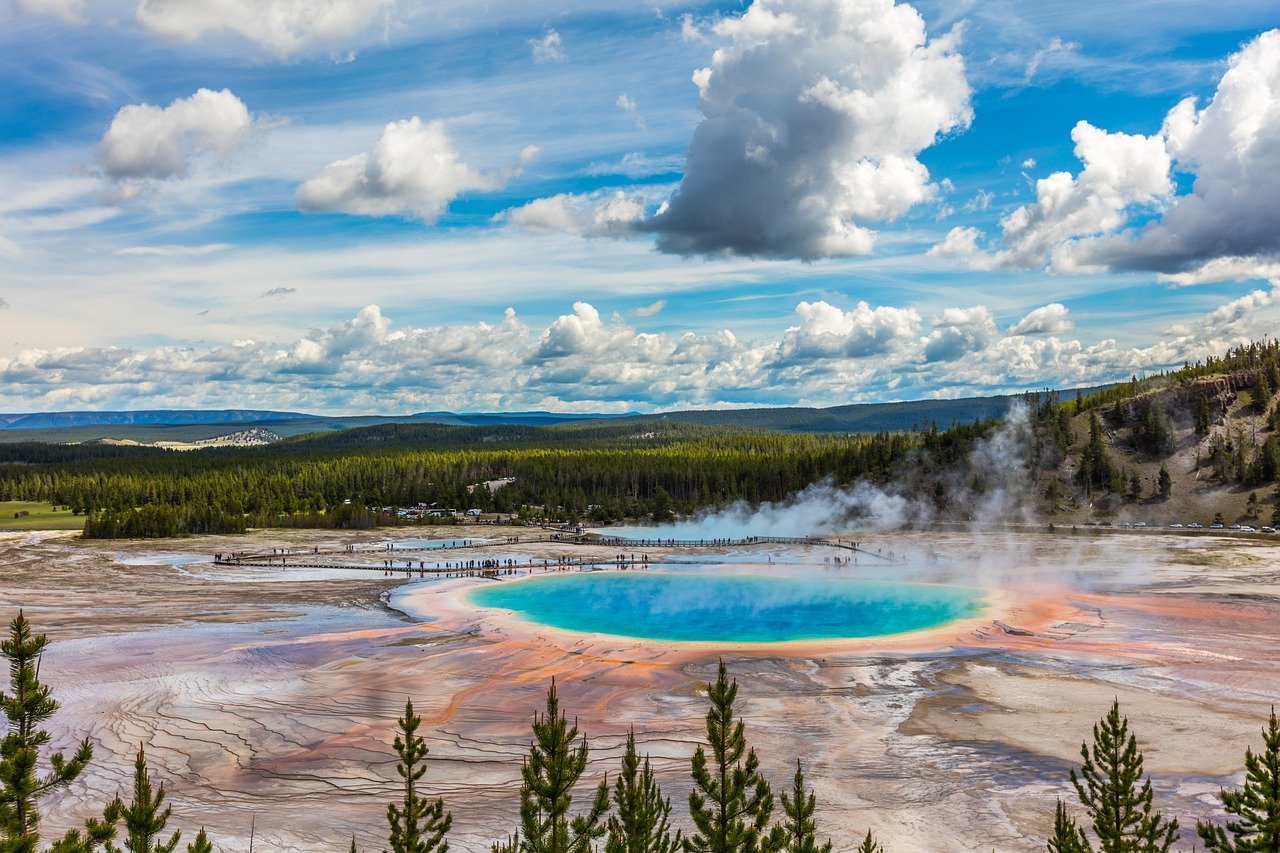
Imagine walking across ground that is essentially the roof of a supervolcano. That is exactly what you do at Yellowstone, and it is as thrilling as it sounds. Born in 1872 as America’s first national park, Yellowstone remains one of the most geologically active regions on the continent, built on a supervolcano that produces its famous geysers, hot springs, and bubbling mud pots.
As spectacular as Old Faithful is, erupting about every 90 minutes, it’s just one of more than 500 geysers in Yellowstone, the most densely packed cluster of such thermal features anywhere on the planet. Honestly, that number alone stopped me in my tracks when I first read it. Five hundred geysers. If you seek wildlife, head to Lamar Valley, called the “Serengeti of North America,” to see bison, elk, and grizzly bears in their natural habitats.
Yellowstone is even open in winter, offering snowshoeing, cross-country skiing, and guided snowmobile tours, with geothermal features like geysers and hot springs looking particularly striking against the snowy landscape. Winter visitors often say the experience feels like something from another planet entirely, which I think makes perfect sense.
3. Yosemite National Park, California: Granite Cathedrals and Thundering Falls
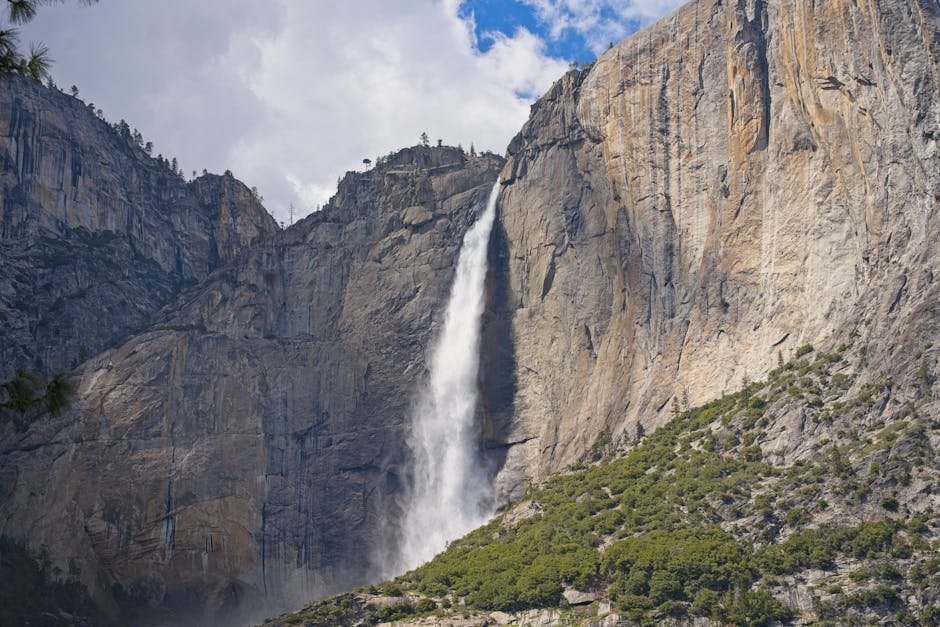
There is a reason John Muir practically wept with joy every time he visited Yosemite. Gazing up at towering granite monoliths such as El Capitan and at Yosemite Falls, North America’s highest waterfall, you’ll know exactly what he meant. Declared a UNESCO World Heritage Site for its unique geological features carved by glaciers, Yosemite also sustains a variety of rare wildlife inhabiting California’s craggy Sierra Nevada mountain range.
Back in 1864, Yosemite became the first land officially protected for conservation purposes by the federal government. That is a staggering legacy. With its jaw-dropping landscapes including granite cliffs, sequoia groves, flowing rivers, peaceful meadows and stunning waterfalls, Yosemite is one of the most celebrated national parks for a reason and attracts huge crowds every year.
Hiking to waterfalls like Bridalveil Fall or Lower Yosemite Fall is perhaps the most popular activity when visiting, and trails like the Mist Trail or Clouds Rest are other noteworthy courses with fantastic views. Here’s the thing though: even the most photographed corners of Yosemite somehow still manage to take your breath away in person. No filter required.
4. Antelope Canyon, Arizona: Light Made Visible
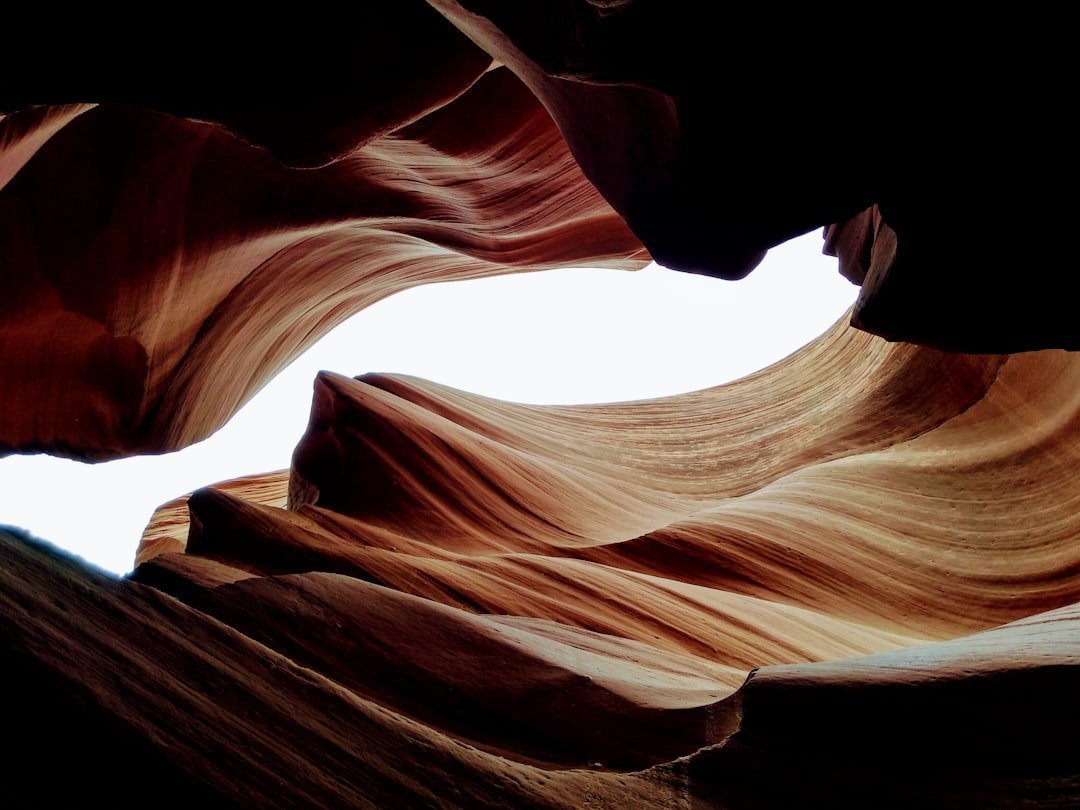
There are places on Earth where geology accidentally becomes art. Antelope Canyon is the most breathtaking example. Antelope Canyon is an example of a geological curiosity known as a slot canyon, formed when water finds its way into a crack or fissure in the bedrock, with the result being thousands of years of weather extremes. Specifically, an intermittent creek that empties into the Colorado River would erupt in turbulent flash floods that wore away the sandstone rock face, followed by hot, dry periods where sandstorms buffed the canyon walls to a striated, swirled finish.
For the Navajo people, Antelope Canyon holds deep spiritual significance, considered a sacred site where many Navajo guides share stories and insights about their culture and the canyon’s history during tours. According to Navajo beliefs, Antelope Canyon was formed not by erosion but by the Holy People, and it’s believed that the spirit world and our world intersect there. That spiritual layer adds an entirely different dimension to the visit.
As sunlight streams through the narrow openings at the top of the canyon, it creates beams of light that change the color of the stone from soft oranges and pinks to deep reds and purples, making each visit a unique and unforgettable experience. The best time to visit is typically from late spring to early fall, with peak visiting times from May through September, offering the most favorable conditions and the chance to see the famous light beams most prominent around midday.
5. Niagara Falls, New York: Raw Power You Can Feel in Your Chest
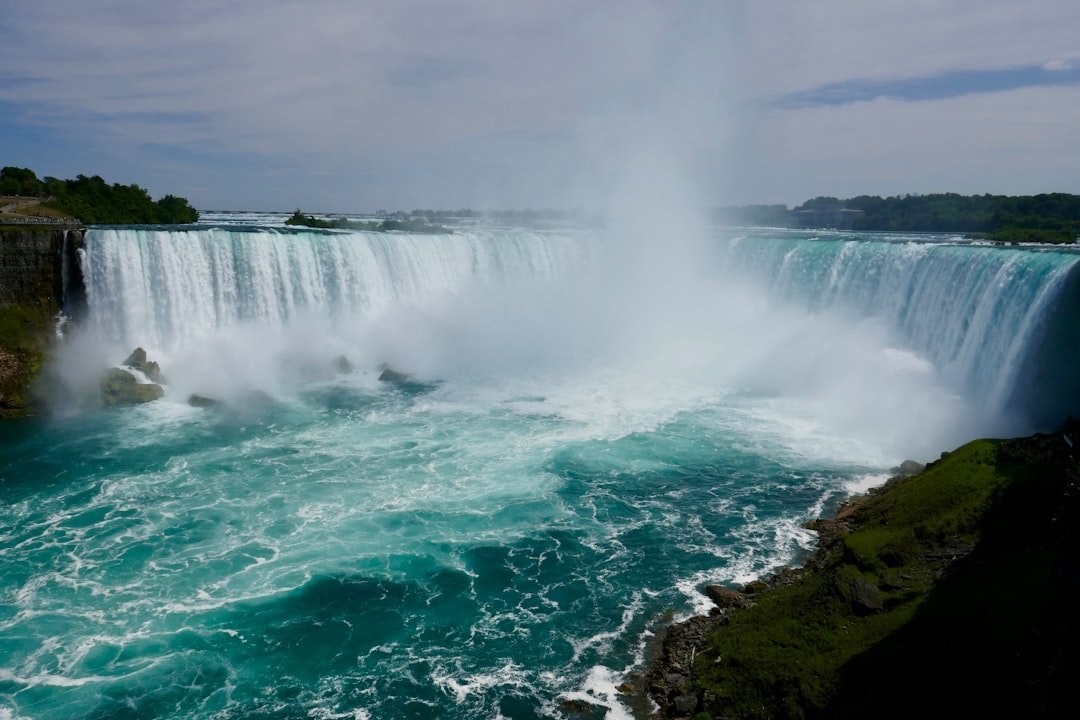
Let’s be real. Niagara Falls sounds almost like a cliché at this point. Until you stand near it, and then it becomes something entirely different. Niagara Falls is not just one, but three waterfalls that gush along the US-Canada boundary between New York and Ontario: Horseshoe Falls, American Falls, and Bridal Veil Falls. They aren’t the USA’s tallest waterfalls, but these powerful cascades have a bigger water flow than any others on the planet.
Straddling the border between New York state and Ontario, Canada, Niagara Falls combined sends six million cubic feet of water a minute, plunging 160 feet into the Niagara Gorge below. That is a number that simply refuses to be imagined. You have to feel the spray, the noise, and the vibration in the ground to understand what it means. Different seasons bring different experiences, with winter sometimes icing over portions of the river creating truly stunning and unique scenery, while late spring, summer, and fall allow easy navigation of the various foot and cycling paths in the area.
6. Crater Lake, Oregon: The Most Impossible Blue on Earth
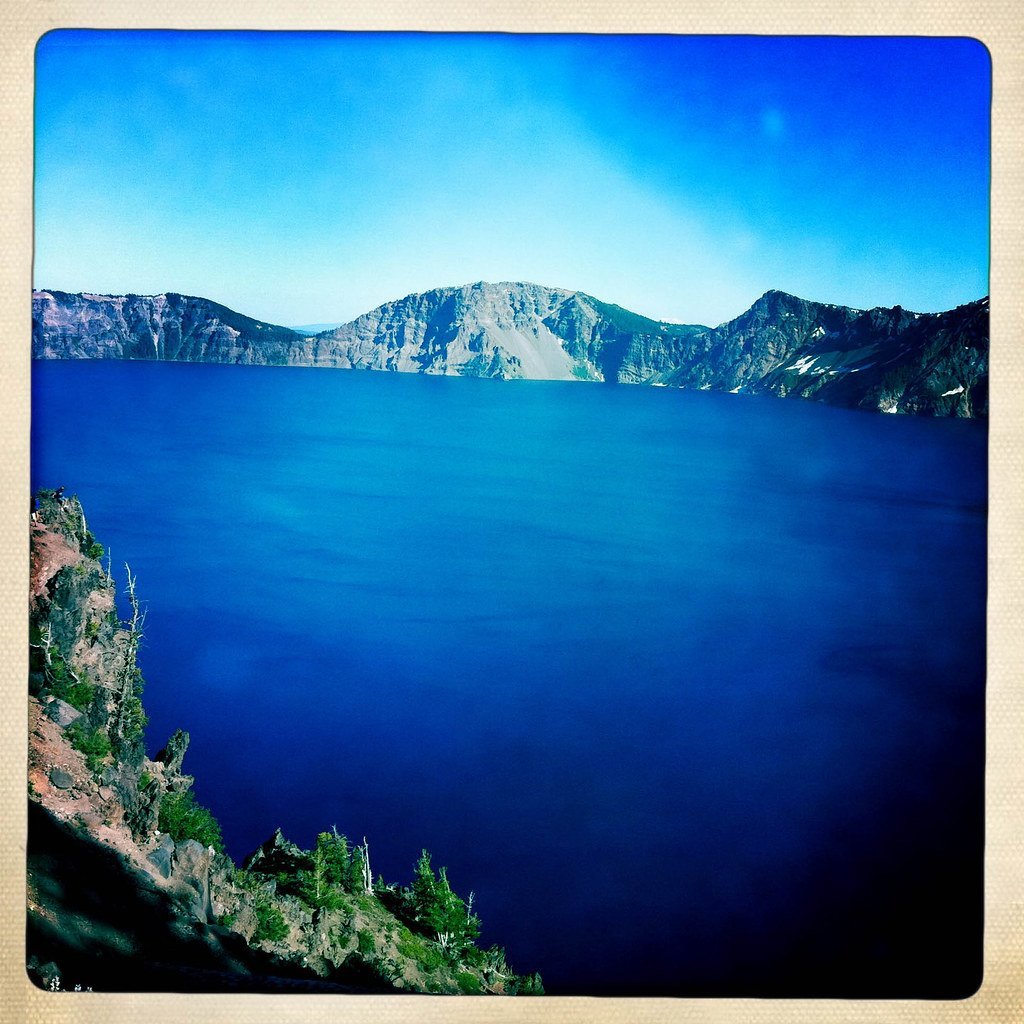
There is no color on Earth quite like the blue of Crater Lake. It is the kind of blue that makes you question whether you are seeing it correctly. Crater Lake, which fills one of the most beautiful calderas in the world, lies atop Mount Mazama in Southern Oregon. Explosive eruptions about 7,700 years ago created a basin measuring five by six miles across and more than half a mile deep, making Crater Lake the deepest lake in the United States and the seventh deepest lake in the world.
Geologists estimate the volcanic debris from the ancient eruption reached about 30 miles into the sky. So much material erupted from Mount Mazama that the volcano collapsed in on itself, creating a caldera. Over time, rainwater and snowmelt accumulated in the basin, and Crater Lake was born. The eruption was, incidentally, roughly 75 times more powerful than the 1980 eruption of Mount St. Helens. Due to unique factors, mainly that the lake has no inlets or tributaries, the waters of Crater Lake are some of the purest in the world because of the absence of pollutants.
Local Native Americans witnessed the collapse of Mount Mazama and kept the event alive in their legends, with one ancient legend of the Klamath people closely paralleling the geologic story which emerges from today’s scientific research. The lake and surrounding park areas offer many recreational activities, including hiking, biking, snowshoeing, fishing, and cross-country skiing, with campgrounds and lodges open to visitors during summer.
7. Denali, Alaska: North America’s Unrivaled Roof
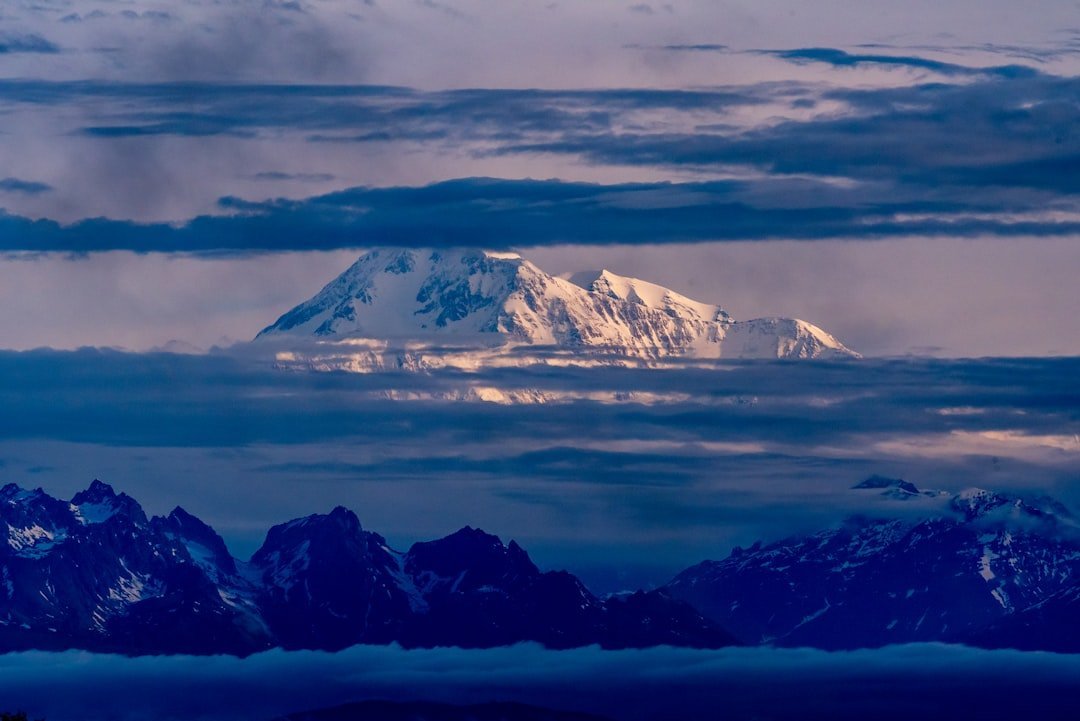
There are tall mountains, and then there is Denali. The difference is not just a matter of feet. It is a matter of presence. Located in Alaska’s interior, Denali is the highest peak in North America at 20,310 feet, rising abruptly from the surrounding subarctic lowlands with one of the greatest vertical reliefs on Earth, climbing nearly 18,000 feet from base to summit. Think about that. A vertical rise of nearly 18,000 feet. That is the equivalent of stacking more than three Mount Everests on top of each other from base to summit.
The mountain is the centerpiece of Denali National Park and Preserve, which includes over six million acres of wilderness ranging from boreal forest to alpine tundra and glaciated peaks, with glaciers such as Kahiltna stretching more than 40 miles. The area supports grizzly bears, moose, caribou, wolves, and Dall sheep, all thriving in a truly wild, unfenced ecosystem. No fences. No guardrails. Just raw wilderness on a scale that is difficult to comprehend.
Flightseeing tours are one of the most popular ways to truly appreciate Denali’s scale, departing from small towns nearby and offering aerial perspectives that ground-level visitors simply cannot access. Climbers first reached the south summit in 1913, a feat now attempted by more than a thousand people every year. It is both inspiring and slightly terrifying when you think about it.
8. Mammoth Cave, Kentucky: A World Hidden Beneath Your Feet
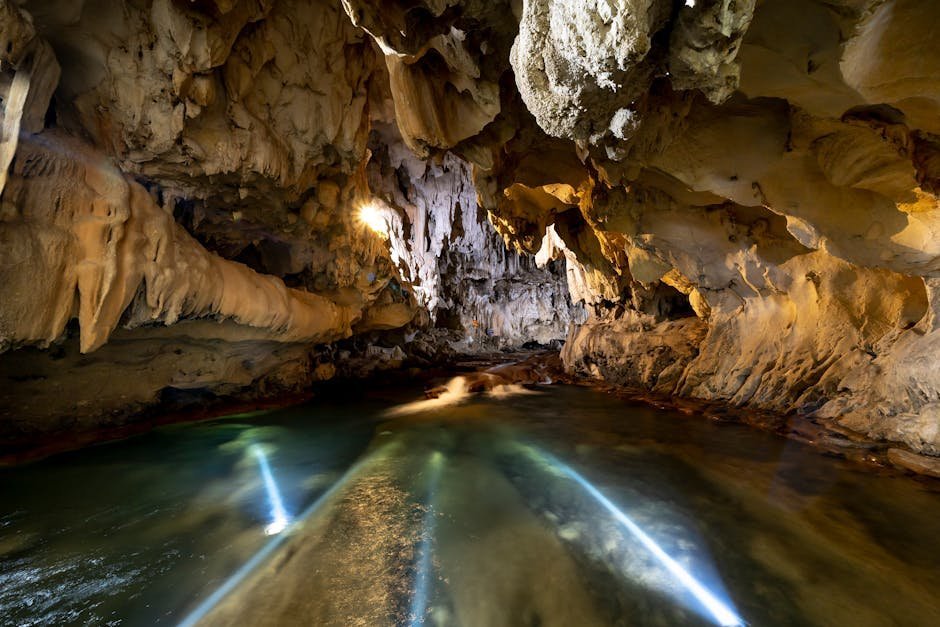
Most people think of America’s natural wonders as things that reach upward. Mammoth Cave reminds you that some of the most astonishing places on Earth go the other direction entirely. Mammoth Cave in central Kentucky is the world’s longest known cave system, currently with 426 miles of surveyed passageways, formed as acidic groundwater dissolved layers of limestone, creating a vast underground network of tunnels, chambers, and deep shafts.
The cave hosts a unique array of animals that have somehow survived its lightless reaches, including rare eyeless fish and cave-adapted invertebrates. It also preserves traces of early human activity, with archaeological evidence showing that Native Americans explored its passages over 4,000 years ago. Later, in the 19th century, Mammoth Cave became a saltpeter source used in gunpowder production during the War of 1812.
Almost 400 miles of underground passageways have been explored inside this limestone karst cave labyrinth sculpted by subterranean rivers, with oddly shaped stalactites, stalagmites, and other impressive cave formations visible on lantern-lit tours. The site is now protected as Mammoth Cave National Park and recognized as a UNESCO World Heritage Site. It is one of those places that genuinely defies expectation every single time.
9. Monument Valley, Arizona and Utah: The American West Made Myth
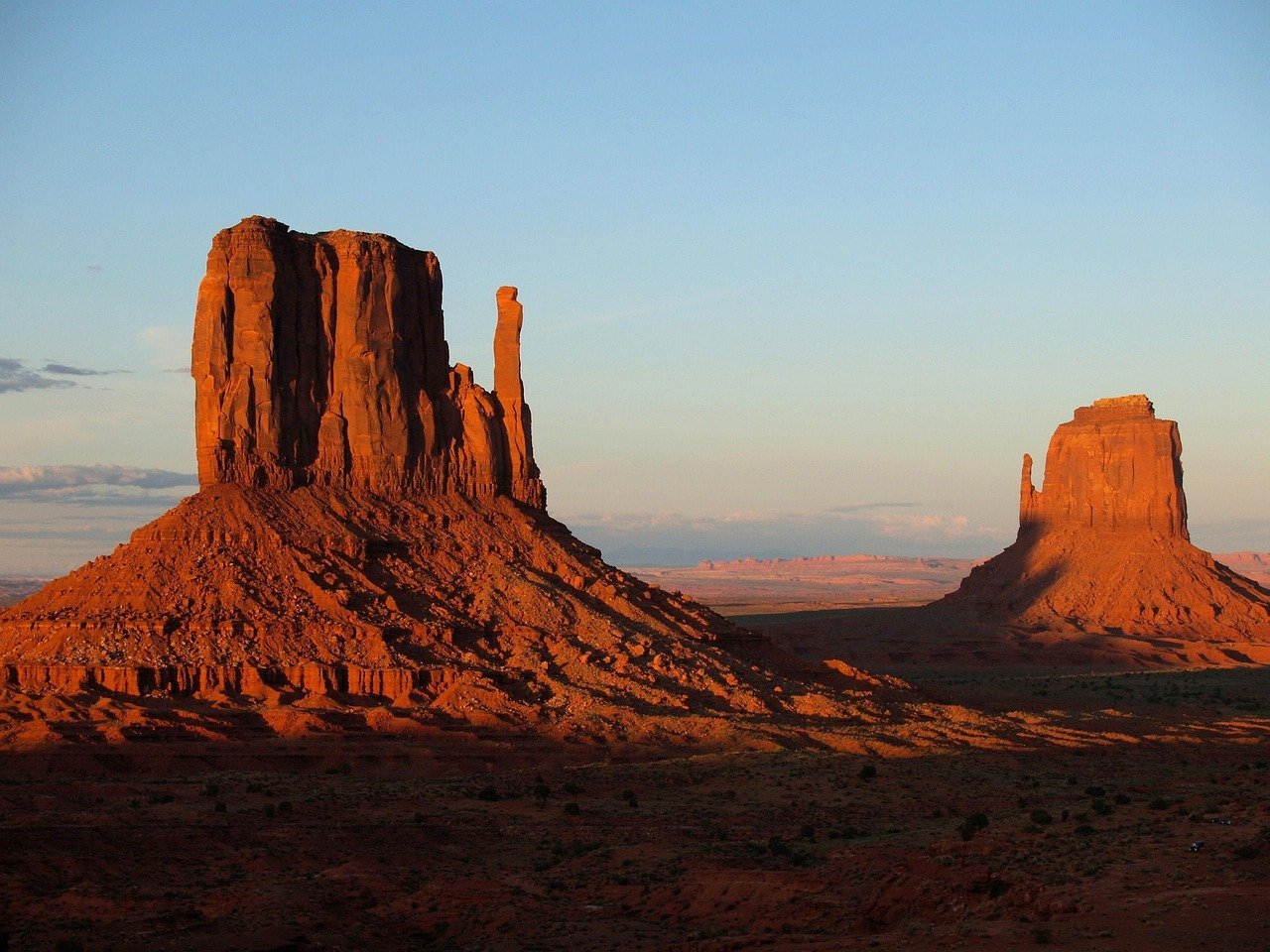
If you have ever watched a classic Western film and wondered where on Earth those iconic red spires were filmed, now you know. Crossing the Arizona-Utah border and located on Navajo Nation land, Monument Valley features gargantuan sandstone buttes that soar up to 1,000 feet from the desert floor. These distinct formations have been featured in numerous Western movies and are some of the most famous natural wonders in America. Softer rock layers were sculpted away by wind and water over millions of years, leaving behind the harder rocks that are today’s monuments.
The Mittens (including the East and West Mitten), Merrick Butte, and the Three Sisters are probably the valley’s most photographed formations, buttes that in first or last light glow bright red-orange. Honestly, the light at golden hour here is something that photographers spend entire careers chasing. These ethereal slot canyons and formations can only be explored on guided tours with a native Navajo guide, with the canyon thought to have been formed by flash flooding during monsoon season, and summer offering the best chance of catching the famous light beams.
10. Glacier National Park, Montana: See It Before the Ice Is Gone
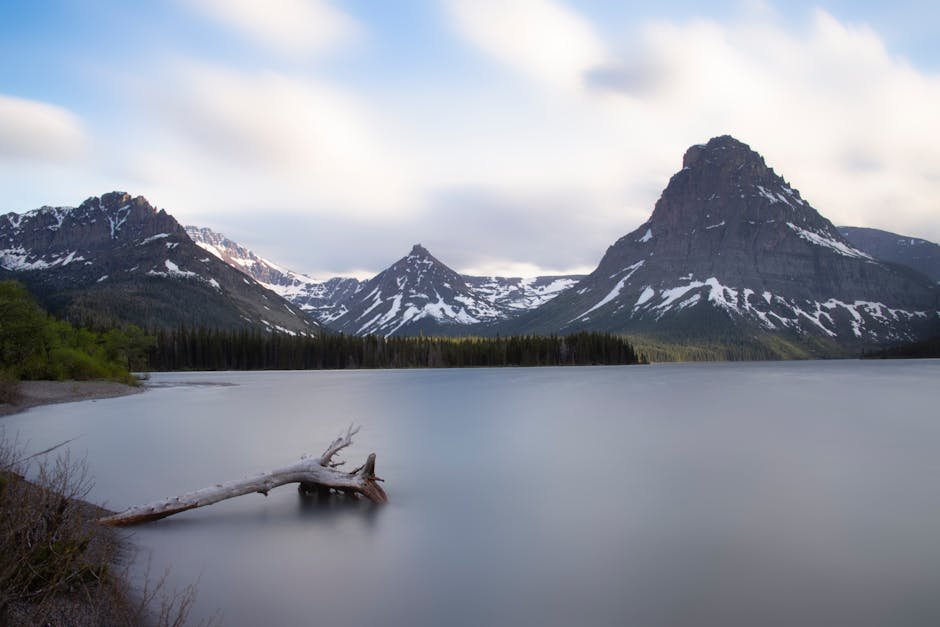
Here is a sobering thought to close this list with. Some of what makes Glacier National Park magnificent is already disappearing. That alone makes it worth visiting with urgency. Spanning the Continental Divide along the border between Montana and Canada, Glacier National Park is home to some of the most stunning landscapes in North America, with towering peaks, lush forests, and awe-inspiring stretches of pristine wilderness. Rugged peaks, U-shaped valleys, and serene alpine lakes clearly illustrate the action of glaciers that gouged through solid rock to sculpt this landscape over thousands of years. The park now has 26 named glaciers, most of which have dramatically receded from what they were in the 1800s, and climate change is expected to wipe many of them out completely in the coming decades.
Often called the Crown of the Continent, Glacier National Park’s exceptional beauty is best on display at Logan Pass, and the national park has more than 700 miles of hiking trails for visitors to take in the stunning natural landscape, with headwaters that flow as far as the Gulf of Mexico. The scale of the wilderness here has a way of resetting something inside you.
Think about the wildlife alone. Glacier is one of the few remaining ecosystems in the continental United States where grizzly bears, wolves, and mountain lions still roam freely alongside each other. That kind of ecological completeness is vanishingly rare in today’s world, and it makes every trail feel a little more electric.
A Final Word: Go While You Still Can
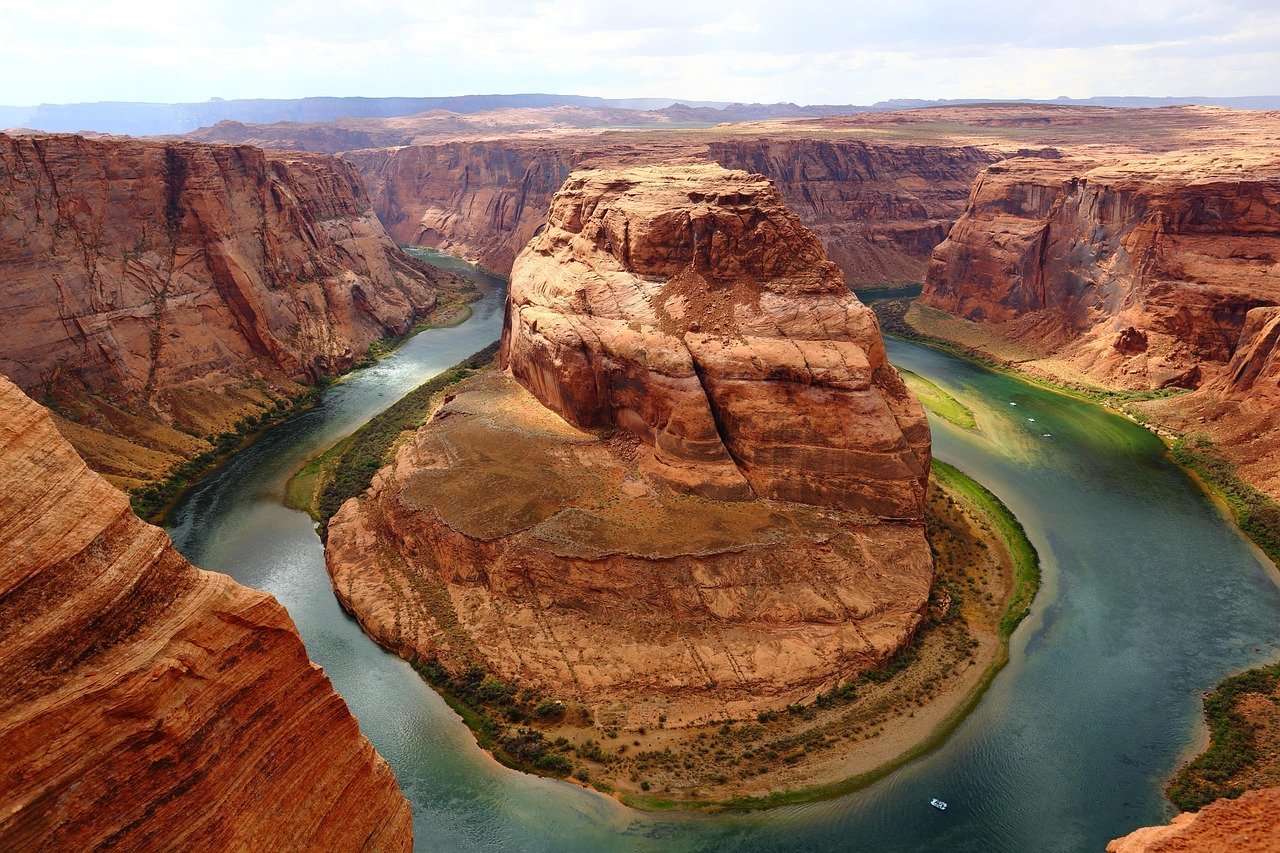
America’s natural wonders are not just travel destinations. They are living records of time itself, spanning billions of years of geological history that dwarf anything humanity has ever built or imagined. It’s the tale of Earth that each place whispers, from volcanoes making islands to rivers carving canyons, glaciers shaping mountains, and life adapting anywhere at all. What truly makes these places astounding is not their physical beauty alone. It’s the knowledge of just how vast and ancient they are, how geological forces are still creating and transforming them today.
Each place on this list offers something that no photograph, documentary, or article, including this one, can truly replicate. The spray of Niagara Falls on your face. The eerie silence deep inside Mammoth Cave. The vertigo at Denali’s feet. These are full-body, full-soul experiences that remind you what it feels like to be genuinely, wonderfully insignificant in the best possible way.
So here is the question worth sitting with: of all ten of these extraordinary places, which one surprised you most? Share your thoughts in the comments below, because chances are, the answer says a lot about what kind of traveler you truly are.

Besides founding Festivaltopia, Luca is the co founder of trib, an art and fashion collectiv you find on several regional events and online. Also he is part of the management board at HORiZONTE, a group travel provider in Germany.
