

- 10 Most Heartbreaking Stories Behind Famous Songs - March 26, 2026
- 10 Unexpected Facts About Your Favorite Pop Culture Icons Over 50 - March 26, 2026
- The 10 Most Iconic Music Festivals of the 20th Century: Were You There? - March 26, 2026
There’s something almost mythological about the great music festivals of the 20th century. They weren’t simply concerts. They were moments in time where thousands, sometimes hundreds of thousands, of strangers gathered in fields, on coastlines, and at racetracks, and collectively decided, even if only for a few days, that music could change the world. Honestly, some of them came close to proving it right.
During the 20th century, especially during the 1960s, many of the defining moments of music and pop culture were closely linked with music festivals. From the elegant shores of Rhode Island to the rain-drenched hills of Somerset, these gatherings shaped entire generations, launched careers overnight, and occasionally ended an era with a single devastating note. Some left behind a golden legacy. Others left behind wreckage, literal and metaphorical. All of them left behind stories.
What follows is a journey through ten of the most iconic music festivals the 20th century ever produced. Brace yourself, because a few of these might genuinely surprise you. Let’s dive in.
1. Newport Jazz Festival (1954) – Where It All Began
The modern concept of music festivals began in the 20th century, significantly marked by the Newport Jazz Festival in 1954, which set the stage for large-scale, multi-artist events in the United States. Think of it as the Big Bang of the festival world. Everything that came after, from Woodstock to Lollapalooza, traces its DNA back to this sun-drenched lawn in Rhode Island.
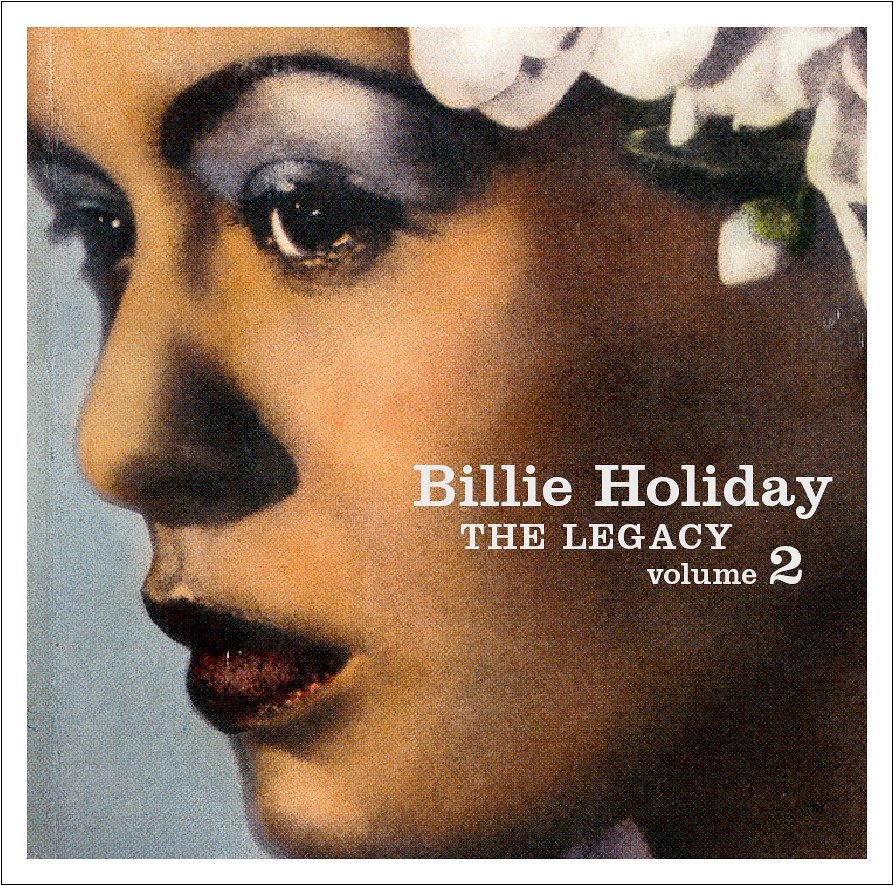
Elaine Lorillard established the festival in 1954, and she and her husband Louis Lorillard financed it for many years, hiring George Wein to organize the first festival and bring jazz to Rhode Island. Its lineup of academic discussion panels and performing artists such as Billie Holiday, Ella Fitzgerald, and Dizzy Gillespie drew audiences of more than eleven thousand people over several days.
Since its founding, the Newport Jazz Festival has been on board for every evolutionary phase of the music, from bop and cool jazz, to fusion and free jazz – whatever mode was making waves wound up on its stage. In the mid-1950s, this kind of youth-centered music festival was jarring to the conservative culture of Newport, where residents were unhappy to see crowds of young people sleeping outside in tents and disregarding established social norms. I think that tension, that discomfort felt by “respectable” society, was precisely the point. It was the first time many Americans realized that music could be a form of cultural protest.
2. Newport Folk Festival (1965) – The Night Bob Dylan Went Electric
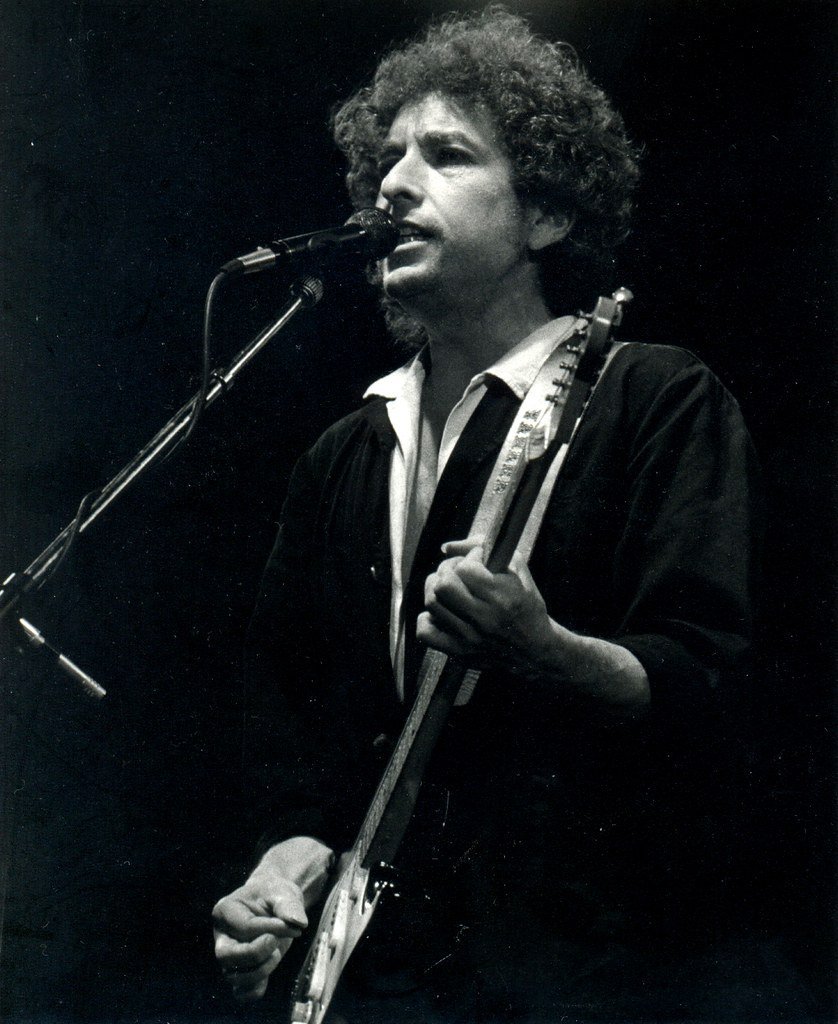
Here’s the thing about the Newport Folk Festival: it was beloved for years as a gathering place for acoustic purity, for earnest troubadours strumming their truth into an open sky. Then, in the summer of 1965, Bob Dylan walked onstage with an electric guitar and tore the whole thing apart.
The roughly 100,000 attendees at the 1965 Newport Folk Festival were ready and excited for Bob Dylan’s acoustic hits, but found themselves outraged when Dylan premiered a new, electric sound. After only three songs, the crowd booed Dylan offstage. This bold move redefined his career and influenced countless musicians. The moment symbolized a turning point in music history, where tradition met innovation, and it remains a defining milestone in the evolution of rock music.
Dylan going electric at Newport wasn’t just a set list change. It triggered a debate about authenticity that still shapes how we talk about music today. In a way, those boos were the sound of an old world collapsing. If a single festival moment deserves to be called seismic, this one has a strong claim. Were the audience wrong to boo? History, I think, delivered its verdict pretty clearly.
3. Monterey International Pop Festival (1967) – The Summer of Love Gets a Soundtrack
The Monterey International Pop Festival was a three-day music festival held June 16 to 18, 1967, at the Monterey County Fairgrounds in Monterey, California. It arrived at the peak of cultural optimism, drenched in California sunshine and the intoxicating promise that music really could bring people together. The festival embodied the theme of California as a focal point for the counterculture and is generally regarded as one of the beginnings of the Summer of Love in 1967 and the public debut of the hippie, flower power, and flower children movements.
The festival is remembered for the first major American appearances by the Jimi Hendrix Experience, the Who, and Ravi Shankar, the first large-scale public performance of Janis Joplin, and the introduction of Otis Redding to a mass American audience. The concert is best remembered for Hendrix’s electrifying guitar work and his dramatic finale, where he set his guitar on fire. It was part virtuosity, part theater, and entirely unforgettable.
Because Monterey was widely promoted, heavily attended, featured historic performances, and was the subject of a popular theatrical documentary film, it became an inspiration and a template for future music festivals, including the Woodstock Festival two years later. Janis Joplin’s performance of “Ball and Chain” was a major part of helping her band get signed to Columbia Records later that year. Careers were made in a single weekend. Not bad for a fairground in Northern California.
4. Woodstock (1969) – The Festival That Became a Religion
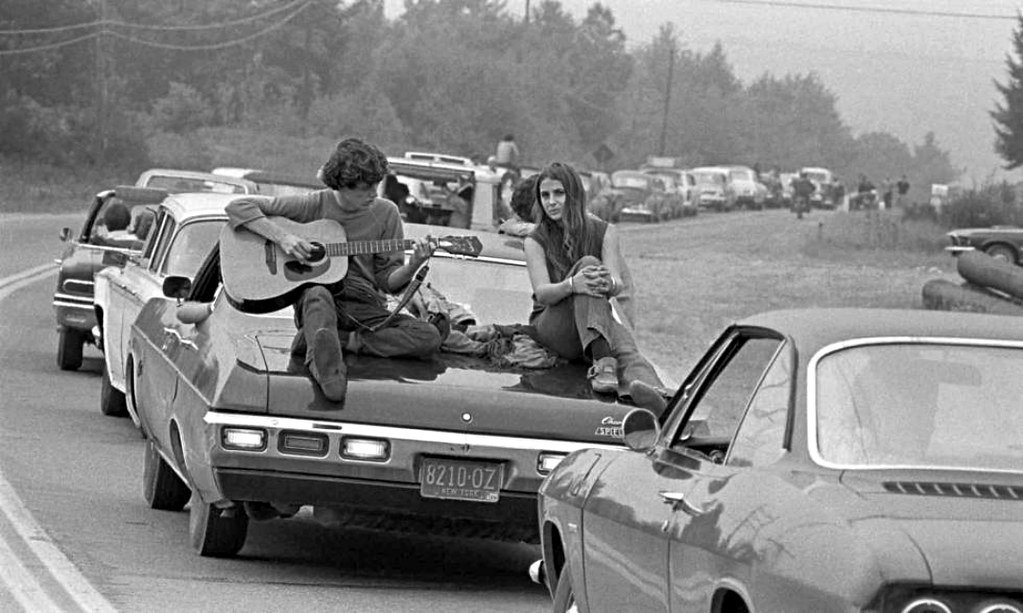
No list of iconic festivals can exist without Woodstock at its center. To call it simply a music event feels almost insulting. The Woodstock Music and Art Fair was a music festival held from August 15 to 18, 1969, on Max Yasgur’s dairy farm in Bethel, New York, and it attracted an audience of more than 460,000. Woodstock was conceived as a profit-making venture but became a free concert when circumstances prevented the organizers from installing fences and ticket booths before opening day.
The festival was organized by four inexperienced promoters who nonetheless signed a who’s who of current rock acts, including Jimi Hendrix, Sly and the Family Stone, the Who, the Grateful Dead, Janis Joplin, the Jefferson Airplane, Ravi Shankar, and Country Joe and the Fish. One standout performer, and Woodstock’s last performer, was Jimi Hendrix, who played a now epic rendition of the “Star Spangled Banner.” That performance, distorted and wrenching, was something entirely new. It turned a patriotic anthem into an anti-war statement in under three minutes.
The festival was the definitive expression of the musical, cultural, and political idealism of the 1960s and was recognized almost immediately as a watershed event in the transformation of American culture. Though several hundred thousand people experienced the festival firsthand, the idea of Woodstock greatly impacted the lives of millions of others, who came to know it through news coverage, stories from friends, and a wildly successful three-hour documentary film that premiered in theaters only seven months later. In 2017, the original site was officially placed on the National Register of Historic Places, joining the ranks of the Empire State Building and the Grand Canyon.
5. Altamont Free Concert (1969) – The Day the Dream Died
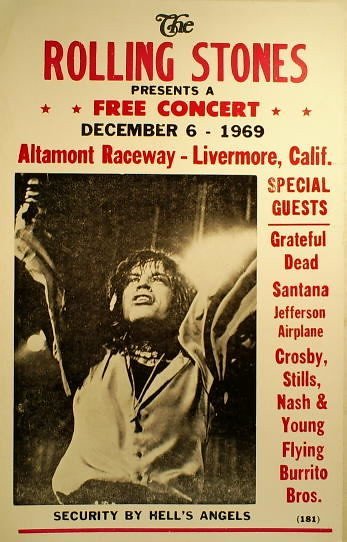
If Woodstock was the high-water mark of 1960s idealism, then Altamont, held just four months later in December 1969, was its brutal hangover. The Altamont Free Concert, held on December 6, 1969, is often referred to as the “end of the Sixties.” Organized by The Rolling Stones as a free concert, it was intended to be the West Coast’s answer to Woodstock.
The Rolling Stones’ concert at Altamont Speedway is infamous for its chaos and tragedy. Intended to be a “Woodstock West,” the event drew 300,000 fans but was marred by violence, including a fatal stabbing, with security provided by the Hells Angels leading to tensions and turmoil. It’s hard to say for sure how much of this disaster was inevitable, but it crystallized the dangers of scaling idealism without adequate planning, infrastructure, or safety. The 1960s, culturally speaking, ended not with a song but with a scream.
Altamont’s legacy is a cautionary tale told to every festival organizer who has ever existed since. It forced the entire industry to reckon with responsibility, crowd safety, and the limits of “free.” Think of it this way: Woodstock showed what festivals could be at their best. Altamont showed what they could become when things went catastrophically wrong. You need both stories to understand the full picture.
6. Isle of Wight Festival (1970) – Britain’s Woodstock Moment
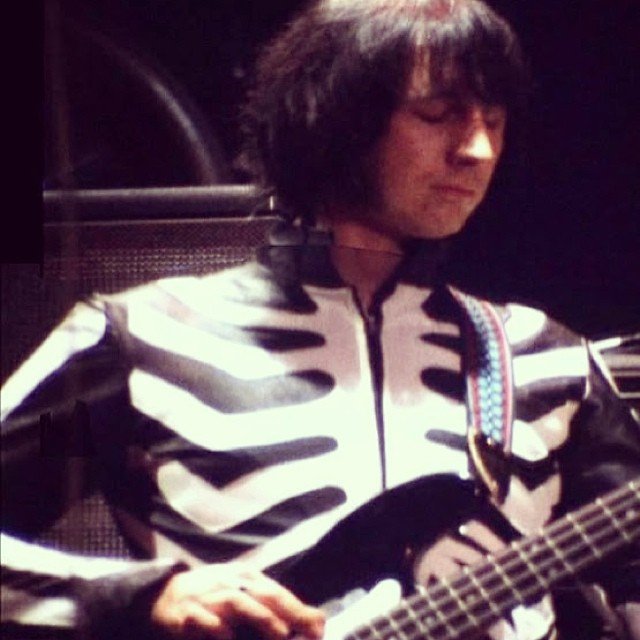
Across the Atlantic, Britain was having its own festival reckoning. The 1970 Isle of Wight Festival wasn’t just a concert. It was a statement. With 600,000 attendants, the 1970 Isle of Wight Festival was at the time one of the largest human gatherings in the world. To put that in perspective, that is more people than attended Woodstock itself.
Artists of the festival included Chicago, The Who, Joni Mitchell, and The Jimi Hendrix Experience. The festival was captured by future Academy Award-winner Murray Lerner. Joni Mitchell’s performance at the Isle of Wight in 1970 was both challenging and triumphant. Facing a restless crowd, Mitchell delivered a heartfelt set with songs like “Woodstock” and “Big Yellow Taxi,” her ability to connect with the audience ultimately turning the tide and creating a memorable experience.
Tragically, Jimi Hendrix’s appearance at the Isle of Wight in 1970 would prove to be one of his final performances before his death just weeks later. The 1970 edition drew over 600,000 people, briefly making it the largest festival ever held, and it attracted American icons like Bob Dylan, in his first major appearance since his 1966 motorcycle accident, and Jimi Hendrix in one of his final performances. That weight, the feeling of something ending, hangs over every frame of the footage that survives.
7. Watkins Glen Summer Jam (1973) – The Forgotten Giant
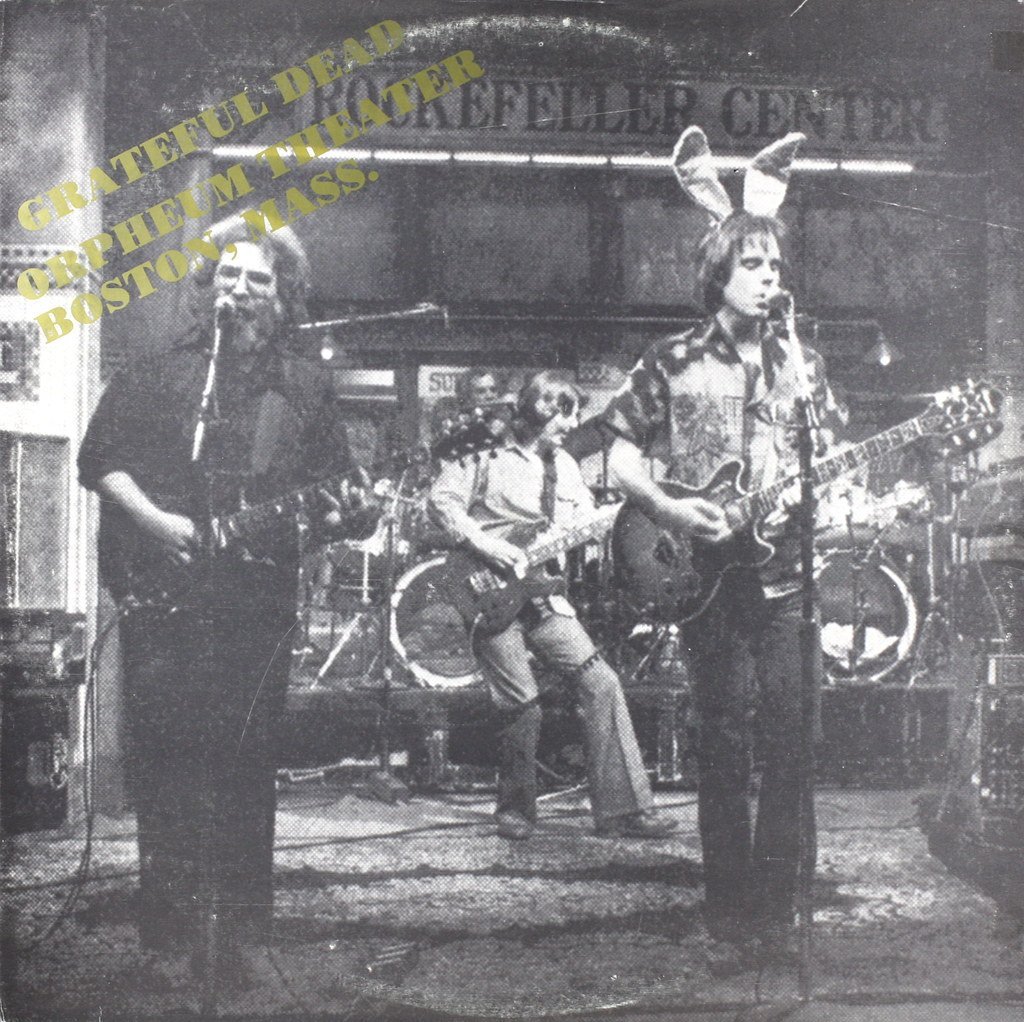
Honestly, this one doesn’t get nearly enough credit. Watkins Glen is the quiet behemoth of 20th-century festival history, largely forgotten outside of dedicated music circles, yet staggering in its sheer scale. The Summer Jam at Watkins Glen on July 28, 1973, was a massive rock festival featuring The Band, The Allman Brothers Band, and the Grateful Dead. With over 600,000 attendees, it was one of the largest rock festivals ever held.
With over 600,000 attendees and virtually no security, most concert-goers got in without paying the $10 ticket price. The festival was located in Watkins Glen Grand Prix Raceway and overwhelmed the small town with an overflow of people. The image of a tiny New York town simply being engulfed by hundreds of thousands of music fans is almost comical, yet the mood was, by all accounts, peaceful and electric.
The Band’s performance, particularly their rendition of “The Weight,” became one of the most memorable moments of the festival. The event exemplified the communal spirit of the 1970s rock scene and remains a landmark in the history of live music. Yet Watkins Glen rarely appears in mainstream pop culture conversations. Sometimes the biggest events happen quietly, without the mythology machine ever catching up to them.
8. Glastonbury Festival (1970s Onward) – The Living Legend
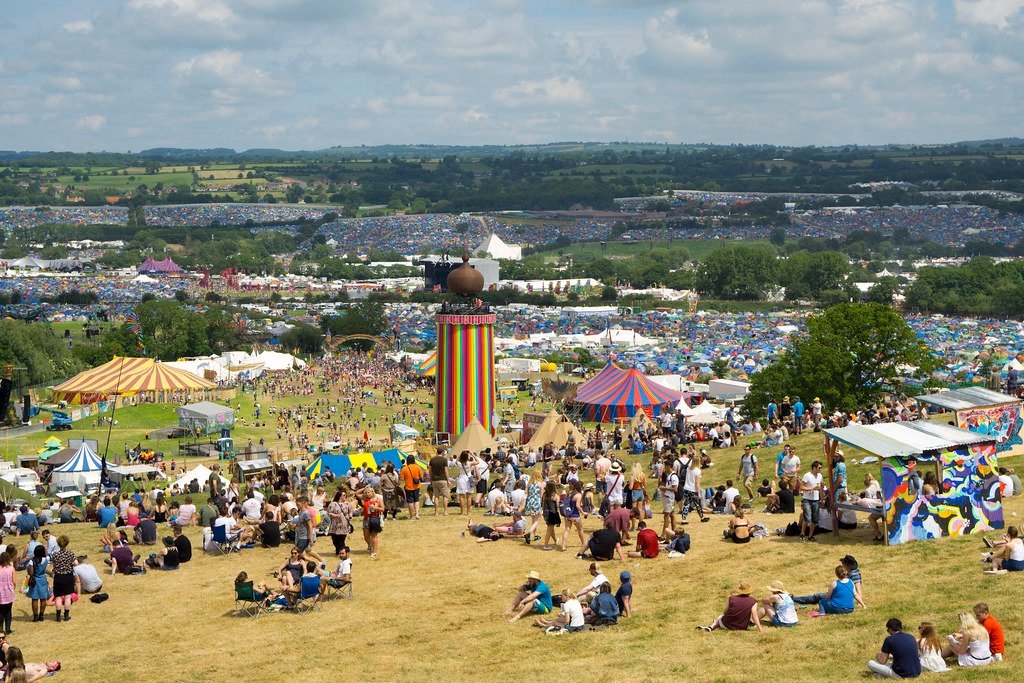
Glastonbury is different from every other festival on this list because it didn’t peak and fade. It simply kept growing, evolving, and reinventing itself across every decade of the 20th century. Glastonbury Festival, held in Somerset, England, is one of the most famous music festivals in the world, known for its eclectic lineup and vibrant atmosphere, attracting around 200,000 attendees each year. The festival’s roots date back to 1970.
Free to the public, the 1971 Glastonbury festival featured artists including Fairport Convention, Joan Baez, and a young David Bowie. That early, scrappy energy never entirely disappeared, even as the festival scaled up enormously. Glastonbury is renowned for its diverse range of performances, spanning music, theatre, and the arts. It’s less a music festival and more a small, temporary city built on mud and collective wonder, appearing once a year like a mirage you can actually walk into.
The Isle of Wight Festival in the UK continued to grow in popularity and showcased a variety of music genres, reflecting the changing times, but it was Glastonbury that truly became Britain’s defining cultural touchstone. Over the decades it hosted everyone from David Bowie to Radiohead, becoming the flagship stage on which British musical identity was constantly tested and rewritten.
9. Rock in Rio (1985) – South America Announces Itself
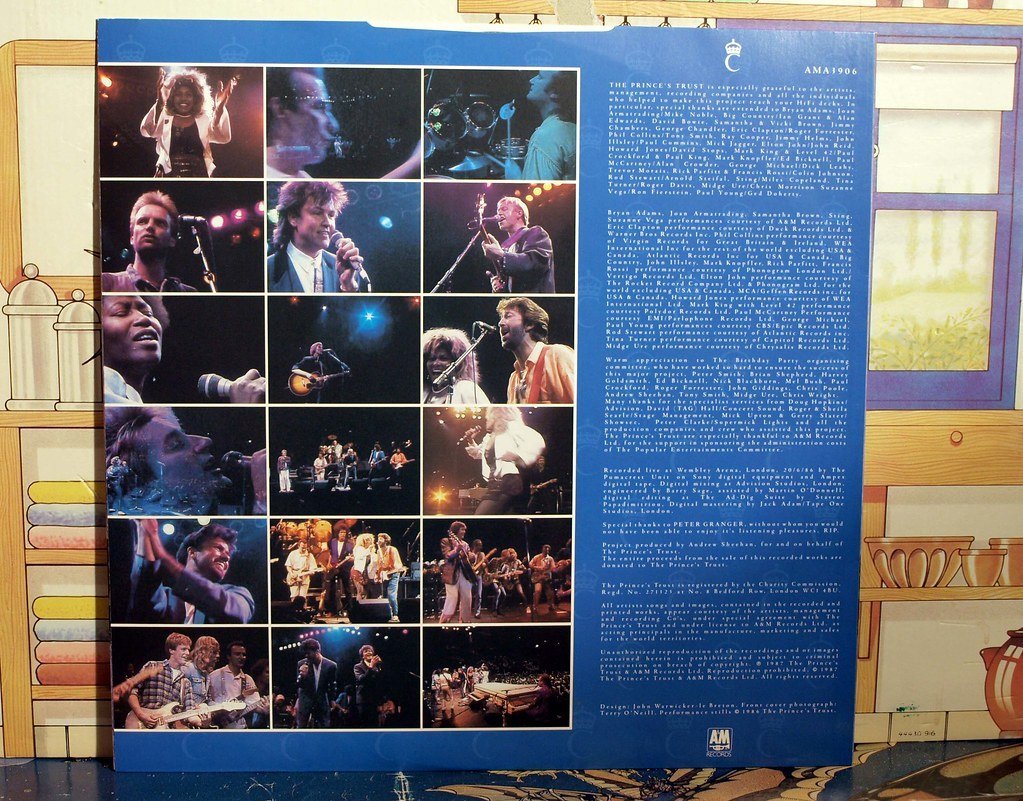
If you think festival culture was purely an Anglo-American phenomenon, Rock in Rio arrived in January 1985 to correct that assumption loudly and completely. Rock in Rio first took place in 1985 in Rio de Janeiro, Brazil, and quickly became one of the world’s largest music festivals. With an attendance of over 1.5 million people, it was a groundbreaking event that set new standards for music festivals.
The festival featured performances by global superstars such as Queen, AC/DC, and Rod Stewart. Rock in Rio has since become a global brand, with editions held in Lisbon, Madrid, and Las Vegas, and its massive scale and diverse lineup continue to draw music lovers from around the world. Think about it: a festival in Brazil drawing more than a million people in 1985, during a period of complex political transition in the country. That’s not just entertainment. That’s culture doing what it does best.
Rock in Rio was, in many ways, proof that the festival format had transcended its North American and European origins to become something genuinely universal. It proved that you didn’t need a muddy English field or a New York farm to create a moment that mattered. All you needed was music, an audience, and the audacity to believe it could work on an enormous scale.
10. Lollapalooza (1991) – Alternative Culture Finds Its Stage
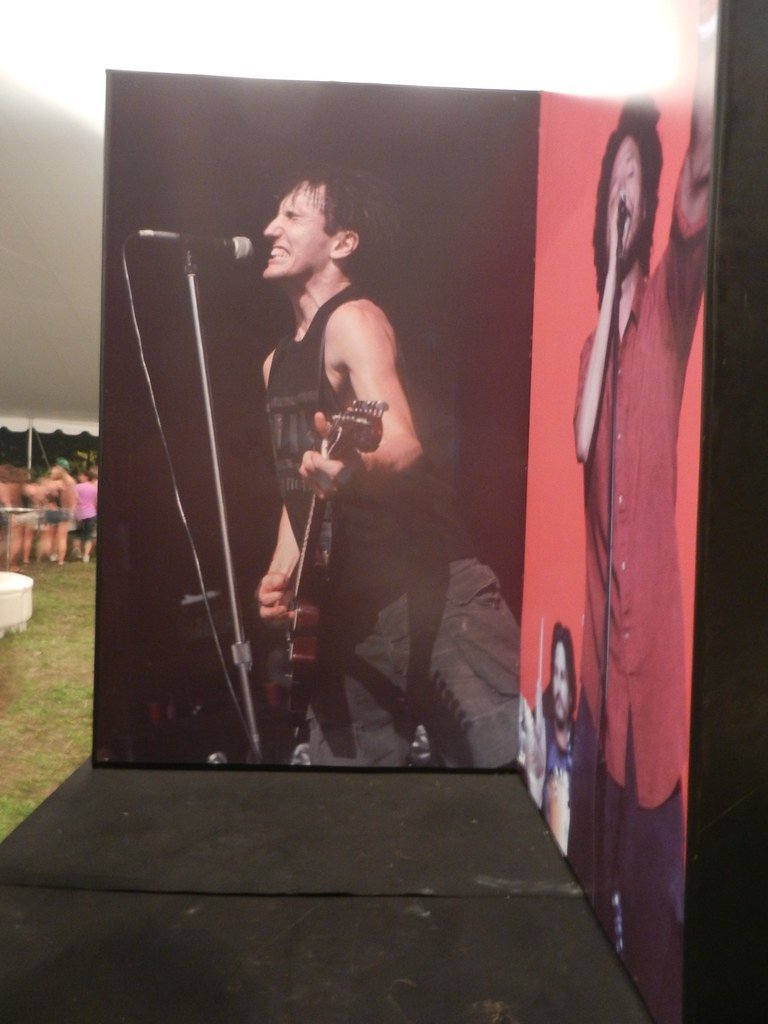
By 1991, rock music was splintering beautifully in every direction. Grunge, industrial, hip-hop, punk revival – there was a whole restless generation of music fans that mainstream stadium rock wasn’t speaking to anymore. Lollapalooza was built for exactly those people. Perry Farrell founded the traveling festival as a farewell tour for his band, Jane’s Addiction. Other acts included Nine Inch Nails, Living Colour, and Ice-T.
Lollapalooza, a music festival featuring alternative rock artists, was founded in Chicago in 1991. What made it remarkable wasn’t just the lineup but the attitude. It felt deliberately anti-establishment, a counterpoint to polished arena rock, throwing together genres and subcultures that had never shared a bill before. Music festivals aren’t just concerts. They’re cultural flashpoints that reveal how music intersects with social movements, technological change, and evolving audience expectations. When you study these events, you’re really studying how counterculture movements found their voice and how genres cross-pollinated and evolved.
Lollapalooza also introduced the touring festival model, bringing the experience to cities across America rather than asking fans to make a pilgrimage to a single remote location. It was practical, innovative, and hugely influential. Woodstock’s legacy served as a blueprint for future music festivals, and events like Lollapalooza drew deep inspiration from Woodstock’s spirit. Yet Lollapalooza managed to feel entirely of its own moment, a bridge between the idealism of the 1960s and the anxious, wired energy of the decade that followed.
The Lasting Echo of a Century of Festivals
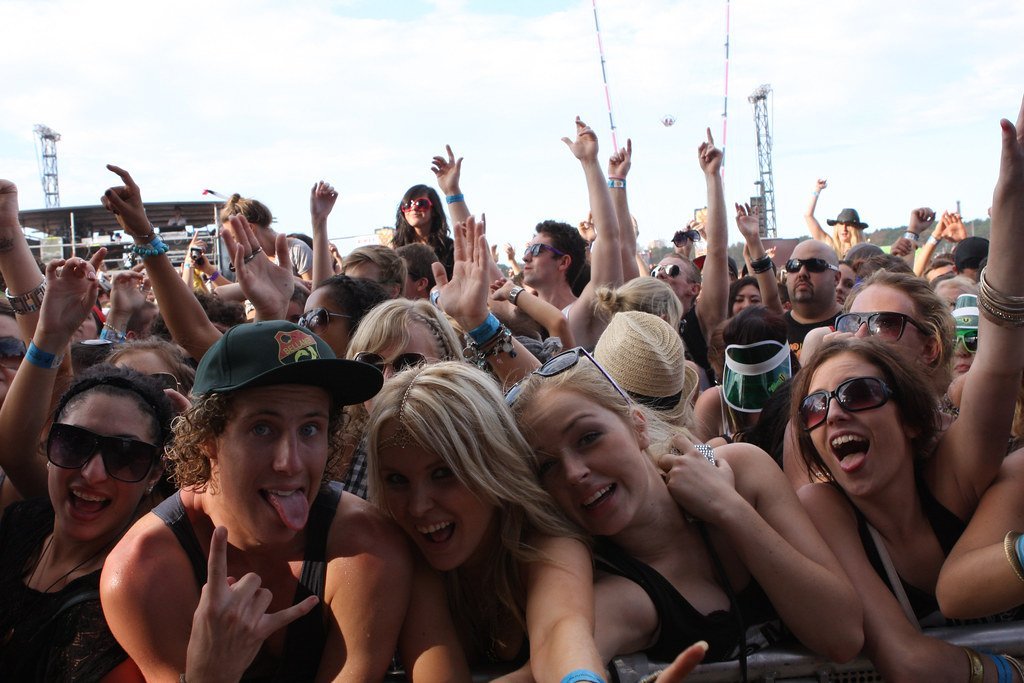
What strikes me most, looking back at these ten events, is that none of them were simply about the music. They were about belonging. About standing in a crowd of strangers and recognizing something of yourself in every face around you. Music festivals are cultural flashpoints that reveal how music intersects with social movements, technological change, and evolving audience expectations. Every festival on this list was a mirror held up to the society that produced it.
Some mirrors showed something beautiful. Others reflected back something dark and uncomfortable. Woodstock was more than just a music festival. It was a social and cultural phenomenon that left a profound impact on society, becoming synonymous with the counterculture movement and the quest for peace and social change. Altamont, in its devastating way, told an equally important truth.
The 20th century gave us the festival as an art form, as a social experiment, and sometimes as a full-blown cultural revolution. The ones listed here were the pioneers, the moments that proved, beyond any doubt, that music gathered together is always more than the sum of its parts. Of all the places to have stood in the 20th century, a muddy field full of music might have been the most extraordinary of all. Which of these would you have chosen to attend?
CEO-Co-Founder
