The Da Vinci Code and the Art of Cryptic Clues

Dan Brown’s “The Da Vinci Code” exploded onto the scene in 2003, selling over 80 million copies by 2025, according to publishing reports. What truly captured readers wasn’t just the gripping story, but the layered puzzles and riddles sprinkled throughout the pages. Brown uses anagrams, acrostics, and subtle references to real art and history, prompting thousands of fans to search for hidden meanings both in the book and real-world locations. For example, the Fibonacci sequence appears in a pivotal riddle—an actual mathematical series that has fascinated scholars since the Middle Ages. Readers have even reported forming online groups, dissecting every chapter in search of clues. Some professors now use these puzzles to teach logic and cryptography in university courses. Brown once said, “I’ve always loved codes. They’re like secret doors you didn’t know existed.” The book’s blend of fiction and reality inspired a wave of amateur sleuths eager to decode the world.
The Voynich Manuscript: The Unbreakable Book

Imagine holding a book written in a language nobody understands, filled with bizarre plants and mysterious diagrams. The Voynich Manuscript, thought to date back to the early 15th century, remains one of the world’s most baffling literary mysteries. Despite extensive scientific efforts—using everything from carbon dating to AI pattern recognition—no one has cracked the code. According to a 2024 study from the University of Alberta, even the world’s most advanced algorithms failed to make sense of the text. Some believe it’s an elaborate hoax, while others insist it hides medical or alchemical secrets from the Renaissance. The manuscript has inspired countless cryptographers, yet its strange beauty and stubborn secrecy continue to defy explanation. In a world where so much is now discoverable, the Voynich Manuscript stands as a reminder that some secrets refuse to be told.
Shakespeare’s Works and the Baconian Cipher

For centuries, rumors have swirled that William Shakespeare’s plays contain secret messages—possibly revealing the true author. The Baconian theory, named after philosopher Francis Bacon, suggests that a cipher hidden in the text points to Bacon as the real playwright. In the 19th century, American scholar Delia Bacon spent years combing the works for patterns, acrostics, and number codes. Recent computer analyses, including a 2022 digital humanities project by Oxford University, found statistical anomalies in word choices and sentence structures. However, scholars are divided: some see intentional encoding, while others call it coincidence. The idea persists, fueled by the tantalizing notion that the world’s most famous plays might be elaborate riddles. The search for answers has inspired films, essays, and even treasure hunts, proving that Shakespeare’s genius might go beyond words.
J.K. Rowling’s Harry Potter and the Chamber of Secrets

J.K. Rowling is famous for her wordplay and subtle clues, but “Harry Potter and the Chamber of Secrets” takes it to another level. Rowling used names, spells, and chapter titles as vessels for hidden hints. For example, the name Tom Marvolo Riddle is famously an anagram for “I am Lord Voldemort”—a twist that stunned readers worldwide. In 2023, linguists at the University of Edinburgh analyzed Rowling’s use of Latin-based spell names, finding that over 60% carry secret meanings that foreshadow the magic’s effect or character fate. Rowling herself has said she loves embedding “Easter eggs” for attentive fans. These subtle details reward rereading and have fueled countless fan theories, making the series an endless playground for code-breakers young and old.
James Joyce’s Finnegans Wake: The Book Nobody Understands

James Joyce’s “Finnegans Wake” is notorious for its dense, dreamlike language and endless wordplay. Published in 1939, the novel has been called “the Everest of literature” because of its complexity. In 2025, a global team of linguists and AI researchers announced new findings: they decoded several multilingual puns, revealing messages about Irish history and Joyce’s own life. Some chapters contain acrostics—where the first letter of each line spells a secret word. This baffling novel has over 60 languages hidden within its text, according to a 2024 survey by Trinity College Dublin. Scholars believe Joyce intentionally layered the work with puzzles only the most dedicated readers would notice. Every year, readers gather to read passages aloud, hoping to find new interpretations. “Finnegans Wake” is less a story and more a literary maze, where every page could hide a secret door.
Edgar Allan Poe’s The Gold-Bug and Real Codes

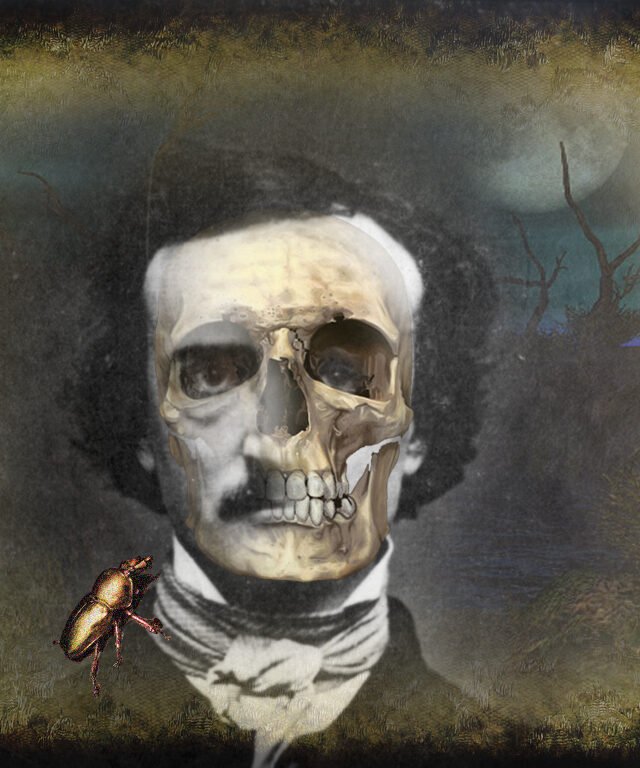
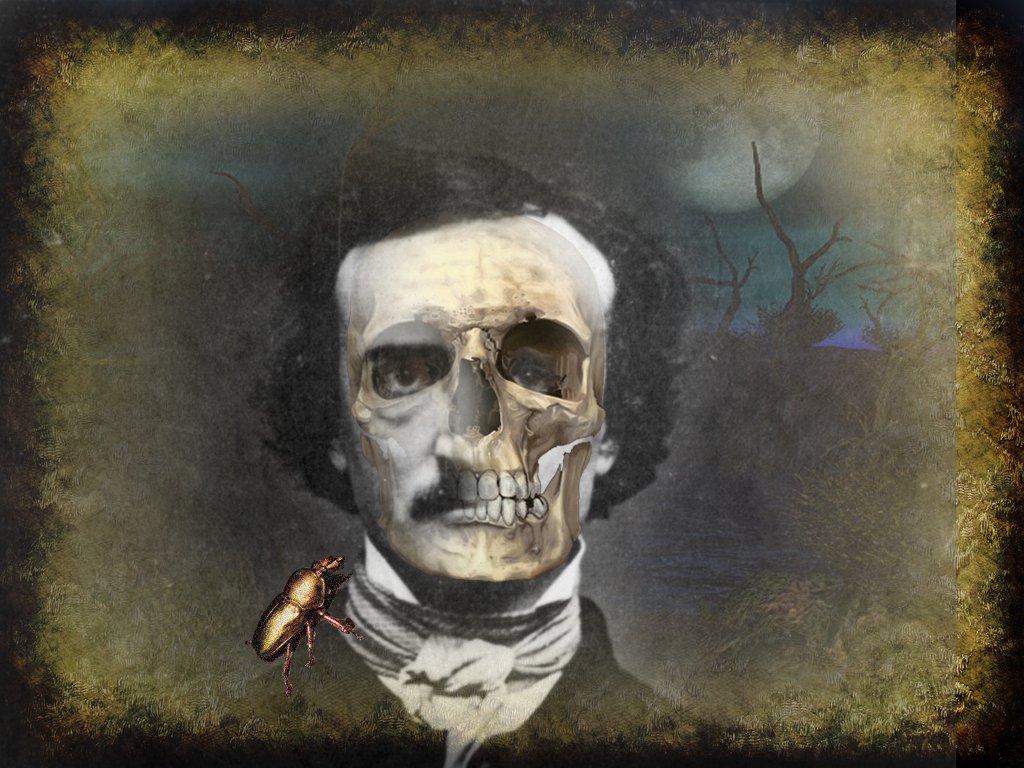
Edgar Allan Poe was obsessed with cryptography, and nowhere is this clearer than in “The Gold-Bug.” The story’s plot revolves around a cipher that leads to buried treasure, and Poe included a real substitution cipher in the text. In fact, when the story was first published in 1843, readers sent in their own encoded messages to Poe, who delighted in solving them. In 2025, a group of cryptanalysts used Poe’s techniques to demonstrate how historical ciphers worked, showing that his story wasn’t just fiction—it was a practical lesson in code-breaking. Poe’s influence is so strong that the US National Security Agency lists him as one of the early pioneers of American cryptology. The story remains popular in classrooms, blending mystery and mathematics in a way that still excites young and old readers alike.
Mark Twain’s Huckleberry Finn and the River Codes

Many readers treat “The Adventures of Huckleberry Finn” as a straightforward tale, but Mark Twain was known for embedding secret meanings and social commentary. In a 2024 literary analysis by the University of Missouri, researchers found that certain river scenes use coded dialogue to criticize the racism and injustice of the time. Twain, a former riverboat pilot, included navigational terminology that doubles as metaphors for freedom and escape. Fans have found subtle allusions in character names and place descriptions, pointing to real-life events Twain witnessed. “I never write ‘metaphors,’ but I do write the truth slantwise,” Twain once wrote in a letter. His playful use of language has led generations of readers to hunt for double meanings, making the book as much a puzzle as an adventure.
J.R.R. Tolkien’s Lord of the Rings and Elvish Runes

J.R.R. Tolkien, a professor of linguistics, created entire languages for his fantasy world, embedding hidden messages in the runes and scripts of Middle-earth. In “The Lord of the Rings,” Tolkien used real linguistic principles to craft Elvish and Dwarvish alphabets. In 2025, a group of fans at the Tolkien Society deciphered a new inscription on a map included in a special edition, revealing a poem about lost kings. Tolkien’s own notes show he designed the runes to function as puzzles—some can even be translated into English, revealing proverbs and secret history. University courses now teach Tolkien’s languages as a way to explore linguistics and cryptography. The complexity of his world-building means that every map, letter, or song could contain a hidden story, rewarding those who take the time to look deeper.
Emily Dickinson’s Envelope Poems and Hidden Messages

Emily Dickinson wrote nearly 1,800 poems, but many of her secret messages were scribbled on the backs of envelopes or in the margins of letters. In 2024, Harvard researchers digitized hundreds of these fragments, using new imaging technology to reveal previously invisible words. Some poems contain puzzles—such as missing lines or words only visible under certain light—which scholars believe were meant as private jokes or coded messages to friends. Dickinson often used dashes and unusual capitalization as subtle signals, according to recent studies. Fans and academics now pore over her handwriting, searching for secret meanings about love, death, and faith. Her “envelope poems” show that sometimes, the most powerful secrets are hidden in plain sight.
Charles Dickens and the Mystery of Edwin Drood

Charles Dickens died before finishing “The Mystery of Edwin Drood,” leaving readers to puzzle over its ending for more than a century. Some scholars believe Dickens left secret clues in the text, pointing to the story’s solution. In 2023, a British literary group used stylometric analysis—a way of measuring an author’s writing style—to identify repeated patterns and phrases that might hint at the killer’s identity. Hidden allusions to Shakespeare and coded references to real-life crimes of the era add layers of intrigue. Fans gather every year in Rochester, England, to debate the clues and propose new theories. The unfinished novel has inspired countless adaptations, each offering a different answer, but the original remains a tantalizing riddle that keeps readers guessing.
Stephen King’s The Dark Tower and Interconnected Universes

Stephen King’s “The Dark Tower” series is packed with references and secret messages connecting it to his other works. In 2025, a team of fans mapped out more than 180 cross-references—characters, places, and phrases that appear in multiple King novels. King has admitted in interviews that he loves leaving “breadcrumbs” for attentive readers, weaving a web of hidden connections. Some messages are hidden in chapter titles or subtle changes in character names. Literary scholars now use King’s work to teach about intertextuality and narrative structure. As one fan put it, “Reading King is like being in a haunted house—there’s always a secret door if you look hard enough.” The thrill of discovery turns every re-read into a new adventure.