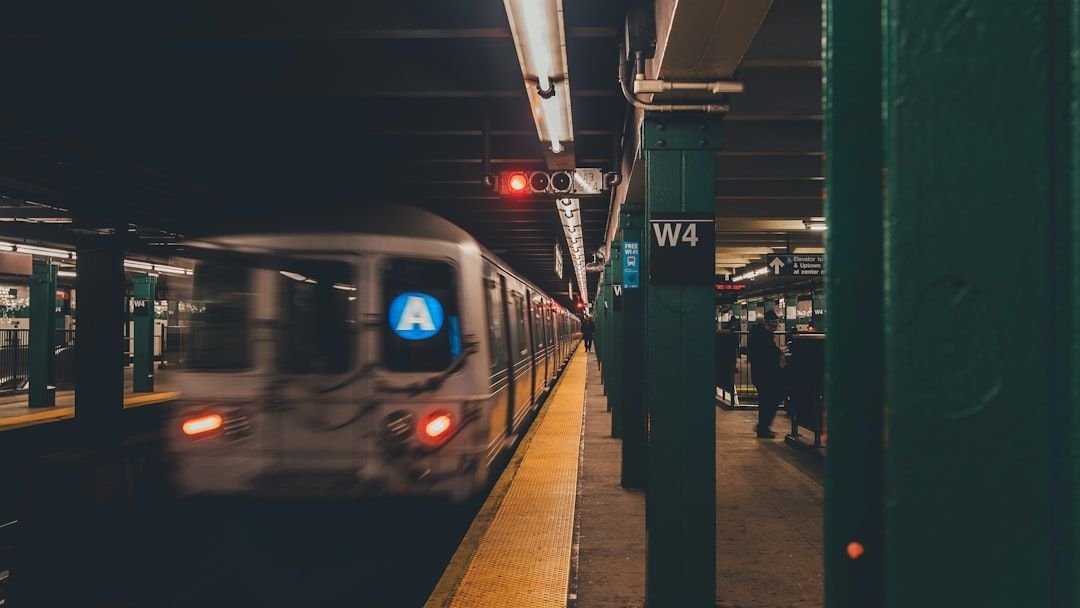
Something unusual is happening beneath the streets of New York City. Commuters who’ve ridden the same lines for years are suddenly switching routes, avoiding certain stations, and completely rethinking their daily journeys. The catalyst isn’t what you’d expect – it’s not crime, it’s not delays, and it’s not even the recent fare hike that pushed subway rides to three dollars. It’s something far more mundane, yet it’s quietly reshaping how millions of people navigate the city.
If you ride the subway regularly, you’ve probably noticed shifts in your own patterns lately. Maybe you’re taking a different line to work, or perhaps you’ve started leaving the house earlier than usual. You’re not alone, and the reason might surprise you.
The Real Driver Behind Route Changes

Construction work replacing aging infrastructure is forcing major service disruptions on several key lines, particularly the 4 and 5 trains between the Bronx and Manhattan. The switches being replaced on the Jerome Avenue Line were last updated in 1988 and have reached the end of their useful lives. Think about that for a second – these critical pieces of equipment are nearly forty years old.
From early January through late February 2026, trains aren’t running between 149th Street-Grand Concourse and 125th Street during weeknights, and weekday rush hour trains are operating less frequently and at reduced speeds. For the roughly 1.1 million daily riders who rely on these routes, that’s forced them to completely reconfigure their commutes.
Metro-North Becomes the Unexpected Alternative

Here’s where it gets interesting. Metro-North is accommodating subway riders at no additional cost for travel between the Bronx and Manhattan at all stations between University Heights or Wakefield and Grand Central. This temporary arrangement has introduced thousands of subway riders to the commuter rail system, many for the first time.
It’s a fascinating social experiment happening in real time. Commuters who’ve never considered taking Metro-North are suddenly discovering it offers a completely different experience – often faster, sometimes more comfortable, though with its own set of trade-offs. The question is whether some of these riders will stick with their new routes even after the subway work is complete.
Weekend Service Chaos Adds to the Mix

The construction disruptions don’t stop during the week. Most MTA subway lines face service changes across the five boroughs on weekends, with only the F, M, Q, 1, and 6 trains, along with the Franklin Avenue and Rockaway Park Shuttles, unaffected. Most other lines see reroutes, skipped stops, and express to local switches.
The MTA is making these changes to perform construction projects such as installing new signal systems and replacing and repairing tracks. Let’s be real – nobody enjoys weekend service changes, especially when you’re trying to get somewhere outside your normal weekday routine. The unpredictability forces riders to plan ahead, check schedules obsessively, and often choose alternative routes they wouldn’t normally consider.
The Financial Squeeze Timing Couldn’t Be Worse

Subway and bus rides now cost ten cents more, with the base fare rising from $2.90 to an even $3.00 starting January 4, 2026. This continues a gradual increase that started in 2015, when the fare was $2.50 per ride. While a dime might not sound like much, it’s psychologically significant – the first time in the system’s history that the base fare has crossed the three-dollar threshold.
The subway ride that long tracked the price of a slice of pizza has officially pulled ahead. That observation hits harder than you might think for longtime New Yorkers who remember when both cost the same.
Rolling Fare Caps Change the Math

The automatic rolling 7-day fare cap for unlimited rides has become permanent, meaning riders pay for 12 trips in a 7-day period and any additional rides are free. At the base fare, no rider will pay more than $35 in a week.
This policy shift is genuinely changing how people think about their commuting patterns. Some riders are now strategically planning their trips to maximize the benefit of the fare cap, consolidating errands and activities to hit that 12-ride threshold faster. Others are reconsidering whether they even need unlimited travel anymore, since the rolling cap effectively gives them the same benefit without prepaying.
The OMNY Transition Adds Another Layer

The MTA ceased MetroCard sales on December 31, 2025, although it still accepts them for an unspecified period into 2026. The agency stopped selling MetroCards to push riders toward the OMNY tap-and-ride system.
The vast majority of transit riders have already transitioned to OMNY, with 94 percent of trips now paid for with tap-and-ride. However, commuters have reportedly continued to flag issues with the technology, including being charged more than once for a single trip and confusion about when they qualify for free rides under the fare-capping system. These glitches, though affecting a minority of riders, create enough frustration that some people are altering their travel patterns to avoid potential overcharges.
Ridership Patterns Reveal Broader Shifts

Subway ridership grew substantially in 2025, with nearly 1.3 billion total trips, up seven percent from 2024. That’s encouraging news for the system’s recovery. Bus and subway ridership increased 7 percent, Long Island Rail Road ridership went up 9 percent and Metro-North ridership increased 6 percent, compared to the prior year.
Still, 2024 subway annual ridership reached 70 percent of pre-pandemic levels, with average weekday subway ridership at 68 percent of pre-pandemic levels. The system hasn’t fully bounced back, and the current construction disruptions are testing riders’ patience during a still-fragile recovery period.
The Congestion Pricing Effect

There has been an 11 percent average monthly dip in traffic in the congestion pricing zone since the program was implemented. Buses within the zone moved almost 24 percent faster in 2025 than in 2024.
This speed improvement is making certain bus routes unexpectedly attractive alternatives to subway lines, especially for crosstown travel. About 27 million fewer vehicles entered the tolling zone over the last calendar year than would have occurred without tolling. Fewer cars means faster buses, which means some riders are choosing surface transit over underground options they previously relied on.
Political Tensions Add Uncertainty

New Mayor Zohran Mamdani campaigned on making buses free for New Yorkers and stated that as the fare rises across the city, his administration remains committed to fulfilling that promise. Whether that’s realistic remains to be seen, considering the MTA’s financial needs.
With another year of congestion pricing ahead, the latest fare hikes mean the affordability gap keeps shrinking between taking mass transit and driving into Manhattan. When the MTA first proposed the 2026 fare hikes, it led to questions about making the cheaper option less cheap. It’s a valid concern that’s influencing how people evaluate their transportation choices.
What This Means for Your Commute

The infrastructure work isn’t going away anytime soon. The switch replacements will improve the daily commutes of roughly 1.1 million riders and last through late February, having started on January 5. That’s weeks of disruption for a significant chunk of the city’s transit riders.
Smart commuters are already adapting. They’re checking service alerts before leaving home, downloading the MTA app for real-time updates, and maintaining backup route options. Some are experimenting with leaving earlier or later to avoid the worst crowds on alternate lines. Others are genuinely reconsidering whether their old commute patterns still make sense.
The Bigger Picture

Weekday and weekend On-Time Performance reached the highest levels since electronic record-keeping was launched, excluding the pandemic period. Weekday OTP in 2025 was 83.7 percent, and weekend OTP was 86.6 percent. The system is actually performing better than it has in years, which makes the current disruptions all the more frustrating for riders.
71 percent of subway customers reported they felt safe on the system in November, the highest rate since the MTA began monthly surveys in 2022. Safety perceptions are improving, crime is down, and service reliability is up. The construction work causing all these route changes is ultimately making the system better for the long term.
The irony is that just as the subway is getting more reliable overall, these necessary infrastructure upgrades are forcing riders to change deeply ingrained commuting habits. For a city that thrives on routine and efficiency, that’s no small disruption. Commuters are adapting, finding workarounds, and discovering routes they never knew existed. Some might even find they prefer their new commute once the dust settles.
So next time you see your train skipping your usual stop or running on a modified schedule, remember – it’s not poor planning or random chaos. It’s decades of deferred maintenance finally being addressed, one ancient switch at a time. The question isn’t whether these changes are necessary, but whether riders will have the patience to stick it out until the improvements are complete.