

For any feedback please reach out to info@festivalinside.com
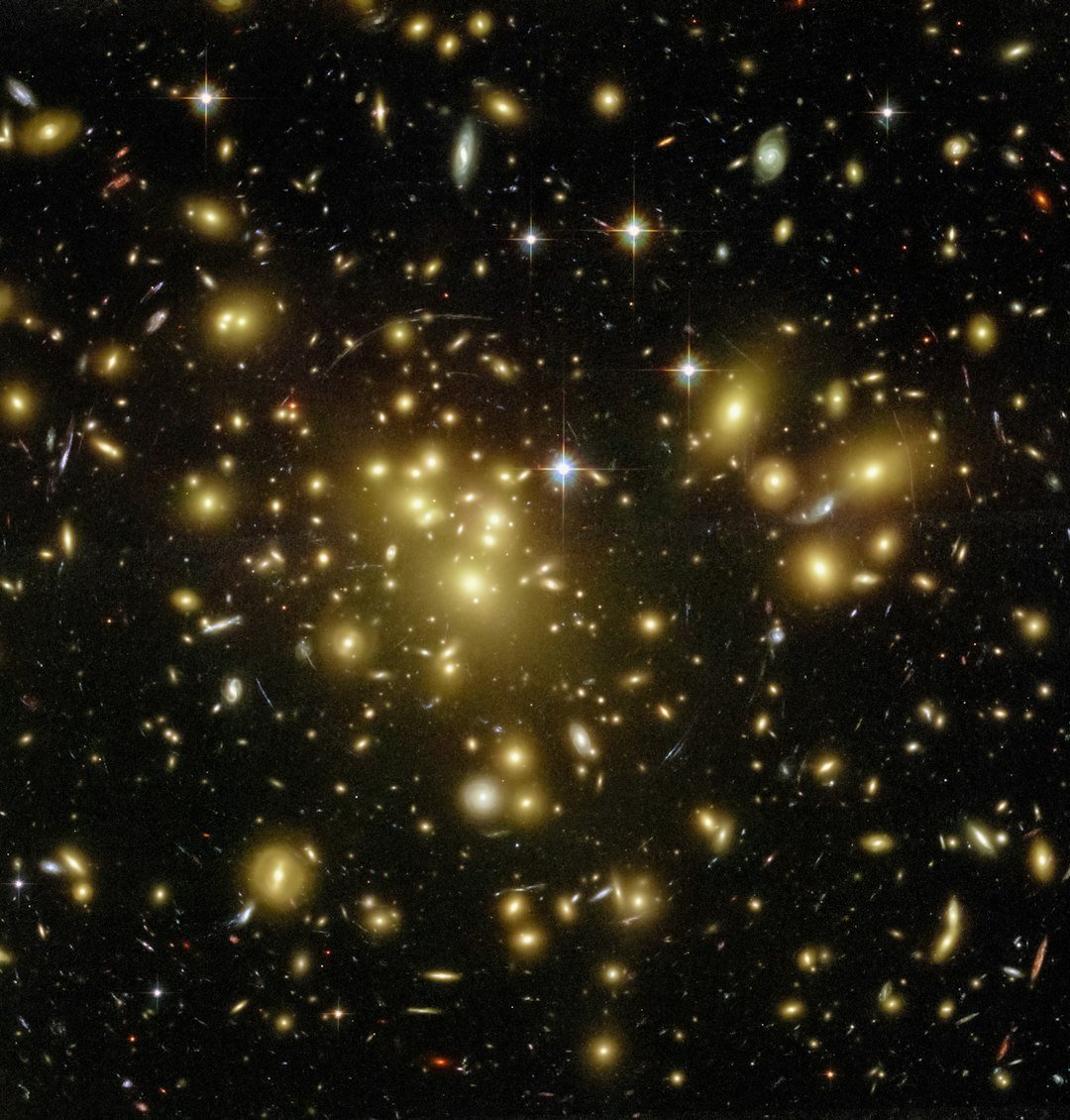
Imagine grasping a grain of sand and realizing it dwarfs nothing compared to the stars that light our nights. Recent 3D visualizations have taken this idea to extremes, stacking everyday scales against the universe’s behemoths in ways that leave jaws on the floor. These comparisons, drawn from telescope data like Hubble and James Webb, pull back the curtain on a reality where human intuition crumbles.
Here’s the kicker: they don’t just stun; they ground cutting-edge astronomy in visuals anyone can digest. As we stare into 2024, these depictions remind us why space exploration keeps accelerating. Buckle up for the hierarchy that redefines everything you thought you knew.
From Sand Grains to Solar Powerhouses
A typical grain of sand measures about 0.5 millimeters, something we overlook daily. Stack that against Earth, with its 12,742-kilometer diameter, and the planet suddenly feels vast. The Sun crushes both at 1.39 million kilometers wide, capable of swallowing over a million Earths without breaking a sweat.
Stars like Betelgeuse kick it up further, stretching 1.2 billion kilometers across, far beyond Mercury’s path from our star. Astronomers track these red supergiants closely because their bloated sizes hint at supernovae on the horizon. Such scale jumps spotlight stellar evolution’s raw drama.
Let’s be real: these contrasts make the cosmos feel personal yet impossibly distant. They rely on precise orbital data to paint pictures that stick.
Stellar Monsters: Supergiants and Hypergiants
VY Canis Majoris claims red supergiant glory at roughly 2 billion kilometers wide, seventeen Suns lined up end to end. UY Scuti edges it out as the champ, hitting 2.4 billion kilometers, its surface spilling past Jupiter if centered on the Sun. These behemoths guzzle fuel fast, surviving just millions of years before going boom.
Their explosions scatter heavy elements across galaxies, paving the way for planets and life like ours. Pulsations tweak their sizes, so telescopes constantly refine the numbers. What fascinates most? Their instability mirrors the universe’s violent recycling process.
This tier of stars challenges our grasp of physics, fueling models of cosmic chemistry. No wonder they dominate size comparisons.
Galaxies: Spirals of Billions
Our Milky Way spans 100,000 light-years, home to 100 to 400 billion stars in a barred spiral. One light-year packs 9.46 trillion kilometers, turning inter-star gaps into chasms. Andromeda looms larger at 220,000 light-years, closing in at 110 kilometers per second for an inevitable smash-up.
Dark matter halos balloon these galaxies further, shaping mergers billions of years out. Infrared scans cut through dust to map this frenzy. Galactic collisions rewrite the sky’s architecture over eons.
These structures house trillions of stars total, dwarfing any single stellar show. They anchor our place in the local crew.
Superclusters Weave the Cosmic Web
Galaxies band into superclusters like the Local Group, stretching 110 million light-years with Virgo’s pull. Laniakea dwarfs it at 520 million light-years, corralling over 100,000 galaxies via gravity flows. Redshift surveys expose this filament-void network blanketing space.
We’re smack in Laniakea’s flow, far from any edge. Dark energy stretches it all, per cosmic models. This web dictates expansion’s pace.
Mind the scale: it turns galaxies into mere threads. Sloan data keeps sharpening the view.
The Observable Universe’s Ultimate Bounds
Light from the Big Bang 13.8 billion years back limits us to a 93-billion-light-year diameter observable universe. It packs 2 trillion galaxies and 10^24 stars, with expansion dragging edges faster than light via spacetime warp. Planck’s microwave backdrop nails this blueprint.
Beyond lies potential infinity, unseeable forever. Quantum ripples from birth seeded it all. General relativity ties the bow.
This cap humbles deepest dives, hinting at multiverses. It’s the hierarchy’s jaw-dropper.
Final Thought
These comparisons don’t just wow; they propel missions like Euclid and James Webb, probing dark matter and early galaxies. They underscore Earth’s fragility amid hypergiant blasts and supercluster drifts. What hits hardest? Our brief spark in this tapestry demands we cherish it. How small do you feel now? Drop your thoughts in the comments.
Source: Original YouTube Video

Christian Wiedeck, all the way from Germany, loves music festivals, especially in the USA. His articles bring the excitement of these events to readers worldwide.
For any feedback please reach out to info@festivalinside.com
