There’s something strange about Alabama. It doesn’t boast or shout from the mountaintops about its achievements. It quietly goes about its business while other states grab headlines and attention. Yet when you dig beneath the surface, you start to see fingerprints everywhere, traces of influence that shaped not just America but the entire world. From the rockets that carried humanity to the Moon to the bass lines that defined modern music, Alabama has been hiding in plain sight all along. This isn’t about ancient history gathering dust in textbooks. We’re talking about living legacies that touch your life right now, this very moment, whether you realize it or not.
Let’s be real, most people drive through Alabama thinking about barbecue or college football. They miss the bigger story entirely.
Where Moonshots Became Reality

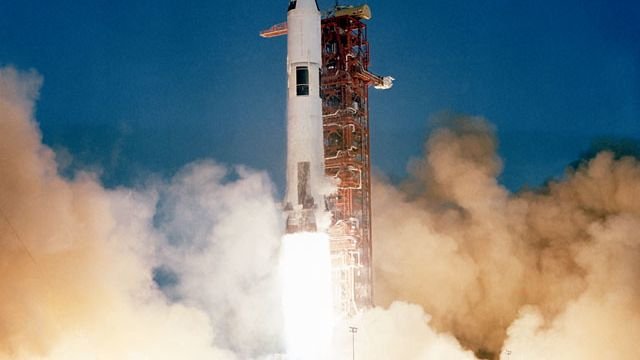
The Saturn V was primarily designed by the Marshall Space Flight Center in Huntsville, Alabama. Think about that for a second. The most powerful rocket ever successfully flown, the beast that carried humans beyond Earth’s orbit, wasn’t just tested in Alabama. It was designed there, engineered there, brought to life there.
The Saturn V was used for nine crewed flights to the Moon and to launch Skylab, the first American space station. Every single moonwalk you’ve ever seen footage of traces back to work done in Huntsville. With a 100 percent success rate it was responsible for putting 12 American astronauts on the surface of the moon.
Honestly, it’s hard to overstate how central Alabama has been to America’s space ambitions. For more than six decades, NASA and the nation have relied on Marshall Space Flight Center in Huntsville, Alabama, to deliver its most vital propulsion systems and hardware, flagship launch vehicles, world-class space systems, state-of-the-art engineering technologies and cutting-edge science and research projects and solutions. The work didn’t stop after Apollo either. This legacy continues right through today.
The Soundtrack of a Generation Was Born in a Small Town

Muscle Shoals Sound Studio is an American recording studio in Sheffield, Alabama, formed in 1969 by four session musicians known as the Muscle Shoals Rhythm Section. They had left nearby FAME Studios in Muscle Shoals to create their own recording facility. These weren’t flashy Los Angeles producers or New York music executives. They were local guys who just happened to create magic.
Over the years, artists who recorded at Muscle Shoals Sound Studio included Wilson Pickett, Aretha Franklin, Etta James, Percy Sledge, the Rolling Stones, Duane Allman, Lynyrd Skynyrd, Joe Cocker, Levon Helm, Paul Simon, Bob Seger, Rod Stewart, Cat Stevens, Bob Dylan, Jimmy Cliff, Cher, George Michael, and the Black Keys. That’s not a list of musicians who passed through. That’s a roster of legends who came specifically to capture something they couldn’t find anywhere else.
From its establishment in 1969 by the Muscle Shoals Rhythm Section until the mid-1980s, the Muscle Shoals Sound Studio in Sheffield, Colbert County, was one of the most sought-after recording studios in the nation. The musical legacy of the recordings made at the studio rivals the “sounds” of Detroit, Memphis, and Philadelphia.
The Rolling Stones recorded in Muscle Shoals. Let that sink in. British rock royalty traveled across an ocean to record in a converted coffin showroom in small-town Alabama. Why? Because the Muscle Shoals sound was that distinctive, that powerful, that essential to the evolution of modern music.
When Democracy’s Promise Met Reality on Alabama Streets

On 25 March 1965, Martin Luther King led thousands of nonviolent demonstrators to the steps of the capitol in Montgomery, Alabama, after a 5-day, 54-mile march from Selma, Alabama, where local African Americans, the Student Nonviolent Coordinating Committee, and the Southern Christian Leadership Conference had been campaigning for voting rights. These weren’t symbolic gestures. People risked their lives, and some lost them.
In his annual address to SCLC a few days later, King noted that “Montgomery led to the Civil Rights Act of 1957 and 1960; Birmingham inspired the Civil Rights Act of 1964; and Selma produced the voting rights legislation of 1965” Three Alabama cities. Three pieces of federal legislation that fundamentally altered American democracy.
The modern civil rights movement in Alabama burst into public consciousness with a single act of civil disobedience by Rosa Parks in Montgomery in 1955. During the intervening years, Alabama was the site of some of the most defining events of the civil rights era. These events transformed the state and profoundly changed America.
The courage displayed on those streets didn’t just change laws. It shifted the moral consciousness of an entire nation. Children today grow up in a different America because ordinary people in Alabama decided enough was enough. The brutality they faced, televised for the world to see, made neutrality impossible. You had to choose a side.
Defending America From Alabama Soil

Redstone Arsenal, in particular, stands as one of the most significant military installations in the United States, playing a pivotal role in national defense, space exploration and advanced research. Its impact spans across multiple domains, including missile defense, aviation, space and technology development. This isn’t some dusty military base from bygone wars. It’s a living, breathing center of American defense innovation.
In 1910, the Wright Brothers established the nation’s first civilian flight school in Montgomery, Alabama. Since then, the state’s been a launching pad for innovation in the aerospace and aviation industry. Aviation training in America literally started here. Over a century ago, Alabama was already shaping how Americans would take to the skies.
Alabama has a rich heritage in aviation training that dates back to 1910, when the pioneering Wright Brothers opened their first civilian flight training program in Montgomery. The tradition is reflected in Fort Rucker, which has served as the primary training center for U.S. Army aviators for decades.
With an annual economic impact of $23.5 billion, Alabama’s defense sector employs tens of thousands and attracts $14 billion in defense spending each year That’s not legacy money. That’s current investment in cutting-edge technology that keeps America secure right now.
Nature’s Hidden Treasure Chest

This provides a wide range of habitats for organisms and gives Alabama more biodiversity than almost all of the other states in the United States. Alabama is ranked 4th place for most biodiversity in the United States and has more biodiversity than any other state east of the Mississippi River! Fourth in the entire nation. Let that compete with your assumptions about Alabama for a moment.
With more than 6,350 species, Alabama ranks fourth among states in terms of species diversity and is first among states east of the Mississippi River. The large western states of California, Texas, and Arizona lead the nation, respectively, and fellow southeastern states Georgia and Florida are right behind Alabama.
Alabama is number one in diversity for freshwater mussels, freshwater fishes, freshwater snails, crayfish, and freshwater turtles. It is fourth for combined diversity of amphibians and reptiles and fifth for salamanders. Alabama is also first in carnivorous plant biodiversity and is one of the world’s hotspots for these unusual organisms. Number one in five different categories of aquatic life. That’s not a fluke.
Alabama is the center of the world’s biological diversity of freshwater invertebrates and the continental center of diversity for many other plants and animals. There are hundreds of species in Alabama that are found nowhere else on Earth.
From mountains to beaches, rivers to wetlands, caves to coastal dunes, Alabama contains an almost ridiculous variety of ecosystems packed into one state. It’s a naturalist’s dream that most people never even know exists.
The Quiet Giant

Alabama doesn’t need to brag. The record speaks clearly enough for anyone willing to listen. This isn’t about state pride or regional boosterism. It’s about recognizing genuine impact that echoes through time. The Moon still hangs in the night sky, and humans walked there because of work done in Alabama. Turn on the radio, and within minutes you’ll likely hear music influenced by the Muscle Shoals sound. The Voting Rights Act still protects American democracy, born from marches on Alabama roads. Military pilots still train using methods pioneered in Alabama over a century ago. Rare species swim in Alabama waters that exist nowhere else on Earth.
Some places leave their mark through volume and visibility. Others change the world quietly, almost accidentally, while everyone’s looking somewhere else. Alabama has always been the latter. It built the rockets, recorded the songs, marched the miles, trained the pilots, and harbored the species without demanding recognition.
Maybe that’s the most Alabama thing about it all. Getting the job done while everyone else takes the credit. Still, the fingerprints remain. America today looks the way it does partly because of decisions made, work completed, and courage displayed in Alabama. That’s not opinion. That’s just history. What do you think about it? Did Alabama’s impact surprise you?