


For any feedback please reach out to info@festivalinside.com
There are bands that sell records, and then there are bands that change the entire shape of pop music. Four Swedes in glittery platform boots managed to do both. Their melodies have traveled so far and lived so long that entire generations who weren’t even born during the group’s original run now sing along to every word. That’s not just success. That’s something rarer and harder to explain.
What is it about this group that made them so unstoppable? The answer lives somewhere between brilliant songwriting, perfect timing, and a kind of magnetic emotional honesty that most pop acts can’t fake. From a small Stockholm rehearsal room to the biggest stages on earth, this is the story of . Let’s dive in.
Four Musicians, Two Couples, One Extraordinary Idea

ABBA was a Swedish pop group formed in Stockholm in 1972 by Agnetha Fältskog, Björn Ulvaeus, Benny Andersson, and Anni-Frid Lyngstad. The name itself is simply an acronym of their first initials, but what sounds like a casual shorthand was actually the foundation of one of the most deliberate creative collaborations in pop history. These weren’t four strangers thrown together by a record label. They were two couples who had already been orbiting each other for years.
Benny Andersson, a keyboardist and vocalist, was working with the pop band the Hep Stars, and Björn Ulvaeus was serving as the guitarist and vocalist of the folk band the Hootenanny Singers. The two met and started writing songs together. Honestly, it almost sounds too neat, like something a scriptwriter invented. After Benny met Björn Ulvaeus in 1966, they soon began writing songs together, and as they got to know each other better, so did their partners Frida and Agnetha, before long they were collaborating on records, and out of this grew ABBA.
The Hunger Before the Spotlight: ABBA’s Early Struggles
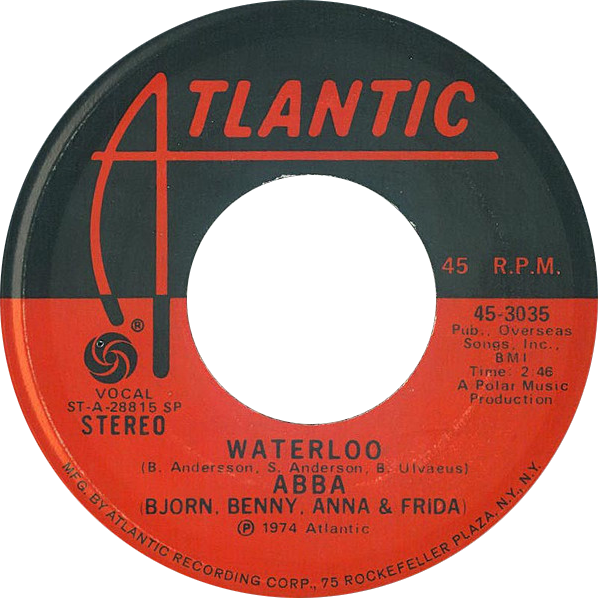
Let’s be real – ABBA were not overnight sensations. Their rise to the top involved real setbacks. While ABBA’s rise to fame when the quartet got together was fast, it wasn’t instant. In fact, the group, still called Björn, Benny, Agnetha and Anni-Frid at this point, entered the competition to be Sweden’s entry for the 1973 Eurovision Song Contest and failed. Their entry “Ring Ring” finished third in Sweden’s national Melodifestivalen and never made it to the contest itself.
Despite failing to make the top two in the national competition, “Ring Ring” actually reached number one in the Swedish charts, and made the soon-to-be-christened ABBA certain that staying as a quartet was the right idea. They dusted themselves off, and decided to give Eurovision another try. That resilience, the ability to take a disappointing result and transform it into determination, turned out to be one of the group’s defining traits. It’s a quality every great artist shares, and ABBA had it in abundance.
Waterloo: The Song That Changed Everything

April 6, 1974. Brighton, England. Everything changed as Agnetha and Frida bounced down the stage in their gloriously of-the-moment synthetic outfits and glittery make-up. Nobody quite knew what they were watching. None of that would likely have mattered, though, if “Waterloo” hadn’t been such a strong song, and the ABBA Eurovision performance so assured. Its knowing lyric and bouncy hooks made light work of the audience inside Brighton’s Dome.
“Waterloo” topped the table with 24 points, way ahead of Italy’s “Sì.” The victory wasn’t just decisive, it was legendary. Winning at Eurovision was only the beginning for “Waterloo” and for ABBA. The song went on to top the charts all over the world, including the UK, and reached number 6 on the Billboard Hot 100. In 1974, ABBA won the Eurovision Song Contest for Sweden with their song “Waterloo.” In 2005, “Waterloo” was chosen as the best song in the competition’s history during its 50th anniversary celebration. That is an extraordinary honor, and I think it’s completely deserved.
The Songwriting Genius Behind the Hits
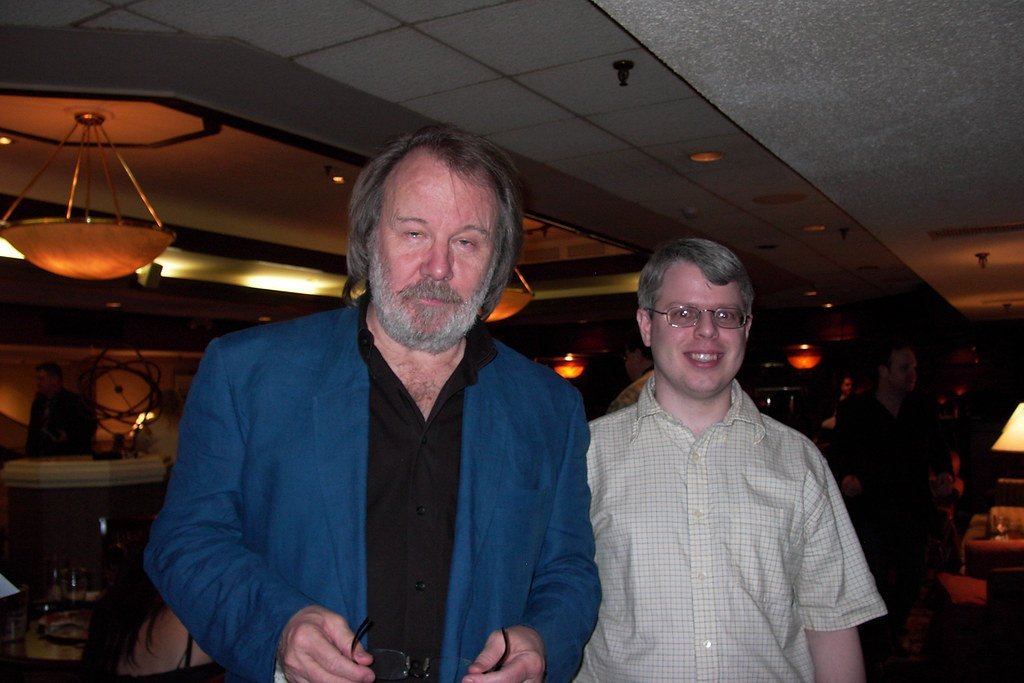
Here’s the thing about ABBA’s music that people sometimes underestimate: it was far more sophisticated than the sparkly outfits suggested. The main songwriters were Benny Andersson handling music and Björn Ulvaeus handling lyrics and co-melody work, and they composed the vast majority of ABBA’s catalogue together. This was a partnership of two distinct musical minds who pushed each other to go further, never settling for a melody that was merely “good enough.”
Everything would start with Björn and Benny getting together with an acoustic guitar and a piano, trying to write songs. In this process they would be throwing fragments of tunes at each other, seeing which of them would fit together, discarding hundreds of melody lines that weren’t good enough. When the two songwriters had a song they were happy with, it would be brought to the studio. At this stage, the tune didn’t have any proper lyrics, just nonsense words and random English phrases. It sounds almost playful, but the results were anything but random. With the lyrics written, Agnetha and Frida would come to the studio to add the magic of their vocals to the recording. Benny once pointed out that the ladies’ voices were the most important ingredient of the group’s sound, the factor that made it sound like ABBA. The voices weren’t a finishing touch. They were the whole point.
A Global Takeover Unlike Any Other

The numbers ABBA racked up are almost difficult to absorb. ABBA have sold in excess of 400 million records worldwide. Think about that figure for a moment. That’s more than most countries have people. The group’s chart domination of Europe was unequivocal, with, at the time, only the Rolling Stones, Elvis Presley and the Beatles having achieved longer runs of Top 10 singles.
A truly global success, “Dancing Queen” was number one in twelve countries. Europe and North America were not the only continents to experience “ABBAmania,” there were six consecutive number one singles in Australia and four number one albums. In Mexico, the group scored eleven Top 10 hit singles, with seven reaching number one, and six number one albums. These were not the numbers of a novelty act. This was total, comprehensive world domination. Few acts in history have come close to matching it.
The Personal Lives That Shaped the Music
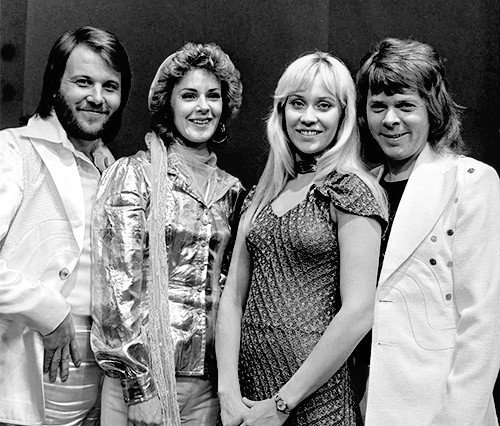
There is a painful and fascinating side to the ABBA story that many casual fans gloss over. During their peak, ABBA comprised two married couples: Fältskog and Ulvaeus, and Lyngstad and Andersson. As their fame grew, their personal lives suffered, leading to the dissolution of both marriages. These relationship changes were reflected in the group’s later music, which featured darker and more introspective lyrics.
At the height of their popularity, both relationships were suffering strain which led ultimately to the collapse of the Ulvaeus-Fältskog marriage in 1979 and the Andersson-Lyngstad marriage in 1981. In the late 1970s and early 1980s these relationship changes began appearing in the group’s music, as they produced more introspective lyrics with different compositions. Songs like “The Winner Takes It All” hit so hard precisely because they weren’t fiction. They were real heartbreak poured into a three-minute pop song. It’s hard to say for sure, but the emotional authenticity of those later recordings may be the very reason they still make people cry today.
Cultural Influence: Beyond the Charts

ABBA’s international success within the global music scene, starting from their Eurovision win, additionally led to a large growth in the accessibility of Swedish pop music worldwide, with Sweden often considered a superpower in the realm of music export. Think about that ripple effect. One group from Stockholm helped turn an entire nation into one of the most respected music-exporting countries on the planet. That is a cultural legacy most artists can only dream about.
ABBA’s revolutionary impact on the world is undeniable with aspects of their music being found in every crevice of culture today. Their signature sound has served as a blueprint for several prominent producers in the pop scene including figures like Max Martin, a Swedish producer for leading pop artists today such as Taylor Swift, Britney Spears, and Ariana Grande. That means ABBA’s DNA is hiding inside some of the biggest pop songs of the last three decades. Two successful Australian films released in 1994, “The Adventures of Priscilla, Queen of the Desert” and “Muriel’s Wedding,” prominently feature ABBA songs on their soundtracks. Their songs didn’t just chart. They became emotional shorthand for entire generations.
Mamma Mia! and the Second Coming of ABBA
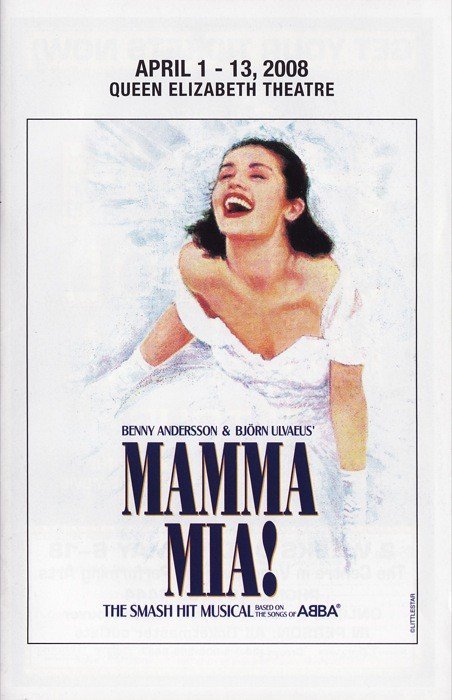
Ten years after the group’s breakup, the compilation ABBA Gold was released and became a worldwide best-seller. In 1999, ABBA’s music was adapted into Mamma Mia!, a stage musical that toured globally. As of October 2024, it remains one of the ten longest-running productions on Broadway and the West End. The musical essentially proved something remarkable: ABBA songs were so emotionally complete that they could carry an entirely new story on their own.
A film of the same name, released in 2008, became the highest-grossing film in the United Kingdom that year. Critics were not always kind to the movie, but audiences absolutely adored it. Estimating ABBA lifetime music sales and streams, ticket sales for various Mamma Mia! adaptations, and ABBA Voyage attendance, projections suggest over $4.8 billion in sales for the ABBA Music Universe. That figure is almost absurd, and it represents just a fraction of the real cultural wealth this group has generated.
The Triumphant Return: Voyage and the Future

In 2021, the group released their first new album in nearly 40 years, titled “Voyage,” which achieved commercial success and included a virtual concert experience featuring digital avatars of the band members. The world had waited four decades, and somehow the comeback was worth every year of the wait. It was deemed by the Official Charts Company as the UK’s biggest-selling album on vinyl and the third best-selling album across the board of 2021.
After years apart, ABBA made headlines when they announced new music in 2021 with their album “Voyage,” which further solidified their relevance in today’s market while introducing them to younger fans who may have never experienced their original hits live. Their music continues to go viral on digital platforms, 50 years after its composition, with new fans flocking to the fold every day. Meanwhile, ABBA is the ninth most streamed musical act amongst artists who produced music pre-1980, with over 6.7 billion lifetime streams, a shocking figure considering the group retired more than 40 years ago.
The Lasting Legacy: Why ABBA Will Never Truly End

The group was inducted into the Rock and Roll Hall of Fame on 15 March 2010. ABBA’s music remains influential, leading to their induction into the Rock and Roll Hall of Fame in 2010 and the opening of ABBA: The Museum in Stockholm in 2013. These are not the honours of a band that had a lucky run. They are the recognitions of a genuinely historic artistic achievement.
ABBA has managed to survive countless eras of cassette tapes, CDs, and streaming services, and they don’t seem to be sinking anytime soon. While trends in the music industry are continuously shifting, ABBA have stayed true to their commitment to the dance-pop mania of the 70s and 80s, and it’s this aspect of their catalog that unites several generations of people around the world. There is something almost defiant about it. Music trends are supposed to have expiry dates. Nobody told ABBA that.
Conclusion: Four Swedes Who Rewrote Pop History

Uploaded by Japan Maik, CC BY 2.0)
When you stand back and look at the whole picture, what ABBA achieved is genuinely staggering. Four musicians from Stockholm turned a Eurovision stage in Brighton into a launchpad for one of the most globally beloved musical careers in history. They wrote songs that survived broken marriages, shifts in music fashion, decades of silence, and still somehow emerged sounding fresh.
Their songs work because they feel true. The joy is real. The heartbreak is real. The hooks are undeniable. In a music industry full of acts carefully manufactured for a single era, ABBA built something eternal. ABBA is a notable anomaly: they never completely disappear from the limelight, remaining an unchanging, reliable boulder of evocative disco-pop in the middle of the sea. I think that image is absolutely perfect. The world keeps changing. ABBA stays exactly where they are. And the world keeps coming back to them.
So here’s the question worth sitting with: in fifty more years, when fashions have changed beyond recognition again, whose music do you think people will still be dancing to? What do you think? Tell us in the comments.

Christian Wiedeck, all the way from Germany, loves music festivals, especially in the USA. His articles bring the excitement of these events to readers worldwide.
For any feedback please reach out to info@festivalinside.com
