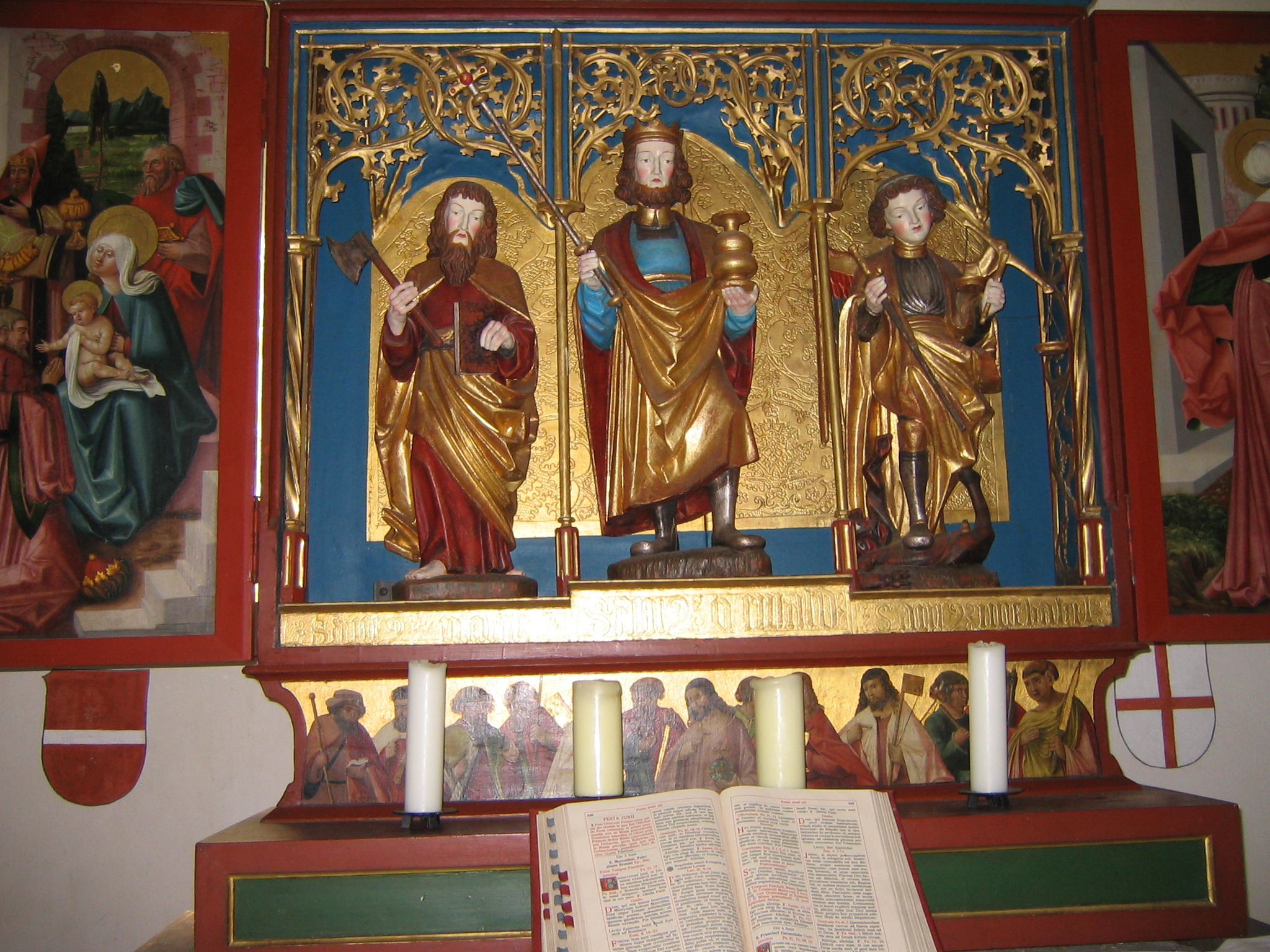
A King Forged in Exile and Battle (Image Credits: Upload.wikimedia.org)
In the rugged valleys of the Austrian Alps, the legacy of a seventh-century English king endures through quiet chapels and mountain streams bearing his name.
A King Forged in Exile and Battle
Oswald’s early life unfolded amid the turbulent politics of early medieval Britain. Born around 604 as the son of Æthelfrith, the powerful ruler of Bernicia, he faced upheaval when his father fell in battle against Raedwald of East Anglia. The young prince and his brothers fled into exile in the Scottish kingdom of Dál Riata, where they encountered Christian missionaries from Iona.
During his time away, Oswald embraced the faith that would define his reign. He returned to Northumbria around 633, rallying an army to confront the invading Welsh king Cadwallon ap Cadfan at the Battle of Heavenfield near Hexham. Tradition holds that Oswald erected a cross on the eve of the fight and vowed to promote Christianity if victorious; his forces triumphed, slaying Cadwallon and reuniting the kingdoms of Bernicia and Deira under his rule.
As king, Oswald invited Aidan, an Irish monk, to establish a monastery on the island of Lindisfarne, laying the foundations for Northumbria’s golden age of learning and piety. His court became a center for evangelism, drawing scholars and missionaries who spread the gospel across the region. Yet prosperity proved fleeting; in 642, Oswald met his end at the Battle of Maserfield against the pagan Mercian king Penda, where he reportedly prayed for his soldiers’ souls as he fell.
Martyrdom and the Birth of a Saint
Oswald’s death transformed him into a figure of veneration almost immediately. Bede, the revered Northumbrian historian, chronicled his life in the “Ecclesiastical History of the English People,” portraying him as a model Christian ruler whose piety and bravery inspired miracles. Reports emerged of healings at sites linked to his relics, including a spring where his blood allegedly mingled with the earth.
By the late seventh century, Oswald’s cult had taken root in England, with churches dedicated in his honor and his feast day observed on August 5. His status as a martyr – killed in defense of the faith – elevated him among the saints, akin to early Christian heroes. Pilgrims flocked to places like Bamburgh, his royal seat, seeking intercession for ailments and protection.
The spread of his story relied on hagiographies and liturgical texts that emphasized his humility and devotion. These narratives not only solidified his sainthood but also bridged Anglo-Saxon and Celtic Christian traditions, influencing the broader conversion of Britain.
Crossing Seas: Oswald’s Cult Reaches the Continent
The veneration of Oswald extended beyond Britain’s shores through Anglo-Saxon missionaries active in the eighth and ninth centuries. Figures like Willibrord and Boniface carried tales of the saint to the Frankish realms, where his relics found new homes in monasteries. By the Carolingian era, Oswald appeared in continental calendars and artworks, blending into the tapestry of European sanctity.
In the German-speaking lands, his popularity surged during the Ottonian and Salian dynasties. Emperors and nobles patronized churches in his name, drawn to his image as a warrior-king who balanced temporal power with spiritual zeal. Manuscripts from this period illustrate Oswald’s life, adapting English motifs to resonate with local audiences.
Key factors in this expansion included trade routes, diplomatic ties, and the circulation of relics; fragments of Oswald’s bones reportedly reached places like Cologne and Essen, fostering devotion. This continental adoption marked a shift from a regional hero to a pan-European intercessor, particularly for protection in battle and against plagues.
An Enduring Presence in the Austrian Alps
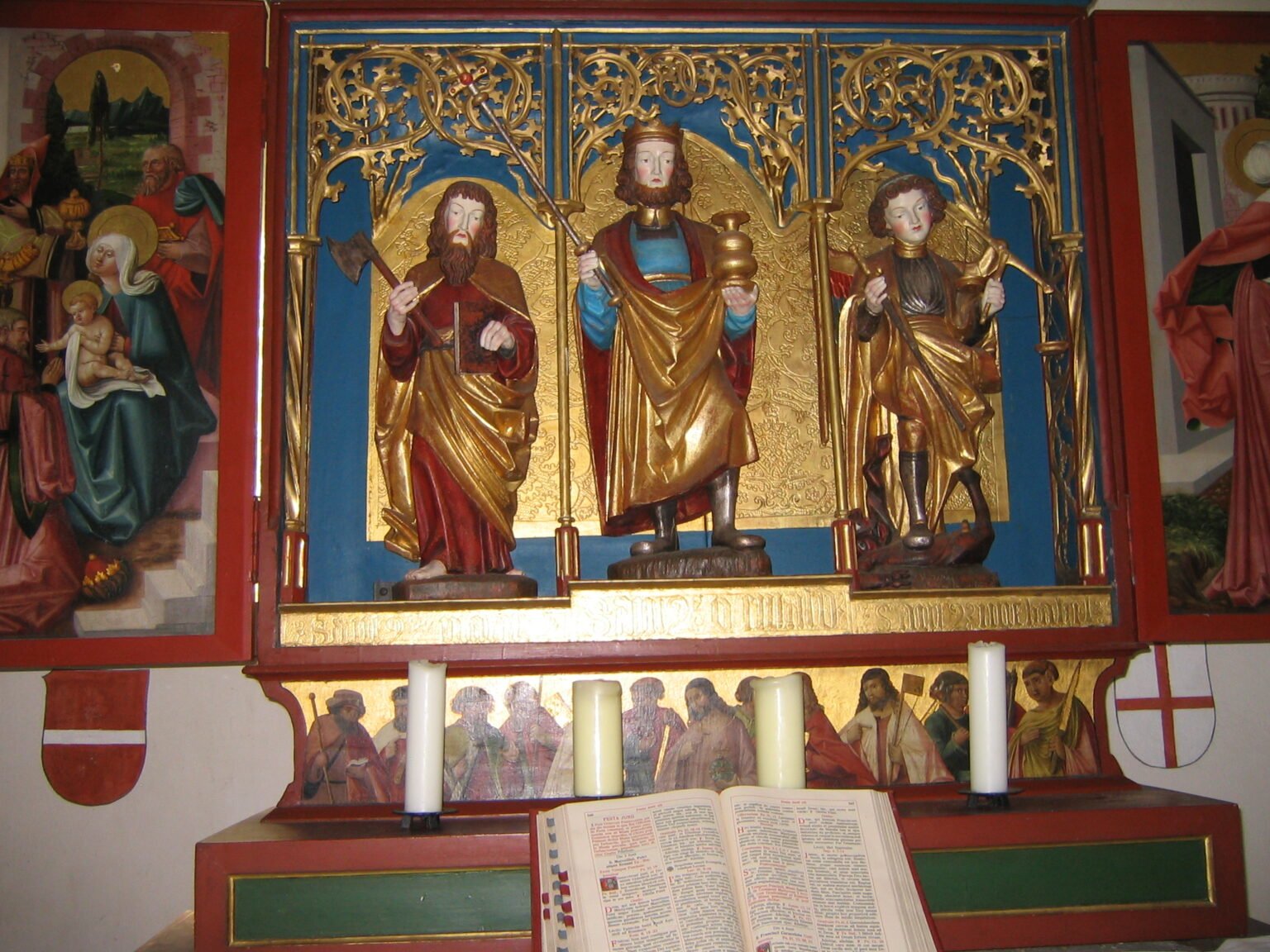
Nowhere is Oswald’s continental legacy more vivid than in the remote Alpine regions of Carinthia, Austria. The village of Sankt Oswald near Bad Kleinkirchheim boasts a church dedicated to him, perched amid peaks that echo his distant Northumbrian homeland. A nearby chapel and even a stream named after the saint highlight how deeply his cult embedded itself in local folklore.
Medieval records trace this devotion to the eleventh century, when miners and herders sought Oswald’s aid for safe travels through treacherous terrain. His feast days brought communities together for processions and blessings, reinforcing ties to the wider Christian world. Today, these sites draw hikers and historians, preserving rituals that blend English origins with Alpine customs.
The Oswaldeck, a scenic promontory overlooking the valley, symbolizes this fusion; from its heights, visitors can reflect on how a king’s martyrdom rippled across centuries and continents.
Lessons from a Timeless Saint
Saint Oswald’s journey from battlefield victor to Alpine guardian underscores the unpredictable paths of medieval piety. His story reminds us how personal faith can transcend borders, shaping cultures in unexpected ways.
- Oswald united Northumbria through military prowess and Christian evangelism.
- His martyrdom fueled a cult that spread from England to the Holy Roman Empire.
- In the Alps, his legacy persists in villages, chapels, and natural landmarks.
What aspects of Oswald’s legacy intrigue you most? Share your thoughts in the comments below.