

- Unsung Heroes of Music History Deserve Their Rightful Place in the Pantheon of Legends - April 9, 2026
- Certain Historical Events Are So Bizarre, They Seem Ripped From the Pages of Fiction - April 9, 2026
- Iconic Cultural Artifacts Are More Than Objects; They Are Time Capsules of Human Experience - April 9, 2026
Carnival – Brazil’s Year-Round Celebration
While Rio de Janeiro’s Carnival captivates the world for a week each February, the magic doesn’t stop when the last float leaves the Sambadrome. This is shown by weekly rehearsals and youth music workshops keeping the rhythm alive all year round, adopting intergenerational bonds. Beyond the four day event, samba schools work as social and cultural places in their neighborhoods. A dozen samba schools put in an entire year’s preparation to build amazingly technical and colorful floats and include the best passistas they are able to find. All through the year the Samba schools practice to put up a great parade during the Carnival. These incredible communities transform from performance groups into neighborhood anchors, hosting everything from children’s workshops to late-night rehearsals where grandparents teach grandchildren the steps their ancestors danced.
The preparation never truly ends, creating a continuous cycle of artistry and community. Since 2005, all Samba schools in the special group have been allotted Samba City to carry out their production processes and practice sessions. Visitors are allowed to tour around the place. You can visit any of these schools to attend their Samba nights free of cost. The rehearsals are sans floats and costumes, but you will get to see performers strut their best stuff in the midst of great Samba music and colourful lights. These rehearsals feel like intimate concerts, where the energy is just as electric as the main event, but with the added warmth of being welcomed into a family tradition.
Oktoberfest – Munich’s Global Beer Empire
When you think Oktoberfest ends on the first Sunday of October, you’re only seeing the tip of an enormous beer-soaked iceberg. In 2025, the 190th Oktoberfest will take place from September 20 to October 5 on the Theresienwiese. With more than six million guests a year, the Oktoberfest is the largest public festival in the world. But the real magic happens when you realize that somewhere in the world, it’s always Oktoberfest season. From Wisconsin to Australia, from Brazil to Japan, cities host their own versions throughout the year, creating a global network of beer halls and lederhosen that never sleeps.
The preparation for Munich’s celebration is equally relentless. Construction of the beer tents (yes, they build and take them down each year!) usually starts about 75 days before the festival. Around June, the tents and fun fair foundations begin their staggered process of construction with a completion date of late September, just in time for the beginning of the festival. Meanwhile, breweries spend months perfecting their special Oktoberfest beers, and traditional costume makers work year-round to meet the demand for authentic dirndls and lederhosen that will be worn at celebrations across six continents.
Pride Festivals – A Rainbow That Never Fades
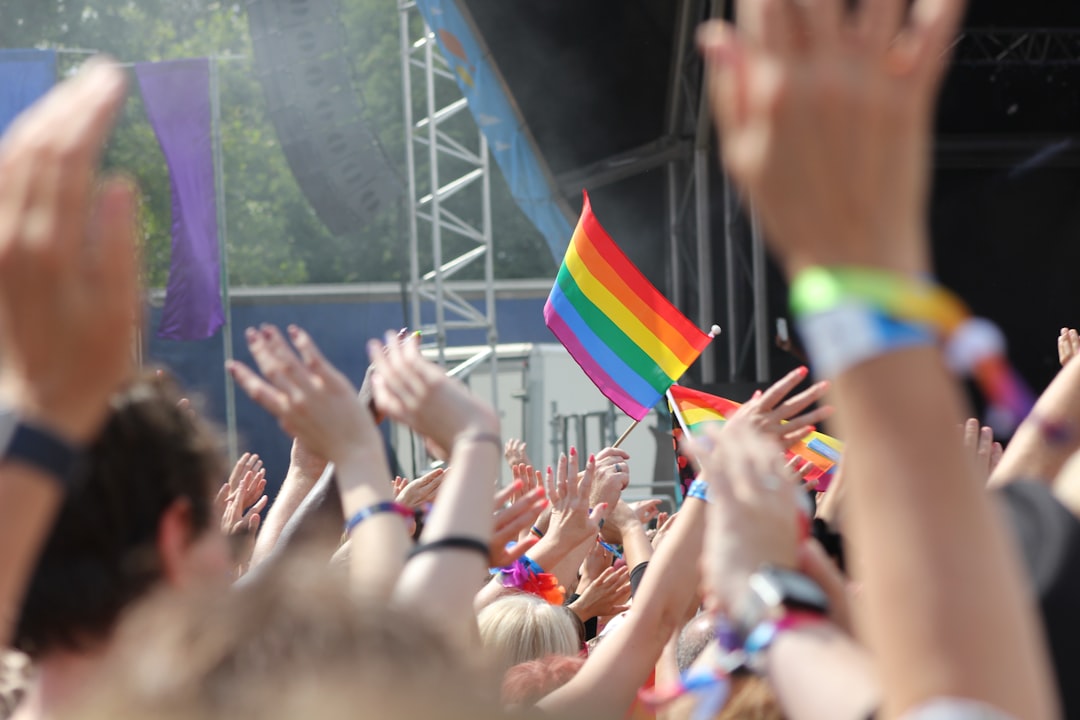
Pride Month in June might grab headlines, but the LGBTQ+ community celebrates somewhere in the world almost every single month. While events take place throughout the year, the majority take place during the months of June, July and August. Scheduled from May 22 to June 8, 2025, this event promises to be an extraordinary “Pride of Our Lifetime,” as stated by the Capital Pride Alliance. Washington DC’s WorldPride 2025 represents just one massive celebration in a continuous global movement that refuses to be contained to a single month.
The sheer scale of Pride’s year-round presence is breathtaking. #HavePride365! captures the essence perfectly – this isn’t just a seasonal celebration but a 365-day movement. Our 2025 gay pride calendar includes all major gay pride events & festivals worldwide. You will find all the different pride parade dates and routes for cities across the globe, the dates of the festivals, and the lists of events when available. From Sydney’s Mardi Gras in February to São Paulo’s massive parade in June, from Amsterdam’s Canal Pride in August to Tel Aviv’s celebrations in spring, the rainbow flag waves continuously across time zones.
Burning Man – The Desert That Lives Everywhere
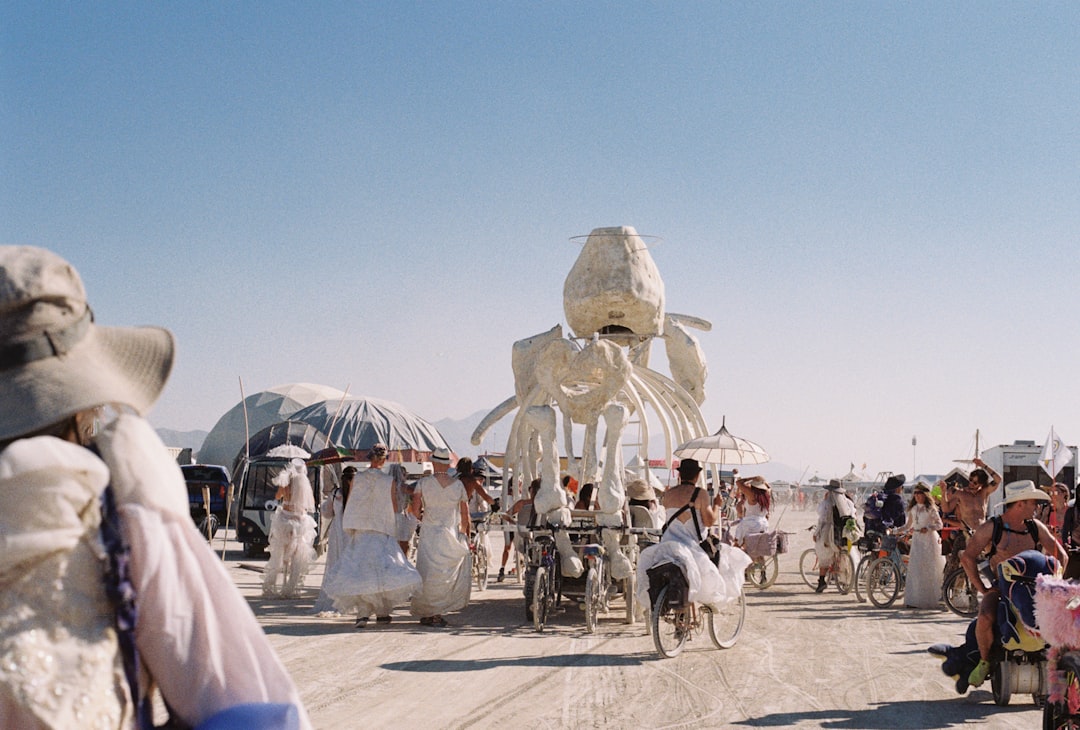
August 24 – September 1, 2025 Once a year, tens of thousands of people gather in Nevada’s Black Rock Desert to create Black Rock City, a temporary metropolis dedicated to community, art, self-expression, and self-reliance. But what happens in the desert definitely doesn’t stay in the desert. The Burning Man Project endorses multiple smaller regional events guided by the Burning Man principles in the United States and internationally. The “Burn” has spawned a worldwide network of regional events that happen year-round, from the frozen lakes of Finland to the beaches of Australia.
These regional burns are more than just copies – they’re living experiments in community building. Burners have created smaller regional events modeled on Burning Man, such as Burning Flipside in Texas; Apogaea in Colorado; Playa del Fuego in Delaware; Firefly in New England; Kiwiburn in New Zealand; Blazing Swan in Australia; Transformus in West Virginia; AfrikaBurn in South Africa; NoWhere near Zaragoza in Spain; Midburn in Israel; and many others. Apogaea – June 4-8, 2025. Apogaea is a regional Colorado Burning Man event, taking place every year in June. Each event adapts the ten principles to local culture while maintaining the spirit of radical self-expression and community that makes Burning Man legendary.
Chinese New Year – The Celebration That Follows the Moon
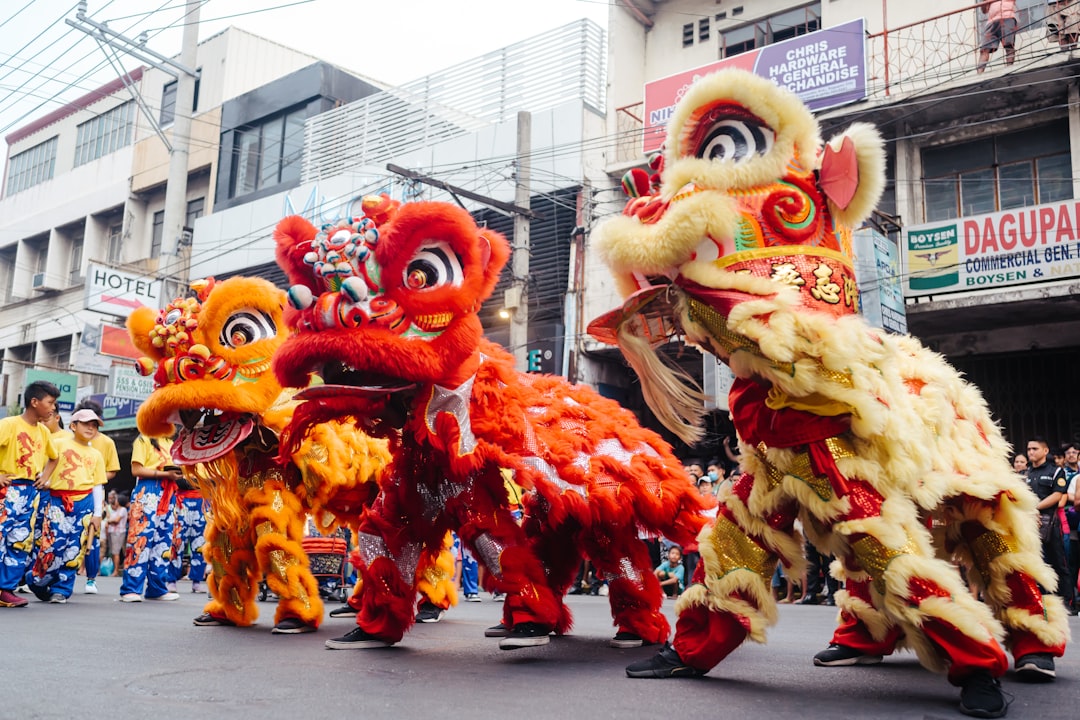
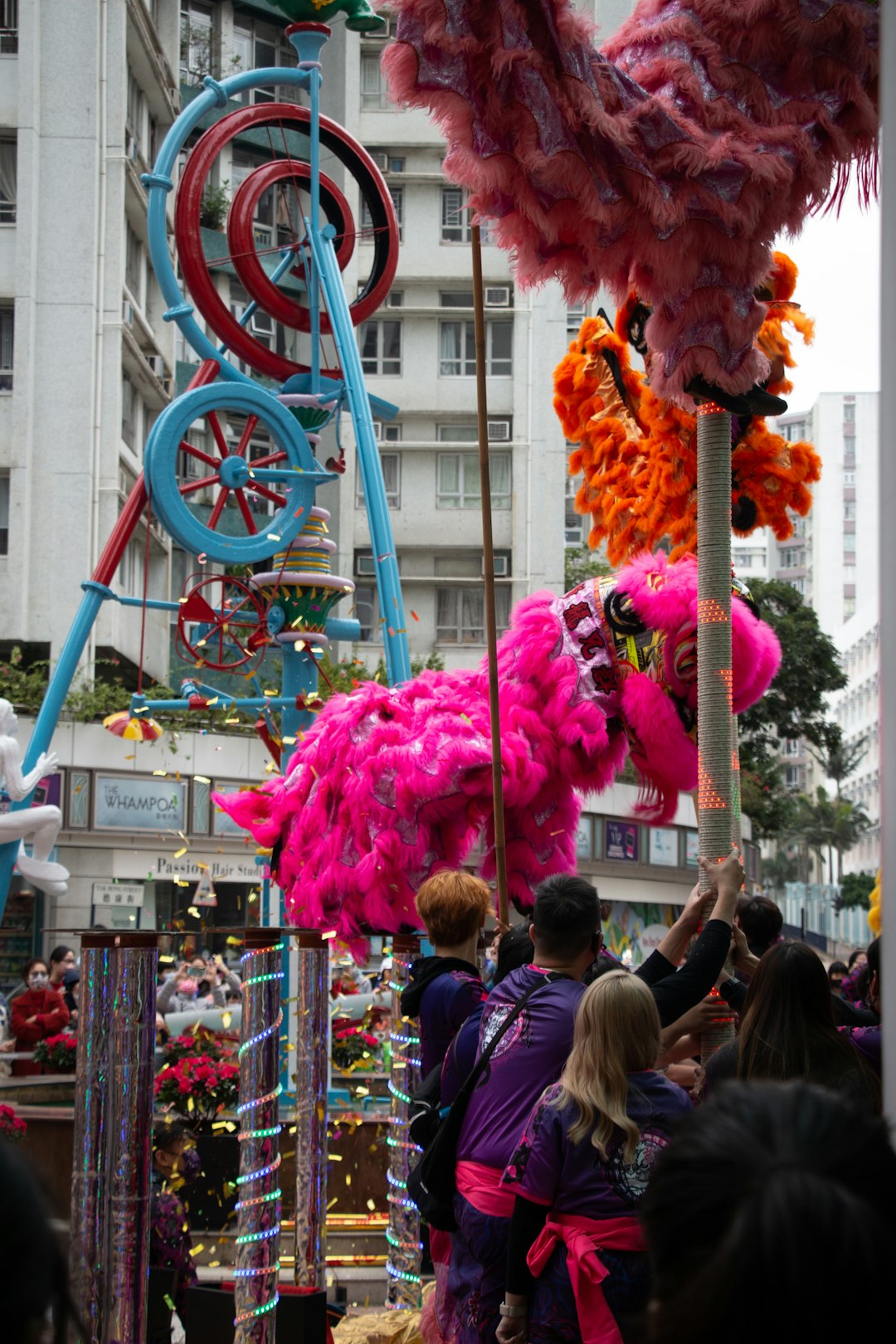
Chinese New Year doesn’t just happen in China – it explodes across the globe wherever Chinese communities have planted roots. While the traditional celebration lasts about 15 days, the reality is that major cities worldwide host elaborate festivities that can span weeks or even months. San Francisco’s celebrations begin in January and continue through March, while Singapore’s festivities blend seamlessly with their year-round cultural programming. Hong Kong treats the Lunar New Year as a season rather than a single event, with preparatory festivals, the main celebration, and follow-up cultural events stretching the joy across months.
The beauty lies in how different cultures have adopted and adapted these celebrations. Vancouver’s Chinese New Year parade draws hundreds of thousands of spectators, while London’s celebrations in Chinatown create a festival atmosphere that rivals any European carnival. Sydney’s lunar new year festival has become so massive that it’s essentially a second New Year’s celebration for the entire city. Each celebration reflects the local Chinese diaspora’s unique story while maintaining connections to ancient traditions that have survived thousands of years.
Holi – The Festival of Colors Gone Global
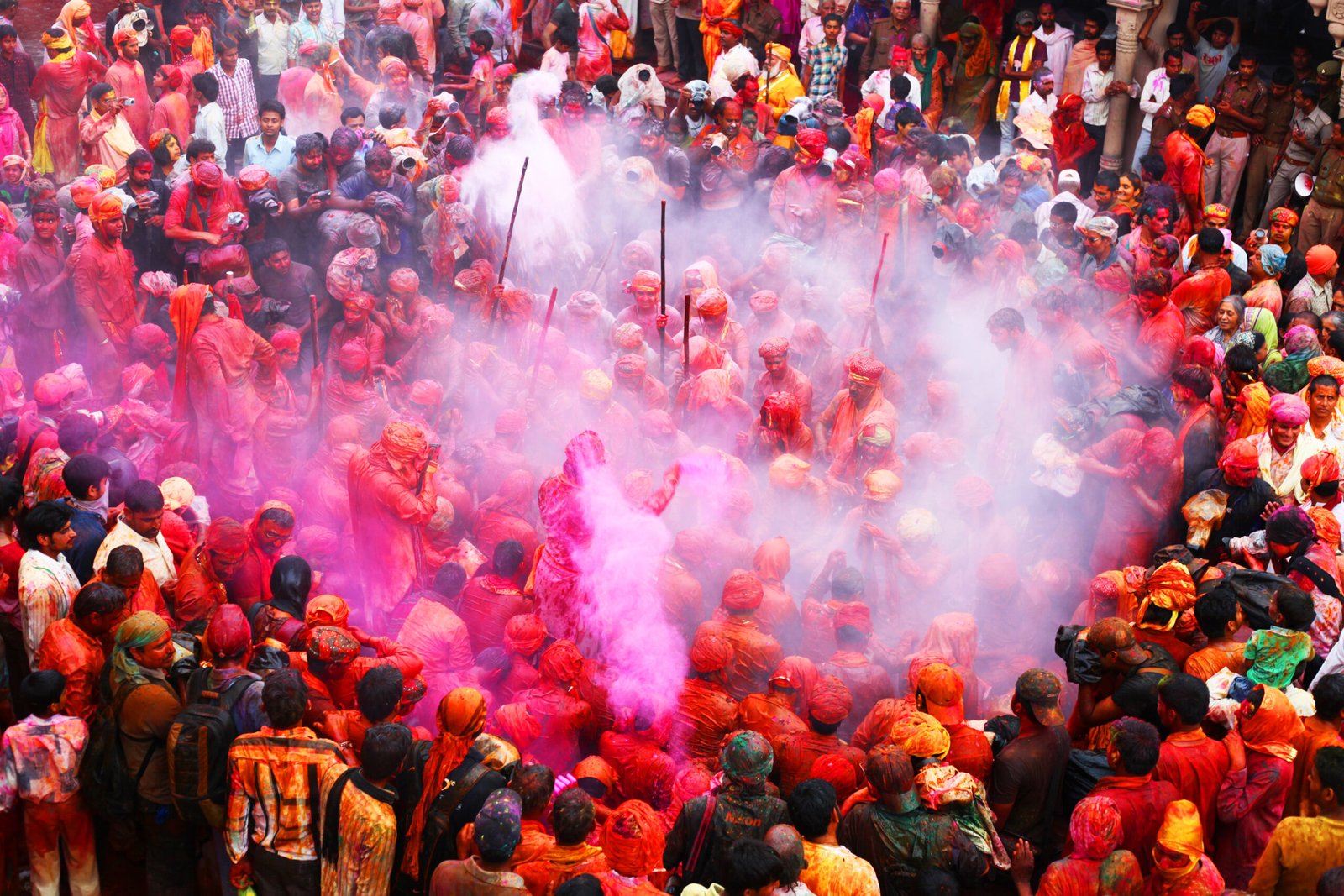
What began as a Hindu spring festival in India has painted the world in brilliant colors throughout the year. The traditional Holi lasts just a day or two in March, but “Holi parties” now happen globally at different times, especially in cities with large Indian communities. From Berlin to Berlin, from Toronto to Tel Aviv, these celebrations adapt to local climates and cultural contexts while maintaining the joyful spirit of throwing colored powder and celebrating new beginnings.
The internationalization of Holi represents something beautiful about how festivals evolve in our connected world. Universities across America host Holi celebrations during spring break, tech companies organize workplace Holi parties for team building, and yoga studios incorporate color throwing into their seasonal events. Each celebration introduces new people to the philosophy behind the festival – the triumph of good over evil, the arrival of spring, and the celebration of love and renewal. What started as a regional Indian festival has become a global celebration of joy that refuses to be contained by geography or season.
Edinburgh’s Festival Marathon
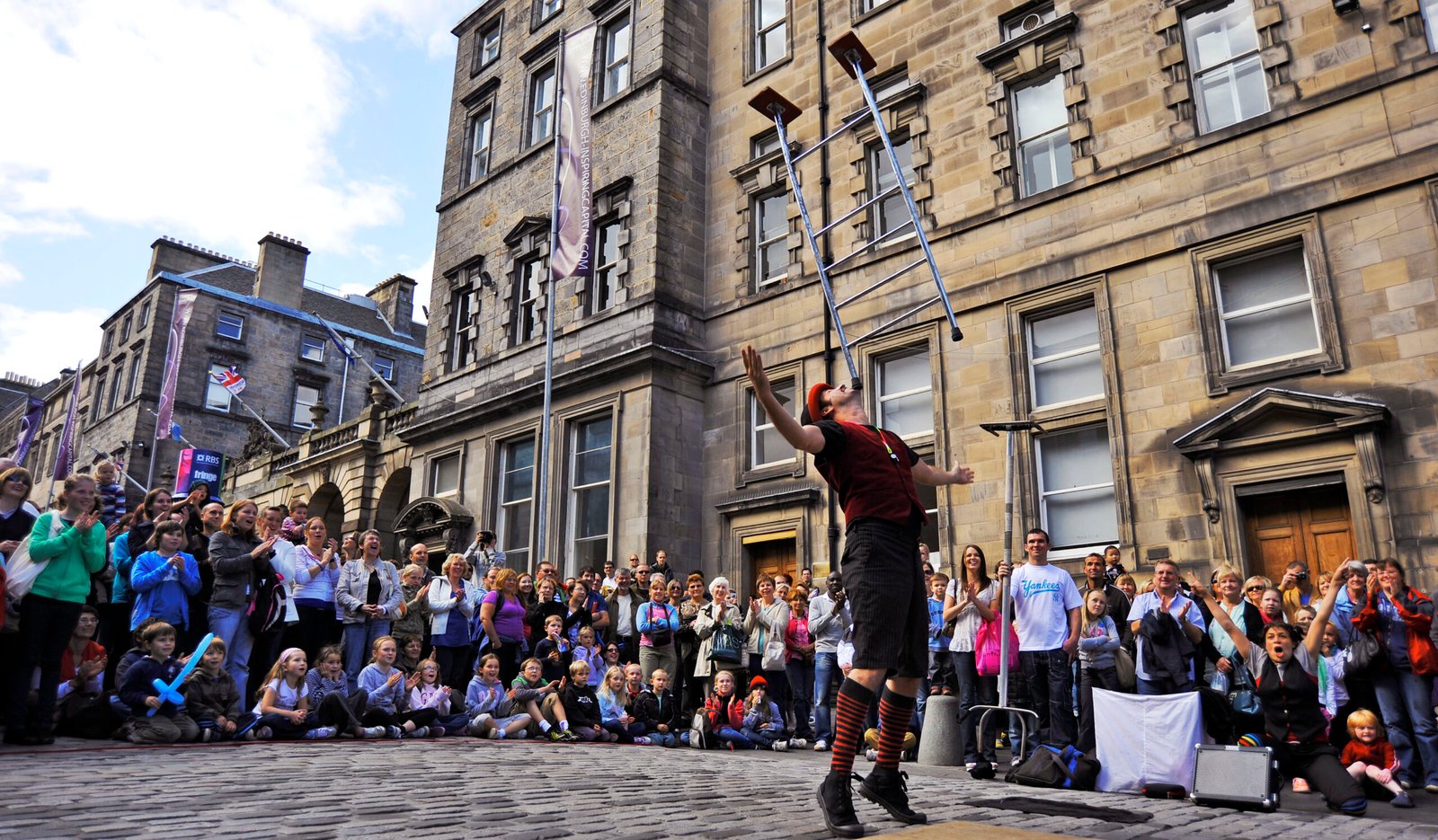
Edinburgh doesn’t just host the world’s largest arts festival – it’s essentially become a city-sized festival venue that never truly closes. The Edinburgh Festival Fringe (Scotland, UK) The world’s largest arts festival lasts most of August, but Edinburgh has so many festivals (Hogmanay, Book Festival, etc.) that it feels like a year-round celebration. From the International Festival in August to Hogmanay (New Year’s) celebrations that last for days, from the Science Festival in spring to the Book Festival that coincides with the Fringe, Edinburgh has turned itself into a year-round celebration of human creativity.
The city’s commitment to continuous celebration is almost absurd in its scope. There’s literally always something happening – jazz festivals, film festivals, storytelling festivals, comedy festivals, and countless smaller events that fill the gaps between major celebrations. Local venues maintain a festival mentality year-round, and the city’s residents have adapted to living in what feels like a permanent state of cultural celebration. Street performers work year-round, knowing that Edinburgh’s appetite for entertainment never diminishes, and the city’s infrastructure has evolved to support this continuous influx of artists and audiences.
Mardi Gras – New Orleans’ Endless Party
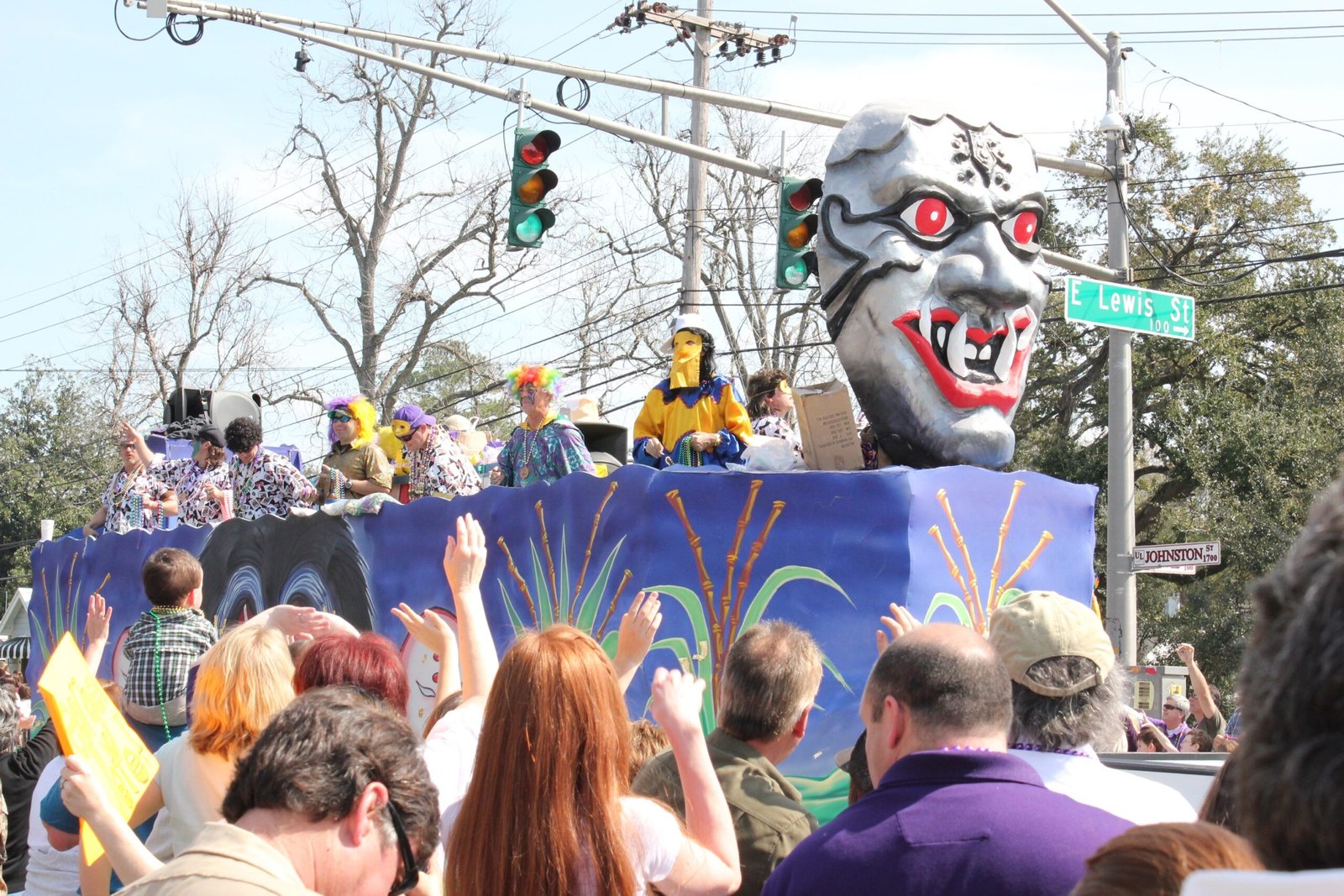
New Orleans doesn’t just celebrate Mardi Gras – it lives in a state of perpetual carnival preparation. While the peak season runs from January through February, the culture of Mardi Gras World (float-building) is ongoing, and parades happen sporadically throughout the year. The city’s dozens of krewes (carnival organizations) work year-round, planning themes, designing floats, and organizing the social events that make Mardi Gras more than just a parade – it’s a way of life.
The economic and cultural impact of this continuous celebration is staggering. Mardi Gras World operates as a year-round tourist attraction where visitors can see float construction in progress, learn about the artistry behind the celebrations, and understand how this festival employs hundreds of artists, craftspeople, and performers throughout the year. The traditions are so deeply embedded in New Orleans culture that families pass down krewe memberships like heirlooms, and the city’s calendar revolves around carnival season even when it’s months away.
Running of the Bulls – Spain’s Adrenaline Export
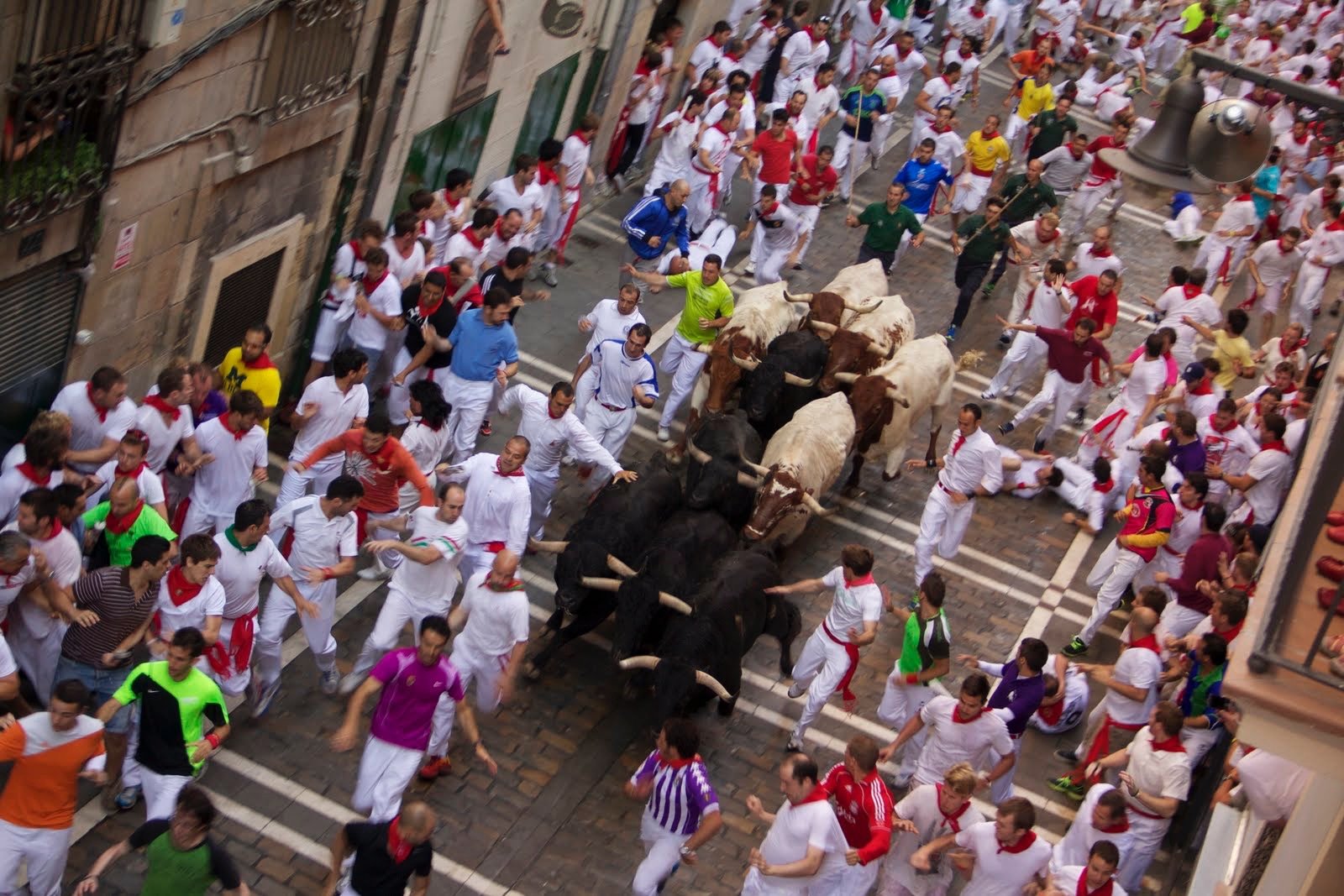
Pamplona’s San Fermín festival lasts just a week in July, but the concept of running with bulls has stampeded across the globe. The United States hosts numerous bull runs throughout the year, from the Great Bull Run series that travels to different states, to local festivals that incorporate the adrenaline rush of being chased by massive animals. Mexico, Colombia, and other countries with Spanish colonial heritage have their own versions that happen at different times, creating a year-round calendar of controlled chaos.
These international adaptations often prioritize safety over tradition, using mechanical bulls, foam obstacles, or specially trained animals. Some events have evolved into obstacle races that capture the excitement without the danger, while others maintain the authentic Spanish tradition with all its risks. The global appetite for this particular form of celebration speaks to something primal about human nature – the desire to feel truly alive through shared moments of exhilaration and terror.
La Tomatina – The Global Food Fight
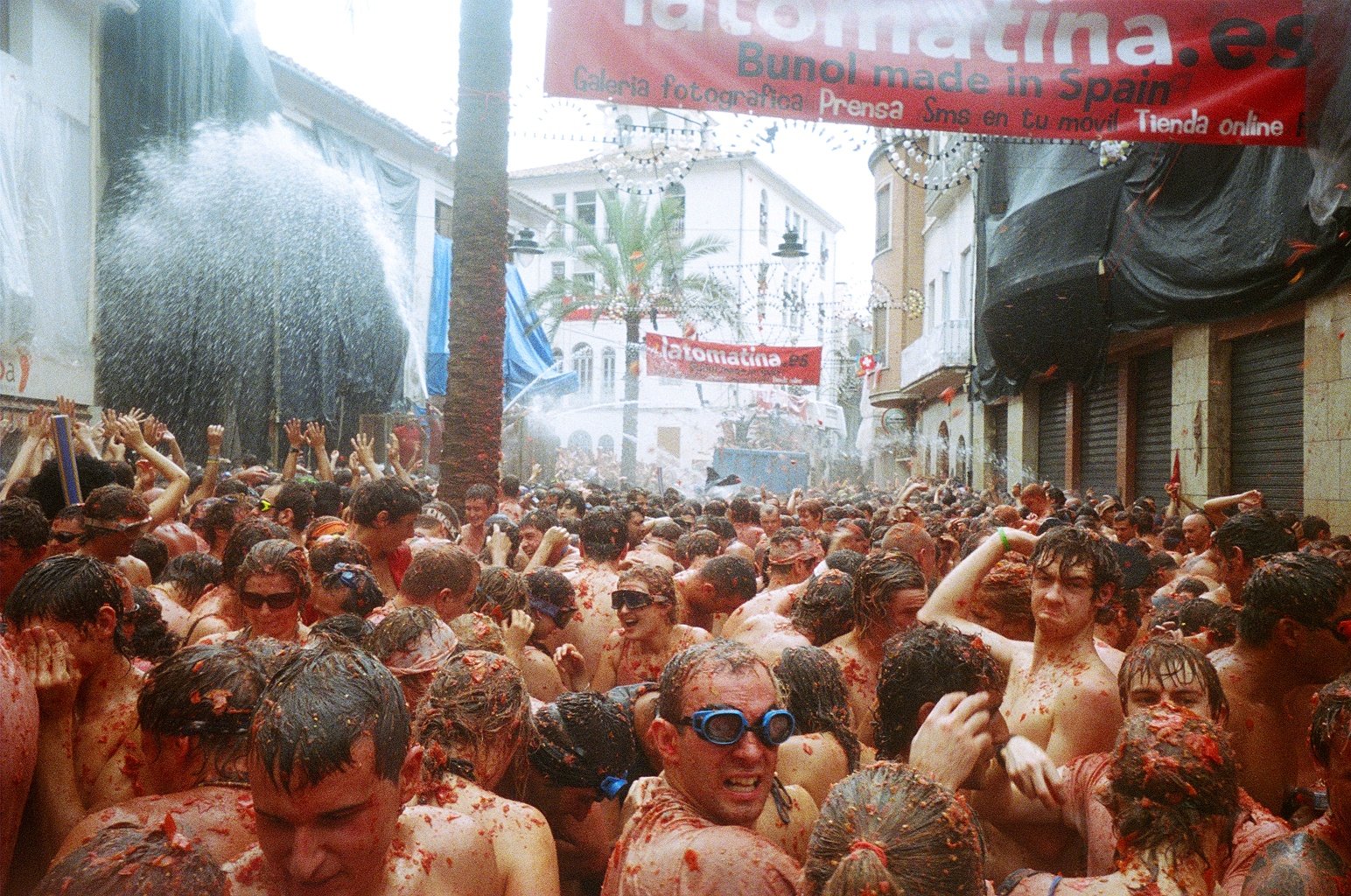
Buñol’s famous tomato-throwing festival lasts exactly one hour on the last Wednesday of August, but copycat events happen worldwide throughout the year. From Colombia’s similar celebration to Korea’s tomato festivals, from Australian food fights to American versions that often use different fruits or vegetables, the concept has proven universally appealing. These events tap into something childlike and joyful about throwing food that transcends cultural boundaries.
The logistics of replicating La Tomatina are fascinating. Each event must source thousands of overripe tomatoes, organize cleanup crews, and manage the controlled chaos of thousands of people throwing food at each other. Some versions have evolved into fundraisers for local food banks, using the spectacle to raise awareness about food waste. Others have become corporate team-building events or festival highlights at larger cultural celebrations, proving that the simple joy of a food fight can be packaged and exported anywhere.
Diwali – The Festival of Lights Illuminating the World
Diwali’s five-day celebration in India extends far beyond its traditional timeline when you consider the global diaspora. Preparations begin weeks in advance, with communities organizing cultural events, shopping festivals, and religious observances that stretch the celebration across months. Cities like London, New York, and Toronto host elaborate Diwali celebrations that can span entire weekends, while smaller communities might celebrate over several different dates to accommodate work schedules and venue availability.
The internationalization of Diwali has created fascinating cultural fusion moments. Leicester’s Diwali celebration is so massive it’s become a tourism draw for people of all backgrounds, while Malaysia’s celebrations blend with local cultural traditions. American shopping malls now host Diwali festivals complete with traditional food, cultural performances, and vendor markets. Each celebration maintains the core meaning of light triumphing over darkness while adapting to local contexts and creating new traditions that bridge cultures.
Songkran – Thailand’s Water War Without End
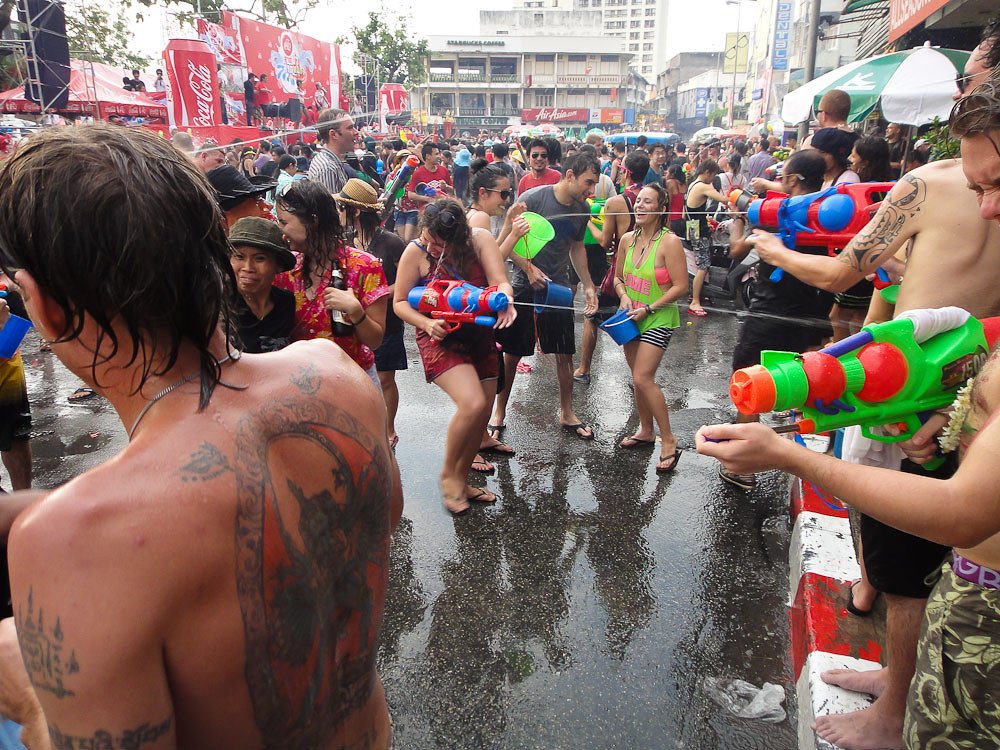
Thailand’s traditional New Year water festival officially lasts three days in April, but the reality is far more complex. Different regions of Thailand celebrate on different dates, water fights often extend for weeks, and similar festivals occur in neighboring countries like Cambodia, Laos, and Myanmar at various times throughout the year. The concept has also been exported to cities with large Thai populations, creating a global network of water-based celebrations.
The appeal of Songkran lies in its perfect combination of spiritual renewal and pure fun. The water represents cleansing and new beginnings, but the reality is thousands of people engaged in the world’s biggest water fight. Cities like Bangkok essentially shut down for days as residents and tourists alike arm themselves with water guns and buckets. The festival has evolved to include foam parties, music festivals, and cultural events that extend the celebration far beyond the traditional three days. International versions often coincide with summer festivals, creating cultural exchange opportunities disguised as elaborate water fights.
The Never-Ending Festival Calendar
What emerges from examining these “never-ending” festivals is a picture of human celebration that transcends geography, season, and cultural boundaries. These events have evolved from local traditions into global phenomena that create continuous calendars of joy, community, and cultural exchange. The digital age has accelerated this process, allowing festivals to inspire copycat events worldwide and enabling communities to maintain connections across vast distances.
The economic impact of this continuous celebration is enormous. Festival tourism has become a major industry, with people planning international trips around celebration calendars. Local economies benefit from year-round preparation and related industries, from costume makers to food vendors to security services. But perhaps more importantly, these festivals create communities that persist long after the last parade float has been stored away, connecting people through shared experiences of joy, tradition, and human celebration.
Can you imagine a world where every day offers a festival somewhere, where the human spirit of celebration never truly rests? These festivals have shown us that joy, like the sun, never actually sets – it just moves to different parts of our beautifully connected world.

Besides founding Festivaltopia, Luca is the co founder of trib, an art and fashion collectiv you find on several regional events and online. Also he is part of the management board at HORiZONTE, a group travel provider in Germany.
