

For any feedback please reach out to info@festivalinside.com
- 8 Mind-Boggling Coincidences From History That Will Make You Question Everything - March 10, 2026
- Classic Rock Anthems That Defined a Generation - March 8, 2026
- What Made 1975 One of the Best Years in Music? - March 8, 2026
Some songs don’t just play on the radio. They sink into the bones of a whole era, become the soundtrack to ‘s joy and heartbreak, and somehow refuse to age. Classic rock gave us more of those songs than any other genre, and whether you lived through them or discovered them decades later, their grip is immediate and undeniable.
There are fifteen tracks in particular that stand above the rest. Not because of nostalgia alone, but because their chart histories, their certification records, and their lasting cultural weight all tell the same story: these songs mattered then, and they still matter now. Let’s dive in.
1. “Stairway to Heaven” – Led Zeppelin (1971)
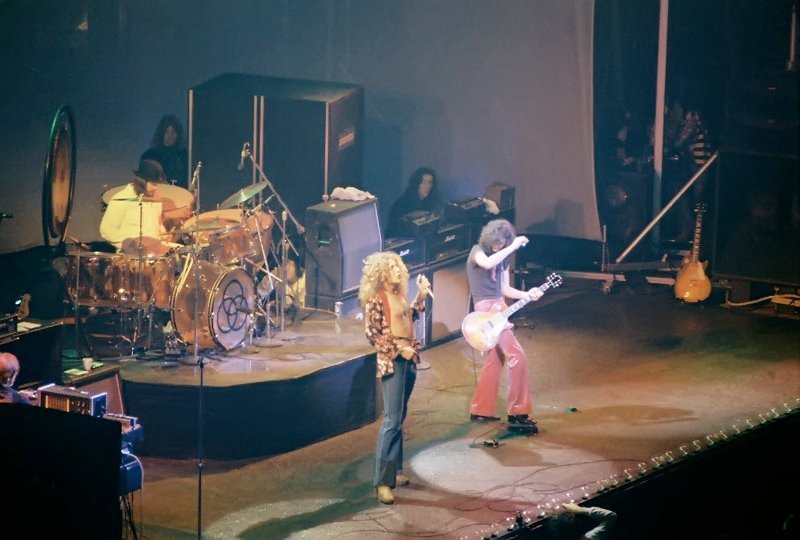
Here’s the thing that makes this song almost mythological: “Stairway to Heaven” is among the most-played rock songs of all time, yet it never made the Billboard charts. The reason is surprisingly simple. It’s not complicated why “Stairway to Heaven” never charted in America or the UK in the 20th century – Led Zeppelin never released the song as a single, so fans couldn’t buy it as a record, and thus it couldn’t go on the charts.
The strategy worked in the band’s favor in ways nobody could have predicted. By most measures, it is the most-played song in the history of American FM radio, and it has also sold more sheet music than any other rock song – about 10,000 to 15,000 copies a year, and more than one million total. The album it lived on, Led Zeppelin IV, is the band’s most commercially successful album and received a 24-times multi-platinum certification from the RIAA, the fifth-highest of all albums.
Led Zeppelin IV stayed on the U.S. album charts longer than any other Zep record, spending 283 weeks – well over five years – on the Billboard charts. Honestly, for a song that was never even released as a single, that’s one of the most extraordinary stories in rock history.
2. “Bohemian Rhapsody” – Queen (1975)
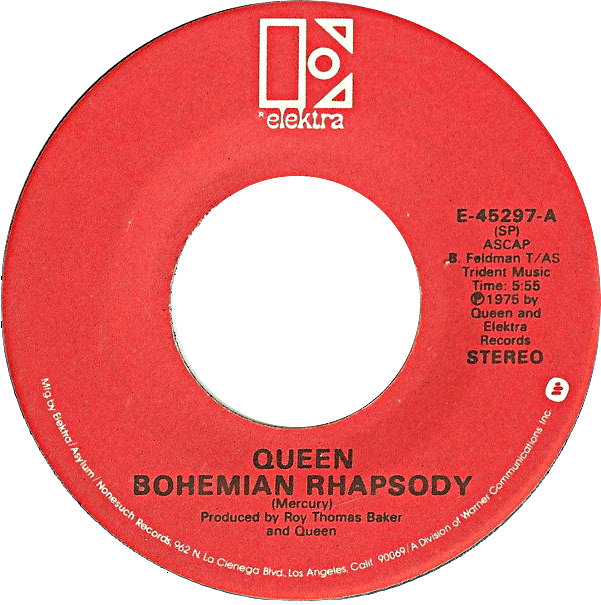
Few songs in history have defied the rules quite like this one. Released on October 31, 1975, “Bohemian Rhapsody” was certified Gold by the RIAA on June 3, 1976, for 500,000 copies sold. In an era of two-to-three-minute radio singles, the track became a huge hit for Queen despite being nearly six minutes long. In the US, the single reached number nine on the Billboard Hot 100 and was certified gold by the RIAA for sales of one million copies.
Its commercial life has spanned multiple decades in a truly remarkable way. The song got a whole new audience when it was used in the 1992 movie Wayne’s World. In the film, Wayne and his friends lip-synced to it in his car, and as a result of the movie, it was re-released as a single in the US and charted at number two. Then, decades later, as of September 2025, it is the most-streamed song from the 20th century, with more than 2.8 billion plays on Spotify alone.
In 2021, the song was certified Diamond by the RIAA for combined digital sales and streams equal to 10 million units – it’s the only song from the 1970s to be certified Diamond. Queen is the first British band in music history to earn the US Diamond song award. That’s the kind of legacy that makes you stop and stare.
3. “Hotel California” – Eagles (1977)

“Hotel California” first entered the Billboard Hot 100 chart dated February 26, 1977, and topped the Hot 100 singles chart for one week in May 1977, the band’s fourth song to reach number one on that chart. At the 20th Grammy Awards, the title track won Record of the Year. It was the crowning achievement of a band already operating at their peak.
The album behind it is staggering in scale. Hotel California is one of the best-selling albums of all time, certified 28 times Platinum by the RIAA in the US, and has sold over 42 million units worldwide. In January 2026, that certification was updated: the Eagles’ Hotel California was re-certified 28x Platinum by the RIAA, scoring the third best-selling album of all time.
“Hotel California” is far more than a soft rock anthem and one of the best-selling songs of all time – it’s a surrealistic fantasy open for endless interpretations that opened up the minds of listeners around the world and ushered in a new decade. I think what makes it so enduring is precisely that ambiguity. Nobody fully agrees on what it means, and that’s exactly the point.
4. “Smells Like Teen Spirit” – Nirvana (1991)
This is arguably the most seismic rock song of the last half of the 20th century. The unexpected success of the song propelled Nevermind to the top of several album charts at the start of 1992, an event often marked as the point when grunge entered the mainstream. Many listeners claim that “Smells Like Teen Spirit” is an anthem for Generation X, capturing the disillusionment, angst, and restlessness felt by many young people at the time.
Its critical legacy has only grown over time. In 2021, Rolling Stone ranked “Smells Like Teen Spirit” fifth on its list of The 500 Greatest Songs of All Time, and in 2017, it was inducted into the Grammy Hall of Fame. The song was also included in the Rock and Roll Hall of Fame’s list of The Songs That Shaped Rock and Roll.
It’s impossible to overstate Nirvana’s impact on the course of musical history. “Smells Like Teen Spirit” stormed through popular culture like a maelstrom, scouring the musical landscape of spandex, frizzy hair, and flashy guitarwork. In its place, Nirvana and their Seattle scene compatriots poured a gritty mixture of rough and ragged, post-punk meets metal grunge.
5. “Born to Run” & “Born in the U.S.A.” – Bruce Springsteen (1975 / 1984)

Two anthems. One man. An ocean of American mythology. When Born to Run landed in the summer of 1975, it heralded rock’s latest phenomenon. Mainstream magazine covers, a top ten LP, and a worldwide fan base soon followed. “Born to Run,” the song, remains his anthem of survival. Then, almost a decade later, came the second act. “Born in the U.S.A.” hit its commercial peak in 1984 and the album sold a stupendous 30 million copies.
Strangely, neither song ever reached number one on the Billboard Hot 100. Springsteen has never had a number one song, ever. “Dancing in the Dark” was the highest charted of his singles, peaking at number two. Yet Springsteen has had eleven number one albums, one of which was “Born in the U.S.A.,” which sat at number one for seven weeks.
The title track “Born in the U.S.A.” was the third single from the album and became a misconstrued anthem of patriotism in the face of societal neglect. That gap between perception and reality is the whole story of Springsteen. The crowd heard triumph; the song was screaming something far darker.
6. “Another Brick in the Wall (Part II)” – Pink Floyd (1979)
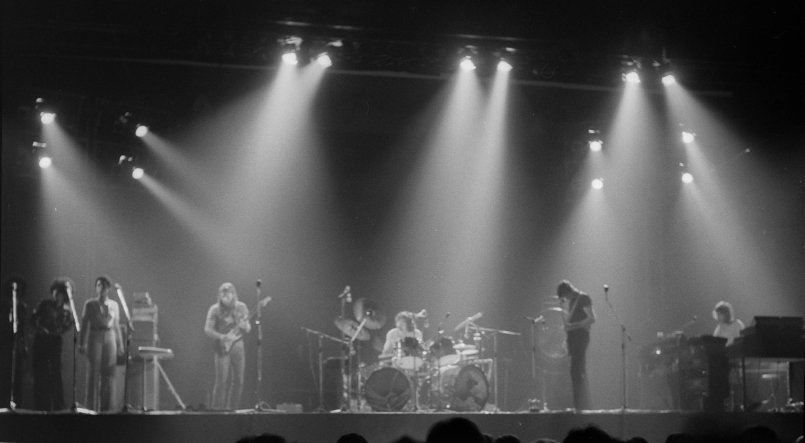
With its three separate parts, “Another Brick in the Wall” was more of an experience than a typical rock single, while allowing the progressive artists to address the school systems of their native England. It was Part II specifically that was actually released as a single – first in the UK in November of 1979 and then in the US in January of 1980 – and it was that composition that would take over America and top the Billboard Hot 100 in less than three months’ time.
There is something wonderfully subversive about a song rooted in anti-establishment anger becoming one of the biggest hits of its year. The children’s choir, the grinding riff, the blunt fury of the message – it all worked in ways that radio programmers probably didn’t fully understand at first. Decades later, “Another Brick in the Wall” remains an essential track for any classic rock playlist.
7. “Sweet Child O’ Mine” & “Welcome to the Jungle” – Guns N’ Roses (1987)
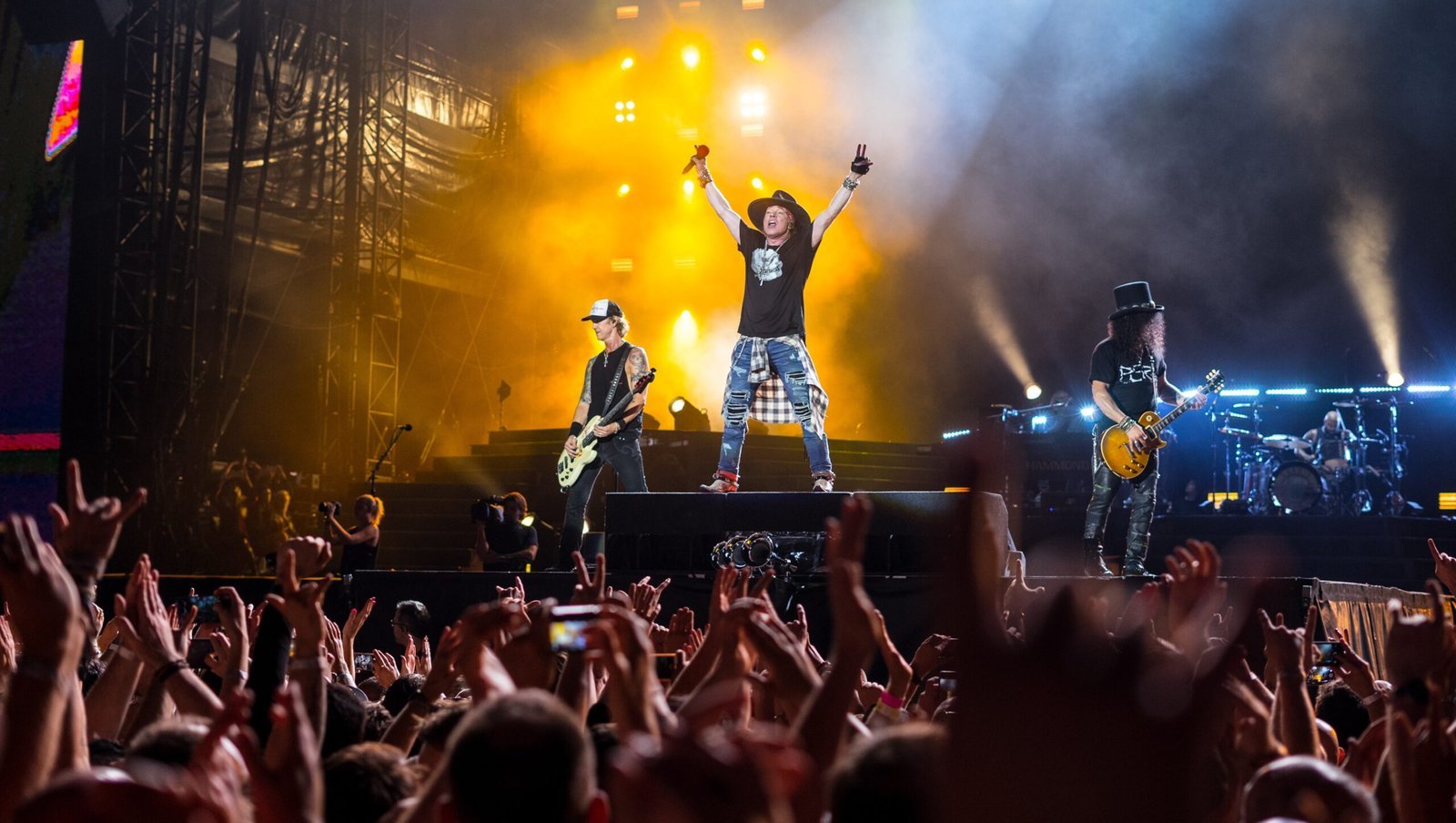
With their blistering energy and incendiary sound, Guns N’ Roses pushed rock to its breaking point. Formed in LA in 1985, they erupted with Appetite for Destruction in 1987, delivering era-defining songs like “Sweet Child O’ Mine,” “Welcome to the Jungle,” and “Paradise City.” Slash’s searing guitar solos paired with Axl Rose’s volatile vocals fueled a visceral, unapologetic force that reshaped the genre for decades to come.
Much has been made about Guns N’ Roses being hard rock saviors during the last part of the 1980s. It took over a year for Appetite for Destruction to reach number one. “Welcome to the Jungle” also needed some time before it eventually became a top ten anthem for the new generation. Patience, apparently, rewarded those willing to wait. The album went on to sell over 30 million copies worldwide, becoming one of the best-selling debut albums in rock history.
As for “Sweet Child O’ Mine” specifically, it remains one of the most-streamed classic rock songs of all time, sitting alongside “Bohemian Rhapsody” and Nirvana’s “Smells Like Teen Spirit” in the upper tier of globally consumed rock tracks. That kind of staying power in the streaming era is not nothing.
8. “Don’t Stop Believin'” – Journey (1981)
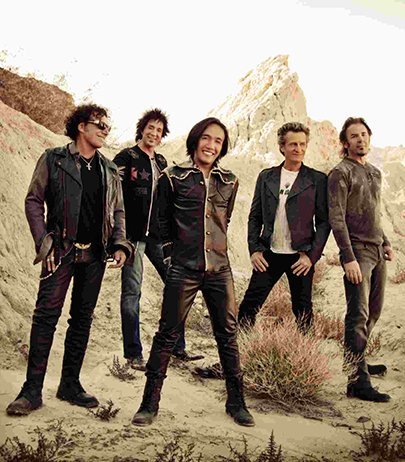
Let’s be real: no song in classic rock radio history has had a stranger second life than this one. Strange as it might seem, this most overplayed of ’80s hits barely breached the top ten in the Billboard Hot 100 when it was released in 1981. The song peaked at number nine, a modest chart result for what would later become a cultural institution. Journey were never primarily a singles band, and the charts reflected that.
“Don’t Stop Believin'” is a timeless classic by Journey, and from its powerful lyrics to its unforgettable melodies, it has left an indelible mark on the hearts and minds of music lovers everywhere. It became one of the first catalog rock songs to sell over one million digital downloads after its appearance in the finale of “The Sopranos” in 2007 reignited mass public interest in the track, per multiple music industry reports from that era.
9. “Like a Rolling Stone” – Bob Dylan (1965)
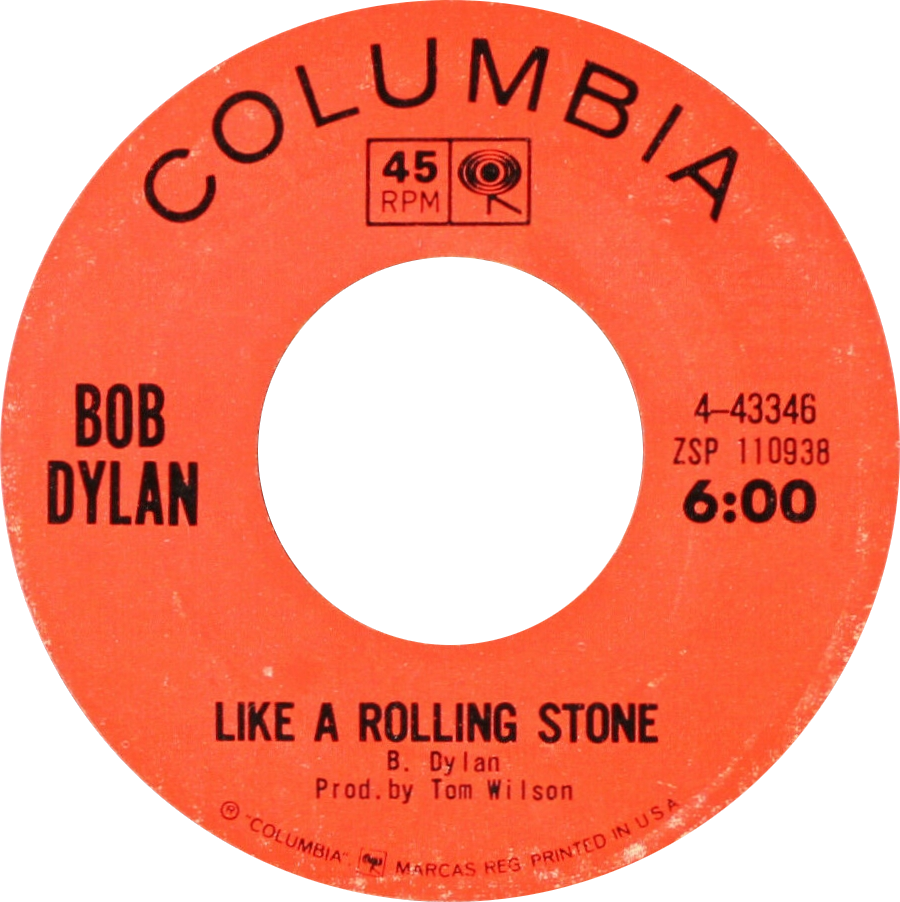
A snare hit announces “Like a Rolling Stone” like a gunshot out of nowhere, and for the next six-plus minutes, Bob Dylan starts a revolution that rock music still reverberates from. The song isn’t only the center of Highway 61 Revisited and Dylan’s career – it’s the eye of the mid-’60s cultural storm he helped stir. It rattled many barriers at the time, including the length of radio singles and their subject matter.
It’s hard to say for sure how much one song can change an entire industry, but “Like a Rolling Stone” is probably the best test case we have. Radio stations in 1965 didn’t play six-minute songs. Dylan dared them to, and they did. It was a seismic breach in convention that opened every door that came after it. The song peaked at number two on the Billboard Hot 100 upon release, held back from the top spot by a track that most people today couldn’t name.
10. “Bad Moon Rising” & “Fortunate Son” – Creedence Clearwater Revival (1969)
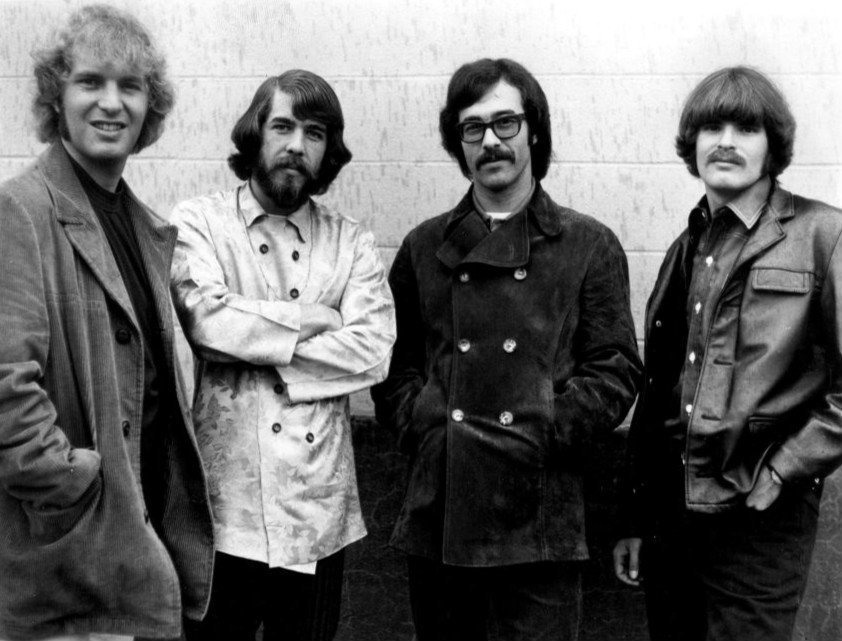
photo front
photo back, Public domain)
John Fogerty wrote songs that felt like they had always existed somewhere deep in American soil. Despite its upbeat, rockabilly swing, “Bad Moon Rising” is basically a feel-good warning about the end of the world. Released in 1969, this CCR classic marries cheery melodies with lyrics about doom and destruction. John Fogerty’s twangy delivery and tight rhythm guitar keep things catchy, even as he sings about death and disaster. It peaked at number two on the Billboard Hot 100 and became a timeless, toe-tapping doomsday anthem.
Its companion anthem “Fortunate Son,” released the same year as the B-side to “Down on the Corner,” became the defining protest song of the Vietnam generation. Classic rock is more than just a genre – it’s a powerful cultural force that shaped decades of music, fashion, and attitude. These tracks became anthems for rebellion, freedom, and raw emotion, and from thunderous guitar riffs and poetic lyrics to unforgettable choruses, these songs have transcended their eras to become permanent fixtures in the soundtrack of rock history.
Both tracks together form a kind of American duality: one song laughs in the face of catastrophe, the other rages at the injustice behind it. It’s hard to imagine a more honest portrait of what 1969 actually felt like for pulled between chaos and resistance.
—
These fifteen songs are more than music. They are landmarks. They mark where stood, what it feared, what it celebrated, and what it refused to accept. Some dominated the Billboard Hot 100. Others barely charted at all and still became the most played songs in radio history. Charts, it turns out, don’t always tell the whole story.
What they share is something rarer than a chart position: the ability to make a complete stranger feel immediately understood. Fifty years from now, someone will still be playing air guitar to “Stairway to Heaven” in their kitchen, and that person will have no idea how right they are to do so.
Which of these anthems hit you hardest the first time you heard it? Tell us in the comments.

Christian Wiedeck, all the way from Germany, loves music festivals, especially in the USA. His articles bring the excitement of these events to readers worldwide.
For any feedback please reach out to info@festivalinside.com
