


For any feedback please reach out to info@festivalinside.com
- The 20 Best Albums to Listen to Alone - September 21, 2026
- The 20 Most Famous Lines in Literature — And Who Almost Wrote Them - September 21, 2026
- How 20 Vinyl Got Its Groove Back - September 21, 2026
Think about the last time you got dressed. Did you consider what your outfit says about you, your values, or the world you live in? Probably not consciously. Yet fashion has always done exactly that – it has spoken, loudly and clearly, on behalf of entire societies. From the whalebone corset to the minimalist linen set, every era has dressed itself in the image of its deepest anxieties, hopes, and revolutions.
What we wear has never been just about aesthetics. It has been a living document of who we are collectively. The garments of any given period tell us about power structures, gender expectations, class hierarchies, and social upheavals in ways that history books sometimes cannot. Across centuries, fashion and culture have moved in a kind of intricate, unspoken dance – one always leading the other. Let’s dive in.
Victorian Splendor: When Fabric Was a Status Report
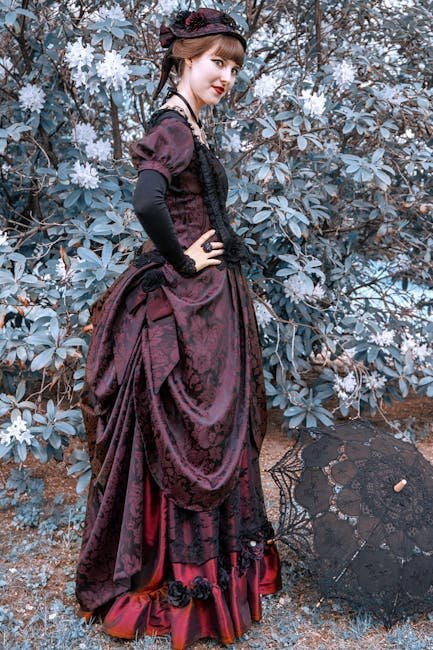
Here’s the thing about Victorian fashion: it was never really about looking beautiful. It was about declaring, loudly and without saying a word, exactly where you stood in the social order. The Victorians were preoccupied by class, and fashion was one way of revealing – or concealing – one’s status in society. Clothing functioned almost like a public resume.
The Victorian age was a time of remarkable social and economic transformation in Britain, driven by the industrial revolution. During this time, fashion played a pivotal role in society, as it was used to define one’s social status. Think of it like a uniform system that nobody officially mandated but everybody meticulously followed.
Clothes were seen as an expression of women’s place in society, hence were differentiated in terms of social class. For women in particular, the restrictions embedded into fashion were staggering. Early Victorian ideals of meek, delicate women were fully established during this period; the ideal woman was quiet, modest, and the center of domestic life. A pale complexion was the most fashionable, and it was considered almost vulgar to appear too healthy.
Mass production of sewing machines in the 1850s as well as the advent of synthetic dyes introduced major changes in fashion. Clothing could be made more quickly and cheaply. Advancement in printing and proliferation of fashion magazines allowed the masses to participate in the evolving trends of high fashion, opening the market of mass consumption and advertising. For the first time in history, looking fashionable was no longer reserved strictly for the elite. Still, the gap between a factory worker’s cotton dress and a duchess’s silk gown remained impossibly wide.
The Jazz Age Explosion: Corsets Out, Freedom In
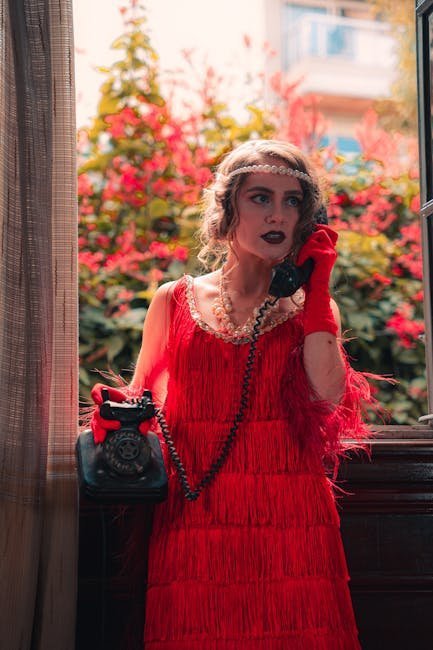
If the Victorian era dressed women like gilded cages, the 1920s threw open the door entirely. Honestly, it’s one of the most dramatic style reversals in all of fashion history – and it didn’t happen by accident. The end of World War I brought a sense of relief and a desire for change. The 1920s was a time of great optimism, marked by technological advancements, economic growth, and the emergence of new artistic and cultural movements. In the aftermath of the war, many people were eager to break free from the traditional norms and conventions that had defined previous generations.
The tight constrictive clothing of the Victorian era – tight corsets and long hemlines – was seen as more and more outmoded and cumbersome. The desire for emancipation finally found its expression in the coming up of the “flapper,” the young, fashionable lady who adopted a new, freer style. Flappers bobbed their hair, a remarkable far cry from the long, highly ornamented hairstyles of ten years earlier.
The Jazz Age was an era of creativity, consumerism, and youth culture. Jazz music was not just background noise – it was the philosophical heartbeat of the entire movement. The rise of jazz music in the 1920s had a profound influence on fashion. Jazz was a music of freedom and improvisation, and it resonated with the social changes of the time. The lively, energetic rhythms of jazz were mirrored in the bold, lively fashion choices of the era.
Mass production and expanding media allowed women of diverse backgrounds to access new styles and activities that were dramatically different from those of their mothers’ generations. I think that last detail is genuinely jaw-dropping – within a single generation, the entire visual language of femininity had been rewritten from scratch.
Postwar Glamour: Dior’s New Look and the Return to Femininity
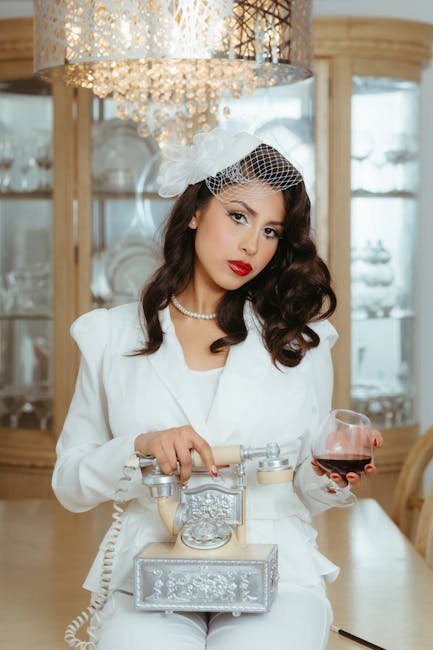
After the devastation of World War II, something fascinating happened in fashion. The world, exhausted and battered, reached not for radical new ideas, but for elegance. For structure. For beauty with a capital B. Fashion in the years following World War II is characterized by the resurgence of haute couture after the austerity of the war years.
With luxuriously and extremely full skirts and shaping that emphasized feminine curves, Dior’s 1947 designs were dubbed the New Look by the fashion press because of their radical departure from World War II styles that were inspired by military uniforms and had stressed economy of fabric. It was, in many ways, a visual exhale. Introduced in 1947, this groundbreaking collection redefined women’s fashion with its cinched waists, voluminous skirts, and luxurious fabrics, offering a fresh start and a sense of renewed glamour. As the world stepped into the 1950s, Dior’s New Look became the epitome of sophistication, setting the tone for a decade of fashion that celebrated beauty, grace, and the joy of dressing up as opposed to the “make do and mend” mentality of the war years.
For many Europeans still living with the privation of postwar food, energy and fabric rationing, Dior’s styles – which used yards and yards of fabric for a single dress – read as offensively wasteful. Some women wearing New Look frocks were chased in the streets and attacked. Critics labeled the designs excessive and unpatriotic. Fashion, it turns out, has always been political territory. The postwar era showed that even glamour could be a battlefield.
Counterculture Rebellion: When Fashion Became a Protest Sign
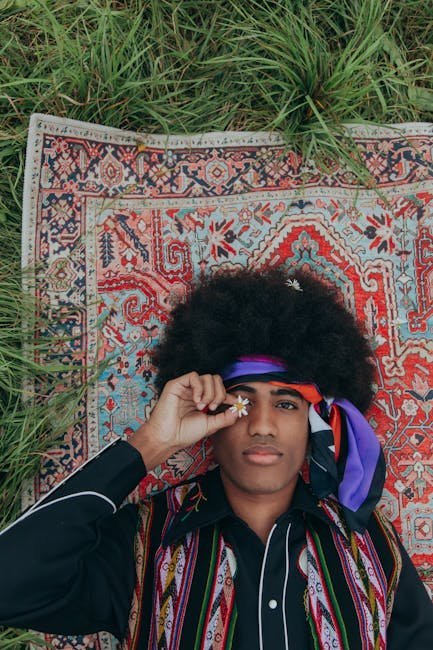
I know it sounds crazy, but by the 1960s, a T-shirt had become as powerful as a pamphlet. Often referred to as the hippie movement, the counterculture of the 1960s and ’70s swept away the conformism of the previous decades and professed an alternative lifestyle whose effects still resonate today. This was not fashion for fashion’s sake. It was fashion as ideology.
These shifts included the wearing of very long hair by men, the wearing of natural or “Afro” hairstyles by Black people, the donning of revealing clothing by women in public, and the mainstreaming of the psychedelic clothing and regalia of the short-lived hippie culture. Ultimately, practical and comfortable casual apparel, namely updated forms of T-shirts (often tie-dyed or emblazoned with political or advertising statements), and Levi Strauss–branded blue denim jeans became the enduring uniform of the generation, as daily wearing of suits along with traditional Western dress codes declined in use.
The counterculture of the 1960s and 1970s largely rejected the mainstream fashion industry, favoring natural materials over synthetic fabrics and handmade or thrifted garments over mass-produced apparel. This is remarkable when you consider that, a mere decade earlier, the fashion world revolved around Parisian haute couture. The vibrant counterculture of the 1960s and 1970s revolutionized fashion into a powerful vessel for self-expression and social rebellion. The hippie movement embraced handmade, recycled garments and natural hairstyles as symbols of freedom, while psychedelic colors mirrored the era’s mind-expanding experiences. Festivals like Woodstock turned music into a sartorial statement, with bohemian aesthetics pushing against mainstream norms.
Modern Minimalism: Less Is More, But More Than It Seems
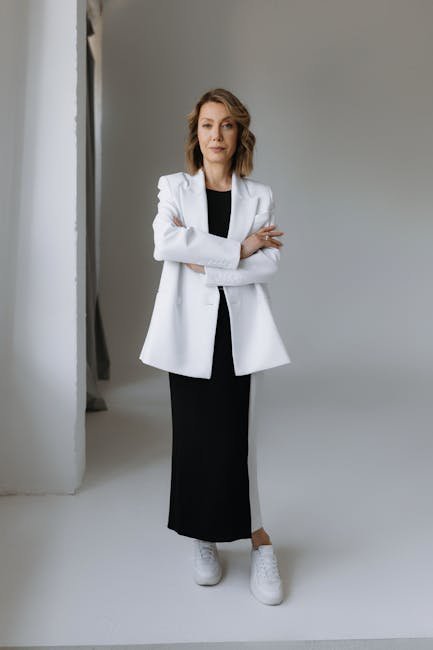
Fast forward to today – 2026 – and the pendulum has swung so far from sequined flappers and paisley bell-bottoms that it almost seems like fashion gave up entirely. Clean lines. Neutral palettes. Capsule wardrobes. The so-called “quiet luxury” aesthetic that dominated much of the past decade is essentially a visual philosophy: do not shout, do not perform, simply exist. It’s almost the anti-fashion fashion.
After years of modern minimalism dominating the fashion landscape, a delightful vintage resurgence has brought 1960s hippie influences back into the spotlight. Vibrant prints, crochet accents, and flared trousers are making a comeback in both high-fashion runways and everyday wear, showcasing a renewed appreciation for nostalgia in style. It seems the fashion world cannot resist looking backward, even when it insists it is innovating.
Contemporary fashion is also witnessing the revival of a markedly contrasting style, one deeply rooted in the countercultural movements of the 1960s and early 1970s, where people sought change due to social and political unrest. Some argue that the fashion of this period in history is timeless and never truly disappeared, but with the heated sociopolitical climate of the mid-2020s, this resurgence may signify more than just a stylistic revival.
There is something quietly profound about the way today’s consumers toggle between stark minimalism and bold vintage nostalgia. It’s a bit like wearing two masks at once – one that says “I need calm” and one that says “I need meaning.” Sustainable fashion practices were first adopted in the 1960s by the hippies, practitioners of counterculture post World War II. And today, those very practices sit at the center of how the most forward-thinking fashion houses are approaching their craft. History, it turns out, keeps sending the same invoice.
The Unbroken Thread: Fashion as a Mirror of Every Generation
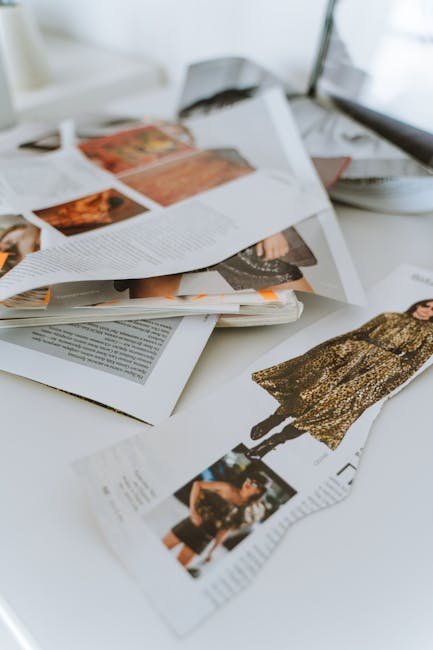
Let’s be real. Every era believes it has invented something entirely new in the world of style. The Victorians thought their corsetry was modern refinement. The flappers thought they had finally broken all the chains. The hippies believed they were outside the fashion system entirely. And today’s minimalists tell themselves they have transcended vanity. None of them were completely wrong – and none of them were completely right either.
The Jazz Age paved the way for the more casual, comfortable fashion choices of later decades. In many ways, the fashion of the 1920s set the stage for the changes in clothing and style that would come in the 20th century. Every rupture in fashion history plants seeds in the next generation’s wardrobe. The bell-bottom makes way for the wide-leg trouser. The corset becomes the structured blazer. The flapper’s dropped waist reappears in contemporary silhouettes.
As members of the hippie movement grew older and moderated their lives and their views, the counterculture was largely absorbed by the mainstream, leaving a lasting impact on philosophy, morality, music, art, alternative health and diet, lifestyle and fashion. That absorption is the key mechanism of fashion history. Rebellion becomes trend. Trend becomes classic. Classic becomes costume. And then, inevitably, someone rebellious picks it back up.
What fashion across the centuries ultimately reveals is not so much what people wore, but what they were reaching for – freedom, structure, identity, belonging, or escape. The clothes change. The longing never quite does. What era do you think most mirrors the tensions of the world we live in today? Think about it next time you decide what to wear.

Christian Wiedeck, all the way from Germany, loves music festivals, especially in the USA. His articles bring the excitement of these events to readers worldwide.
For any feedback please reach out to info@festivalinside.com
