

- 20 Forgotten Writers Who Invented Modern Genres - September 21, 2026
- 10 Opening Lines That Were the Author’s Second Choice - September 21, 2026
- The 20 Quietest Songs That Leave the Loudest Impression - September 21, 2026
There’s something about standing on the edge of a shoreline that does something to your soul. The air shifts. Time slows. You start questioning whether what you’re looking at is actually real or simply a dream your brain invented on a sleepless night. Nature has a remarkable talent for designing landscapes so breathtaking, so quietly impossible-looking, that a photograph of them almost feels like fraud.
The world’s most extraordinary beaches aren’t just about sand and water. They’re about the way volcanic forces, marine biology, and millennia of geological drama converge to create something that shouldn’t logically exist. From shores that glow electric blue in the dark to cliffs that look carved by giants, there are corners of this planet that will leave you genuinely speechless. Let’s dive in.
Pink Beach, Komodo National Park, Indonesia
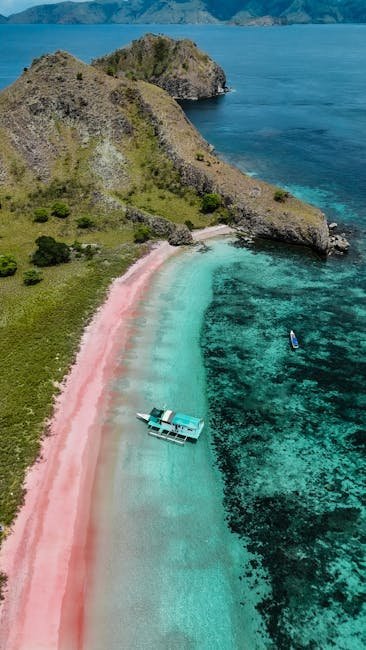
Honestly, the first time you see photos of this place, you assume someone went heavy on the filters. Pink Beach, located in Komodo National Park, is one of the rarest beaches in the world with naturally pink sand, and its soft pink hue comes from microscopic red organisms called foraminifera, which blend with the white sand to create a stunning pastel shoreline. It’s the kind of color you’d expect on a greeting card, not a real beach, and yet, here it exists.
Pink beaches get their color from foraminifera, which are microscopic red organisms that live in the coral reefs and get washed up on the shore. A pink sand beach is very rare, and there are only a handful of them worldwide. They’re even rarer than black sand beaches. Think about that for a second. Pink sand is rarer than the black volcanic sand you find scattered across Iceland. That alone should put this place on every bucket list.
The corals of Pink Beach’s underwater gardens are in excellent condition, with hundreds of species of both soft and hard corals, and thousands of species of fish. Pink Beach is a terrific choice for snorkelers and beginner divers, as even the shallow waters are home to an abundance of species. Komodo National Park is a UNESCO World Heritage Site, and once you have been there, you will understand why this beautiful destination holds such an esteemed title.
A short walk up the nearby hill gives you a panoramic view of the bay, the pink shoreline, and the surrounding islands, ideal for wide landscape photos. Pink Beach is a perfect place to slow down: walk barefoot, take photos from different angles and enjoy the contrast between blue water, pink sand, and green hills. The best time to visit is during Indonesia’s dry season, roughly April through October, when the colors practically vibrate under clear skies.
Reynisfjara Black Sand Beach, Iceland
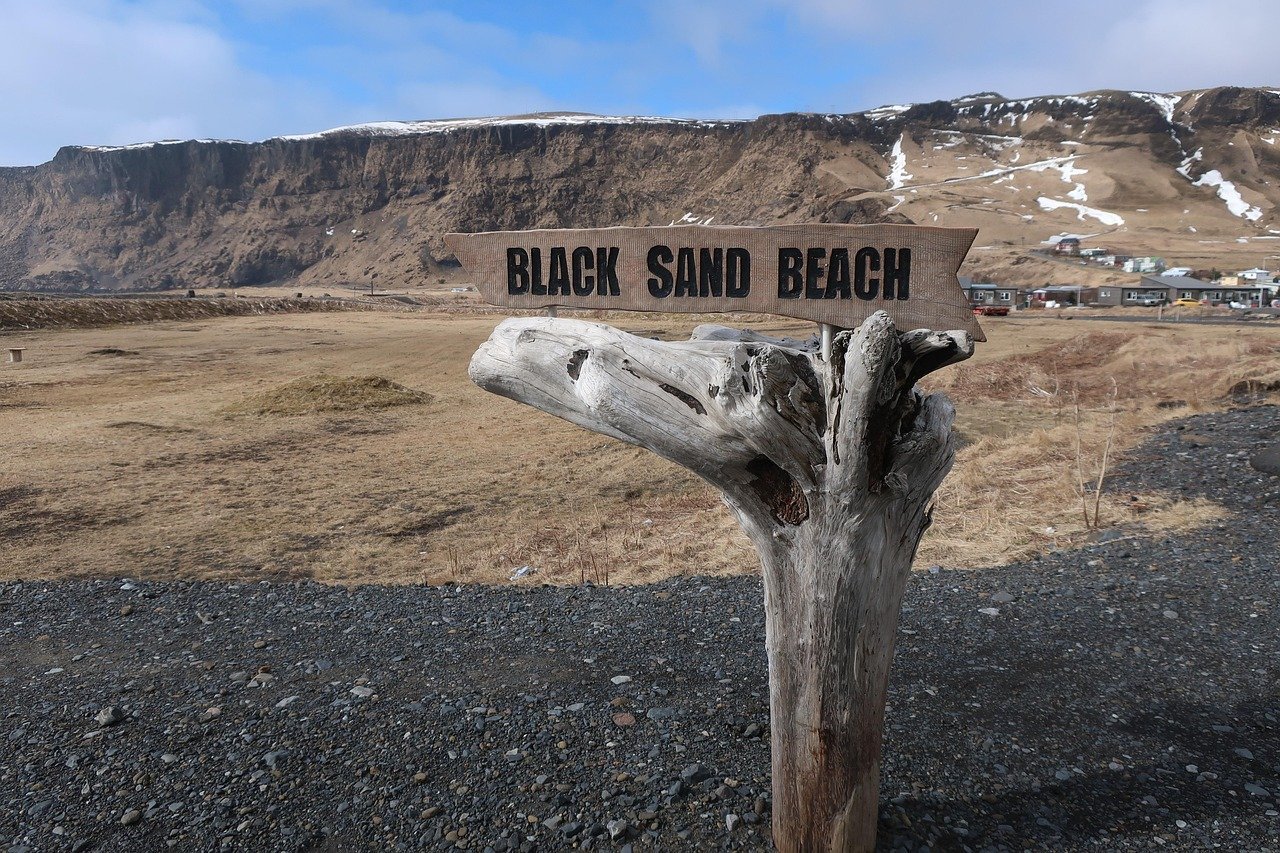
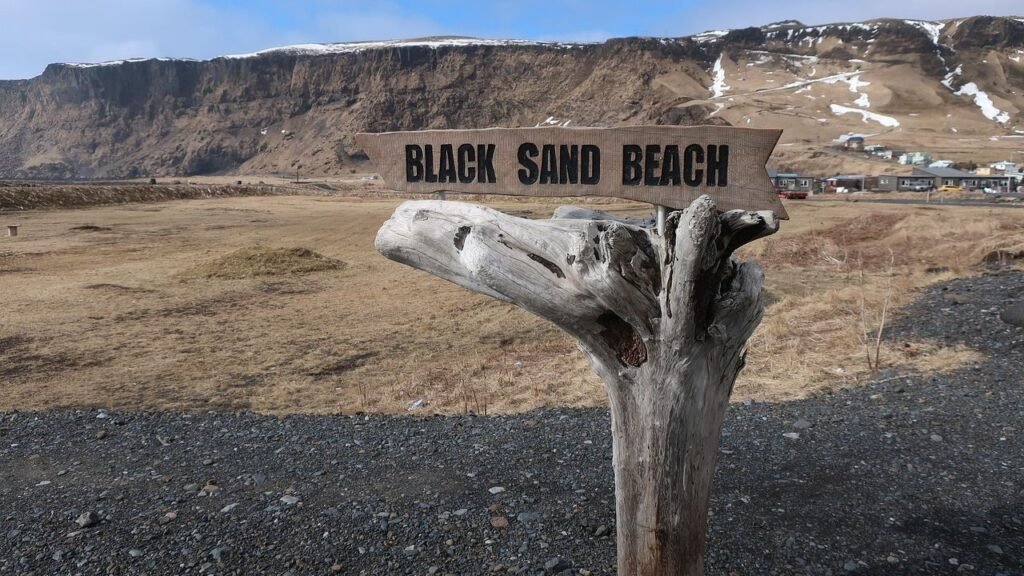
Iceland plays by entirely different rules than the rest of the world. Reynisfjara beach is the most famous black sand beach in Iceland. Tucked along the South Coast, this cinematic location is known for its ash-colored shores, towering basalt columns, and powerful sneaker waves crashing against the cliffs. It’s not a beach where you come to sip cocktails. This is a beach that makes you feel the raw, indifferent power of the earth.
The sand at Reynisfjara is black due to its volcanic origins. Formed from cooled lava that flowed into the ocean during eruptions, the lava fragments were broken down over time by the powerful waves, creating the distinctive black sand beach we see today. It’s essentially a beach built from the ruins of volcanic catastrophe, and I think that’s what makes it so strangely beautiful.
The Reynisfjara beach includes massive stacks of basalt, basalt grottoes, hexagonal basalt columns, high cliffs, lava formations, black coastline, and magnificent stone arches. These towering columns, arranged in almost impossibly geometric patterns, have inspired local folklore for centuries. One of the most famous legends associated with Reynisfjara is the story of two trolls who attempted to drag a ship to shore. According to local folklore, the trolls were caught by the sun’s rays and turned to stone, becoming the sea stacks known as the Reynisdrangar.
Its otherworldly appearance and dramatic atmosphere have become a favorite backdrop for fantasy films and series, such as Game of Thrones. As of early 2026, recent winter storms have reshaped parts of the shoreline, so visitors should plan to enjoy the views, photography, and atmosphere from safe distances rather than walking freely along the shoreline. Still, few places on earth deliver this kind of visual drama.
Vaadhoo Island Bioluminescent Beach, the Maldives
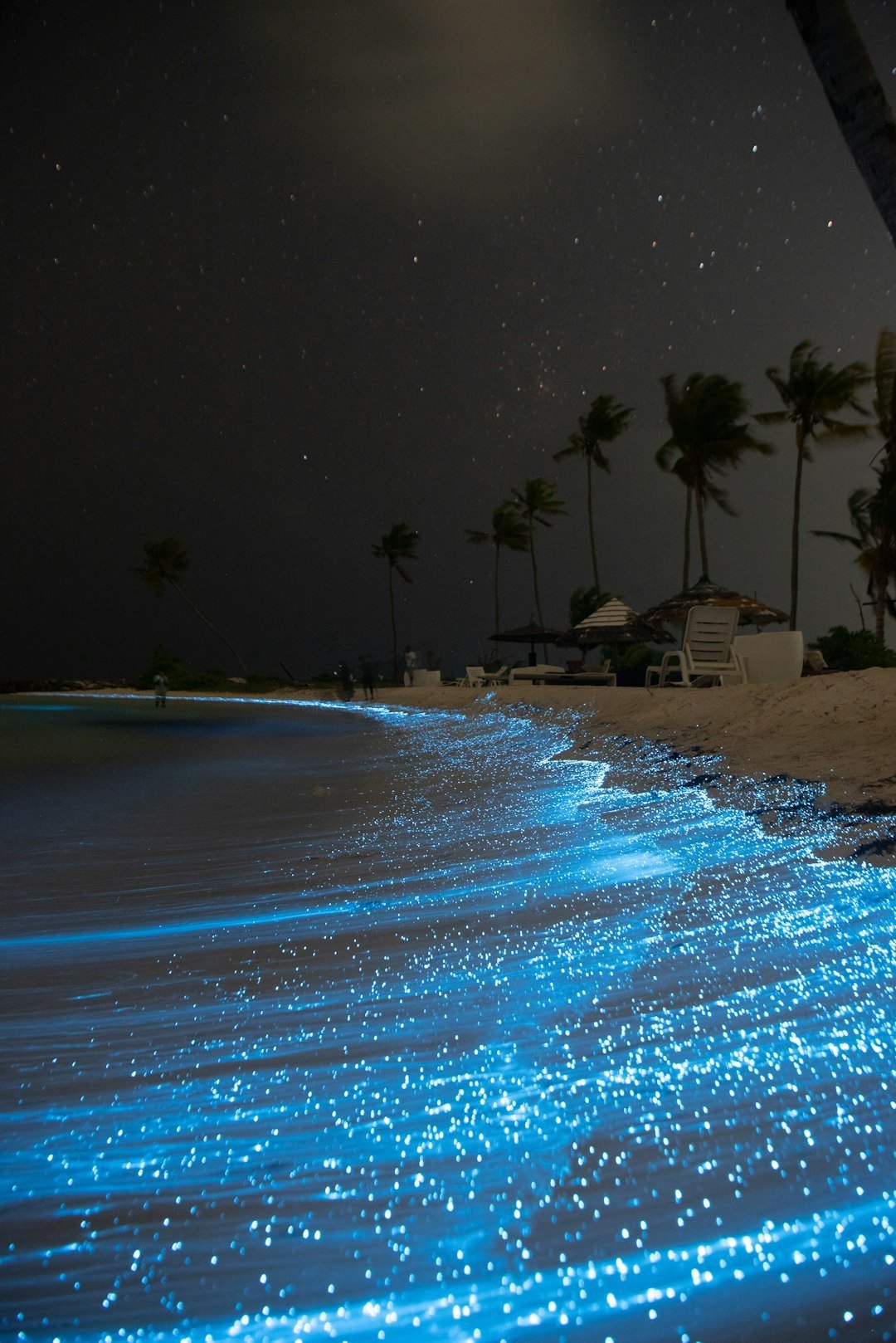
Imagine walking along a beach at midnight and the waves lighting up electric blue around your feet with every single step you take. It sounds like a scene from a science fiction film. The glowing beach, known for its world-famous Sea of Stars, is located on Vaadhoo Island in the Raa Atoll in the Maldives. A natural phenomenon occurs there which turns the beach into a glowing sea of stars.
This spectacle is commonly known as the “Sea of Stars,” an effect created by bioluminescent plankton. These unassuming organisms turn into gorgeous light shows when they’re agitated by water movement, mesmerizing travelers from around the world who flock to the Maldives for a chance to see it. It’s humbling, honestly. A microscopic organism creating one of nature’s most spectacular visual experiences.
To get that iconic glow, microscopic dinoflagellates have a chemical called luciferin, which, when disturbed, releases “cold light,” or light that radiates without heat. These organisms thrive in warm waters, like those in the Maldives. When conditions are just right and human movement stirs the plankton, they quite literally shine and appear as luminous ripples throughout the shoreline.
Choosing a new moon phase enhances the experience, as the night sky is darker, allowing the bioluminescence to shine more brightly. Around five days after the new moon phase, the nights tend to be slightly warmer, which encourages the phytoplankton to surface and become agitated, resulting in a more vibrant glow. It’s a beach experience that has no comparison anywhere on the planet.
Whitehaven Beach, Australia
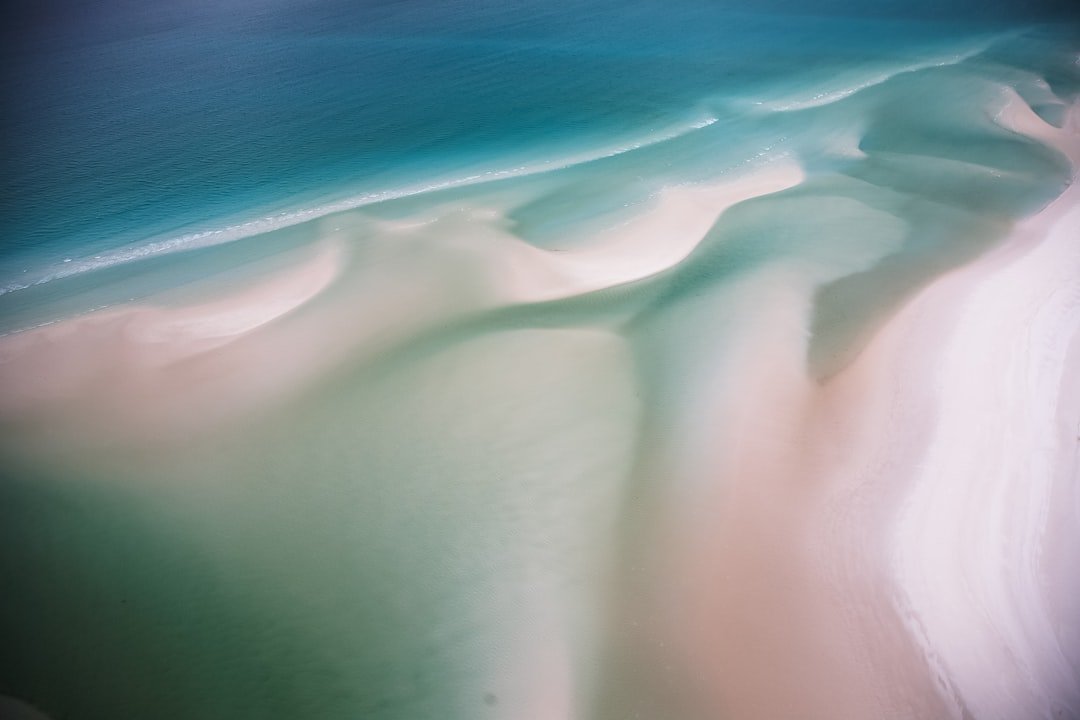
Some beaches are beautiful. Whitehaven Beach is something else entirely. Located in the Whitsundays, Whitehaven Beach is consistently ranked among the best beaches in the world. With its swirling white sand and crystal-clear waters, it’s easy to see why. The sand here is 98% silica, which gives it its brilliant white color. It’s so fine that it doesn’t retain heat, making it perfect for barefoot strolls.
Think of it like this: the same material used in fine optical instruments makes up nearly the entirety of this beach’s sand. It’s less like a shoreline and more like walking across a surface engineered by some perfectionist architect of nature. Stretching over 4 miles, Whitehaven Beach’s water forms a hypnotic swirl of blues and greens at Hill Inlet, like someone dropped a gallon of watercolor paint into the ocean.
From the Hill Inlet Lookout, the view is so surreal that first-time visitors often stop mid-sentence, unable to finish their thoughts. The tidal movements create constantly shifting ribbons of color across the inlet, meaning the scene literally changes throughout the day. No two visits are ever the same. Local guides on sailboat tours share stories about the Ngaro people, the indigenous locals who navigated these islands for thousands of years, giving the stunning landscape an additional layer of human and cultural depth.
Navagio (Shipwreck) Beach, Zakynthos, Greece
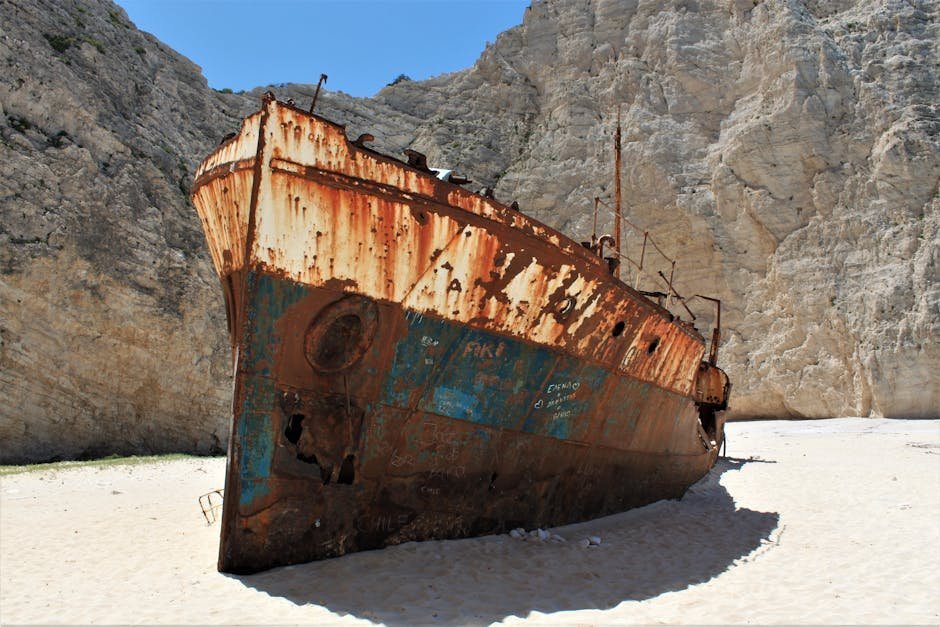
Here’s a beach with an actual backstory. Navagio, also known as “Shipwreck Beach,” is one of Greece’s most famous spots. A rusted shipwreck from the 1980s rests on the shore, surrounded by towering limestone cliffs and unbelievably blue water. The water is so intensely turquoise that visitors sometimes assume photo editing is involved. It is not.
Surrounded by towering cliffs, this hidden gem is accessible only by boat. The rusty remains of a smuggler’s ship lie on the beach, adding a dramatic touch to the already stunning scenery. According to reports, the smuggler ship Panagiotis was left wrecked on the beach in 1983 while transporting cigarettes. The crew escaped and left their cargo, and now their stranded vessel serves as one of the most photographed scenes in the Mediterranean. Life is strange.
The cliffs enclosing the cove rise dramatically on three sides, creating a natural amphitheater of white limestone and sapphire water that feels almost theatrical. Reaching the beach requires a boat ride from the nearby port, which makes the arrival itself feel like a discovery. You round a corner and suddenly, there it is. Praia da Marinha is one of its most iconic spots, with turquoise waters and sea-carved arches creating a jaw-dropping landscape – but Navagio delivers that same sense of wonder with the added mystery of human history literally rusting on its shores.
Papakōlea Green Sand Beach, Hawaii, USA
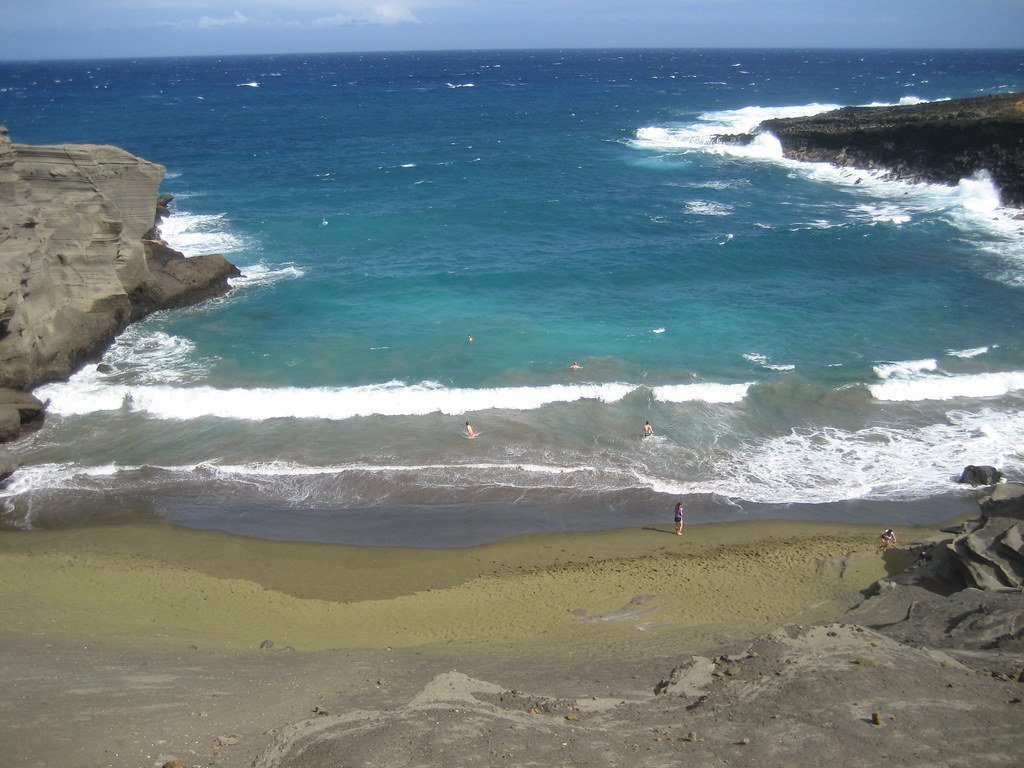
Most people have never heard of a green sand beach. That’s the thing about this planet. It keeps surprising you. Papakōlea Beach on Hawaii’s Big Island is one of only four green sand beaches in the world. The striking olive-colored sand comes from tiny particles of a semi-precious stone called olivine, which forms from volcanic eruptions. The beach sits inside a collapsed volcanic cinder cone, making the surrounding landscape feel as dramatic as the shoreline itself.
Olivine is actually a gemstone. Let that sit for a moment. This beach is essentially carpeted in microscopic semi-precious gems, pulverized by ocean waves over thousands of years into something you can walk on barefoot. It’s wildly improbable and absolutely real. This secluded beach is accessible via a challenging hike, adding a sense of adventure to the visit. The unique color and remote location make it a bucket-list destination for beach lovers seeking something truly different.
To get there, prepare for a rugged 2.5-mile hike, some serious off-roading, or a bumpy ride with a local driver, but the surreal scenery makes it worth every step. The effort is very much part of the experience here. Arriving after that hike, sweaty and out of breath, and then standing before a beach of glowing olive green sand backed by dark volcanic cliffs – it hits differently than stepping off a shuttle bus. Some places need to be earned.
Playa de las Catedrales, Galicia, Spain
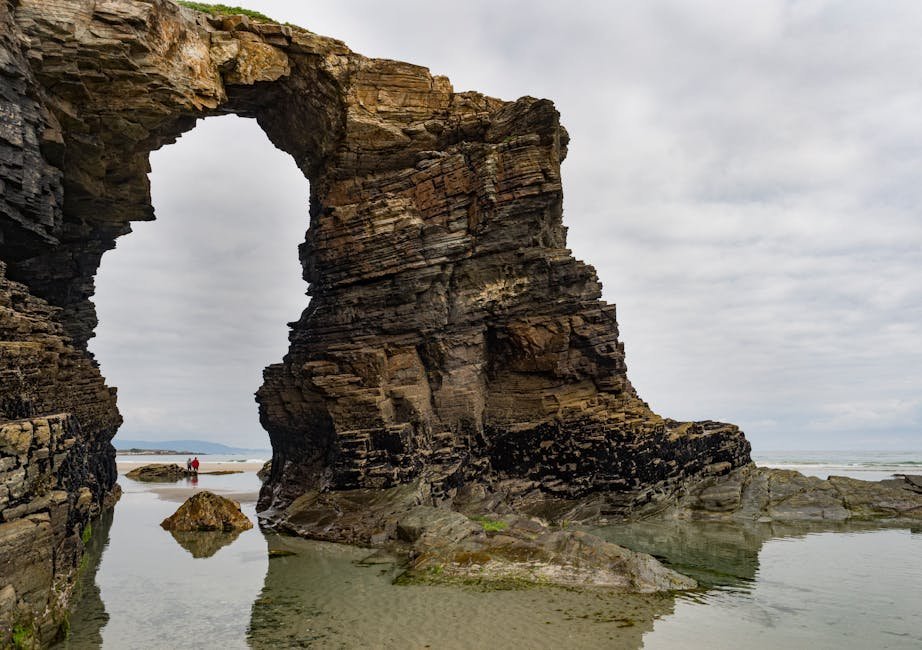
There is a beach in northwestern Spain that looks less like a coastline and more like the ruins of an ancient civilization built by water. Known for its otherworldly rock formations, Playa de las Catedrales in Galicia, Spain, offers a mesmerizing spectacle at low tide. The natural arches and caves, carved by the relentless waves, resemble the grandeur of Gothic cathedrals. Walking through these stone corridors feels like stepping into an ancient, mystical world.
The name translates roughly to “Beach of the Cathedrals,” and standing beneath those towering stone arches, it’s genuinely difficult to convince yourself this was built by nothing but wind and water over millions of years. The rhythmic sound of the ocean echoes off the walls, enhancing the magical atmosphere. It’s the kind of place that makes you want to whisper, the way you would in an actual cathedral.
Here’s the critical detail for planning a visit: the arches and caves are only fully accessible during low tide. At high tide, the sea reclaims the entire formation and swallows the passages whole. Timing is everything. The Algarve’s coastline is a dramatic blend of golden beaches, hidden coves, and towering limestone cliffs, and while Galicia sits further north, it shares that same dramatic dialogue between rock and ocean that defines Atlantic Europe at its most spectacular. The Spanish Atlantic coast, it turns out, has been keeping secrets.
Pink Sands Beach, Harbour Island, The Bahamas
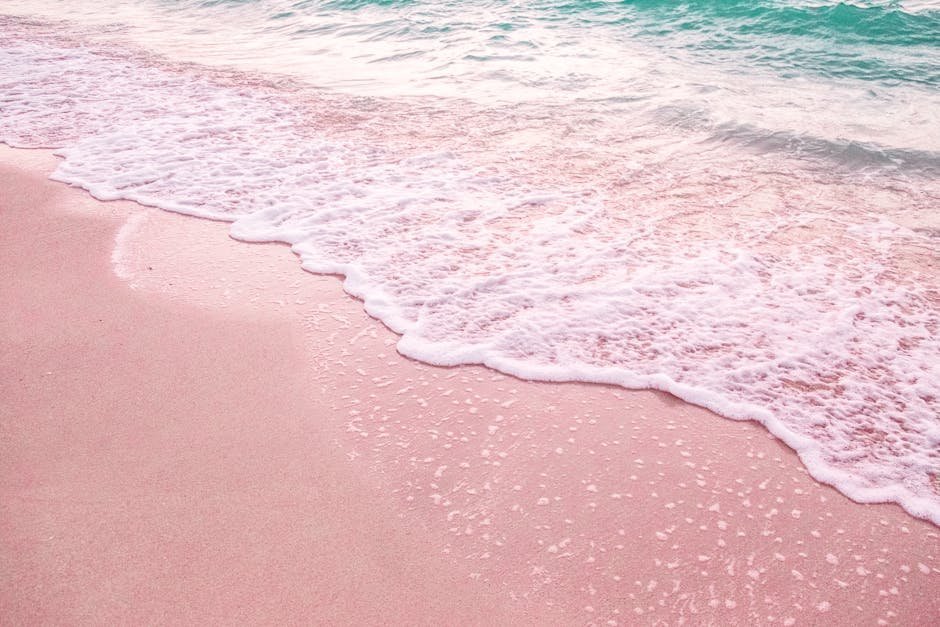
The Bahamas need no introduction when it comes to beautiful beaches. Yet even there, among all that turquoise abundance, Harbour Island’s Pink Sands Beach holds a special rank. Imagine walking on a beach where the sands blush pink beneath your feet. Pink Sands Beach in the Bahamas offers just such a surreal experience. Its unique hue comes from microscopic coral insects known as foraminifera, whose shells are pink or red.
Strolling along these shores, visitors are enveloped in an otherworldly ambiance that feels straight out of a dream. This beach is a romantic escape, perfect for quiet contemplation or a dreamy walk at sunset. The gentle waves create a soothing symphony that enhances the sense of tranquility and wonder. It stretches for roughly three miles, which means you can walk for a long time before you stop feeling slightly amazed.
What makes it different from Komodo’s pink beach is the vibe. Where Komodo feels raw and remote, Harbour Island has a laid-back, pastel-tinted elegance to it, with charming hotels and restaurants just steps from the shore. Pink Sands Beach on Harbour Island offers a unique and romantic beach experience that’s as Instagrammable as it gets. The blush-colored sand is made from tiny coral particles, giving the beach its signature hue. Combine that with the crystal-clear water, and you’ve got a beach that’s straight out of a fairy tale. It’s the kind of place where you start seriously reconsidering your life choices the moment you set foot on it.
The World Is Still Full of Wonders
There’s a temptation to think that, in 2026, everything worth discovering has already been discovered, photographed, and posted online. These eight beaches prove otherwise. A glowing sea in the Maldives. Olive gemstone sand in Hawaii. A shipwreck sealed inside limestone cliffs in Greece. Each of these places delivers something that no hotel pool, no rooftop bar, and no city skyline ever could: the undeniable, almost overwhelming reminder that the natural world is still far stranger and more beautiful than anything we could design.
Extraordinary destinations don’t just create memories. They create a particular kind of humility, a sense that you are small, lucky, and alive in front of something much larger than yourself. The world’s most incredible beaches are still out there, still waiting, still real. The only question is which one you’ll stand on first.
Which of these beaches surprised you the most? Drop your thoughts in the comments – we’d love to hear which one just made it to the top of your bucket list.

Besides founding Festivaltopia, Luca is the co founder of trib, an art and fashion collectiv you find on several regional events and online. Also he is part of the management board at HORiZONTE, a group travel provider in Germany.
