

- 12 Bob Dylan Lyrics That Changed the Way We Hear the World - September 12, 2026
- History’s Biggest Lies—The Myths We Still Believe Today - September 12, 2026
- Famous Actors Who Almost Gave Up—And the One Role That Changed Everything - September 12, 2026
There are moments in music history that transcend sound. They reach past the stage, past the speakers, past the record sleeves, and land somewhere far more important – in the real world, where real people are suffering. The Concert for Bangladesh was one of those moments. In fact, it was the moment that invented the idea entirely.
On a single Sunday in the summer of 1971, a group of musicians gathered in New York City and did something that had simply never been done before at this scale. They used their fame not to fill their own pockets, but to shine a blinding spotlight on one of the most devastating humanitarian crises of the 20th century. The ripple effects would be felt for decades. Let’s dive in.
Fact 1: It Was Born From a Friendship, Not a Business Plan

Here’s the thing – this whole event started with a dinner conversation and a lot of heartbreak. Ravi Shankar, a Bengali musician who was deeply connected to his homeland, first brought the issue of the crisis in East Pakistan to the attention of his friend George Harrison in the early months of 1971, over dinner at Friar Park. There was no committee meeting. No corporate sponsor. Just one friend asking another friend for help.
As a Bengali himself, whose family members were among those fleeing to India, Shankar was deeply distressed. Wanting to plan a benefit concert, he hoped to raise awareness as well as up to $25,000 in aid for the refugees, so he turned to George for help. It’s hard not to feel something when you realize the whole thing started that simply – and ended up changing the world.
Fact 2: The Crisis That Sparked It All Was Catastrophic
As East Pakistan struggled to become the separate state of Bangladesh during the 1971 Bangladesh Liberation War, the political and military turmoil and associated atrocities led to a massive refugee problem. East Pakistan had also endured devastating destruction from the Bhola cyclone in 1970, and in March of 1971, torrential rains and floods arrived in the region, threatening a total humanitarian disaster.
The Indian Government estimated the cost of caring for the refugees at $1 million a day. Foreign aid provided only a fraction of the desperately needed food, equipment, and medicine. Think about that for a second – a million dollars a day, and the world was barely paying attention. That indifference was exactly what Harrison and Shankar were determined to break.
Fact 3: George Harrison Assembled a 24-Piece Supergroup in Weeks
derived work: Clusternote, CC BY-SA 3.0)
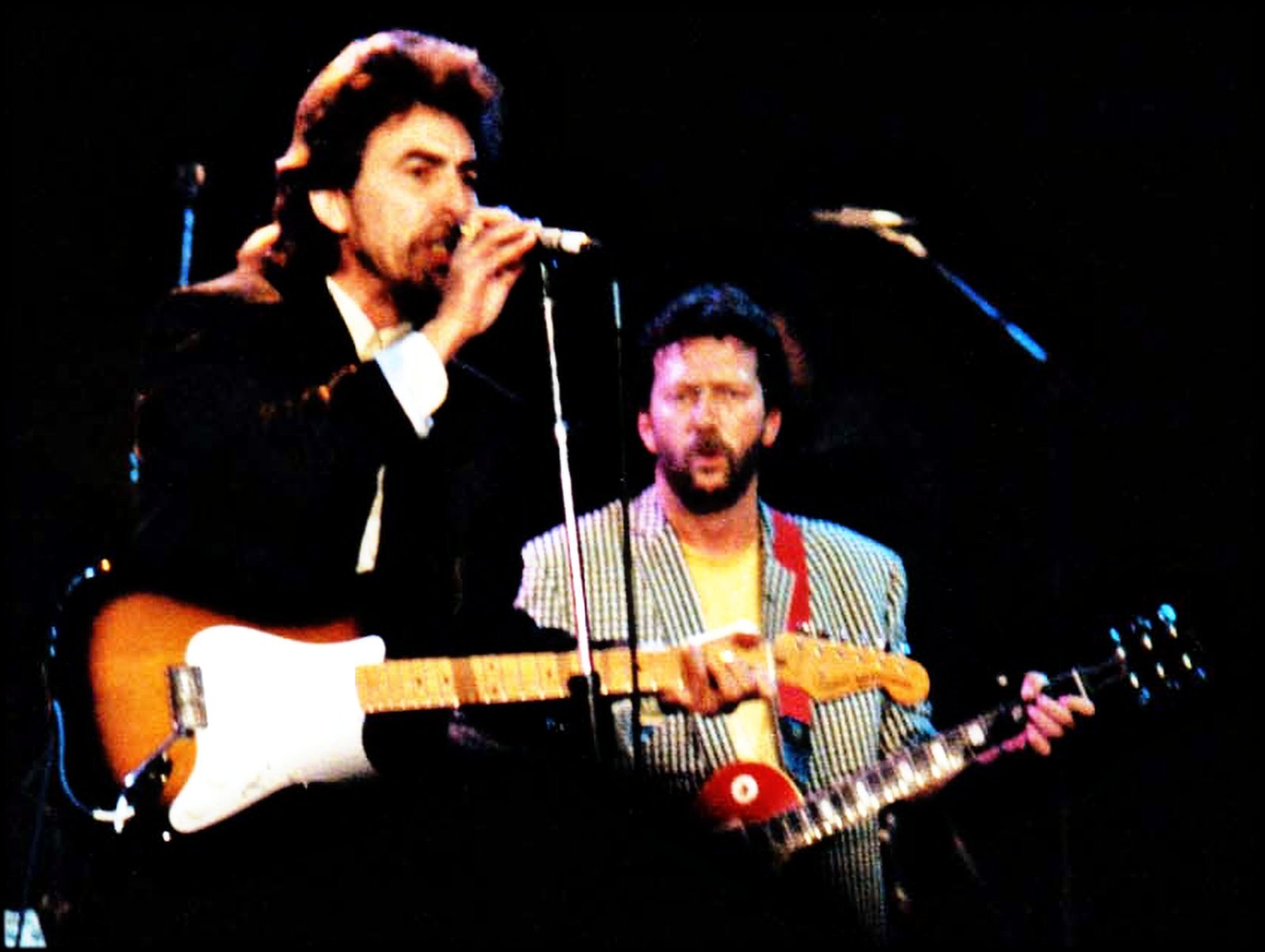
What Harrison pulled off in terms of logistics was, honestly, staggering. Setting aside his other work, he spent a month and a half making calls to some of the world’s biggest rock artists, convincing them to alter any plans they already had for the purpose of coming together, without any pay, to use their talents for a worthy cause. No pay. Just show up and help. Try pitching that today.
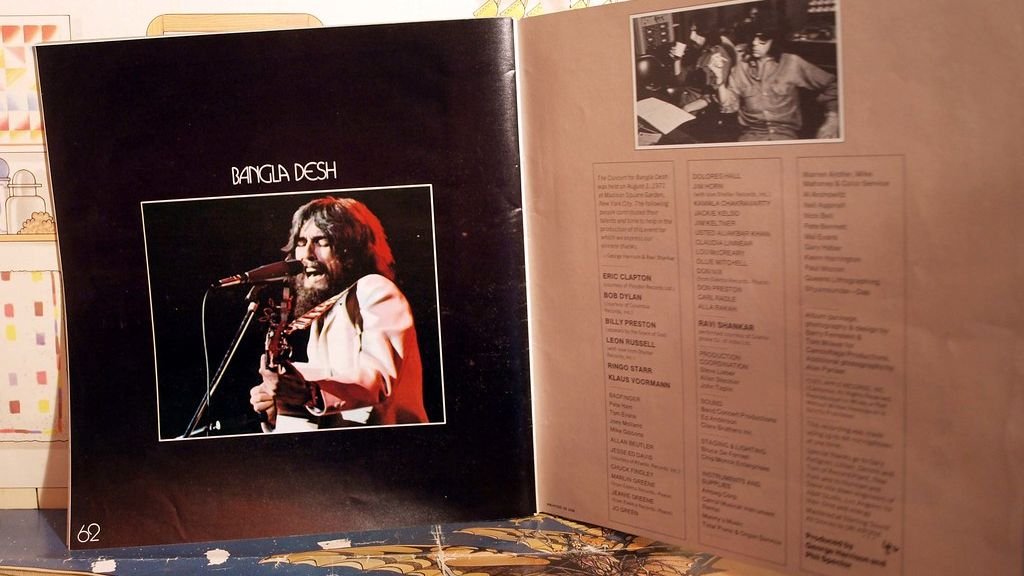
Ringo Starr was in the middle of working on a film. Eric Clapton was battling a heroin addiction. Bob Dylan had practically become a recluse since a motorcycle accident in 1966. But they all showed up. Other notable musicians, including Billy Preston, Leon Russell, Klaus Voormann, and the band Badfinger also rallied to George’s call. In a matter of weeks, the ex-Beatle had assembled a 24-piece band.
Fact 4: Two Sold-Out Shows Were Held on the Same Day
The Concert for Bangladesh was a pair of benefit concerts organised by former Beatles guitarist George Harrison and Indian sitar player Ravi Shankar. The shows were held at 2:30 and 8:00 pm on Sunday, 1 August 1971, at Madison Square Garden in New York City, to raise international awareness and fund relief for refugees from East Pakistan. Two complete shows, on the same day, back to back. That takes serious stamina from everyone involved.
The upcoming concert by “George Harrison and Friends” was announced via a minuscule ad buried in the back pages of the New York Times. Tickets sold out in no time, leading to the announcement of a second show. There is something quietly poetic about that – a tiny ad that led to one of the biggest nights in music history. The demand was immediate and overwhelming.
Fact 5: It Was the First-Ever Rock Charity Single Too
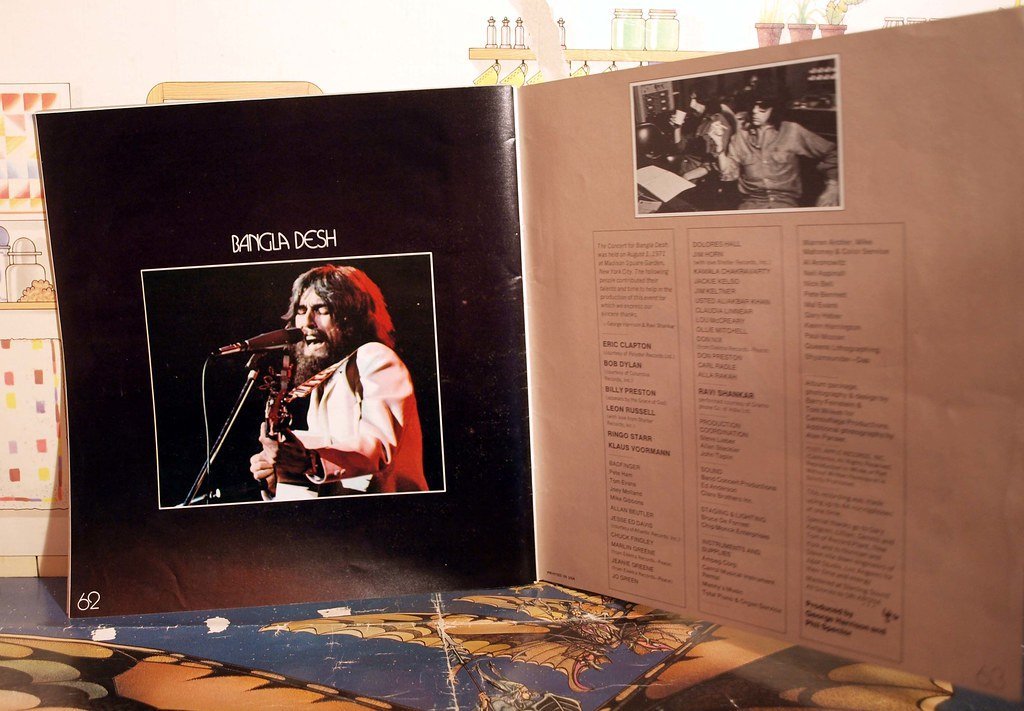
Most people know about the concert. Fewer people know that Harrison went even further before the shows even happened. In the middle of his hurried preparations, he composed the song “Bangla Desh” in order to call further attention to the Bengalis’ cause, and rush-released it as a charity single four days before the shows. Four days. Composed, recorded, and released in the middle of organizing one of the most ambitious concerts ever staged.
The single “Bangla Desh” was recorded in Los Angeles in early July 1971, and released at the end of the month just before the Madison Square Garden shows. It became the first ever rock ‘n’ roll charity single. It’s a footnote that deserves a headline of its own. Harrison essentially invented two entirely new formats at once – the charity single and the mega benefit concert.
Fact 6: Bob Dylan’s Surprise Appearance Was a Historic Comeback
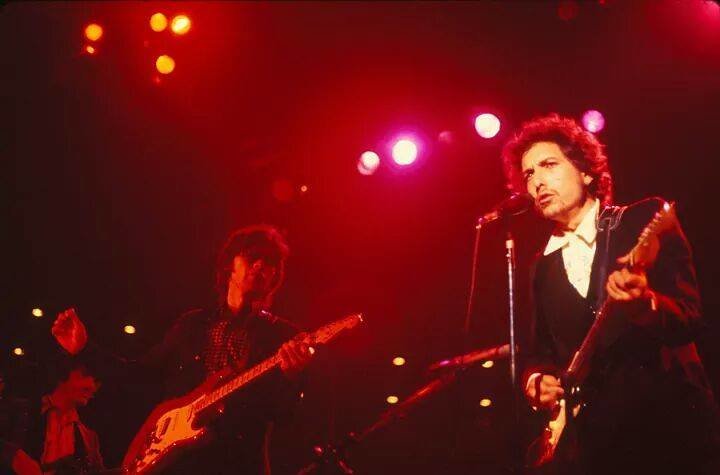
If the concert had a single jaw-dropping moment beyond its very existence, it was Bob Dylan walking onto that stage. The shows were a pioneering charity event and set the model for future multi-artist rock benefits. Crucially, the event represented Dylan’s first major concert appearance in the U.S. in years, which sent the crowd into a frenzy that nobody who was there likely ever forgot.
Dylan had essentially retreated from public life since a motorcycle accident in 1966. He was famously reclusive, guarded, and deeply cautious about the concert stage. The fact that Harrison convinced him to show up – for free, for a cause – says everything about the moral gravity of that night. I think that cameo alone should be studied in music history classes.
Fact 7: The Concert Put Bangladesh on the Global Map Overnight
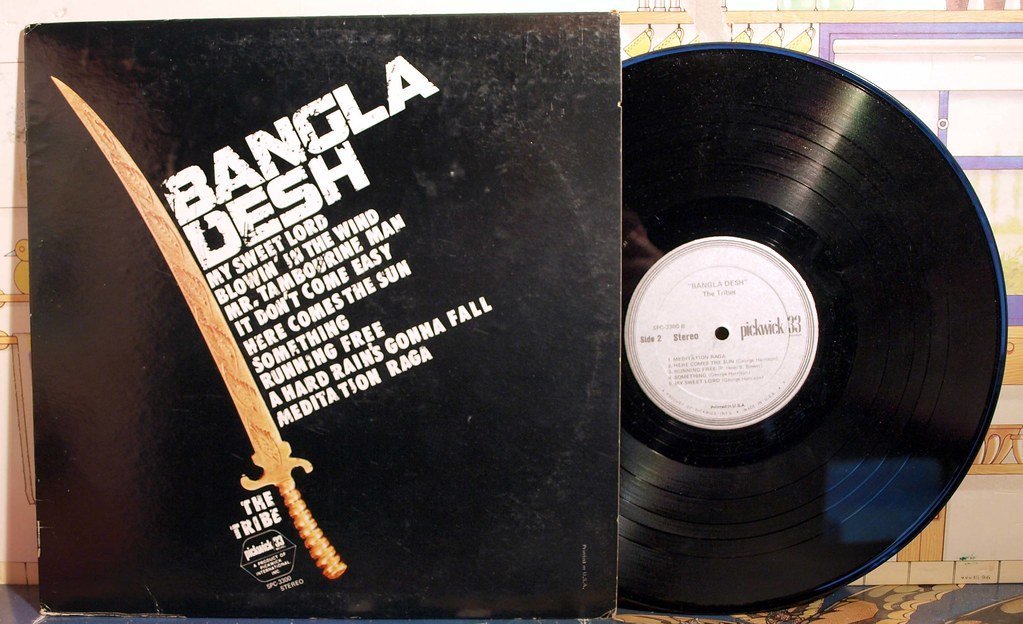
Up to that point, little public attention had been drawn to the crisis in East Pakistan and Bangladesh. Few people outside the region knew how the deadly catastrophe had come to be, or what individuals who cared could do to help relieve the suffering. The name “Bangladesh” was, for most Western audiences, essentially unknown.
Politically, as Bangladeshi historian Farida Majid would note, the “warmth, care and goodwill” of the August 1971 concerts “echoed all over the world,” inspiring volunteers to approach UNICEF and offer their assistance, as well as eliciting private donations to the Bangladesh disaster fund. In one single Sunday afternoon and evening, a name became a cause, and a cause became a global movement. That kind of cultural reach is almost impossible to manufacture intentionally.
Fact 8: The Live Album and Film Extended the Impact Massively
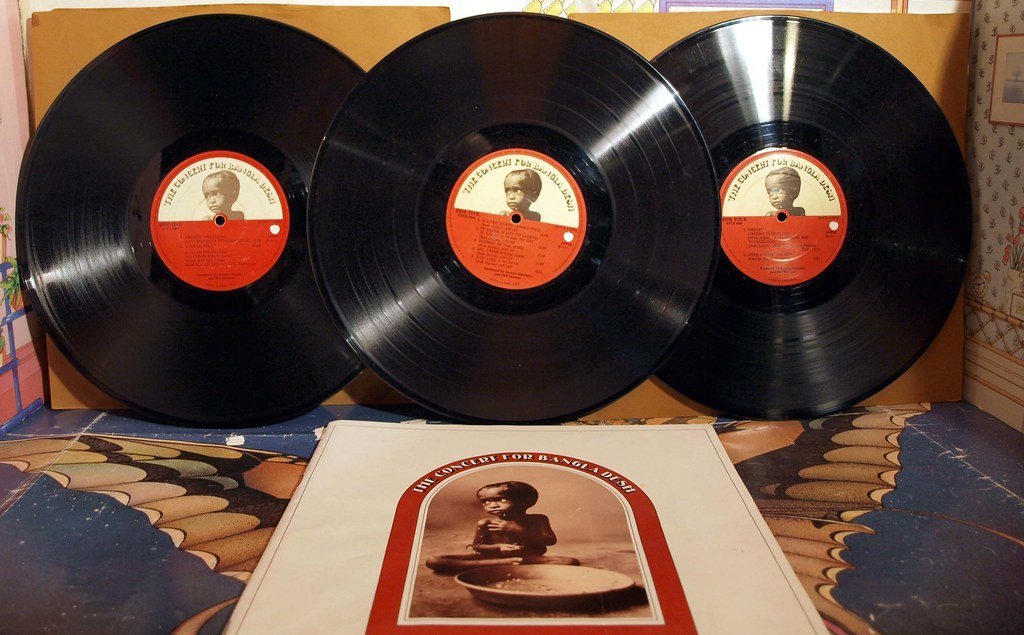
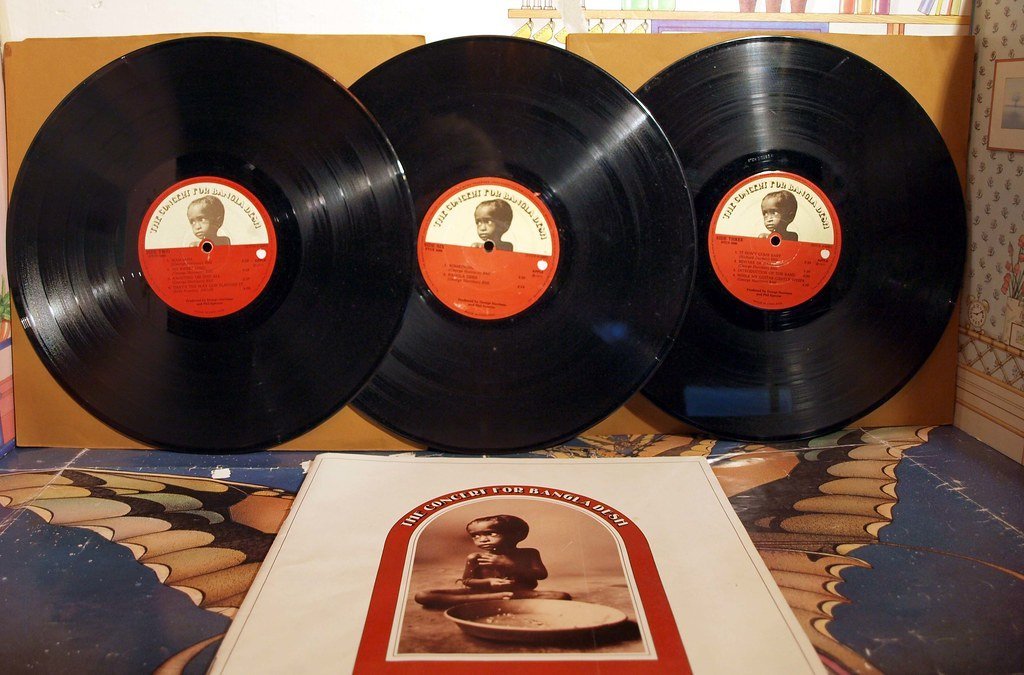
Harrison was smart enough to know that a single night couldn’t do everything alone. The concerts were followed by a bestselling live album, a boxed three-record set, and Apple Films’ concert documentary, which opened in cinemas in the spring of 1972. That meant the fundraising didn’t stop when the lights went down at Madison Square Garden – it just moved to record stores and movie theaters.
Despite the cost, the album was an immediate commercial success. In America, it spent six weeks at number 2 on the Billboard Top LPs chart. On other US charts, compiled by Cash Box and Record World, the live album peaked at number 2 and number 1, respectively. The album sold over 5 million units globally. That is not just a charity album – that’s a blockbuster record by any standard of the era.
Fact 9: The Total Money Raised Reached an Estimated $12 Million
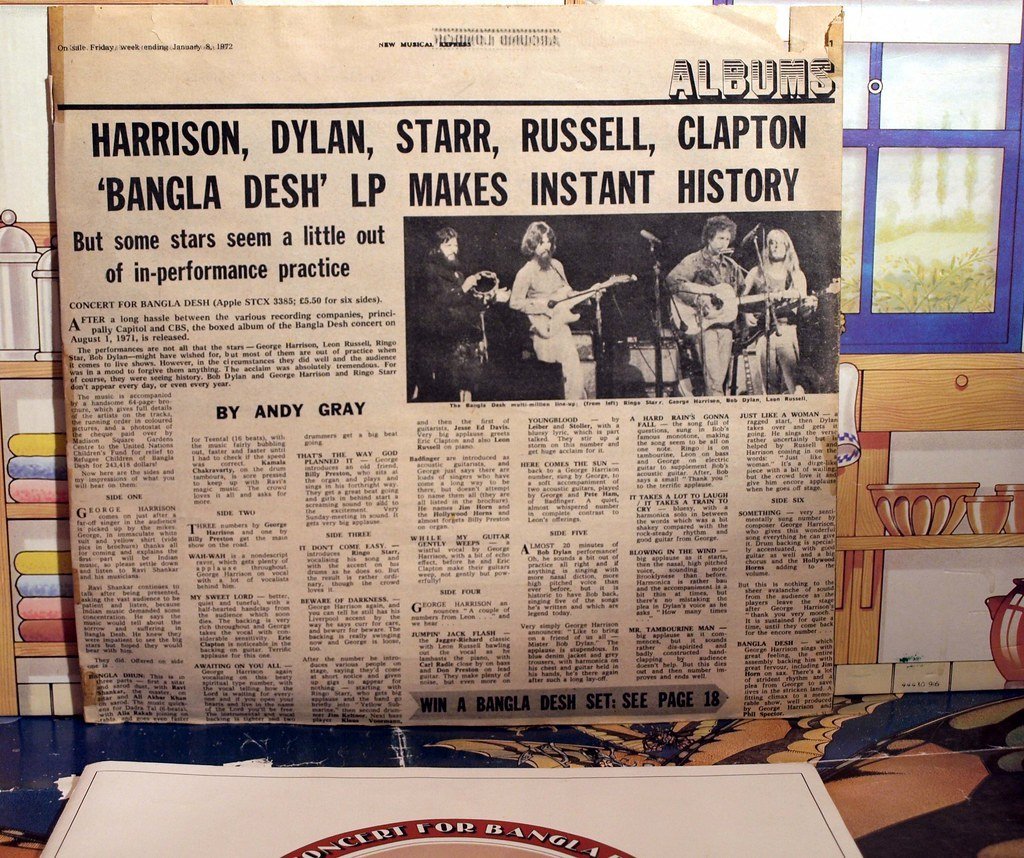
The financial story of the Concert for Bangladesh is more complicated than it might appear. There were serious tax headaches, bureaucratic delays, and controversy around the distribution of funds. It was frustrating, and it slowed things down. But the end result was undeniable. By 1985, through revenue raised from the Concert for Bangladesh live album and film, an estimated $12 million had been sent to Bangladesh, and sales of the live album and DVD release of the film continue to benefit the George Harrison Fund for UNICEF.
The George Harrison Fund for UNICEF continues that legacy to this day, providing support for UNICEF programs in Bangladesh while expanding its influence to include other countries where children are in need. While forever linked with Bangladesh, the Fund has supported programs in Angola, Romania, India, Haiti and Brazil. What started as a dinner conversation at Friar Park became a permanent institution of global charity. Not bad for a rock guitarist who just wanted to help a friend.
Fact 10: It Created the Blueprint for Every Major Charity Concert That Followed
The shows were a pioneering charity event, in aid of the displaced Bengali refugees of the Bangladesh Liberation War, and set the model for future multi-artist rock benefits such as Live Aid (1985) and the Concert for New York City (2001). The blueprint was so clear and so effective that future organizers essentially followed it step by step.
After that, the idea of a benefit concert took off. The 1980s brought massive follow-ups like Live Aid in 1985, organized by Bob Geldof and Midge Ure to raise money for the Ethiopian famine. It was broadcast around the world and featured artists like Queen, U2, David Bowie, and Led Zeppelin. Farm Aid followed soon after, started by Willie Nelson, Neil Young, and John Mellencamp to support American farmers. Live 8 in 2005 took the benefit model global again, focused on poverty and debt relief in Africa.
The Legacy: A Template That Still Matters
In his entry for the album in the book 1,000 Recordings to Hear Before You Die, Tom Moon recognises the concerts as “the first large-scale example of rock activism,” saying that Harrison and his fellow performers provided the blueprint for celebrities to employ their fame for charitable causes. That framing feels exactly right. Before Bangladesh, musicians entertained. After Bangladesh, they could also mobilize.
Pop artists became looked upon as more than just entertainers during the late 1960s and early 1970s, and this was the first large-scale pop music event to benefit a major human rights issue. Perhaps most crucially, the Concert for Bangladesh showed that celebrities could tap into their fan base to make Western audiences more attentive to geographically distant issues. That lesson remains as vital in 2026 as it was back then.
George Harrison was called “the quiet Beatle” for most of his career. But on August 1, 1971, he made more noise than almost anyone in the history of popular music – not with his guitar, but with his conscience. The question worth sitting with is this: how many millions of lives, across how many decades, have been touched because one musician simply answered a friend’s call for help?
What do you think? Could something like the Concert for Bangladesh still happen with the same raw, unsponsored purity today? Tell us in the comments.
CEO-Co-Founder
