


- Authors Who Wrote Their “Final” Book First - September 14, 2026
- 11 Classic Novels That Were Originally Meant for Children (Seriously) - September 14, 2026
- 20 Songs That Feel Like They Were Written for a Memory You Haven’t Made Yet - September 14, 2026
There is something almost magical about the idea of a dimly lit room humming with electronic sound, rows of glowing cabinets, and teenagers crowded around a machine with nothing more than a joystick and a pocket full of quarters. For a stretch of time from the late 1970s into the early 1980s, the arcade wasn’t just a place to play games. It was the center of an entire youth culture.
The golden age of arcade video games was a period of rapid growth, technological development, and cultural influence that stretched from the late 1970s to the early 1980s. Arcades became more than just places to play video games – they were vibrant social hubs where young people congregated, competed, and forged communities, offering a unique communal experience that home gaming systems of the time simply couldn’t replicate. The games born during this era didn’t just entertain people. They genuinely rewired the DNA of entertainment itself. Let’s dive into the seven titles that made it all happen.
1. Space Invaders (1978): The Shot Heard Around the Gaming World
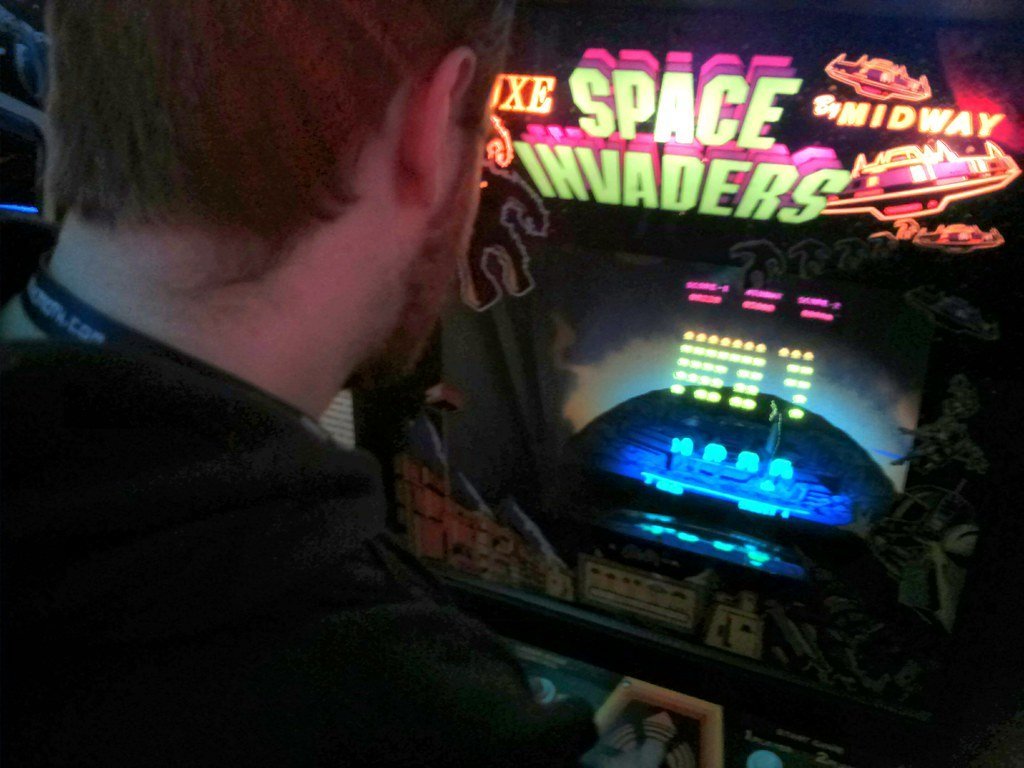
If you had to pick a single moment when arcade gaming went from novelty to phenomenon, this is probably it. Space Invaders, designed by Tomohiro Nishikado and released by Taito in 1978, became the first true gaming phenomenon, with a premise that was revolutionary for its time: defend Earth from descending alien invaders that speed up as you eliminate them. That one small design twist – enemies accelerating as their numbers dwindled – was an unintentional byproduct of the processor having fewer sprites to render. Accidental genius, honestly.
Space Invaders was so popular in Japan that it reportedly caused a shortage of 100-yen coins. Think about that for a second. A video game broke a nation’s coin supply. Within months, the game became so popular that specialty arcades referred to as “Space Invaders Parlours” opened with nothing but Space Invaders cabinets, and the game became the arcade industry’s all-time best-seller, remaining the top arcade game for three years through 1980. Its legacy stretched far beyond quarters too – Shigeru Miyamoto, the creator of Donkey Kong, Mario, and The Legend of Zelda, commented that Space Invaders incited his interest in video games, leading him to pursue it as a profession.
2. Pac-Man (1980): The Game That Ate the World
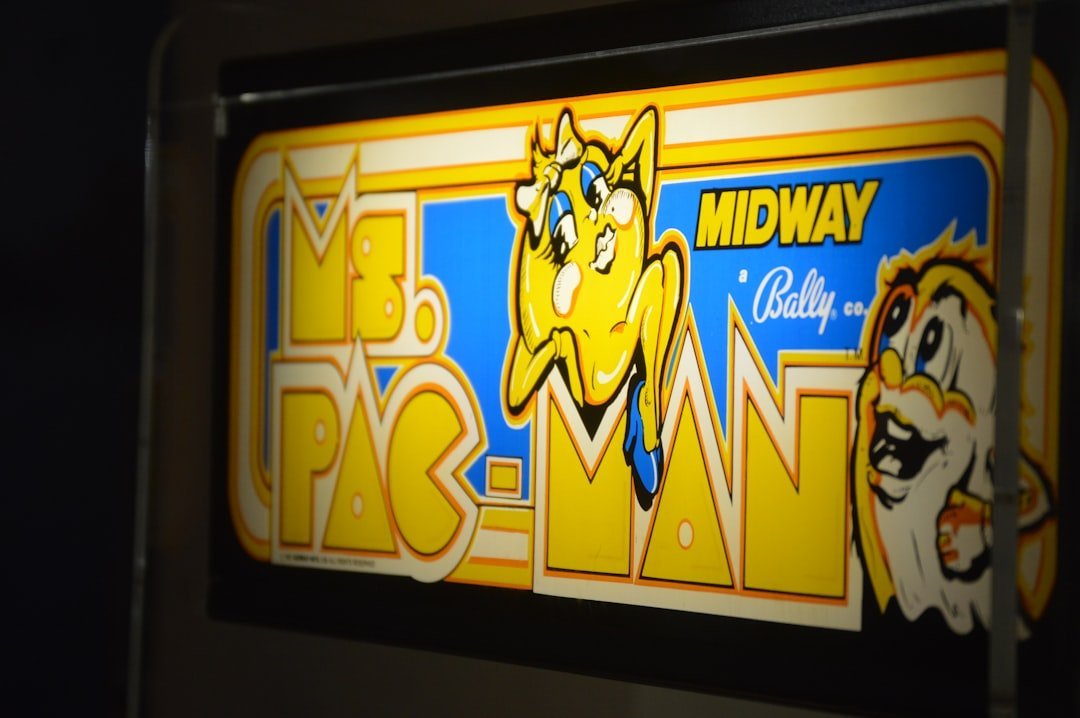
Here’s the thing about Pac-Man – it didn’t just become a popular game. It became a cultural earthquake. In 1980, Pac-Man was released by Namco and broke away from the shooter-dominated landscape, introducing the maze-chase genre and appealing to a broader demographic, including casual gamers. That was a genuinely radical move at the time. Pac-Man was also responsible for expanding the arcade game market to involve large numbers of female audiences across all age groups.
Its release in 1980 caused such a sensation that it initiated what is now referred to as “Pac-Mania.” The game spawned an animated television series, numerous clones, Pac-Man-branded foods, toys, and a hit pop song – and its popularity was such that President Ronald Reagan congratulated a player for setting a record score. I think it’s safe to say no game before or since has genuinely commanded the attention of a sitting US president. Pac-Man has become one of the highest-grossing video games of all time, generating total revenue of $14 billion by 2023.
3. Donkey Kong (1981): The Birth of the Modern Hero
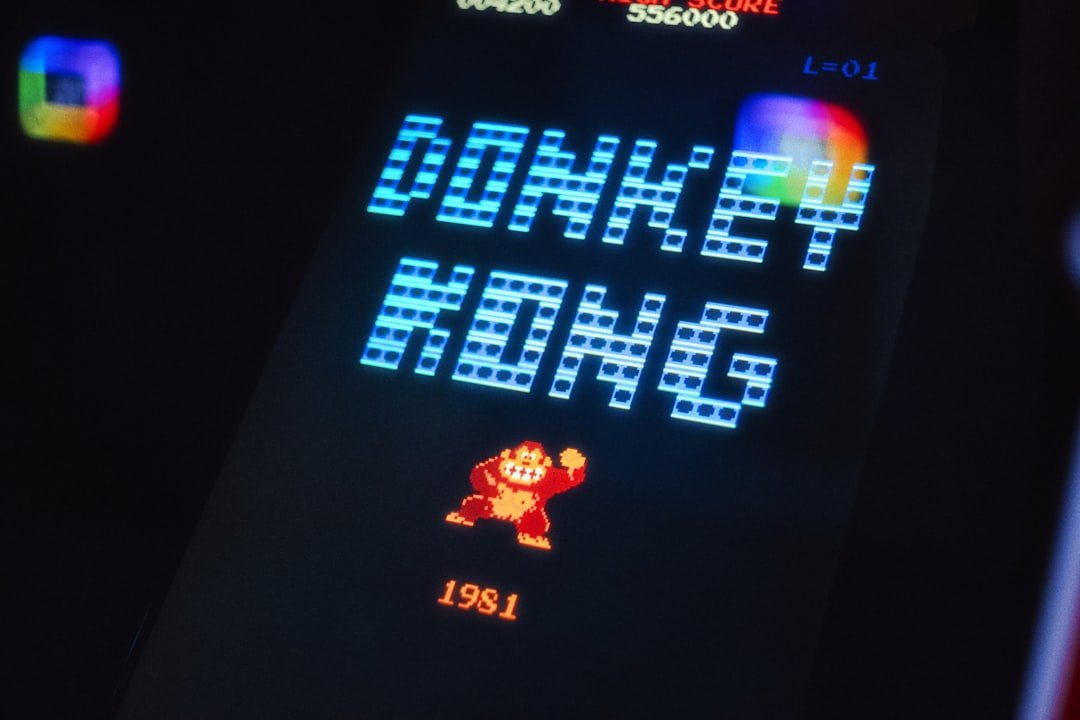
Donkey Kong carries a backstory almost as dramatic as the game itself. Nintendo’s “Radar Scope” was a commercial failure in North America, but Nintendo of America workers, including future visionary Shigeru Miyamoto, decided to use thousands of unsold cabinets to make a completely different game – the result was Donkey Kong in 1981, which became an enormous success. It’s a bit like turning a failed soufflé into a five-star dish. Donkey Kong was one of the first games to blend a story with gameplay, featuring a big ape tossing barrels at Mario as he tries to rescue a princess.
The game that cemented Nintendo’s success in the video game industry starred the titular ape kidnapping a woman named Pauline and taking her to the top of a construction site, while Mario pursued Donkey Kong across four distinct levels, dodging obstacles and those famous barrels. Universal Studios sued Nintendo claiming Donkey Kong copied King Kong – but Nintendo won, establishing video game characters as protectable intellectual property. That legal victory quietly changed how the entire industry protected its creative work forever after.
4. Asteroids (1979): Physics in a Pixelated Universe
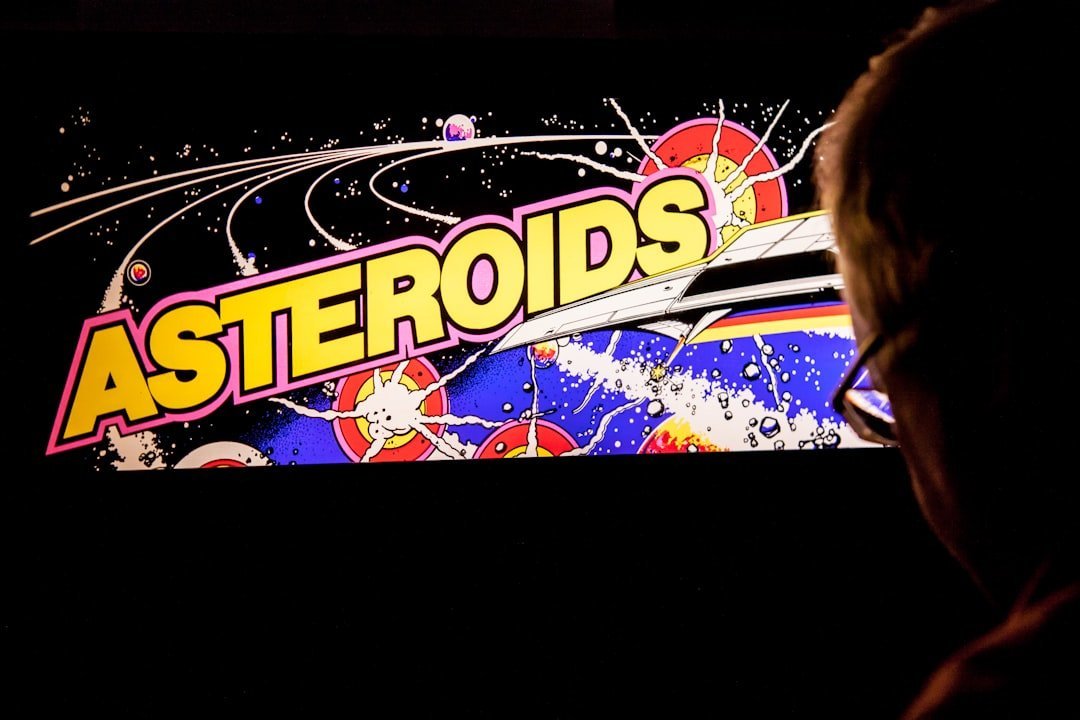
Asteroids is the kind of game that sounds deceptively simple on paper. You’re a tiny ship. There are rocks. Shoot the rocks. But the genius was in the physics. Developed by Atari, Asteroids popularized vector graphics and introduced physics-based movement, allowing players to maneuver in zero gravity, with its innovative mechanics and addictive gameplay cementing its place as one of the defining games of the era. That feeling of momentum, of drifting through space with no friction – it was unlike anything players had experienced before.
Among the best-selling arcade games of the golden age, Asteroids sold over 70,000 cabinets, while Space Invaders had grossed $2 billion in quarters by 1982 and Pac-Man had grossed over $1 billion by 1981. The arcade boom that began in the late 1970s is credited with establishing the basic techniques of interactive entertainment and for driving down hardware prices to the extent of allowing the personal computer to become a technological and economic reality. Asteroids was a key part of that charge. Original Asteroids arcade cabinets from the golden age are today highly sought after by collectors.
5. Galaga (1981): The Shooter Perfected
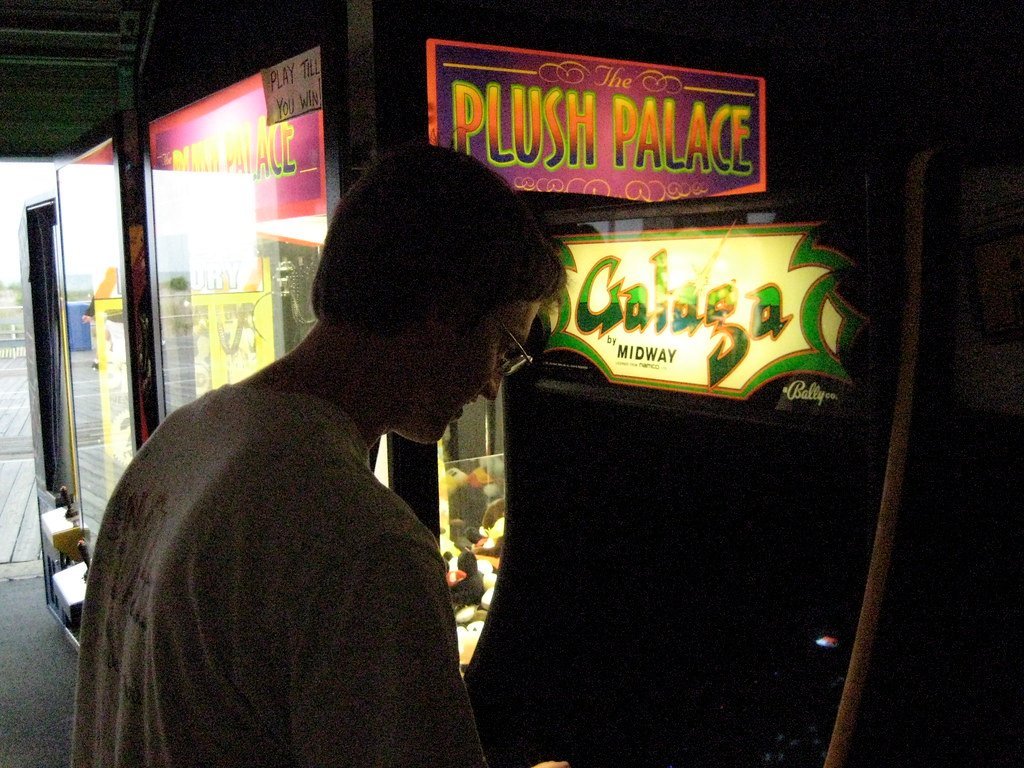
If Space Invaders was the rough draft, Galaga was the masterpiece. Galaga, Namco’s sequel to Galaxian, refined the Space Invaders formula to near-perfection, introducing enemy tractor beams that could capture your fighter – but if you rescued your ship, you’d pilot two fighters simultaneously, doubling your firepower. That mechanic alone was a stroke of genius. It turned a potential punishment into a risky reward, creating genuine strategic tension in every single run.
Although early location tests were unsuccessful, Galaga went on to become one of the most successful titles of the golden age of arcade video games, routinely appearing on Japanese and American arcade charts through 1987, and is widely regarded as one of the greatest video games of all time. The enemy AI in Galaga was more advanced than most arcade games of its time – the alien ships didn’t just move randomly; they used coordinated attacks, spiraling patterns, and dive-bomb maneuvers, making them unpredictable and harder to defeat. Even today, you’ll spot a Galaga cabinet in movies and TV shows. From movies like The Avengers to TV shows such as Stranger Things, Galaga has cemented its place in pop culture, with Tony Stark even calling out a S.H.I.E.L.D. agent playing Galaga in the background.
6. Frogger (1981): Crossing the Road Was Never So Terrifying
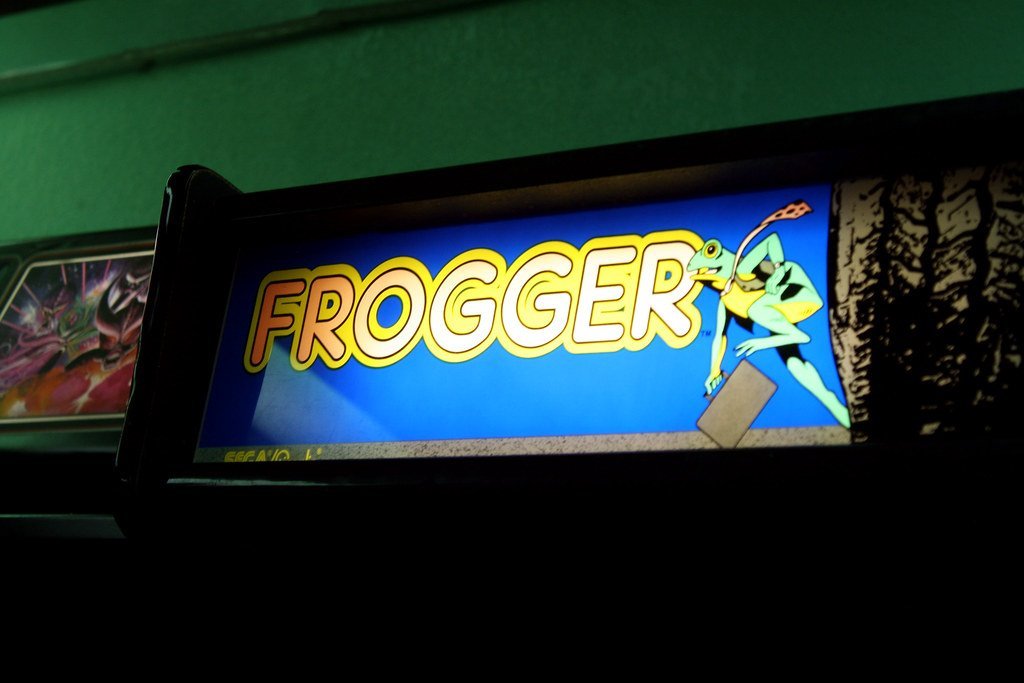
Frogger sounds ridiculous when you explain it to someone who’s never played it. You’re a frog. Cross the road. Don’t get hit. Ride a log. Don’t fall in the river. It sounds like the plot of a nature documentary gone wrong. Yet somehow, Konami’s Frogger challenged players to guide a frog across a busy road and a treacherous river to reach its home, and its innovative gameplay and increasing difficulty made it a fan favorite.
Konami and Sega teamed up for the 1981 arcade title “Frogger,” giving gamers a chaotic amphibian adventure where players guide frogs individually across a road and adjacent creek to their homes, involving avoiding vehicles and riding logs and turtles. Arcade video games switched from black-and-white to color during this era, with titles such as Frogger and Centipede taking advantage of the visual opportunities of bright palettes. That visual leap was enormous. The game was later immortalized in an episode of “Seinfeld,” a recognition that came from Frogger already being a widespread success when it became one of the biggest arcade games in North America in 1981.
7. Centipede (1980): Atari’s Eight-Legged Masterpiece
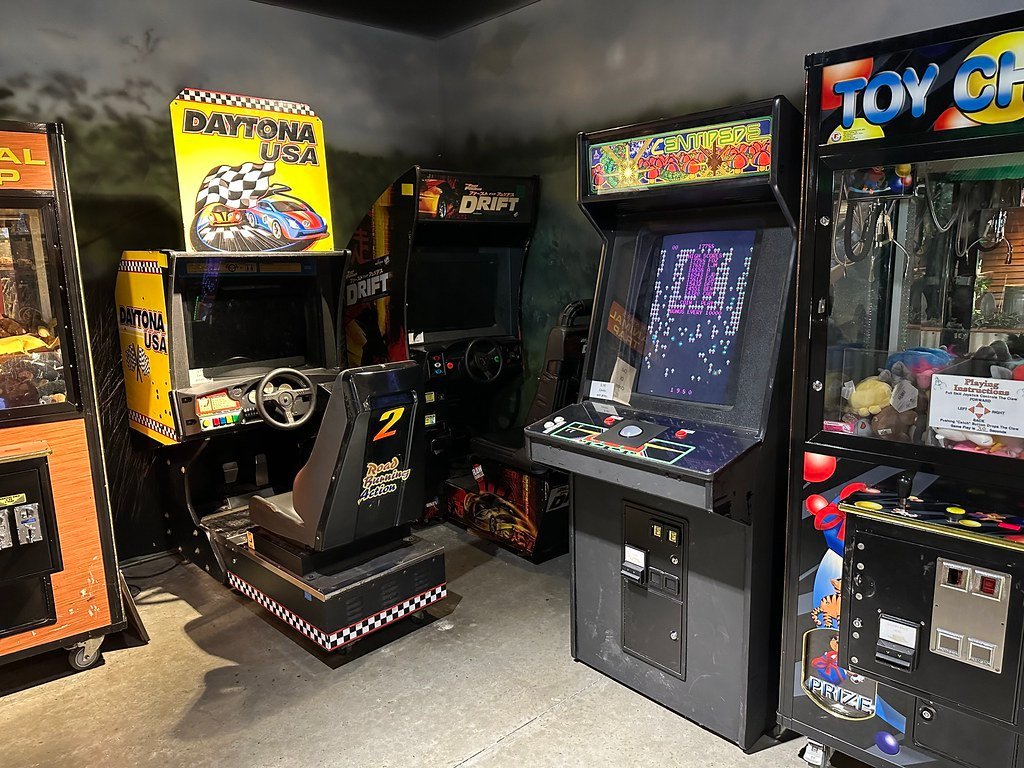
Centipede is often overlooked in casual conversations about arcade classics, which is honestly a bit of a crime. Developed by Atari and released in 1980, the game tasked players with blasting a segmented centipede as it wound its way down the screen through a field of mushrooms, with each destroyed segment splitting the creature into smaller, faster pieces. The result was mayhem of the most satisfying kind.
Elements from games such as Centipede are still recognized in today’s popular culture, decades after the golden age. Much like Frogger, Centipede distinguished itself by appealing to players who weren’t necessarily die-hard shooter fans, helping broaden the audience for arcade gaming considerably. These classics shaped arcade culture as well as the entire gaming industry, introducing game design elements and gameplay mechanics that became blueprints for future titles. Centipede’s trackball controller was also a notable hardware innovation that gave players a more tactile, precise kind of control than a standard joystick – something that genuinely influenced how developers thought about input design going forward.
The Legacy That Never Faded

It’s hard to fully articulate just how much these seven games shaped everything that came after them. Though the golden age of arcades ended in 1984, its impact on gaming is undeniable, with many modern gaming concepts – high scores, platformers, multiplayer competition – originating in this era. The difficulty curve, the risk-reward mechanic, the competitive high score table – all of it traces back to these neon-lit cabinets. These games established gaming vocabulary we still use today: difficulty curves, risk/reward systems, score chasing, power-ups, and joystick-and-button layouts that became standard for decades.
Despite the decline of the golden era taking place around 30 years ago, the nostalgia and cultural legacy of 1980s arcade gaming continues to thrive today, with a notable revival of interest both among older generations seeking to recapture their youth and younger gamers curious about the origins of gaming. Arcade games have left an indelible mark on the gaming industry and culture as a whole, laying the foundation for modern video games, introducing groundbreaking technology, and creating a communal gaming experience that remains unmatched – and today, arcade games continue to inspire new generations of players and developers, proving that their legacy is far from over.
Seven games. A handful of years. A cultural revolution that still echoes in every game you’ve ever played on your phone, console, or PC. What would the gaming world look like today if none of this had happened? It’s almost impossible to imagine. What’s your favorite arcade memory – do you have one? Tell us in the comments below.
CEO-Co-Founder
