

- Autographs Worth More Than Gold - September 15, 2026
- 13 Books That Became Broadway Hits - September 15, 2026
- Magazines That Never Stopped Printing - September 15, 2026
There is something deeply human about the questions we cannot answer. History stretches back thousands of years, filled with great triumphs, catastrophic disasters, and the occasional disappearance or artifact that simply refuses to make sense. Eyewitnesses are usually long dead, key evidence has been lost to the mists of time, and sometimes entire cultures have vanished, leaving no written records to explain their most remarkable achievements. Or maybe there was only ever one person who could lay the mystery to rest, and they took the answer to their grave.
Honestly, that’s what makes these mysteries so magnetic. They sit at the edge of what we know and what we can never fully prove, taunting historians, archaeologists, and curious minds alike. Some have been studied for centuries. Some are still being actively investigated right now, in 2026, with cutting-edge technology that earlier researchers could only dream of. Yet the answers remain just out of reach. So let’s dive in.
1. The Lost Colony of Roanoke
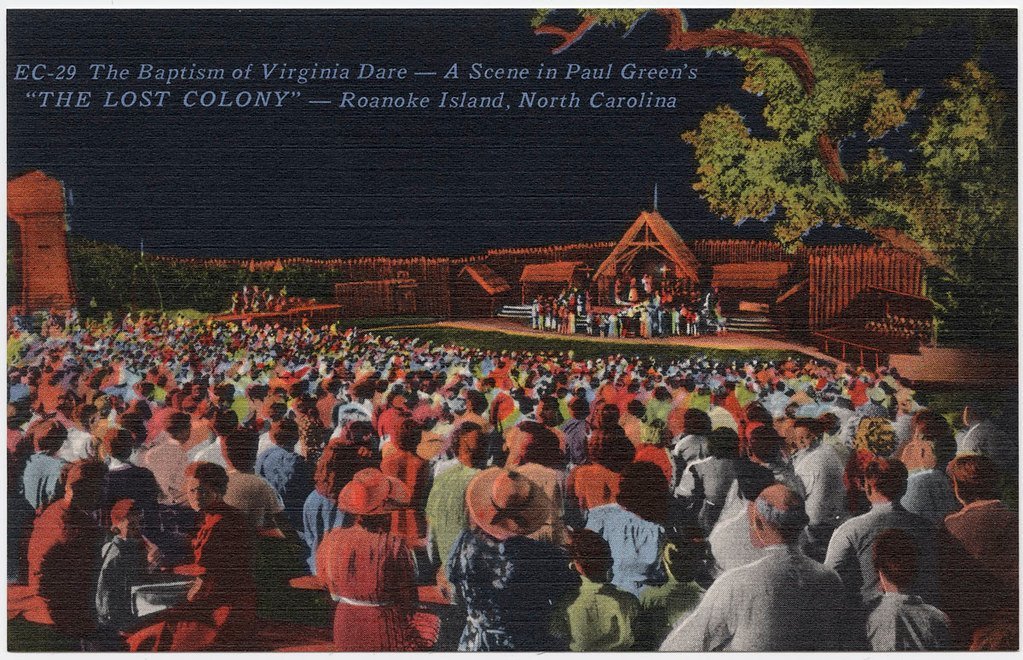
Few mysteries in American history are as haunting as the story of Roanoke. Around 115 English settlers arrived on Roanoke Island to start a new life. They were not the first English explorers, but this group included women and children, and their goal was the creation of a permanent English settlement in the New World. The expedition’s leader, Governor John White, returned to England to get more supplies. His return was delayed by a war between England and Spain, and when he made it back three years later, he found the colony deserted and the word “CROATOAN” carved into a wooden post.
Historians and archaeologists have considered several possible theories regarding the Lost Colony: Did they die from natural causes, whether by hurricane, disease or starvation? Were they attacked, either by Native Americans or Spanish explorers? Or could they have left Roanoke Island voluntarily for another location? A hidden fort symbol on a 1585 map, revealed under backlighting at the British Museum, suggests the colonists had planned to move inland. Competing evidence from Hatteras Island supports another theory, that some settlers relocated to live among Indigenous Croatoan communities, leaving scholars to conclude the colonists may have split into multiple groups. Regardless of this evidence and many other theories, it is likely that no definitive answer to the mystery of the colonists’ disappearance will ever be found.
2. The Voynich Manuscript
![2. The Voynich Manuscript (Beinecke Rare Book & Manuscript Library, Yale University ([1])., Public domain)](https://festivaltopia.com/wp-content/uploads/2026/03/1773947872811_1773947869571_voynich_manuscript_-28167-29.jpeg)
Originating in the 15th century, the Voynich Manuscript is an enigmatic book filled with indecipherable text and bizarre illustrations. Despite centuries of scrutiny by linguists and cryptographers, its code remains unbroken. Think of it like a locked diary that someone left behind, but where the key to open it has never existed, or at least has never been found. Its pages feature unidentified plants, celestial diagrams, and peculiar human-like figures, with theories linking it to alchemy, herbalism, or even extraterrestrial origins.
The medieval mystery was acquired by a rare book dealer called Wilfrid Voynich in 1912. Experts have deduced that it may have been composed in Italy, based on similarities to other works from the Renaissance period, but its origins remain unknown. The ancient text has been studied by experts throughout the years, and none have been able to unravel the mystery of the Voynich Manuscript nor provide new insights. Researchers have even worked with artificial intelligence, hoping computers might uncover hidden meanings. Despite these efforts, no one has decoded the script or fully explained the manuscript’s purpose.
3. Stonehenge and Its Builders
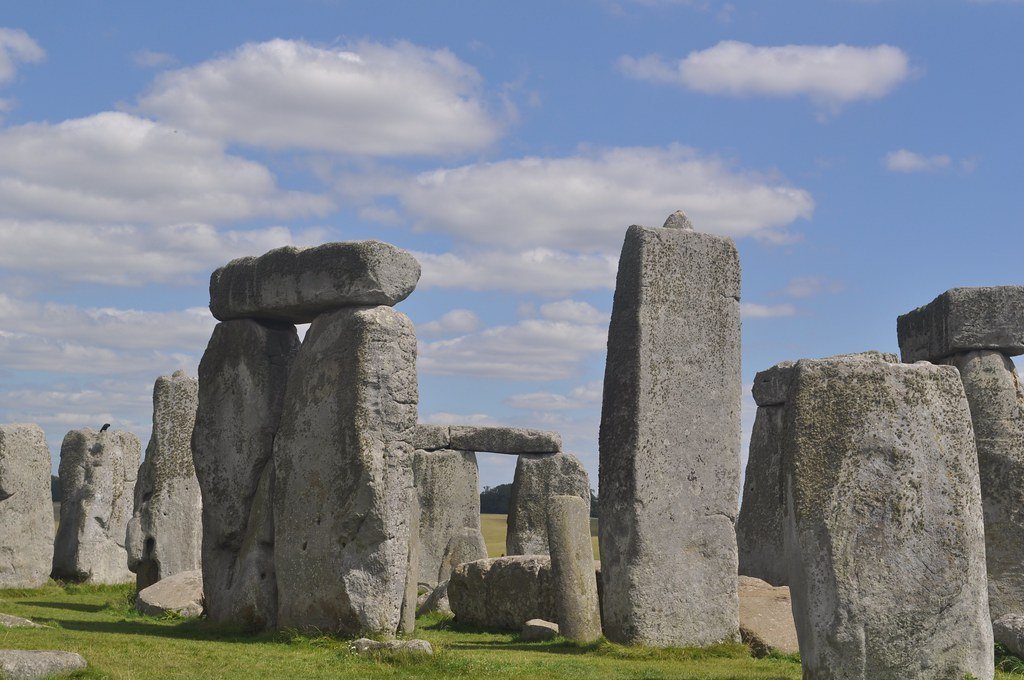
Standing on the Salisbury Plain in England, Stonehenge is one of those sights that hits you in the chest the moment you lay eyes on it. It is massive, impossibly precise, and completely baffling. A prehistoric monument located on Salisbury Plain in England, Stonehenge is an icon that has puzzled researchers for centuries. Constructed around 3000 BCE, its purpose, builders, and the methods used to transport its massive stones remain unclear. Experts debate how ancient people moved stones weighing several tons without modern technology.
One theory suggests that Stonehenge may have been a site for healing rituals, with the bluestones believed to have medicinal properties. However, the exact purpose and construction methods of Stonehenge remain a subject of debate. Others believe it functioned as an astronomical calendar, precisely aligned with the movements of the sun during the solstices. It’s hard to say for sure which theory, if any, is correct, but the sheer engineering ambition behind Stonehenge suggests a level of social organization and astronomical knowledge that continues to rewrite what we thought we knew about prehistoric humans.
4. The Nazca Lines of Peru
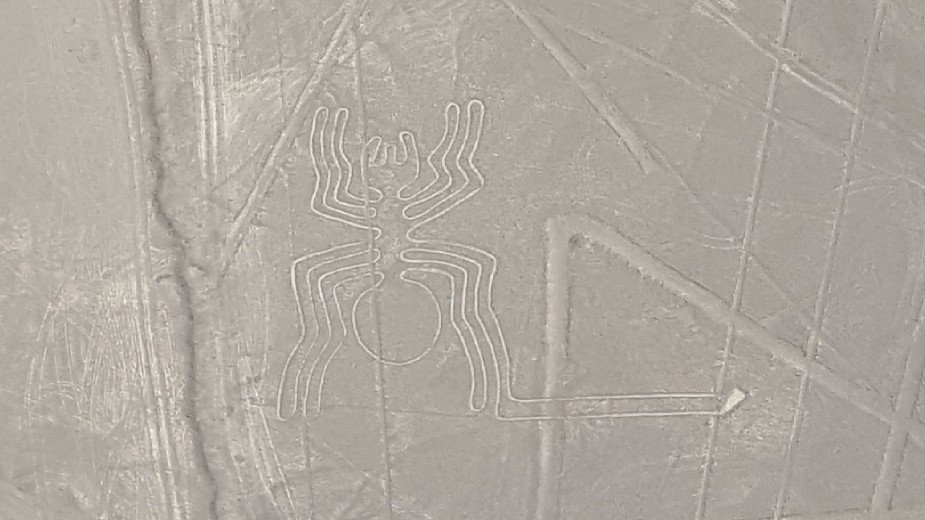
Imagine spending years of your life carving enormous animals and geometric shapes into the ground, knowing that no one around you could ever see the full picture from ground level. That is essentially what the ancient Nazca people did. The Nazca lines are a series of large drawings etched into the ground in Peru around 2,000 years ago, created by the Nazca civilization. They remained widely unknown until a plane flying over the desert of southern Peru spotted them. There are over 300 geoglyphs depicting various things, such as animals, plants, geometric shapes, and humanoid figures, and some of the images measure 1,200 feet long.
Their purpose and creation remain a mystery, with theories ranging from astronomical markers to ritualistic pathways. Some researchers believe the Nazca Lines were created by the Nazca people as offerings to the gods, while others suggest they may have served as a giant astronomical calendar. What makes the mystery even more tantalizing is the precision involved. The lines are remarkably straight, the proportions uncannily accurate, all achieved by a civilization with no access to aircraft, satellites, or advanced measuring equipment. The “how” is almost as perplexing as the “why.”
5. The Dyatlov Pass Incident
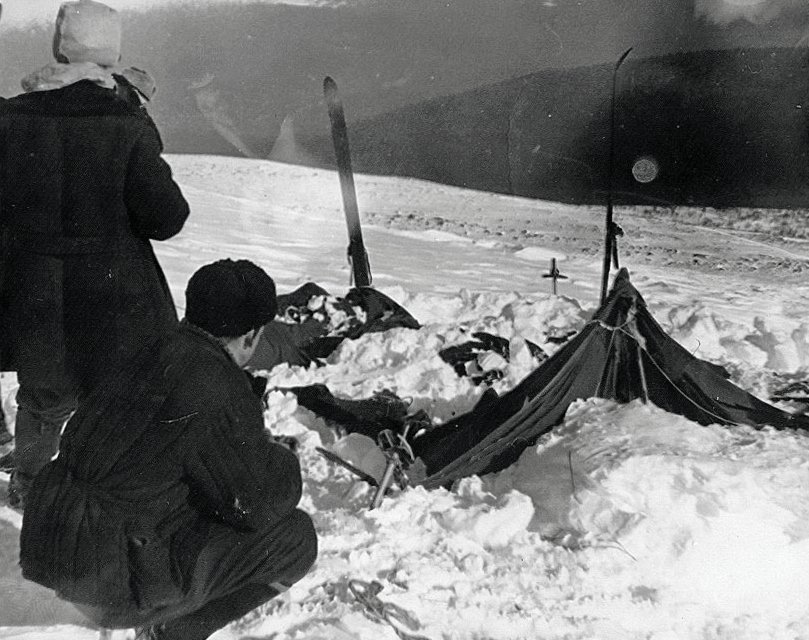
This one is genuinely chilling. Nine Soviet ski hikers died in the northern part of the Ural Mountains in the Soviet Union on the night of February 1 or 2, 1959, under undetermined circumstances. The experienced trekking group from the Ural Polytechnical Institute had established a camp on the eastern slopes of Kholat Syakhl mountain, then overnight cut their way out of their tent by knives and fled the campsite, inadequately dressed for heavy snowfall, strong winds and extreme cold temperatures as low as minus 40 degrees Celsius.
Their tent had been torn or cut open from the inside, and they had seemingly fled its shelter in a state of partial undress. Some were wearing socks, or only one shoe. While most of the bodies appeared to have died from hypothermia, three had experienced fatal injuries, ones described by a doctor who examined the bodies as equal to the effect of a car crash. The official investigation concluded a “compelling natural force” was to blame, with theories ranging from avalanches and hypothermia to more exotic explanations like secret military tests. Whatever happened on that frozen mountainside, it happened fast, and it was terrifying enough to make nine experienced hikers run out into a deadly night without their boots on.
6. The Mary Celeste Ghost Ship
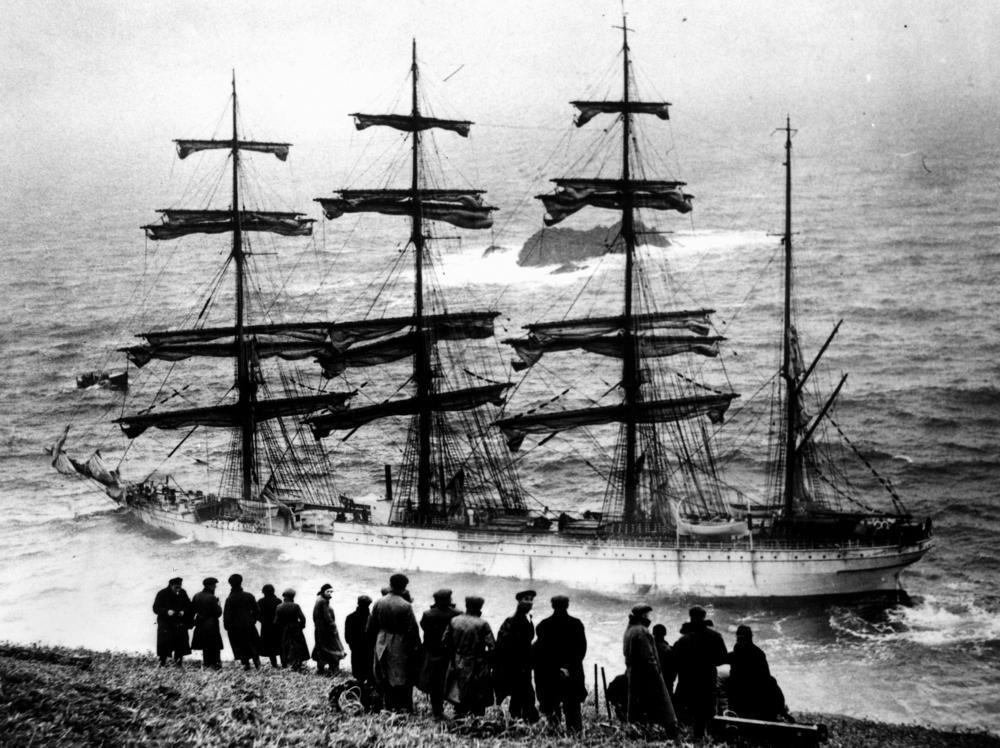
A ghost ship drifting silently through the Atlantic with no crew on board. It sounds like the plot of a thriller novel, but the Mary Celeste is completely real. In 1872, the merchant ship Mary Celeste was found adrift in the Atlantic Ocean. The ship was seaworthy, cargo intact, but the crew had vanished. There were no signs of piracy or struggle. Personal belongings were undisturbed, and only the lifeboat was missing.
The only lifeboat on the ship was missing, and one of its pumps was found disassembled. Three and a half feet of water was coming into the ship’s bottom, although the cargo comprising 1,701 barrels of denatured alcohol was largely intact. In 2006, a chemistry professor at University College London proposed a solution: a “pressure-wave type of explosion” caused by the ship’s cargo and some unknown spark had caused little damage but frightened the crew into abandoning the vessel. Other researchers have discounted the theory. The crew of the Mary Celeste were never found, and to this day, no one truly knows what prompted them to abandon a perfectly serviceable ship in the middle of the ocean.
7. The Location of Cleopatra’s Tomb
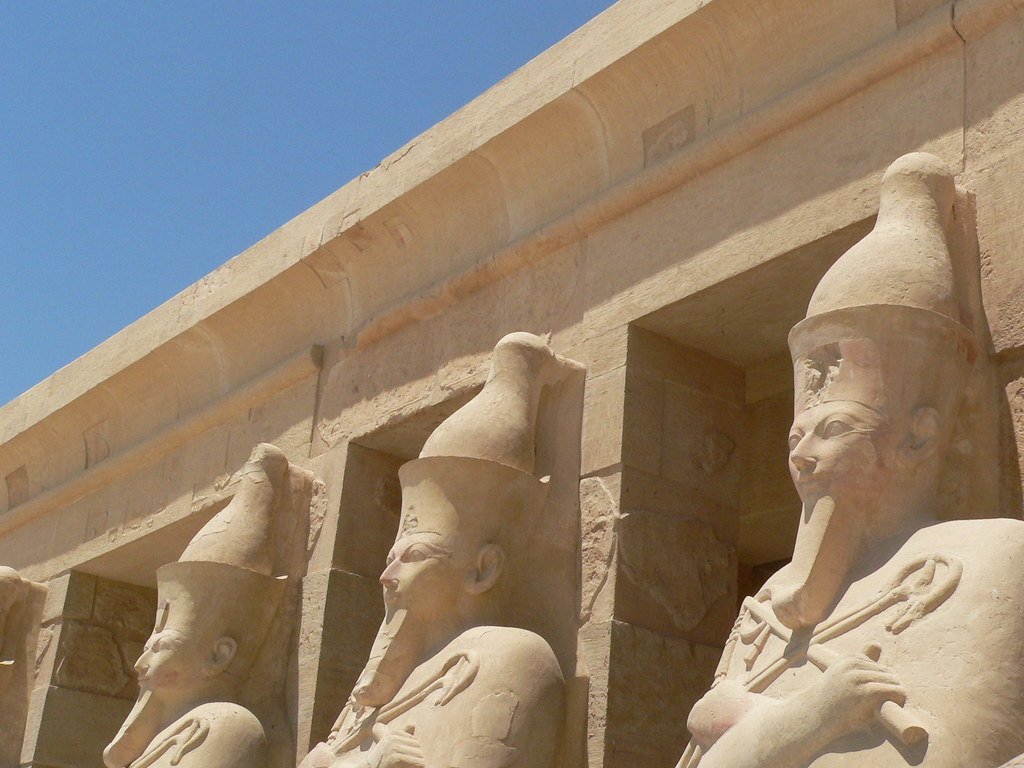
She is one of the most famous figures in all of human history. Yet no one knows where she is buried. The location of Antony’s and Cleopatra’s tomb, the couple purportedly buried together, remains a complete mystery. Some researchers believe it resided in Alexandria, her capital city, only to be lost when a tsunami swept through in 365 AD, while others suspect it lies elsewhere in the Nile Delta, possibly in a temple dedicated to Isis and Osiris.
She is among the most famous leaders in world history, yet archaeologists still do not know the location of Egyptian Queen Cleopatra’s tomb. National Geographic Explorer and archaeologist Dr. Kathleen Martínez and her team have uncovered a major clue in their 20-year-long hunt: the remains of a port off Egypt’s Mediterranean coast. The ancient accounts that do mention Cleopatra’s burial are often vague and conflicting, leaving historians and archaeologists with little to work with in their quest for definitive proof. The passage of more than two millennia has further eroded physical traces and made it challenging to discern the remnants of Cleopatra’s tomb from other ancient structures. It is a remarkable irony that someone so meticulously documented in ancient literature has managed to keep her final resting place secret for over two thousand years.
8. The Antikythera Mechanism
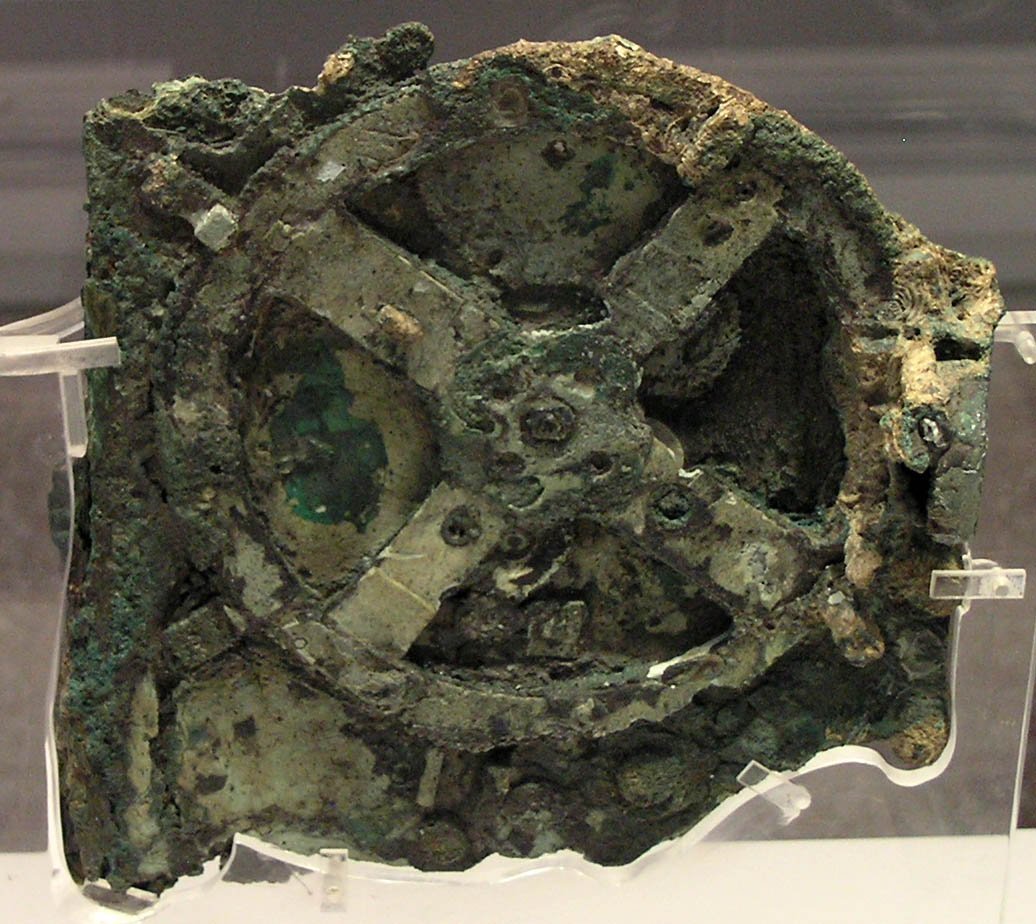
Here is a mystery that takes the form not of a disappearance or a death, but of something that simply should not exist. Discovered in a shipwreck off the Greek island of Antikythera, this ancient device has been dubbed the world’s first analog computer. Dating back to around 100 BCE, the Antikythera Mechanism consists of a complex system of gears designed to predict astronomical positions and eclipses. Its level of sophistication was not thought possible until a thousand years later.
This intricate bronze device, often referred to as the world’s first computer, contains a complex system of gears and dials. Its primary function was to predict astronomical events such as eclipses and the positions of celestial bodies, as well as track the cycles of the ancient Olympic Games. It is like finding a smartphone inside a pharaoh’s tomb. The device reveals a tradition of ancient scientific knowledge that we may have drastically underestimated. No one can fully explain how the people in ancient Greece invented such an advanced instrument, and so for now, it will remain one of the top unsolved ancient mysteries.
9. Jack the Ripper’s Identity

The name alone sends a shiver down the spine. Jack the Ripper was an infamous serial killer who murdered at least five women in London’s Whitechapel district in 1888, and his identity is one of history’s most enduring mysteries. The name itself came from a taunting letter sent to the police during the killing spree, and the macabre audacity of the crimes captivated, and horrified, the Victorian public in a way nothing had before. The killer seemed to vanish as suddenly and completely as he had appeared.
Over the decades, researchers have proposed dozens of suspects, ranging from local butchers and surgeons to members of the royal family. The lack of reliable forensic technology in the 1880s means that much of the physical evidence collected at the time is practically useless today. People have been trying to solve this mystery for decades, if not centuries, and they’ve got nothing but reasonable theories and plenty of unreasonable ones to show for it. Eyewitnesses are long dead, and key evidence has been lost to the mists of time. The Ripper’s identity remains locked away in the London fog of history.
10. The Lost City of Atlantis
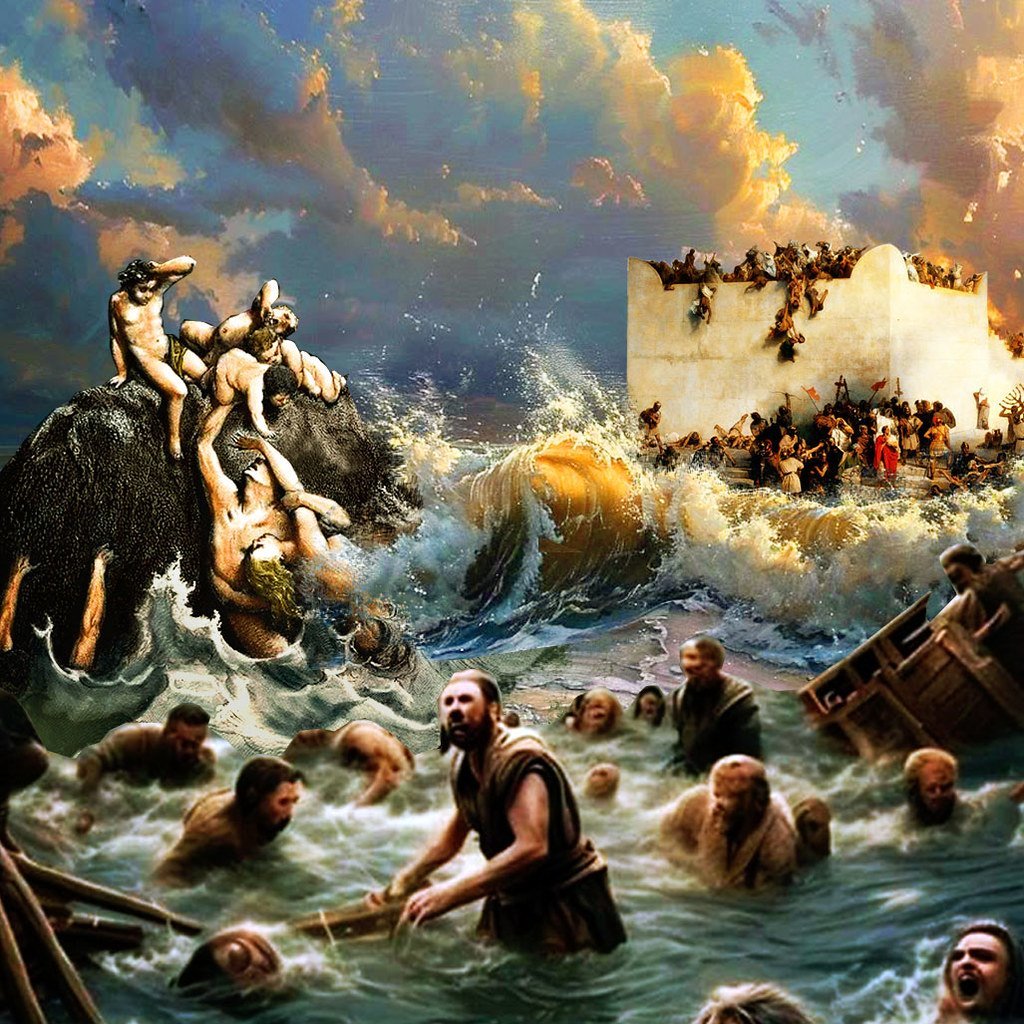
Perhaps no mystery in human history has inspired more speculation, more failed expeditions, or more creative reinterpretation than Atlantis. The lost city of Atlantis has long fascinated historians and laypeople alike. First mentioned by the ancient Greek philosopher Plato in his dialogues, Atlantis was described as an advanced civilization that existed around 9,000 years before Plato’s time. Although many have searched for the fabled city, no concrete evidence has been discovered to confirm its existence.
Some theories suggest that Atlantis may have been inspired by real ancient civilizations or natural disasters, while others argue it was purely a fictional allegory created by Plato. One theory associates the myths of advanced technology with accounts of sea raiders from the west who had stumbled upon bronze metallurgy before other civilizations. Rising sea levels might therefore account for its disappearance if it had been an island that slowly became submerged. Honestly, the greatest thing about Atlantis might be precisely that it has never been found. It exists in that magical space between myth and history, feeding our hunger for a world more extraordinary than the one we know.
Some Questions Were Never Meant to Be Answered
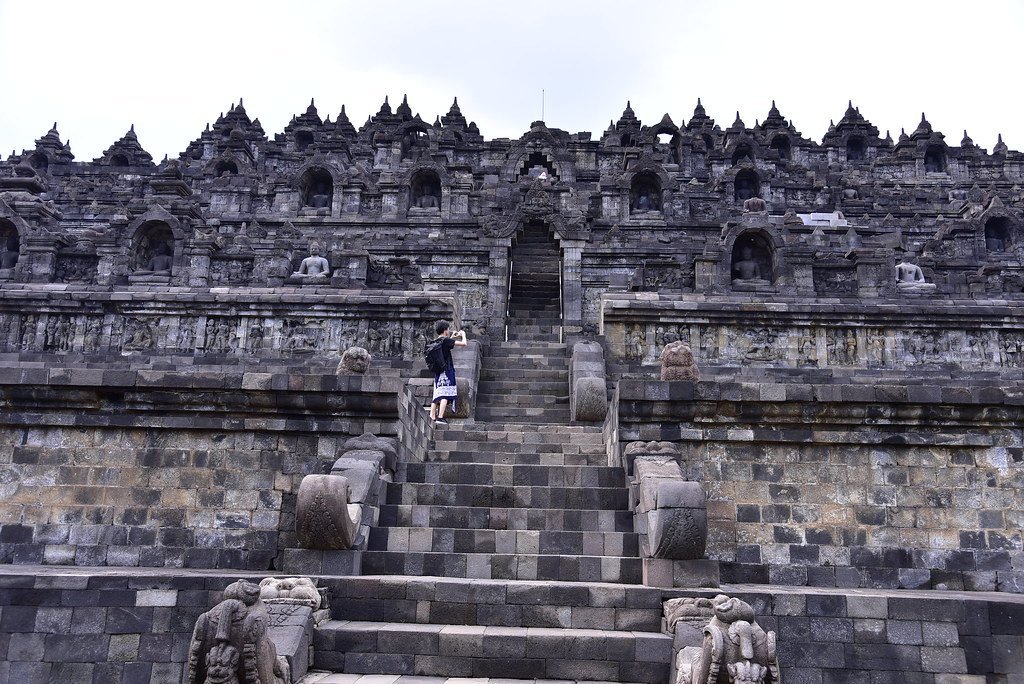
Looking across these ten mysteries, a pattern emerges that is both frustrating and strangely beautiful. Conjecture and speculation can only take researchers so far when it comes to the lost tales and inventions of humanity’s past. These mysteries are characterized by either an abundance of physical evidence without explanation or records, or records without corresponding evidence.
There is real wisdom in accepting that history has gaps, and that not every question will find its answer. While historians and scholars can meticulously develop working theories to address these gaps in history, disproving or challenging those theories is often a much simpler task, resulting in heated debates among experts. Technology continues to improve. DNA testing, satellite imaging, deep-sea robotics, and AI-driven text analysis are all being turned toward these ancient puzzles right now.
Yet even so, some mysteries seem designed to endure. Perhaps their greatest gift to us is not an answer, but the insatiable curiosity they inspire. The questions keep us looking backward, keep us humble, and remind us that the past is not a closed book but a living, breathing enigma. Which of these ten mysteries do you find most captivating, and do you think any of them will ever truly be solved?
CEO-Co-Founder
