

For any feedback please reach out to info@festivalinside.com
- Who Is the Best German Rapper? Inside the Scene Taking Over Europe’s Music Culture - September 16, 2026
- The Best R&B Artists of Today: Voices Defining the Sound of a New Generation - September 16, 2026
- 12 Ending Lines in Literature That Hit Harder Than the Plot - September 16, 2026
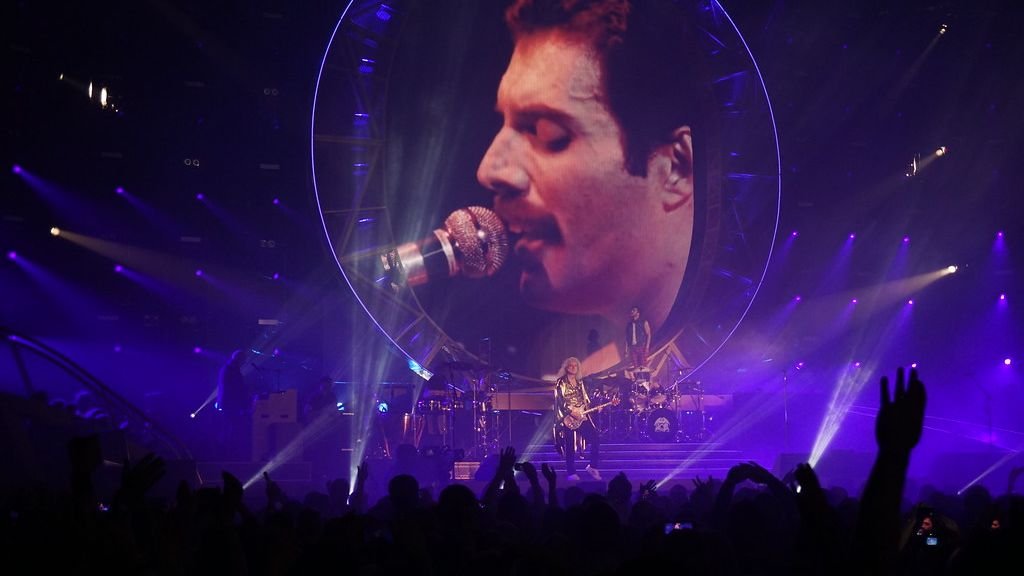
There are performances. Then there are moments that rewrite what a live music performance can even be. July 13, 1985, was supposed to be just another mega charity concert, a noble cause backed by big names and good intentions. Nobody, not even the organizers, could have predicted what was about to happen when four British musicians walked onto the Wembley Stadium stage that summer evening.
Live Aid was a two-venue benefit concert held on July 13, 1985, organized by Bob Geldof and Midge Ure to raise funds for famine relief in Ethiopia. Billed as the “global jukebox,” the event was held simultaneously at Wembley Stadium in London and John F. Kennedy Stadium in Philadelphia. It was one of the largest satellite link-ups and television broadcasts of all time, with an estimated audience of 1.9 billion people in 150 nations watching the live broadcast – nearly forty percent of the world’s population. That is a staggering number. Almost half the planet, glued to a screen. What happened next is the stuff of legend. Let’s dive in.
A World Stage Like No Other: The Scale of Live Aid
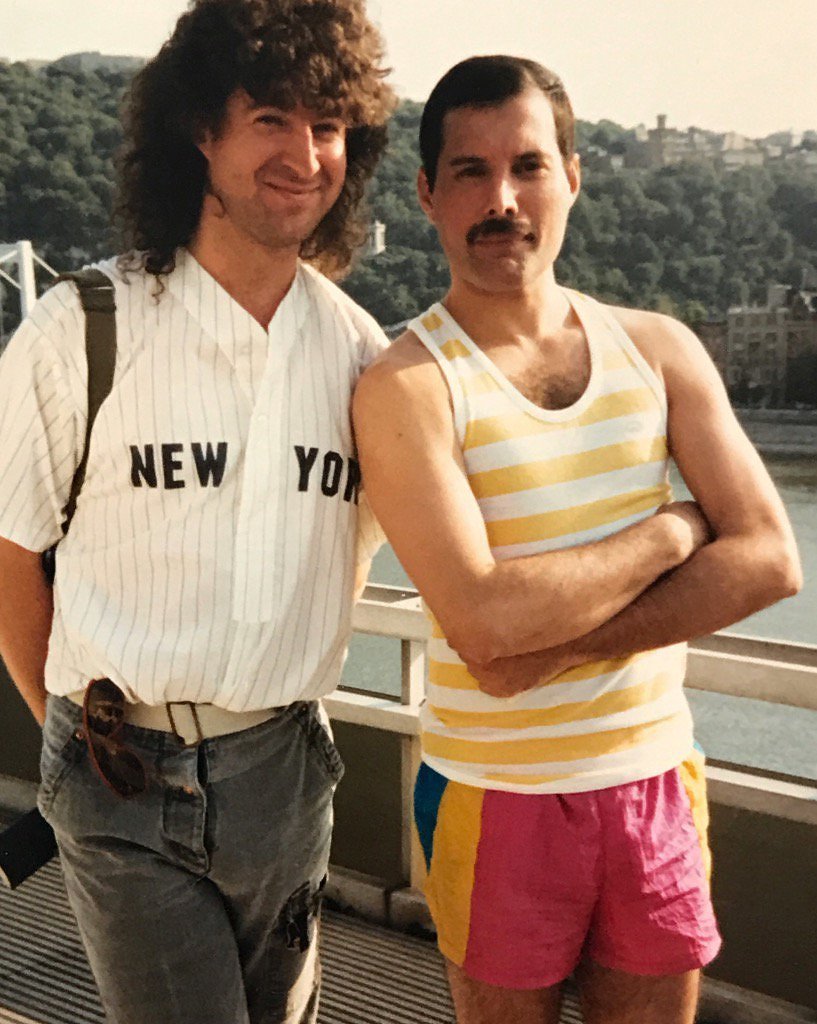
Let’s be real for a second – no artist in 1985 had ever performed for an audience of that magnitude. Not even close. The 16-hour marathon featured titans from Bob Dylan and Led Zeppelin to Paul McCartney and Madonna, taking the stage at both London’s Wembley Stadium and Philadelphia’s John F. Kennedy Stadium for what was being billed as a “global jukebox,” with each performer or group allotted just around 20 minutes.
Sting, U2, Dire Straits, The Who, David Bowie, Elvis Costello, Elton John, and George Michael were among the acts performing in London that day, while Bob Dylan, Eric Clapton, Mick Jagger, Madonna, and Tom Petty were at the JFK Stadium in Philadelphia for the American counterpart. The roster was genuinely ridiculous. It read like someone had made a wish list and somehow every name said yes. The pressure to stand out was immense, and most bands crumbled under it. Queen did not.
Nobody Expected Queen to Steal the Show
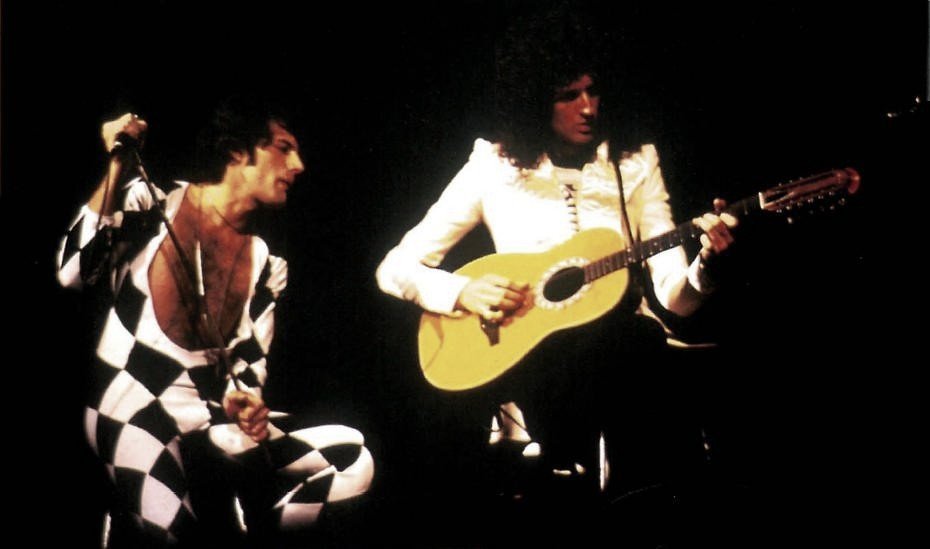
Here is the thing that makes this story so extraordinary. Queen was not the hot act of 1985. Ironically, in the run-up to the gig, the band was seen as past its prime. Their iconic hits like “Bohemian Rhapsody” and “We Will Rock You” dated back to the previous decade. Past their peak and reeling from the catastrophe of a misadvised run of shows in apartheid South Africa the previous year, Queen was not expected to shine. Mercury, in particular, had been the focus of disparaging coverage and rumors in the press, where speculation over his sexuality had arguably choked the band’s attempts to break into the American market.
Bob Geldof himself later said, “The last people anyone expected to come out of that gig as being the memorable ones was Queen.” That admission alone tells you everything. Even the man who organized the entire event did not see it coming. The concert may have even saved the band. “They were on the verge of breaking up – or taking a serious break,” according to music journalist Mark R. Blake. The comeback story does not get more dramatic than that.
The Setup: Preparation While Others Improvised
What separated Queen from every other act that day? Preparation. Pure, obsessive preparation. After finally accepting the invitation to play the benefit concert for Ethiopian famine relief, Queen decided to rehearse their set thoroughly to get timings and solos down to perfection for what would be a truncated performance.
They booked out the 400-seat Shaw Theatre near King’s Cross train station in London, and spent a week honing their setlist, getting it ready for the 72,000 fans who would be at Wembley and the estimated 1.9 billion people watching on television from 130 countries around the world. Think about that. While other legendary artists just showed up and winged it, Queen were in a theatre in London, drilling every moment down to the second. With more than a billion people watching around the world, it was a massive opportunity, and Queen had rehearsed it down to the minute. That level of discipline, honestly, is what separates the great from the truly unforgettable.
Freddie Mercury’s Stage Presence: Pure, Unrepeatable Magic
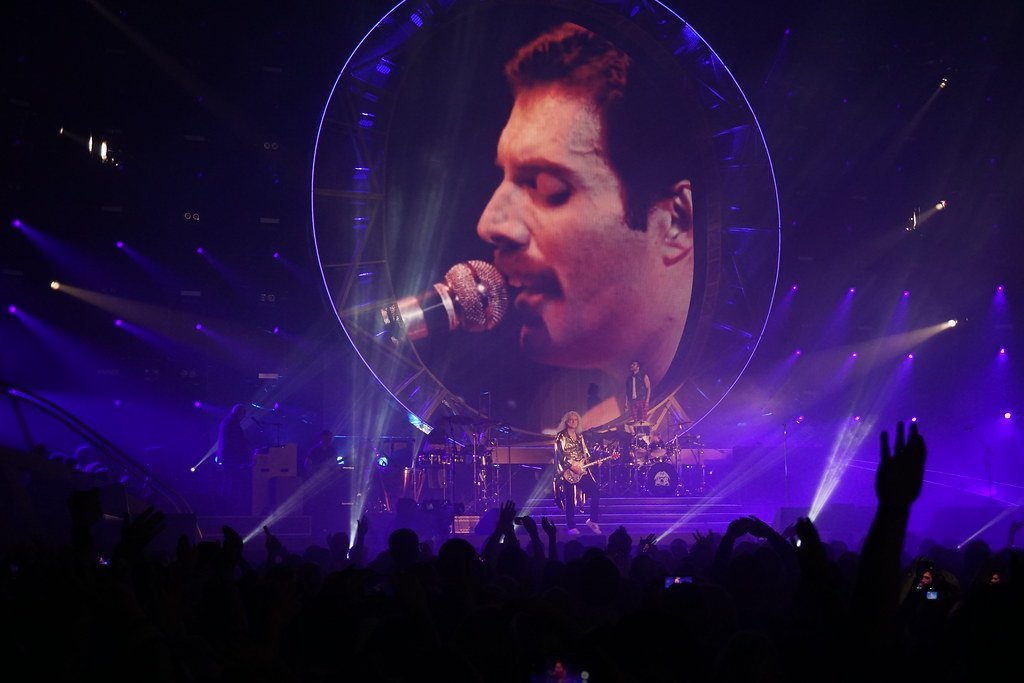
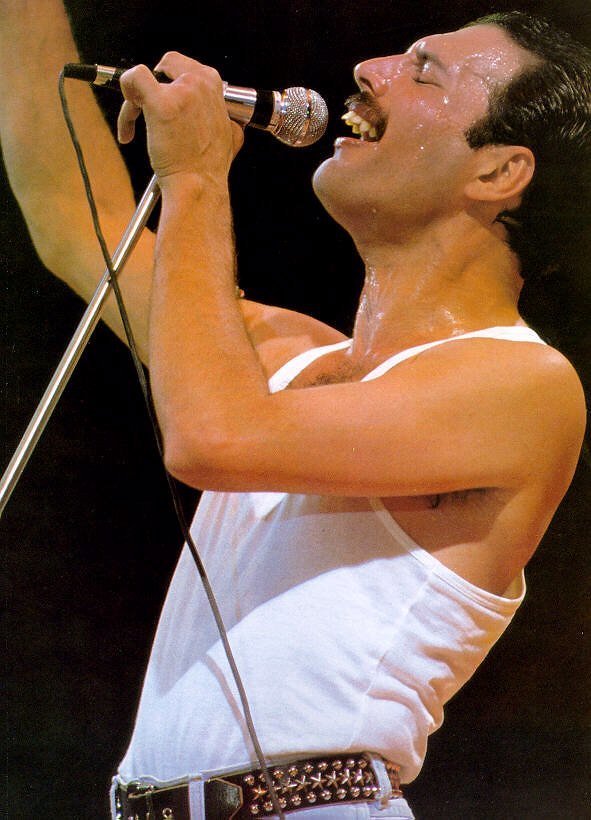
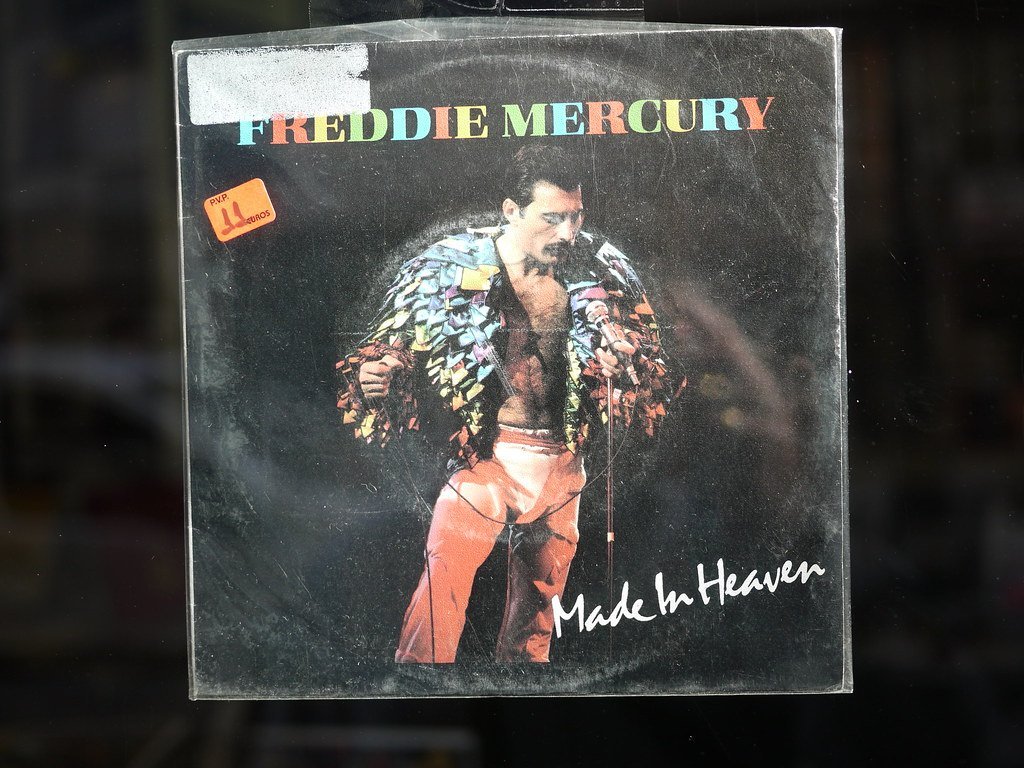
You could write a thousand articles about Freddie Mercury’s stage presence and still not fully capture it. At Live Aid, he was simply operating on a different plane from every other human being in that stadium. A truly charismatic Mercury, who looked full of confidence, jogged out onto a vast stage whose top was adorned with a banner saying “Feed The World,” sporting his trademark mustache and wearing white jeans, a white tank top, and with a studded band around his right bicep.
Amid an atmosphere charged with pessimism, Mercury danced out on stage and welcomed the crowd like his dearest friend. By the time he sat down at the piano and hit the first few notes of “Bohemian Rhapsody,” he was the absolute master of the stadium. Over the next 21 minutes, his audience, and the 1.9 billion people watching on TV around the world, fell in love with him. His humor, his hyper-masculine yet fantastically camp energy and that phenomenal four-octave voice were irresistible. The word “charisma” feels inadequate. Honestly, it does. He was a force of nature wearing white jeans.
The Crowd Interaction That Became Legend
If there is one moment from Live Aid that has echoed through the decades more than any other, it is that vocal exchange. Freddie Mercury at times led the crowd in unison refrains, and his sustained note – “Aaaaaay-o” – during the a cappella section came to be known as “The Note Heard Round the World.”
The next few moments were remarkable, as Mercury led the 72,000 spectators in some spine-tingling vocal improvisation, as they sang along to “ay-oh.” It looked effortless. It was anything but. What started as an improvised interaction with the crowd at a Queen concert in Montreal during 1978, “Ay-Oh!” became a hallmark of their most momentous performances. The crowds continued to grow throughout the 1970s and into the 1980s, but Freddie still managed to make every single person watching feel involved in the show. Seventy-two thousand strangers, suddenly a choir. That is not a technique. That is a gift.
The Setlist: A Masterclass in Song Selection

Not every great performer made smart choices that day. Queen did. Geldof had advised all the participants not to promote new hits but to do their old favorites. Queen took the message to heart. Every song they chose was designed to work at maximum scale, for the widest possible audience.
Kicking off with an abridged version of the 1975 mega-hit “Bohemian Rhapsody,” Queen’s Live Aid setlist tore through a medley of their best-loved hits: “Radio Ga Ga” gave way to “Hammer To Fall,” before “Crazy Little Thing Called Love,” “We Will Rock You,” and a rousing “We Are The Champions” closed their set. Queen consciously wrote their songs as vehicles for theatrics, and that day, it set them apart. They closed their set with “We Are The Champions,” an anthem built to amplify with the size of its audience. Think of it like a perfectly engineered rocket – each song a stage, each moment calculated to propel the crowd higher. Mercury took nothing for granted, his remarkable vocals flawless till the end, even as he basked in his indisputable victory at the edge of the stage.
What the Other Artists Said Backstage
I think what makes this story even more special is the reaction from the other megastars watching from the wings. These were not ordinary musicians. These were the biggest names in the world. It wasn’t only Queen who realized they had been sensational. Paul Gambaccini, who was part of the BBC broadcasting team at Live Aid, recalled the awe among other superstar musicians watching backstage, saying, “Everybody realized that Queen was stealing the show.”
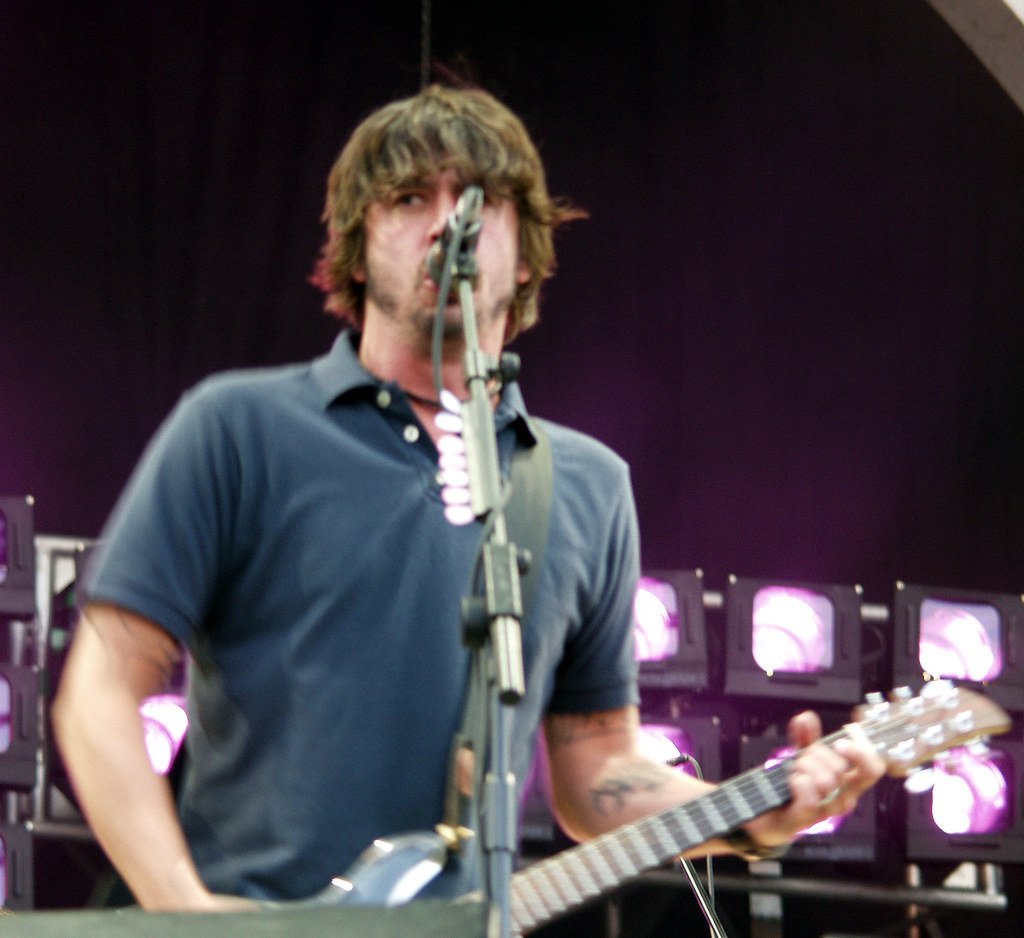
According to the BBC’s presenter David Hepworth, their performance produced “the greatest display of community singing the old stadium had seen and cemented Queen’s position as the most-loved British group since the Beatles.” That comparison to the Beatles is not thrown around lightly. Dave Grohl of Foo Fighters later said Queen “walked away being the greatest band you’d ever seen in your life,” adding that “they should be recognized as one of the greatest rock bands of all time, because they could connect with an audience.”
The Lasting Cultural Impact: Decades Later, Still Undimmed
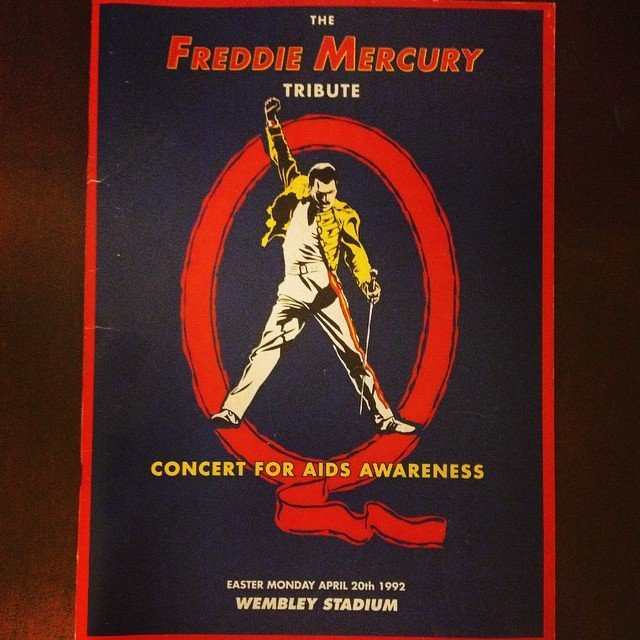
Queen’s twenty-one-minute performance, which began at 6:41 pm, was voted the greatest live performance in the history of rock in a 2005 industry poll of more than 60 artists, journalists, and music industry executives. Twenty years after the event, and the verdict was still unanimous. That says something enormous.
In August 2024, opening for Taylor Swift’s Eras Tour at Wembley Stadium, Hayley Williams of Paramore tributed Freddie Mercury’s Live Aid performance, wearing an outfit compared to the one Mercury wore and leading the audience in unison refrains, similar to Mercury’s during Queen’s set. Nearly four decades later, at the very same stadium, a performer on the world’s biggest tour felt compelled to reference that moment. After Live Aid, Queen’s three-year-old Greatest Hits rose fifty-five places into the UK top twenty. The performance did not just revive their reputation. It transformed them permanently. Queen rotated around the stadiums of the world after Live Aid 1985, enjoying an Indian summer of a career, having cemented their place as one of history’s true great rock and roll bands.
Why This Performance Remains the Greatest Live Moment in Music History
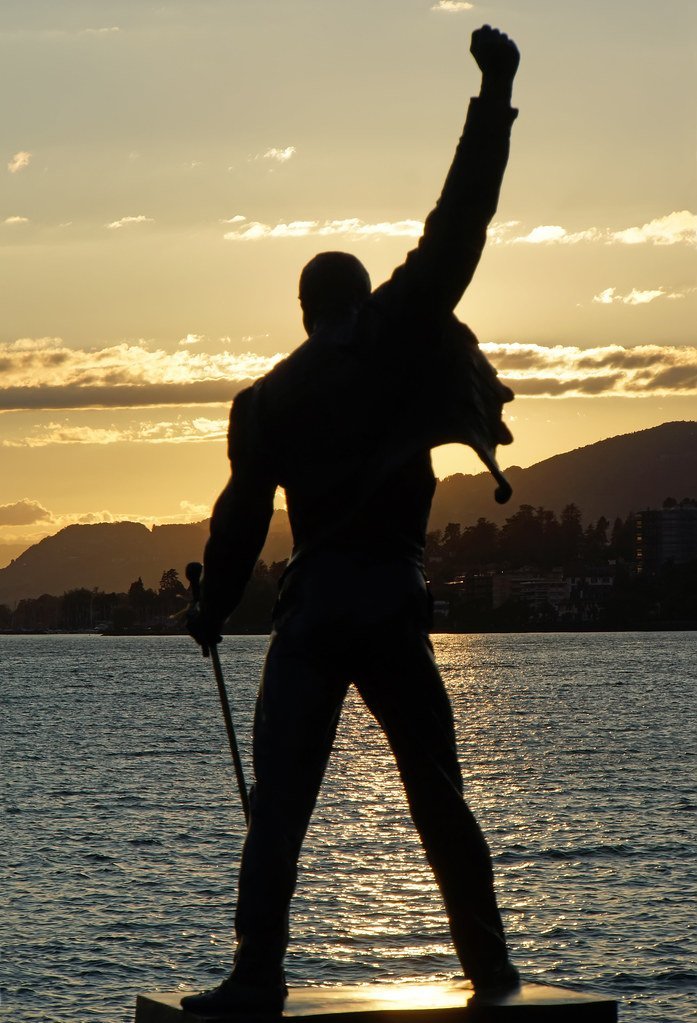
Forty years on, no live music performance has managed to dislodge Queen from that summit. Not one. There is a simple reason for that. Most great concerts are the product of perfect conditions. The right crowd. The right venue. The right lighting. Queen’s Live Aid performance was the opposite of perfect conditions – a band under enormous pressure, with limited time, no elaborate staging, and a crowd that did not even know it was about to witness history.
The brilliance of that set didn’t only reverberate around the world that summer. It has rippled through every viewing thereafter. The tragedy and speed of Mercury’s death a few years later seemed only to amplify the potency of his most glorious performance. It felt as though, having been allotted a finite portion of life, he had spent it in lavish, outrageous bursts, sharing delightedly with that crowd on July 13, 1985. That poignancy, that bittersweet knowledge of what came next, turns an extraordinary performance into something almost mythological.
Queen did not just play a concert. They reminded the world what live music is actually for. They proved that twenty minutes in the right hands, with the right songs, and one irreplaceable human being at the center, can stop time itself. What do you think – will any live performance ever come close to matching it? Tell us in the comments.

Christian Wiedeck, all the way from Germany, loves music festivals, especially in the USA. His articles bring the excitement of these events to readers worldwide.
For any feedback please reach out to info@festivalinside.com
