

- 5 Ambitious 21st-Century Ideas That Crashed and Burned - July 26, 2026
- 5 Bizarre True Crime Cases That Defy Belief - July 26, 2026
- Discover Your Reading Persona: Which Type Fits You Best? - July 25, 2026
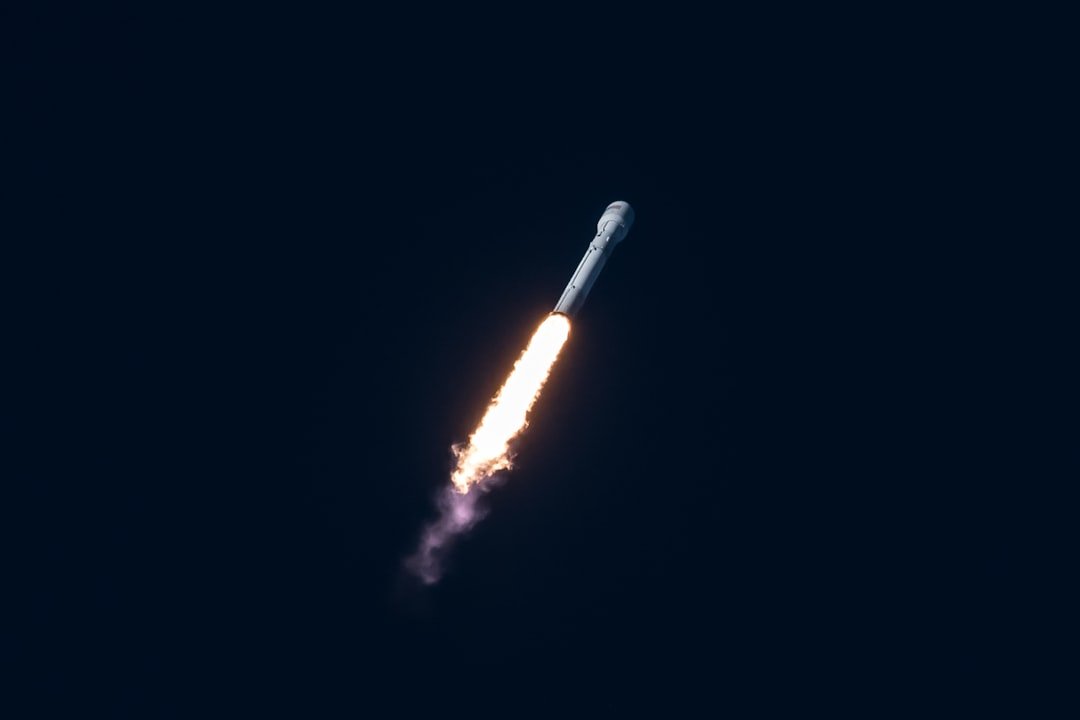
Predawn Spectacle Lights Up Florida Skies (Image Credits: Unsplash)
Cape Canaveral Space Force Station, Florida – Four astronauts from NASA, the European Space Agency, and Roscosmos launched toward the International Space Station aboard a SpaceX Dragon spacecraft early Friday morning.[1][2]
Predawn Spectacle Lights Up Florida Skies
The SpaceX Falcon 9 rocket ignited at 5:15 a.m. EST from Space Launch Complex 40, transforming the dark predawn sky into a brilliant display of light and fire.[2] This marked the 12th crew rotation mission under NASA’s Commercial Crew Program, propelling the Dragon spacecraft named Freedom into orbit.[1]
Minutes after liftoff, the crew experienced forces up to 2 g as the vehicle executed a series of automated maneuvers. The first stage of the Falcon 9 separated successfully and landed at Landing Zone 40 nearby. SpaceX teams in Hawthorne, California, monitored the ascent, while NASA personnel at Johnson Space Center in Houston oversaw station operations.[3]
Meet the International Crew Pioneers
Commander Jessica Meir of NASA leads the team on her second flight to the station. She previously participated in the first all-female spacewalk in 2019, spending over seven hours outside the ISS replacing a battery charger alongside Christina Koch.[2]
Pilot Jack Hathaway represents NASA on his debut spaceflight. Mission specialists include Sophie Adenot from the European Space Agency, a French astronaut on her first mission, and Andrey Fedyaev of Roscosmos, returning for his second orbital stay. The quartet will integrate with Expedition 74 members already aboard.[1]
| Crew Member | Agency | Role |
|---|---|---|
| Jessica Meir | NASA | Commander |
| Jack Hathaway | NASA | Pilot |
| Sophie Adenot | ESA | Mission Specialist |
| Andrey Fedyaev | Roscosmos | Mission Specialist |
Research Agenda Targets Deep Space and Earth Benefits
Crew-12 members plan to spend eight months conducting experiments that advance human exploration beyond low Earth orbit. Studies will examine pneumonia-causing bacteria to refine cardiovascular treatments, generate intravenous fluids on demand, and analyze how physical traits influence blood flow in microgravity.[1]
Additional investigations focus on automated plant health monitoring and interactions between plants and nitrogen-fixing microbes to boost space food production. These efforts support maintenance tasks and scientific goals, maximizing the station’s utility.[2]
- Pneumonia bacteria research for better heart treatments.
- On-demand IV fluid production for long missions.
- Blood flow studies tied to body characteristics.
- Plant-microbe partnerships for sustainable food.
- Automated monitoring of crop health in orbit.
Restoring the Station’s Full Strength
The launch followed the early January return of Crew-11, prompted by a crew member’s serious but stable health issue – the first medical evacuation from the ISS in its 26-year history. The outpost had operated with just three residents since then.[2]
Docking occurs autonomously Saturday at 3:15 p.m. EST to the Harmony module’s space-facing port, about 34 hours after liftoff. Hatch opening follows around 5 p.m., with a welcome ceremony soon after. The arrival restores the standard seven-person crew, including NASA astronaut Chris Williams and two Roscosmos cosmonauts.[1]
“With Crew-12 safely on orbit, America and our international partners once again demonstrated the professionalism, preparation, and teamwork required for human spaceflight,” NASA Administrator Jared Isaacman stated.[1]
Key Takeaways
- Launch succeeded at 5:15 a.m. EST from Florida, en route to 8-month stay.
- International crew brings diverse expertise for critical experiments.
- ISS returns to full seven-person operations post-medical return of prior crew.
This mission underscores reliable commercial partnerships propelling humanity’s orbital ambitions. As Crew-12 hurtles toward docking at 17,000 mph, it promises advancements from microgravity labs high above Earth. What excites you most about their research? Share in the comments.

Besides founding Festivaltopia, Fritz is the managing director of Europe’s largest manufacturer of mobile stages Kultour and has a lot of experience in the event industry, loves music and likes to go to festivals.
