

- 15 Times History Was Changed by a Single Speech - September 25, 2026
- “20 Authors Who Captured the American Dream Like No One Else” - September 25, 2026
- 20 Literary Rivalries That Shaped the American Canon - September 25, 2026
There’s something almost theatrical about a perfectly executed crime. The audacity. The precision. The sheer nerve it takes to walk into a room and leave with millions while everyone else is still trying to figure out what just happened.
New York has always been a stage for this kind of calculated chaos. Maybe it’s the density of the place. You’ve got the world’s wealthiest investors walking past subway token booths where a handful of quarters could feed someone for days. It’s a city of extremes, and criminals have always known how to exploit that.
The crimes on this list weren’t sloppy stick-ups or desperate grabs. They were elaborate performances. Some took years to plan, others relied on nothing more than a convincing suit and the city’s unshakable faith in appearances. Most of them worked, at least until they didn’t. So let’s dive in.
The Lufthansa Heist: When Patience Pays Off (Until It Doesn’t)

Picture this. It’s 3 a.m. on Monday, December 11, 1978, and six masked men pull up to the Lufthansa cargo terminal at JFK Airport in a black van. They walk away with around $5 million in cash and $875,000 in jewelry, making it the largest cash robbery committed in the U.S. at the time.
What made this one brilliant wasn’t just the haul. The idea came from Louis Werner, a Lufthansa cargo supervisor who knew the system inside and out and owed roughly $20,000 in gambling debts. Werner knew exactly how the security system worked, who could open the locks, what time shipments arrived, where to park, and how the staff was trained to react to a theft. The thieves didn’t smash their way in or fire shots. They forced employees into the break room, had a supervisor disable the alarm, and cleaned out the vault in just over an hour.
The cash and jewels were loaded into the van, and the crew inconspicuously drove away. The entire heist took little more than an hour. Honestly, the plan was flawless. Until one guy forgot to ditch the getaway van. Parnell ‘Stacks’ Edwards was assigned to destroy the van in a junkyard, but he drove it to his girlfriend’s apartment, drank, consumed drugs, forgot all about it, and parked in a no-parking zone next to a fire hydrant.
That mistake kicked off a bloodbath. James ‘Jimmy the Gent’ Burke, the reputed head of the operation, allegedly started killing his collaborators almost immediately, starting with Edwards just a week after the robbery. The stolen cash and jewelry have never been recovered. Of the many suspected participants, almost all of whom were involved in organized crime, only one was ever convicted and served time in connection with the robbery.
The Fake Wall Street Office Scam: Suits, Receptionists, and Delusions of Legitimacy
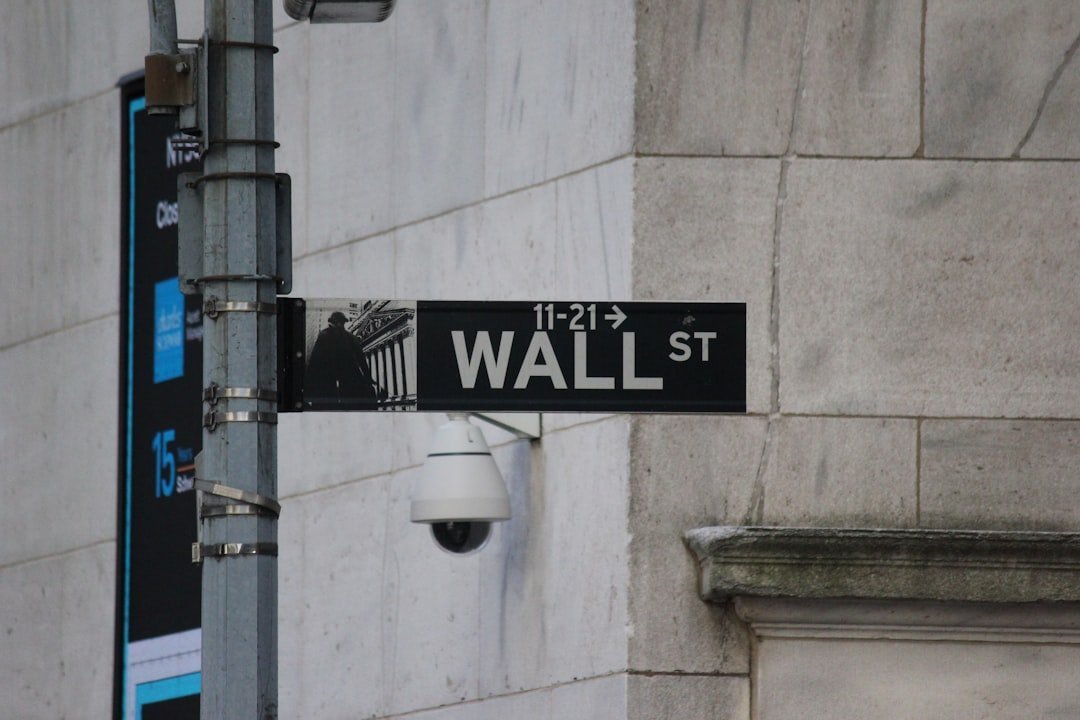
Here’s the thing about New York. If you look successful, people assume you are successful. That’s all it takes sometimes.
Robert Sucarato, a hedge fund manager, was charged in April with running a $1.6 million fraud out of a virtual office on the 22nd floor of 67 Wall St. To all appearances, Sucarato was one of the world’s most successful hedge fund managers, with his main fund at New York Financial seemingly clocking gains of 20% one year and 55% the previous year, purportedly doubling the fund’s size to $5 billion.
Let’s be real. It was all smoke. A California dentist named Bill McKee invested $220,000 and later said he was impressed that Gryphon had an office address on Wall Street in New York City, viewing that as another indication of the firm’s legitimacy and success. Con artists often hold themselves out as successful businesspeople with impressive office locations and official looking publications.
These scams are clever because they exploit something fundamental about human psychology. According to a former chief of the Securities and Commodities Fraud Task Force, the reason these schemes work has to do with creating an image, especially for people outside of New York, since companies based in the financial capital are viewed as having credibility. The entire con was built on appearances. Phones ringing. Professional receptionists. The right address. That’s all it took to convince people to hand over millions.
It’s hard to say for sure, but these boiler room operations still happen today in different forms. The tools change, the addresses shift, but the principle stays the same. If you can fake legitimacy long enough, you can clean people out before they realize what happened.
The Brooklyn Art Storage Heist: Avoiding the Spotlight Entirely
Most people think art thieves target museums. Big dramatic entrances. Laser grids. Ocean’s Eleven stuff. The reality is way more mundane.
Art theft is usually a crime of opportunity, and it tends to take place not in the heavily guarded halls of cultural institutions, but in storage units or while works are in transit. Most large museums and cultural institutions do not display all the objects within their care. That’s where the real vulnerability lies. Private collectors stash millions in art in storage facilities, assuming anonymity equals security. It doesn’t.
In the days leading up to Christmas in 1990, four works of art were lifted from three different locations in New York, with the stolen pieces valued at $4.3 million, or $8.3 million when adjusted for inflation. One theft involved an untitled Willem de Kooning gouache work from 1962 valued at $750,000, with a detective saying that the thief absconded with the work without a trace.
According to the FBI, about 90% of museum heists are inside jobs. Think about that. The people tasked with protecting the art are the ones walking out with it. It makes sense when you consider access. Guards, assistants, warehouse staff – they know when pieces are moved, where they’re stored, and what the blind spots are.
I think what’s fascinating here is how these thieves avoided the spectacle entirely. No headlines. No alarms. Just quiet, calculated theft from places where wealthy collectors thought their treasures were safe.
The Subway Token Booth Robbery Ring: The Slow Bleed
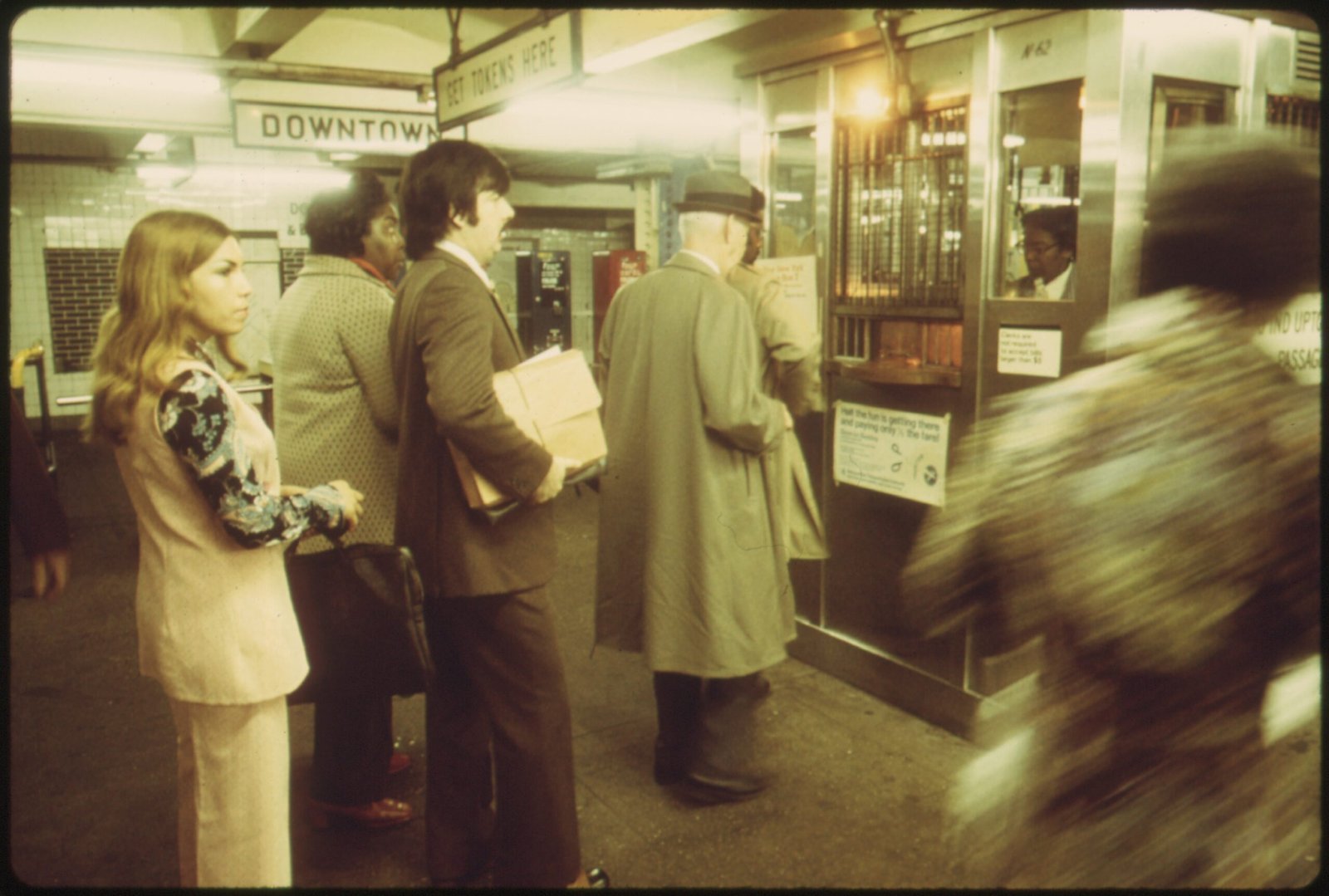
Not all brilliant crimes are fast. Some take patience. Years of it.
Most clerk murders happened during robberies when clerks were going in and out of the booth to empty the turnstiles of tokens, a process called ‘pulling the wheels.’ There was violence around token booths, sure. Booth arsons occurred in the 70s, 80s and 90s, with several clerks murdered, including one at Halsey Street in Brooklyn in 1988 that killed a clerk.
However, the most effective crimes weren’t the violent ones. They were the ones nobody noticed. Workers with access to the system quietly skimmed cash over the years. No smash-and-grabs. No headlines. Just small, consistent theft that added up to serious money over time.
Subway booths were most needed when riders had to exchange cash for the special subway tokens, which came in a variety of different designs throughout the decades and were used all the way up until 2003 when they were officially retired. During that era, token booths handled massive amounts of cash daily. With the right access and patience, someone could skim quietly for years without raising suspicion.
The local irony here is almost poetic. The city was literally robbed by people inside its infrastructure. These weren’t outsiders breaking in. They were the ones holding the keys. By the time anyone noticed, the money was long gone.
The Pizza Delivery Bank Heist: When No One Questions Food

Let me ask you something. If someone knocked on your office door with a pizza at night, would you think twice? Probably not. That’s the genius of this one.
Criminals used pizza deliveries as cover to enter secured office buildings after hours. In a Brooklyn bank robbery in 1972, the robber told the police to bring pizza because the hostages were hungry. Pizza is such a normal part of the city’s ecosystem that it becomes invisible. Nobody questions a delivery guy with a box.
The principle is simple. Blend into the routine. Office buildings have security, sure, but most of that security is designed to keep out obvious threats. A guy in a uniform holding food? That’s not a threat. That’s just Tuesday.
Think about how many secure locations rely on visual identification and routine assumptions. If you look like you belong, you probably get waved through. That’s not a flaw in the system – it’s just human nature. We don’t scrutinize the mundane. Criminals know this.
Millions were stolen before suspicion arose, according to the user instructions. It’s hard to say for sure how long this method worked or how widespread it became, but the concept is sound. If you can exploit trust and routine, you don’t need elaborate disguises or high-tech equipment. You just need a pizza box and confidence.
What Made These Crimes Work
Looking back at these cases, there’s a pattern. None of them relied on brute force or luck. They exploited gaps in trust, routine, and perception.
The Lufthansa heist succeeded because of insider knowledge and timing. The fake Wall Street office worked because people trust appearances. The art storage thefts avoided high-security targets entirely. The subway token scheme relied on patience and access. The pizza delivery heists used the city’s own rhythms against it.
These weren’t smash-and-grab operations. They were performances. Each one required understanding how systems work, where the weaknesses are, and how to exploit them without raising immediate suspicion. The best crimes are the ones nobody notices until it’s too late.
Honestly, part of me has to respect the creativity, even if I’d never condone the act. It takes a certain kind of mind to see a flaw in a system that everyone else takes for granted. That’s what separates brilliant criminals from desperate ones.
When the Performance Ends
Of course, most of these stories end the same way. Someone talks. Someone slips up. The van doesn’t get ditched. The fake office rent goes unpaid. A partner gets greedy.
The Lufthansa crew fell apart because Burke got paranoid and started killing people. The fake investment firms collapsed when clients started asking too many questions. Art thieves got caught when pieces resurfaced on the market. Token booth schemes eventually showed up in audits. Pizza delivery covers only work until someone notices the pattern.
The brilliance of these crimes was always temporary. That’s the nature of it. You can’t sustain a lie forever, no matter how well-constructed. Eventually, the cracks show.
Still, for a while, these schemes worked. And in a city like New York, where everything moves fast and everyone’s got their own hustle, that’s almost impressive. Almost.
Conclusion
New York will always attract people trying to get away with something. The density, the wealth, the chaos – it’s all fertile ground for creative crime. These five cases prove that the most effective heists aren’t always the loudest or most violent. Sometimes, they’re the ones that blend into the background until it’s too late to stop them.
The Lufthansa heist remains legendary decades later. The fake Wall Street offices still pop up in new forms. Art storage facilities are still vulnerable. Subway systems are still exploited. And pizza delivery? Well, that’s never going out of style.
So what do you think? Would any of these work today, or has technology closed too many gaps? Drop your thoughts below.

Besides founding Festivaltopia, Luca is the co founder of trib, an art and fashion collectiv you find on several regional events and online. Also he is part of the management board at HORiZONTE, a group travel provider in Germany.
