

For any feedback please reach out to info@festivalinside.com
- 12 Fashion Trends From the 70s and 80s That Are Making a Huge Comeback - August 15, 2026
- 15 Most Popular Music Festivals in the World, According to Instagram - August 15, 2026
- 8 Music Festivals That Defined an Era and Where Their Spirit Lives On. - August 15, 2026
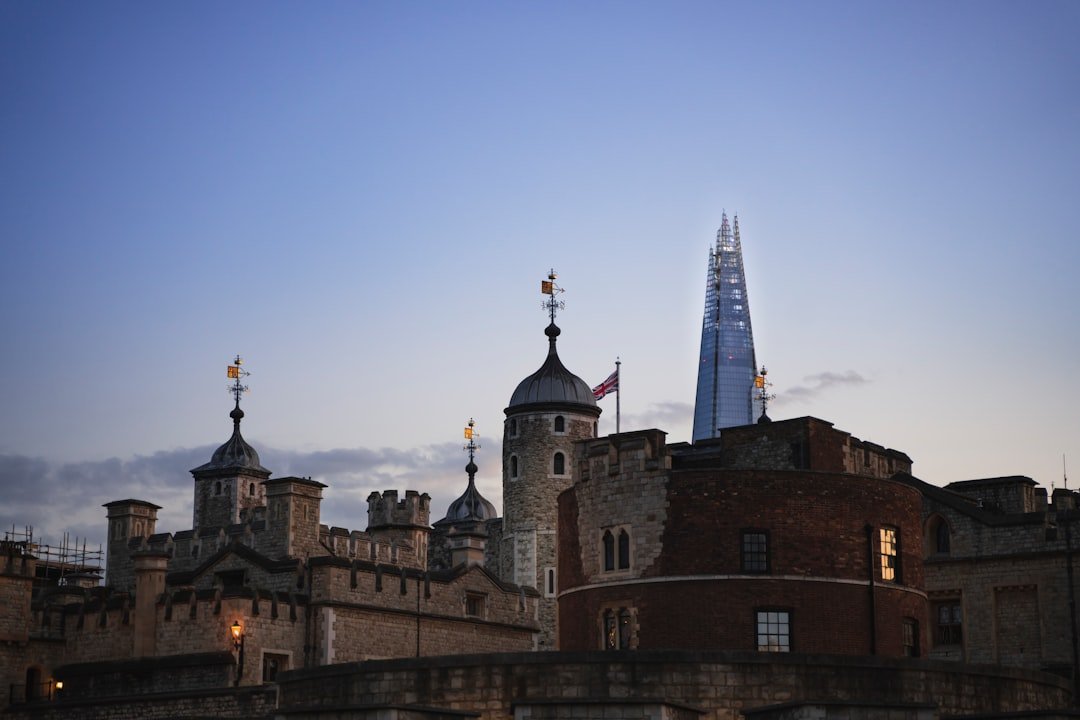
London stands as one of the world’s oldest continuously inhabited cities, its streets layered with millennia of conquest, catastrophe, and comeback. What began as a modest Roman crossing on the Thames has evolved into a throbbing metropolis of nine million souls, speaking over 300 languages. This resilient urban giant has weathered invasions, plagues, fires, and bombs, each trial forging its indomitable spirit.
Here’s the thing: tracing London’s history reveals not just dates and kings, but a blueprint for human endurance. From Boudica’s flames to the Blitz’s rubble, the city refuses to fade. Dive deeper, and you’ll see how these eras shaped the London we navigate today.
Roman Roots and Saxon Revival
Everything kicked off around 43 AD when Roman legions under Emperor Claudius planted Londinium at a prime Thames crossing. This strategic port exploded into a trade hub for grain, wool, and metals, complete with a wooden bridge, forums, and basilicas by 60 AD. Queen Boudica’s revolt torched it all in 60-61 AD, yet the Romans bounced back with stone walls enclosing 330 acres, temples to Mithras, and a peak population of 60,000.
By 410 AD, the empire’s collapse left ghostly ruins amid barbarian raids. Saxons revived the west side as Lundenwic by the 7th century, turning it into a pottery and agriculture hotspot. King Offa minted silver pennies around 780 AD, Vikings besieged in 851 AD, and Alfred the Great reclaimed it in 886 AD, refortifying walls and sparking guilds under Athelstan by 928 AD.
Medieval Mayhem and Tudor Triumphs
William the Conqueror’s 1066 Norman Conquest imposed the White Tower by 1078, while a 1130 charter granted self-rule, ballooning the population to 80,000 by 1300. Westminster Abbey and St. Paul’s rose amid wool trade booms via the Hanseatic League. The Black Death slashed numbers to 40,000 in 1348-49, Peasants’ Revolt torched records in 1381, yet guilds like goldsmiths powered recovery.
Henry VIII dissolved monasteries in the 1530s, doubling folks to 200,000 under Elizabeth I, birthing suburbs and the Globe Theatre in 1599. Plagues killed 10% in 1563, but the Royal Exchange opened in 1571, fueling Drake’s voyages. Mary I’s Smithfield burnings scarred faith, though Elizabethan stability sparked a cultured, seafaring renaissance.
Stuart Fires, Georgian Empire, and Victorian Steam
James I’s 1603 rule saw the 1605 Gunpowder Plot foiled, Civil War grip London in 1642, and Charles I executed in 1649. The 1665 Great Plague took 100,000 lives, followed by the 1666 Fire devouring 13,200 houses and old St. Paul’s; Christopher Wren rebuilt 51 churches, dome-crowning new St. Paul’s by 1710. The 1688 Glorious Revolution installed William and Mary, birthing constitutional monarchy.
By 1800, Georgian London hit one million, fueled by colonial sugar, slaves, and tobacco; coffee houses spawned the Stock Exchange, Westminster Bridge eased 1750 traffic. Victorian railways launched from London Bridge in 1836, population soared to 6.5 million by 1900. Bazalgette’s sewers fought 1858’s Great Stink, Crystal Palace wowed at 1851’s Exhibition, though Jack the Ripper terrorized 1888 Whitechapel.
20th Century Wars to Swinging Sixties and Beyond
World Wars hammered hard: Zeppelin raids killed 650 in 1915, Blitz dropped 30,000 tons of bombs in 1940-41, V-2s in 1944. Churchill commanded from Cabinet War Rooms; post-war, Empire Windrush brought 500 Jamaicans in 1948, igniting multiculturalism. Festival of Britain in 1951 built Royal Festival Hall, Carnaby Street swung in the Sixties, Brixton rioted in 1981 amid Thatcher’s 1986 Big Bang finance boom.
London phoenixed into a nine-million global hub. The 2012 Olympics regenerated East End with Orbit and Westfield, Brexit stirred 2016 EU debates, Ukrainian refugees arrived post-2022. Notting Hill Carnival pulses, HS2 rail looms, climate marches fill Oxford Street – proof of endless reinvention.
Final Thought
London’s arc from forsaken Londinium to polyglot powerhouse screams tenacity, each era a testament to adaptation amid chaos. What chapter of this epic would you relive first? Share in the comments.
Source: Original YouTube Video

Christian Wiedeck, all the way from Germany, loves music festivals, especially in the USA. His articles bring the excitement of these events to readers worldwide.
For any feedback please reach out to info@festivalinside.com
