

For any feedback please reach out to info@festivalinside.com
- How 20 Vinyl Got Its Groove Back - September 21, 2026
- 10 Great Albums That Came Out the Same Year and Changed Music - September 21, 2026
- 20 Authors Who Write Entire Books by Hand - September 21, 2026
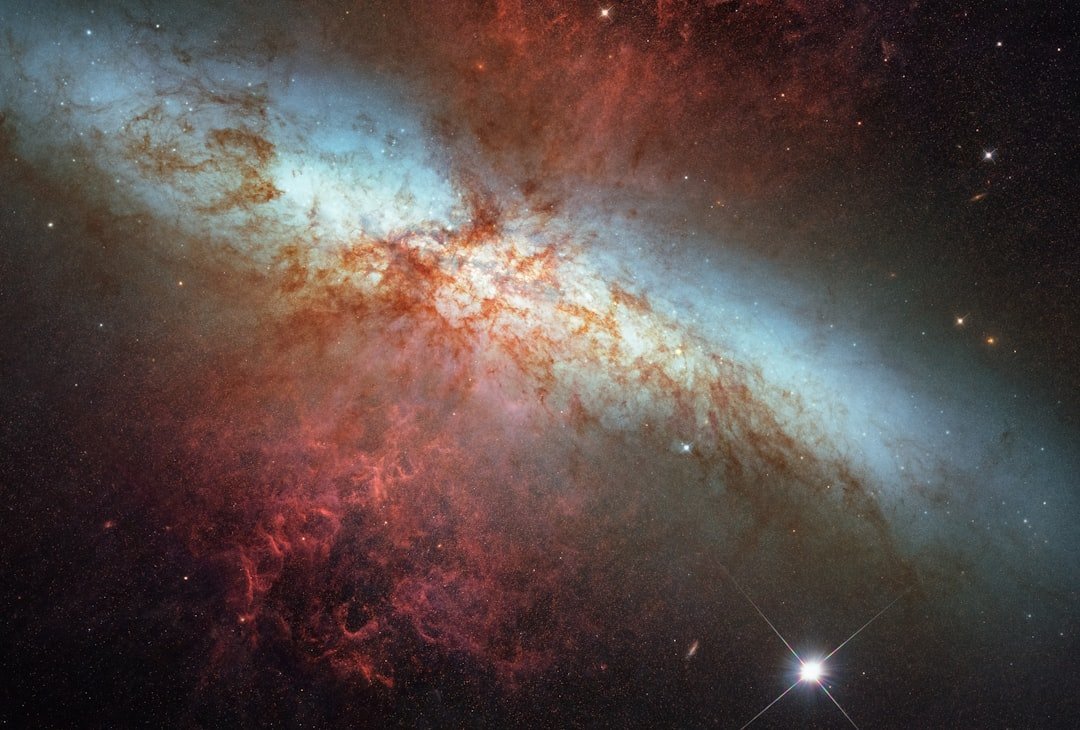
Picture a realm so vast it defies imagination, where trillions of galaxies swirl in an endless dance across 93 billion light-years. Today’s release on May 24, 2025, distills the universe’s profoundest secrets into one extraordinary overview, blending ancient origins with frontier discoveries. This isn’t just science; it’s a reality check on our tiny place in infinity.
From invisible forces shaping galaxies to hints of parallel worlds, the guide pulls back the curtain on cosmic enigmas. Here’s the thing: what we see is barely five percent of the story. Ready to have your mind expanded?
The Observable Universe’s Jaw-Dropping Scale
The observable universe spans 93 billion light-years, packing in roughly two trillion galaxies teeming with billions of stars and planets each. Light from the farthest edges has journeyed billions of years to reach us, making our Milky Way a mere speck in this grand expanse. Telescopes like James Webb keep rewriting the map, spotting galaxies born just hundreds of millions of years post-Big Bang. This scale humbles us, reminding everyone that humanity’s view is limited by the speed of light itself. Ongoing surveys push boundaries further, revealing how expansion stretches the fabric of space-time relentlessly.
The Big Bang: Universe’s Fiery Birth
About 13.8 billion years ago, everything burst from a singularity of infinite density, expanding faster than light in its infancy. Within seconds, it cooled enough for protons and neutrons to form, laying groundwork for atoms and stars. Cosmic microwave background radiation, glowing at 2.7 Kelvin uniformly across the sky, stands as smoking-gun proof of this event. Tiny quantum fluctuations in that glow seeded today’s galaxies, turning ripples into cosmic megastructures. General relativity and quantum mechanics back the theory solidly, yet puzzles like “what came before” linger tantalizingly. This origin tale anchors all physics, driving hunts for a theory of everything.
Dark Matter and Dark Energy: Hidden Rulers
Dark matter claims 27 percent of the universe’s mass-energy, gluing galaxies together via gravity without a trace of light – think rotation curves and lensing that scream its presence. Our Milky Way would shred apart without it. Dark energy, at 68 percent, accelerates expansion, a 1998 supernova shocker that upended models. Ordinary matter? Just five percent, the tip of the iceberg. Labs worldwide, from CERN to deep underground detectors, chase particles like WIMPs for direct hits. Cracking these could spawn new energies or warp drives, flipping physics on its head.
Stars’ Dramatic Life Cycles
Stars spark to life in nebulae, gravity squeezing gas into fusion furnaces that transmute hydrogen to helium. Our Sun, middling at 4.6 billion years old, faces five billion more before red giant bloating. Heavyweights burn hot and fast, detonating as supernovae to spew gold, iron, and planet fodder. Remnants? Neutron stars cram solar mass into 12-mile balls, or black holes trap all escape. Pulsars like the Crab Nebula tick with millisecond fury, etching stellar ends in radio waves. These explosions recycle elements, fueling the universe’s endless rebirth and blasting gamma rays across eons.
Galaxies, Black Holes, and Exoplanet Frontiers
Galaxies come spiraled like the Milky Way’s 100-400 billion-star arms, elliptical ancients, or irregular crash victims, classified by Hubble’s tuning fork. Sagittarius A*, our core’s four-million-solar-mass black hole, anchors it all, soon merging with Andromeda in 4.5 billion years. Black holes swallow stars, their 2019 M87 image showing plasma rings around inescapable voids; LIGO’s waves confirm mergers. Over 5,500 exoplanets dot the tally, TRAPPIST-1’s seven Earth-sizes teasing habitable oceans via Kepler and TESS scans. Biosignatures like oxygen beckon life hunters, rogue worlds multiplying odds. These cosmic cities and voids rewrite assembly rules, quasars blazing brighter than hosts.
Multiverse Dreams and Humanity’s Cosmic Quest
Eternal inflation bubbles our universe amid infinities, string theory’s 10^500 vacua tuning life-friendly laws just so. Many-worlds quantum splits realities at every choice, cold microwave spots hinting collisions. Black holes’ Hawking radiation whispers evaporation, probing multiverse gates. Humanity counters with Voyager probes, SpaceX Starships, Mars rovers, and Euclid’s galaxy maps. AI sifts data for dark energy clues, lunar bases hedging Earth’s bets. As risks mount here, stars beckon multi-planetary survival.
Final Thought
The universe dwarfs us yet invites endless discovery, a tapestry of fire, shadow, and potential infinities. One ripple from the Big Bang echoes in your reading this today. What’s your wildest cosmic guess – life nearby or endless solitude? Drop it in the comments.
Source: Original YouTube Video

Christian Wiedeck, all the way from Germany, loves music festivals, especially in the USA. His articles bring the excitement of these events to readers worldwide.
For any feedback please reach out to info@festivalinside.com
