


- 10 Iconic Dance Crazes From the 60s and 70s That Still Rule the Festival Floor - September 2, 2026
- The Eccentric Lives of America’s Most Beloved Authors Were Far From Quiet - September 2, 2026
- 10 US Cities Where the 70s and 80s Music Scene Still Thrives Unapologetically - September 2, 2026
Hollywood is supposed to be where dreams come true. You work hard, you hustle, you network, and eventually the credits roll with your name on them. That’s the story we’ve been sold for decades. Yet right now, thousands of entertainment industry workers are waking up to a harsh reality that looks nothing like the Hollywood dream.
The paradox is striking. We’re living in an era with more content than ever before. Streaming platforms pump out show after show, movie after movie. Your watchlist never seems to shrink. Yet behind that endless scroll of entertainment options, something darker is unfolding. Jobs are vanishing at an alarming rate, and the people who make your favorite shows possible are struggling to survive.
The Numbers Tell a Brutal Story

Entertainment and media layoffs surged sharply higher in 2025, with over 17,000 jobs slashed, marking an 18 percent increase compared to the previous year. Let that sink in for a moment. These aren’t just statistics on a spreadsheet. These are writers, editors, production assistants, sound technicians, costume designers, and countless others who poured their passion into bringing stories to life.
An estimated 41,000 entertainment jobs in Los Angeles have been lost over the past five years, according to Bureau of Labor Statistics data. It’s not just a bad year or a temporary slowdown. This is a sustained hemorrhage of opportunity that’s fundamentally reshaping the industry’s landscape.
Paramount shed 2,000 employees as the year came to a close. Warner Bros. Discovery, Disney, NBCUniversal – all the major players have been slashing their workforces. One veteran top TV executive described it as a full-scale depression for the entertainment industry, noting they’d never seen anything quite like this before.
When the Streaming Bubble Burst

Remember when streaming was the future? When every company with enough capital decided they needed their own platform to compete with Netflix? In 2019, the industry was flooded with cash as networks and tech companies built their own streaming services, and about 600 scripted TV series aired in the US in 2022, double the total from a decade earlier.
Wall Street threw money at these platforms, hoping to replicate Netflix’s success story. Studios were greenlighting projects left and right. Writers rooms were staffed. Production crews had steady work. It felt like a golden age for content creators, even if the traditional movie theater experience was taking a hit.
Here’s the thing, though. That kind of spending wasn’t sustainable. Companies began to realize they were no longer profitable, which affected stock prices and changed the streaming wars, with Netflix becoming a profit machine and Disney’s streaming division finally turning profitable, but other studios losing money or not growing fast enough found themselves in deep trouble.
The streaming industry is now pulling back from Hollywood, as companies commission fewer original shows and inject less money into the Hollywood economy. The party is over. The hangover is brutal.
Productions Are Fleeing Los Angeles

It’s not just about fewer shows being made overall. Productions that do get greenlit are increasingly abandoning Hollywood’s traditional home. In Q1 2025, only 24 of 87 U.S. scripted projects filmed partly in Los Angeles, while U.S.-produced series premieres fell 27% year over year and 42% versus 2022.
Los Angeles film shoot days have decreased by 35 percent annually since 2019, with television’s annual shoot days down by nearly 50 percent. The iconic Hollywood sign still stands over the city, but increasingly it’s watching productions pack up and head elsewhere.
Where are they going? Pretty much anywhere that offers better tax incentives. Georgia, Oklahoma, Canada, the United Kingdom – places that are rolling out the red carpet with financial breaks that California simply can’t match. Destinations like the UK, Canada, and Australia offer increasingly generous tax incentives without annual or per-project caps, a major advantage for productions costing over $100 million.
Unemployment Reaches Crisis Levels

Unemployment in film and TV was at 12.5% last August, the industry’s worst August since at least 2000, the pandemic notwithstanding, and nearly triple the national unemployment rate. Triple the national rate. Let me repeat that because it’s staggering: people working in entertainment face joblessness at three times the rate of the average American worker.
The Los Angeles region reached a peak of 18,560 annual television shoot days in 2021, but by 2024 that number had plummeted to just 7,716, a 58.4% decline in three years. The president of FilmLA called 2024 the worst year on record excluding COVID, and the first quarter of 2025 looks even worse.
Honestly, when you talk to people in the industry, the desperation is palpable. These aren’t folks asking for handouts. They’re skilled professionals who just want to work in the field they’ve dedicated their lives to.
Corporate Mergers Mean More Cuts

The consolidation wave sweeping through Hollywood promises even more pain ahead. The FCC approved the Paramount-Skydance merger in July 2025, and during the last quarter of 2025, Warner Bros. Discovery reviewed bids to sell its holdings and accepted Netflix’s offer.
Corporate mergers are rarely marked by employees getting a pay rise and reassured job security, as evidenced by the dramatic mass layoffs that followed Disney’s acquisition of 20th Century Fox. When companies talk about synergies and cost savings, what they really mean is eliminating redundant positions. Real people with real bills to pay.
Paramount said it expects to wring out $6 billion in merger-cost savings over the next three years, with analysts predicting at least 6,000 job losses, echoing Disney’s 2019 Fox acquisition downsizing. Six thousand jobs. That’s a small city’s worth of livelihoods hanging in the balance.
The AI Threat Looms Large

If massive layoffs and production declines weren’t enough, there’s another storm cloud on the horizon: artificial intelligence. According to the World Economic Forum, 41 percent of companies worldwide will lay off workers over the next five years because they intend to begin increasing reliance on AI technology.
A report from June noted that as many as 200,000 Hollywood jobs will either be lost or won’t ever be created thanks to AI. Two hundred thousand. Jobs that won’t exist because a computer can do them faster and cheaper. Sound editors, 3D modelers, graphic designers, composers – professions that took years to master could become obsolete.
I know it sounds crazy, but we’re watching technology potentially eliminate entire career paths before our eyes. The writers and actors who struck in 2023 saw this coming. Their concerns about AI weren’t paranoid fantasies. They were prescient warnings about an industry eager to cut costs by cutting people.
Even Production Content Is Down Dramatically

Some 16,012 total episodes of TV content were produced in 2022, dropping to 13,300 episodes in 2023 and 11,069 in 2024, with total hours of TV produced falling from 14,958 hours in 2022 to 10,405 last year. That’s almost 5,000 fewer episodes in just two years.
More shows, fewer jobs? Not exactly. The reality is fewer shows and way fewer jobs. Among streaming platforms, most saw fewer U.S.-produced TV premieres in 2024 than a year earlier, with exceptions being Netflix, Peacock, and Prime Video, while Disney+ slimmed down its original offerings significantly.
The streaming model that was supposed to revolutionize entertainment has instead created instability. Shows get cancelled after one season. Projects get shelved for tax write-offs. On-location production in greater Los Angeles declined 13.2% from July through September compared to the same period the previous year, with only 157 projects completed and released in 2024, down 14% from 2023 and down from 228 in 2022.
The Human Cost Behind the Headlines

Let’s be real for a moment. Behind every percentage and statistic is a person whose life has been upended. A TV writer who has worked on shows like ‘Lopez vs Lopez’ and ‘Primo’ has been out of work for a year and a half, noting that fluctuations are happening at the highest level which undoubtedly affect anybody doing the nitty-gritty work.
Streamers and others have pulled back, networks have shortened the seasons and number of episodes, and there’s a lot less work to be had, while California is just not competing with tax credits. People who once turned down jobs because they had so many offers now can’t find any work at all.
Production assistants, those entry-level workers who endure brutal hours and low pay because it’s supposed to be a stepping stone, are finding the ladder has been pulled up. Production assistants have long endured brutal hours, low salaries and abuse in the hope of moving up the food chain, but contracting budgets and blatant nepotism have turned a job that was supposed to be a doorway into a holding cell.
A Glimmer of Hope? The Creator Economy

While traditional Hollywood crumbles, there is one sector actually growing. From 2022 to 2024, L.A. employment in motion picture and sound recording industries decreased by 27%, but during that same time period, employment in the creator economy increased by 5%, and companies in the creator space also increased by 5%.
YouTube creators, TikTok influencers, independent podcasters – the digital content landscape is thriving even as traditional studios contract. The microdramas business has also grown this year, employing Hollywood production crews, nonunion actors and writers to create bite-sized, bingeable episodes that turn a profit.
Still, it’s hard to say for sure whether this new model can absorb all the displaced workers from traditional entertainment. The scale is vastly different. A major studio production employs hundreds of people. A YouTube creator might have a team of five.
What Does 2026 Hold?
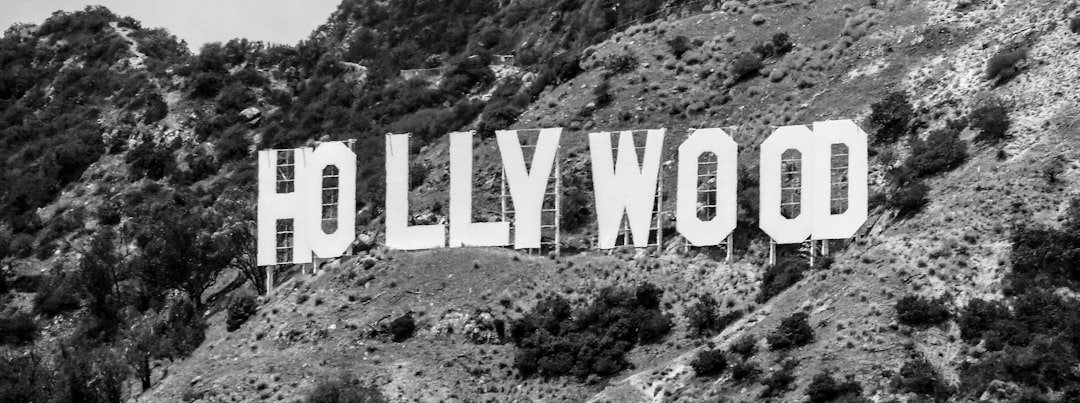
Hollywood has changed, with another 17,000 jobs vaporized in 2025, a barely-rescued box office result, and the looming merger of market-leading Netflix with legacy brand Warner Bros. The question on everyone’s mind is whether things can get worse. The uncomfortable answer seems to be yes.
A study estimates that by 2026, more than 20% of Hollywood jobs will be cut. One-fifth of all remaining positions. Gone. The vibrant system that created prosperity for a 360-degree ecosystem of movie studios, TV networks, producers, actors, writers, directors, their agents and managers and lawyers, plus an entire web of below-the-line craftspeople and various production experts has receded over the horizon of history.
It’s not that Hollywood is disappearing entirely. Stories will still be told. Movies will still be made. Yet the opportunity for financial success has become vastly limited, concentrated among a tiny elite while everyone else scrambles for scraps.
The Uncomfortable Truth

Issues like layoffs and price hikes are an inevitable consequence of consolidation, and monopolies are not naturally occurring but are designed to maximize the outcomes desired by those who bring them into being. This isn’t some accident of market forces. These are deliberate choices made by executives chasing quarterly profits at the expense of the people who actually create the content.
A Teamsters Motion Picture Division director who told The Hollywood Reporter that in any merger or acquisition they’ve seen in their history, it hasn’t been good for workers. When companies promise that consolidation will create jobs, history suggests we should be skeptical.
Hollywood corporate executives, both current and retired, are surveying the wreckage of 2025 and wondering what will come next. Even the people at the top seem uncertain about where this all leads.
Can Anything Stop the Bleeding?

Some are calling for policy interventions. Better tax incentives to compete with other states and countries. Infrastructure investments. Cost containment measures that don’t involve simply firing people. Reversing the production exodus will require a multifaceted approach combining competitive incentives, infrastructure investment, and cost containment measures, otherwise nearly half of U.S. series and films being shot abroad could cement a new normal of empty lots and missed opportunities.
Unions are considering their options too. Hollywood is a union town, and organized labor is pondering what options it has beyond making noise, with the strength and solidarity shown in 2023 potentially needed once again. The strikes that shut down production in 2023 showed that workers still have power when they act collectively.
Yet whether these efforts can reverse the tide remains an open question. The forces reshaping Hollywood – technology, globalization, corporate consolidation – are massive and interconnected. No single fix will solve everything.
The streaming shift promised to democratize entertainment, giving viewers unlimited content and creators unlimited opportunities. Instead, it’s created a winner-takes-all economy where a few massive platforms dominate while workers face unprecedented instability. More shows didn’t mean more jobs. It meant a temporary bubble followed by a devastating crash that’s still claiming victims. What do you think the future holds for Hollywood workers? Will the industry recover, or is this the new normal?

Besides founding Festivaltopia, Luca is the co founder of trib, an art and fashion collectiv you find on several regional events and online. Also he is part of the management board at HORiZONTE, a group travel provider in Germany.
