

- The Evolution of Rock ‘n’ Roll Shaped American Culture in Profound Ways. - August 27, 2026
- Certain Festival Anthems From the 60s and 70s Still Resonate Deeply Today. - August 27, 2026
- 12 Iconic Road Trips Across America That Still Capture the Spirit of Freedom. - August 27, 2026
Chapbooks: The Internet Before the Internet
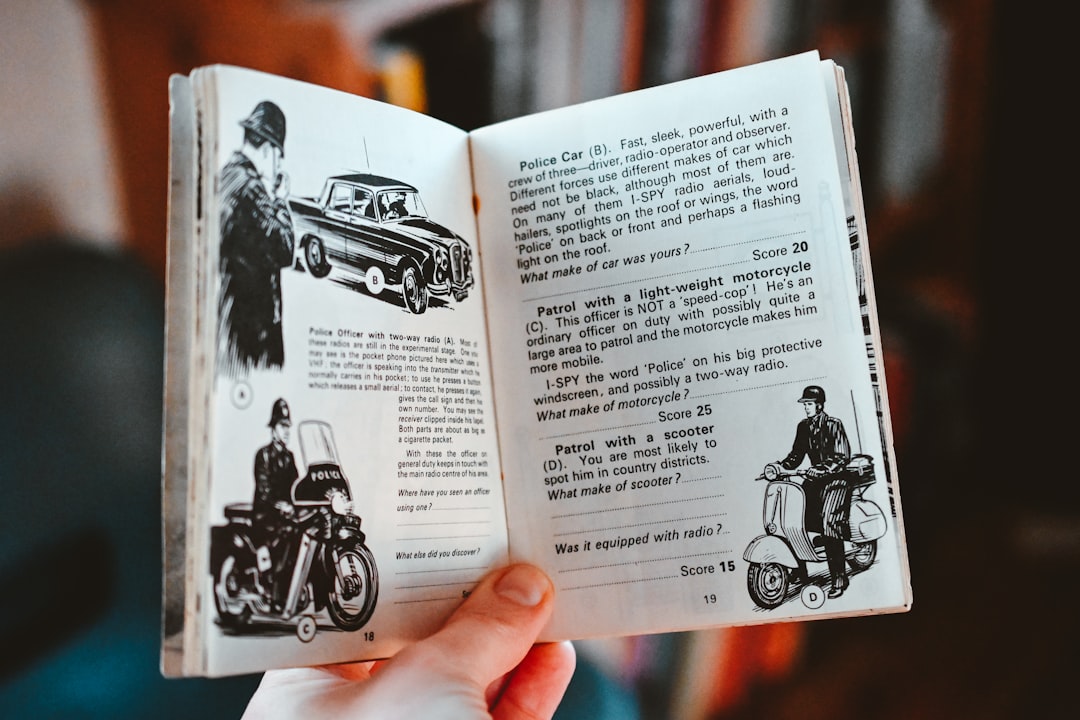
Picture this: it’s 1650, and you’re itching for the latest gossip or a thrilling story to pass the time. There’s no Netflix, no social media, not even a proper newspaper. But wait – here comes a chapman with a satchel full of tiny booklets that cost just pennies. These were chapbooks, the original viral content of their time.
Chapbooks – short works on cheap paper – were targeted towards lower-class readers and featured a diverse range of subjects. Everything from myth and fairy tales to practical and medical advice and prayers contributed to a steady demand that helped spread literacy among the lower classes. Think of them as the Wikipedia articles of the pre-industrial world, but with more drama and fewer citations.
In the 1660s, as many as 400,000 almanacs were printed annually, enough for one family in three in England. One 17th-century publisher of chapbooks in London stocked one book for every 15 families in the country. These numbers reveal something astonishing – chapbooks weren’t just popular entertainment, they were mass media. Yet once books could be mass-produced and sold for a reasonable price, the popularity of the chapbook began to rapidly decline.
Dime Novels: America’s First Paperback Revolution
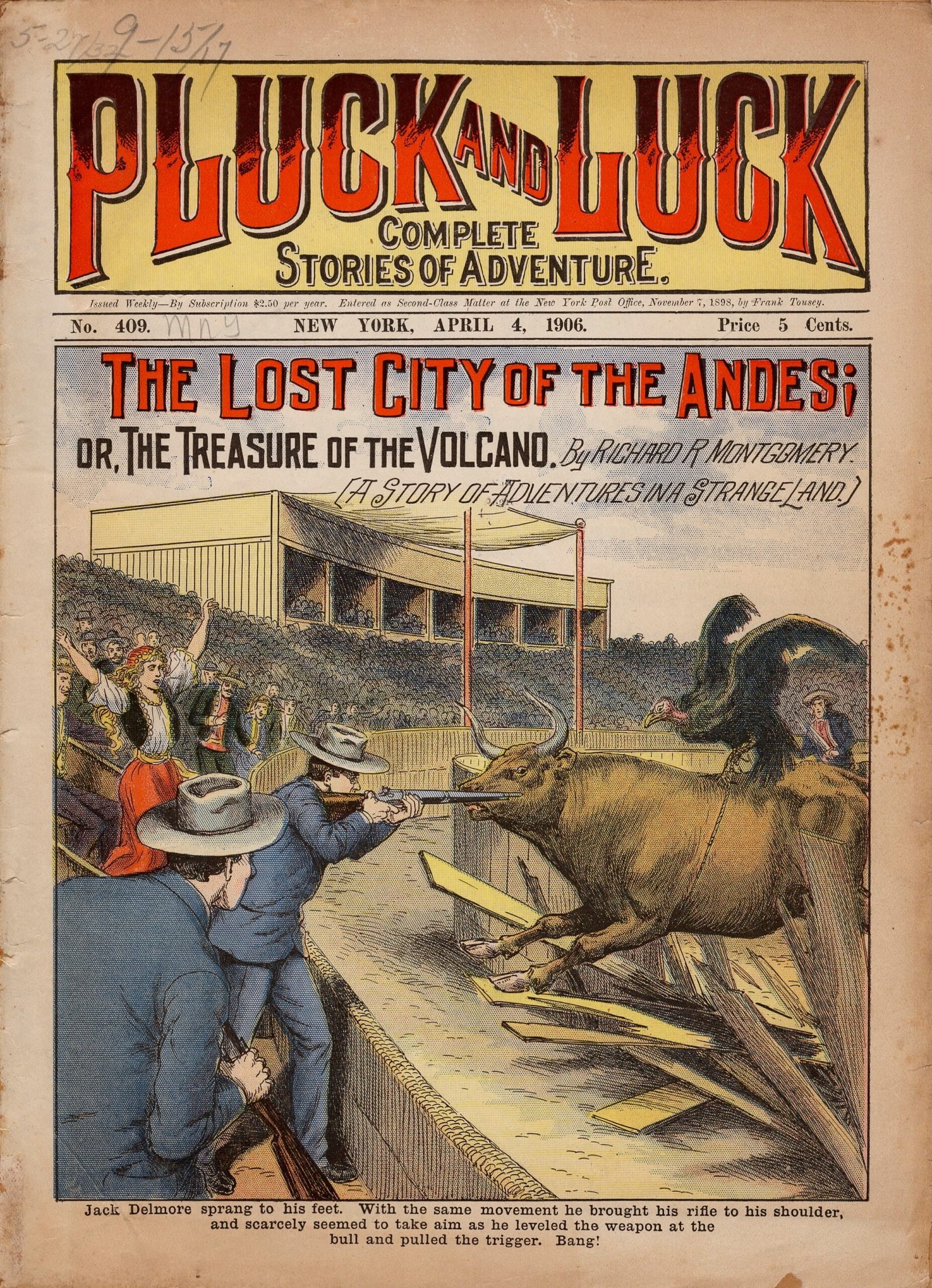
The year was 1860, and America was about to explode into civil war. But Frank Munsey had a different kind of explosion in mind – a literary one. His dime novels would sell for exactly ten cents and change reading forever. According to Pamela Bedore, author of Dime Novels and the Roots of American Detective Fiction, 50,000 dime novels were published between 1860 and 1915.
It sold more than 65,000 copies in the first few months after its publication as a dime novel. That was just the first one – “Malaeska, the Indian Wife of the White Hunter.” The success was instant and intoxicating. No exact publication records exist for any of the publishers of dime novels, but Everett estimated that in 1864 there were five million dime novels in circulation that had been produced by the Beadle firm alone, not counting the output of its competitors.
But success bred its own destruction. While the 1890s brought the entrance of pulp fiction magazines into the publishing arena, they were heavily influenced by the dime novels. Rising post rates may have caused a decline in the publication of the dime novel, but the content and sentiment behind the works continue to influence publications even to modern day. Like many genres, dime novels didn’t die – they evolved into something else entirely.
Picaresque Novels: When Heroes Were Actually Scoundrels
Before superheroes saved the world and before romantic leads were perfect gentlemen, literature celebrated rogues. The picaresque novel followed wandering protagonists who lived by their wits, stole when necessary, and told lies as naturally as breathing. Don Quixote, despite his noble delusions, was essentially a con man who couldn’t tell reality from fantasy.
These early novels captured something raw and honest about human nature – the idea that survival often requires moral flexibility. The episodic structure reflected how real life unfolds: not in neat three-act structures, but in a series of random encounters and hasty escapes. Each chapter was an adventure, each town a new opportunity for mischief.
Yet the very qualities that made picaresque novels authentic also doomed them. As literature became more sophisticated and readers demanded tighter plots, the rambling adventures of lovable rogues felt outdated. Publishers wanted stories with clear beginnings, middles, and ends – not meandering tales that could theoretically continue forever. The age of the antihero would return, but it would take centuries.
Penny Dreadfuls: Victorian Britain’s Guilty Pleasure
By the 1850s, there were up to a hundred publishers of penny-fiction, and in the 1860s and 1870s more than a million boys’ periodicals were sold per week. That’s not a typo – more than a million copies every single week. Victorian Britain was absolutely obsessed with these lurid tales of murder, mayhem, and supernatural terror.
What made penny dreadfuls so irresistible? They offered everything respectable literature wouldn’t: graphic violence, sexual intrigue, and heroes who weren’t quite heroic. The illustration which featured at the start of each issue was an integral part of the dreadfuls’ appeal, often acting as a teaser for future installments. As one reader said, “You see’s an engraving of a man hung up, burning over a fire, and some [would] go mad if they couldn’t learn … all about him.”
The popularity of penny dreadfuls among British children was challenged in the 1890s by the rise of competing literature. Leading the challenge were popular periodicals published by Alfred Harmsworth. Priced at one half-penny, Harmsworth’s story papers were cheaper and, at least initially, were more respectable than the competition. In the end, penny dreadfuls were killed by something even cheaper and more sensational – which tells you everything about human nature.
Campus Novels: When University Life Was Actually Funny

Once upon a time, academic novels weren’t about crushing student debt or adjunct professor poverty. They were actually funny. Books like “Lucky Jim” captured the absurdity of university life with wit so sharp it could cut glass. These novels understood that higher education was often a elaborate con game played by people too proud to admit they had no idea what they were doing.
The golden age of campus novels coincided with an era when universities were smaller, quirkier places where genuine eccentrics could flourish. Professors were characters, not brands. Students were oddballs seeking knowledge, not customers purchasing credentials. The comedy came from the gap between academic pretensions and human reality.
Today’s university environment – with its corporate culture, political tensions, and economic pressures – has largely killed off the comic campus novel. Modern academic fiction tends toward darkness, examining toxic workplace dynamics and systemic inequalities. While these issues deserve attention, something has been lost: the ability to laugh at the fundamental silliness of human beings pretending to be profound.
Bowery Boys Tales: Street Gangs as Heroes
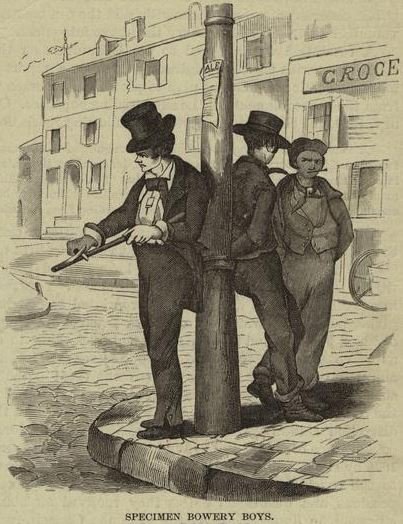
Before West Side Story romanticized gang violence, Bowery Boys tales celebrated it outright. These stories depicted young men from New York’s roughest neighborhoods as modern-day Robin Hoods, fighting corrupt politicians and protecting their communities through organized violence. The moral universe was simple: rich people were bad, poor people were good, and justice came through fists, not courts.
What killed the Bowery Boys genre wasn’t changing moral standards – it was changing criminal reality. As actual organized crime became more sophisticated and deadly, the idea of lovable street gangs became harder to sell. Real gangsters carried guns, not just brass knuckles. They killed innocent people, not just corrupt politicians.
The genre also fell victim to urban renewal and demographic change. The immigrant neighborhoods that produced the Bowery Boys disappeared, replaced by different communities with different stories. By the 1930s, hardboiled detective fiction offered a more realistic and compelling vision of urban crime, complete with morally complex protagonists who understood that violence always carries a price.
Nautical Melodramas: When Every Ship Had a Dark Secret
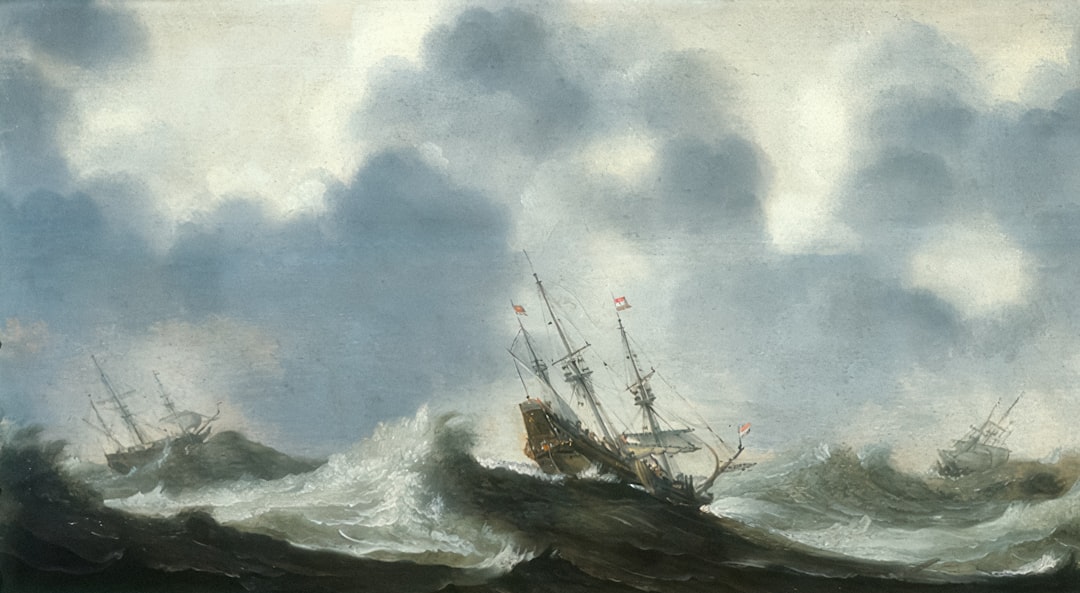
The 19th century was obsessed with the sea, and nautical melodramas fed that obsession with tales of mutiny, piracy, and mysterious voyages to unknown shores. Every ship carried dark secrets, every captain harbored troubled past, and every storm revealed character. These stories captured the genuine terror and wonder of an age when ocean travel meant disappearing beyond the horizon for months or years.
The genre flourished when sailing ships still dominated trade and imagination. Readers could relate to stories about wooden vessels battling wind and wave because such ships were still visible in every harbor. The ocean represented genuine mystery – vast expanses where anything might happen and no one would ever know.
But steam power changed everything. As steamships made ocean travel safer and more predictable, the romantic appeal of sailing ships faded. World War I brought submarine warfare and naval aviation, making old-fashioned ship-to-ship combat seem quaint. By the 1920s, more sophisticated adventure stories had emerged, offering psychological complexity that nautical melodramas couldn’t match.
It-Narratives: When Furniture Could Talk

Imagine a novel told from the perspective of a coin as it passes from hand to hand, witnessing every transaction and secret. Or a chair describing the conversations it overhears, the arguments it witnesses, the intimate moments it observes. These “it-narratives” were the 18th century’s experiment with radical perspective, decades before modernist literature would rediscover the power of unconventional narrators.
These novels offered something genuinely unique: the ability to move freely through society while remaining invisible. A guinea coin could travel from palace to brothel, from merchant’s purse to beggar’s palm, observing class differences with perfect impartiality. Household objects witnessed family secrets no human narrator could access.
Yet the very novelty that made it-narratives compelling also limited their appeal. After the initial surprise wore off, readers wanted human emotions and psychological depth that furniture simply couldn’t provide. The technique was fascinating but ultimately restrictive – a literary dead end that would have to wait for writers like Virginia Woolf to find new ways to experiment with consciousness and perspective.
Sensation Novels: Victorian Bestsellers That Scandalized Society
In the 1860s, respectable Victorian ladies were secretly devouring novels about bigamy, murder, and adultery. Sensation novels like “The Woman in White” offered middle-class readers the thrill of criminal behavior without any actual risk. These books were essentially domestic thrillers, proving that the most terrifying dangers often lurked behind respectable facades.
What made sensation novels so powerful was their realistic settings. Unlike Gothic novels with their remote castles and supernatural threats, sensation fiction took place in contemporary England, in houses that looked exactly like the readers’ own homes. The message was clear: darkness could hide anywhere, even in the most respectable neighborhoods.
The genre’s success contained the seeds of its destruction. As sensation novels became more popular, they also became more formulaic. Publishers demanded increasingly outrageous plots, leading to stories so melodramatic they became unintentionally comic. By the 1880s, the genre had evolved into modern detective fiction and psychological thrillers – more sophisticated forms that abandoned the sensation novel’s crude emotional manipulation.
Lost World Fiction: Before Science Fiction Conquered Everything
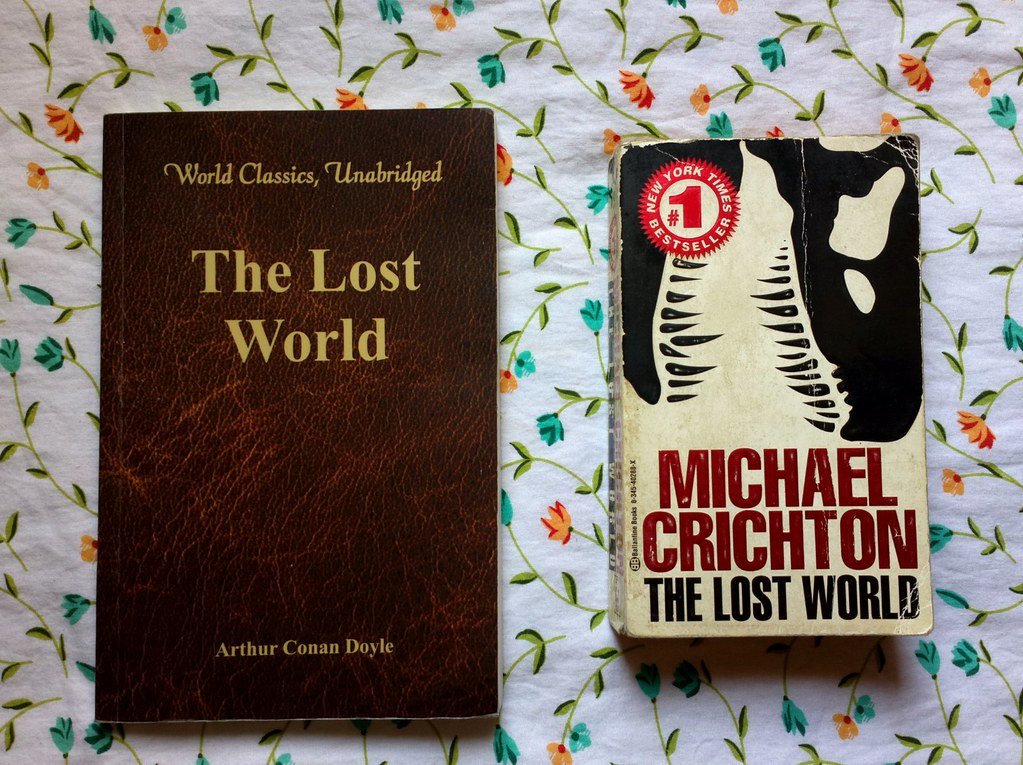
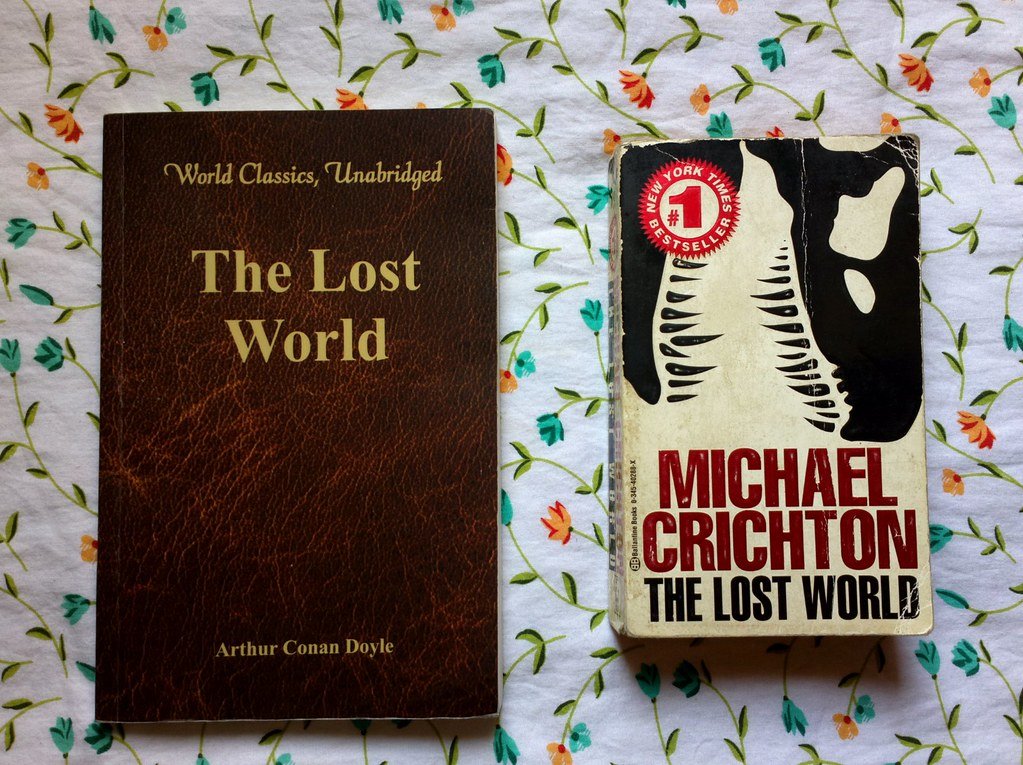
Arthur Conan Doyle’s “The Lost World” promised something irresistible: the possibility that somewhere on Earth, the age of dinosaurs continued. This wasn’t science fiction in the modern sense – it was adventure fiction based on the assumption that our planet still held genuine mysteries, hidden valleys where evolution had taken different paths.
Lost world stories captured the final moments of geographical optimism, when blank spaces on maps still suggested infinite possibilities. Explorers might discover anything: living dinosaurs, advanced civilizations, lost tribes with ancient wisdom. The genre reflected genuine scientific uncertainty about what might exist in unexplored regions.
But blank spaces on maps don’t last forever. By the 1930s, aerial photography and improved communication had mapped most of the planet. Science fiction offered more compelling unknowns – other planets, parallel dimensions, futures filled with technological wonders. Why search for lost worlds on Earth when writers could invent entire galaxies? The age of exploration had ended; the age of imagination had begun.
Pulp Westerns: When Cowboys Ruled the Magazine Racks
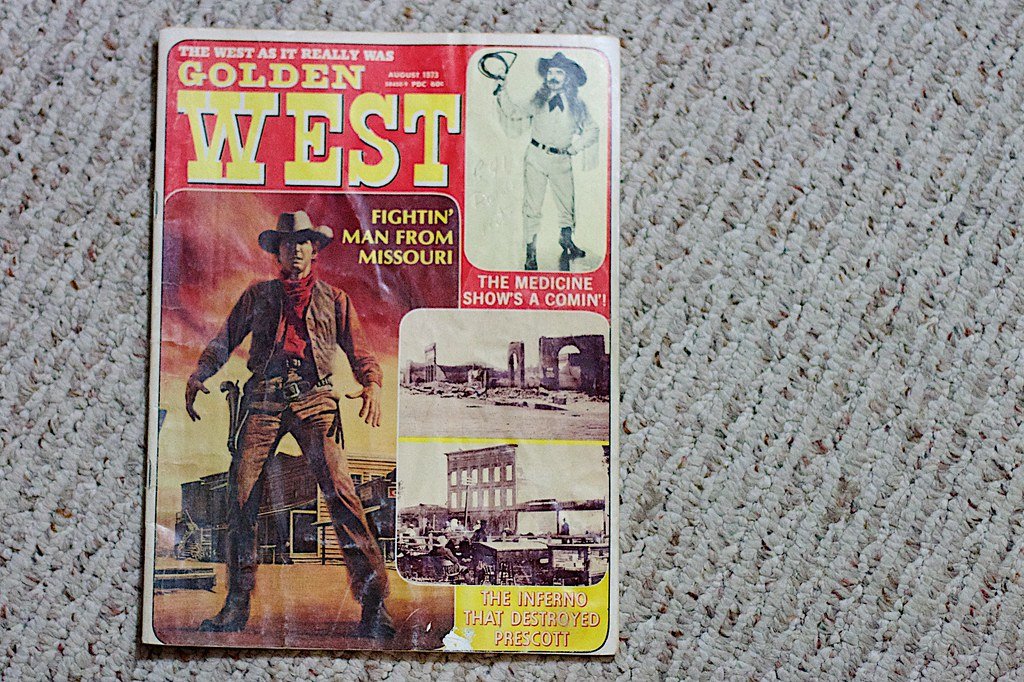
Street & Smith led the way with all three, launching Detective Story Magazine in 1915, Western Story Magazine in 1919, and adding Love Story Magazine to their roster in Aug. 1921, which claimed the highest circulation of any pulp in its day, peaking at around 600,000 in 1929. But it was Western Story Magazine that truly captured America’s imagination. Spurred on by its impressive roster of contributors, Western Story’s circulation reached almost two million readers by 1922. According to Jon Tuska, Street & Smith was earning approximately $400,000 on a single issue of Western Story during this period.
Western pulps often led in market share throughout the heyday of pulp magazine publishing, followed by romance pulps. These top genres proved popular enough to produce pulp magazines fitting both categories. The formula was simple but effective: brave heroes, villainous outlaws, and the vast frontier where anything could happen. Every month brought new adventures in towns with names like Deadwood and Tombstone.
The decline was swift and brutal. The genre peaked around the early 1960s, largely due to the tremendous number of Westerns on television. The burnout of the American public on television Westerns in the late 1960s seemed to have an effect on the literature as well, and interest in Western literature began to wane. Readership began to drop off in the mid- to late 1970s and reached a new low in the 2000s. Most bookstores, outside a few west American states, only carry a small number of Western fiction books.
Gothic Chapbooks: Terror for a Penny
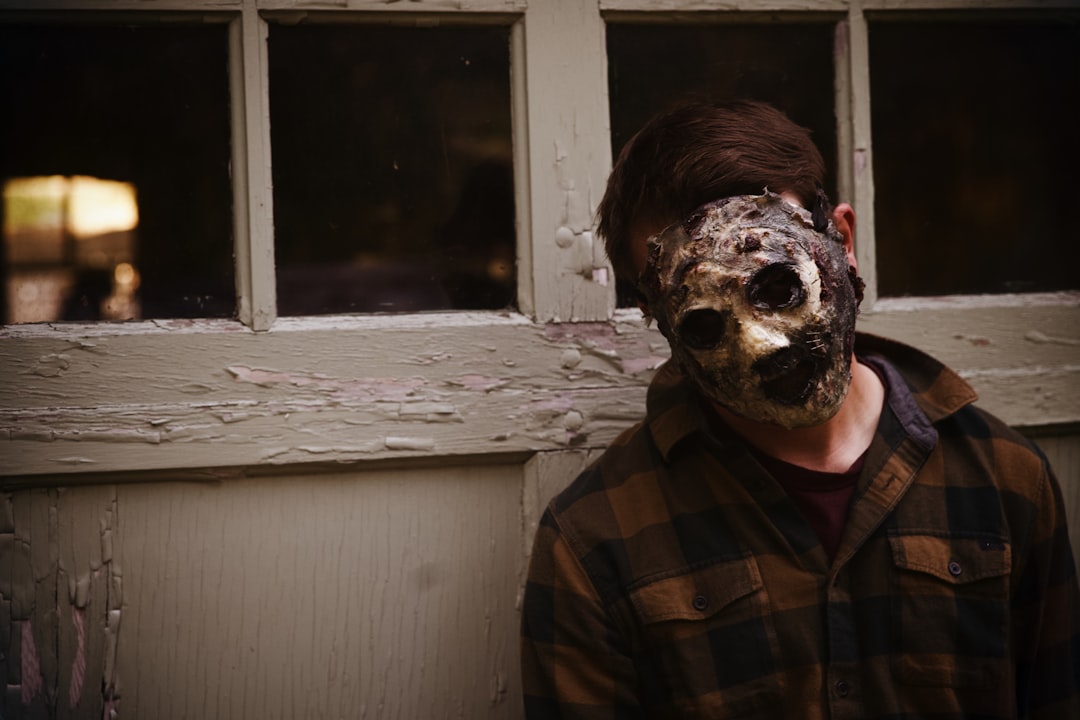
Before horror movies, before Stephen King, there were Gothic chapbooks – tiny pamphlets that delivered maximum fear for minimum cost. These late 18th and early 19th century publications took the Gothic novel’s most terrifying elements and compressed them into bite-sized portions of pure nightmare fuel.
Gothic chapbooks understood that true horror works best in small doses. A 16-page story about a haunted castle could be more effective than a 300-page novel because it didn’t overstay its welcome. Readers could consume these tales in a single sitting, experiencing intense fear without the commitment required for longer works.
The format was perfect for the Gothic mood – cheap paper, rough printing, and crude illustrations that suggested more than they showed. But this very crudeness became a liability as printing technology improved and readers’ expectations rose. Gothic chapbooks were absorbed into penny dreadfuls and eventually evolved into modern horror fiction, losing their distinctive charm in the process.
Epistolary Novels: When Letters Told the Story
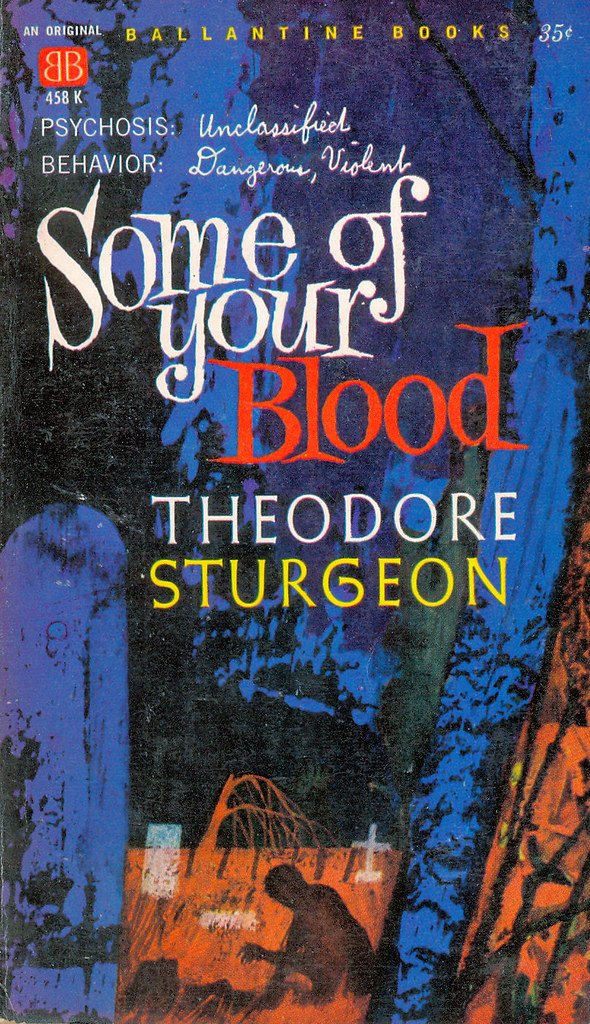
Once upon a time, novels were made of letters. “Dracula” unfolded through diary entries and telegrams. “Pamela” consisted entirely of correspondence between a servant girl and her friends. These epistolary novels created intimacy by letting readers eavesdrop on private communications, making them feel like co-conspirators in the story.
The format offered unique advantages: multiple perspectives, realistic pacing, and the thrill of forbidden reading. Letters revealed character through voice and style in ways that traditional narration couldn’t match. Each correspondent had distinctive concerns, vocabulary, and biases, creating rich psychological portraits without explicit analysis.
Yet epistolary novels faced a fundamental problem: they required constant justification. Why would characters write such detailed letters? How did the narrator obtain these private documents? As literary realism developed more sophisticated techniques, the epistolary format began to seem artificial and constraining. Modern writers occasionally revive the technique – through emails, text messages, or social media posts – but it remains a specialized tool rather than a dominant form.
The Last Page: What These Lost Genres Really Tell Us

These thirteen forgotten genres didn’t just disappear – they were murdered by progress. New technologies, changing social conditions, and evolving reader expectations killed them as surely as any weapon. Yet their deaths reveal something profound about the relationship between literature and society.
Every successful genre reflects its era’s anxieties, dreams, and possibilities. Chapbooks served a world where information was scarce and expensive. Dime novels fed a growing democracy’s hunger for accessible entertainment. Penny dreadfuls satisfied Victorian society’s need to explore forbidden desires safely. When social conditions changed, these genres became obsolete.
Perhaps the most remarkable thing about these lost genres isn’t that they died, but that they lived so vibrantly while they lasted. Each one solved specific cultural problems, met particular needs, and shaped the reading habits of millions. Their innovations – serialization, cheap printing, genre specialization, and mass marketing – laid the foundation for everything that followed. What would you have read if you’d lived in their world?

Besides founding Festivaltopia, Luca is the co founder of trib, an art and fashion collectiv you find on several regional events and online. Also he is part of the management board at HORiZONTE, a group travel provider in Germany.
