

Authors Who Captured the American Dream Like No One Else
F. Scott Fitzgerald – The Great Gatsby’s Glittering Despair
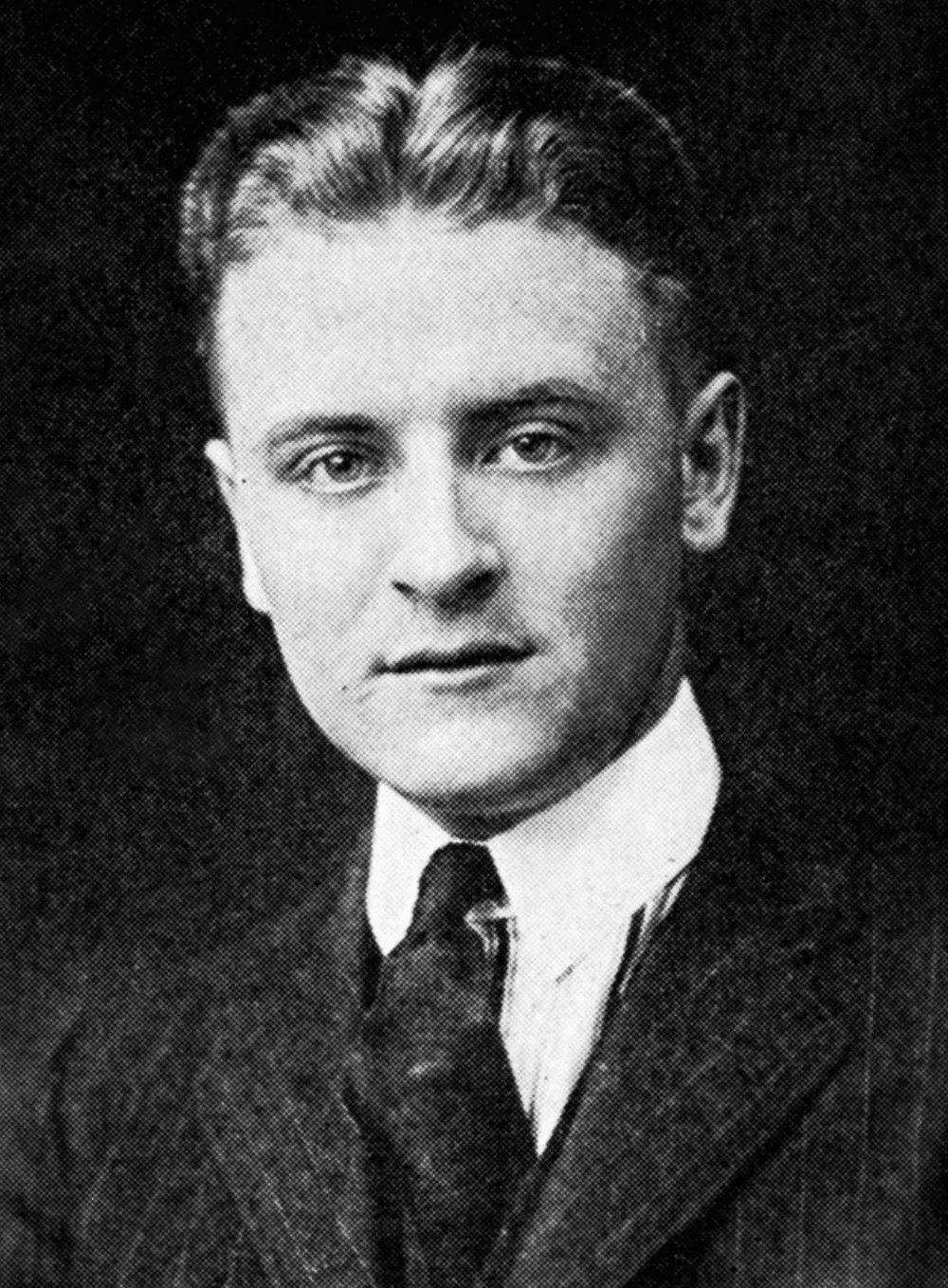
F. Scott Fitzgerald’s The Great Gatsby (1925) remains the definitive critique of American materialism and the hollowness behind the Dream’s glittering facade. What makes Fitzgerald’s work so enduring is how he showed that the American Dream wasn’t just failing—it was actually destructive, consuming the very people who pursued it most fervently. Jay Gatsby’s death mirrors the demise of the Dream itself, serving as a stark warning about the dangers of chasing illusions. Since the 1920s, Fitzgerald has been recognized for satirizing materialism in the chase for the American dream. His portrayal of wealth and excess in the Jazz Age revealed how the pursuit of success could corrupt the soul and leave people spiritually bankrupt. The green light at the end of Daisy’s dock became one of literature’s most powerful symbols of unreachable desires, representing dreams that forever remain just out of grasp.
John Steinbeck – The Grapes of Wrath and Broken Promises
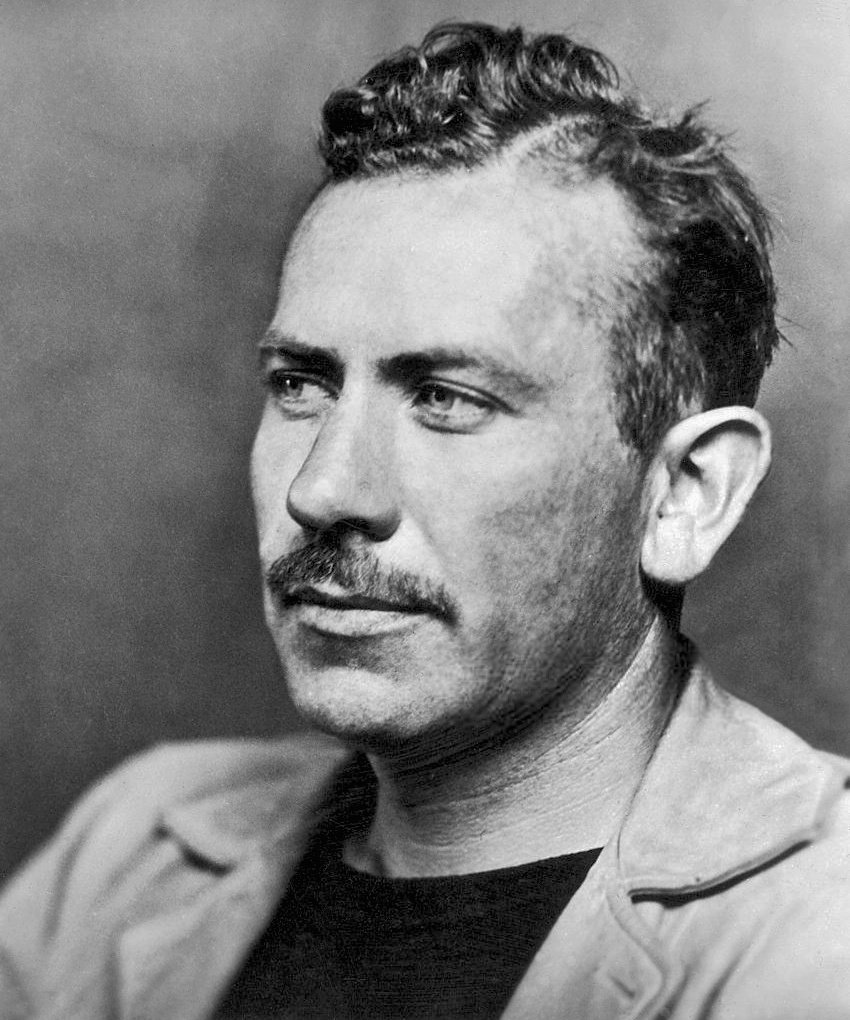
John Steinbeck’s The Grapes of Wrath (1939) and Of Mice and Men show how the American Dream often remains elusive, even for those who work hardest to achieve it. Steinbeck had a unique ability to capture the struggles of ordinary Americans during the Great Depression, showing how economic hardship could shatter even the most modest dreams. In Of Mice and Men, George and Lennie dream of their own piece of land with a ranch so they can “live off the fatta the lan'” and enjoy a better life, but the book shows that not everyone can achieve the American Dream. His characters weren’t wealthy socialites like Gatsby’s circle—they were migrant workers, farm laborers, and displaced families who represented the backbone of America. Steinbeck’s genius lay in showing how the system often failed those who needed it most. The Dust Bowl migrants in The Grapes of Wrath faced not just natural disasters but human cruelty and indifference that made their pursuit of a better life nearly impossible.
Arthur Miller – Death of a Salesman’s Tragic Truth
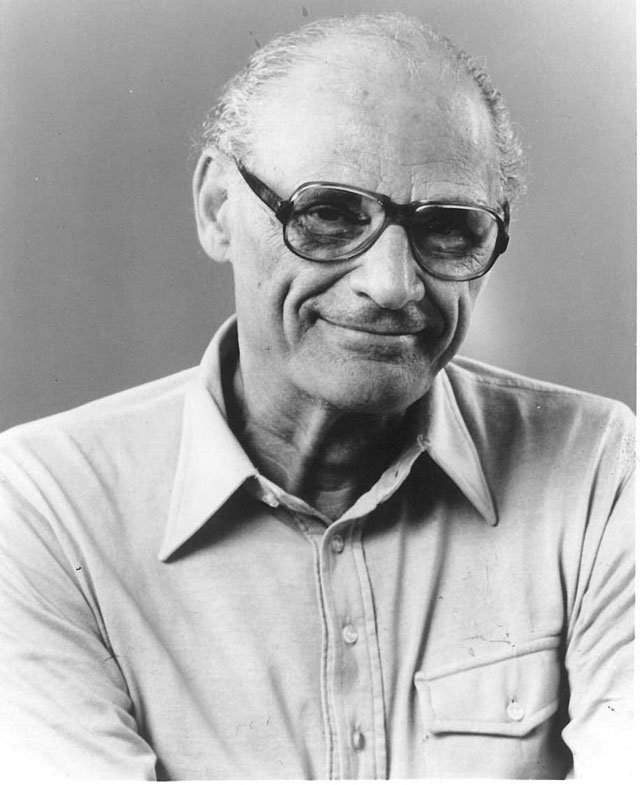
Arthur Miller’s Death of a Salesman (1949) delivers perhaps the most devastating critique of the American Dream by focusing on an ordinary man’s spectacular failure. Willy Loman represents every middle-class American who believed that hard work, personality, and optimism would guarantee success. Miller’s play was revolutionary because it showed that the American Dream could be just as destructive to average people as it was to the wealthy characters in Fitzgerald’s work. The tragedy of Willy Loman is that he never stops believing in the Dream, even as it destroys him and his family. Miller understood that the Dream’s greatest cruelty wasn’t in its failure to deliver—it was in how it convinced people that their failures were personal rather than systemic. The play is recognized as one of the key works that talks about the vanity of the American Dream.
Theodore Dreiser – An American Tragedy’s Dark Vision
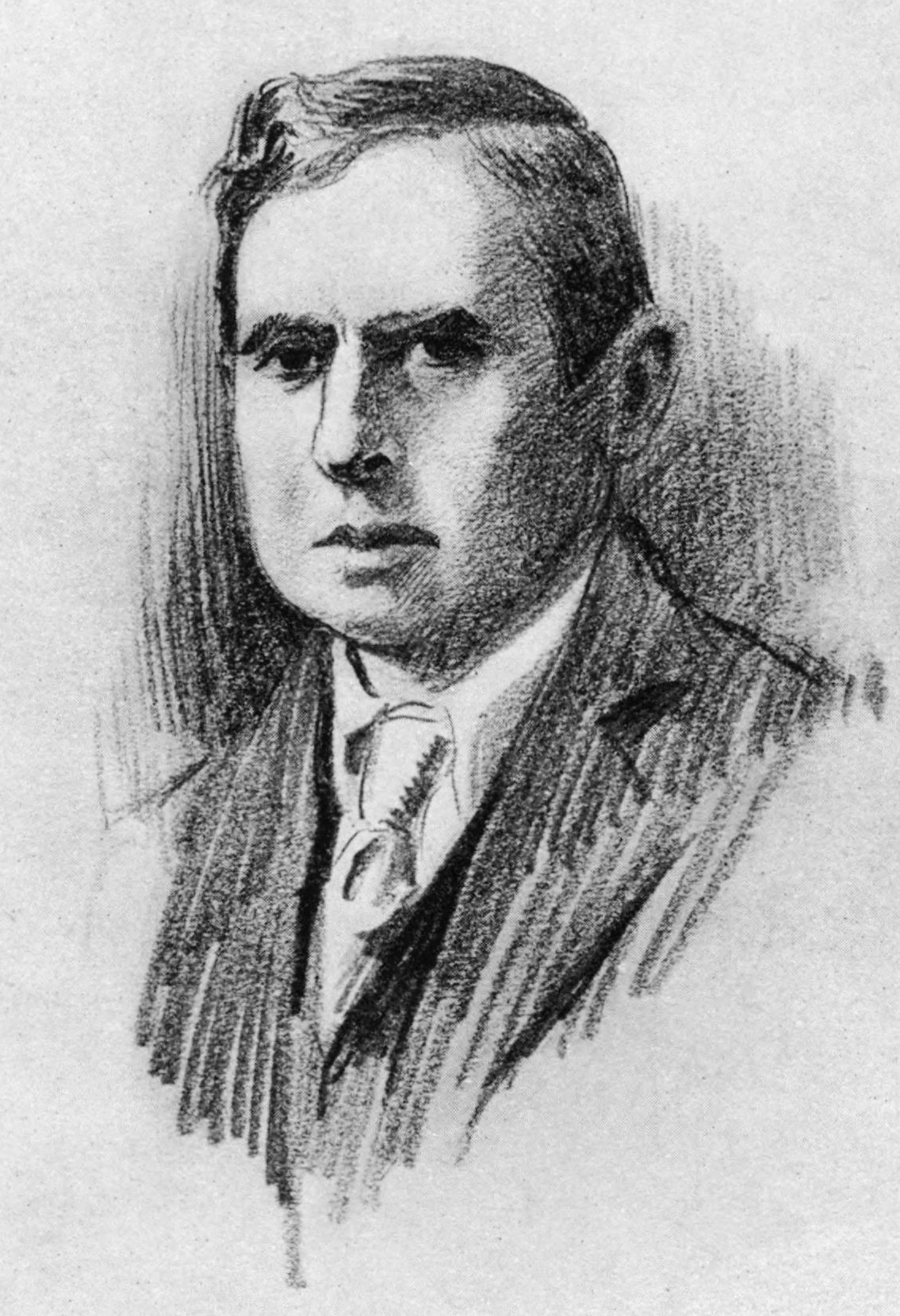
Theodore Dreiser’s An American Tragedy (1925) stands alongside Fitzgerald’s work as a foundational critique of American materialism. Dreiser’s novel showed how the pursuit of wealth and status could lead to moral corruption and ultimately destroy lives. What made Dreiser’s approach unique was his unflinching realism—he didn’t romanticize poverty or wealth but showed both as part of a brutal system that rewarded cunning over virtue. His protagonist’s downfall wasn’t just personal but representative of a society that promised everything to everyone while delivering very little to most. Dreiser wrote during the same era as Fitzgerald but approached the American Dream from a different angle, focusing on the working class rather than the wealthy elite. His work demonstrated that the Dream’s failures weren’t limited to any particular social class but were built into the very structure of American society.
Horatio Alger – The Rags-to-Riches Myth Maker

Horatio Alger’s 19th-century stories like Ragged Dick created the template for American success stories, establishing the myth that hard work and moral character would inevitably lead to prosperity. Alger’s tales were incredibly popular because they offered hope to millions of Americans struggling with poverty and uncertainty. His heroes always started from the bottom—orphans, street children, or poor farm boys—and through determination, honesty, and a bit of luck, they climbed the social ladder to respectability and wealth. What makes Alger significant in the context of American Dream literature is that he created the very myths that later authors would spend decades deconstructing. His stories were so embedded in American culture that they became part of the national psyche, influencing how people thought about success and failure. Even today, when politicians or business leaders talk about “pulling yourself up by your bootstraps,” they’re invoking the Horatio Alger myth. Later writers like Fitzgerald and Miller would show the dark side of these cheerful rags-to-riches stories.
James Truslow Adams – Coining the Dream
James Truslow Adams actually coined the term “American Dream” in his 1931 book The Epic of America during the Great Depression, defining it as “that dream of a land in which life should be better and richer and fuller for everyone, with opportunity for each according to ability or achievement”. Adams was writing at a time when the Dream seemed most fragile, as millions of Americans faced unemployment and poverty. His definition wasn’t about material wealth alone but about the possibility of a society where everyone could reach their full potential regardless of their background. He emphasized that it was “not a dream of motor cars and high wages merely, but a dream of social order in which each man and each woman shall be able to attain to the fullest stature of which they are innately capable”. What’s remarkable about Adams is that he created the term that would define American aspirations for generations to come. His work captured both the hope and the fragility of American ideals during one of the nation’s darkest periods. Adams understood that the Dream was as much about equality and recognition as it was about prosperity.
Ralph Ellison – Invisible Man’s Excluded Vision

Ralph Ellison’s Invisible Man (1952) explored how Black Americans were systematically excluded from the American Dream. Ellison’s protagonist struggles not just with poverty or lack of opportunity but with the fundamental invisibility that racism imposed on African Americans. The novel’s power lies in showing how the American Dream wasn’t just unavailable to Black Americans—it actively erased them from the national narrative. Ellison’s work was groundbreaking because it revealed that the Dream’s failures weren’t just economic but deeply rooted in America’s racial hierarchy. His invisible man represents millions of Americans who were told they belonged to the land of opportunity while being systematically denied access to that opportunity. The novel’s surreal elements and complex symbolism capture the psychological impact of being excluded from the very society that claimed to offer freedom and equality to all. Ellison showed that for many Americans, the Dream wasn’t just deferred—it was deliberately withheld.
Toni Morrison – Song of Solomon’s Complex Heritage

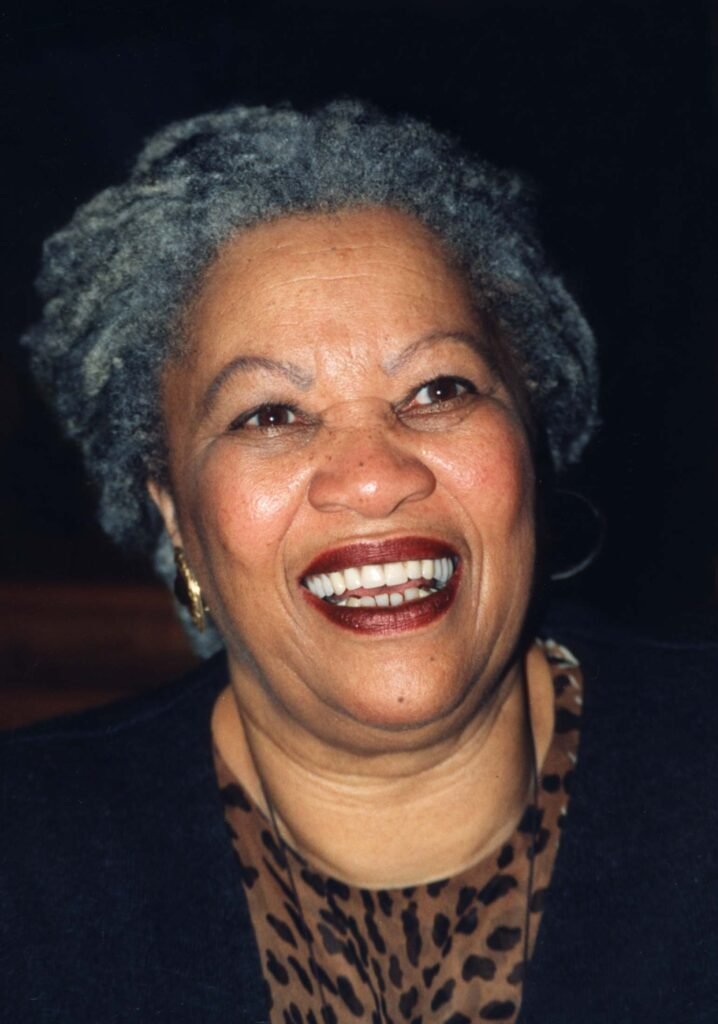
Toni Morrison’s Song of Solomon (1977) wove African American struggles into the fabric of the American Dream. Morrison’s approach was unique because she didn’t just critique the Dream’s exclusions—she created alternative narratives that celebrated African American culture and history. Her characters pursue their own versions of success and fulfillment, often in conflict with mainstream American values. Morrison understood that the American Dream had to be redefined to include the experiences and aspirations of people who had been historically marginalized. Her work shows how African Americans created their own dreams and definitions of success, often in the face of tremendous obstacles. Morrison’s integration of African American struggles into the Dream’s fabric demonstrates how the concept must evolve to be truly inclusive. Her storytelling combined magical realism with hard social truths, creating a rich tapestry that showed both the pain and the resilience of African American communities.
John Updike – The Rabbit Series and Middle-Class Disillusionment

John Updike’s Rabbit series tracked the postwar middle-class experience with unprecedented detail, following Harry “Rabbit” Angstrom through decades of American life. Updike’s genius was in showing how the American Dream played out for ordinary suburban Americans who achieved a measure of success but still felt profoundly unfulfilled. His characters had the house, the car, the job, and the family that represented the Dream’s promises, yet they remained restless and dissatisfied. Updike wrote about the psychological cost of achieving the Dream, exploring how material success could coexist with spiritual emptiness. The Rabbit novels span from the 1950s through the 1990s, providing a unique chronicle of how American society and its dreams evolved over half a century. Updike’s detailed realism captured the texture of middle-class life with both affection and sharp criticism. His work showed that even when the American Dream “succeeded,” it often left people feeling hollow and searching for something more meaningful.
Philip Roth – American Pastoral’s Shattered Ideals
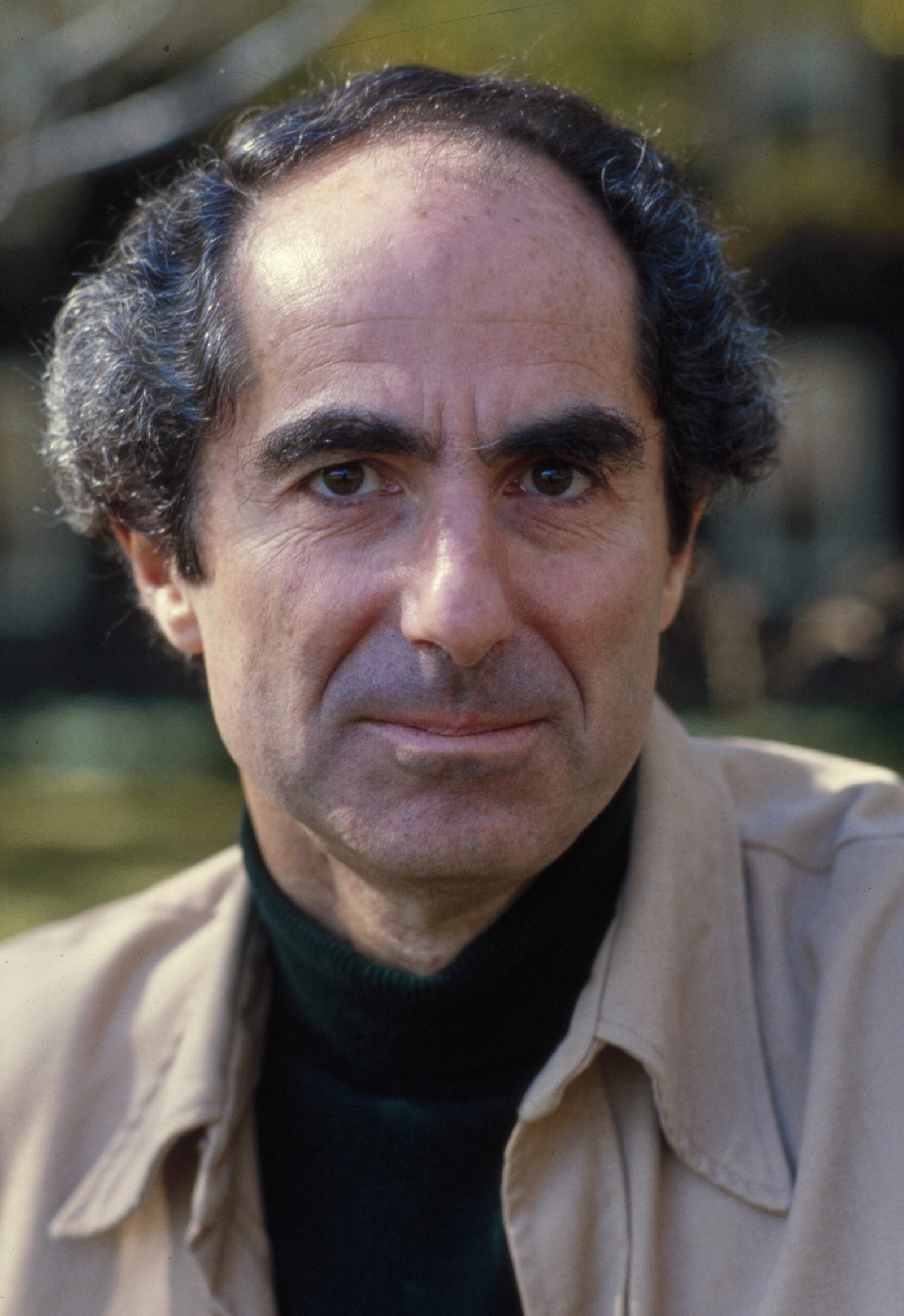
Philip Roth’s American Pastoral (1997) deconstructed the American Dream through the story of Seymour “Swede” Levov, a successful Jewish-American businessman whose perfect life falls apart during the social upheavals of the 1960s. Roth’s novel was a masterpiece of irony, showing how the Dream’s promises of stability and prosperity could be destroyed by forces beyond individual control. The Swede represents the assimilated American who believes he has escaped the limitations of his background through hard work and conformity to American ideals. Roth’s genius lay in showing how the American Dream could be both achieved and utterly destroyed within a single generation. The novel explores themes of identity, assimilation, and the price of trying to become the “perfect” American. Roth understood that the Dream’s greatest tragedy wasn’t always failure—sometimes it was the violent collapse of apparent success. His work captures the complexity of American identity in the latter half of the 20th century, when traditional certainties were being challenged and overturned.
Jhumpa Lahiri – The Namesake and Immigrant Dreams

Jhumpa Lahiri’s The Namesake (2003) depicted the immigrant pursuit of identity and success in a more modern setting. Lahiri’s work brought a fresh perspective to American Dream literature by focusing on the experiences of recent immigrants who face the challenge of balancing their cultural heritage with American aspirations. Her characters don’t just pursue economic success—they struggle with questions of identity, belonging, and what it means to be American. Lahiri’s approach is particularly powerful because she shows how the American Dream looks different to people coming from other cultures and traditions. Her characters often achieve material success but struggle with the psychological and cultural costs of assimilation. The novel explores how second-generation immigrants inherit both the opportunities and the conflicts of their parents’ dreams. Lahiri’s detailed portrayal of Bengali-American life shows how the Dream must be constantly redefined and negotiated by each new group of Americans.
Sandra Cisneros – The House on Mango Street’s Latino Dreams

Sandra Cisneros’s The House on Mango Street (1984) illustrated Latino dreams in a hostile America through the eyes of a young Chicana girl coming of age in Chicago. Cisneros’s work was groundbreaking for its authentic portrayal of working-class Latino life and the specific challenges faced by Latino families pursuing the American Dream. Her protagonist, Esperanza, dreams of a better house and a better life, but she also struggles with the limitations imposed by poverty, gender, and ethnicity. Cisneros wrote in a unique style that combined poetry with prose, creating a voice that was both accessible and literary. Her work shows how the American Dream can be both inspiring and crushing for young people who see the possibilities around them but face significant barriers to achieving them. The novel’s power lies in its honest portrayal of how systemic inequalities shape individual dreams and aspirations. Cisneros gave voice to experiences that had been largely absent from mainstream American literature.
Junot Díaz – The Brief Wondrous Life of Oscar Wao’s Brutal Reality

Junot Díaz’s The Brief Wondrous Life of Oscar Wao (2007) blended immigrant hope with brutal reality, showing how the American Dream intersects with issues of race, class, and cultural identity. Díaz’s novel was unique for its use of multiple narrative voices and its mixing of high and low culture, from Dominican history to comic book references. His characters pursue success and acceptance in America while dealing with the trauma of their family’s past in the Dominican Republic under the Trujillo dictatorship. Díaz showed how the American Dream can be both a source of hope and a source of additional pressure for immigrants who carry the weight of family expectations and historical trauma. His work is notable for its unflinching portrayal of violence and discrimination, showing how the Dream’s promises can be undercut by harsh realities. The novel’s innovative style and structure reflect the complex, hybrid nature of immigrant experience in contemporary America. Díaz demonstrated how American Dream narratives must account for global connections and historical trauma.
Viet Thanh Nguyen – The Sympathizer’s War-Torn Dreams

Viet Thanh Nguyen’s The Sympathizer (2015) examined war, exile, and the Dream’s broken promises through the perspective of a Vietnamese refugee and spy. Nguyen’s novel was groundbreaking for its complex portrayal of the Vietnam War’s aftermath and its impact on both Vietnamese and American society. His protagonist embodies the contradictions of the American Dream for those who come to America as refugees rather than voluntary immigrants. The novel explores how war trauma complicates the pursuit of American success and belonging. Nguyen’s work is particularly important because it gives voice to perspectives that were often marginalized in American literature about the Vietnam War. His protagonist’s dual identity as both communist spy and American refugee reflects the complex political and cultural negotiations that many immigrants must make. The novel shows how the American Dream can be both a sanctuary and a source of ongoing conflict for those whose arrival in America is tied to historical violence and displacement.
Don DeLillo – Underworld’s Cold War Consumerism

Don DeLillo’s Underworld (1997) captured Cold War America’s consumerist dreams with epic scope and postmodern sensibility. DeLillo’s massive novel spans decades of American history, showing how the American Dream became increasingly tied to consumption and material accumulation during the Cold War era. His work explores how fear of nuclear annihilation paradoxically intensified Americans’ focus on material comfort and prosperity. DeLillo’s characters pursue success and security in a world overshadowed by the threat of destruction, making their dreams both more urgent and more absurd. The novel’s title refers not just to the criminal underworld but to the hidden connections between American prosperity and violence, both domestic and international. DeLillo’s postmodern style reflects the complexity and fragmentation of contemporary American experience. His work shows how the American Dream evolved in response to global politics and technological change, becoming more complex and more problematic in the process.
Barbara Ehrenreich – Nickel and Dimed’s Working Poor Reality

Barbara Ehrenreich’s Nickel and Dimed: On (Not) Getting By in America (2001) was written from her perspective as an undercover journalist investigating the impact of welfare reform on the working poor in the United States. Ehrenreich’s work challenges the very definition of the American Dream as “the ideal that every US citizen should have an equal opportunity to achieve success and prosperity through hard work, determination, and initiative,” showing through her experiences that this ideal can no longer be attained. She was inspired by the rhetoric surrounding welfare reform, which promised that a job—any job—can be the ticket to a better life, but discovered that survival on $6 an hour is nearly impossible. Ehrenreich found that no job is truly “unskilled” and that one job is not enough—you need at least two if you want to live indoors. She concluded that the “working poor” are “in fact the major philanthropists of our society” who “neglect their own children so that the children of others will be cared for” and “live in substandard housing so that other homes will be shiny and perfect”. Her work exposed the myth that hard work alone guarantees escape from poverty in modern America.
Matthew Desmond – Evicted’s Housing Crisis

Matthew Desmond’s Evicted: Poverty and Profit in the American City (2016) is set in the poorest areas of Milwaukee during the 2008 financial crisis, following eight families struggling to pay rent and facing eviction. The book won the 2017 Pulitzer Prize for General Nonfiction for “a deeply researched exposé that showed how mass evictions after the 2008 economic crash were less a consequence than a cause of poverty”. Desmond’s central argument is that “eviction is a cause, not just a condition of poverty”. His research shows that without stable shelter, everything else falls apart—poor families spend at least half their income on housing, sometimes 60-70 percent, leaving them unable to buy enough food and facing constant eviction threats. “We have failed to fully appreciate how deeply housing is implicated in the creation of poverty,” Desmond writes, calling the situation an unjustifiable “withdrawal

Besides founding Festivaltopia, Luca is the co founder of trib, an art and fashion collectiv you find on several regional events and online. Also he is part of the management board at HORiZONTE, a group travel provider in Germany.
