

- 9 Historical Mysteries That Still Baffle Experts to This Very Day - April 5, 2026
- 15 Legendary Authors Whose Personal Lives Were as Gripping as Their Novels - April 5, 2026
- Top Tips to Experience the 2026 California Superbloom - April 5, 2026
History, for all its written records and excavated ruins, is full of stubborn gaps. Some questions have clean answers. Others linger for centuries, drifting from one generation of scholars to the next like an open wound that never fully closes. We dig, scan, date, and theorize. Still, certain puzzles refuse to give themselves up.
What’s fascinating, honestly, is that we live in an era of satellite imaging, DNA analysis, and artificial intelligence, yet some ancient riddles remain every bit as slippery as they were thousands of years ago. The closer we look, the more questions emerge. Let’s dive in.
1. The Voynich Manuscript: The World’s Most Uncrackable Book
![1. The Voynich Manuscript: The World's Most Uncrackable Book (Beinecke Rare Book & Manuscript Library, Yale University ([1])., Public domain)](https://festivaltopia.com/wp-content/uploads/2026/04/1775318199456_1775318191707_voynich_manuscript_-28167-29.jpeg)
Imagine stumbling upon a book that nobody alive can read. That’s the Voynich Manuscript in a nutshell. This 240-page illustrated book, carbon-dated to the early 15th century, is written entirely in an unknown script that nobody has been able to decode. It’s the kind of thing that makes even the most seasoned cryptographer lose sleep.
The manuscript contains bizarre drawings of unidentifiable plants, naked figures in strange plumbing-like structures, and astronomical diagrams that don’t match any known system. Professional cryptographers, linguists, and artificial intelligence programs have all tried and failed to crack its code.
Experts have deduced that it may have been composed in Italy, based on similarities to other works from the Renaissance period, but its origins remain unknown. This early 15th-century illustrated codex stands as a pinnacle of cryptographic mysteries. Carbon-dated to Italy’s Renaissance, it features herbal, astronomical, and biological sections with undeciphered “Voynichese” text alongside fantastical illustrations. Some scholars even suspect the entire thing is an elaborate hoax, though proving that is, ironically, just as difficult as decoding it.
2. Göbekli Tepe: A Temple That Rewrites Everything
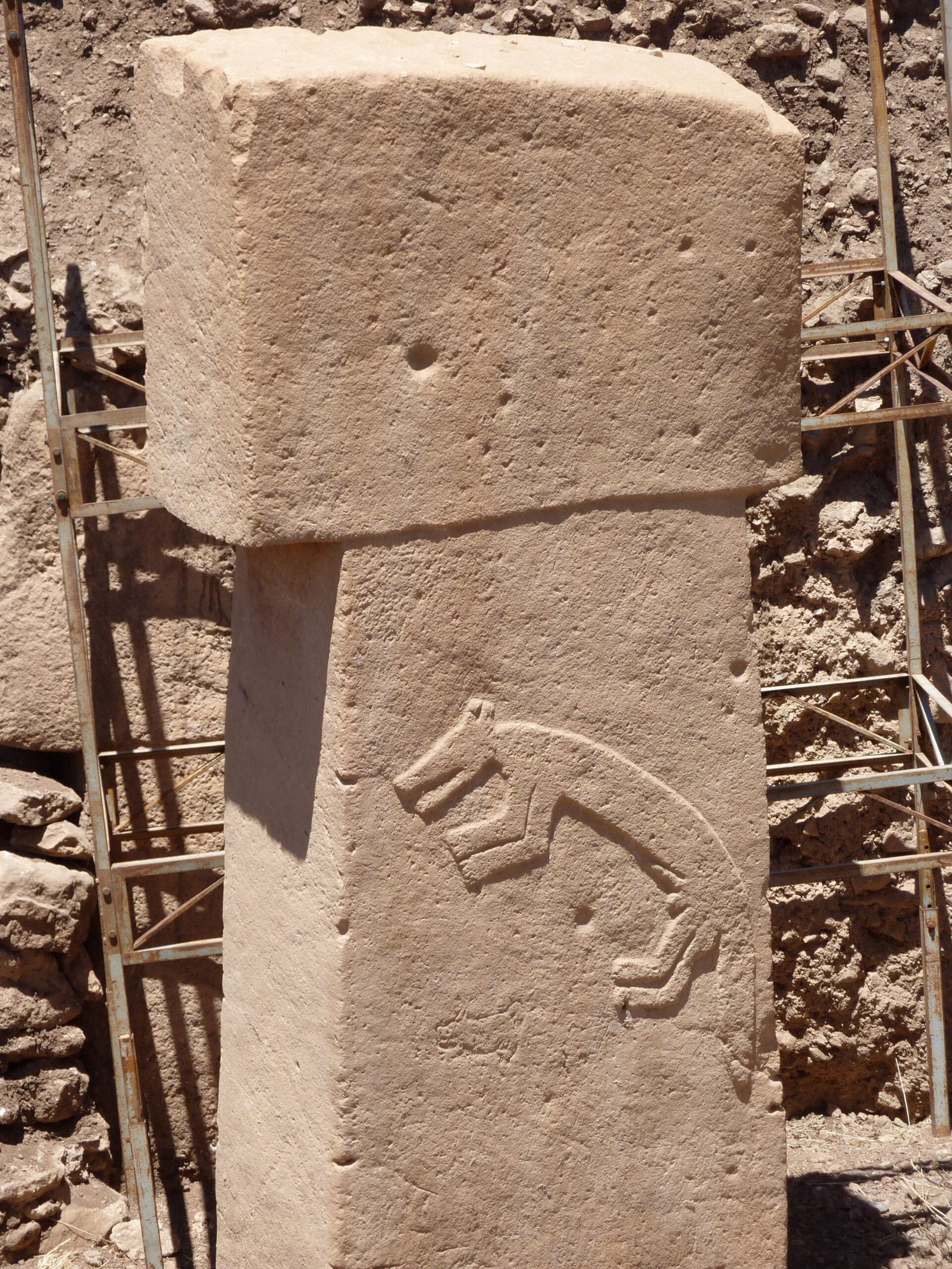
Here’s a fact that should genuinely shake your understanding of prehistory. Göbekli Tepe is estimated to be around 12,000 years old, making it one of the oldest examples of monumental architecture. That predates Stonehenge by roughly 6,000 years. Let that settle for a moment.
The site is composed of multiple circular enclosures, each containing large T-shaped limestone pillars that reach up to 19 feet in height. These monolithic pillars are adorned with intricate carvings of animals and abstract symbols, showcasing the artistic prowess of the ancient people who built the site.
The discovery of this site challenges conventional theories about the development of complex societies, as it predates the establishment of agriculture and the rise of early civilizations. The builders of Göbekli Tepe seemingly prioritized the construction of this monumental site over subsistence activities, indicating that religion and communal efforts may have played a crucial role in the early stages of human societal development. Think about it like this: they built a cathedral before they figured out farming. How? Why? Nobody fully knows.
3. The Lost Colony of Roanoke: 118 People, Zero Answers
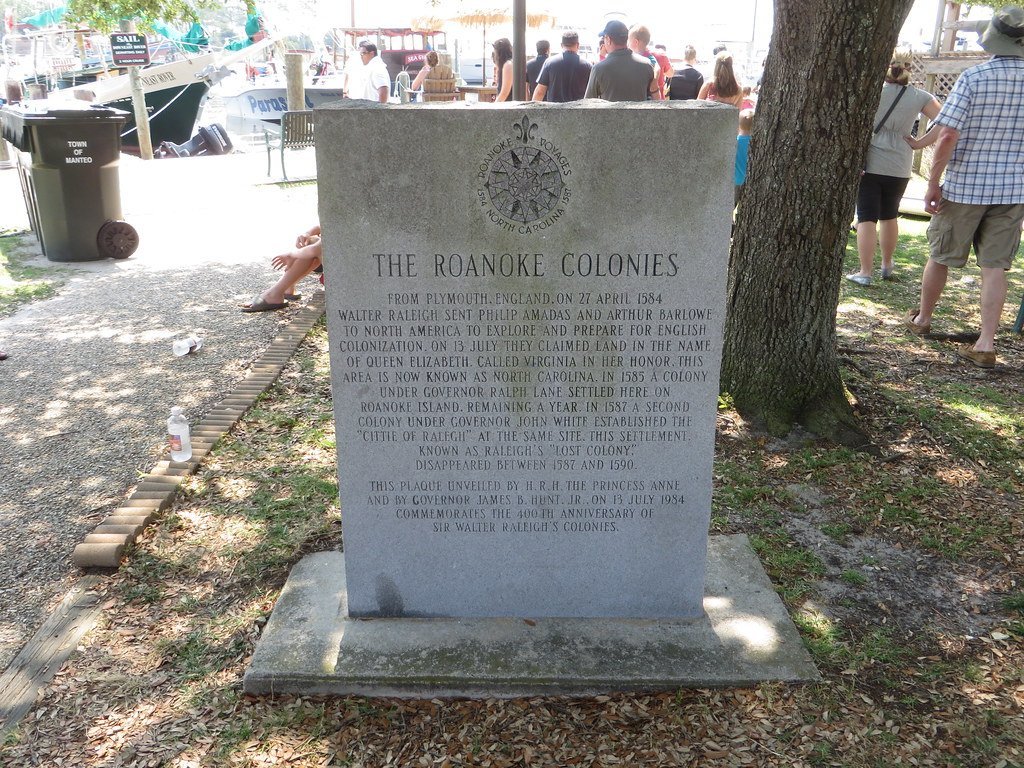
This one is, to me, one of the most unsettling mysteries in history. Not because it involves supernatural forces, but because it involves real people, families, children, who simply vanished. In 1587, over 100 English settlers established a colony on Roanoke Island in what is now North Carolina. When the colony’s governor returned from a supply trip to England three years later, every single person had vanished without a trace.
The only clue left behind was the word “CROATOAN” carved into a wooden post and “CRO” etched into a nearby tree. No bodies, no signs of struggle, no clear evidence of what happened to an entire community of men, women, and children.
Some documents suggest Chief Powhattan killed some of the colonists, but there’s no archaeological evidence to back that up. Other theories propose the residents were attacked by the Spanish or that the colonists simply died of natural causes. Recent 2025 artifacts hint at Native assimilation, which is arguably the most plausible theory, though it remains unconfirmed. It’s hard to say for sure, but the truth might be somewhere far more human than the legend suggests.
4. The Nazca Lines: Giant Art With No Obvious Audience
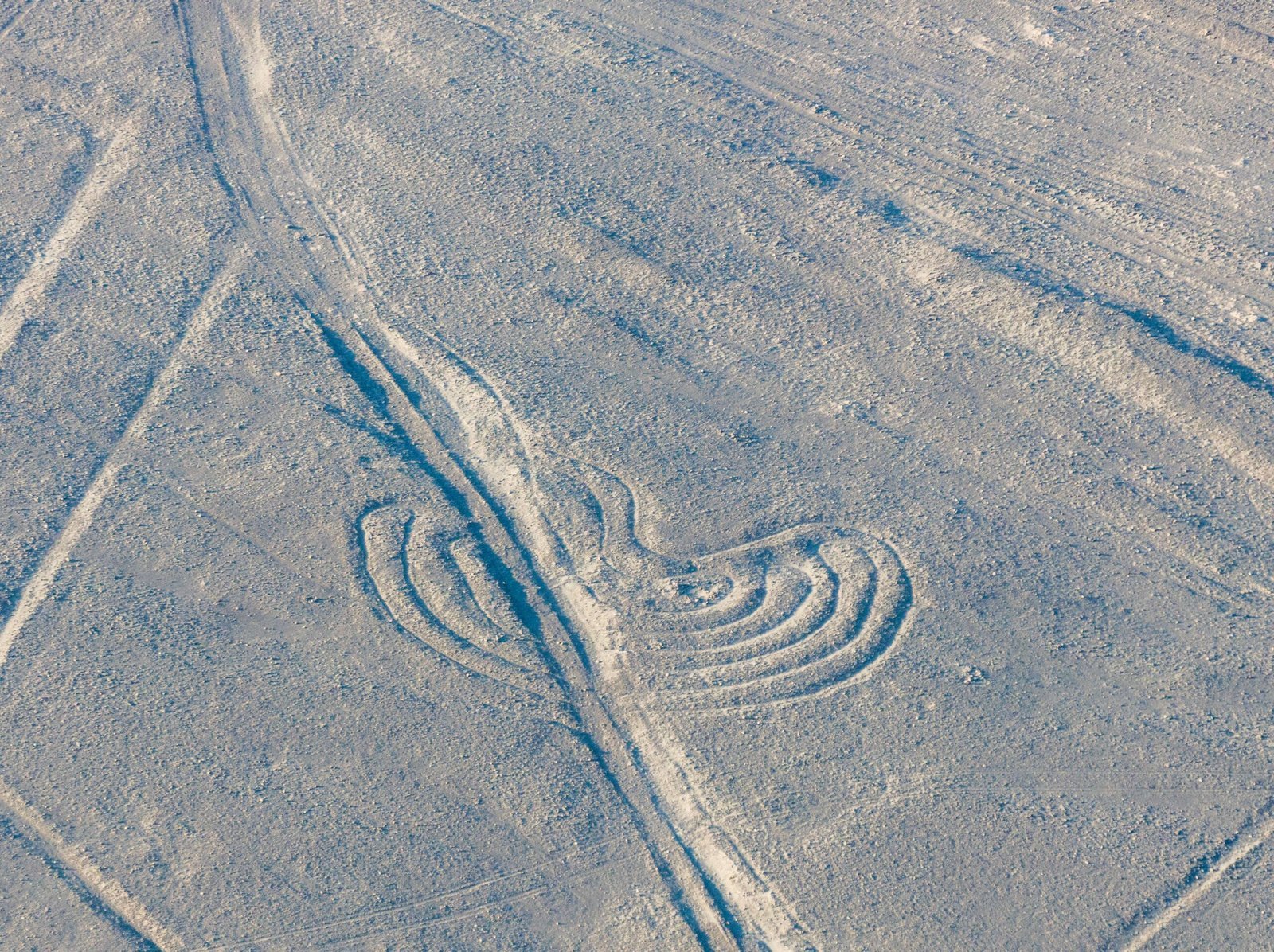
The Nazca Lines of Peru are one of those things that sound completely absurd when described out loud. Between AD 1 and 700, the Nazca people of Peru carved 12 to 15 inches out of rust-colored rock, revealing the lighter-colored stone in deeper layers. The result was massive in-ground pictures of animals, plants, humans and geometric shapes that are best seen from an airplane. An airplane. Which obviously didn’t exist then.
Some outlandish theories suggest the carvings point to aliens or ancient astronauts, but researchers can’t agree on some of the more realistic theories, either. Initial scholars suggested the Nazca Lines were connected to astronomy, while recent theories argue they were used for begging rain from the gods.
It’s a bit like finding a massive, detailed mural painted on the floor of a building with no windows, no stairs, and no way to see it from the inside. The craftsmanship is undeniable. The intent, however, remains stubbornly hidden behind 1,500 years of silence. Honestly, the debate over their purpose feels like it could go on for another millennium.
5. The Antikythera Mechanism: An Ancient Computer That Shouldn’t Exist
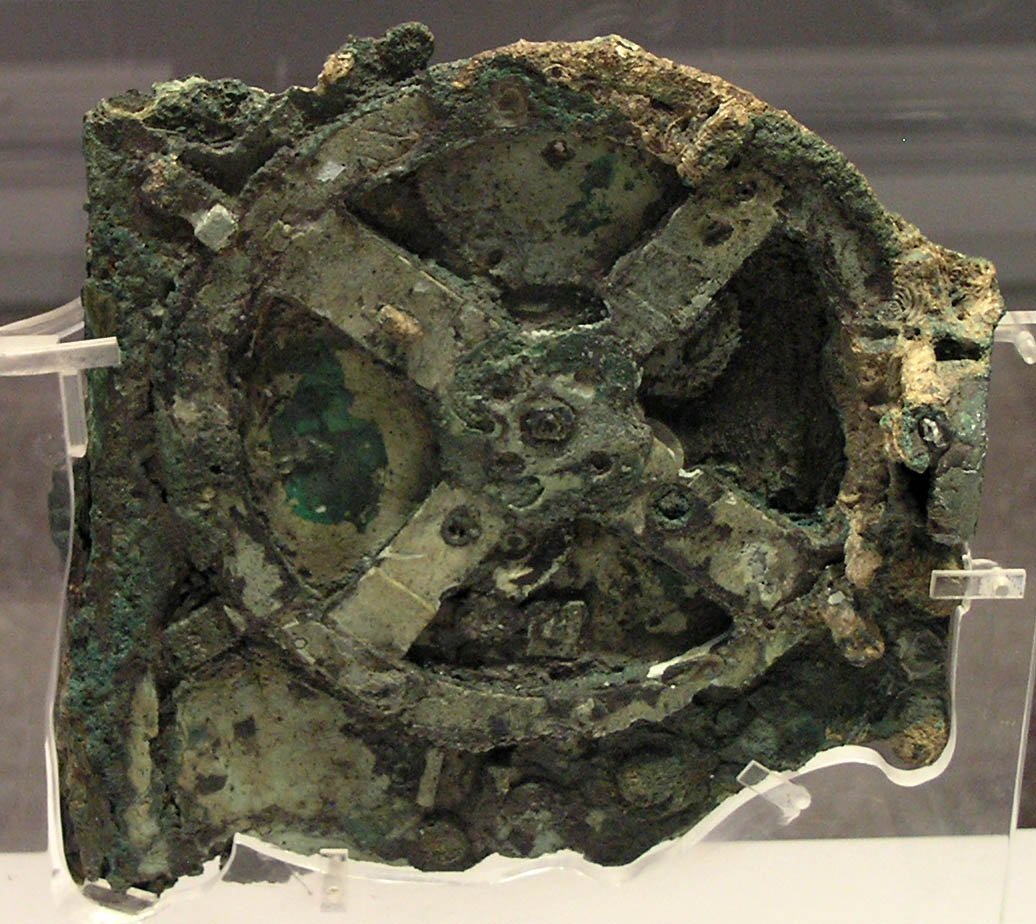
Let’s be real. If you told someone in 1900 that Greek divers had just hauled up what is essentially the world’s first computer from a 2,000-year-old shipwreck, they wouldn’t believe you. In 1900, Greek divers discovered a wreckage off the coast of Antikythera. It had been buried on the bed of the Aegean Sea since 65 BCE and is one of the largest shipwrecks ever found. More than 300 objects were found, but none were more intriguing and mysterious than the Antikythera mechanism, the world’s first “computer.”
In the 1970s, the importance of this bronze mechanism was uncovered as it was revealed that the device was a complex machine with at least 30 gear wheels. It was used to track astronomical positions and predict celestial events with remarkable precision. The engineering sophistication involved is staggering.
No one can fully explain how the people in ancient Greece invented such an advanced instrument, and so for now, it will remain one of the top unsolved ancient mysteries. The deeper question isn’t just how it was built, but what other technologies existed in the ancient world that simply didn’t survive. That thought is equal parts thrilling and deeply humbling.
6. The Disappearance of the Classic Maya Civilization
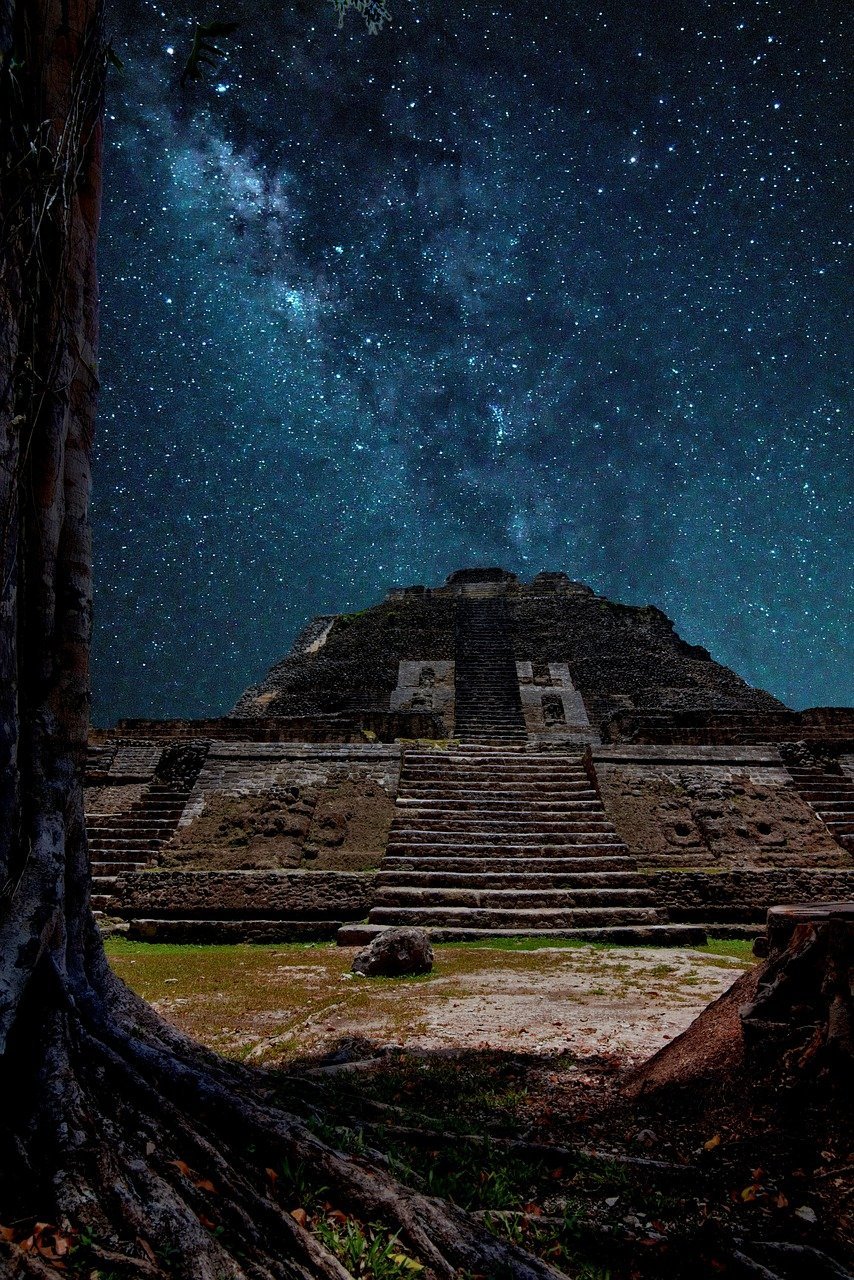
The Maya didn’t just fade quietly into the background of history. They crashed. Hard. The Maya flourished for centuries from around 2000 BC in Mesoamerica and were famed for advanced architecture, hieroglyphic writing, precise calendars, and monumental pyramids including El Castillo at Chichen Itza. At their peak, they were one of the most sophisticated civilizations on Earth.
A long, severe drought dried up their water supplies, making it hard to grow enough food. On top of that, cutting down forests and farming heavily wore out the land, making things even worse. With fewer resources, there was more fighting between cities and growing unrest among the people. Add to all that possible disease and overpopulation, and you get a perfect storm that brought the great Maya civilisation to its knees.
Even with modern research, scientists still debate one of the most famous unsolved mysteries of ancient history, and exactly how these factors combined to end such a remarkable culture. It’s almost a mirror held up to our own era, an advanced society facing ecological collapse, internal conflict, and resource depletion. The eerie parallels are not lost on anyone paying attention.
7. The Minoan Script Linear A: A Language Frozen in Time
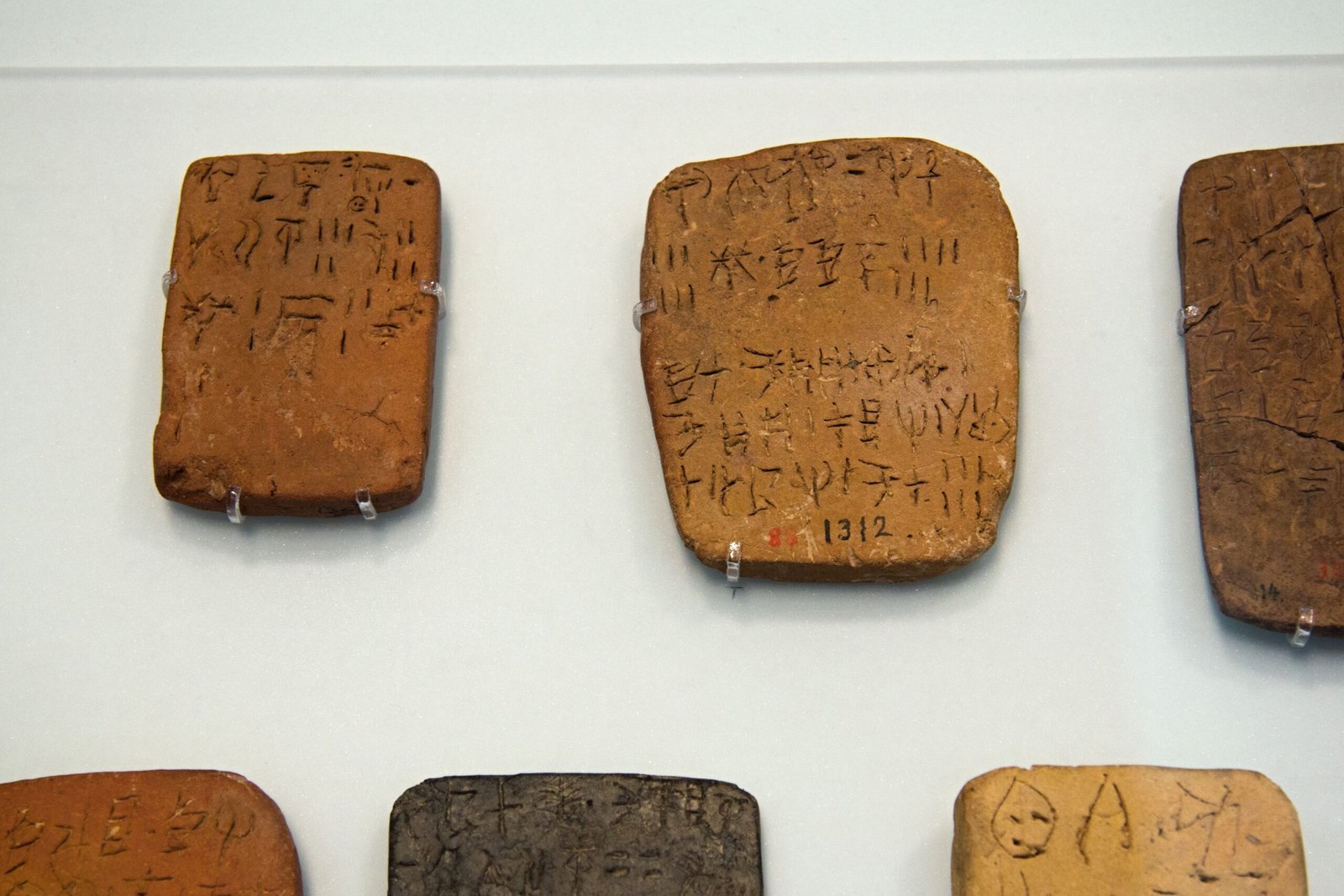
Linear A is one of Europe’s strangest unsolved riddles, a mysterious script scratched onto clay tablets by the Minoan civilisation of Crete between 1800 BC to 1450 BC. It is one of those mysteries where the frustration is almost physical. You can hold the tablets. You can see the symbols. You just cannot understand a word.
They used these 70 to 120 abstract line symbols for everything from tallying olive oil and grain to sacred rituals. Unlike its successor Linear B which was cracked in the 1950s as early Greek, Linear A resists the attempts of every codebreaker, computer, and linguist to understand it, despite sharing similar signs.
Linear A could well be a lost language, perhaps a non-Greek Minoan dialect or similar to one of the languages of Anatolian origin such as Luwian or Lycian. The fact that we decoded Linear B, its close sibling, yet still cannot crack Linear A is a bit like solving one half of a combination lock, then staring helplessly at the other half. The Minoans have, so far, kept their most intimate thoughts entirely to themselves.
8. The Stone Spheres of Costa Rica: Perfect Balls, Imperfect Answers
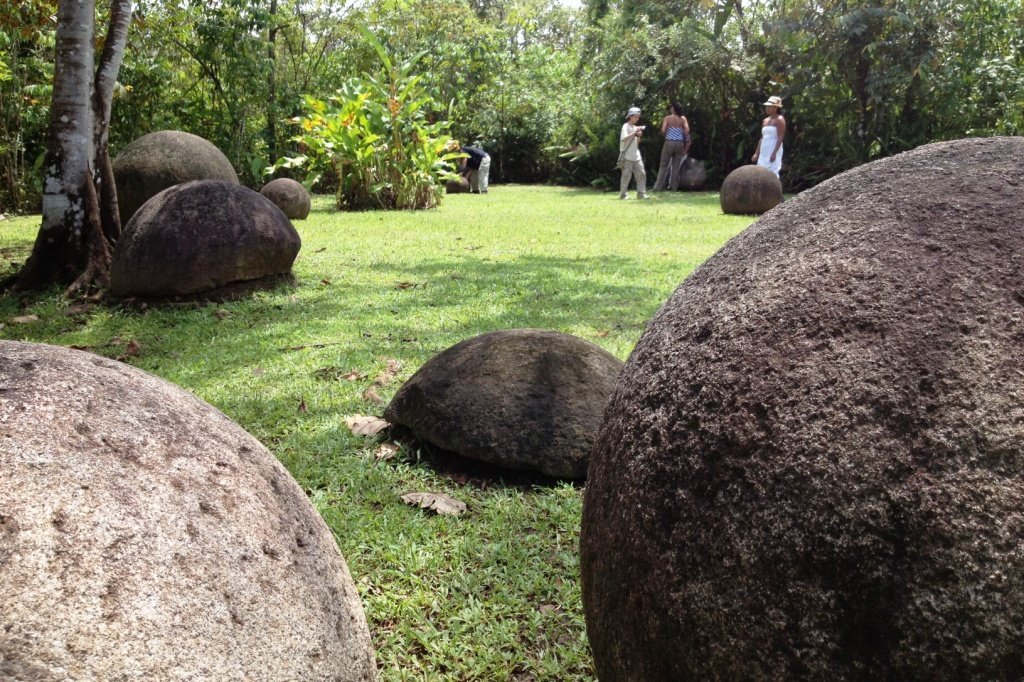
Some mysteries don’t involve lost cities or missing people. Sometimes they are simply objects. Enormous, bewildering, magnificent objects. While clearing the jungle for banana plantations in 1940 in Costa Rica’s Diquis Delta region, employees of the United Fruit Company uncovered numerous large stone spheres partly buried in the forest floor. Around 300 spheres are known to exist, with the largest weighing 16 tonnes and measuring eight feet in diameter.
Archaeologists believe the stone spheres date back to a civilization that lived in the region between 500 BC and AD 1500. After years of hacking away at jungle overgrowth, researchers have uncovered about 300 of these stone spheres littered all across the ground. They are strikingly, almost geometrically perfect, which raises an obvious question: how?
Since their discovery, the true purpose of the spheres has been the subject of speculation ranging from theories about the balls being navigational aids, to relics related to Stonehenge, the product of an unknown ancient civilization or visits from extraterrestrials. The most haunting detail, though, is that archaeologists haven’t been able to find any other signs of civilization around the stones. It’s as if someone placed them there, then quietly ceased to exist entirely.
9. The Tomb of Alexander the Great: History’s Greatest Missing Person Case
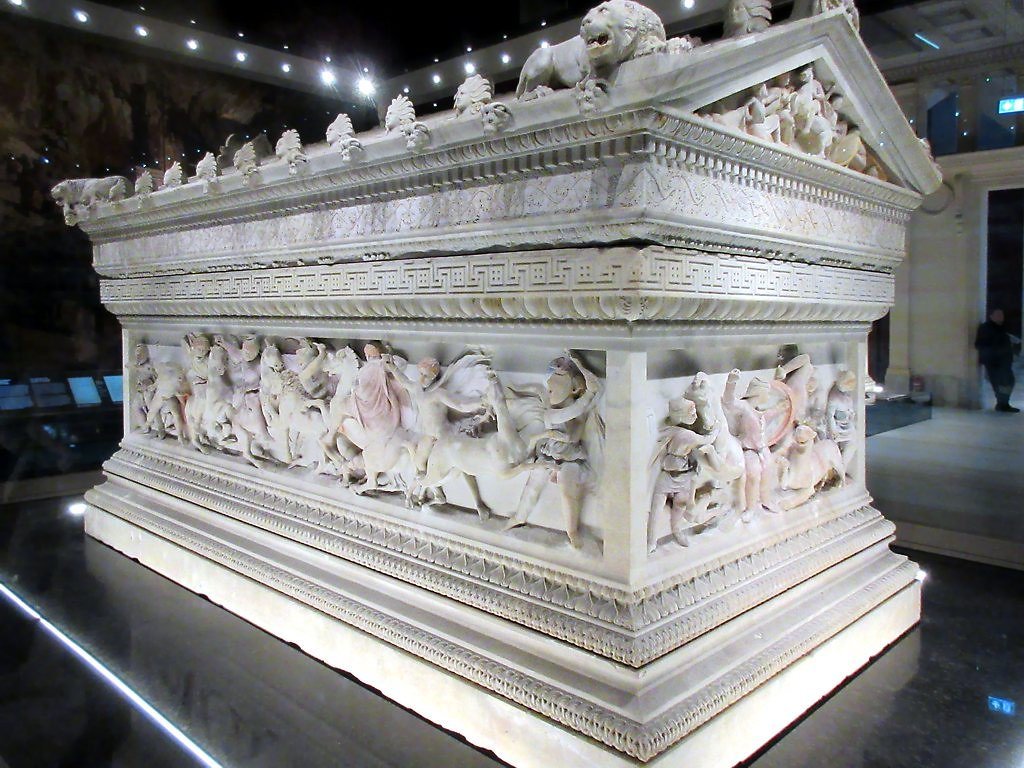
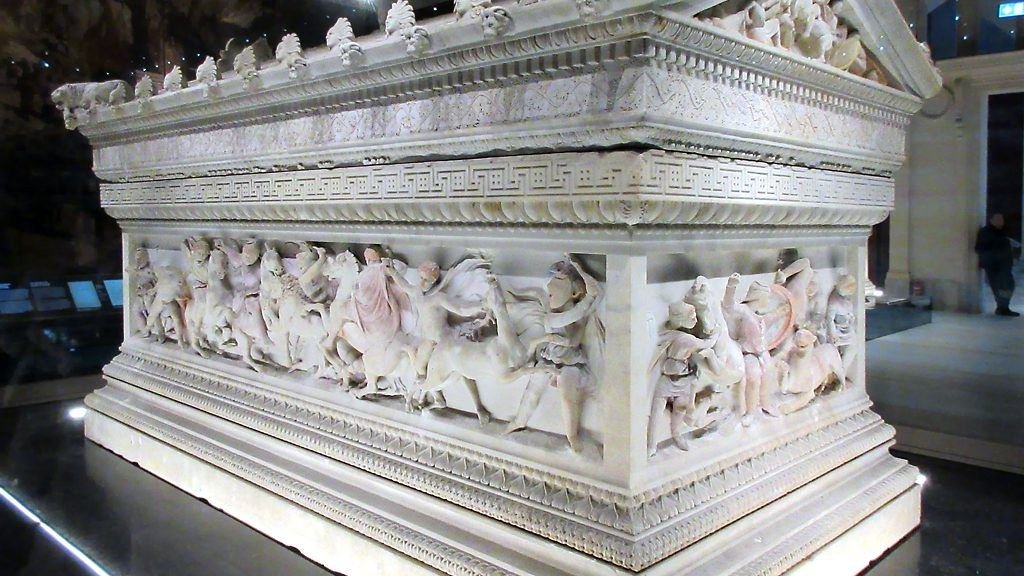
For a man who conquered roughly half the known world before the age of 33, Alexander the Great left behind a surprisingly elusive legacy in one critical sense. Nobody knows where he is buried. One of the great mysteries of antiquity is the final burial place of Alexander the Great. Ancient historian Diodorus wrote that Alexander’s body was mummified and placed in a golden sarcophagus, which was then placed in another golden casket and transported on a wagon to his burial site, said to be the Temple of Amun at Siwa in Egypt.
However, Ptolemy, a close friend of Alexander’s and a general in his army, is reported to have met the cortege on its route from Persia to Egypt and proposed to bury Alexander in Alexandria instead of Siwa. But is this really what happened all those years ago? To this day, the burial site of Alexander the Great has never been found.
If and when it is found, it is anticipated to be among the greatest archaeological discoveries of all time. Scholars have searched beneath churches, mosques, and public buildings in modern-day Alexandria for generations. Nothing. The man who carved his name into the edges of the ancient world somehow managed to hide himself from ours completely. You have to admit, there’s something almost poetic about that.
The Enduring Power of Not Knowing
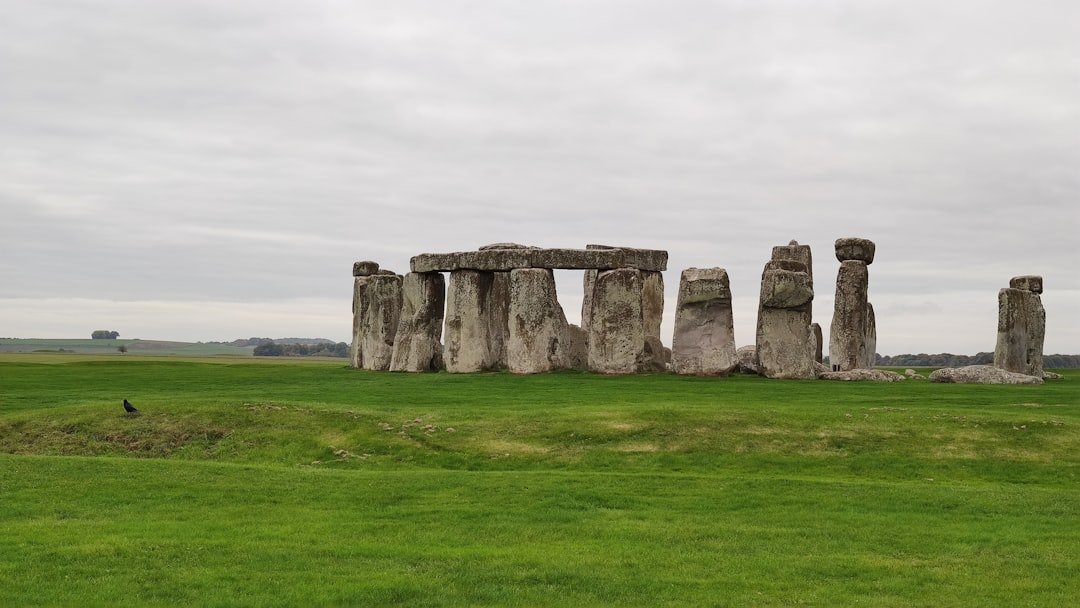
What strikes me most about all nine of these mysteries is that they don’t diminish with time. They deepen. Every new archaeological tool, every fresh DNA analysis, every satellite scan seems to add texture to the uncertainty rather than dissolve it. Despite the unprecedented progress made, much of Antiquity remains shrouded in mystery. Even though our experts are sitting on hills of information, there are still mountains of missing clues and pieces to the puzzle.
There’s something strangely comforting in that. It means the past is not a closed book. It is an active conversation, one that humanity has been having for millennia and shows no signs of finishing. Despite advances in technology and methodology, these mysteries remain unsolved, serving as a reminder of the vast unknowns that still exist. They inspire ongoing investigation and debate, fueling the human spirit of curiosity and the quest for answers.
Perhaps the mysteries we can’t solve say more about us than the ones we can. They tell us we are a species that stares into darkness not because we expect the light to come on immediately, but because the act of looking itself means something. Which of these nine mysteries surprised you most? Tell us in the comments below.
CEO-Co-Founder
