


For any feedback please reach out to info@festivalinside.com
- 12 Iconic Musicians Who Vanished From the Spotlight – And Where They Are Now - March 24, 2026
- 8 Music Festivals From the Past That Defined a Generation - March 24, 2026
- Billboard’s Top 10 Greatest Pop Stars of the 21st Century - March 24, 2026
Wolfgang Amadeus Mozart is one of those names that needs no introduction. His symphonies, concertos, and operas have outlived entire civilizations, and his music still fills concert halls and living rooms across the world more than two centuries after his death. A gifted child and a composer of genius, Mozart lived only 35 years, yet he left us more than 620 works that are still played daily by the world’s greatest orchestras. That is staggering. That is almost impossible.
Yet for all the reverence we pour onto his name, most people know surprisingly little about the actual man behind the music. The real Mozart was complicated, funny, and honestly a little bizarre. There is a much wilder, more human story lurking beneath all that powdered-wig grandeur. Buckle up, because what follows might genuinely surprise you.
He Had an Absolutely Filthy Sense of Humor
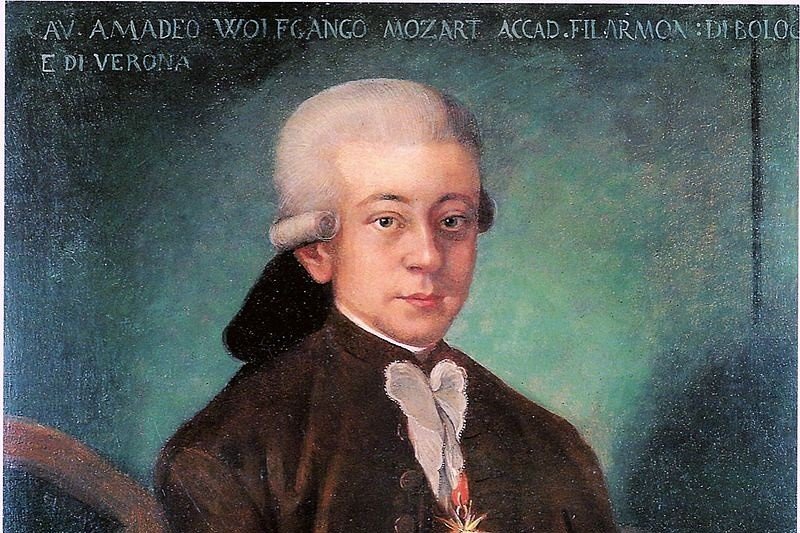
Let’s start here, because this one never fails to shock people at dinner parties. Mozart had quite a potty mouth. His jokes, both in his regular life and his musical works, were extremely crude, and he often included toilet humor in his music and poetic letters to his family. We are talking about the man who composed some of the most sublimely beautiful music in human history, and he apparently found fart jokes endlessly amusing. Honestly, that is kind of endearing.
His repertoire also included bawdy humor, reflecting the earthy realities of 18th-century Europe. Among his lesser-known works are the so-called “dirty canons,” which feature crude and risqué lyrics, composed for private gatherings of friends, revealing a side of Mozart far removed from the highbrow world of Viennese court music. Based on meticulous scholarly investigation, evidence of scatology exists in roughly one in ten of the letters written by Mozart. So this was not just an occasional joke. It was practically a personality trait.
He Was Terrified of the Trumpet
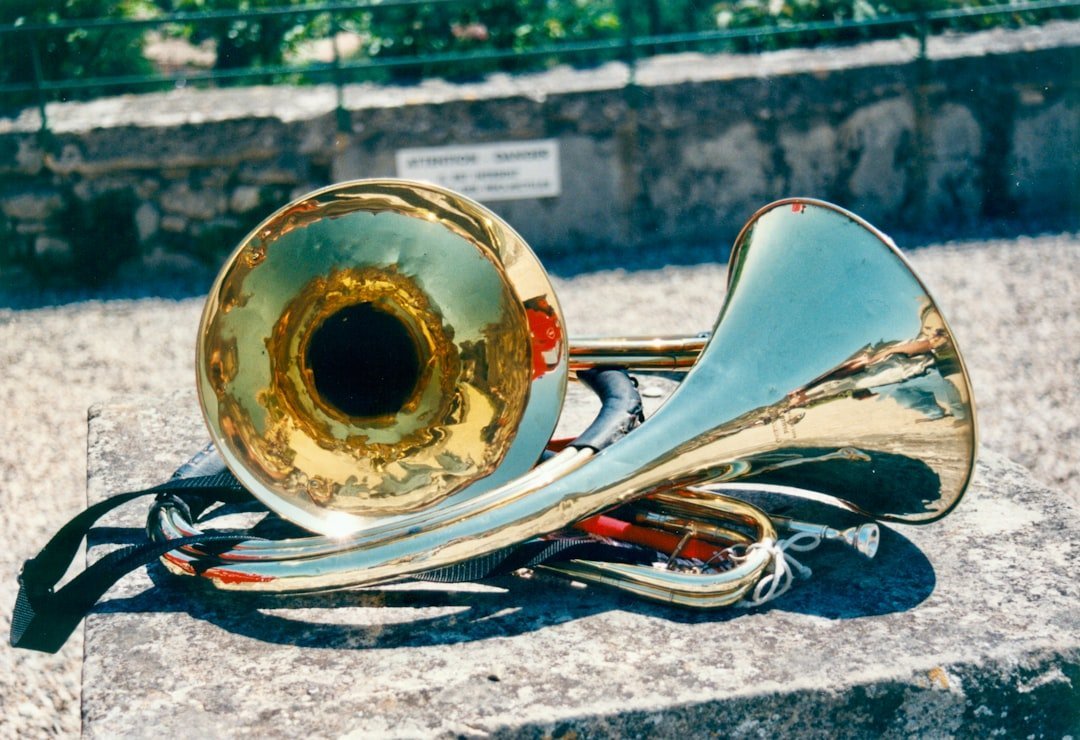
Here is where it gets genuinely strange. Mozart was a multi-instrumentalist of extraordinary ability. Besides being a terrific composer, he was also a multi-instrumentalist who played the piano, the harpsichord, the organ, the violin, and the viola. That’s an impressive lineup by anyone’s standard.
Despite being a musical genius, Mozart struggled with the trumpet. His father said that he had a hard time learning to play it. Mozart couldn’t compose successful music for it, and if you look for a Mozart trumpet piece, you’ll only find works by his father, Leopold Mozart. This is because the trumpet caused the composer discomfort from a young age that he never got over, and many believe he was afraid of it. Think about that for a moment. The greatest composer of the 18th century was apparently spooked by a brass instrument. It’s like finding out a master chef is terrified of soup spoons.
He Literally Did Not Know His Own Name
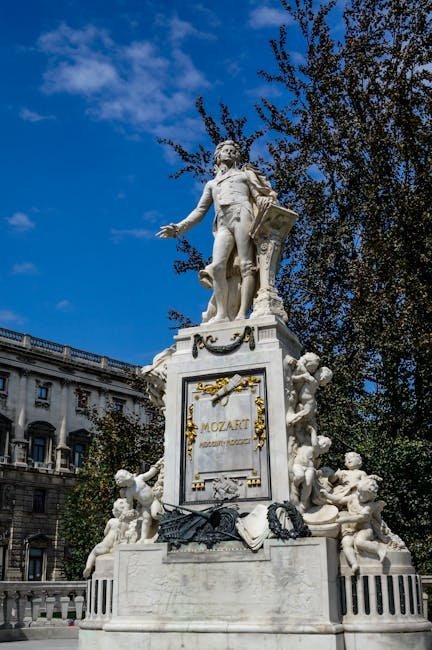
Well, sort of. Mozart is now best known as Wolfgang Amadeus, but as a baby he was actually baptized Joannes Chrysostomus Wolfgangus Theophilus Mozart. The first two names record the feast day of his birth, after St. John Chrysostom, Wolfgangus was the name of his maternal grandfather, and Theophilus means “lover of God” in Greek. That is a lot of name for one small Austrian child.
Mozart was a cosmopolitan man and freely translated his name into different languages. Amadeus is the Latin equivalent of Theophilus, and Mozart also used the German version Gottlieb, the Italian version Amadeo, and the French versions Amadè or Amadé. It seems that Amadè was Mozart’s actual preference. He would mock traditional Latin by adding “-us” to the end of words and sometimes signed his name as “Wolfgangus Amadeus Mozartus.” So the famous name the whole world knows was partly born from a joke. Classic Mozart.
He Held a Full Funeral for His Pet Starling
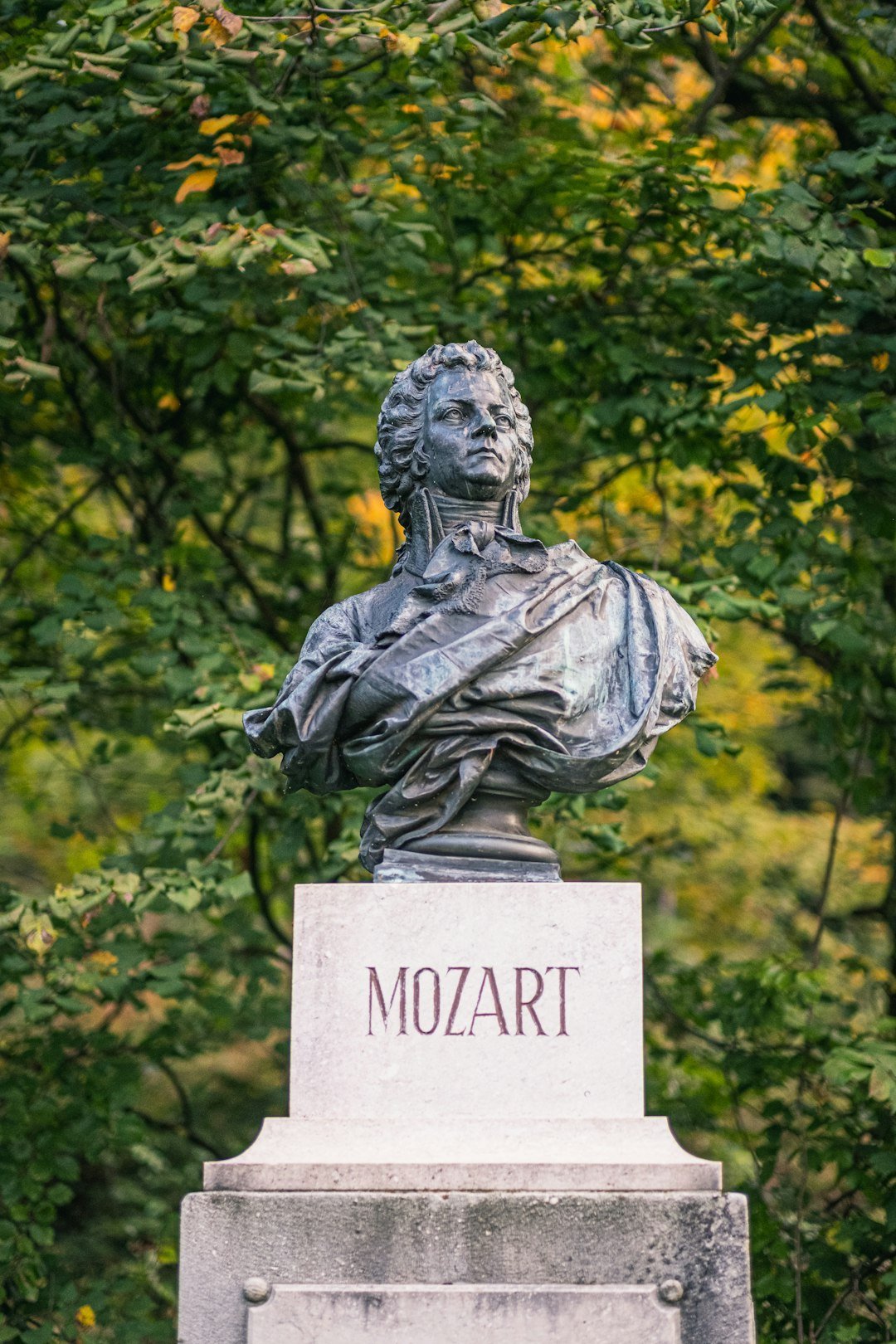
This is the kind of story that makes you love someone instantly. Mozart had a very unusual pet: a starling. He noted the purchase of the bird in a notebook in 1784, paying only a few coins for the creature, which he named Vogelstar. Legend has it that the bird spontaneously sang a few bars of one of Mozart’s own compositions, prompting the composer to happily purchase it on the spot.
When his pet starling died, Mozart held a formal ceremony during the animal’s burial, with guests requested to come in mourning clothes. Not only that, but Mozart had specially composed a poem in his pet’s memory. He was, by all accounts, a devoted animal lover in general. He had many pets, among them a dog, a canary, a horse, as well as the starling. For a man who skipped his own father’s funeral, showing up in full mourning attire for a small bird is a wonderfully contradictory detail.
His Composing Style Was Almost Physically Restless

Most of us picture a composer sitting quietly at a desk, quill in hand, eyes closed in deep concentration. Mozart was apparently nothing like that. While composing he was simultaneously involved in other activities such as walking, riding, or playing billiards. He could not sit still, even while creating masterpieces.
This same man who could be found crawling under tables at parties or writing letters filled with scatological humor was also capable of intense focus and dedication to his craft. When composing, Mozart would enter a state of near-obsessive concentration, often working through the night to complete a piece. This duality in his nature, the ability to switch from lighthearted jester to serious composer in the blink of an eye, was a hallmark of his genius. It is a fascinating contradiction. I think that tension between chaos and control is actually what made his music so alive.
He Had a Surprisingly Turbulent Love Life
The romantic story of Mozart is far messier than the polished portrait suggests. Mozart did find himself in some genuinely awkward romantic situations as an adult. During a trip to Mannheim in the late 1770s, he met and fell in love with soprano Aloysia Weber. However, as Aloysia rejected his proposal of marriage, Amadeus switched his romantic attention to her sister Constanze. The two married in 1782, despite his father’s disapproval of the match.
It reads a little like something from a soap opera, honestly. There is even a story that Mozart once met Marie Antoinette when both were children, became smitten with her, and declared his intent to marry her. Whether or not that story is entirely accurate, it paints a picture of a man who wore his heart, for better or worse, very much on his sleeve. The contrast between Mozart’s public and private personas was stark. In public, he was often the life of the party, charming audiences with his wit and musical prowess. In private, however, he could be moody, anxious, and prone to bouts of melancholy.
He Was a Financial Disaster Despite His Fame
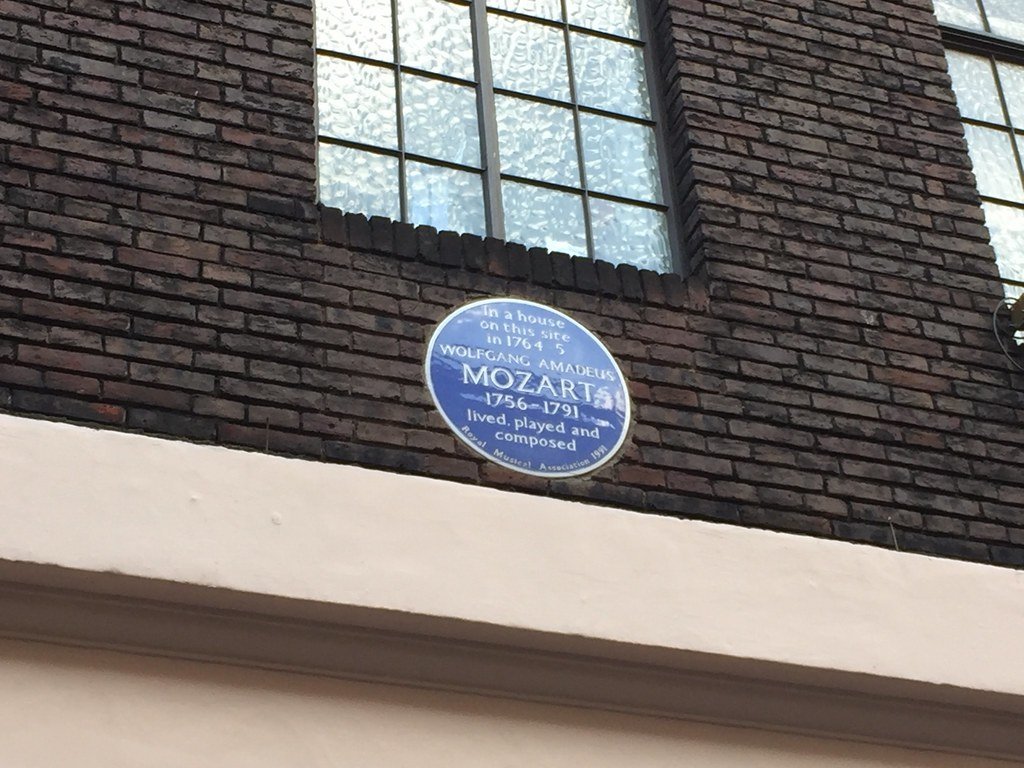
Here is a painful irony. For someone who was literally commissioned by royalty and celebrated across Europe, Mozart was chronically broke. Mozart was in debt when he died in 1791, and his wife Constanze had to request a pension from the Emperor to provide for herself. The situation was not because Mozart had been unsuccessful or unappreciated: he was simply bad with his own finances.
Despite the great recognition that Mozart enjoyed from the start of his musical career, he often spent his life as a struggling artist. Typically, he earned only the equivalent of about $1,500 a year in modern terms, and though he eventually managed to earn significantly more under Emperor Joseph II, Mozart and his wife’s luxurious lifestyle kept their finances constantly under pressure. It is a bit like a modern-day celebrity who earns millions and still can’t pay rent. Talent and financial wisdom, it turns out, are not the same thing.
His Death Remains One of History’s Biggest Medical Mysteries
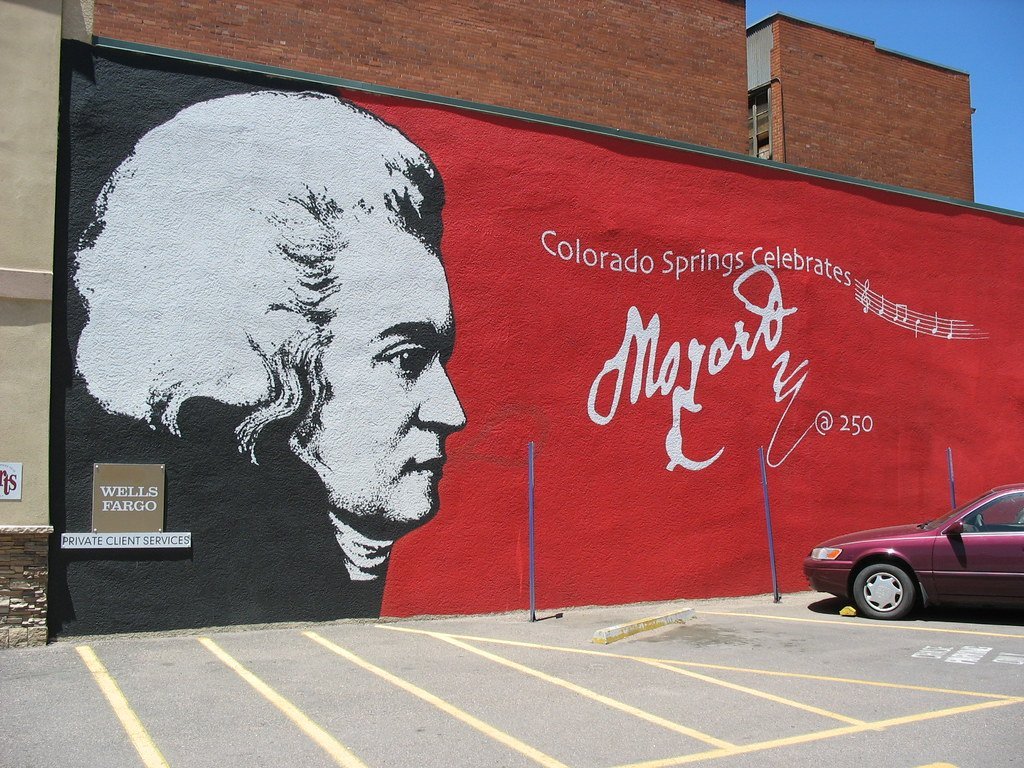
Over two centuries later, we still do not know exactly what killed Mozart. Mozart died at the age of 35 on December 5th, 1791. How did he die? The answer remains unclear. All that can be said confidently is that he contracted a sudden illness which apparently killed him. Theories have ranged from the dramatic to the mundane.
As for what that illness was, many ideas have been put forward, including strep throat, tuberculosis, syphilis, and rheumatic fever. The uncertainty over the circumstances of Mozart’s death has even stoked speculation that he was poisoned by a rival composer. Today, the medical and historical consensus is that he likely died of natural causes like rheumatic fever or kidney disease, as there is no substantial evidence to support the poisoning theory. Still, the mystery lingers, and perhaps that is fitting for a man whose life was never quite what it seemed on the surface.
The Genius Behind the Quirks
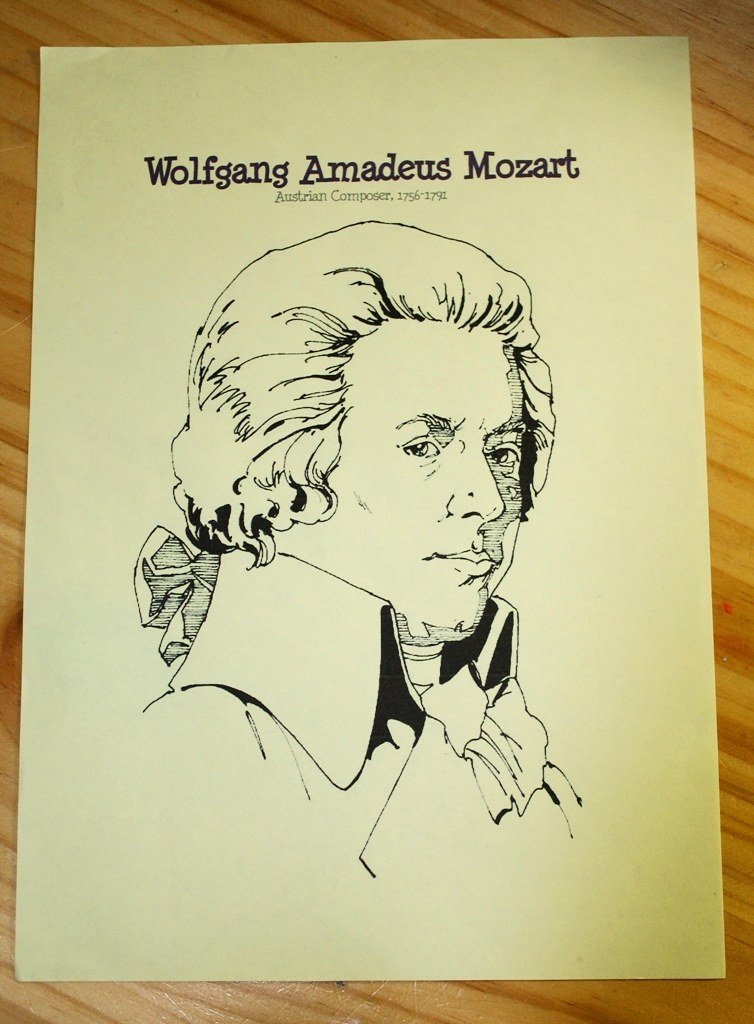
What strikes me most about Mozart is not the sheer volume of music he produced, extraordinary as that is. It’s the contradiction at the heart of the man. Perhaps the greatest lesson we can take from Mozart’s personality is that genius isn’t about perfection or conformity. It’s about embracing our whole selves, quirks and all, and channeling that authenticity into our work.
He was a man who laughed at toilet jokes, mourned a bird, feared a trumpet, and somehow also wrote music that makes people cry at weddings and concert halls and late at night when they are all alone. His pranks and jokes were a form of release, a way to cope with the pressures of his demanding career and personal struggles. His humor also shaped his art. The playfulness, the restlessness, the contradictions. None of it was separate from the genius. It was all part of the same extraordinary, messy, irreplaceable human being.
Next time you hear a Mozart symphony, remember: there’s a good chance he was cracking jokes and playing billiards while writing it. What would you have guessed about the man behind the music?

Christian Wiedeck, all the way from Germany, loves music festivals, especially in the USA. His articles bring the excitement of these events to readers worldwide.
For any feedback please reach out to info@festivalinside.com
