


For any feedback please reach out to info@festivalinside.com
There is something quietly astonishing about cracking open a book written decades ago and finding, somewhere between the pages, a description of your daily life. A wireless earbud here. A streaming algorithm there. The way music has become a tool of mood management, social control, or even personal identity. Writers have long possessed an almost uncanny ability to peer around the corner of time, seeing cultural shifts before the rest of us even sense them coming.
The connection between literature and music is deeper than most people think. Books don’t just tell stories – they map the emotional and technological terrain of the future. Some of the most transformative shifts in how we create, consume, and experience music were quietly sketched out in novels, essays, and manifestos long before any producer or platform ever turned them into reality. Here are seven of those books – and their stories will genuinely surprise you. Let’s dive in.
1. Brave New World by Aldous Huxley (1932) – The Soundtrack of Controlled Happiness
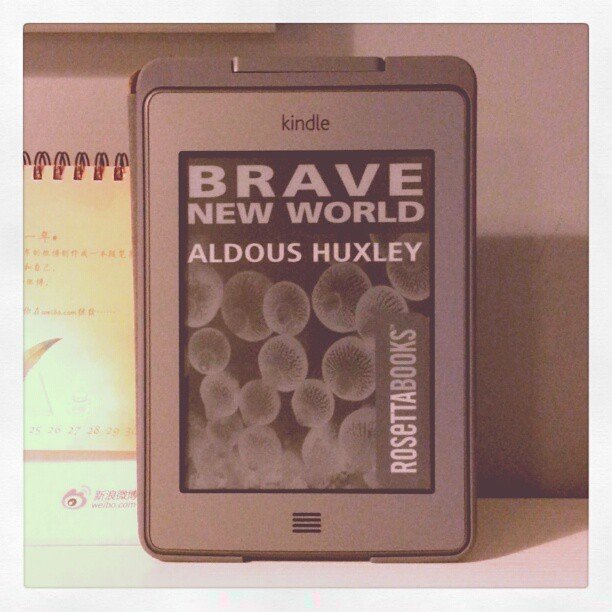
Few books have anticipated the emotional landscape of modern music quite like this one. Brave New World, published in 1932 by Aldous Huxley, is set in a futuristic World State where citizens are engineered into social hierarchies and the novel anticipates advancements in psychological manipulation and classical conditioning combined to form a dystopian society. Huxley imagined a world where entertainment – including synthetic music – was engineered to keep citizens comfortably numb, incapable of deeper feeling. Honestly, when you scroll through an algorithmically curated playlist designed to reduce your anxiety or boost your productivity, it’s hard not to feel a chill.
Among the futuristic technologies Huxley envisioned were synthetic music and television, all designed as escapist entertainments to keep the citizenry “happy.” That concept sits uncomfortably close to how streaming platforms now use AI-driven recommendation systems to keep listeners in emotional loops. In the novel, the ruling authorities attain mass compliance not through force, but by supplying the masses with endless streams of distracting entertainment. Sound familiar? Today’s music industry, at its most commercial, does something remarkably similar.
2. Fahrenheit 451 by Ray Bradbury (1953) – The Birth of the Earbud Era
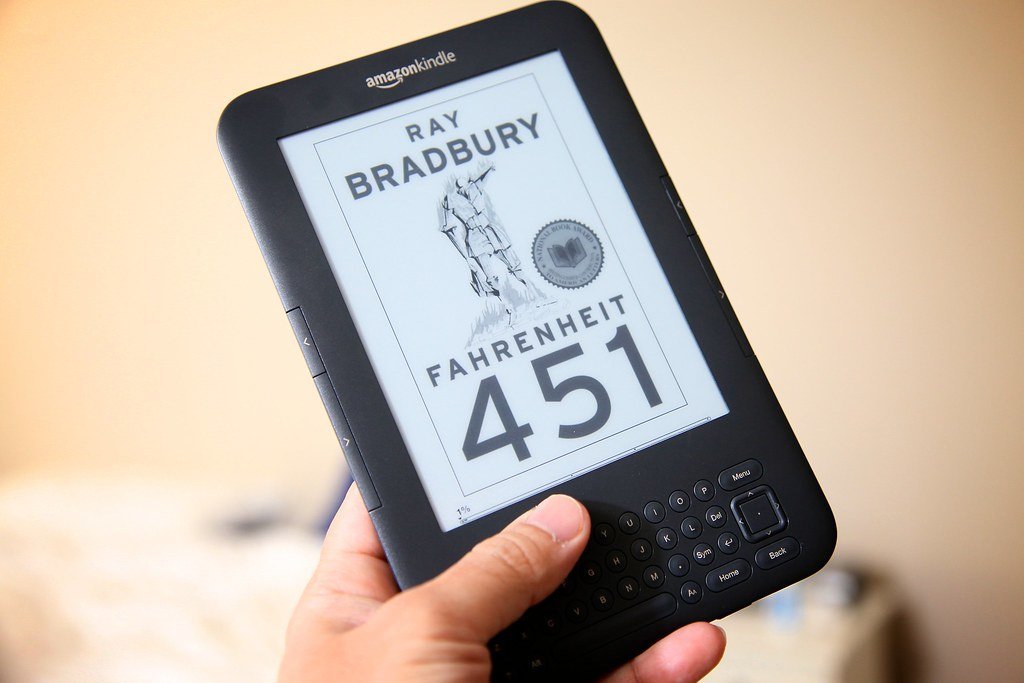
Let’s be real: this one is almost too on the nose. Ray Bradbury’s classic dystopian novel, Fahrenheit 451, published in 1953, foreshadowed several modern-day inventions that have become commonplace in the 21st century. The most startling of these, for music lovers especially, is the “Seashell” – a tiny in-ear radio that completely immerses its wearer in a private world of sound. The character Mildred uses them to drown out reality, lost in an endless stream of noise.
The character Mildred Montag is shown wearing these seashells all the time, tuned into what Bradbury referred to as an “electronic ocean of sound,” totally engrossed in her own auditory universe and cut off from the outside world. The fact that Bradbury made this forecast in 1953, before wireless technology had even developed enough to fit inside your ear, makes it truly amazing. Today, the market for wireless earbuds is valued at tens of billions of dollars, and Apple’s AirPods have sold hundreds of millions of units worldwide. Bradbury wasn’t writing science fiction so much as he was writing a user manual for our present.
3. Understanding Media: The Extensions of Man by Marshall McLuhan (1964) – The Medium Is the Music
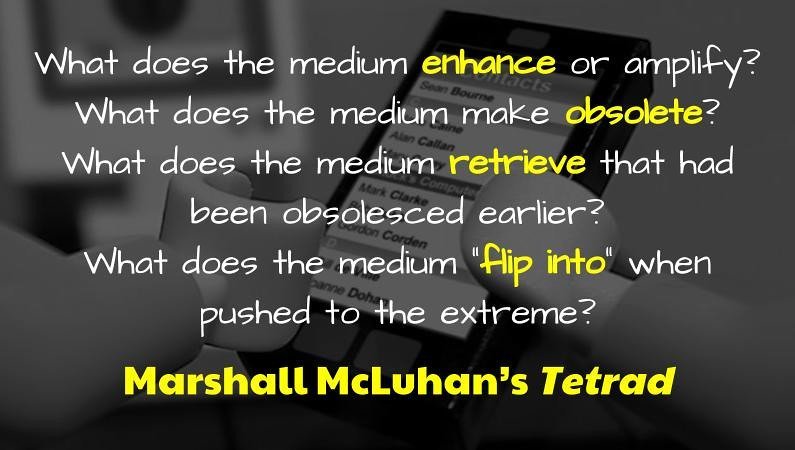
Marshall McLuhan’s classic work Understanding Media was called “a timeless analysis of how language, speech, and technology shape human behavior in the era of mass communication” when it was first published in 1964. The book famously anticipated the impact of electronic media and the internet on culture and society, and challenged our assumptions about how and what we communicate. McLuhan’s core insight – that the delivery system matters more than the content itself – is one of the most prophetic ideas in cultural history.
The book coined the well-known phrases “the media is the message” and “the global village,” which described respectively the hierarchy of media and content and the shrinking of our world due to electronic media. Think about that concept applied to music in 2026. The rise of TikTok as a music discovery engine proves McLuhan’s point perfectly – it doesn’t matter if a song is brilliant or shallow; what matters is the platform delivering it. McLuhan believed that media have effects in that they continually shape and re-shape the ways in which individuals, societies, and cultures perceive and understand the world. Streaming platforms have reshaped what a “hit song” even means.
4. The Future of Music: Manifesto for the Digital Music Revolution by Dave Kusek and Gerd Leonhard (2005) – The Streaming Prophecy
This one is a different kind of prediction. Not fiction, but a manifesto that read like one. In that book, the authors predicted the iPhone, Siri and Spotify. Written years before any of those became household realities, it was the kind of vision that makes you wonder if the authors had access to information the rest of us didn’t. The book explains new ways of discovering music, new ways of acquiring it, and how technology trends will make music “flow like water,” benefiting the people who love music and make music.
The metaphor of music flowing like water is now simply the reality of everyday life. Many of the predictions have indeed come to pass, which underscores the quality of analysis and vision behind the book. Think about it: you don’t “own” most of your music anymore, do you? It flows to you through a pipe called Spotify or Apple Music, on demand, twenty-four hours a day. Kusek and Leonhard saw that shift coming and wrote it down while most of the industry was still arguing about illegal MP3 downloads.
5. 1984 by George Orwell (1949) – Music as Political Weapon
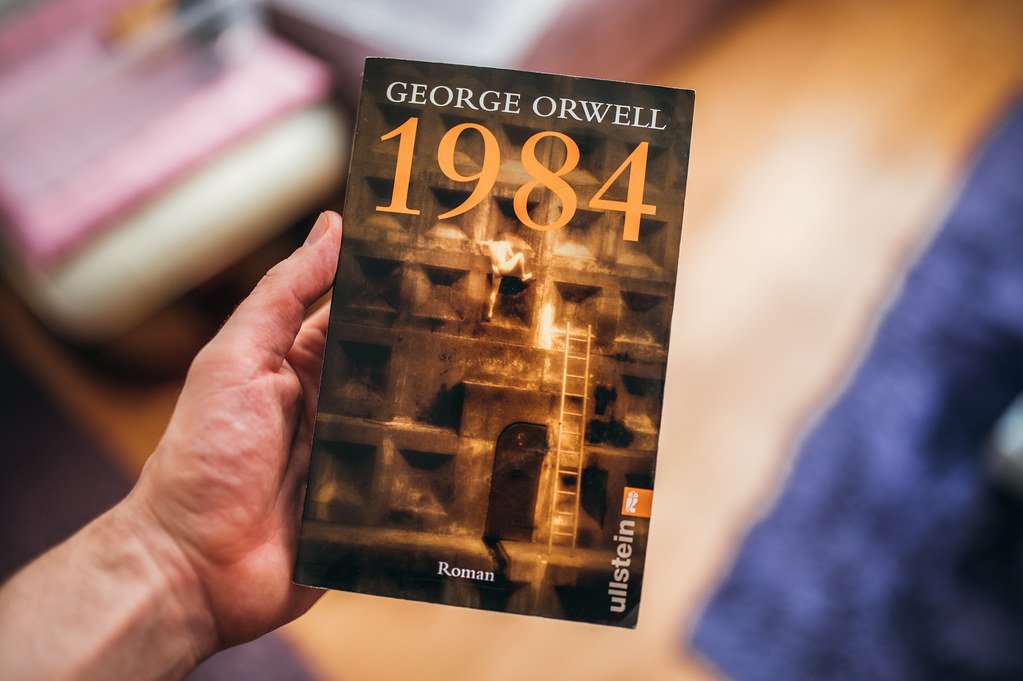
Orwell is famous for predicting surveillance states and thought control, but his insight into how music and art get weaponized by power is equally sharp. In his vision of Oceania, music is not a means of personal expression – it is manufactured by machines called “versificators” that produce patriotic songs for mass consumption, stripping creativity of its soul. It’s a sobering mirror to hold up against today’s algorithmically generated music, which in some forms is literally produced by AI without a single human artist involved.
The deeper point Orwell was making is about authenticity – or rather, its deliberate erasure. When music serves ideology or commerce above all else, something irreplaceable is lost. In 2026, the debate around AI-generated pop music and the homogenization of streaming content sits directly in Orwell’s shadow. His imagined world where creativity is replaced by mechanical reproduction wasn’t a distant nightmare. It was a warning that the music industry is still working out how to answer.
6. The Gutenberg Galaxy by Marshall McLuhan (1962) – From Vinyl to the Global Music Village
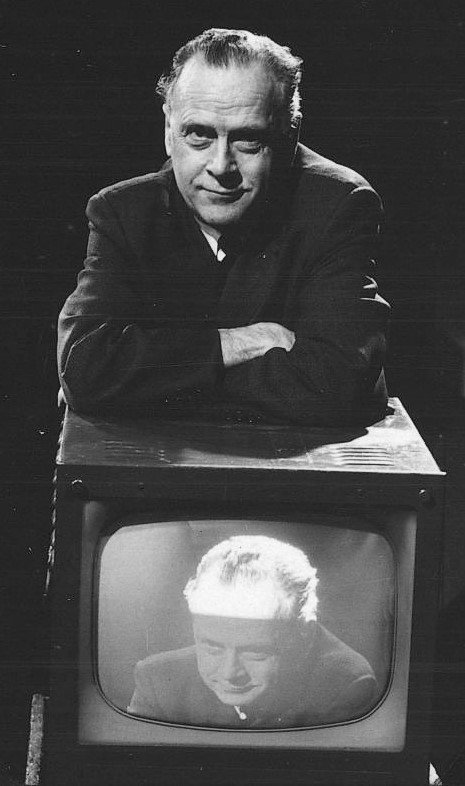
In 1961, the name of Marshall McLuhan was unknown to everyone but his English students at the University of Toronto and a coterie of academic admirers. But then came two remarkable books – The Gutenberg Galaxy in 1962 and Understanding Media in 1964 – and the professor soon found himself characterized by the San Francisco Chronicle as “the hottest academic property around.” The Gutenberg Galaxy made a specific and daring argument: that the shift from oral culture to print culture had fundamentally rewired human consciousness. What happens, he asked, when we shift again?
That question now has an answer, and it plays out every time an artist in Lagos, Seoul, or Buenos Aires releases a song and within hours has listeners on every continent. While the global village created by electronic media could create amazing new empathy and understanding, allowing connection with cultures far away, it also forces all the “tribes” of the world into one tiny, digital space where they don’t always get along. The globalization of music – the cross-pollination of K-pop, Afrobeats, Latin trap, and lo-fi hip hop – is McLuhan’s global village playing itself out in sound. He called it decades before Spotify had a single international listener.
7. The Evolution of Music Through Culture and Science by Peter Townsend – Where Science Meets Sound

The Evolution of Music Through Culture and Science aims to recognize the impact of science on music, why it occurs, how we respond, and even to tentatively predict future developments. No aspect of modern music making has been untouched by the synergy with scientific innovation. Townsend’s work tackles something that most pop culture doesn’t want to admit: the music we hear today is as much a product of scientific advancement as artistic inspiration. From compression algorithms to spatial audio to AI composition tools, the science is now inseparable from the song.
This is not a one-way interaction – the early attempts to make recordings were a major motivating force to design the electronics for amplifiers, and these in turn inspired and enabled the designs of semiconductor electronics and modern computer technology. That feedback loop between music and technology is one of the most underappreciated forces in human history. Townsend’s book makes you rethink the idea that music is purely an emotional art form. It is also an engineering discipline, and the two have always pushed each other forward in ways that are only becoming more visible now, in the age of AI producers and spatial sound design.
Literature as the Original Forecaster: A Closing Reflection

Here’s the thing about all seven of these books: none of their authors set out to write a music industry report. They were writing about humanity – its fears, its hungers, its tendency to reach for tools that both liberate and ensnare. Music, as it turns out, sits right at the center of all of those impulses. It always has.
What makes literature such a powerful predictor of cultural change is exactly its freedom from the immediate. A novelist in 1932 doesn’t have quarterly earnings to protect. A philosopher in 1964 doesn’t need to keep advertisers happy. They can follow the thread of an idea wherever it leads, even if it leads somewhere the present isn’t ready to go yet. That freedom is also what makes great books so uncanny in hindsight.
The writers on this list didn’t just anticipate technology. They anticipated what technology would do to us emotionally – how it would shape the way we feel, escape, connect, and consume sound. That’s a far harder thing to predict than a gadget. It requires looking at human nature itself and asking, honestly: given what we know about people, where does this road lead?
In 2026, we are living inside answers that used to be someone else’s daring questions. The books were always there, quietly waiting for us to catch up. What surprises you most – that the writers got so much right, or that we were too distracted to notice sooner? Tell us in the comments.

Christian Wiedeck, all the way from Germany, loves music festivals, especially in the USA. His articles bring the excitement of these events to readers worldwide.
For any feedback please reach out to info@festivalinside.com
