
Small-ship cruising sounds like the easy version of a cruise: fewer people, no giant terminal, no shuffling through crowds. Then the ship anchors offshore, and a whole set of rules you never heard about kicks in.
Boarding order, cutoff times, and even what fits in your day bag change once a tender enters the picture. The most useful detail is saved for #1, but the smaller surprises on the way there are the ones that can wreck a morning.
#17 – Tender Tickets Control the First Rush, Not Every Ride
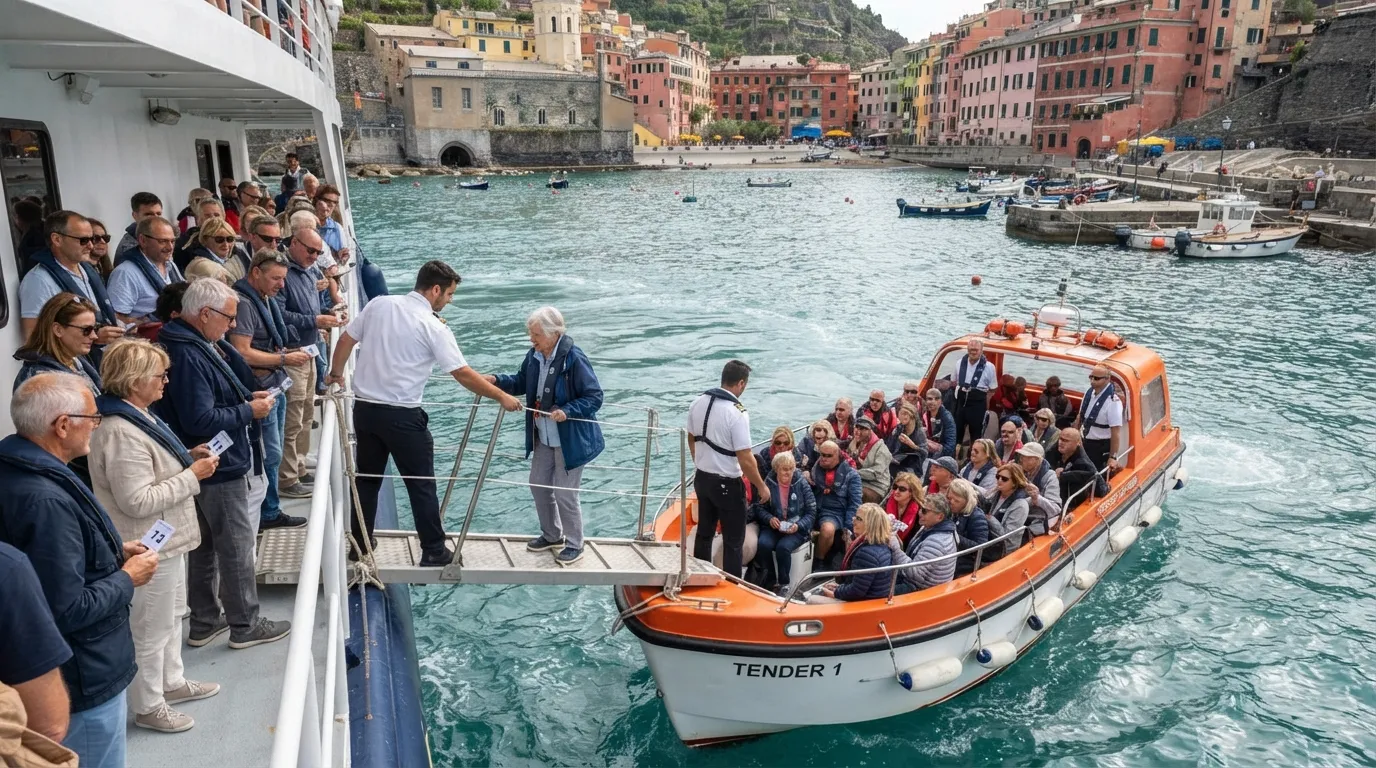
On tender days, small-ship lines often issue tickets or group numbers early, sometimes from a self-service board or an app. Guests on ship-organized excursions usually go first, and independent travelers collect numbers after that first wave clears.
Many lines switch to open boarding once the morning rush ends. Early risers still land the best slots, and rough water can delay launches even when you’re holding a number.
That’s only the opening move, because the next rule comes with a hard deadline.
#16 – The Last Tender Time Is Strictly Enforced
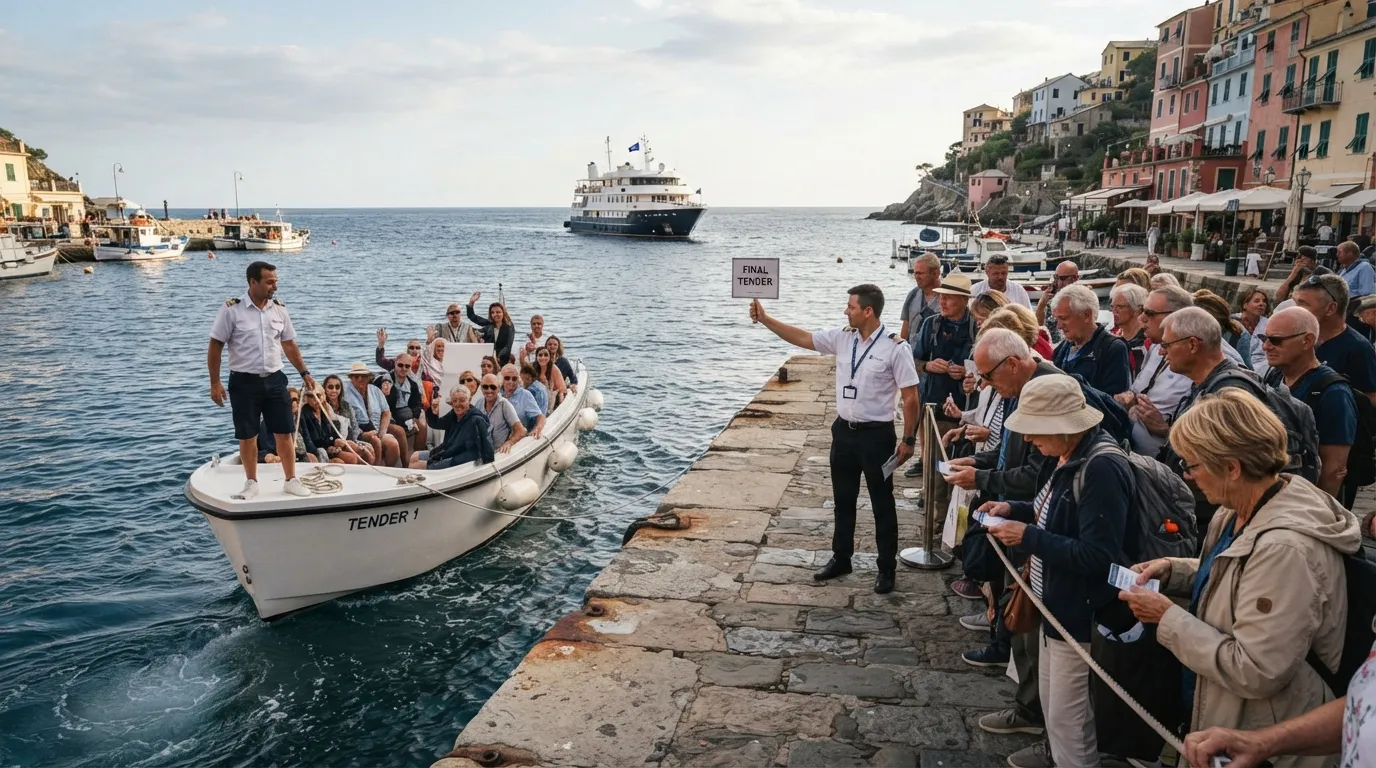
Operator guidance says the ship will not wait for passengers who miss the final tender back, and independent explorers are the ones most at risk. Return queues start forming at the shore station well before the cutoff.
Plan to reach the tender point at least 30 minutes early on busy days. That cushion covers weather delays and longer rides from certain anchorages. Most itineraries need no ticket for the return, but your ship card is a must.
At a Glance
- The final tender back is a hard cutoff, not a suggestion.
- Shore queues build before the posted last time.
- Aim to arrive 30 minutes early on busy days.
- Keep your ship card in an easy-to-reach pocket.
And the thing that decides whether tenders run at all? You can’t control it.
#15 – Sea Conditions Dictate Whether Tenders Operate at All
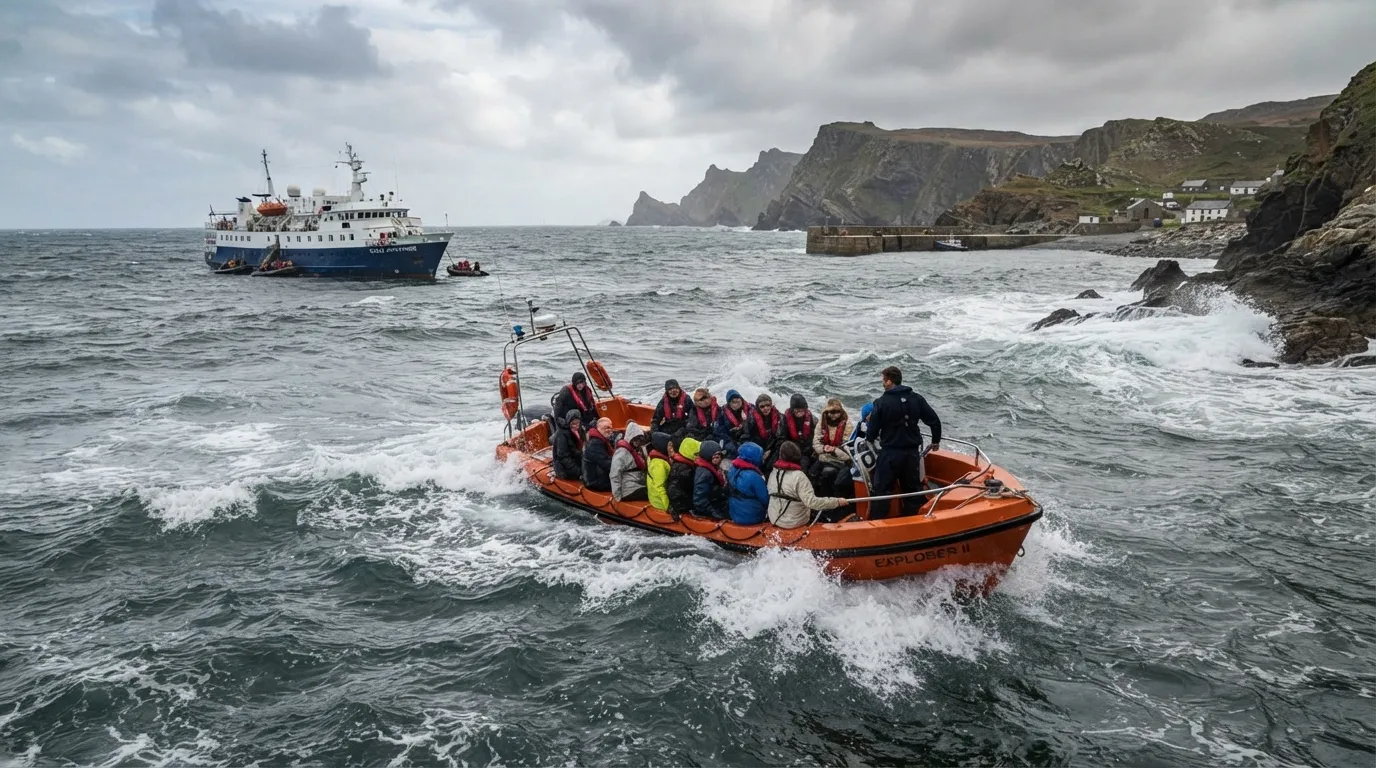
Wind, swell, and visibility decide whether tenders can launch safely. Captains watch the forecast and may cancel the port stop entirely if conditions turn unsafe.
Small ships feel the motion more than big ones, even on a short transfer. If you’re prone to motion discomfort, sort out your plan before the ship anchors, not in the tender line. The ride usually lasts five to fifteen minutes, depending on how far the landing site is.
Some guests, though, face a harder question than choppy water.
#14 – Mobility Needs Require Advance Confirmation
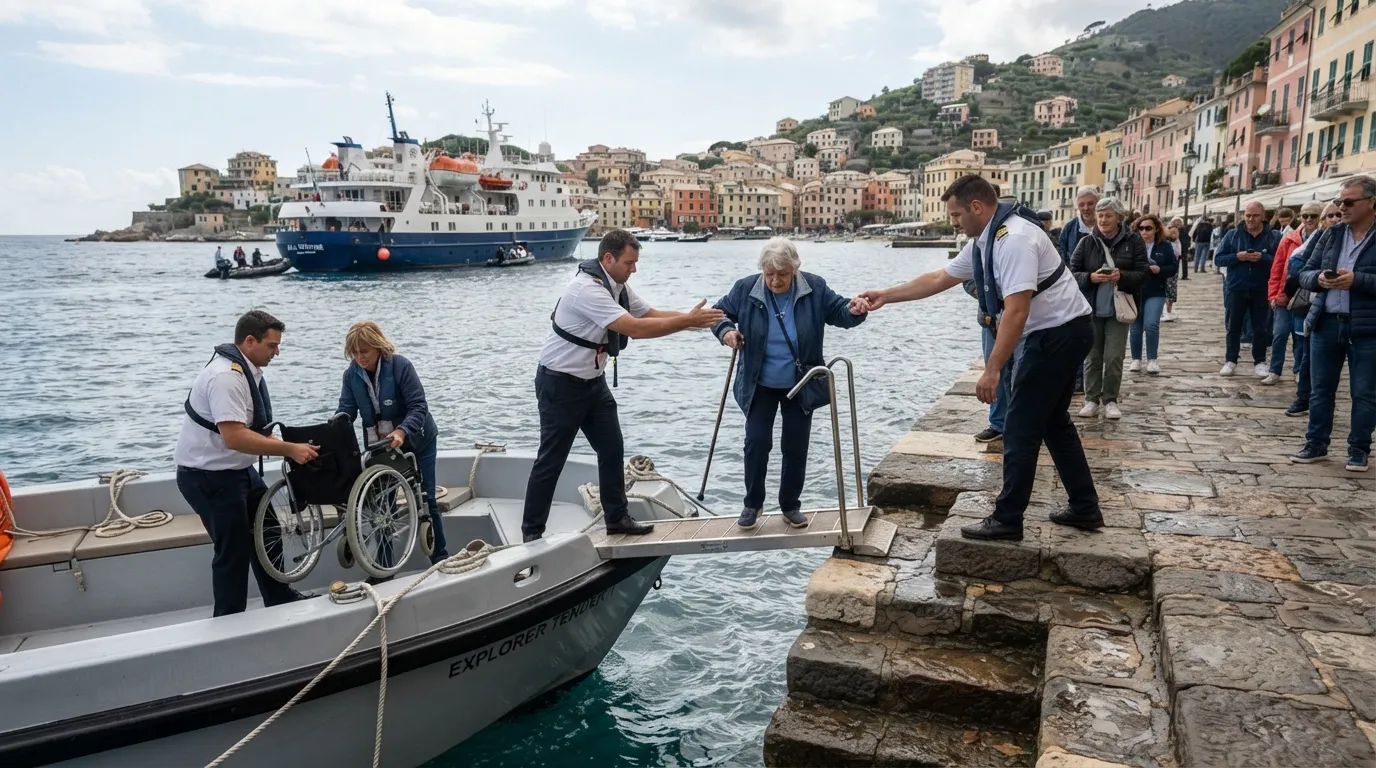
Tender transfers involve steps, gaps, and moving platforms, which can limit options for guests using wheelchairs or scooters. Lines publish accessibility notes for each port, but what’s actually possible depends on that day’s tender and landing conditions.
Contact the cruise line directly for the latest details on each tender port. Some vessels take collapsible manual chairs with crew help, while powered devices often can’t make the transfer.
Worth Knowing
- Accessibility notes are published port by port.
- The tender and landing conditions on the day have the final say.
- Collapsible manual chairs may be accepted with crew help.
- Powered devices often can’t make the transfer.
Whatever your situation, what you carry across that gap matters too.
#13 – What You Carry Determines Boarding Ease
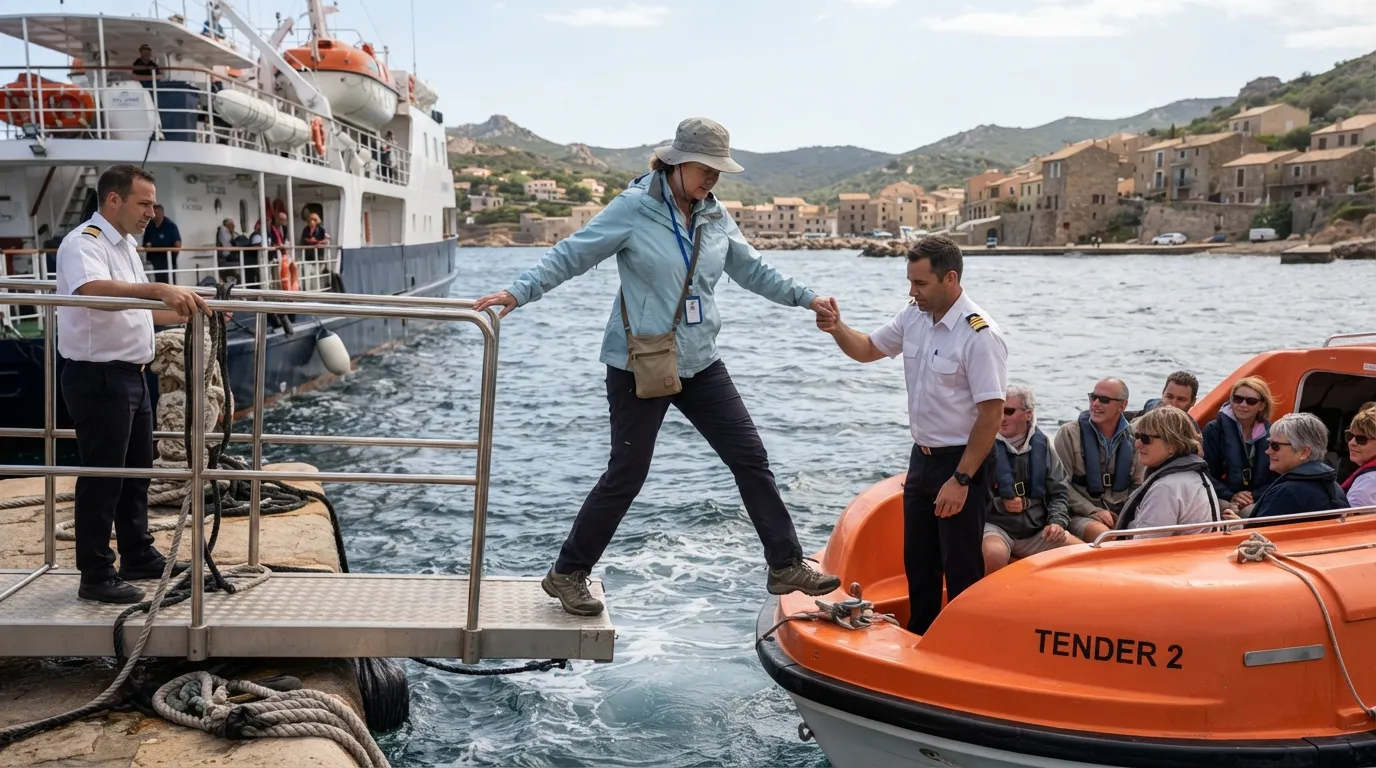
Stick to the essentials: ship card, any required ID, medication, sun protection, and a small bag that leaves your hands free. Bulky items make the step across the moving gap harder than it needs to be.
Water and a light layer help during waits in sun or spray. Leave everything else in the cabin, because going back midday means waiting through another full tender cycle.
Pack perfectly, though, and the plan can still change while you’re standing on the dock.
#12 – Announcements Override Printed Schedules
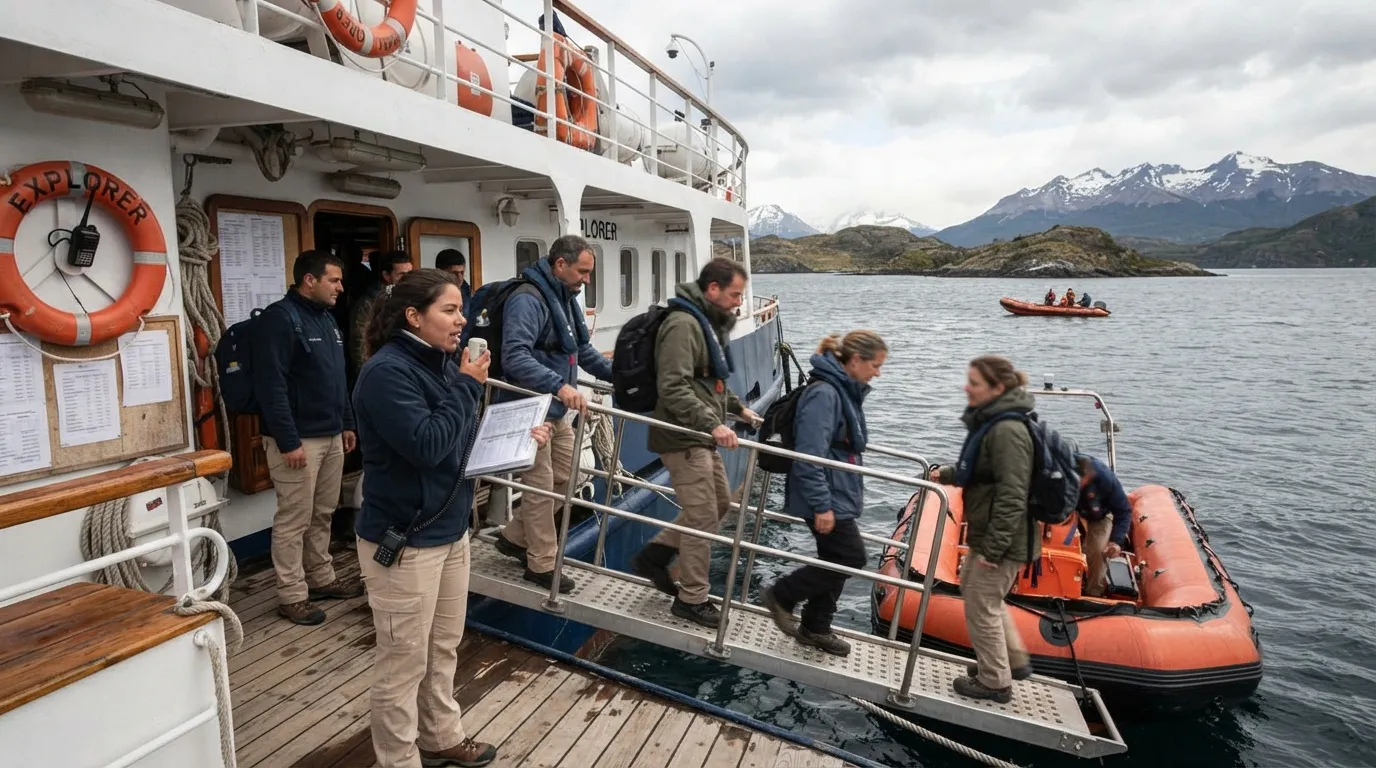
Daily programs and apps list tender plans the night before or the morning of arrival. Then updates arrive over the public address system as conditions change.
Expedition-style small ships adjust often, depending on wildlife or weather. Keep listening for changes even after the first instructions. Crew run boarding from designated lounges or the gangway area once the ship is cleared.
The announcement that matters most, though, is the one that sets your place in line.
#11 – Excursion Guests Board Ahead of Independents
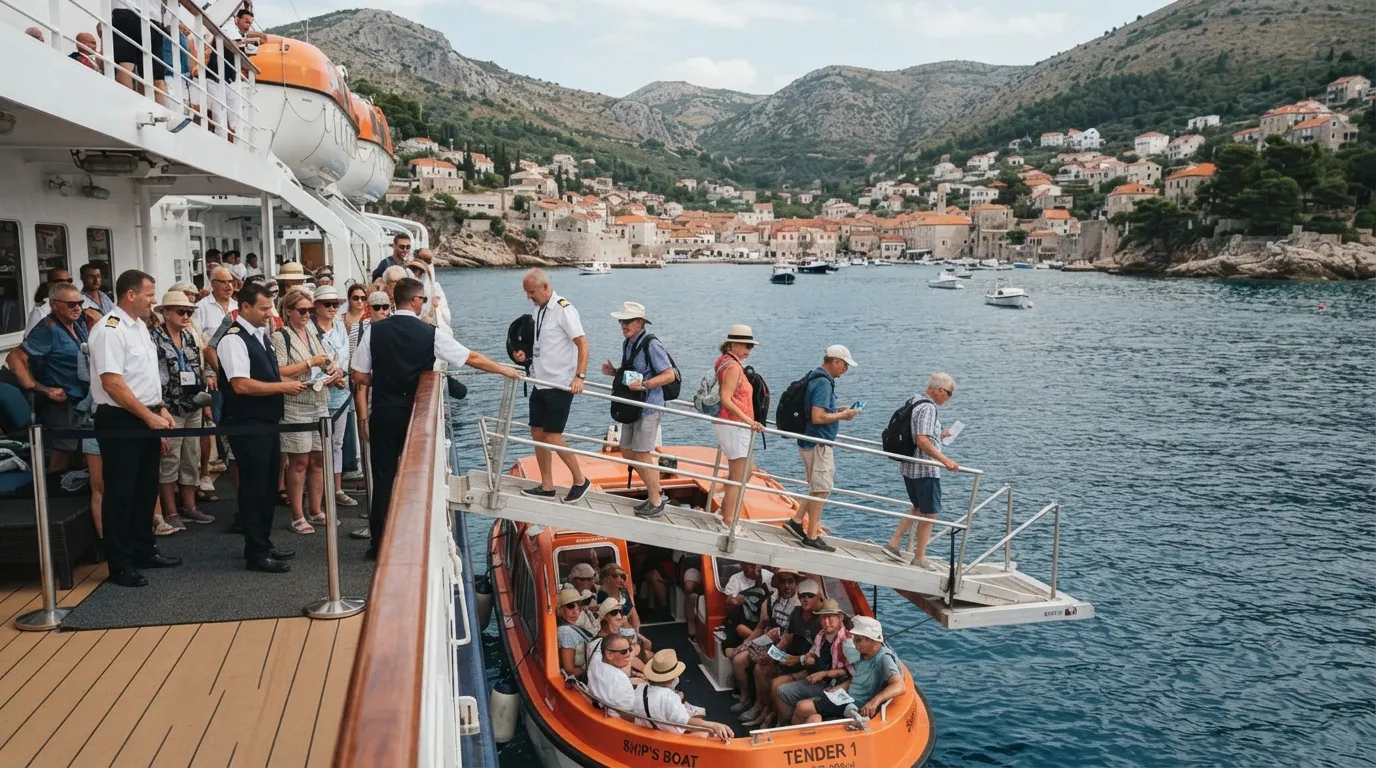
Ship-booked shore excursions get priority tender slots so tours can start on time. Independent travelers wait for those groups to clear before their numbers are called.
The system protects the schedule but rewards early planning. Some lines add app-based virtual queuing after the priority phase.
Even your cabin can affect how quickly you get there once you’re called.
#10 – Cabin Location Affects Tender Access Speed
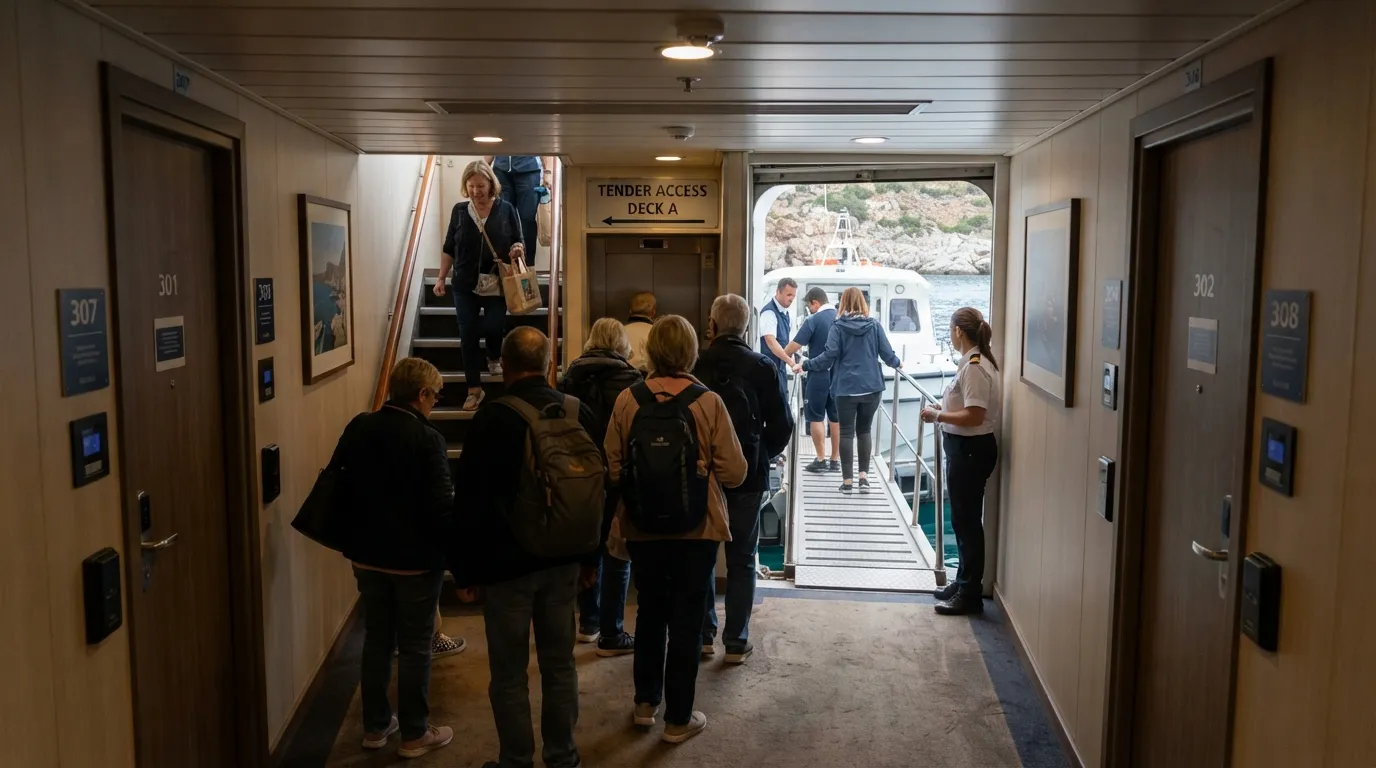
Lower-deck cabins near stairwells or elevators tend to reach the tender platform faster than upper or aft staterooms. Small ships have fewer elevators, so stairs become part of your daily routine.
Build walking time into your morning on tender days. Operators rarely guarantee specific cabin-to-platform distances in advance.
Next up: the meal schedule you thought was fixed.
#9 – Dining Windows Shift Around Tender Operations
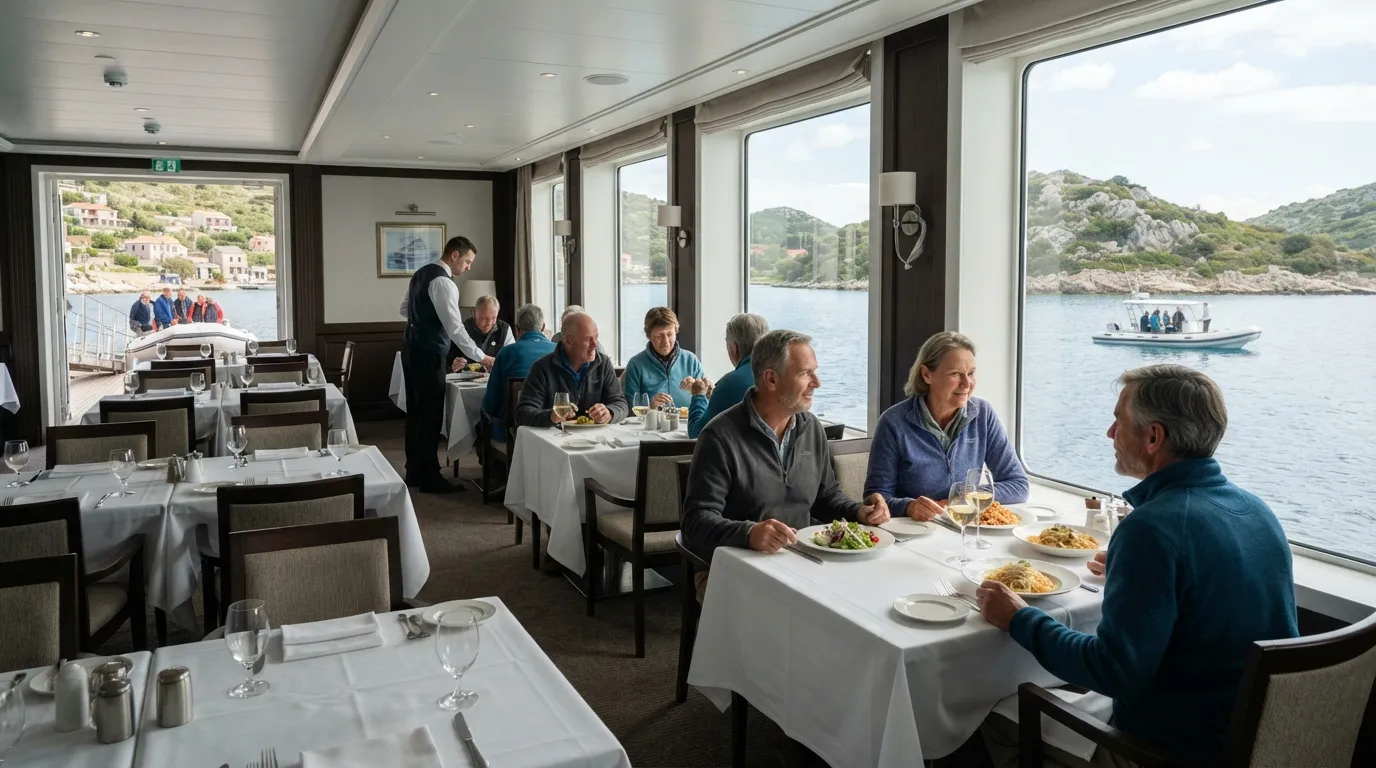
Meal service on small ships often flexes when many guests are ashore or tenders are running. Breakfast may run longer, and lunch timing may move to fit returning groups.
Check the daily program for updated hours. Open seating on smaller vessels makes these shifts easier to handle than fixed reservations.
Then there are the ships where the tender isn’t a tender at all.
#8 – Zodiacs Replace Traditional Tenders on Expedition Itineraries
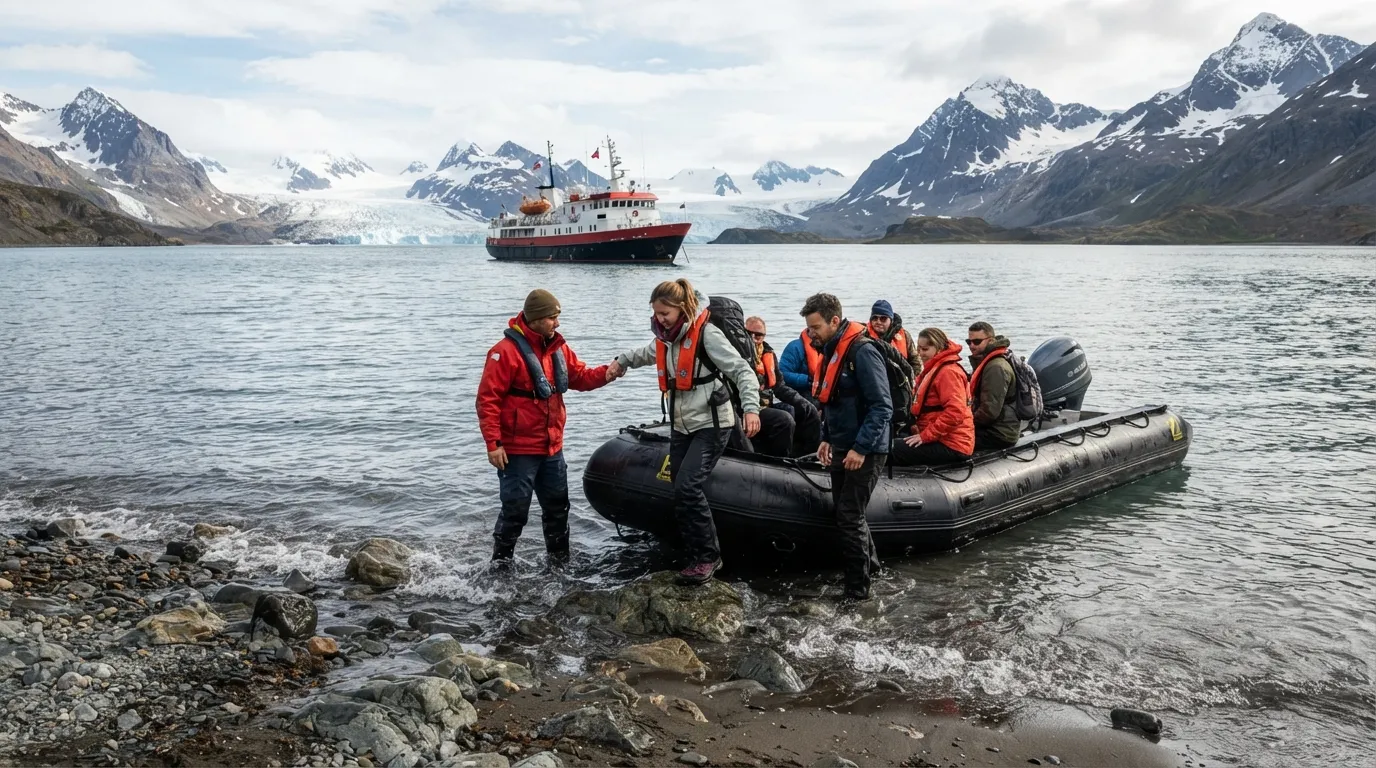
Many small expedition ships use Zodiac inflatable boats for landings instead of larger enclosed tenders. They reach remote beaches, but depending on the site you may face a wet or dry landing.
Crew brief guests on boarding technique before the first use. Life jackets and weight-distribution instructions are standard.
Quick Compare
- Traditional tender: larger, enclosed boat that moves guests between ship and landing point.
- Zodiac: inflatable boat that reaches remote beaches, with a wet or dry landing depending on the site.
- Both: crew assistance at boarding and a gap to step across, so a free-handed approach helps.
Which brings up what to wear when spray is part of the commute.
#7 – Packing Layers Matters More Than Formal Wear
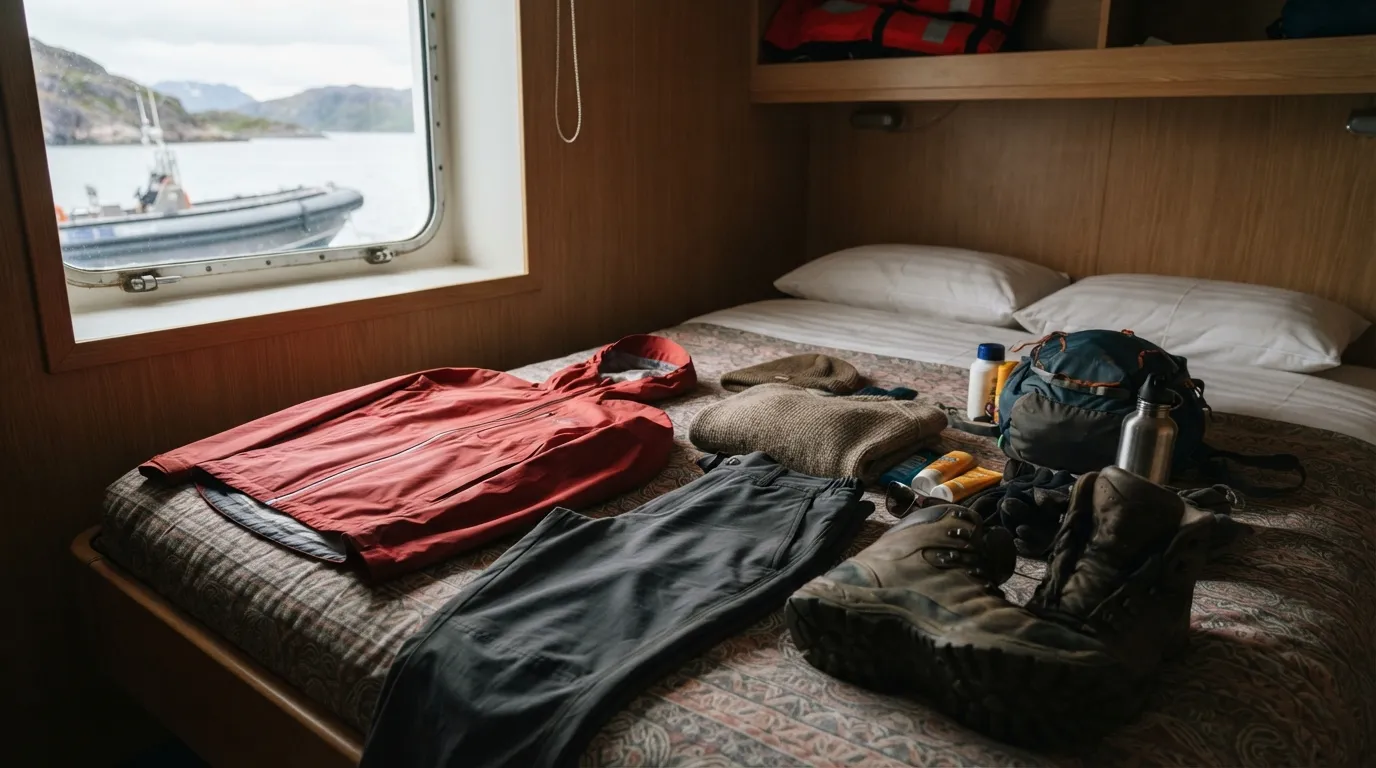
Small-ship dress codes stay casual, built around quick changes for landings. Waterproof shells, quick-dry pants, and sturdy shoes handle tender spray and unpredictable shores better than dressier choices.
Check operator guidance for destination-specific recommendations. Many lines supply parkas or boots on polar voyages, which cuts down what you have to pack.
Once ashore, though, there’s a different kind of waiting game.
#6 – Independent Exploration Requires Extra Buffer Time
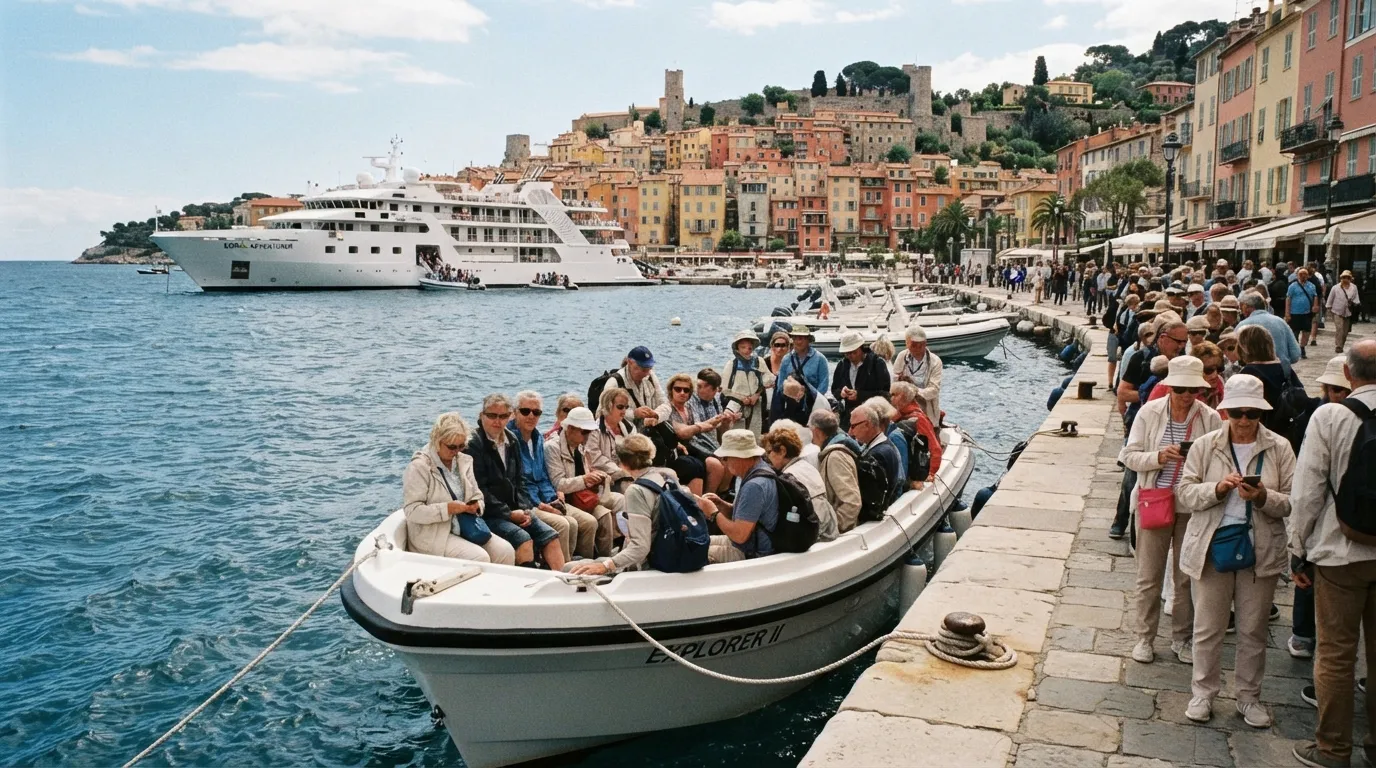
Without excursion priority, independent guests often face longer initial waits. Flexible plans keep you from sprinting back for the final tender.
Port-agent contact details help if plans change ashore. Most lines print them in the daily program.
But even a perfect buffer can’t beat the biggest wildcard of all.
#5 – Weather Windows Can Cancel Tender Days Entirely
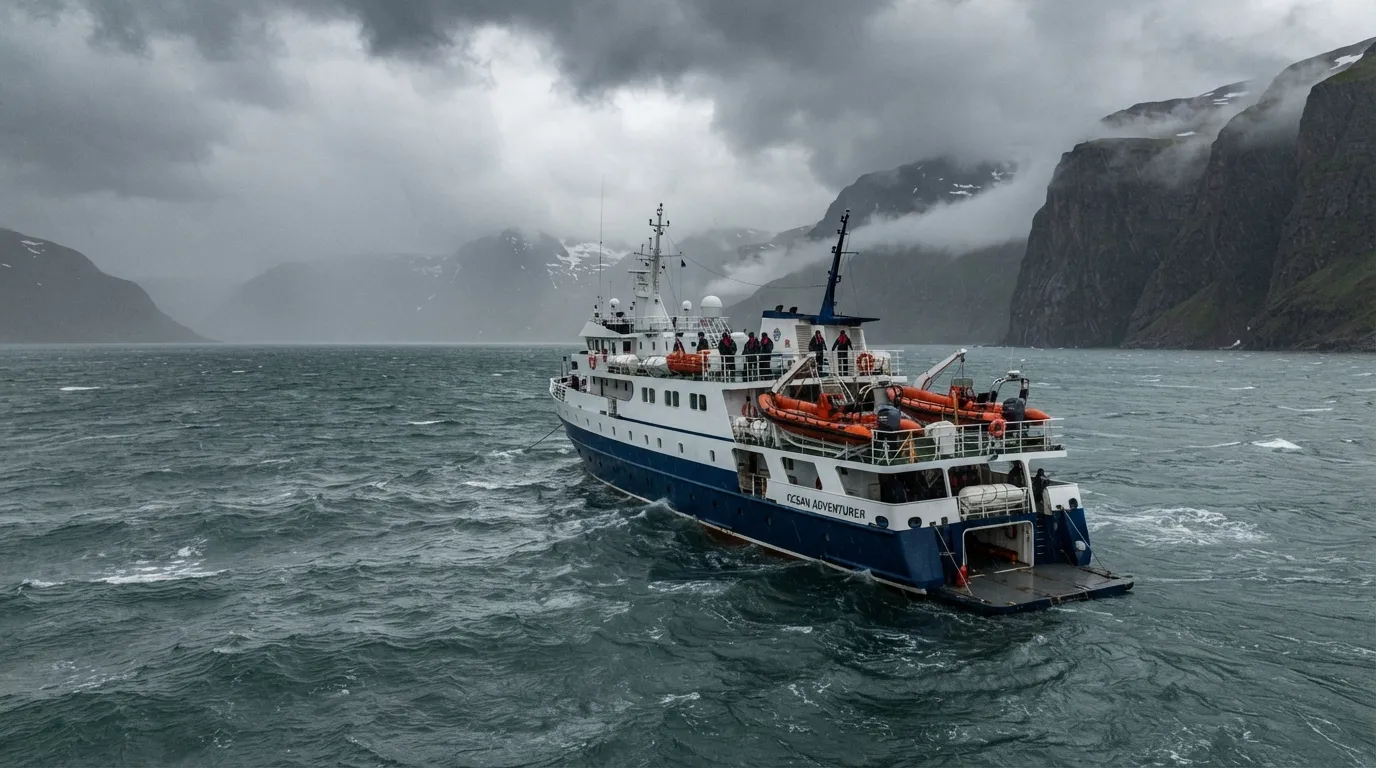
Even small ships cancel port calls when conditions make safe transfers impossible. Captains put safety ahead of the schedule.
Sea days or scenic cruising often replace missed stops. Guests usually hear about the change through announcements once the decision is made.
The best defense is a habit most people skip.
#4 – Return Process Uses No Tickets but Requires ID
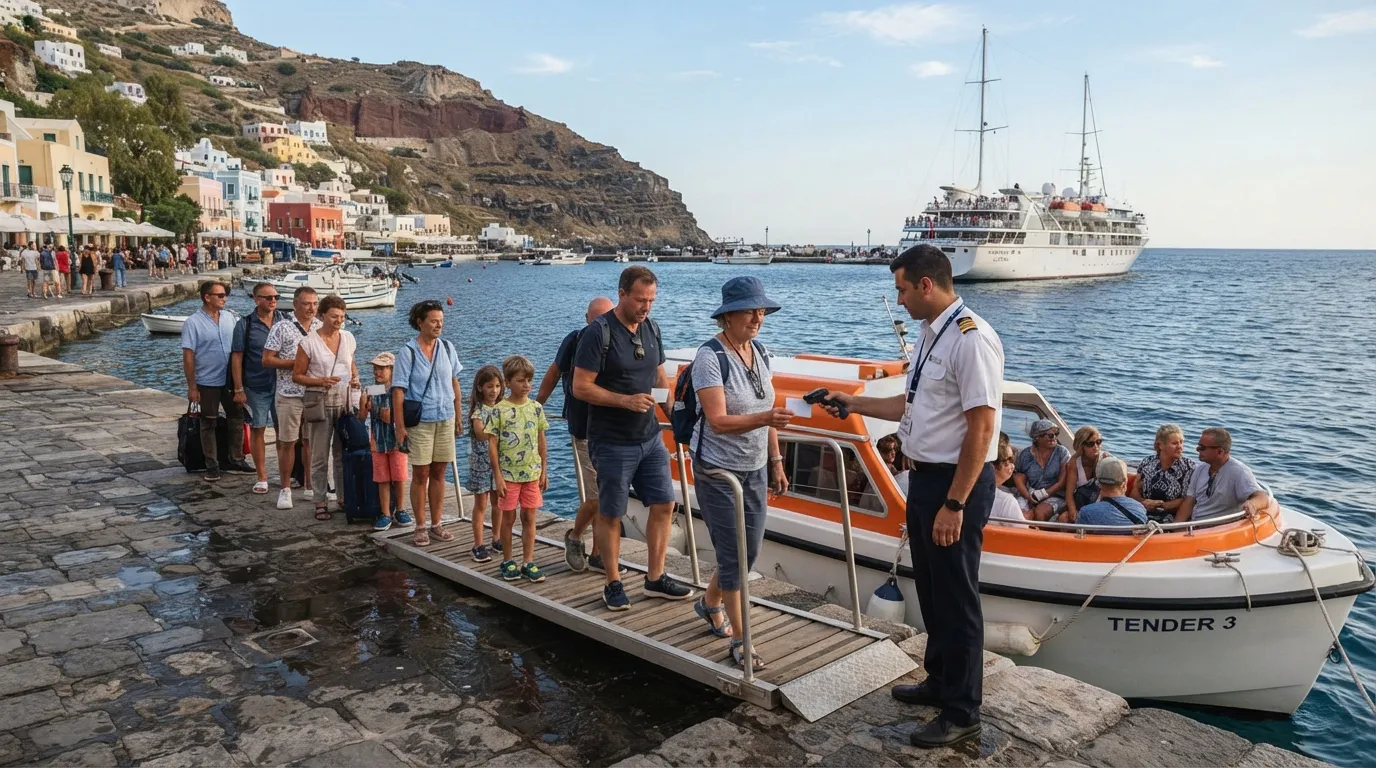
Heading back is simpler: you queue at the shore tender station. Your ship card must be scanned or shown at both ends.
Children need adult supervision throughout. The final tender is the busiest, so an earlier return makes the whole thing smoother.
Small ships do speed up some steps, just not the ones you’d expect.
#3 – Small-Ship Scale Speeds Some Steps but Not All
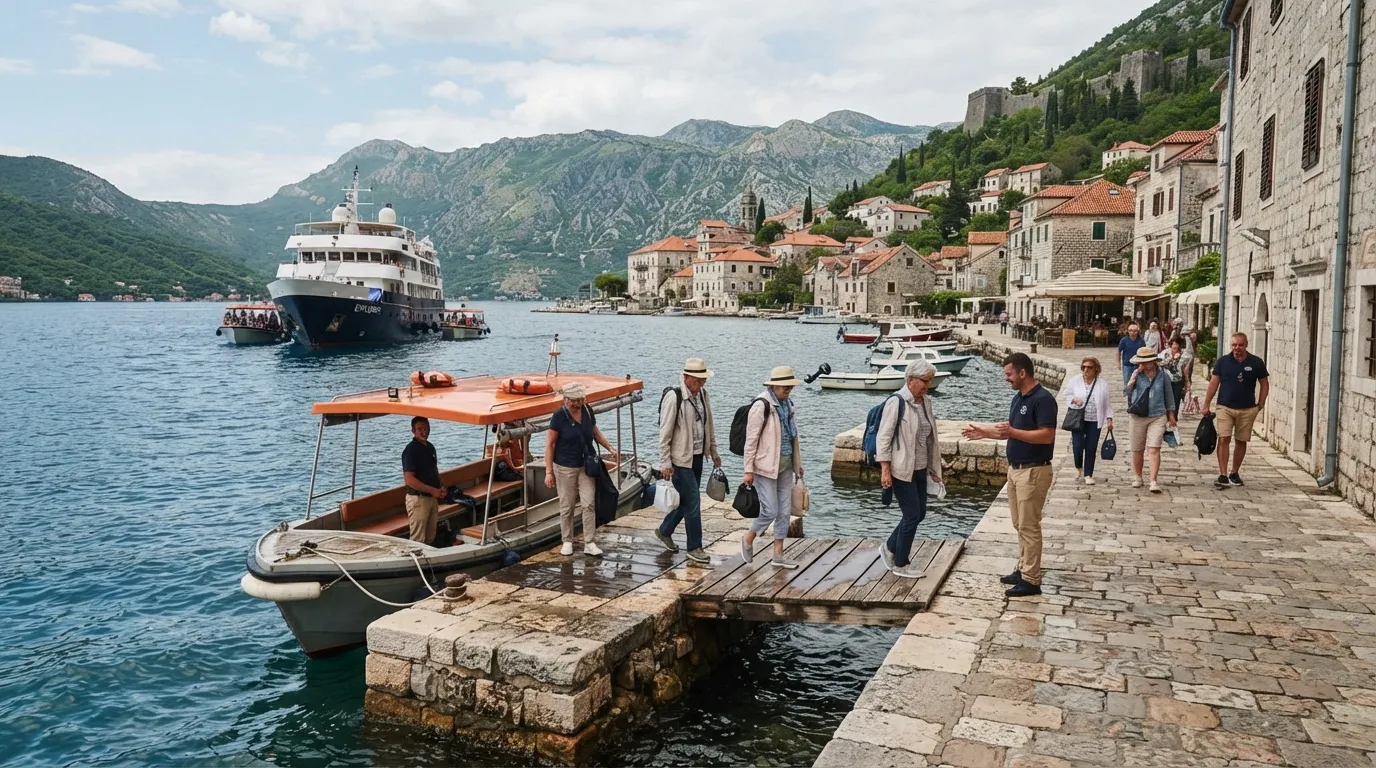
Fewer passengers mean shorter queues once priority groups clear. The same safety and weather rules still apply as on larger vessels.
Some modern small-ship apps offer digital queue options. Always confirm the current method in the daily materials.
Then comes a step that has nothing to do with the water.
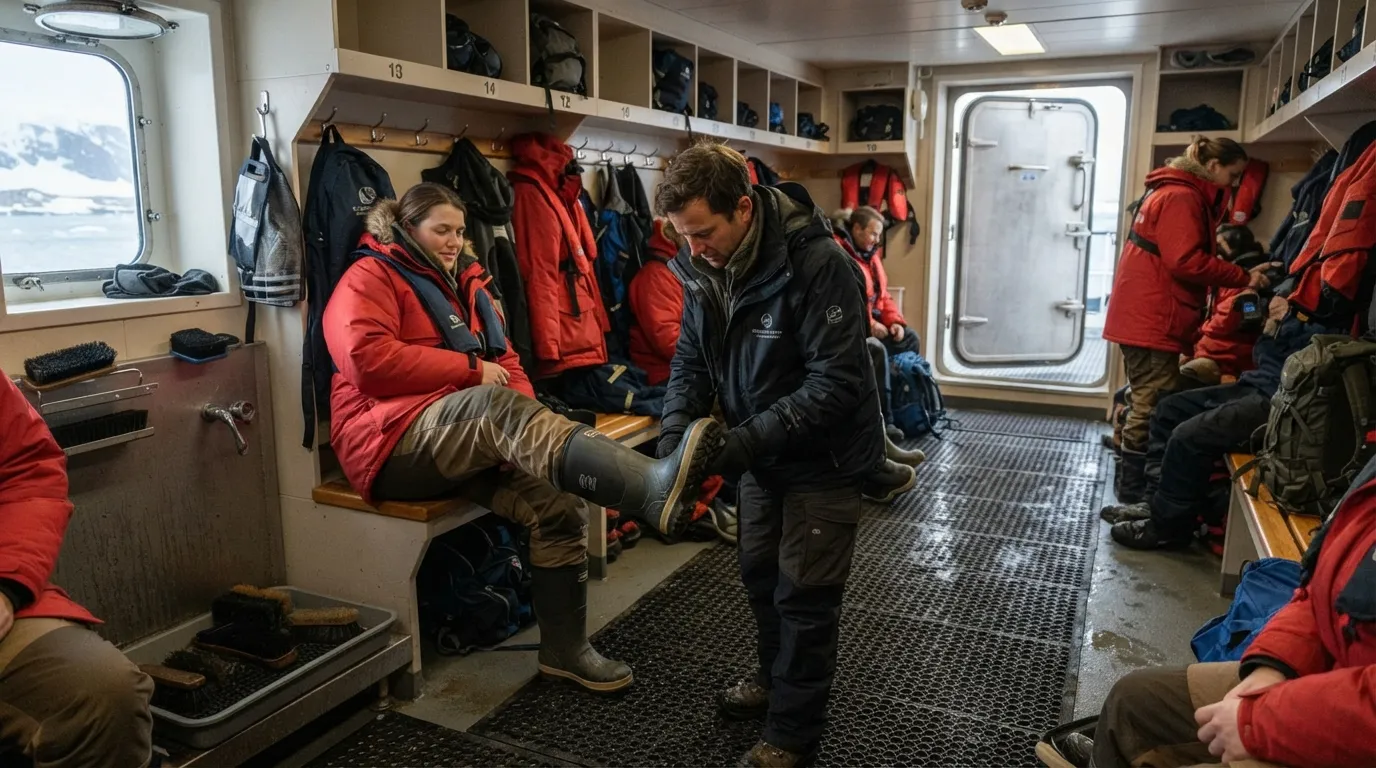
#2 – Biosecurity and Gear Checks Add Pre-Landing Steps
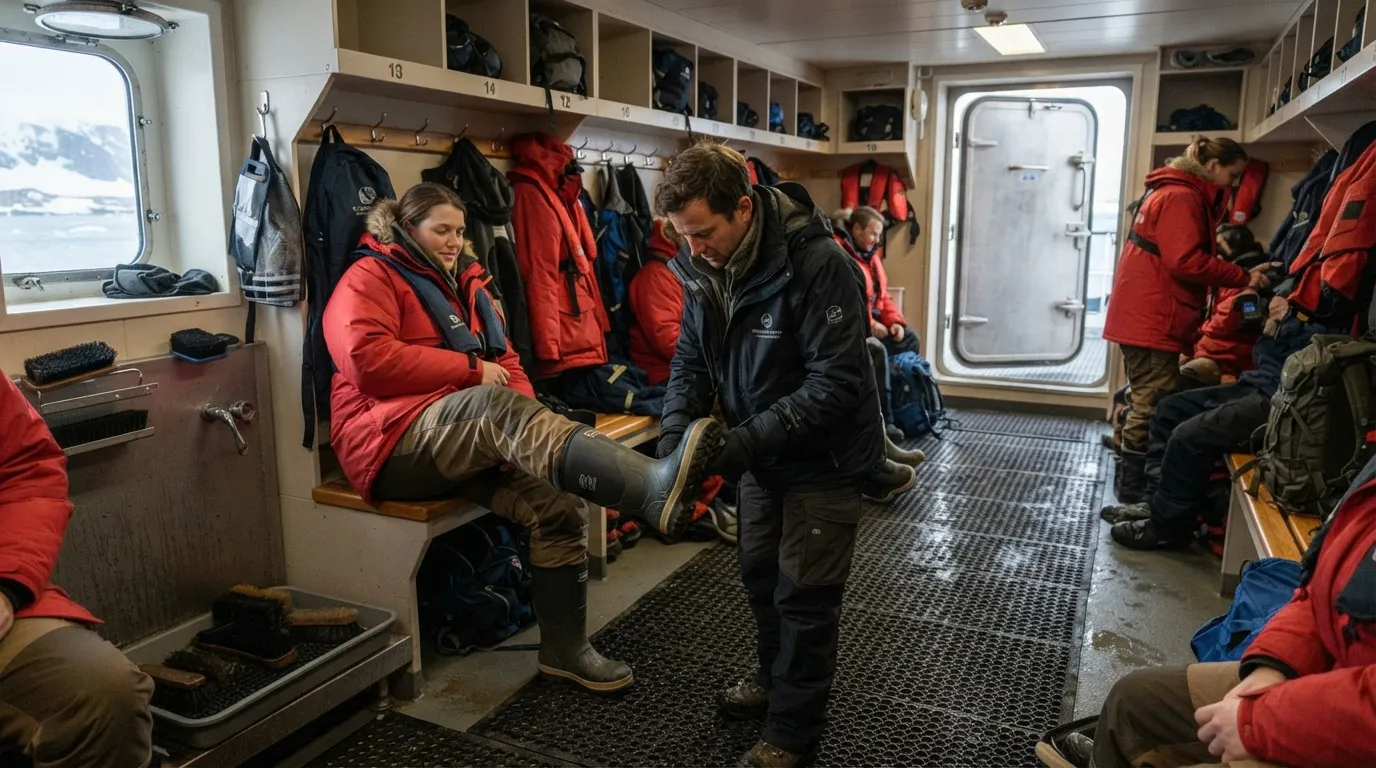
Expedition small ships enforce cleaning protocols for boots and clothing before Zodiac or tender use in sensitive areas. Inspections take place in dedicated mudrooms.
Allow extra time in your schedule for these procedures. They protect the destination but stretch out the overall disembarkation.
Worth Knowing
- Boots and outer clothing are the usual focus of cleaning checks.
- Inspections happen in dedicated mudrooms before you board.
- Protocols apply to sensitive areas, so they may not appear at every stop.
- Extra time here can push back your landing.
And the detail that ties everything together is also the easiest one to skip.
#1 – The Single Most Overlooked Detail Is the Ship’s Specific Tender Policy
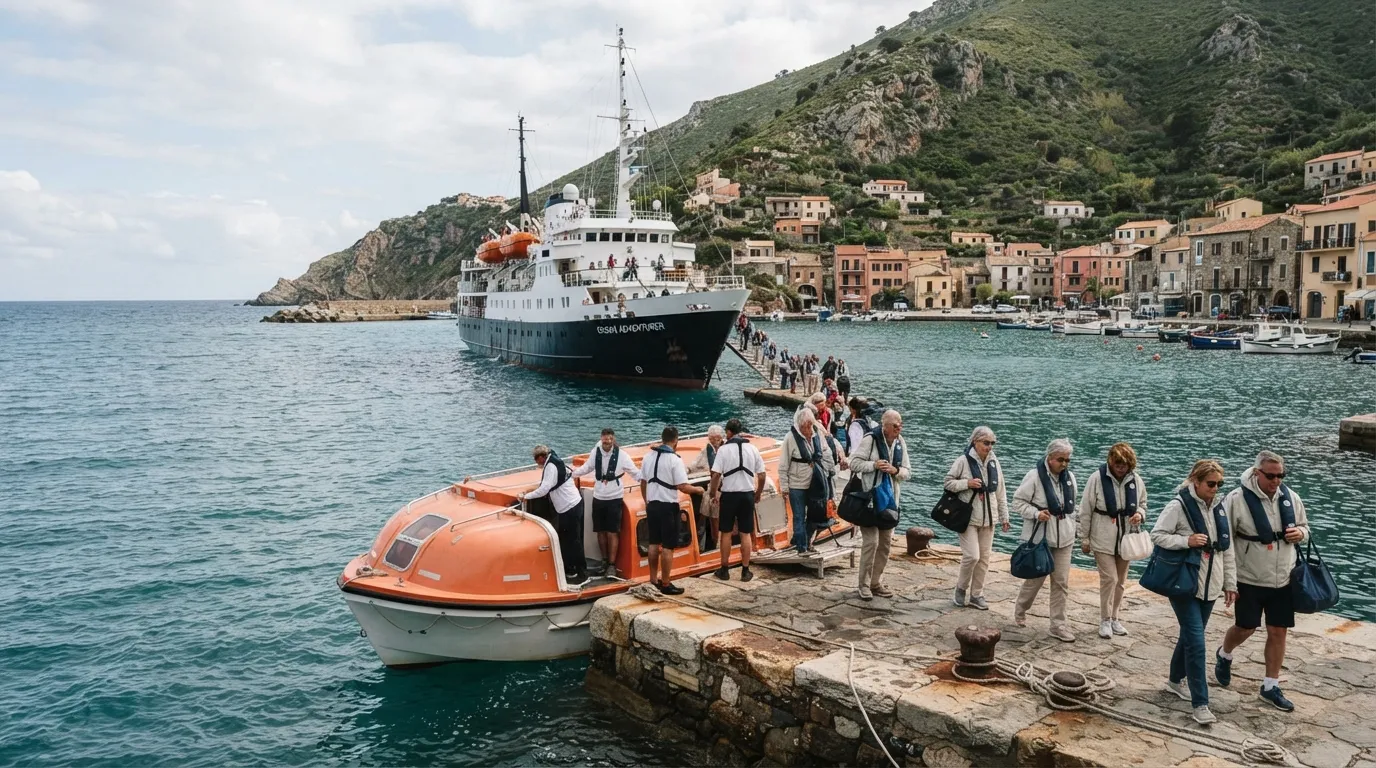
Every small-ship operator publishes its own tender, accessibility, and last-call rules in pre-cruise documents and the daily program. Assuming every line works the same way causes the biggest surprises at the first tender port.
Reading those materials the evening before arrival heads off most common friction points. That one habit turns an uncertain process into a predictable part of the day.
Tender days on small ships come down to priority order, hard time limits, weather calls, and how well you prepared the night before. There’s no universal shortcut, only each line’s current rules and a little buffer built into your plans.
The ship may be small, but the first tender port is where you find out how much the fine print matters.